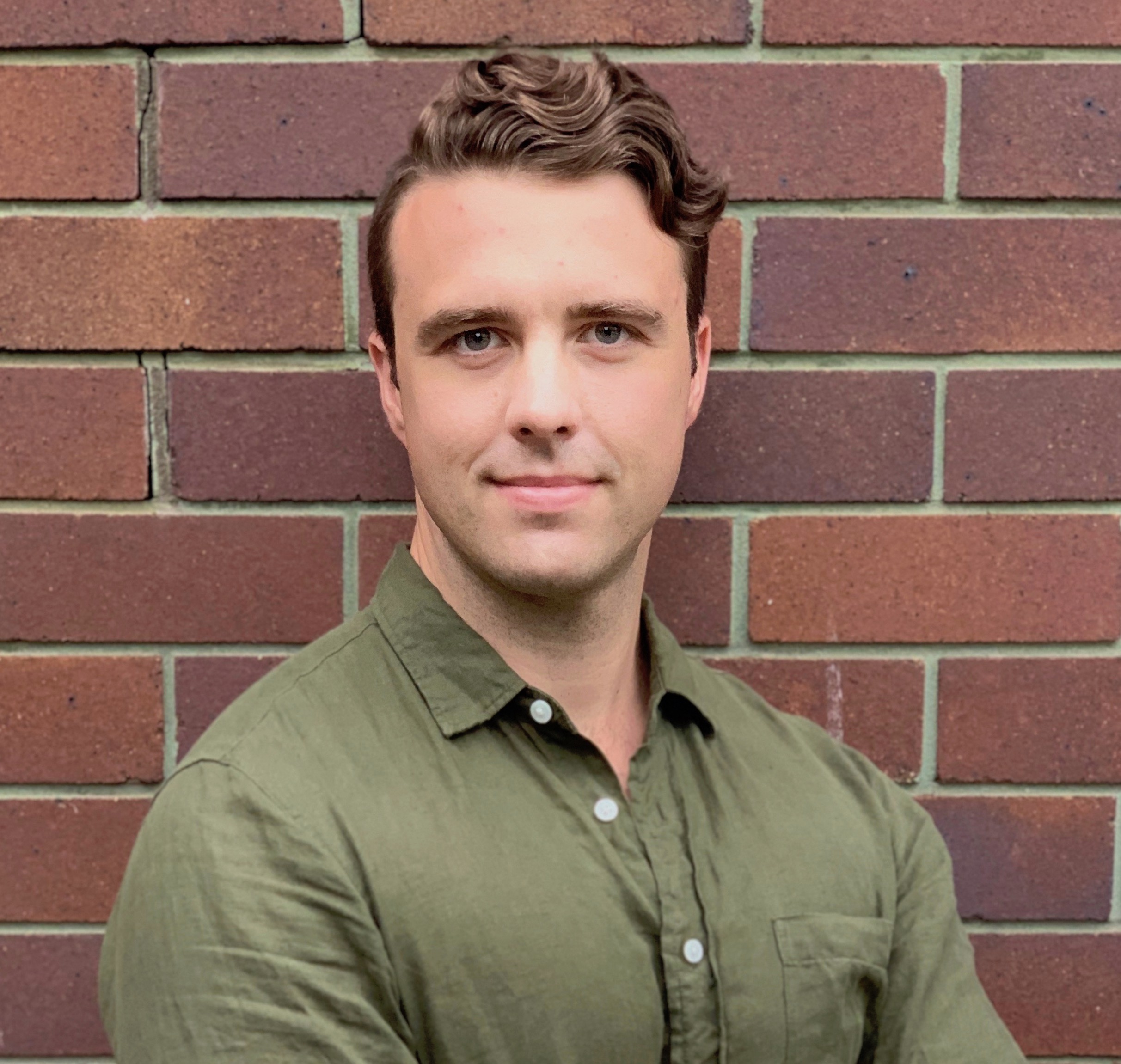
Dr. Gavin Morris is a Lecturer in Education at Charles Darwin University's College of Education, with over two decades of teaching experience in Australian schools. His academic qualifications include a PhD from Charles Darwin University (2019), Master of Education from University of Sydney (2016), and Bachelor of Education from James Cook University (2000). Morris specializes in Indigenous research methodologies, Health & Physical Education, and Sport Science. His qualitative work focuses on trauma healing, truth-telling, and decolonization practices in Aboriginal communities, particularly using Dadirri (deep listening) methodologies. Recent research explores digital platforms for cultural preservation and community resilience. As a registered postgraduate research supervisor, Morris contributes to undergraduate and postgraduate programs while maintaining active fieldwork in remote Northern Territory communities like Nauiyu at Daly River.
Jarrod Ray Hore is a Scientia Lecturer in the School of Humanities & Languages at the University of New South Wales (UNSW), Sydney, and Co-Director of the New Earth Histories Research Program. His work explores environmental history, settler colonialism, and the intersections of science, geology, and cultural landscapes. Hore’s research focuses on landscape photography’s role in shaping colonial projects, earthquake geology, and the logistics of the natural history trade. He has published widely in journals like the Pacific Historical Review and Australian Historical Studies, and his award-winning book *Visions of Nature* (2022) examines how photography reinforced settler territoriality. His research interests span environmental history, transnational history, the history of science, and colonial studies. Key areas include the history of settler colonialism in Australia, New Zealand, and North America, as well as the cultural and scientific dimensions of geological exploration. Hore actively supervises HDR and honours students in environmental history, colonial history, and the history of photography. His awards include the Marilyn Lake Prize (2023) and Donna Coates Prize (2022), with shortlist recognitions for prestigious history awards. Beyond academia, he teaches courses like *A House Divided: The Making of Modern America* (ARTS2150), emphasizing U.S. histories of race, class, and global engagement. Hore’s work bridges environmental humanities and colonial studies, analyzing how visual and scientific practices reinforced imperial and settler agendas. His current projects explore the material and logistical networks underpinning natural history collections and the epistemologies of colonial geology.
Robert Wellington serves as Associate Professor and Director of the Centre for Art History & Art Theory at the School of Art & Design, Australian National University (ANU), within the College of Arts & Social Sciences. His academic leadership focuses on advancing art historical research and public engagement through institutional initiatives. His research spans Art History, Early Modern European Art (particularly Louis XIV's France), Museum Studies, Public Humanities, and Cultural Heritage. Wellington investigates transcultural object exchange, royal iconography, and identity construction through material culture, with emphasis on Versailles, medals, and marginalia. His work bridges historical scholarship with contemporary public humanities applications in museums and digital archives. Analysis of his 2020-2024 publications reveals concentrated exploration of Louis XIV's cultural legacy, Versailles' global impact, and the evolving role of humanities institutions. He pioneers digital critical editions while examining how objects shape identity across cultural boundaries, consistently connecting historical practices to modern museum and archival challenges. No scientific awards were documented in the provided materials. As Centre Director, Wellington oversees research programs and institutional partnerships, though specific student advisees and grant details remain unlisted in available sources. His leadership facilitates interdisciplinary projects including the Jean-Benjamin de Laborde digital edition initiative. The Centre for Art History & Art Theory functions as a research hub under Wellington's direction, driving public humanities innovation through the ANU's Art & Design Seminar Series, Visiting Artist Program, and collaborative projects with national collections. Current initiatives focus on digital heritage and community-engaged scholarship within the School of Art & Design framework.
Dr. Rebecca Clements is a Research Fellow at RMIT University's School of GUSS, focusing on sustainable and equitable urban development. Her current projects include the 'Deep Timetable' ARC project (Noongar-led railway history in WA) and examining parking approaches in Australian cities' apartment boom. Previously, she held a Henry Halloran Research Trust Postdoctoral Fellowship at the University of Sydney's Infrastructure Governance Incubator and conducted micromobility research with the Institute of Transport and Logistics Studies. Her PhD from the University of Melbourne explored Japanese parking policies during automobility. Research interests include overcoming urban car dominance, parking policy, transport justice (e.g., children’s mobility), and decolonial infrastructure governance. Key awards include the Henry Halloran Fellowship. Her work bridges policy analysis, equity, and decolonial methodologies to reimagine urban futures.
Dr Luke Hespanhol is a Senior Lecturer in Design and Computation at the University of Sydney's School of Architecture, Design and Planning. He is affiliated with the Sydney Southeast Asia Centre and Sydney Nano Institute, and previously served as a guest researcher at Aarhus University's Department of Aesthetics and Communication. His work focuses on interactive media installations that foster reflection on human-environment relationships, blending urban design, technology, and social engagement. He holds a PhD in interactive media architecture from the University of Sydney's Design Lab, with research exploring user-centred hybrid urban environments. His doctoral work laid the foundation for his current interests in digital placemaking, urban informatics, and smart cities. Research Interests: - Designing technology-infused public spaces - Media architecture as a tool for inclusive urban development - Ethical implications of AI and blockchain in cultural contexts - Temporal and spatial dimensions of urban interaction design - HCI methodologies for multiperspectival cultural heritage interpretation - Antifragile city frameworks integrating citizen participation His recent publications highlight trends in reimagining urban futures through speculative design, ethical AI systems, and autonomous vehicle interaction paradigms. While no specific scientific awards are listed, his work often addresses critical societal issues like decolonization in technology and climate-resilient infrastructure. Grants and Collaborations: - 2025: 'Waste to Resilience: Sanitation Against Stunting and Climate Vulnerability in Informal Coastal Areas' (Sydney Southeast Asia Centre) - 2022: 'The Metaverse as Vehicle for Aboriginal Digital Inclusion, Wellness and Self-Determination' (Facebook Research) Dr Hespanhol is actively involved in the Media Architecture Institute and contributes to cross-disciplinary initiatives uniting technology, art, and urban planning. His research emphasizes co-creation processes with communities to ensure equitable technological integration in urban systems.
Dr. Farzana Aman Tanima is a Senior Lecturer at the University of Sydney Business School’s Accounting, Governance, and Regulation department. She previously held roles at the University of Wollongong (2017–2023). Her research focuses on critical and dialogic accounting, social justice, and challenging neoliberal frameworks through participatory approaches. Born in Bangladesh, she earned her PhD in 2015 from Victoria University of Wellington, New Zealand, with a thesis on dialogic accounting practices for marginalized women. Education: PhD in Accounting, Victoria University of Wellington, 2015 Undergraduate Honours Degree, Victoria University of Wellington Research Interests: Dr. Tanima’s work centers on dialogic accounting to democratize accounting practices, with focus on NGOs, microfinance, Indigenous education, and race. She employs participatory action research and autoethnography to address systemic inequalities. Key areas include: Accounting’s role in empowerment and development Decolonizing accounting education through Jindaola Critical race theory and counter-accounting Awards: 2024 Mary Parker Follet Award (AAAJ Journal) 2020 VC OCTAL Teaching Award 2015 AFAANZ Best PhD Award Teaching & Mentorship: She leads pedagogical initiatives embedding Indigenous perspectives into curricula and fosters dialogic learning. Supervised two completed PhDs, with co-authored publications. Active in mentoring early-career researchers through invited talks and workshops. Labs/Teams: Part of the Alternative Accounting Research Network and editorial boards for CPA Journal and Financial Accountability & Management . Co-leads special issues on critical dialogics and publicness in accounting.
Professor Susan Goodwin is a leading academic at the University of Sydney, specializing in social policy, gender studies, and social justice. She holds a BA(Hons) from ANU and a PhD from the University of Sydney. Her work focuses on collaborative research projects with government and civil society organizations, emphasizing participatory methodologies to address poverty and inequality. Educations: PhD, University of Sydney BA(Hons), Australian National University Her research interests span social structures, gender relations, and community development, with a focus on policy analysis methodologies. Notable projects include participatory approaches to community revitalization in Australia and Hong Kong, and interrogating constructions of motherhood in Australia. Professor Goodwin is affiliated with the Sydney Policy Lab, Sydney Southeast Asia Centre, and the Charles Perkins Centre. Her awards include the 2016 Vice-Chancellor’s Award for Outstanding Research Supervision and a 2014 residency at Hong Kong Baptist University. Key Grants & Projects: ARC Linkage Project on participatory community development in public housing neighborhoods NSW Refugee Youth Policy Initiative Research on gender, social policy, and adolescent girls' sexuality in Indonesia She actively contributes to policy networks like the Social Policy Research Network and co-convenes the Sydney Social Justice Network. Her work bridges academic research with practical policy impact, emphasizing grassroots engagement and equity.
Associate Professor Helen Adam is a leading academic in the School of Education at Edith Cowan University (ECU), specializing in culturally responsive pedagogy and the role of children’s literature in fostering equity and inclusion. She holds a PhD in Early Years Education (2019) and has extensive experience in primary education and literacy research. Her career includes roles as a teacher, researcher, and leader in teacher education, particularly in addressing systemic inequities through literature. She is Board President of the Primary English Teaching Association of Australia (PETAA) and actively contributes to national and international educational initiatives. Research interests focus on diverse children’s literature, social-emotional development, and dismantling prejudice through books. Notable projects include a Churchill Fellowship (2022) exploring global practices in children’s literature and equity-driven education. Her work has been recognized with awards such as the 2023 Churchill Fellowship and multiple ECU research accolades. Helen supervises postgraduate research in literacy and diversity, including projects on postmodern picturebooks and culturally diverse family representation. She collaborates with institutions like ECU’s Kurongkurl Katitjin Centre for Indigenous Education, emphasizing allyship and support for marginalized groups.
Professor Victor Callan AM is Professor of Leadership and Organisational Change at the University of Queensland Business School within the Faculty of Business, Economics and Law. With over 300 publications to his name, including 179 journal articles, 60 conference publications, and 17 books, he is one of Australia's most recognized researchers in organizational change, leadership performance, and employee training. His influential work has shaped public policy in workforce development, vocational education, and organizational change management. Education: Bachelor (Honours) of Arts, University of New South Wales Doctor of Philosophy, Australian National University Professor Callan's research focuses on two primary areas: organizational change and leadership, with special interest in employees' and leaders' experiences with large-scale change; and employee skills, capabilities and training, examining effective responses to skills development and shortages. His work explores adaptation levels, personal capabilities, communication dynamics, and team processes during organizational transitions. He has pioneered research on maverickism in organizations, investigating how positively deviant change agents drive radical organizational transformations. His recent publications reveal a strong trend toward gender equality research, Indigenous knowledge integration, and maverick leadership. These works span multiple disciplines including organizational behavior, human resource management, vocational education, and leadership studies. His research on workplace gender inequality employs wicked problems frameworks, while his work on Indigenous knowledge holders emphasizes co-creation and positioning as expert researchers. Major Awards and Recognition: Fellow of the Academy of Social Sciences in Australia Fellow of the Queensland Academy of Arts and Sciences Fellow of the Australian Institute of Company Directors Member (AM) of the Order of Australia for significant service to higher education University's Award for Excellence in Higher Degree Research Supervision Two UQ Excellence in Leadership Awards Professor Callan has supervised numerous PhD students across diverse topics including leadership ascension, maverickism, CEO appointments, and organizational change. He has secured substantial research funding, including his 14th Australian Research Council project in 2025 focusing on Indigenous women environmental rangers. His advisory work spans over 100 projects for government departments and international organizations across South Africa, Ghana, Tanzania, Indonesia, Bhutan, Brunei, New Zealand, PNG, and South Pacific countries, addressing employee skills, vocational education, industry closures, and workforce development. He actively contributes to executive education for senior managers globally and has developed strong research, consulting, and industry partnerships. His current teaching focuses on MBA programs and the Bachelor of Advanced Business Honours program at UQ.
Associate Professor Sunny-Boy Ahmar Mahboob is a distinguished linguist at the University of Sydney, where he serves as Degree Coordinator for the Master of Crosscultural and Applied Linguistics program within the Department of Linguistics, Faculty of Arts and Social Sciences. With extensive experience in applied linguistics and language education, Dr. Mahboob has established himself as a leading expert in World Englishes, TESOL, and language variation research, both nationally and internationally. Dr. Mahboob's educational background includes: BA from Karachi MA from Karachi MA from Indiana University MEd from Sydney PhD from Indiana University (2003) Dr. Mahboob's primary research focuses on language variation in global contexts, with particular attention to World Englishes, the NNEST (Non-Native English Speaking Teachers) movement, language policy, and decolonial approaches to linguistics. His work critically examines how language policies and practices affect educational outcomes and social justice, especially in postcolonial contexts like Pakistan and the Middle East. He pioneered 'appliable linguistics' - an approach that bridges theoretical linguistics with practical applications in education and policy, emphasizing the need for linguistic theories to address real-world problems. His recent publications reveal a strong trajectory toward decolonial linguistics, with increasing focus on subaltern perspectives, environmental connections to language diversity, and critical examinations of colonial legacies in language education. Dr. Mahboob's work consistently addresses power dynamics in language teaching and the need for more inclusive approaches that value linguistic diversity across educational contexts from primary schools to universities. Dr. Mahboob has received numerous prestigious awards: 2019: Australia's Research Field Leader in English Language and Literature (The Australian's Research magazine) 2012: Fellow of the National Talent Pool; President's Programme for Highly Qualified Overseas Pakistanis 2006: Faculty of Arts and Social Sciences Teaching Award, University of Sydney 2005: Teaching Initiative Award and Fellow of the Association of Pacific Rim Universities 2004: ECU Research and Creativity Award 2002: 'Distinguished President Award' from INTESOL, Indianapolis As an academic mentor, Dr. Mahboob supervises research students including Ruohong CAO (Developing Mandarin Learning Materials for Young Learners in Australia through Positive Discourse Analysis) and Tracy GAO (Evaluating Chinese Language Textbooks: A Sociosemiotic Perspective). His editorial work includes serving as Editor of TESOL Quarterly (2014-2017) and Associate Editor for multiple linguistics journals. Dr. Mahboob has secured significant research funding for projects including the SLATE (Scaffolding Literacy in Academic and Tertiary Environments) project and indigenous language funding initiatives in Australia. Dr. Mahboob founded and leads the International Free Linguistics Conference series, which has become an important platform for critical and alternative approaches to linguistics. His 'SLATE project' focuses on genre-based pedagogy for academic writing, and he actively collaborates with researchers across multiple continents through the World Englishes research network. His recent work increasingly explores the connections between language diversity and environmental sustainability, positioning linguistic ecology as a critical component of broader ecological concerns.
Professor Kieran Tranter is Chair of Law, Technology, and Future at Queensland University of Technology (QUT), School of Law. He leads the Law, Technology and Humans journal and directs the Human Technology Law Centre. His research explores law’s intersection with technology, focusing on cultural narratives and future-oriented legal frameworks. Prior roles include Associate Professor at Griffith University and HDR Convenor. Key areas include law and technology in the Global South, First Nations justice, and automation’s societal impact. Education PhD (Griffith University) Research Interests Tranter’s work bridges law with cultural studies, science fiction, and socio-technical systems. He examines how technology shapes legal frameworks and vice versa, with a focus on: Automated vehicles and regulatory challenges Transport justice for Indigenous communities Legal semiotics in media and popular culture Awards Research Supervision Award (Griffith University, 2017) Group Teaching Citation (Griffith University, 2011) Academic Excellence Award (Griffith University, 2010) Advising & Grants Tranter supervises PhD candidates on topics like lethal autonomous weapons systems, AI governance, and First Nations transport equity. He advocates for decolonizing road safety policies and has advised on regulatory frameworks for automated vehicles. Labs/Teams Co-leads the Technologies of Justice stream at QUT’s Centre for Justice and coordinates the Datafication and Automation research stream.
Douglas Booth is an Honorary Professor at the School of Human Movement and Nutrition Sciences at The University of Queensland. His work focuses on sport history, with a particular emphasis on Indigenous perspectives and cultural narratives in sports studies. Current affiliation: University of Queensland Academic rank: Professor Research Interests include: Sport history Indigenous sport narratives Cultural and historical analysis of sport Recent Publications (2022) highlight his contributions to decolonizing sport history, Indigenous methodologies, and critical analysis of sport historiography. His work appears in the Routledge Handbook of Sport History .
Mark Harris is a Professor at Monash University's School of Philosophical, Historical and International Studies (SOPHIS). His research focuses on historical anthropology, ethnohistory, and Latin American societies, particularly in the Amazon region. He has held academic positions in the UK, US, Brazil, and Australia, and his work emphasizes interdisciplinary approaches to Indigenous studies, colonialism, and decolonization. Education: PhD in Anthropology (London School of Economics and Political Science, 1998), BSc in Anthropology/Psychology (University of London). Research interests include the intersection of environment and society in Amazonian contexts, Indigenous knowledge systems, and transatlantic histories. Recent projects include studies on Brazilian Amazonian cultures and Jesuit documentary sources. He has contributed to over 30 research outputs since 1998, emphasizing riverine societies, seasonal rhythms, and Indigenous histories. Notable awards include the British Academy Postdoctoral Fellowship (1996), Phillip Leverhulme Prize (2004), and Warren Dean Memorial Prize (2011). His funded projects explore Indigenous experiences in Brazil and Australia, aiming to create socially responsible knowledge communities. Advising and grants focus on fostering global interdisciplinary collaboration. His work aligns with UN SDGs related to education and sustainable development, emphasizing socially responsible research practices.
Helen Verran is a Professorial Research Fellow at Charles Darwin University's Northern Institute within the Faculty of Arts and Society. An accomplished ethnographer with a distinguished career spanning seven universities across four continents, she has dedicated her academic life to exploring cross-cultural knowledge work, particularly with Indigenous communities. Before joining Charles Darwin University, she spent twenty-five years teaching and researching in History and Philosophy of Science at the University of Melbourne, where she collaborated extensively with Yolngu Aboriginal knowledge authorities. University of Melbourne (25 years in History and Philosophy of Science) Nigeria (8 years in the 1980s working with Yoruba teachers) Charles Darwin University (current position at the Northern Institute) Verran's research centers on ethnographic approaches to knowledge production in an era dominated by numerics, algorithms, and big data. She investigates how first-person experience and Indigenous knowledge systems can inform policy and governance, preventing crucial aspects of human experience from being lost in purely quantitative approaches. Her work spans Indigenous knowledge traditions, philosophy of science, comparative philosophy, and decolonizing practices, with particular focus on Yolngu Aboriginal Australian knowledge systems and Yoruba knowledge from Nigeria. She has developed innovative 'Ground Up' research methods that enhance Indigenous sovereignties and has made significant contributions to Science and Technology Studies (STS), especially regarding numbers and enumeration in cross-cultural contexts. Her recent publications reveal a sustained engagement with decolonizing methodologies, museum epistemology, Indigenous knowledge systems, and the philosophical implications of cross-cultural knowledge exchange. Verran's work consistently examines the tensions between different knowledge systems while developing practical approaches for working across these differences respectfully. She has made notable contributions to understanding Indigenous mathematics and the role of numbers in different cultural contexts, as evidenced by her award-winning book 'Science and an African Logic' (2001). Vice Chancellor's Award for Research Impact (2023) International prizes for 'Science and an African Logic' (2001) Referenced in Wikipedia pages Verran actively supervises postgraduate research and shares her expertise through 'Espresso Yourself!' sessions for Higher Degree by Research students. Her current projects include 'Design and evaluation as strategies/practices for exploring organisational sustainability' and 'Hope and a Decolonising Pedagogy,' reflecting her commitment to developing practical applications of her theoretical work. She has established collaborative research frameworks with Indigenous communities in Arnhem Land, particularly focused on digital technologies, environmental management, and education in remote settlements. As an active participant in academic networks, Verran organizes conferences and workshops on STS and Indigenous methodologies, including the 'Making and Doing Top End Science and Technology Studies together' event in 2024. Her work contributes significantly to Sustainable Development Goals related to quality education, reduced inequalities, and peace, justice and strong institutions.
Professor Mindy Blaise is a Vice Chancellor’s Research Fellow and Director of the Centre for People, Place and Planet at Edith Cowan University (ECU), Western Australia. Her transdisciplinary research focuses on feminist knowledge production, anticolonial practices, and pedagogies addressing environmental crises and social inequities. Blaise holds a Doctor of Education (1999) from the United States and has held academic positions at institutions including the University of Texas, Austin, and The Education University of Hong Kong. Her research interests include experimental pedagogies for the Anthropocene, queer theory, postdevelopmentalism, and multi-species ethnography. She leads major projects like the ARC Discovery Project on 'Understanding and Addressing Everyday Sexisms in Australian Universities' and collaborates internationally through collectives such as #FEAS (Feminist Educators Against Sexism), which won the 2023-2025 AARE award. Blaise’s recent articles explore topics like regenerative sustainability education, feminist postdevelopmental lexicons, and ecological grief in childhood. Her work often bridges early childhood education with environmental humanities, emphasizing ethical relations with non-human worlds. Grants include funding from the ARC, Healthway, and philanthropic foundations for projects on climate justice, Indigenous knowledge transfer, and anti-sexism initiatives. Professional associations: AARE, AERA, Gender and Education Association Research supervision: Over 15 completed PhD/MEd projects focusing on gender, ecology, and pedagogy Labs/teams: Director of ECU’s strategic research centre; co-founder of Common Worlds Research Collective and The Ediths