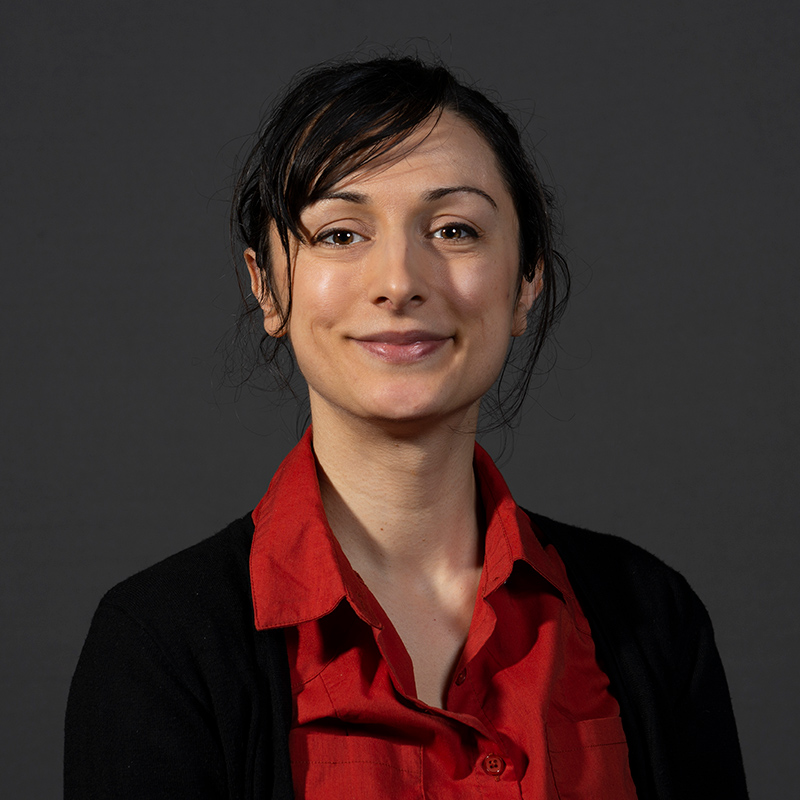
Dr. Olga Plakhotnik is a Researcher at the Chair for Ukrainian Cultural Studies , Institute for Slavic Studies , University of Greifswald . She previously held postdoctoral and research positions at the University of Alberta and National Aerospace University , with a Ph.D. in Sociology (2019) from the Open University (UK) . Education : Ph.D. in Sociology (2019), Open University (UK) MA in Sociology and Cultural Studies (2007), European Humanities University (Lithuania) Candidate of Sciences in Social Philosophy (2004), National Aerospace University (Ukraine) MA in General Psychology (1991), Kharkiv National University (Ukraine) Her research interests focus on gender studies , queer theory , and post-Soviet political sociology , particularly analyzing sexual citizenship , feminist protest discourses , and decolonial frameworks in Ukraine. Recent publications interrogate transphobia in militarized spaces , racial politics during war , and undisciplined queer knowledge production . She employs critical pedagogy and discourse analysis to challenge epistemic hierarchies in academia and activism. Her work with Feminist Critique journal and contributions to LGBT+ educational programs in Eastern Europe highlight her commitment to gender equity and epistemic resistance .
Christina Zetterlund is an Associate Professor in the Department of Design at Linnaeus University's Faculty of Arts and Humanities. Her academic work focuses on craft and design history through grassroots perspectives that challenge established power structures and institutional narratives. She has developed significant place-based research approaches centered on Småland and Sápmi regions, exploring alternative design histories that diverge from traditional academic frameworks. Zetterlund's research interests span craft history, design history, place-based perspectives, grassroots histories, Nordic Romani history, and innovative curatorial practices. Her work emphasizes collaborative knowledge production, often developed together with communities, organizations, and various contexts. She investigates how design and craft practices intersect with social conditions, class perspectives, and regional identities, particularly through her extensive work documenting Småland's glassworker traditions and her research on Roma jeweler Rosa Taikon. Her recent publications and projects demonstrate a consistent focus on alternative design histories and critical curatorial approaches. The articles reveal strong thematic connections around challenging homogenized design narratives, exploring regional design traditions, and examining the political dimensions of craft and design. Her work frequently addresses issues of representation, power structures in design history, and the relationship between past, present, and future in design practices. 2020 Cultural Award for the Kronoberg region (for 'During the Lunch Break: Conversations on Friggers and the Conditions of Making') Zetterlund actively engages in collaborative research and curatorial projects that bridge academic work with community practice. Her current initiatives include the '(Re-)Thinking Curating Design and Craft' seminar series with Magnus Ericsson, exploring alternative approaches to curating design and craftsmanship with Swedish and international cultural creators. She has also led significant collaborative projects with Småland's civil society to explore how place-based design museums could embrace multiple perspectives and diverse practices. Her work with the Design Archive in Nybro through the '(Re-)learning the Archive' project (2021-2023) exemplifies her commitment to developing future-oriented, community-engaged design practices that connect historical understanding with contemporary challenges in rural development.
Susan Forde is Professor of Media and Journalism at Griffith University's School of Humanities, Languages and Social Science in Brisbane, Australia. She served as Director of the Griffith Centre for Social and Cultural Research from 2016-2024 and has held academic positions at Griffith University since 2012. Her work focuses on community and independent media forms within democratic systems. PhD in Journalism, University of Queensland (1998) Professor Forde specializes in community, grassroots and alternative media and journalism forms. Her research examines the role of independent media in democratic systems, with particular focus on environmental journalism, Indigenous broadcasting, and ethnic community media. She has conducted extensive research on media policy, journalistic practices, and the intersection of media with social justice issues. Her work often explores how community media can provide alternative perspectives to mainstream narratives, particularly regarding climate crisis and Indigenous rights. Her recent publications reveal a strong focus on the evolving landscape of community media in the digital age, with particular attention to Indigenous broadcasting, environmental journalism, and the challenges facing diverse journalists online. Her research demonstrates how alternative media forms are adapting to digital platforms while maintaining their community-focused missions, especially in areas like climate activism and Indigenous storytelling. Editorial Advisory Board, Griffith Review (literary journal) Editorial Board, The Conversation (Australia) Professor Forde has led research projects funded by the Australian Research Council, National Indigenous Australians Agency, and UNESCO. She has supervised graduate students in media and journalism studies and frequently collaborates on interdisciplinary research addressing media's role in social and environmental issues. She co-founded the Journal of Alternative and Community Media with Professor Chris Atton, establishing an important scholarly platform for research in this field. Her work bridges academic research and public engagement, with regular contributions to public forums and speaking engagements at events like the Brisbane Writers' Festival.
Kathleen Vaughan, PhD, MFA, is a Professor of Art Education at Concordia University's Faculty of Fine Arts, where she serves as Undergraduate Program Director for Art Education and Coordinator of the Community Art Education (BFA Major) program. She holds a Tier 1 Concordia University Research Chair in Art + Education for Sustainable and Just Futures (2021-2026) and previously held a Tier 2 Research Chair in Socially Engaged Art and Public Pedagogies (2016-2021). As an active member of the Royal Society of Canada's College, she directs Studio Re-Imagine and leads interdisciplinary research projects including Learning With the St. Lawrence and The Future is Wool. Her educational background includes a PhD in Education from York University (Toronto), where her multimodal dissertation earned four academic awards, an MFA in Studio Arts from Concordia University, a diploma from Ontario College of Art, and a BA in English and Art History from the University of Toronto. Prior to joining Concordia in 2008, she taught at York University's Faculty of Education, Ontario College of Art and Design, and Concordia's Studio Arts department. Vaughan's research centers on socially engaged art practices, public pedagogies, and place-based inquiry, with particular focus on walking and mapping methodologies, textile practices, and environmental justice. She employs research-creation approaches that integrate studio-based, collaborative, and community-engaged methods, often working with urban forests, the St. Lawrence River, and cross-cultural contexts including Montreal, Toronto, Iceland, and Latvia. Her work bridges visual arts, environmental studies, and social justice through projects like Nel mezzo del cammin textile mapping series and community initiatives in Pointe-St-Charles. Her research output demonstrates consistent exploration of walking as methodology, textile mapping, urban ecologies, and community engagement across diverse contexts. Key thematic threads include human-animal relationships (particularly with dogs), sustainable material practices (especially wool), and decolonizing approaches to community art. The publications reveal evolving methodological sophistication in blending artistic practice with scholarly inquiry, particularly through multimodal dissertation formats and interdisciplinary collaborations. Concordia University Research Chair in Art + Education for Sustainable and Just Futures (Tier 1, 2021-26) Concordia University Research Chair in Socially Engaged Art and Public Pedagogies (Tier 2, 2016-21) Faculty of Fine Arts Distinguished Teaching Award (2016) Curriculum Innovation Funding (2014, 2015, 2016) Four international academic awards for PhD dissertation innovation Vaughan has supervised numerous PhD and MA theses in Art Education, focusing on community art, research-creation, and socially engaged practices. Her major research grants include SSHRC funding for Learning With the St. Lawrence (2019-2024) and ongoing projects through Studio Re-Imagine. She teaches graduate and undergraduate courses in community art education, socially engaged art, and museum education, often linking classroom learning to Montreal community settings through experiential initiatives like The Right to the City course in Pointe-St-Charles. As co-director of Studio Re-Imagine, she leads collaborative projects exploring socially engaged art's role in public pedagogies. She is an active member of Concordia's Textiles and Materiality cluster within Milieux Institute for Arts, Culture and Technology, and the Centre for Oral History and Digital Storytelling (COHDS). Her bi-annual Iceland Field School, hosted at the Icelandic Textile Centre in Blönduós, connects textile practices with environmental sustainability research.
Dr. Christoph Lange is a researcher at the Department of Social and Cultural Anthropology, University of Cologne, specializing in human-animal relations, Mediterranean critical zones, and the cultural politics of horse breeding. He contributes to the MESH (Multidisciplinary Environmental Studies in the Humanities) initiative and works within the Global South Study Center Cologne (GSSC). Current affiliation: University of Cologne Department: Social and Cultural Anthropology Research networks: MESH, GSSC His research explores: Interconnectedness of Arabian horse breeding networks Strategic tribalism in Egyptian electoral politics Decolonizing animal certification systems Interspecies performance in show horse culture Environmental change analysis in Zimbabwean national parks Mediterranean as anthropological laboratory Recent publications examine Mediterranean environmental crises, Arabian horse knowledge production, and the politics of animal purity. While no scientific awards are currently documented, his work bridges ethnographic fieldwork with multispecies theory across three continents.
Dr Myfanwy Taylor serves as Lecturer (Teaching) in Urban Economies and Planning at University College London's Bartlett School of Planning. Her work bridges urban planning, economic geography, and community activism with a focus on democratizing local economies. Affiliated with UCL's Economic Geography Network and multiple international research collectives, she maintains active roles in policy development through the London Assembly and UK Government forums. Education: Master of Science in Urban Studies, University College London (2010) Master of Physics, University of Oxford (2003) Graduate Diploma in Economics, Birkbeck, University of London Associate Fellow, Higher Education Academy Taylor's research centers on community economies, anti-displacement struggles, and the social value of traditional retail markets. She examines how everyday economic practices challenge neoliberal urban development through grounded studies of London's markets and commercial spaces. Her work integrates diverse economies theory with critical urban studies to develop planning frameworks for economic democracy and just transitions. Current projects explore bottom-up economic planning in Tottenham and County Durham through collaborations with grassroots organizations. Analysis of her 15 most recent publications reveals strong thematic continuity in urban economic justice, with increasing emphasis on place-based just transitions (2023-2024) and methodological innovation in studying affective dimensions of 'left-behind places'. Her interdisciplinary approach spans economic geography, urban sociology, and planning theory, consistently prioritizing community-engaged methodologies. Key awards: Royal Town Planning Institute Sir Peter Hall Award for Wider Engagement (2016) Nomination for UCL Provost’s Awards for Public Engagement (2015) Taylor actively supervises doctoral research including Sarah Goldzweig's work on threatened retail spaces in London. Her grant portfolio features Leverhulme Trust funding for 'Economic Development from Below' research and ESRC support for the Markets4People project. She collaborates with community organizations like the Wards Corner Community Benefit Society and Seven Sisters Development Trust, translating academic work into practical tools for grassroots economic development. Her research cluster 'Everyday Economies' serves as an intellectual hub connecting scholars, policymakers, and activists. Through the Community Economies Research Network and Small Business Anti-Displacement Network, she fosters transnational knowledge exchange on alternative economic practices. Current initiatives focus on developing democratic economic planning frameworks for urban contexts facing commercial gentrification pressures.
Wandia Njoya serves as Associate Professor of Literature at Daystar University, Kenya, where she previously led the Department of Language and Performing Arts. Currently a fellow at the University of Bayreuth's Africa Multiple Cluster of Excellence, she researches education policy anthropology in African contexts. Her scholarly work examines intersections of arts, humanities, religion, and education policy through decolonial lenses. She investigates lived experiences of Kenyan educators and systemic impacts of globalism/colonialism on post-independence education, emphasizing narrative approaches to uncover hidden agendas behind educational frameworks. Publication analysis reveals consistent focus on religious influences in public education, curriculum decolonization, and knowledge production. Her work bridges academic rigor and public discourse, frequently employing storytelling to analyze educational experiences across Kenyan historical and cultural landscapes. Scientific Awards: Three consecutive annual awards for best blog on social issues and active citizenship As former department head and co-convener of Bayreuth's 2022 Education Alibi conference, Njoya actively shapes education reform discourse. She mentors emerging scholars while developing interdisciplinary platforms for Kenyan/international researchers to generate innovative educational perspectives accessible to public stakeholders.
Dr. Stephen Muthoka Mutie is a Lecturer and researcher at Kenyatta University, Kenya, specializing in gender studies and literary theory. He serves as Chief Editor of the Editon Consortium Journal of Literature and Linguistic Studies (ISSN: 2663-9297) and peer reviews for journals including Postcolonial Text and Kabarak Journal of Research & Innovation . His research critically examines feminist knowledge production in Africa, focusing on intersections between gender studies, feminist scholarship, and political representation. Current projects investigate femicide in Kenya and Wangari Maathai's contributions to redefining African feminist thought. He advocates for a homegrown feminist ethos that centers African perspectives like "Wanjiku," challenges epistemological dependency, and preserves cultural norms while protecting women. Publications from 2017-2019 analyze postcolonial Kenyan literature, political writings, and identity construction, revealing consistent themes: decolonizing feminist frameworks, critiquing elite feminism's failures, and examining power dynamics in East African political narratives. His work spans literary criticism, political science, and gender studies with emphasis on African contexts. Dr. Mutie actively mentors graduate students in gender scoping reviews and methodology. He has participated in international conferences including CODESRIA's Gender Institute in Dakar (2018) and the University of Ghana's forum on gender and justice in pluralistic societies (2019), demonstrating commitment to advancing gender equity across Africa.
Julie Berrett-Abebe is an Assistant Professor at the Tan Chingfen Graduate School of Nursing at UMass Chan Medical School, with a clinical appointment at Mass General Hospital in Boston. Her interdisciplinary work bridges social work, nursing, and healthcare delivery systems to address complex patient needs across cancer survivorship, mental health, and health disparities. Education: BA in Psychology & English from University of Notre Dame MA in Pastoral Ministry from Boston College MSW in Social Work from Boston College PhD in Philosophy in Social Work from Simmons College Dr. Berrett-Abebe's research program demonstrates a consistent trajectory from clinical practice to systems-level healthcare integration. Her early work focused on fear of cancer recurrence and its impact on survivorship care, evolving into broader investigations of social determinants of health including food insecurity among individuals with serious mental illness. Recent publications reveal an expanding emphasis on antiracist frameworks in social work education and practice, alongside continued work in interprofessional supervision models. Her publication history shows steady productivity across high-impact journals in social work, oncology, and healthcare policy. Analysis of her 13 publications from 2015-2025 reveals three interconnected research strands: cancer survivorship (particularly fear of recurrence and social needs assessment), mental health integration in primary care, and antiracist approaches to social work education. The interdisciplinary nature of her work is evident through collaborations with oncologists, nurses, psychologists, and primary care physicians across multiple institutions. Key Contributions: Pioneering research on fear of cancer recurrence and its clinical implications Development of interprofessional training models for healthcare providers Advocacy for addressing social determinants of health in clinical practice Leadership in integrating social work perspectives into cancer survivorship care Advancement of antiracist frameworks in social work education Dr. Berrett-Abebe actively collaborates with interdisciplinary teams across healthcare settings, with particular focus on improving care for cancer survivors, individuals with serious mental illness, and older adults. Her work often employs mixed-methods approaches that bridge clinical practice with social work theory to develop practical interventions for complex healthcare challenges.
Abraham DeLeon is a Professor of Social Foundations in the Department of Educational Leadership and Policy Studies at the University of Texas at San Antonio. His interdisciplinary work bridges educational theory, critical pedagogy, and radical social critique. Degrees: B.S. in Social Studies Education (New Mexico State University), M.A. in History (University of Connecticut), Ph.D. in Curriculum & Instruction (University of Connecticut) Research Interests: DeLeon's scholarship focuses on critical pedagogy, cultural studies, anarchist theory, and utopian inquiries. His work interrogates neoliberalism's impact on education through archival research, French social theory, and nonhuman animal studies. Article Trends: His publications explore intersections of technology, space, and power; utopian visions for post-neoliberal education; and anarchist methodologies in curriculum studies. Recurring themes include affect theory, decolonial frameworks, and imaginative resistance. Scientific Awards: 2011 Critics Choice Award (American Educational Studies Association) Additional Contributions: DeLeon advocates for reimagining educational spaces through movement and multiplicity, challenging standardized knowledge production while engaging with mystical literature and speculative futures.
Dr. Iris Berger serves as Associate Professor of Teaching in the Department of Language and Literacy Education at the University of British Columbia's Faculty of Education, with significant affiliation to the Centre for Early Childhood Education & Research (CECER). Her work bridges academic scholarship and practical application in early childhood education policy, leadership development, and outdoor learning environments across Canadian contexts. Her research program centers on reimagining educational leadership through narrative and storytelling as political action, exploring how place-based pedagogies can address ethical and political dimensions of childhood. She investigates the complexities of outdoor education, policy implementation, and pedagogical documentation while challenging traditional binaries in early childhood practice. Her approach emphasizes knowledge as dynamic, situated, and incomplete, fostering intellectual 'restlessness' among students and practitioners. Analysis of her recent publications reveals a strong trajectory toward place-conscious and outdoor-focused early childhood education, increasingly incorporating posthumanist perspectives, Indigenous knowledge systems, and critical examinations of identity. Her work consistently engages with material-discursive practices and more-than-human pedagogies, demonstrating growing international collaboration and theoretical sophistication while maintaining practical relevance for educators. Dr. Berger's scholarly contributions have been recognized through significant awards: Peter Wall Institute for Advanced Studies’ Virtual Roundtables Award (2020-2021) UBC Sustainability Office Grant (2015) Dissertation Award from the Canadian Philosophy of Education Society (2014) She actively secures research funding and leads collaborative projects, notably the 'Advancing Early Childhood Education Outdoors Now' initiative with researchers from Population and Public Health, Curriculum and Pedagogy, and Camosun College. Her grant work focuses on translating research into practice through community partnerships and policy engagement, particularly regarding outdoor learning environments during and beyond the pandemic. As a core member of UBC's Centre for Early Childhood Education & Research, Dr. Berger contributes to interdisciplinary teams examining early childhood policy implementation, pedagogical innovation, and outdoor programming. Her collaborative networks extend to Indigenous communities, healthcare professionals, and international scholars, creating integrated approaches to complex challenges in early childhood education.
Brooke Schreiber is an Associate Professor in the Department of English at Baruch College's Weissman School of Arts and Sciences, City University of New York (CUNY). Her academic appointments include coordinating the SWUFE joint degree program and serving as Associate Writing Director for the English Department Writing Program. She holds a Ph.D. in Applied Linguistics from Pennsylvania State University, an M.A. in English Language and Linguistics from the University of New Hampshire, and a B.A. in Sociology from Stanford University. Schreiber's research centers on linguistic justice, transnational writing education, and Global Englishes pedagogy. She investigates multilingual writing practices, translingual approaches, and the sociopolitical dimensions of language teaching. Her work actively challenges linguistic hierarchies and native-speaker biases through innovative pedagogical frameworks. Key research domains include: Transnational composition ethnography and joint degree programs Digital translanguaging and online intercultural exchanges Writing program administration for multilingual writers COIL (Collaborative Online International Learning) pedagogies Her publication portfolio demonstrates a consistent focus on linguistic diversity in writing education, with recent work emphasizing resistance to linguistic nationalism, ethical transnational partnerships, and decolonizing language pedagogies. Methodologically, she employs qualitative approaches including ethnography, discourse analysis, and action research across global contexts. Schreiber has received numerous honors including the Barbara Gluck Teaching Excellence Award (2022) and multiple PSC-CUNY research grants. Notable awards: Elbow Symposium for Teaching and Writing (2018) Melikian Scholar Award (2014) Gil Watz Outstanding Graduate Student Award (2014) Faculty Fellowship Publication Program (2017) She has secured significant research funding for projects including: Disrupting native-speakerism (PSC-CUNY, $5,973) Chinese-American joint degree programs (Lang Fellowship, $6,954) COIL impact studies (PSC-CUNY, $5,990) While no specific lab is mentioned, she collaborates internationally with scholars in Sri Lanka, Lebanon, China, and Serbia through COIL initiatives and transnational research teams.
Professor Jenny Pickerill is Chair in Environmental Geography at the University of Sheffield , School of Geography and Planning. Her work bridges environmental justice , anti-capitalist alternatives , and Indigenous geographies through empirical research with eco-communities, anarchist collectives, and environmental campaigns. PhD in Geography, University of Newcastle Upon Tyne MSc in Geographical Information Systems, University of Edinburgh Worked at Curtin University and University of Leicester before Sheffield Research explores: Environmental Activism - Digital protest (2003), framing of wilderness (2008), everyday environmentalism (2024) Difference and Decolonization - Indigenous-environmentalist relations (2019), research ethics (2012), anti-colonial frameworks Experimental Solutions - Affordable eco-housing (2016), Tiny House Movement (2022), emotional sustainability (2009) Teaching covers environmental geography , critical geopolitics , and fieldwork in eco-communities. Supervises PhD topics on sustainability transitions, collective action, and participatory methodologies.
Lilliana Patricia Saldaña is an Associate Professor in the Department of Mexican American Studies at the University of Texas at San Antonio's College of Education and Human Development. Rooted in Chicanx Studies, Chicana feminist thought, Indigenous epistemologies, and decolonial theories, her work focuses on teacher identity formation, epistemic struggles in education, and decolonial practices in schools and public spaces. Co-Director of the MAS Teachers’ Academy Board member of Esperanza Peace & Justice Center and Mexican American Civil Rights Institute (MACRI) Her research emphasizes: Decolonial educational frameworks Chicana feminist methodologies Mexican American foodways as resistance practices Community-based research approaches Alternative digital archiving Historical legacies in education justice Recent publications and projects analyze MAS implementation challenges, Chicana/x/o music as pedagogy, and Indigenous food histories. Awards include the 2021 UTSA President's Distinguished Diversity Award. She has secured grants from the Andrew W. Mellon Foundation and Humanities Texas. $100,000 Andrew W. Mellon Foundation Grant Humanities Texas Grant for Indigenous Histories Smithsonian Latino Center Grant for Ethnic Studies Saldaña specializes in creating transformative educational spaces through her teaching of: Introduction to Chicanx Studies Latinx Cultural Expressions Community-Based Research Methods
Siv B. Lie is an Associate Professor of Ethnomusicology at the University of Maryland's School of Music. She holds affiliate appointments in the Department of Anthropology, School of Theater, Dance, and Performance Studies, and the Center for Global Migration Studies. Her research explores intersections between Romani (Gypsy) cultural production, race, and politics. Key areas include: Ethnoracial identity in French jazz Genocide commemoration practices Language and semiotics in music Cultural commodification dynamics Recent publications examine: Jazz Manouche's role in negotiating ethnoracial belonging Music pedagogy as resistance against color-blind policies Sonic qualia in racialized performance contexts Historical memory through musical commemoration Awarded the 2022 William A. Douglass Prize in Europeanist Anthropology, her work appears in journals like Ethnomusicology , Jazz and Culture , and European History Quarterly . She co-founded NYU's Initiative for Romani Music and curates RomArchive's music section.