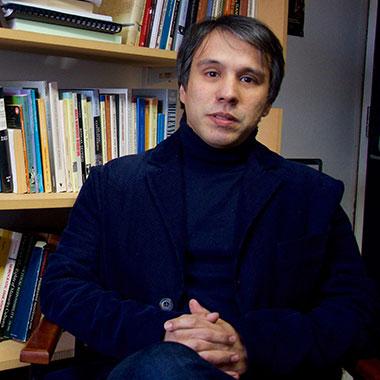
Francisco Carballo is a Lecturer in the Politics and International Relations department at Goldsmiths, University of London , where he has been since 2012. He serves as Deputy Director of The Centre for Postcolonial Studies , collaborating with scholars like Walter Mignolo on decolonial politics. His interdisciplinary work bridges sociology, political theory, and cultural studies, informed by his prior teaching at the National Autonomous University of Mexico. Research Interests : Latin American politics from below (Argentina, Bolivia, Mexico) Decolonial/postcolonial theory Rough politics (blurring boundaries of activism, violence, lawfulness) Teaching : Year 1: Politics of Other Cultures Year 2: Rough Politics Year 3: Rethinking Latin America: Power, Politics and Ideas Postgraduate: Latin American Dictionary: Art and Politics Supervision Areas : Latin American Politics Modernity/Coloniality Decolonisation Development and De-Growth Radical Politics Global Social Theory Violence Decolonial Aesthetics Current Political-Intellectual Debates in Latin America Political Ethnography Documentary Filmmaking in the Global South Public Engagement : Regularly contributes to mass media platforms for political-intellectual debates. Publications span postcolonial politics, exclusion theory, pandemic responses, and doctoral work on normativity. His research emphasizes cultural reinvention of political language through arts and grassroots movements.
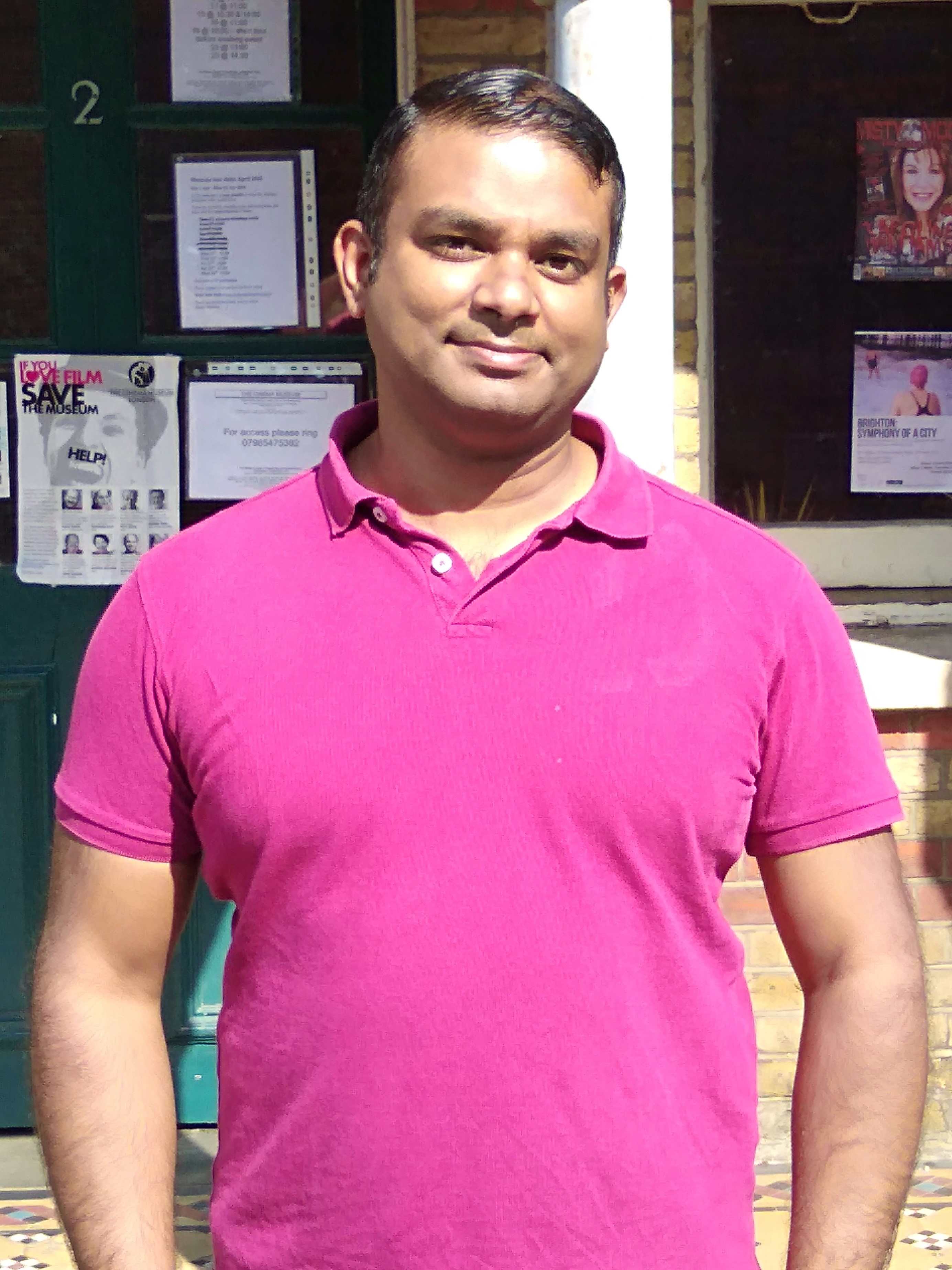
Saba Joshi is a Lecturer in the Department of Politics at the University of York, where she contributes to research and teaching in political science, gender studies, and international development. Her work is centered on gender, land dispossession, and resistance in South and Southeast Asia. Education: PhD in International Relations and Political Science, Graduate Institute of International and Development Studies (2020) Masters in International Studies (Politics), Graduate Institute of International and Development Studies (2012) Master's in Politics and International Relations, Jawaharlal Nehru University (2009) BA in History (Honours), St Stephen's College, University of Delhi (2007) Her research interests lie at the intersection of feminist political ecology, legal geographies, and agrarian transformation, with a focus on women's resistance to land grabbing, gendered impacts of climate change, and decolonial research practices. She employs qualitative, ethnographic, and feminist methodologies to examine how marginalized communities, particularly women, navigate dispossession and assert agency. The trends in her recent publications reveal a strong thematic consistency: gendered resistance to land dispossession, feminist legal geographies, and the contradictions of international development governance. Her work critically engages with how gender expertise is institutionalized (or marginalized) in food security and land governance policies, especially in Cambodia and India. She also contributes to methodological debates on decolonizing research and feminist epistemologies. Scientific Awards: Enloe Award (2022) Saba Joshi is the Principal Investigator on multiple funded research projects, including those supported by The British Academy, focusing on gender, agriculture, climate change, and land-use change in South and Southeast Asia. She actively supervises PhD students and collaborates with international scholars. Her work bridges academic research with activism, emphasizing participatory and ethical research practices. She is actively involved in academic networks and has presented her research in seminars, workshops, and international conferences, contributing to global dialogues on land justice, feminist theory, and decolonial scholarship.
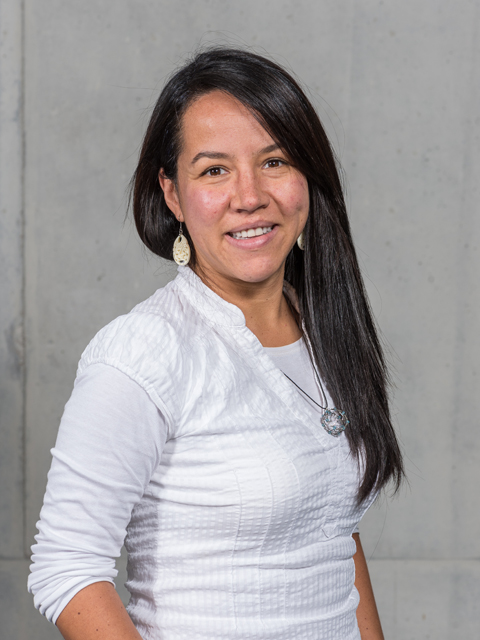
Clare Hall is a Senior Lecturer in Performing Arts at the School of Curriculum Teaching & Inclusive Education, Monash University. Her interdisciplinary research focuses on social justice, equity, and cultural diversity through arts engagements, particularly in music and sociology. She holds a PhD and a BA in Music Performance from the Victorian College of the Arts. Her work addresses gender, class, ethnicity, and neurodiversity in education and the arts, supported by grants from the Australian Research Council (ARC). Key Projects: Singing Indigenous Languages Collective (SILC): Revitalizing First Nations languages through song Neurocomplexity Collaboratory: Fostering neurodiversity in education Decolonising and Indigenising Music Education (Routledge, 2024) Research Interests: Intersectionality in music education Queer and feminist methodologies Neurodiversity in teaching professions Indigenous language revitalization Awards: Award for Doctoral Research in Education (2013) Mollie Holman Doctoral Medal (2013) Teaching Commitment: Courses including EDF5860, EDF3065, and EDF2078, emphasizing transdisciplinary arts pedagogies.
Giorgia Dona is Professor at the University of East London's Business and Law school, specializing in forced migration, refugee studies, and decolonial approaches to displacement. Her research examines asylum systems in Italy, France and the UK, digital equity in humanitarian contexts, and psychosocial impacts on displaced youth. Recent work explores carceral aspects of asylum accommodation, mental health outcomes for young migrants in Iceland, and the emotional labor of digital service provision. She critically engages with technologies of border governance while advocating for ethical participatory research with displaced communities. Her publications demonstrate sustained focus on child protection frameworks, diaspora knowledge production, and decolonization of refugee paradigms through collaborative methodologies.
Allan Pang is a Researcher in the Department of History within the School of Humanities at the University of Bristol. His work focuses on transregional histories connecting Hong Kong, Chinese diaspora communities, and Southeast Asia. As a historian with expertise in decolonization, cultural policies, and history education, Dr. Pang contributes significantly to understanding the complex interplay between colonialism, Chinese identities, and postcolonial nation-building across East and Southeast Asia. Education: BA, University of Hong Kong MPhil, University of Hong Kong PhD, University of Cambridge Dr. Pang's research engages with themes such as history education, popular music, and decolonisation from a transregional perspective across East and Southeast Asia. His current book project examines the transmission of historical knowledge in Hong Kong, Malaya/Malaysia, and Singapore from the 1950s to the 1990s, analyzing how Cold War politics, decolonization processes, and Chinese politics shaped understandings of 'Chineseness' through educational systems and public historical narratives. He also investigates transregional Chinese popular music across Hong Kong and Southeast Asia since the 1950s, examining how musicians and cultural producers exerted transregional agency through the music industry amidst political transitions, with particular attention to the works of composer Joseph Koo and lyricist James Wong from Hong Kong, Xinyao from Singapore, and campus folk songs from Taiwan. Dr. Pang's publications demonstrate a consistent focus on transregional connections between Hong Kong, Southeast Asia, and Chinese diaspora communities. His work bridges historical analysis with cultural studies, examining how historical narratives are constructed and transmitted through educational systems, popular culture, and public spaces. A notable trend in his recent scholarship is the examination of how Cold War politics shaped cultural production and historical consciousness across Asian contexts, particularly in relation to Chinese identities. His research increasingly incorporates digital humanities approaches, as evidenced by his public education campaign 'Malaysia Unbound' which features a digital interactive map of transregional connections. Scientific Awards: Shortlisted for the Best Article on Global Hong Kong Studies 2023, ICAS (International Convention of Asia Scholars) Book Prize for 'Stamping 'Imagination and Sensibility': Objects, Culture, and Governance in Late Colonial Hong Kong' Associate Fellow of the Higher Education Academy Dr. Pang is actively involved in teaching and public engagement. In 2024-25, he is delivering lectures and seminars for a second-year unit 'Asia in Global Perspective' (team taught). Before arriving at Bristol, he taught courses on empires in maritime East Asia, twentieth-century world history, Hong Kong history, and historiography. His public outreach includes working with Imagined Malaysia, an NGO in Malaysia, on the public education campaign 'Malaysia Unbound: Transregional Histories through Documents,' which explores Malaysia's transregional connections through weekly infographics and a digital interactive map. He also contributes to public initiatives at the Hong Kong History Centre through public talks and online lecture series.
Professor Michaela Benson is Professor of Public Sociology at Lancaster University's School of Social Sciences. She is internationally recognised for her leadership in Migration Studies and Urban Sociology, with her work critically examining Brexit and migration, lifestyle migration, class, space and place, and self-build housing. Since 2022 she also serves as Chief Executive of The Sociological Review , a charitable foundation advancing public sociology. Education & Recognition: Michaela holds a PhD and was elected Fellow of the Academy of Social Sciences (FAcSS) in 2025. Research Interests: Her research agenda centres on the intersections of migration, citizenship, and urban life, with a particular focus on how these phenomena are reshaped by Brexit. She explores lifestyle migration as a lens on class, coloniality, and identity, and interrogates the meanings of home and housing through self-build practices. Her work is marked by a commitment to reflexive, empirical methodologies and public engagement. Scholarly Output: Across more than 60 publications, her recent articles span critiques of post-Brexit bordering practices, the colonial legacies shaping UK migration regimes, and innovative pedagogies in sociology. A consistent theme is the biopolitical and geopolitical dimensions of migration governance, analysed through ethnographic and multi-sensory methods. Awards & Fellowships: Fellow of the Academy of Social Sciences (FAcSS) – 2025 British Academy Mid-Career Fellowship – 2020-2021 Research Funding & Projects: Brexit, citizens’ rights and British Citizens in the EU-27 5 years on – ESRC consultancy (2025) Rebordering Britain and Britons after Brexit (MIGZEN) – ESRC (2021-2024) BrExpats: Freedom of Movement, Citizenship and Brexit in the lives of Britons resident in the European Union – ESRC (2017-2019) PhD Supervision & Research Groups: She welcomes doctoral researchers working on migration and citizenship, Brexit, class, home and housing, and urban sociology, especially those employing qualitative or ethnographic methods. She is affiliated with the Centre for Alternatives to Social and Economic Inequalities and the Centre for Health Futures .
Dr. Ashvin Immanuel Devasundaram is a Reader in Global Cinemas at Queen Mary University of London, specializing in World Cinemas with a focus on New Independent Indian Cinema, emerging cinemas from South Asia, the Middle East, Latin America, and Africa. He actively engages in transdisciplinary and intercultural exploration, connecting cinematic representations with themes such as postcolonialism, decolonisation, LGBTQ+ issues, urban violence, and cultural heritage. Current Research: Principal Investigator for the AHRC-funded India-UK project 'Connecting Creative Industries and Cultural Heritage: India-UK Film Festival Federation, Youth Curation and Community Co-creation' (2024-2027). Leadership Roles: Associate Director of the UK Asian Film Festival (UKAFF) and founder of its Edinburgh edition (2016). Key Themes: Intersections of cinema with philosophy, politics, migration, postmodernism, and urban transformations across India, South Africa, Bhutan, Singapore, and Brazil. His work has led to the establishment of an international interdisciplinary research network on global urban violence and its impact on marginalized communities, alongside ongoing editorial roles in academic series and journals. He mentors through the B-MEntor scheme and integrates philosophical themes into his music with the transglobal neo-progressive rock project The Multitude. Scientific Awards: Edinburgh University Literary Award (2012), QMUL Community Engagement Prize (2018).
Dr Carolina Escobar-Tello is a Senior Lecturer and Postgraduate Year Tutor in the Design School at Loughborough University, part of the School of Design and Creative Arts. She holds a PhD in 'Design for Happiness' from Loughborough University (2010) and has professional experience across government and industry, including DEFRA and UNICEF. Her research focuses on sustainability, happiness, and wellbeing, with a particular emphasis on social innovation and systemic approaches to design. Education: MSc Sustainable Product Design (Distinction, Bournemouth University), BA (Hons) Industrial Design (Universidad de Los Andes, Colombia). She co-leads the Design Research Society’s Sustainability Special Interest Group (SustainabilitySIG) and founded Riant by Design, a company promoting sustainable and happier lifestyles through design frameworks. In 2013, she won the HE Social Entrepreneurship Award for her 'Design for Happiness' toolkit. Her work bridges academia and industry, emphasizing participatory methods and cultural contexts in design. Research areas include decolonial design, healthcare systems, art therapy techniques for wellbeing, and service design for marginalized communities. She currently supervises four PhD students exploring sustainable societies and social innovation. Grants & Projects: Funded research on textile artisan communities, healthcare systems, and cultural contexts in service design. Labs/Teams: Co-leads SustainabilitySIG; collaborates with Riant by Design.
Dr. Justine Atkinson is a Lecturer in Media, Culture and Society at the University of Glasgow, specializing in Theatre, Film & Television Studies. She holds a PhD in film curation (2023) and is founder/director of Aya Films, a media education company. Her work focuses on collaborative curation, digital platforms (e.g., Curate-It app), and diversity in film distribution. She has collaborated with festivals like Edinburgh International Film Festival and SAFAR, and previously served as Festival Producer for Africa in Motion (2013–2019). Education: PhD in Film Curation, University of Glasgow (2023) Research interests include decolonisation in film festivals, digital curation practices, and media access equity. She teaches across four MSc programs at Glasgow and has guest-lectured internationally, including at South West University, Chongqing (2024). Her projects emphasize democratizing film knowledge through apps like Curate-It, designed to empower grassroots screenings. Her publications explore African audiovisual content distribution, pandemic-era media access, and festival curatorial equity. Grants and collaborations are centered on expanding inclusive film practices. She leads Aya Films' initiatives to bridge educational and industrial gaps in media sectors.
Spencer Swain is an Associate Professor in Social Sciences at York St John University, leading the School of Education, Languages and Psychology as its Research Lead and directing postgraduate taught programmes. He co-leads the Inclusion, Society and Education research group and serves as Associate Editor for the International Journal of the Sociology of Leisure . His research focuses on identity, migration, and inequality, particularly the British-Somali diaspora and educational disparities linked to class, decoloniality, and place. His work has influenced national/international policies (e.g., House of Lords, WHO) and is disseminated through journals, books, and media outlets like The Guardian and BBC Radio. He emphasizes anti-racist pedagogy, equitable teaching practices, and has received student nominations for inclusive practice awards. Research projects include examining barriers to higher education for coastal communities and service children, funded by NCOP, Office for Students, and others. He investigates leisure’s role in social justice, including goalball’s community value and grime music’s cultural significance. Professional roles include Secretary of the Leisure Studies Association, Race Equality Charter representative, and Decolonising the Curriculum coordinator. His teaching spans sociology, politics, and cultural studies, with a focus on gender, race, migration, and social justice. Key achievements include a four-star REF 2021 rating for research on British-Somali males’ experiences and contributions to anti-racist curriculum reform. He actively engages in public talks, media commentary, and interdisciplinary collaborations to bridge academic and community spheres.
Gillian Stokes is an Associate Professor of Inclusive Social Research at the Social Research Institute, UCL Institute of Education. Her work bridges health, social equity, and decolonisation in research, with a focus on systematic reviews and qualitative methods. Stokes also contributes to editorial roles as Editor of the Journal of Ethnic and Racial Studies and Associate Editor of Research for All. Doctor of Philosophy, University College London (2019) Master of Science, University of Kent (2008) Bachelor of Science, Middlesex University (2006) Her research spans systematic reviews , decolonisation , and AI's equity implications , addressing topics like cardiovascular risk communication, co-production in evidence synthesis, and the marginalisation of African/Caribbean communities. Recent publications highlight decolonial frameworks in research AI equity mental health disparities methodological innovations Scientific awards include Fellowships from the Royal Society of Medicine and Public Health, alongside multiple student excellence prizes. She mentors African and Caribbean youth in STEM and founded ACHWA (African and Caribbean Heritage Women Authors). Stokes supervises PhD research on sociological and public health topics and teaches qualitative methods, systematic reviews, and race/diversity courses. She serves on UCL's Academic Board and as Head of Staff Development.
Dr. Kerem Nisancioglu, a researcher at the Department of Politics and International Studies (SOAS University of London), contributes to critical international relations, postcolonial theory, and historical sociology. His work interrogates Eurocentrism, colonial legacies, and capitalism's geopolitical origins. Key research areas: International Relations, Decolonization, Historical Materialism, Critical Race Theory His scholarship spans 2013–2025 , focusing on: Decolonizing academic institutions ( Decolonising the University , 2018) Colonialism's role in capitalist development ( How The West Came to Rule , 2015) Racial dimensions of sovereignty ( Racial Sovereignty , 2019) Ottoman Empire's impact on global capitalism ( Combination as Foreign Policy , 2016) Student activism against university outsourcing ( Counter-Conduct in the University Factory , 2016)
Angela Viora is a Lecturer in European Languages at Monash University, Faculty of Arts, within the School of Languages, Literatures, Cultures and Linguistics. She specializes in Italian Studies, integrating language education with interdisciplinary research in performance, migration, and art. Her teaching spans Italian language, culture, and European studies, and she actively contributes to curriculum innovation, particularly in decolonizing language education. She is based in Melbourne, Australia, and holds a PhD from Monash University in Theatre and Performance. PhD in Theatre and Performance, Monash University (2019) MA in Visual and Performing Arts, Accademia Albertina di Belle Arti di Torino (2012) Academic Diploma (Hons) in Fine Arts and Art History, Accademia Albertina di Belle Arti di Torino (2007) Her research centers on performance studies, migration, embodiment, and space, with a strong emphasis on practice-as-research. She explores identity, belonging, and the socio-political dimensions of art through site-specific and socially engaged performances. Her creative work often addresses the Italian diaspora, domestic space during lockdowns, and the body as a political and emotional site. Her recent publications and artistic outputs show a consistent focus on interdisciplinary performance, pedagogical innovation, and migration narratives. The 2025 monograph The Ecology of the Performance Art Process synthesizes years of practice-led inquiry into fragmentation, union, and reconfiguration in art. Other works like The P.R.omised Land and B.O.D.Y. The Bureau of Domestic Yearning reflect on migration and domesticity through embodied performance. ACIS Publishing Grants Scheme Award (2024) Decolonising and Indigenising European Languages at Monash University: Professional Development of Educators (2024) LLCL Education Funding - Recruiting and retaining students in European Languages (2024) Angela Viora supervises PhD students and is an active researcher in multiple collaborative projects, including the PhotoVOICE initiative with Monash and the University of Padua. She is a member of the Brimbank Arts Advisory Committee and participates in working groups focused on student engagement and decolonizing curricula. Her artistic projects often involve community collaboration and public engagement, reflecting her commitment to socially responsive scholarship.
Rachel Johnson is a Lecturer in Film Studies at the School of Languages, Cultures and Societies, University of Leeds. Her research and teaching focus on film institutions, particularly film festivals, exhibition, curation, and cinephilia, with a strong commitment to decolonial and critical theoretical frameworks. She actively collaborates with local and international film organizations, including Leeds International Film Festival and Festival Films Femmes Afrique. Educational Background: PhD in Film Studies, University of Leeds MA in European Culture and Thought: Culture, University College London BA in English Literature and Italian, University of Leeds Her research explores cinematic justice, African cinemas, migration cinema, and Italian cinema through decolonial lenses such as pluriversality and the colonial matrix of power. She is particularly interested in how film institutions like festivals and archives value, share, and mobilize cinema, often challenging dominant hierarchies and canons. Her recent work emphasizes marginalized perspectives in cinephilia and co-curation as a decolonial practice. Her publications reveal a consistent trajectory in analyzing ideological structures within European A-list film festivals, especially regarding the representation of migration and Italian cinema. She has developed a method of ideology critique rooted in Lacanian and Žižekian theory, examining festival apparatuses, paratexts, and film texts to uncover power dynamics. Her work spans monographs, peer-reviewed articles, policy reports, and public writing, reflecting a commitment to both scholarly and public engagement. Scientific Contributions and Recognition: Author of Film Festivals, Ideology and Italian Art Cinema (Amsterdam University Press, 2023) Co-investigator on Canada Research Council-funded project Decolonizing Film Festival Research in a Post-Pandemic World Co-founder of the New Voices in Cinephilia network with Professor Stephanie Dennison Active member of NECS, BAFTSS, and IAMHIST Rachel Johnson supervises PhD students on topics including Pan-African film history, puzzle films, and decolonial cinema, and mentors practice-based research in videographic criticism and podcast documentaries. She is deeply involved in public film culture as co-director of Leeds Cineforum and collaborator with Hyde Park Picture House. Her grants and collaborative projects reflect a strong commitment to social justice, institutional critique, and empowering marginalized voices in global film culture. Research Labs and Teams: Centre for World Cinemas and Digital Cultures, University of Leeds New Voices in Cinephilia network (co-founded) Italian Cinemas/Italian Histories project (collaborator) Practice Research SIG, BAFTSS
Dr. Billian Otundo is a postdoctoral researcher at the Cluster of Excellence Africa Multiple and habilitation candidate at the Department of English Linguistics, University of Bayreuth (Germany). She investigates multilingual African learning spaces through translanguaging frameworks, focusing on the intersection of language, identity, and digital innovations in Kenya. Her research integrates quantitative and qualitative methodologies with tools like SPSS, R, Praat, and MAXQDA. Co-convener of Postdoctoral Working Groups at Africa Multiple Collaborating with University of Cologne’s Phonetic Laboratory on Kenyan English and Kiswahili intonation Research Interests: Sociolinguistics, World Englishes, Translanguaging, Code-switching, Sociophonetics, Decolonisation of Linguistics Curriculum, and Educational Linguistics. She examines language attitudes, variation in intonation, and inclusion policies in African education systems. Scientific Awards: DFG Postdoctoral Grant (2022) TWAS-DFG Cooperation Grant (2021) NWO-WOTRO Funding (2018) BIGSAS Doctoral Fellowship (2011-2015) Dr. Otundo actively contributes to academic service as an editorial board member of the Journal of Linguistics, Literary and Communication Studies and the Africa Multiple publication series. She founded the Philippines-Kenya Education Network and consults on inclusive policy design for Kenya’s Bungoma County Government.