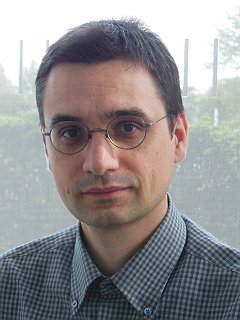
Prof. Dr. Jana Giceva is a Professor for Database Systems at the TUM School of Computation, Information and Technology since 2020. Her research bridges database systems with modern computer architecture, focusing on hardware-aware data processing, operating system integration, and efficient execution of big data workloads. She previously held roles at Imperial College London, Microsoft Research, and Oracle Labs. Education: PhD in Computer Science from ETH Zurich (2017) Awards: ERC Starting Grant (2024), ETH Medal (2018), VMware Early Career Faculty Award (2019), Google PhD Fellowship (2014) Her work explores database/operating system co-design , chiplet-aware scheduling , and disaggregated systems programming , with publications covering query optimization, graph data structures, and hardware acceleration. Collaborations with institutions like Imperial College London and ETH Zurich highlight her cross-disciplinary impact. Key Research Themes: Hardware-Software Integration High-Performance Query Execution Asynchronous I/O Optimization Adaptive Runtime Systems
Jan Christiansen is a Professor in the Department of Information and Communication at Flensburg University of Applied Sciences. He specializes in Programming Languages and Programming Theory, teaching in the Applied Computer Science program. His research focuses on functional logic programming, probabilistic programming, formal verification, and compiler design. His key research areas include the integration of functional logic programming into Haskell, probabilistic programming semantics, and formal methods for verifying Haskell programs in Coq. He has contributed to tools like Sloth for strictness analysis and has explored foundational aspects of encapsulated search in Curry. His work bridges functional programming, logic programming, and probabilistic models, emphasizing practical implementations and theoretical rigor. Christiansen leads the Academic Advisory Service and co-founded TechStartUp@HS-Flensburg. His recent publications span compiler plugins for embedding functional logic in Haskell, probabilistic library implementations, and monadic approaches to program verification. His research bridges academia and practical software development, with implications for both theory and industry.
Graziano Blasilli is an Assistant Professor at Sapienza University of Rome's Department of Computer, Control and Management Engineering within the School of Engineering. With a prolific publication record spanning from 2018 to 2025, he has established himself as a significant contributor to the fields of visual analytics, information visualization, and cybersecurity. His research primarily focuses on applying visualization techniques to complex domains including cybersecurity, healthcare, and business process management. Blasilli's research interests center around visual analytics for cybersecurity, with numerous publications on network security visualization, vulnerability analysis, and cyber situational awareness. He has also made significant contributions to healthcare informatics through visual analytics for network medicine and digital twins. His technical expertise extends to developing visualization frameworks for machine learning interpretability, clustering quality assessment, and process mining. His work consistently bridges theoretical visualization concepts with practical applications in critical domains. His recent publications demonstrate an expanding research trajectory into healthcare digital twins, explainable AI for deep learning, and visual perception-based analysis of clustering algorithms. Blasilli frequently collaborates with researchers including Marco Angelini, Simone Lenti, and Giuseppe Santucci, forming a productive research group at Sapienza University of Rome. His work appears in top-tier visualization venues including IEEE Transactions on Visualization and Computer Graphics, VizSec, EuroVis, and AVI. Blasilli's research has practical implications across multiple sectors, particularly in cybersecurity operations where his visualization techniques help security analysts detect threats and understand complex network behaviors. His work on healthcare applications shows promise for improving clinical decision support systems through better data visualization.
Nora Neuenhaus is a Scientific Associate at the Chair of Empirical Educational Research within the Faculty of Human Sciences at Otto-Friedrich-University Bamberg. She holds a doctorate in Psychology from the University of Bamberg (2011) and has built a distinguished research career focused on metacognition and strategic learning processes across educational contexts. Her educational background includes: 2011: Doctorate – Dr. phil. (Psychology) University of Bamberg 2006: Diploma – Dipl.-Psych., University of Koblenz-Landau 2002/03: Research semester, University of Minnesota, Minneapolis 2002: Semester abroad, Leiden University, Netherlands Dr. Neuenhaus's research program centers on strategic learning and self-regulated learning , investigating how metacognitive processes influence academic performance. Her work examines the developmental trajectory of metacognitive knowledge from elementary through secondary education and into university settings. She has made significant contributions to understanding how procedural and declarative metacognitive components interact with learning strategies to affect reading comprehension and subject-specific achievement. Her methodological approach often combines computer-based assessments with traditional measures to capture strategic processing in authentic learning contexts. Analysis of her publication record reveals a consistent research trajectory focused on metacognition across educational stages, with recent expansion into digital learning environments. Her work demonstrates increasing sophistication in measuring strategic knowledge and its relationship to performance outcomes. A notable trend is the integration of theoretical frameworks with practical applications for educational interventions, particularly in the development of assessment tools and learning support systems. Dr. Neuenhaus has been actively involved in multiple significant research projects including 'Strategic behavior of students when reading non-fiction texts' (funded by FNK), 'Self-regulated learning at university – conditions, consequences, support (SeLF)', and 'EWIKO - Development of metacognitive knowledge and domain-specific prior knowledge in secondary school students' as part of a DFG Priority Programme. She is a member of the German Society for Psychology (DGPS) and the European Association for Research on Learning and Instruction (EARLI), reflecting her active participation in the international research community. Her teaching portfolio includes numerous seminars on self-regulated learning, strategic learning techniques, and psychological foundations of education spanning from 2009 to the present. Her research has direct applications for educational practice, particularly in developing evidence-based approaches to enhance students' metacognitive skills and learning strategies across different educational contexts.
Florian Wagner serves as a Researcher at the University of Erfurt's Department of History within the Faculty of Philosophy. Since 2017, he has worked as a temporary academic advisor at the university while contributing to the DFG interdisciplinary research group 'Voluntariness' on (re)migration, with specific focus on West and East Africa. His academic background includes doctoral studies at the European University Institute in Florence. Wagner's research centers on the historical intersections of migration, colonialism, and international cooperation. His primary interests include the history of remigration, forced and voluntary repatriation programs, colonial internationalism, and transnational anti-imperial networks. His doctoral work examined cooperation among self-proclaimed colonial experts between 1830-1950, while his current postdoctoral project investigates remigration in forced and declared voluntary repatriation programs. His publication record demonstrates significant contributions to understanding how colonial knowledge systems influenced European identity formation and educational frameworks. The articles reveal consistent thematic threads connecting colonial internationalism, German imperial history, and comparative migration studies across temporal and geographic contexts. Wagner previously held a fellowship at the German Institute for International Relations (DHI-West) at UC Berkeley in the 'Migration and Knowledge' program during 2018-2019. His academic trajectory shows sustained engagement with transnational historical methodologies and critical examinations of European colonial legacies.
Hamid Bagheri is an Associate Professor in the School of Computing at the University of Nebraska-Lincoln, where he conducts cutting-edge research at the intersection of software engineering, security, and formal methods. He also serves as a faculty associate of the Institute for Software Research (ISR) at the University of California, Irvine, and co-directs the ESQuaReD Lab (Engineering Software Quality and Reliability through Deductive methods), which focuses on ensuring software quality through rigorous engineering approaches. Dr. Bagheri's research spans several critical areas including security of mobile devices and IoT systems, scaling formal verification with machine learning, software analysis and testing, dependable cyber-physical systems, and automated program repair and fault localization. His work combines theoretical rigor with practical applications, addressing real-world challenges in software security and reliability through publications in top venues like ICSE, FSE, ASE, and IEEE/ACM Transactions journals. His recent publications demonstrate a strong trend toward integrating machine learning techniques with formal methods to enhance software analysis capabilities. This includes leveraging transformers for database design optimization, neuro-symbolic approaches for certified software synthesis, and large language models for repairing formal specifications, reflecting his ability to adapt to emerging technologies while maintaining a strong theoretical foundation. Dr. Bagheri has received numerous prestigious awards including the EPSCoR FIRST Award, the NSF CISE Career Research Initiation Initiative Award, multiple Distinguished Paper Awards from top conferences, and teaching honors such as the SoC Student Choice Outstanding Teaching Award (2023-2024) and the CSE Outstanding Teaching Award (2020-2021). As an advisor, Dr. Bagheri has mentored several successful PhD students including Mohannad Alhanahnah (who joined Chalmers University as a tenure-track faculty member in Fall 2024) and Clay Stevens (who joined Iowa State University as a tenure-track faculty member in Fall 2023). His research has been supported by significant grants from NSF and other funding agencies, with recent work focusing on automated specification repair, security analysis of IoT systems, and verification of network protocols. The ESQuaReD Lab, which Dr. Bagheri co-directs, brings together a multidisciplinary team focused on addressing critical challenges in software quality and reliability through innovative engineering approaches and formal analysis techniques, with applications spanning mobile security, IoT systems, and cyber-physical systems.
Selim Küçükkaya serves as a Research Associate at the Chair of Comparative Politics within the Institute of Political Science at Friedrich-Alexander University Erlangen-Nuremberg (FAU), a position held since September 2024. Previously, he contributed as a Student Assistant at the same chair from 2022 to 2024 under Prof. Dr. Sandra Eckert's supervision. His academic qualifications include: Bachelor of Arts in Political Science and Theater and Media Studies (FAU, 2019) Master of Arts in Political Science (FAU, 2024) Master of Science in Urban Studies via Erasmus Mundus 4CITIES program (2024) with study periods in Brussels, Vienna, Copenhagen, and Madrid Academic year abroad at Duke University (2019-2020) focusing on Environmental Politics Research activities concentrate on political dynamics shaping Western European urban structures amid the climate crisis, specifically analyzing how climate emergency declarations trigger institutional transformation in cities. His work bridges climate governance, sustainable urban development, and comparative local policy analysis, informed by field research across multiple European capitals. Scientific Recognition: No awards or fellowships documented in source materials Professional Activities: Provides consultation services every Tuesday during lecture periods (3:00-4:00 PM) supporting research and teaching operations at FAU's Kochstr. 4 campus. No grant funding or student supervision details are specified in available documentation, though his master's thesis examined transformation capacity in German cities under climate emergency frameworks. Research Environment: Embedded within Prof. Eckert's Chair of Comparative Politics, contributing to urban governance research without dedicated laboratory facilities or team leadership responsibilities indicated.
Ziawasch Abedjan is a full professor of computer science and chair of the Data Integration and Data Preparation (D2IP Lab) Group at Technische Universität Berlin, part of the Berlin Institute for the Foundations of Learning and Data (BIFOLD). He holds a PhD from the Hasso Plattner Institute (2014) and was previously a junior professor at TU Berlin (2016–2020), with postdoctoral work at MIT (2014–2016). His research focuses on scalable methods for processing large heterogeneous datasets, emphasizing automated data preparation, extraction, and cleaning for data science workflows. Education: PhD in Computer Science, Hasso Plattner Institute (2014) MSc in Computer Science, Hasso Plattner Institute (2010) BSc in Computer Science, Hasso Plattner Institute (2008) Research Interests: Dr. Abedjan’s work bridges database systems and machine learning, addressing challenges in data integration, automated data cleaning, and scalable data science tools. His team develops systems like Blend for unified data discovery and MATE for multi-attribute table extraction. Recent projects include exploring the environmental impact of AutoML and advancing catalog enrichment techniques. Awards & Recognition: First Prize, GI Data Science Challenge (BTW 2023) SIGMOD Reproducibility Award (2019) Best Dissertation Award (2013/2014) Teaching & Service: Teaches foundational courses in data structures and databases. Serves on committees for major conferences (SIGMOD, VLDB) and chairs roles such as Reproducibility Chair for BTW (2023/2025). Active in editorial roles for journals including ACM JDIQ and IEEE Data Engineering Bulletin. Labs & Teams: Leads the D2IP Lab, collaborating with universities and industry. Current projects include TDC2 NFDI4DS. Offers thesis topics in data science lifecycle optimization and ML system design.
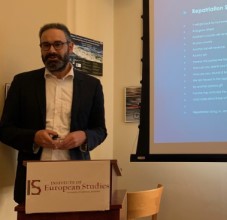
László Andor serves as an Honorary Professor in the Faculty of Economics at Viadrina European University, actively contributing to the Master in European Studies (MES) program. He is scheduled to teach the seminar "Questions of Social Europe" during Summer Semester 2025, examining the evolution of Social Europe from foundational declarations to contemporary frameworks like the European Pillar of Social Rights and its Action Plan. His research centers on European social policy dynamics, with emphasis on labor economics, welfare state resilience during crises (financial, pandemic, and geopolitical), and EU-level social investment mechanisms. He critically analyzes the tension between national welfare models and supranational solidarity, exploring emerging frontiers including health union coordination, minimum wage policies, unemployment insurance systems, and housing policy integration within the EU framework. Professor Andor maintains office hours by appointment at the Lodge House (LH 111) in Frankfurt (Oder), with administrative coordination handled through his dedicated university email channel.
Ravi Chugh is an Associate Professor in the Department of Computer Science at the University of Chicago. His work bridges Programming Languages (PL) and Human-Computer Interaction (HCI), focusing on direct manipulation programming systems and hole-driven development. Affiliation: University of Chicago Role: Director of Undergraduate Studies Research interests: Direct Manipulation Programming Systems Type Systems Program Synthesis Structured Editing Visual Programming His recent work includes Ragged Blocks (UIST 2025) for structured text rendering, Code Style Sheets (OOPSLA 2025) for styling code, and projects like Sketch-n-Sketch and Hazel for bimodal programming environments. Professional Activities: Program Committee: HATRA 2025, VL/HCC 2023, PLDI 2022, POPL 2021 Artifact Evaluation Co-Chair: PLDI 2018-2020 Editorial Board: Journal of Functional Programming (2020–)
Prof. Dr. Michael Elberfeld is a faculty member at the Technical University of Central Hesse , affiliated with the Department of Mathematics, Natural Sciences and Computer Science . His research focuses on theoretical computer science, particularly in computational and parameterized complexity, logic in computer science, and algorithmic meta-theorems. Education : Doctorate in Theoretical Computer Science from the University of Lübeck (2012); Diploma (MSc) in Computer Science from the University of Lübeck (2007). His work explores the intersection of graph theory , logic , and space-bounded computation , with groundbreaking contributions to problems on bounded tree-width structures and order-invariant logics . He has developed logspace algorithms for graph canonization and studied succinctness tradeoffs in logical formalisms. Key publications include analyses of parameterized space complexity , algorithmic meta-theorems , and applications to bioinformatics like haplotype inference and network orientation. His research is supported by the European Commission through grants 648276 and P 28699 . He collaborates extensively with researchers such as Martin Grohe , Pascal Schweitzer , and Till Tantau , bridging theoretical logic with practical applications in staff rostering and biological network analysis .
Daniel Weidner is a researcher at the Chair of Computer Science VI (Artificial Intelligence and Knowledge Systems) within the Faculty of Mathematics and Computer Science at the University of Würzburg. His work spans declarative programming, database systems, and artificial intelligence applications. Primary affiliation: Chair of Computer Science VI, University of Würzburg Research focus: AI-driven database systems and logic programming His research interests include declarative technologies, logic programming, and their applications in data mining, tennis analytics, and NoSQL databases. He has extensively contributed to the development of tools that bridge Prolog and Python environments. Weidner has supervised multiple theses and seminar papers, including works on tennis trajectory recognition, heating system data analysis, and declarative program evaluation. His projects often involve Python-based implementations of deductive database systems. Supervised: 4 bachelor's, 2 master's theses Teaching roles: Logic programming, database exercises, and advanced database seminars Scientific awards: No explicit honors mentioned in available records.
Gerhard Brewka is a Professor at the Intelligent Systems Department of Leipzig University , where he has held the chair for Intelligent Systems since September 1996. He was previously a Full Professor for Knowledge-Based Systems at the Technical University of Vienna (1995-1996) and a visiting researcher at the International Computer Science Institute in Berkeley (1991-1992). Research Focus: Nonmonotonic reasoning, answer set programming, preference handling, computational models of argumentation, multi-context systems, and qualitative decision making. Leadership: Served as President of ECCAI (now EurAI) and KR Inc., and as General Chair of IJCAI 2016 and ECAI 2006. His recent publications emphasize formal argumentation , nonmonotonic reasoning , and multi-context systems , reflecting his work on integrating heterogeneous knowledge bases and extending abstract dialectical frameworks. He was named an ECCAI Fellow in 2002 and has contributed to foundational texts in knowledge representation and logic programming. Scientific Contributions : 2014: Generalizations of Dung frameworks for argumentation, GRAPPA framework for graph-based argument processing, and multi-context systems in dynamic environments. 2013: Expanding argumentation frameworks, prioritized nonmonotonic systems, and reactive multi-context models. 2012-2011: Studies on splitting theorems, managed multi-context systems, and answer set optimization. Scientific Awards : ECCAI Fellow (2002) Laboratory: His research group is located on the 8th floor of the Paulinum at Leipzig University, focusing on AI and knowledge representation.
Emilio Jesús Gallego Arias is a non-tenured Research Fellow at the French National Center for Scientific Research (CNRS), hosted at the Institute of Fundamental Computer Research (IRIF) of CNRS and University of Paris Cité. He is also a member of the PiCube Inria team. Previously, he held postdoctoral positions at the University of Pennsylvania (2012–2014) and MINES ParisTech (2014–2019). His research spans mechanically-verified functional and logic programming , with a focus on the Coq proof assistant and the Mathematical Components Library . He develops tools like coq-lsp (language-server for Coq IDEs) and jsCoq (web interface), replacing earlier projects like SerAPI . His work bridges programming language theory , digital signal processing , and formal verification , particularly in the ANR FEEVER project for verifying Faust programs. His 15 most recent works (2014–2024) address type systems , differential privacy , and formal verification in domains like audio processing and mechanism design . Publications span journals (e.g., Journal of Privacy and Confidentiality), conferences (ICML, POPL, FARM), and workshops (CoqPL, UITP). He contributes to open-source projects (GitHub), including DFuzz (linear dependent types), DualQuery (privacy algorithms), and RAM (relational machine). He uses formal methods in collaborative development platforms (Gitter, GitLab) and advocates for free software and accessible audio technology .
Reynald Affeldt is a Chief Senior Research Scientist at AIST (National Institute of Advanced Industrial Science and Technology, Japan) and a Visiting Professor at NAIST (Nara Institute of Science and Technology). His work focuses on formal verification of software using logic and the Coq proof-assistant, with notable contributions to monadic equational reasoning, probabilistic programming, and robotics applications. His research spans multiple domains, including Monadic effects and equational reasoning Probabilistic and nondeterministic programming Information theory and error-correcting codes 3D geometry for robotics Recent publications highlight his efforts in extending monadic reasoning with transformers and formalizing probabilistic semantics in Coq. He has contributed to various conferences, notably as a committee member for CPP and TyDe tracks, and as a program chair for APLAS-related events. His work includes applications to OCaml, imperative language semantics, and algorithm verification (e.g., n-queens, quicksort).