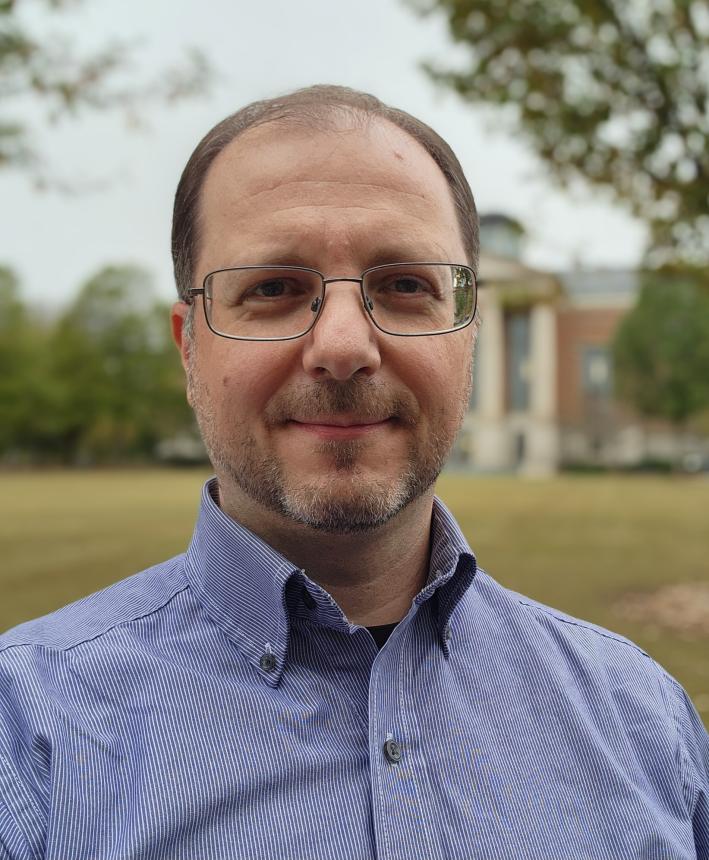
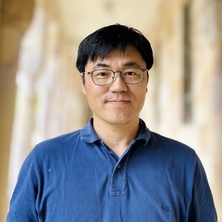
Julian Jara-Ettinger is an Associate Professor of Psychology and Computer Science at Yale University. He holds a Ph.D. from MIT (2016). His research focuses on understanding the cognitive and computational mechanisms underlying human social behavior, including fairness, linguistic communication, gesture, moral reasoning, and pedagogy. He employs interdisciplinary methods such as computational modeling, eye-tracking, cross-cultural studies, and developmental research to bridge psychology and artificial intelligence. Key research areas include the development of social cognition in children, the integration of theory of mind with communication, and the application of cognitive science principles to build socially intelligent machines. His work emphasizes how humans infer others' knowledge, intentions, and desires, with implications for AI safety and ethical systems design. Publications span topics like epistemic inference, moral judgments, and the computational foundations of social interaction. His lab's research often intersects with evolutionary simulations, neural modeling, and cultural psychology. No scientific awards are explicitly mentioned in the provided text. Collaborations involve cross-disciplinary teams addressing challenges in developmental science, AI ethics, and cognitive robotics. His work has practical applications in educational strategies, social policy, and human-AI collaboration frameworks.
Natalie T. Wood, PhD (Auburn University, 2002), is a Professor of Marketing and Associate Dean at Saint Joseph’s University’s Haub School of Business. Her expertise spans consumer behavior and social media marketing, with a focus on digital engagement and virtual environments. PhD, Auburn University (2002) GradDip in Marketing, Edith Cowan University (1999) BBus in Marketing, Edith Cowan University (1996) Her research explores social media’s influence on consumer trends, political marketing, themed hospitality authenticity, and virtual education. Key journals include Journal of Consumer Behaviour and Business Horizons . Recent publications analyze microblogging’s role in customer service and brand promotion. Notable awards: Saint Joseph’s University Faculty Merit Award for Teaching (2013) and Research (2007). Grants from Arrupe Center (2019) and Direct Selling Education Foundation (2010-2011) highlight her funded work. Professional roles include Assistant Director, Center for Consumer Research (2007-2011).
Bruce Rusk is an Associate Professor in the Department of Asian Studies at the University of British Columbia (Faculty of Arts) and serves as the Graduate Advisor. He previously taught at Cornell University for six years before joining UBC in 2012. During the 2012–13 academic year, he was on leave at the Institute for Advanced Study in Princeton and the National Humanities Center in North Carolina. Additionally, he is the webmaster and past president of the Society for Ming Studies, a scholarly organization focused on Ming history and culture. Bruce holds a Ph.D. from the University of California, Los Angeles (UCLA), where his dissertation, The Rogue Classicist: Feng Fang (1493–1566) and his Forgeries , examined sixteenth-century classical text forgeries. Following his Ph.D., he was a postdoctoral fellow at Stanford University from 2004 to 2006. He also earned his B.A. (History Honours) from UBC, which inspired his return to Vancouver to join the scholarly community here. His research focuses on the cultural history of pre-modern and early modern China, particularly the Ming and Qing dynasties. Key interests include authenticity and forgery in textual and material culture, transmission of knowledge, history of philology, writing systems in East Asia, and digital humanities. He collaborates globally on the SSHRC-funded FROGBEAR project, developing an open access repository for East Asian religious studies. Current work explores authentication practices surrounding artifacts like Xuande incense burners and silver ingots, reflecting his broader study of how authenticity and deception were negotiated in late imperial China. Recent publications address intersections between forgery, material culture, and digital methodologies, including co-editing Literary Information in China: A History (2021) and analyzing Ming-Qing literary practices. His work highlights the cultural significance of textual preservation and the sociocultural dynamics of early modern Chinese scholarship. As a leader in academic organizations, Bruce has contributed to the Society for Ming Studies, advancing research in Ming culture through his roles as webmaster and past president. His advising and grants include mentoring UBC graduate students and contributing to the FROGBEAR initiative. His career bridges historical research with digital innovation, emphasizing interdisciplinary approaches to Asian studies.
Dr. Shanna Williams is an Assistant Professor in the Department of Educational and Counselling Psychology at McGill University's Faculty of Education. She holds clinical licensure in Quebec and Ontario, with expertise in forensic child psychology and maltreatment-related research. Her work focuses on child lie-telling, commercial sexual exploitation, moral development, and eyewitness testimony. Prior roles include a postdoctoral fellowship at the University of Southern California’s Gould School of Law and forensic law enforcement collaboration in Los Angeles. Education: Ph.D., McGill University: School/Applied Child Psychology M.A., McGill University: Educational Psychology B.A., McGill University: Psychology Postdoctoral Visiting Fellow, University of Southern California Research Interests: Lie-Telling Dynamics: Investigating how cognitive and social factors influence children's deception across contexts. Child Maltreatment: Developing trauma-informed forensic interview protocols and assessing maltreatment impacts on memory and disclosure. Legal Systems: Enhancing child-witness support through improved questioning techniques and cross-cultural legal practices. Publications Trends: Her recent work emphasizes pandemic-era challenges in child protection, digital exploitation, and legal system adaptations. Over 20 peer-reviewed articles address topics like forensic interviewing methods, maltreatment detection, and interdisciplinary collaboration. Awards: SSHRC Postdoctoral Fellowship (2016-2017) SSHRC Joseph-Armand Bombardier CGS Doctoral Fellowship (2010-2013) Advising & Grants: Supervises graduate students in child psychology and maltreatment studies. Research funded by SSHRC, NSF, and NIH grants focusing on forensic child development. Labs/Teams: Child Interviewing & Witness Lab Canadian Child Interviewing Research Team
Pardis Emami-Naeini is an Assistant Professor of Computer Science at Duke University, with joint appointments in the Sanford School of Public Policy and the Department of Electrical and Computer Engineering. She serves as the Director of the Duke Interdisciplinary Security, Privacy, and Interaction Research (InSPIre) lab and is a Duke Science and Technology Scholar. Her interdisciplinary work bridges computer science, public policy, and electrical engineering, with a focus on developing usable privacy and security solutions that empower individuals from diverse sociodemographic backgrounds. Dr. Emami-Naeini earned her Ph.D. in Computer Science from Carnegie Mellon University in 2020, followed by postdoctoral research at the University of Washington (2020-2022). Her research sits at the intersection of security, privacy, and human-computer interaction, with particular expertise in IoT security, technology-enabled abuse, reproductive health privacy, and smart city security. She has published extensively at flagship venues including IEEE S&P, CHI, CSCW, and SOUPS, with her work covered by major media outlets such as Wired and The Wall Street Journal. Her recent publications reveal a clear trajectory toward examining the human dimensions of security and privacy in emerging technologies, from LLM chatbots for mental health to social robots and period-tracking apps in the post-Roe v. Wade landscape. Her work consistently emphasizes the need for privacy-aware design that accounts for diverse user needs and contexts, particularly for vulnerable populations. Google Systems and ML Research Gift Award (2025) Google AI Research Scholar Program Award (2024) Top 5% Instructor in Duke Trinity College (2024) ORAU Ralph E. Powe Junior Faculty Enhancement Award (2023) Duke Science and Technology Scholar (2022) IEEE S&P paper highlighted in IEEE Security and Privacy Magazine (2021) CyLab Presidential Fellowship (2019) Dr. Emami-Naeini actively mentors several Ph.D. students including Jabari Kwesi, Jessie Cao, and Hiba Laabadli, as well as undergraduate and master's students. Her research has influenced key organizations including the National Institute of Standards and Technology (NIST), Consumer Reports, and the World Economic Forum in creating usable security and privacy labels for smart devices. She serves on numerous program committees including USENIX Security and CHI, and has participated in NSF grant review panels, demonstrating her growing leadership in the security and privacy community. Her InSPIre lab conducts user-centered research to uncover security and privacy needs of diverse stakeholders, with a particular focus on marginalized communities. The lab's work spans multiple domains including intimate partner violence, reproductive health, virtual reality, and smart cities, always with a strong emphasis on translating research findings into practical tools and policy recommendations.
Sarah Ita Levitan is an Assistant Professor in the Department of Computer Science at Hunter College, CUNY, and a member of the doctoral faculty in both Computer Science and Linguistics PhD programs at the CUNY Graduate Center. She previously served as a Postdoctoral Research Scientist at Columbia University, where she completed her PhD in Computer Science in 2019 under Dr. Julia Hirschberg. Research Focus: Spoken Language Processing Natural Language Processing Paralinguistic Analysis Trustworthiness and Deception Detection Acoustic-Procedic and Lexical Feature Extraction Online Radicalization and Misinformation Recent Publications demonstrate expertise in analyzing speech and text for trust cues, deception detection, and mental health prediction. Her awards include grants from NSF, Google, and Columbia University fellowships. She leads the Hunter Speech Lab , mentoring PhD, MS, and undergraduate students in computational linguistics research. Scientific Awards and Grants: NSF EAGER Grant (2023) Google Cyber NYC Grant (2023) NSF AI Institute Grant (2023) Air Force Office of Scientific Research Grant (2020) Brown Institute Seed Grant (2020) Knight News Innovation Fellowship (2018) Teaching: Courses include Natural Language Processing (undergraduate/graduate), Computational Linguistics, Computer Theory, and advanced topics in spoken language processing at both Hunter College and Columbia University.
Angela Book is a Professor in the Department of Psychology at Brock University. She holds a Ph.D. from Queen’s University and specializes in Forensic Psychology, with a focus on psychopathy and its relationship to victim selection, emotion perception, and deceptive behavior. Her research explores how psychopathic traits influence vulnerability judgments and social manipulation. She is affiliated with Brock’s Psychology Department and has contributed extensively to forensic assessment methodologies and youth psychopathy research. Education: Ph.D. in Psychology, Queen’s University Research Interests: Forensic Psychology, psychopathy, emotion perception, victim selection, deception detection, vulnerability assessment. Grants & Advising: No specific grants or advisee records explicitly mentioned in the provided text. Labs/Teams: Not explicitly detailed in the text, though her work aligns with forensic and clinical psychology research groups at Brock.
Kassem Fawaz is an Assistant Professor in the Department of Electrical & Computer Engineering at the University of Wisconsin-Madison. His research focuses on security, privacy, and mobile computing, with applications in social robotics, generative AI, and adversarial machine learning. He teaches graduate-level courses including Advanced Computer Security, Master's Research, and Independent Study in Electrical & Computer Engineering. Education: PhD (2017) and MS (2011) from the University of Michigan, BE (2009) from the American University of Beirut His work addresses challenges in privacy-preserving analytics, model robustness, and ethical AI, leveraging commodity devices for secure systems. Recent publications explore social media algorithms, black-box attacks, and family dynamics in generative AI use. Key scientific awards include the NSF CAREER Award (2020), Caspar Bowden Award (2019), and multiple student travel grants from ACM, PETS, and USENIX. He has supervised graduate research projects and taught core security courses since 2023.
Dr. Koustuv Saha is an Assistant Professor of Computer Science at the University of Illinois Urbana-Champaign (UIUC), leading the OnCARE lab. He holds a PhD from Georgia Tech and a B.Tech from IIT Kharagpur. His research focuses on computational social science, social computing, and ethical AI applications in mental health and wellbeing. His work bridges computer science with psychology, sociology, and public policy to address societal challenges. Education: PhD in Computer Science (Georgia Tech, 2021), B.Tech in CSE (IIT Kharagpur, 2012). Previous roles include Senior Researcher at Microsoft Research Montreal (FATE group) and industry research experience in Silicon Valley. Research interests include wellbeing sensing technologies, algorithmic fairness, and large language models’ societal impacts. Recent work examines caregiver mental health, deceptive wellness apps, and AI ethics in content moderation. His studies combine causal inference, NLP, and multimodal data analysis. Publications span top venues like CHI, CSCW, ICWSM, and JMIR. Notable awards include Georgia Tech’s Outstanding Dissertation Award (2022) and Snap Research Fellowship (2020). He advises on AI governance and collaborates with policymakers, clinicians, and industry. OnCARE lab explores human-centered AI for societal good, with projects on mental health support systems, ethical tech design, and algorithmic transparency in health contexts. Current focus includes caregiver AI tools, LLM-based empathetic systems, and workplace wellbeing interventions.
Kathleen M. Carley is a full professor at Carnegie Mellon University's School of Computer Science with courtesy appointments in Engineering and Public Policy, Heinz School, and Electrical and Computer Engineering. As director of the Center for Computational Analysis of Social and Organizational Systems (CASOS) and the Center for Informed Democracy and Social-Cybersecurity (IDeaS) , she leads interdisciplinary research at the intersection of network science, cognitive modeling, and cybersecurity. Ph.D. in Sociology from Harvard University SB degrees in Economics and Political Science from MIT Her research focuses on Dynamic Network Analysis (DNA) and Social-Cybersecurity (SC) , developing tools like ORA (network analysis), AutoMap (semantic mining), Construct (influence simulation), and BotHunter (bot detection). She has over 400 publications and 15+ active research projects addressing disinformation, cognitive security, and organizational resilience. Recent work examines LLM-powered bots , multi-platform misinformation dynamics , and public health analytics . As an IEEE Fellow, she contributes to standards in computational social science while teaching courses on network analysis and complex socio-technical systems.
Gavin Oxburgh is a Professor of Police Science at Northumbria University and an HCPC-registered Consultant Forensic Psychologist. He holds Chartered Psychologist and Chartered Scientist statuses, and serves as Assistant Director of The Northern Hub for Veteran and Military Families Research. With 22 years in the Royal Air Force Police as a senior detective specializing in child protection and sexual offenses, he now advises globally on legal psychology and human rights. His work includes collaboration with the International Criminal Court (ICC) and contributions to the UN-led Mendez Principles on Effective Interviewing. Research focuses on legal/criminological psychology, including international human rights, non-coercive interviewing, false memories, and veterans' issues. He has secured over £5M in grants from ESRC, EPSRC, and defense-related funds. Key roles include editorial positions for Journal of Investigative Psychology and Torture Journal , and Associate Investigator status with EPSRC/GCHQ's Academic Centre of Excellence in Cyber Security Research (ACE-CSR). Professional activities include founding ETICA (Global) for ethical investigative practices and co-founding the International Investigative Interviewing Research Group (iIIRG). He trains investigators worldwide, including UN agencies, European institutions, and South African law enforcement. His qualifications include a PhD in Psychology (2011), PGCLTHE (2008), and Fellow of the British Psychological Society (FBPsS). Notable projects include studies on remote forensic interviewing during the pandemic, veteran suicide prevention, and capacity-building in counter-wildlife crime. His work emphasizes ethical interviewing techniques, cross-cultural challenges, and technology's role in modern investigations.
Leonard Saxe serves as the Klutznick Professor of Contemporary Jewish Studies at Brandeis University’s Heller School for Social Policy and Management, where he directs the Cohen Center for Modern Jewish Studies. His work focuses on socio-demographic analysis of American Jewish life, with emphasis on identity formation, educational interventions, and community dynamics. His educational background includes a Ph.D., M.S., and B.S. in Psychology from the University of Pittsburgh. Saxe’s research spans Jewish Studies, Social Psychology, and Demography, examining how programs like Birthright Israel shape Jewish identity and how antisemitism manifests in contemporary society. He employs rigorous survey methodology and data synthesis techniques to address methodological challenges in studying religious populations. Recent publications (2024-2025) reveal a strong focus on campus antisemitism, political polarization within Jewish communities, and longitudinal impacts of Jewish educational programs. These works demonstrate methodological innovation in community studies while addressing urgent social issues facing American Jews. His significant honors include: Congressional Science Fellow (Office of Technology Assessment, 1980-1981) Fulbright Senior Lecturer (U.S.-Israel Educational Foundation, 1981-1982) APA Early Career Award for Distinguished Contributions to Psychology in the Public Interest (1989) Heller Mentor Award (2005) Marshall Sklare Award (2012) Saxe has mentored numerous researchers through the Cohen Center and secured substantial grant funding for community studies across 20+ U.S. regions. His work directly informs communal planning and policy decisions through data-driven insights about Jewish population dynamics. As director of the Cohen Center for Modern Jewish Studies, he leads a multidisciplinary team conducting demographic surveys, program evaluations, and methodological research that shapes understanding of contemporary Jewish life in North America.
Roberto Perdisci is a Professor at the University of Georgia , holding the Patty and D.R. Grimes Distinguished Professorship in Computer Science . He also serves as an Adjunct Associate Professor at the Georgia Tech School of Cybersecurity and Privacy and is a faculty member of the UGA Institute for Artificial Intelligence . His research focuses on securing networked systems through web security , malware detection , and machine learning applications. Directed the UGA Institute for Cybersecurity and Privacy Post-Doctoral Fellow at Georgia Institute of Technology Research Scholar at Georgia Tech Information Security Center His work combines systems research with data mining to address challenges in network security , malware analysis , and Internet-scale measurements . Key contributions include DNS reputation systems analysis , CAPTCHA attack frameworks , and robocall mitigation prototypes . He has received the NSF CAREER award for adaptive malware detection research. Conference service includes: Program Chair for ACSAC 2024 and EuroS&P 2024 Area Chair for WWW 2024 Security Track Best Reviewer Award at ACM CCS 2022 Current affiliations span multiple institutions, with research groups focusing on: Phishing and Social Engineering (PhishInPatterns, TRIDENT projects) Web Browser Forensics (WEBRR, Clickminer) IoT Device Identification (IoTFinder)
Associate Professor Dan Dongseong Kim is Deputy Director of UQ Cybersecurity and an Associate Professor at The University of Queensland (UQ), Australia. Previously, he held permanent academic positions at The University of Canterbury (UC), New Zealand (2011-2018) as a Senior Lecturer and Lecturer. His research focuses on Cybersecurity and Dependability for AI, IoT, Autonomous Vehicles, Cloud Computing, and Moving Target Defenses (MTD). Doctor of Philosophy in Computer Engineering from Korea Aerospace University Postdoctoral Research at Duke University (2008-2011) Visiting Scholar at University of Maryland (2007) Dan's work explores Graphical Security Models , Moving Target Defense for proactive resilience, and AI-Driven Cybersecurity with emphasis on adversarial robustness and interpretable models. His recent publications (2024-2025) span journals like IEEE Transactions on Dependable and Secure Computing and conferences such as DSN , addressing automated defense, evolving attacks, and hardware-aware security frameworks. He has advised 15 Ph.D. graduates, including researchers now at institutions like RMIT University, La Trobe University, and CSIRO's Data61. Current supervision includes projects on Automated Penetration Testing , AI-Based Intrusion Response , and Moving Target Defense . Dan's research is funded by agencies including the Republic of Korea's Agency for Defence Development and US Army Research Lab . His professional roles include Associate Editor for IEEE Communications Surveys and Tutorials and Steering Committee Chair for IEEE PRDC .
Amir SEPEHRI is an Assistant Professor in the Department of Marketing at ESSEC Business School, France. He holds a PhD in Marketing from Ivey Business School, Canada (2021). His research focuses on consumer behavior, digital marketing strategies, and text analysis, addressing topics such as online retailing dynamics, deception detection in communication, and the psychological impacts of narrative framing. He has developed tools like PassivePy for automated text analysis, and his work bridges consumer psychology with practical industry applications. Key research areas include the unintended consequences of product tagging in e-commerce, the role of information load in online talk popularity, and the strategic use of third-person narratives in fundraising. His findings have been published in journals like Journal of Personality and Social Psychology and Journal of Consumer Psychology . SEPEHRI also explores emerging technologies, such as voicebots' anthropomorphism and user engagement, as seen in his 2024 conference presentation. No scientific awards are listed, though his contributions to consumer behavior research are notable. He advises on grants related to text analytics and marketing strategies, though specific grant details are not provided. His academic activities include teaching marketing and consumer behavior courses, though course specifics are not detailed here.