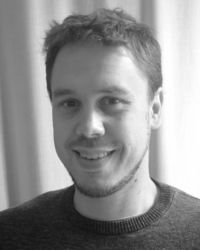
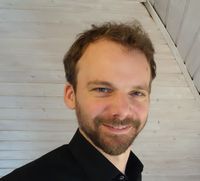
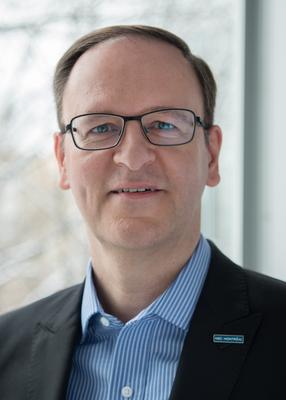
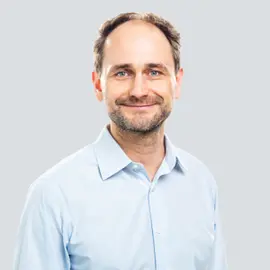
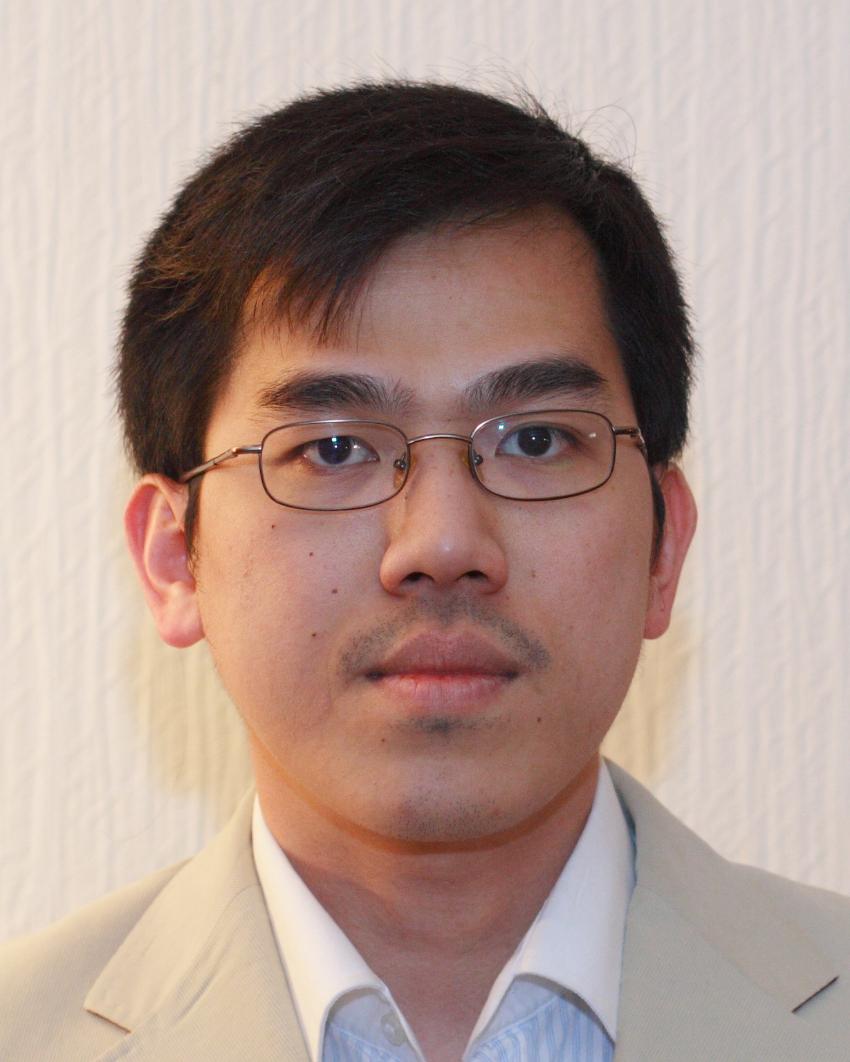
Ben Lindley is an Assistant Professor of Nuclear Engineering and Engineering Physics at the University of Wisconsin-Madison since 2020. He leads research in advanced reactor design, reactor physics, and integrated energy systems with a focus on cost reduction, nuclear-solar co-generation, and multiphysics modeling. His work spans computational methods development, safety analysis, and fuel cycle optimization, supported by DOE grants and collaborations with Argonne National Laboratory. Education: PhD in Nuclear Engineering (Cambridge, 2014), MEng & BA in Mechanical Engineering (Cambridge, 2011) Affiliations: Joint faculty appointment at Argonne National Laboratory His research explores nuclear reactor design , flexible operation (load-following, thermal storage), and economic viability of advanced reactors. Recent publications highlight innovations in microreactors, molten salt systems, and fusion-fission hybrids, with methodological advances in reinforcement learning for reactor control and open architecture design . Key article trends include: Advanced reactor cost reduction Nuclear-solar synergy Accident-tolerant fuel analysis Fusion energy commercialization Uncertainty quantification High-fidelity computational modeling Scientific Awards : 2021 ICONE21 Best Paper Award 2011 Babcock Award Runner-Up IET Bill Kerss Scholarship ANS 40 Under 40 Cambridge Rex Moir Prize Ben leads the RETI Lab (reti.ep.wisc.edu), mentoring graduate students through courses like Nuclear Reactor Theory (NE405) and advising on advanced reactor projects with national laboratories.
Dr. phil. Tobias Kalt is a Research Professor at the Berlin School of Economics and Law (HWR Berlin) and a political scientist specialising in socio-ecological transformation, energy justice, and the political economy of the global hydrogen economy. His work combines political-ecological and political-economic perspectives to analyse power relations, conflicts, and justice issues arising from global energy and industrial transformations. Research focus: Socio-ecological transformation and transformation conflicts North–South relations, (green) extractivism, and energy justice Work and ecology, with particular attention to trade unions and employees in transformation processes (Neo-)Gramscian approaches in political ecology Within the research project „Industrial Employees in Transformation“ (funded by the Hans Böckler Foundation), Dr Kalt investigates how industrial employees experience and shape transformation processes, how they articulate justice concerns within organisational change, and how these dynamics influence intra- and inter-organisational transitions. Across his 2021–2025 publications, a clear thematic trajectory emerges: from domestic labour–climate coalitions in the German coal phase-out, through trade-union strategies in green transitions, to a critical interrogation of the emerging global hydrogen economy. His recent work increasingly centres on the Global South, interrogating green extractivism, hydrogen justice, and the continuities of colonial patterns in renewable-energy supply chains. Selected collaborators: Johanna Tunn, Franziska Müller, Jesko Hennig, Jenny Simon, Anne Tittor, Imeh Ituen, Nina Glatzer. Contact: Tobias.Kalt@hwr-berlin.de
Stefan Schoppengerd is a researcher at the Department of Economics and Business, Berlin School of Economics and Law . His career spans roles in political science, editorial work, and critical social research focused on labor, care, and socio-ecological transformation. Academic Rank: Researcher Department: Economics and Business University: Berlin School of Economics and Law Research Interests: Schoppengerd’s work intersects political economy, labor studies, feminist critique, and healthcare policy. He analyzes conflicts in green industrial transformation, working time reduction, and the economization of care sectors. Publications: His recent articles explore decarbonization in steel industries, hydrogen corporatism, and social-ecological labor policies. Earlier works critique gender dynamics in pop culture and examine G7/G8 summit dynamics. Email: Stefan.Schoppengerd@hwr-berlin.de
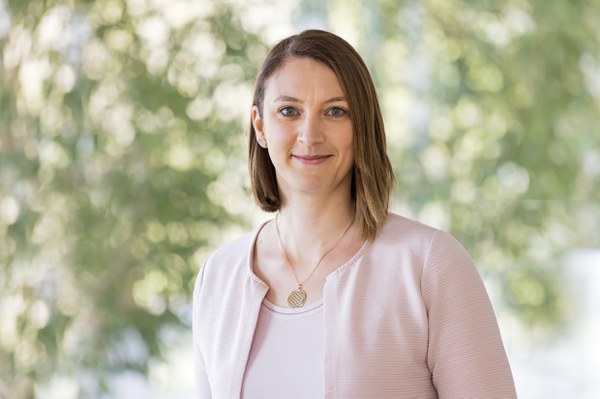
Dr. Susanne Spörler is a researcher at the Institute for Sustainable Hydrogen Economy (INW) within Jülich Research Centre, focusing on advancing hydrogen-based energy solutions. Her work spans catalytic processes, material development, and system engineering for sustainable energy infrastructure. Research interests center on hydrogen production , storage technologies , and reaction engineering , addressing critical challenges in decarbonizing industrial processes. Key areas include catalytic interface design (INW-1), catalyst material innovation (INW-2), and process optimization for chemical hydrogen carriers (INW-4). As part of Germany’s Helmholtz Association, her institute collaborates on national energy transition initiatives, though specific projects or leadership roles are not detailed in available records. No awards, publications, or student supervision information is publicly documented.
J.A. Annema is a researcher at Delft University of Technology's School of Technology, Policy and Management , specializing in Transport and Logistics . With over 117 research outputs and active collaborations across Europe, Annema focuses on sustainable transport policy analysis, vehicle-grid integration, and multimodal transport systems. Key contributions include analyzing societal impacts of bike-sharing integration (2025) and modeling freight decarbonization strategies (2023). Active in 5 major research areas: Transport Policy (100%), Vehicle Systems (86%), Electric Vehicles (59%), Netherlands (55%), Consumers (50%), Road Infrastructure (44%) Recent work explores policy implementation barriers (2025) and behavioral impacts of sociodemographics (2024). As a supervisor, Annema has guided research on European high-speed rail networks (2023) and focus group studies on peak credit systems (2020). Current affiliations include editorial roles at Edward Elgar Publishing since 2013, and ongoing participation in policy discussions about CO2 mitigation (2013-2023). Network analysis shows strong institutional ties to TU Delft and external collaborations across Europe.
Dr. Mark Dekker is a Researcher at Utrecht University's Faculty of Geosciences, specifically within the Copernicus Institute of Sustainable Development and the Environmental Sciences department. He also holds a position at the Netherlands Environmental Assessment Agency (PBL). His work bridges data science, mathematical modeling, and environmental policy, with a particular focus on climate change mitigation strategies. Dr. Dekker completed his PhD in 2022 with a thesis titled 'Macroscopic Dynamics in Complex Systems,' which examined interactions between microscopic and macroscopic phenomena across various complex systems including climate tipping points, railway disruptions, ecological patterns, neuroscience data, and pandemic interventions. His educational background has equipped him with strong analytical skills in mathematical and computational modeling. His research interests span Dynamics of Complex Systems , Climate Dynamics , Critical Transitions , and Integrated Assessment Modelling . Dr. Dekker applies data science and mathematical techniques to climate change questions, particularly focusing on climate justice and mitigation effort-sharing. He distinguishes normative considerations from climatological uncertainties to understand what determines fair national emission reduction targets. His work includes developing the Carbon Budget Explorer webtool for visualizing fair climate targets. Dr. Dekker's publication record shows a clear evolution from fundamental complex systems research during his PhD (2017-2021) toward applied climate policy analysis. His recent work (2022-2025) focuses on energy system modeling, climate scenario analysis, and effort-sharing frameworks. He has made significant contributions to understanding variance in climate policy scenarios and identifying 'model fingerprints' in mitigation pathways. His interdisciplinary approach connects climate science with social considerations of fairness and justice. As an educator, Dr. Dekker contributes to several bachelor-level courses including Introduction to Adaptive Systems, Graphics, Image processing, Introduction to Complex Systems, and Introduction Project. His teaching reflects his expertise in complex systems and computational approaches. Dr. Dekker is actively involved in the IMAGE team within the Horizon-2020 ECEMF project, working on scenarios describing future energy economy evolution and identifying potential routes to climate neutrality. His research combines data analysis, network analysis, computational modeling, and mathematical modeling using Python and Matlab. His work has significant policy relevance, particularly for national and international climate target setting.
Olivier Labarthe is an Associate Professor at Kedge Business School , affiliated with the MEI team and collaborating with institutions like Laboratoire de l'intégration, du matériau au système (IMS-Bordeaux) , Université de Bordeaux , and School of Industrial and Systems Engineering [Georgia Tech] . His work bridges Physical Internet concepts with urban logistics and multi-agent systems . Academic Rank: Associate Professor Research Focus: Urban Freight Logistics, Multi-mode Mobility, Enterprise Interoperability Collaborations: Georgia Tech, CNRS, IMS-Bordeaux Research Interests : He specializes in Physical Internet applications for urban logistics , integrating freight transportation with people mobility . His studies explore multi-mode transport systems , synchromodality , and green logistics using agent-based modeling and data-driven optimization . Article Trends : His recent work (2024) emphasizes Physical Internet in urban freight transshipment and hyperconnected synchromodal networks . Earlier publications (2023-2010) cover cargo bike routing , multi-agent interoperability , and multicriteria supplier selection , reflecting a consistent focus on sustainable logistics and smart city solutions . Labs & Collaborations : He works with the MEI team at Kedge Business School, the IMS-Bordeaux laboratory, and the School of Industrial and Systems Engineering [Georgia Tech] . His collaborations span institutions like CNRS , CEA Leti , and industry partners such as Stellantis and Thales .
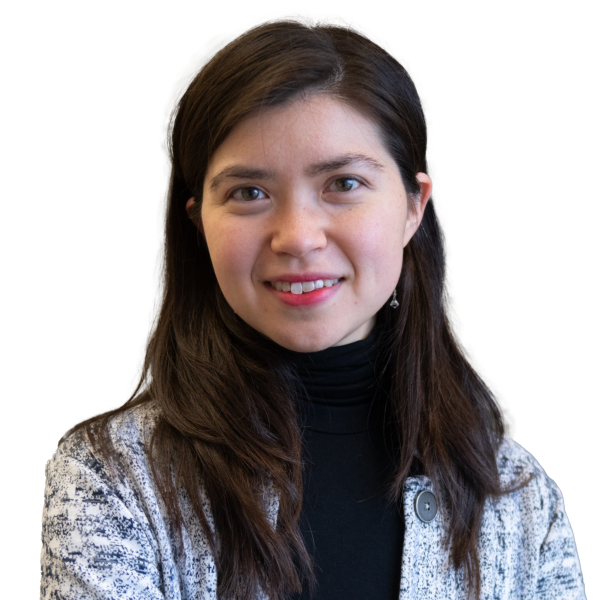
Anna Wuttig is the Neubauer Family Assistant Professor in the Department of Chemistry at the University of Chicago's Division of the Physical Sciences. She joined the faculty in July 2021 and leads the Wuttig Research Group focused on advancing sustainable chemical synthesis through electrochemistry. Dr. Wuttig's research centers on the chemistry of electricity-driven reactions occurring at complex electrified interfaces—the boundary between solid conducting materials and liquid solutions. Her work combines synthetic, electroanalytical, and spectroscopic approaches to understand and manipulate these interfaces. Her research interests include: Catalysis and electrocatalysis Organic and inorganic chemistry Materials chemistry for sustainable synthesis Chemistry at electrified interfaces Design of electricity-driven processes for sustainable chemical manufacturing Dr. Wuttig's recent work demonstrates significant advances in sustainable synthesis. Her 2024 Nature Catalysis paper showed how interfacial tuning of electrocatalytic surfaces can dramatically improve reaction yields in fragment-based electrophile coupling, with implications for greener pharmaceutical manufacturing. Her scientific awards and fellowships include: National Science Foundation Graduate Fellow National Institute of Health Postdoctoral Fellow Dr. Wuttig mentors several researchers in her lab, including postdoctoral researchers and undergraduate students. Her research is supported by the University of Chicago and the National Institutes of Health. She is affiliated with the University of Chicago Catalyst Design for Decarbonization Center and the Neubauer Family Assistant Professor Program. The Wuttig Lab is located in Room E405A of the Gordon Center for Integrative Science. Her team is actively working to map out and address synthetic challenges using electrochemical approaches, with the goal of creating more sustainable chemical processes for the manufacturing industry.
Olivier Bahn is a Full Professor at the Department of Decision Sciences at HEC Montréal , where he has been since 2003. He currently serves as Director of the GERAD research group and Co-director of the e3 Cluster (energy, environment, circular economy). His research focuses on energy economics , climate change modeling , and mathematical optimization for sustainable systems. Engineering degree from CNAM (Paris) Doctorate in Economic and Social Sciences from the University of Geneva Key research areas include decarbonization strategies , hydrogen economy , smart grid optimization , and sustainable materials development . His work bridges operational research with environmental policy through quantitative modeling. Recent publications focus on hydrogen market modeling , biogenic carbon neutrality , and smart grid capacity planning . He has contributed to journals like Renewable & Sustainable Energy Reviews , Energy and Climate Change , and Environmental Science & Technology . Awards : 2023 : Prix d'excellence (IAPQ) - Scientific Collaboration Category Student Supervision : Co-directed PhD research with Erick Delage and Mario Samano , advising on topics like smart grid optimization , energy efficiency , and hydrogen logistics . Supervised multiple master’s projects on renewable energy forecasting , ESG risk assessment , and clean cement production .
Mirko Bothien is a Senior Lecturer and Head of Research/Focus Area Renewable Energy at the Institute of Energy Systems and Fluid Engineering (IEFE) within the Zurich University of Applied Sciences (ZHAW) School of Engineering. He also holds an Associate Professor position at the Department of Energy and Process Engineering at the Norwegian University of Science and Technology (NTNU) in Trondheim. Previously, he was a Rudolf Diesel Industry Fellow at the Institute for Advanced Study at TU München from 2018 to 2022. His work focuses on renewable energy systems with particular emphasis on hydrogen technologies and gas turbine applications. Dr. Bothien earned his Dr.-Ing. in Thermoacoustics and Combustion from the Institute of Fluid Mechanics and Acoustics at TU Berlin (2005-2008) and his Dipl.-Ing. in Turbo-machinery and Jet Propulsion from RWTH Aachen (2001-2005). In 2023, he completed a Certificate of Advanced Studies in Teaching and Learning in Higher Education from PH Zürich, enhancing his pedagogical expertise. Dr. Bothien's research spans thermoacoustics, combustion dynamics, gas turbine technology, hydrogen energy systems, and alternative fuels. He leads numerous projects investigating hydrogen combustion in gas turbines, ammonia-hydrogen co-firing, and advanced combustion systems for carbon-free power generation. His work addresses critical challenges in decarbonizing power systems through innovative combustion technologies that maintain high efficiency while reducing emissions. His research integrates experimental, numerical, and theoretical approaches to understand complex combustion phenomena, particularly focusing on thermoacoustic instabilities in reheat combustors and novel flame stabilization mechanisms. He teaches Thermodynamics, Heat Transfer, and Wind Power and Hydropower courses. Analysis of Dr. Bothien's recent publications reveals a strong focus on hydrogen and ammonia combustion technologies for gas turbines, with particular attention to thermoacoustic stability, flame dynamics, and emissions characteristics. His work demonstrates increasing emphasis on carbon-free energy carriers and their integration into existing power generation infrastructure. The research spans fundamental combustion science to applied engineering solutions, with a clear trajectory toward enabling hydrogen-based power systems. Dr. Bothien actively leads multiple research projects including HyPowerGT (demonstrating hydrogen-powered gas turbines), FLEX4H2 (hydrogen flexibility), AETHER (hydrogen burner development), and ADONIS (ammonia-hydrogen combustion in micro gas turbines). These projects involve collaboration with industry partners and research institutions across Europe, securing significant research funding for advancing renewable energy technologies. As Head of Research at IEFE, Dr. Bothien oversees a research team focused on renewable energy systems, with particular expertise in thermoacoustic analysis, combustion dynamics, and hydrogen technologies. The team operates advanced experimental facilities for combustion research and maintains strong industry partnerships to translate research findings into practical applications for the energy sector.
Prof. Ulrich J. Wagner, Ph.D. is a leading scholar in environmental economics, industrial organization, and public finance at the University of Mannheim . His work focuses on climate policy, carbon pricing mechanisms, and the intersection of economic regulation with environmental outcomes, with publications in top-tier journals like the American Economic Review and Review of Economic Studies . Previously an Associate Professor at Carlos III University in Madrid, he earned his doctorate at Yale University (2006) and conducted postdoctoral research at Columbia University's Earth Institute. Professor of Quantitative Economics Chair in Quantitative Economics International Representative at University of Mannheim His research interests span: Environmental economics Industrial organization Public economics Climate policy design Carbon pricing mechanisms Energy transition economics His recent work emphasizes carbon border adjustment mechanisms, health co-benefits of decarbonization, and behavioral interventions in transport policy. He leads the ERC Consolidator Grant HEAL (2020–2026) and contributes to projects like EPoS and TRACE . Scientific Awards: Erik Kempe Award in Environmental and Resource Economics (2015) Editor’s Choice, Science (2014) Grants & Projects : ERC Consolidator Grant HEAL (2020–2026) SFB/Transregio 224 EPoS (2018–2025) BMBF Economics of Climate Change (2018–2022) TRACE Project (2019–2022) Teaching : He instructs courses at all academic levels on topics including empirical environmental economics, energy economics, and climate policy. His educational materials are accessible via his personal website .
Marie Lamoureux is an Associate Professor of Law at Aix-Marseille University , specializing in Energy Law and Private Law (Section 01). She is affiliated with the CERIC (Centre d'études et de recherches internationales et communautaires) and contributes to research on Environmental Law and Legal Compliance . Her research interests focus on Energy Law , Contract Law , and Environmental Compliance . She explores the intersection of Legal Frameworks with Renewable Energy and Climate Policy , emphasizing EU Energy Policy , Interpretation of Contracts , and Corporate Responsibility . Recent publications highlight trends in Energy Market Regulation , Environmental Litigation , and Legal Innovations for Sustainable Development . Her work addresses Energy Transition , Consumer Protection , and Compliance Mechanisms in French and European Law .
Professor Hoai Phuong Ha is affiliated with UiT The Arctic University of Norway's Department of Computer Science. A leading expert in green computing and cyber-physical systems, they contribute to Arctic research through the Distributed Arctic Observatory (DAO) and Arctic Green Computing (AGC) group. Founded ARC (Arctic Center for Sustainable Energy) PI in EU FP7 EXCESS and H2020 TAILOR projects WP-leader in EEA POLNOR HAPADS and RCN PREAPP projects Their research focuses on energy-efficient computing, including IoT systems, edge computing, and parallel algorithms. Recent work addresses wireless charging trajectories (eU2U, 2025), smart grid networks (GridWatch, 2024), and pollution monitoring (2024). Publications span cyber-physical observatories, sensor calibration, and distributed systems optimization. Key trends in their 15 most recent articles (2017-2025) include: energy-aware data structures, Arctic-adapted IoT deployments, and sustainable computing methods. Collaborations span EU and Norwegian grants with applications in smart grids, environmental sensing, and high-performance computing. Co-founder of Arctic Center for Sustainable Energy (2017) Active in EEA POLNOR (2019-2023) and RCN eX3 infrastructure project Their lab (Realfagbygget A237) develops systems for Arctic tundra monitoring, including UAV-powered networks and energy-harvesting protocols. Students include researchers from multiple international collaborations.
T M Indra Mahlia , a Distinguished Professor at the School of Civil and Environmental Engineering , University of Technology Sydney (UTS), leads cutting-edge research in sustainable energy systems and environmental engineering. As a core member of the Centre for Technology in Water and Wastewater and the Centre for Advanced Modelling and Geospatial Information Systems , he bridges engineering innovation with practical climate solutions. PhD from University of Malaya (Kuala Lumpur, Malaysia) Fluency in English, Indonesian, Malay, and Achinese for peer review His research spans Techno-Economic Analysis , Circular Economy , and Water-Energy Nexus challenges, supported by over $5 million in grants. His work focuses on: Hydrogen energy systems optimization Advanced materials for energy storage Low-cost water purification technologies Sustainable biodiesel production Thermal management innovations As a Highly Cited Researcher (Clarivate Analytics, 2017-2022) and The Australian 's 2019/2025 Sustainable Energy Leader , he mentors future researchers - notably guiding two Highly Cited PhD students ( H.C. Ong and A.S. Silitonga ). His publications across 2024-2026 demonstrate technical advancements in: Hydrogen carrier systems Microalgae-derived lubricants High-entropy alloy corrosion resistance Artificial neural network optimization Phase change material thermal sinks Biohydrogen production pathways
Sebastian Karlsson is a Researcher in the Department of Energy Technology at Chalmers University of Technology, Sweden, specializing in industrial decarbonization through carbon capture and storage (CCS) systems. His work focuses on modeling cost-optimal CO 2 transport infrastructure and biomass supply chains for Swedish industries, particularly the pulp and paper sector. His educational background includes a Doctoral thesis titled Energy infrastructures for low-carbon-emitting industries (2023) and a Licentiate thesis on CO 2 transportation infrastructure and biomass supply systems for carbon capture and storage (2021). Research interests center on industrial decarbonization pathways , with expertise in: CO 2 capture and transport network optimization BECCS implementation in biomass-intensive industries Policy-economic analysis of permitting and grid constraints Regional biomass supply chain modeling His methodology integrates systems engineering with climate policy analysis to address Sweden-specific industrial challenges. Publication trends since 2021 reveal consistent focus on Swedish industrial decarbonization , with 9 works spanning journal articles, theses, and conference papers. Key thematic clusters include infrastructure cost optimization (40% of works), biomass-CCS integration (30%), and policy-regulatory analysis (30%), demonstrating technical depth in energy systems modeling applied to real-world industrial contexts. Currently participating in the European Commission-funded project Providing access to cost-efficient, replicable, safe and flexible CCUS (ACCSESS) (2021-2025), he collaborates with senior researchers including Filip Johnsson and Fredrik Normann. No student supervision activities are documented in the provided materials. His research operates within Chalmers' Energy Technology department, contributing to Sweden's national decarbonization strategy through industry-focused technical solutions and policy recommendations.