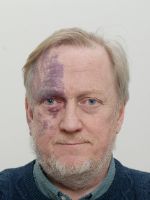
Lars O. Nord is a Professor in the Department of Energy and Process Engineering at NTNU, specializing in thermal energy systems, CO2 capture technologies, and dynamic process modeling. He holds a PhD from NTNU (2010) and a Master's from Virginia Tech (2001). His research focuses on power cycles, turbomachinery optimization, and decarbonization strategies for energy systems. Nord has led projects such as DEXPAND and InnCapPlant, addressing CO2 capture under variable loads and expander efficiency in renewable systems. Current roles: Head of the Thermal Energy research group and teaches courses like Engineering Thermodynamics. Research highlights include thermal energy storage integration, moving bed adsorption processes, and offshore hybrid energy systems. His work spans over 80 publications, emphasizing CO2 capture dynamics, turbine design, and control strategies for flexible power plants. Notable collaborations include SINTEF and Aker Solutions. Nord advises multiple PhD candidates and has mentored alumni now leading roles in industry and academia.
Kristofer Gunnar Paso serves as a Professor in the Department of Chemical Engineering within the Faculty of Natural Sciences at the Norwegian University of Science and Technology (NTNU), where he conducts research at the Ugelstad Laboratory. His work integrates fundamental rheological principles with practical applications in petroleum engineering and sustainable materials development, addressing critical industry challenges through experimental and theoretical approaches. Professor Paso's research spans rheology, polymer technology, enhanced oil recovery, wax deposition mechanics, and nanocellulose applications. His investigations focus on the behavior of complex fluids—including waxy crude oils, biopolymer composites, and nanocellulose suspensions—with emphasis on improving oil transportation efficiency, developing sustainable materials, and understanding interfacial phenomena. Key contributions include modeling wax deposition mechanisms, optimizing pour point depressants, and pioneering nanocellulose applications for enhanced oil recovery under extreme conditions. Analysis of his 2018-2025 publications reveals a strategic evolution from petroleum-focused rheology toward sustainable material solutions. While maintaining strong contributions to flow assurance (40% of recent work), his research increasingly incorporates biocomposites and recycled materials (25% growth since 2020), reflecting industry shifts toward decarbonization. His collaborative approach spans petroleum engineering, food science, and environmental technology, evidenced by publications in Energy & Fuels , Polymers , and Current Opinion in Food Science . No scientific awards were documented in the source material. Professor Paso maintains active collaborations across NTNU and international institutions, though specific advising relationships and grant details remain unreported. His laboratory operations center on the Ugelstad Laboratory's advanced rheological testing facilities, which support investigations into material behavior under reservoir conditions and industrial processing environments.
Thomas Michael Sattich is an Associate Professor at the University of Stavanger , affiliated with the Faculty of Social Sciences and Department of Media and Social Studies . His research focuses on geopolitical implications of sustainability transitions, particularly energy policy interdependence and EU-China relations. PhD in Political Science and Economics Expertise in qualitative methods, mixed methods (cluster analysis), and data visualization Lead researcher on EU-funded digital climate negotiation simulation projects His recent publications examine renewable energy geopolitics, industrial policy competition, and sustainability education frameworks. Methodologically, he specializes in Qualitative Comparative Analysis (QCA) and network analysis, contributing to debates on energy security and regional cooperation.
Professor Ingrid Bouwer Utne is a faculty member at the Department of Marine Engineering, Norwegian University of Science and Technology (NTNU). Her primary research focuses on risk analyses of ships, marine systems, and autonomy, with emphasis on operational safety, maintenance management, and risk control in autonomous maritime technologies. Key Projects: Leader of the Risk Group at NTNU, involved in the SFI Autoship initiative and ERC AdG BREACH project addressing risk-based rationality in autonomous systems. Research Interests: Autonomous systems design, probabilistic risk assessment, safety engineering, and risk-informed decision-making for marine operations. Grants & Funding: Secured funding from the Research Council of Norway, MAROFF, and industry partners for projects like ORCAS (Online Risk Management for Autonomous Ships) and UNLOCK (Supervisory Risk Control). She supervises numerous PhD students and postdocs, focusing on topics such as autonomous vessel navigation, risk modeling for underwater robotics, and decarbonization of maritime systems. Her work bridges theoretical risk analysis with practical applications in marine autonomy and safety systems.
Børge Rokseth is an Associate Professor at the Department of Engineering Cybernetics, Norwegian University of Science and Technology (NTNU). His work focuses on maritime systems, autonomous vessel control, and safety verification. He actively supervises Master's students and contributes to research on risk-informed control systems, hybrid power systems, and systems-theoretic process analysis (STPA). Research Interests: Rokseth's research spans autonomous ship systems, dynamic risk assessment, and safety verification. He explores risk-based decision-making for maritime autonomy, hazard identification in hybrid propulsion systems, and control function allocation in dynamic positioning. His work integrates systems theory, machine learning, and regulatory compliance (e.g., COLREGS) to enhance safety and environmental performance in marine operations. Publications: His recent work includes probabilistic trajectory prediction frameworks for autonomous ships, STPA-based safety analyses, and studies on decarbonization barriers in the maritime industry. These publications emphasize risk modeling, systems-theoretic approaches, and simulation-based verification. Teaching: Rokseth teaches courses such as TTK4130 - Modelling and Simulation, contributing to the education of future engineers and researchers in cybernetics and maritime systems.
Nicola Paltrinieri is a Professor of Risk Assessment at the Department of Mechanical and Industrial Engineering, NTNU (Norway), and an Adjunct Professor at the University of Bologna (Italy). His expertise spans risk assessment, hydrogen technologies, process safety, and data-driven safety management. He holds Chartered Engineer and Chartered Scientist certifications and has served on editorial boards for journals like Safety Science and Journal of Risk Research . Education: PhD in Environmental, Safety and Chemical Engineering (University of Bologna, 2012) Master’s in Chemical and Process Engineering (University of Bologna, 2008) Research Interests: Focuses on hydrogen infrastructure safety, Natech accident analysis, risk-based inspection strategies, and AI integration in safety systems. His work emphasizes sustainable energy transitions and mitigating risks in emerging technologies like hydrogen. Key Projects (2022-2026): H2Glass : Decarbonizing glass and aluminum sectors via hydrogen HyInHeat : Hydrogen technologies for industrial heating HYDROGENi : Norwegian research center for hydrogen/ammonia Awards: Onsager Fellowship (2016–2021) Frank Lees Medal (2012) for safety-related publications Grants & Leadership: Head of NTNU Energy Team Hydrogen, coordinator for EU-funded projects like SUSHy , and active in international risk committees (e.g., EFCE, ESRA). His work bridges academia and industry, with over 8 PhD examinations supervised. Labs/Teams: Leads the NTNU Energy Team Hydrogen and collaborates on initiatives like SH2IFT-2 for safe hydrogen fuel handling. His research group focuses on AI-driven risk analysis and hydrogen infrastructure resilience.
Daniel Beat Müller serves as Professor at the Industrial Ecology Programme within the Department of Energy and Process Engineering at the Norwegian University of Science and Technology (NTNU), Trondheim. His office is located at Realfagbygget Gløshaugen (E4-120) with contact details daniel.mueller@ntnu.no and +4791897755. His research centers on analyzing human needs in relation to material/energy flows and environmental impacts, with two primary focus areas: (i) urban evolution and associated material flows for managing building/infrastructure stocks, and (ii) national/global metal cycles to identify supply constraint reduction strategies. His methodology integrates design, modeling, and decision-making through transdisciplinary stakeholder engagement. Müller teaches Material Flow Analysis and Systems Analysis of the Built Environment for Industrial Ecology and Civil Engineering Master's students. His research outputs demonstrate strong trends in circular cities, critical mineral management, and urban metabolism, with recent publications emphasizing building information modeling, electric vehicle battery systems, and phosphorus cycling. His work consistently addresses resource criticality within energy transition contexts. As (ad interim) chair of the International Society of Industrial Ecology’s MFA-ConAccount section, he contributes to methodological standardization. He previously served on the U.S. National Research Council’s Committee on Defense Stockpiles and remains active in Switzerland's National Research Programme 65 "New Urban Quality". Müller supervises numerous Master's and doctoral students, with thesis topics spanning lithium-ion battery recycling, building stock dynamics, and urban resource flows. His projects frequently involve industry collaboration for practical implementation of material stewardship strategies.
Marius Korsnes is an Associate Professor at the Department of Interdisciplinary Cultural Studies, Faculty of Humanities, Norwegian University of Science and Technology (NTNU). He leads the ERC-funded 'MidWay' project on sufficiency in meat and milk consumption in China and co-leads the NFR INTPART project 'Sociomaterial Transformations in Norway and East Asia (SoMaT)'. He is actively involved in the MEATigation, COJUST, and GreenBlack projects, and previously led research in the FME NTRANS center on deep decarbonization. His work bridges energy, sustainability, and socio-cultural transitions with a strong focus on Norway and China. BA in International Studies, University of Oslo (2009) BA in History, University of Oslo (2011) M.Phil. in Culture, Environment and Sustainability, University of Oslo (2012) PhD in Technology, Innovation and Culture, NTNU (2015) His research centers on sustainability transitions , energy use , renewable energy systems , consumer practices , and sufficiency , particularly in the context of China and Norway. He explores how socio-material practices shape energy and food systems, with attention to justice, inclusion, and policy implications. His work integrates Technology, Innovation and Society (TIS) perspectives and public engagement. His recent publications (2022–2025) reflect a strong trend in energy citizenship , meat and dairy consumption , prosumerism , and sufficiency . These articles analyze low-income energy practices, policy injustices, and cultural dynamics in food and energy transitions. The research is interdisciplinary, combining social science, environmental studies, and policy analysis. ERC Starting Grant (MidWay project) Member, Academy for Young Researchers (AYF) NTNU Star Program Korsnes has advised Master’s students and contributes to transdisciplinary research, including using improvisational theatre for collaborative research. He has been involved in major research centers like FME ZEN and FME CenSES, and his work emphasizes public engagement and societal impact. His projects often involve international collaboration, especially between Norway and East Asia.
Børge Rokseth is an Associate Professor at the Department of Engineering Cybernetics , Norwegian University of Science and Technology (NTNU). His work focuses on integrating advanced methodologies for safety and risk control in autonomous maritime systems. He has held academic positions since at least 2014, with a consistent record of research collaboration and publication. Research Areas: Maritime risk analysis, autonomous ship systems, safety engineering, dynamic positioning systems, systems-theoretic process analysis (STPA) Key Publications: 15 most recent articles cover topics like trajectory prediction for autonomous vessels, hybrid power systems safety, machine learning in risk assessment, and dynamic positioning system reliability His publications (2014-2025) emphasize safety-critical systems in marine environments. Common themes include: Application of STPA for hazard analysis in autonomous shipping Development of risk-informed control systems Integration of machine learning with engineering risk assessment Comparative studies of different ship autonomy levels As a supervisor, Rokseth has guided master's students including Ane Joramo Stokke and Ludvig Vik Løite. His work has been presented at international conferences such as the European STAMP Workshop, International Conference on Conceptual Modeling, and the International Seminar on Safety and Security of Autonomous Vessels.
Asgeir Tomasgard is a Professor of Operations Research at NTNU's Department of Industrial Economics and Technology Management. He serves as Director of NTNU Energy and NTNU Energy Transition Initiative, leading interdisciplinary efforts to model and analyze energy systems at the intersection of technology, economy, and society. His research focuses on decarbonization of transport, industry, and buildings using large-scale optimization models that address dynamics and uncertainty in energy transitions. Board member of Norwegian Climate Foundation, Energi21, and Gassco AS Member of European Academies Science Advice Council (EASAC) and European Work Group for Stochastic Optimization Leads initiatives to integrate renewable energy solutions and assess energy transition pathways He co-authored statements advocating for wind energy and electric vehicle adoption, emphasizing system-wide energy modeling to achieve climate goals. His work highlights the economic viability and necessity of renewable energy expansion alongside energy efficiency improvements.
Jan Emblemsvåg is a Professor at NTNU’s Department of Ocean Space Operations and Civil Engineering in Ålesund, Norway. He has held senior industry roles including Shipyard Director at Vard, SVP Ship Design & Systems at Rolls-Royce Marine, and Managing Director at Midsund Bruk. His academic positions span BI Norwegian Business School, Ålesund University College, and NTNU since 2006. Emblemsvåg’s expertise bridges engineering and management, focusing on sustainable development through rigorous analytical frameworks. Education: PhD from Georgia Institute of Technology (1999), MSc (1995), and Civil Engineering degree from Norwegian Institute of Technology (1994). R&D focuses on six core areas: 1) Product/process development with Lean methodologies, 2) Life-Cycle Costing/Analyses (integrating cost, environmental, and social dimensions), 3) Risk management and uncertainty analysis using Monte Carlo methods, 4) Operations/General management under Lean principles, 5) Project management with Lean integration, and 6) Renewable energy (especially nuclear power’s role in maritime and industrial sectors). Publications emphasize energy policy critiques, nuclear propulsion feasibility, and sustainable shipping. Recent work highlights nuclear energy’s potential as a cost-effective, low-emission solution for maritime transport and industrial needs. Active in policy debates advocating evidence-based energy strategies. Labs/Teams: Leads NTNU’s research initiatives on nuclear propulsion for merchant ships (NuProShip project) and collaborates internationally on maritime safety and evacuation modeling.
Richard Wood is an Adjunct Professor at the Industrial Ecology Programme, Department of Energy and Process Engineering, Norwegian University of Science and Technology (NTNU), and a part-time Professor at the School of Environment, University of Newcastle, Australia. He leads research consultancy XIO-SA, focusing on environmental-economic analysis for public good. His expertise includes sustainability science, systems approaches, and quantitative modeling techniques like carbon footprinting, life-cycle assessment, and input-output analysis. **Research Interests**: Globalization and environmental impacts of trade Sustainable consumption and production Circular economy and material efficiency Environmental footprints and policy design EXIOBASE multi-regional input-output modeling **Awards**: Recognized as a Web of Science Highly Cited Researcher (2019–2022), and Co-Editor in Chief of the Journal of Industrial Ecology. His work has produced over 100 publications, including foundational contributions to EXIOBASE, a global environmental input-output database. **Grants & Labs**: Key developer of EXIOBASE, widely used for environmental footprint quantification. Advises on methodologies for consumption-based carbon accounting and sustainable investment strategies. Active in global policy initiatives addressing climate change and biodiversity loss.
Marianne Zeyringer is an Associate Professor in Renewable Energy Systems at the Department of Technology Systems (ITS), University of Oslo. She leads the Energy Systems Modelling Group and co-leads the SPATUS Thematic Research Group. Her research focuses on designing net-zero energy systems with high shares of renewables, emphasizing interdisciplinary approaches integrating social sciences and climate science. She coordinates the UiO:Energy Convergence Environment EMPOWER and leads initiatives like the dScience Community Forum. Previously, she held roles at UCL Energy Institute, the European Commission Joint Research Centre, and Lawrence Berkeley National Laboratory. She teaches Energy Markets and Regulation and supervises multiple PhD students exploring topics like hydrogen storage, social factors in energy models, and climate risk. She actively contributes to editorial boards and international projects, including the NextGen Energy Climate Group and the ERC grant reFUEL. Her work emphasizes climate-resilient energy systems, spatial-temporal modeling, and equity considerations. Notable contributions include highRES-Europe, a high-resolution electricity system model, and studies on wind energy variability and policy impacts.
Yulia Arinicheva Skåtun serves as an Associate Professor in the Department of Mechanical and Marine Engineering at Western Norway University of Applied Sciences (HVL), Campus Bergen. She teaches advanced courses including Hydrogen Technology, Electrochemistry for Batteries/Fuel Cells/Electrolysers, Thermodynamics, and Applied Fluid Dynamics, with scheduled instruction for MAS354 (Bachelor Thesis), MAS534 (Electrochemistry Systems), MAS550 (Guided Self-Study), and MAS595 (Master Thesis) through 2026. Her research spans ceramics for energy applications , all-solid-state batteries , and hydrogen technologies , with specialized focus on solid electrolytes like LLZO garnets. Current work investigates grain boundary effects in battery materials and hydration mechanisms in lithium-conducting ceramics, bridging fundamental materials science with practical energy storage solutions. She coordinates the EU Erasmus+ H2CoVE project building hydrogen competency and collaborates with FME HyValue, Norway's hydrogen research center. As leader of the HVL Hydrogen Team, she integrates experimental electrochemistry with thermodynamic modeling for next-generation energy systems. Her doctoral training at Forschungszentrum Jülich/RWTH Aachen focused on ceramic matrices for nuclear waste immobilization, followed by postdoctoral research on solid-state batteries. International research stays include UC Davis, ESRF, ICSM Marcoule, JRC-ITU, HZDR, and University of Bergen.
Dag Harald Claes is a Professor of Political Science at the University of Oslo's Department of Political Science within the Faculty of Social Sciences. He currently heads the bachelor's program in International Studies and maintains a secondary appointment as professor 2nd at Molde University College. His academic career includes previous positions at the Fridtjof Nansen Institute and the Arena program. Professor Claes specializes in international politics with particular focus on energy policy and international political economy. His research spans international energy governance, OPEC dynamics, Norwegian petroleum policy, and the geopolitics of oil markets. He has published extensively on Arctic offshore petroleum, EU energy governance, and the financialization of oil markets. His recent publications reveal a strong focus on the intersection of energy politics and international relations, with particular attention to how global energy institutions navigate the transition toward decarbonization. His work demonstrates consistent engagement with both theoretical frameworks of international political economy and practical policy challenges in energy governance. Professor Claes teaches several key courses including STV1200: International Politics, STV2220: International Political Economy, STV4282: The Politics of Global Energy, and STV4523: Topics in Political Economy. He also oversees the INTER1000 introductory course in international studies and INTER3090 thesis topics. His academic contributions include numerous books such as The Politics of Oil: Controlling Resources, Governing Markets and Creating Political Conflicts (2018), The Politics of Oil-Producer Cooperation (2001), and co-edited volumes including the Handbook of OPEC and the Global Energy Order (2020).

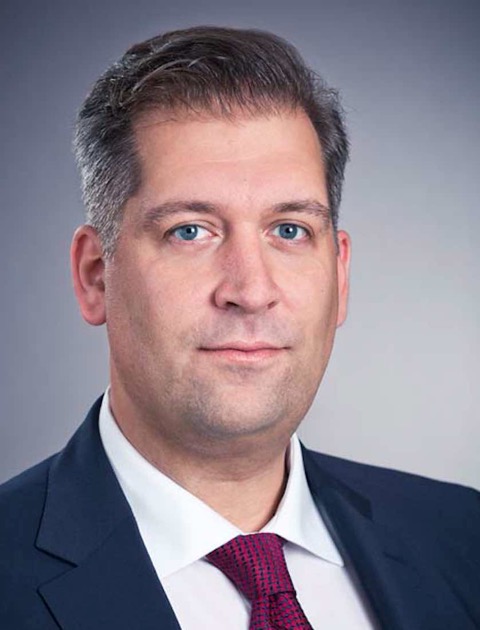

/marianze/marianne-zeyringer.jpg)