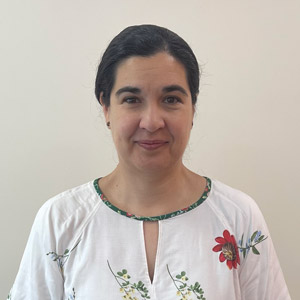
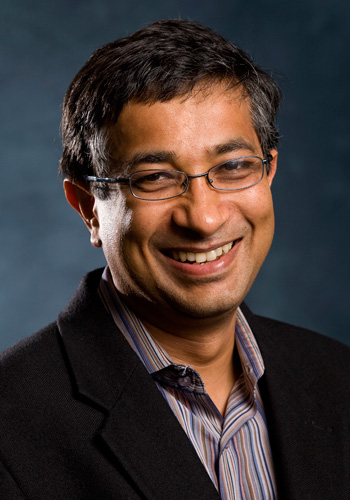
K. Bruninx is a Researcher at the Delft University of Technology , affiliated with the School of Technology, Policy and Management and the Energy and Industry department. His work focuses on energy systems, electricity markets, and decarbonization technologies. Research interests: Capacity remuneration mechanisms in decarbonized power systems Carbon price risk management for low-carbon industries Demand response optimization via residential heat pumps Low-emission electricity purchasing frameworks Long-duration energy storage dynamics Recent publications highlight trends in energy market design , carbon pricing instruments , and AI-driven optimization for sustainable systems. Key subfields span capacity markets , distributed energy resources , and interannual storage modeling . Active projects: BATT-AI (2025-2030): Integrating artificial intelligence with energy storage optimization
Mario Liebensteiner is a Junior Professor (tenure track W3) for Economics with a focus on Energy Markets and Energy System Analysis at Friedrich-Alexander University Erlangen-Nuremberg (FAU). He is affiliated with the Department of Business, Economics, and Social Sciences (FAU WiSo) and contributes to the interdisciplinary research focus on Energy Markets and Energy System Analysis. Liebensteiner is also a member of the expert panel Energy Systems of the Future (ESYS) of the German Academies of Sciences and Humanities, providing expertise on energy transition and market design. Liebensteiner completed his doctorate in economics at Vienna University of Economics and Business (WU Vienna) and earned his diploma in economics from Johannes Kepler University Linz (JKU Linz) and City University of Hong Kong. Prior to his current position, he worked as a postdoctoral and pre-doctoral researcher at Technical University of Kaiserslautern and Vienna University of Economics and Business. His research focuses on the economic analysis of energy markets, environmental policy, and the transition to sustainable energy systems. Liebensteiner examines the interplay between renewable energy integration, carbon pricing mechanisms, electricity market design, and the challenges of sector coupling in the energy transition. His work investigates how market structures and policy instruments affect investment decisions, system flexibility, and emissions reduction in the power sector, with particular emphasis on the German energy context. He employs both theoretical modeling and empirical analysis to address these complex energy economics questions. Analysis of Liebensteiner's recent publications reveals a strong focus on the economic dimensions of the energy transition, particularly examining the interactions between renewable energy integration, carbon pricing, and electricity market design. His work increasingly addresses the challenges of sector coupling, flexibility needs in power systems, and the socio-economic impacts of energy policies. A notable trend is his examination of both theoretical market mechanisms and their practical implementation in the German context, with growing attention to cross-border electricity trade effects and the integration of hydrogen technologies in future energy systems. Member of the expert panel Energy Systems of the Future (ESYS) of the German Academies of Sciences and Humanities Research published in leading energy economics journals including Energy Economics, Applied Energy, and Energy Policy Liebensteiner collaborates with researchers across disciplines through the Energy Campus Nuremberg (EnCN) and participates in strategic partnerships with energy sector companies organized in the Nuremberg Energy Region (Energieregion Nürnberg eV). His research is connected to the DFG Collaborative Research Center on gas networks and markets, suggesting involvement in significant research funding. While specific grants aren't detailed in the provided information, his publication record in high-impact journals indicates successful research funding acquisition. Liebensteiner is part of the Energy Markets and Energy Systems research group at FAU WiSo, which collaborates closely with engineers at the Energy Campus Nuremberg (EnCN). This interdisciplinary team works on the transformation of electricity and gas sectors, sustainable mobility concepts, sector coupling issues, and business models for decentralized smart energy systems. The research group maintains strategic partnerships with numerous energy sector companies through the Nuremberg Energy Region, aiming to implement secure, cost-effective, climate-friendly, and sustainable energy solutions.
Francesco Creta serves as Associate Professor in the Department of Aeronautical and Space Engineering at Sapienza University of Rome's School of Engineering. His research focuses on advanced combustion phenomena with emphasis on hydrogen and ammonia fuels for decarbonization applications. His primary research interests include thermodynamic instability in premixed flames , turbulent combustion modeling , and rocket propulsion systems . Creta investigates fundamental flame behaviors through direct numerical simulation (DNS) and develops data-driven models for thermodiffusively unstable flames, particularly examining hydrogen-ammonia mixtures for sustainable energy applications. His work bridges theoretical combustion physics with practical engineering solutions for gas turbines and liquid rocket engines. Analysis of his 15 most recent publications reveals a strong trend toward hydrogen-ammonia combustion for decarbonization, with significant focus on flame instability mechanisms (particularly Darrieus-Landau and thermodiffusive effects), data-driven modeling approaches , and rocket engine applications . His research increasingly integrates machine learning techniques with traditional combustion modeling to address complex flame behaviors under high-pressure conditions. Creta maintains active research collaborations with leading combustion scientists across Europe, evidenced by co-authorship on high-impact publications in Proceedings of the Combustion Institute , Combustion and Flame , and Physics of Fluids . His work receives consistent recognition through publication in top combustion venues and presentation at major international conferences including the European Combustion Meeting and AIAA SciTech Forum. His research group conducts advanced numerical simulations of combustion systems, with particular expertise in liquid rocket engine modeling, transcritical flows, and flame instability analysis. Current projects focus on enabling hydrogen and ammonia combustion for gas turbine retrofitting and next-generation propulsion systems, addressing critical challenges in flame stability and pollutant formation.
Cornelius Masuku is an Associate Professor of Engineering Practice at Purdue University's Davidson School of Chemical Engineering, where he has been since August 2020. He holds a B.Sc. Eng. (2005) and Ph.D. (2012) from the University of the Witwatersrand, followed by a Postdoctoral Fellowship at Carnegie Mellon University (2017–2020). His research focuses on sustainable energy and decarbonization of chemical processes, with emphasis on reactor design and modeling, catalysis, and process intensification. Key areas include CO₂-free hydrogen production, Fischer-Tropsch synthesis optimization, and photocatalytic processes for renewable fuels. He investigates innovative technologies like induction heating for steam methane reforming and electrification of industrial processes to enhance energy efficiency and reduce emissions. Recent work highlights include studies on multi-dimensional reactor modeling, decarbonization strategies through electrification, and the development of sustainable downstream refining options for biomass-to-liquid (BTL-FT) fuels. His interdisciplinary approach integrates computational fluid dynamics, process optimization frameworks, and catalytic materials research. While specific grants or student advisees are not detailed here, his research is supported through institutional and collaborative initiatives. He is affiliated with Purdue’s chemical engineering research groups focused on sustainable fuels and process engineering. Dr. Masuku’s contributions span over 50 peer-reviewed publications since 2007, addressing topics ranging from Fischer-Tropsch product distribution to solar-driven hydrogen production. His work bridges fundamental catalytic research with scalable industrial applications.
Dr. Daniel Cohan is a Professor of Civil and Environmental Engineering at Rice University. He leads the Cohan Research Group, focusing on air quality modeling, energy systems, and climate policy. His work integrates atmospheric chemistry with policy analysis to address challenges like ozone pollution, renewable energy transitions, and agricultural emissions. Dr. Cohan earned a B.A. in Applied Mathematics from Harvard University and a Ph.D. in Atmospheric Sciences from Georgia Tech. Research interests include photochemical modeling, climate change mitigation, and the health impacts of pollutants. He has authored over 50 peer-reviewed publications and the book Confronting Climate Gridlock , which explores policy solutions for clean energy. Dr. Cohan serves on the U.S. EPA’s Board of Scientific Counselors and has received the NSF CAREER Award. Recent publications highlight wind-solar energy potential in Texas, health impacts of gas flaring, and soil nitrogen emissions modeling. His work emphasizes interdisciplinary approaches to environmental challenges, combining engineering, economics, and policy.
Dara O'Rourke is an Associate Professor in the Department of Environmental Science, Policy, & Management at the University of California, Berkeley. His research focuses on sustainability transitions, industrial decarbonization, environmental justice, and labor studies, with a particular emphasis on regulating the environmental and social impacts of industrial activities. He collaborates with NGOs and community organizations in the US, Asia, and globally to advance strategies for sustainable industrial practices and equitable governance. Education: Ph.D. in Energy and Resources, UC Berkeley (1999) SB in Mechanical Engineering, MIT (1989) His research interests include analyzing global supply chains, corporate sustainability, and the intersection of environmental protection with labor rights. Notable projects involve studying the impacts of manufacturing on communities in Vietnam, China, and Indonesia, as well as developing data-driven governance frameworks for environmental improvement. Research Group: The O'Rourke Group focuses on sustainability transitions, industrial ecology, and environmental justice. Current students include Tosin Folorunso (focusing on sustainable fashion and textile waste) and Sangcheol Moon (working on global environmental governance and plastic waste). His work emphasizes practical solutions through partnerships with industry and civil society, aiming to bridge gaps between academic research and real-world applications in sustainability.
Christoph Bertram is an Associate Research Professor at the Center for Global Sustainability (CGS), University of Maryland School of Public Policy. His research focuses on climate change mitigation strategies, energy policies, and the interplay between mid-term climate actions and long-term goals. He holds a PhD in Economics from Technische Universität Berlin and master's degrees in Physics and Political Science from Universität Tübingen. Key areas of expertise include carbon lock-in analysis, nationally determined contributions (NDCs), net-zero targets, and the application of integrated assessment models. Bertram has contributed to major international projects such as the Network for Greening the Financial System (NGFS) scenarios and IPCC's Sixth Assessment Report. His recent work evaluates high-ambition decarbonization pathways for countries like South Korea and Indonesia, emphasizing policy design, institutional constraints, and transition risks. He co-authored analyses on methane emissions, land-sector climate strategies, and the impacts of U.S. legislation like the Inflation Reduction Act. Bertram remains affiliated with the Potsdam Institute for Climate Impact Research (PIK) as a guest researcher, where he previously led the International Climate Policy team. His research consistently bridges technical modeling with policy-relevant insights, addressing both global and national climate challenges.
Dr. Sihang Liu is an Assistant Professor in the School of Computer Science at the University of Waterloo. Prior to this role, he served as a visiting faculty member at SystemsResearch@Google. He holds a PhD from the University of Virginia, where his research was supported by the Google Fellowship Award. His academic career has been marked by contributions to computer architecture, systems, and persistent memory technologies. Dr. Liu's research interests span computer architecture, systems, and cybersecurity, with a focus on persistent memory systems, energy-efficient computing, and data center optimization. His work bridges hardware-software co-design and explores challenges in scalable computing, fault tolerance, and sustainable AI systems. His recent publications highlight advancements in adaptive memory tiering (HybridTier), carbon intensity forecasting (EnsembleCI), and securing persistent memory (Side-Channel Attacks on Optane). These contributions underscore his commitment to addressing critical issues in modern computing systems' performance, security, and environmental impact. Awards: Google Fellowship Award (PhD), NVMW Memorable Paper Award Finalist (2019), 2019 MICRO Top Picks Honorable Mention Professional Service: Program committees for ISCA, MICRO, ASPLOS; Artifact evaluation roles in leading conferences As an advisor, Dr. Liu mentors a diverse group of students, including current PhD candidates Henry Tian and Desen Sun, and numerous undergraduates. His lab focuses on innovation in sustainable computing and resilient systems design.
Peter Alstone is an Associate Professor at California Polytechnic State University, Humboldt's School of Engineering. His research focuses on distributed electricity technology, demand response systems, off-grid energy solutions in developing regions, and the nexus of information technology with energy systems. He holds a PhD in Energy and Resources from UC Berkeley, an MS in Environmental Systems and Technology from Humboldt State University, and a BS in Chemical Engineering from North Carolina State University. PhD: Energy and Resources (UC Berkeley) MS: Environmental Systems and Technology (Humboldt State University) BS: Chemical Engineering (North Carolina State University) Dr. Alstone's work emphasizes sustainable energy access, grid resilience, and decarbonization strategies. His research bridges technical innovation with policy implications, particularly in underserved regions. He leads studies on demand response mechanisms to support renewable energy integration, wildfire resilience in rural infrastructure, and the environmental impacts of off-grid fossil fuel generators. His recent articles analyze California's demand response potential through 2050, global off-grid energy challenges, and wildfire mitigation technologies for Indigenous communities. He collaborates on grid-interactive microgrids and energy-efficient technologies for developing countries. Alstone's research has contributed to understanding the 'dirty footprint' of fossil-fuel reliant off-grid systems and advancing LED lighting market dynamics in sub-Saharan Africa. His work frequently intersects with environmental justice and climate adaptation. He is affiliated with the Sustainable Energy Research Center (SERC) at Humboldt State University and actively engages in community-oriented energy projects.
Bruno Gallotta is a Lecturer in Operations and Business Technology Management at the University of Derby's College of Business, Law and Social Sciences. His research focuses on sustainability integration in business processes, particularly supporting Small and Medium Enterprises (SMEs) in adopting pro-environmental practices and transitioning towards net-zero goals. Gallotta has collaborated extensively on regional sustainability initiatives, including studies on clean growth trends in the East Midlands and innovation dynamics in São Paulo's SME sector. He holds a PhD from the University of Derby (2018) titled 'Implementing Sustainability Initiatives in Business Processes,' which explored frameworks for embedding environmental considerations into organizational operations. His work bridges business strategy, digital transformation, and environmental policy, with emphasis on place-based enterprise support systems. Research outputs emphasize conceptual frameworks for SME sustainability transitions, net-zero performance measurement systems, and the role of business networks in environmental growth. His 2024 studies highlight digital transformation's role in achieving net-zero metrics and unlocking SME potential through structured enterprise support. Earlier work includes analysis of low-carbon workforce skills gaps and application of Delphi methodologies in validating sustainability frameworks. Awards and grants: No explicit awards noted, but his research has been funded through institutional projects like the D2N2 Low Carbon Sector Study. He collaborates with local and regional governments on policy-implementation strategies. Labs/Teams: Active in the University of Derby's sustainability research group, contributing to interdisciplinary projects on green growth and enterprise development.
Dr Frank Alparslan is a Senior Lecturer in Project Management at the University of Northampton's Department of Human Resource Management & Organisational Behaviour. He is affiliated with the Centre for Sustainable Business Practices and contributes to the UN Sustainable Development Goals through his research. Frank holds a PhD in Business & Law from Istanbul Gelisim University (2023), an MBA in Aviation from the University of North Alabama (2004), and a Bachelor's in Aviation Business Administration (2001). His research interests span aviation sustainability, project management, cybersecurity, and sustainable logistics. Key focuses include decarbonization strategies, safety management systems, and the impact of emerging technologies on business operations. He actively engages in interdisciplinary projects addressing post-growth approaches to logistics, space sustainability, and digital inclusion. Frank has authored/co-authored 6 research outputs since 2004, including studies on multinational enterprise strategies, aviation safety culture, and synthetic fuels for rural transport. His work emphasizes practical applications and policy impacts across industries. Frank is an active peer reviewer for journals like the Aeronautical Journal and International Business Review. He mentors PhD candidates exploring aviation sustainability, regulatory frameworks, and digital technologies in supply chains. His teaching emphasizes inclusive Active Blended Learning (ABL) methodologies.
Hendrik Lens is a **Professor for Power Plant and Grid Systems** and **Director of the Institute** at the University of Stuttgart's **Institute of Combustion and Power Plant Technology (IFK)**. He leads the **Power Generation and Automatic Control (SuA) department**, focusing on advanced grid technologies and energy system optimization. His research emphasizes **grid stability**, **renewable energy integration**, and **converter control strategies**. Key contributions include studies on grid-forming converters, inertia-aware generation planning, and dynamic network equivalents. He collaborates internationally on projects like the *VerbundnetzStabil initiative* analyzing interconnected power systems. Publications span **18 journals/conferences in 2024 alone**, with a focus on smart grid technologies and decarbonization strategies. His work addresses challenges such as frequency containment reserves, distributed generation impacts, and stochastic unit commitment tools. Operates within the Institute of Combustion and Power Plant Technology, contributing to both academic and applied research in sustainable energy systems.
Dr. Rosa M. Fernandez Martin is a Senior Lecturer in Economics and Finance at Keele Business School (Keele University, UK), specializing in sustainability economics. Previously, she held academic roles at UNED (Spain), University of Birmingham, University of Chester (as Programme Leader in Economics and Deputy Head of Department), and University of Warwick (Associate Professor in Global Sustainable Development). Her research focuses on renewable energy policies, food sustainability, corporate social responsibility, and European environmental governance. She has extensive teaching experience in micro/macroeconomics, environmental economics, and development economics. Her research explores transdisciplinary issues such as green finance, SME sustainability practices, and community engagement in energy transitions. She leads the UACES-funded research network on Europe’s role in addressing climate change and sustainable development. She actively contributes to peer-reviewed journals as an associate editor and serves as a reviewer for European Commission initiatives. Dr. Fernandez Martin has supervised PhD students in corporate sustainability topics and published widely across journals and book chapters. Her work emphasizes policy coherence, decarbonization strategies, and the Quintuple Helix Innovation Model for sustainability transformations.
Jing Li is an Associate Dean (Research & Innovation) and Reader in Accounting at the School of Management, University of Bradford, within the Faculty of Management, Law & Social Sciences. She holds academic leadership roles such as Director of Studies for BSc Accounting & Finance, Deputy Head of Accounting, Finance & Economics Division, and Impact Champion. Her administrative contributions include coordinating REF2021 submissions for UoA C17, C19, and A4. Education: PhD in Accounting (University of Bradford), MA in Finance, Accounting, and Management, and a Bachelor’s in Business and Management Studies. Research focuses on intellectual capital reporting, corporate governance, financial accounting, big data analytics in finance, and financial literacy. Recent work explores decarbonization via blockchain, energy market resilience, and IoMT in healthcare. Publications span 40+ articles and 5 research projects, including collaborations on financial literacy with Flicker Associates and ICAS-funded studies on intellectual capital disclosure. Teaching expertise includes Financial Accounting, Corporate Reporting, and valuation methods. Supervised numerous MSc/MBA dissertations on accounting and finance topics. Grants include £20k for a financial literacy project (with Flicker Associates) and £12k from ICAS on intellectual capital disclosure. Research themes emphasize sustainability, innovation, and interdisciplinary applications of technology in finance and healthcare.
Ramanan Krishnamoorti is a distinguished academic and administrator at the University of Houston (UH), serving as Vice President for Energy and Innovation, and holding professorships in Petroleum Engineering, Chemistry, and Chemical & Biomolecular Engineering. He leads the Cullen College of Engineering as a key figure in energy innovation and interdisciplinary research. Education: Ph.D. in Chemical Engineering, Princeton University (1994) B.Tech in Chemical Engineering, Indian Institute of Technology Madras (1988) Advanced studies in Materials Science (Cornell University) and Chemical Engineering (California Institute of Technology). Research Interests: Focuses on sustainable materials, polymer science, carbon capture technologies, and energy systems. His work bridges academia and industry, addressing challenges in decarbonization, nanocomposite materials, and energy workforce development. He explores innovative solutions for environmental sustainability through advanced materials and policy-driven initiatives. Leadership Roles: Chief Energy Officer at UH (2013–present) Interim Vice President/Vice Chancellor for Research & Technology Transfer (2015–present) Past Chair of the Chemical & Biomolecular Engineering Department (2008–2013) Associate Dean for Research in the College of Engineering (2005–2008) Key Contributions: His research spans polymer functionalization, direct air capture systems, and energy policy. Recent work emphasizes upcycling plastics, nanomaterials for thermal management, and microcredential programs to reskill the energy workforce. He collaborates across disciplines to advance sustainable energy paradigms and mitigate climate impacts. Labs & Teams: Leads interdisciplinary teams in the Cullen College, focusing on energy innovation and materials science. Collaborates with industry partners to translate research into practical applications, such as carbon capture technologies and advanced composites.