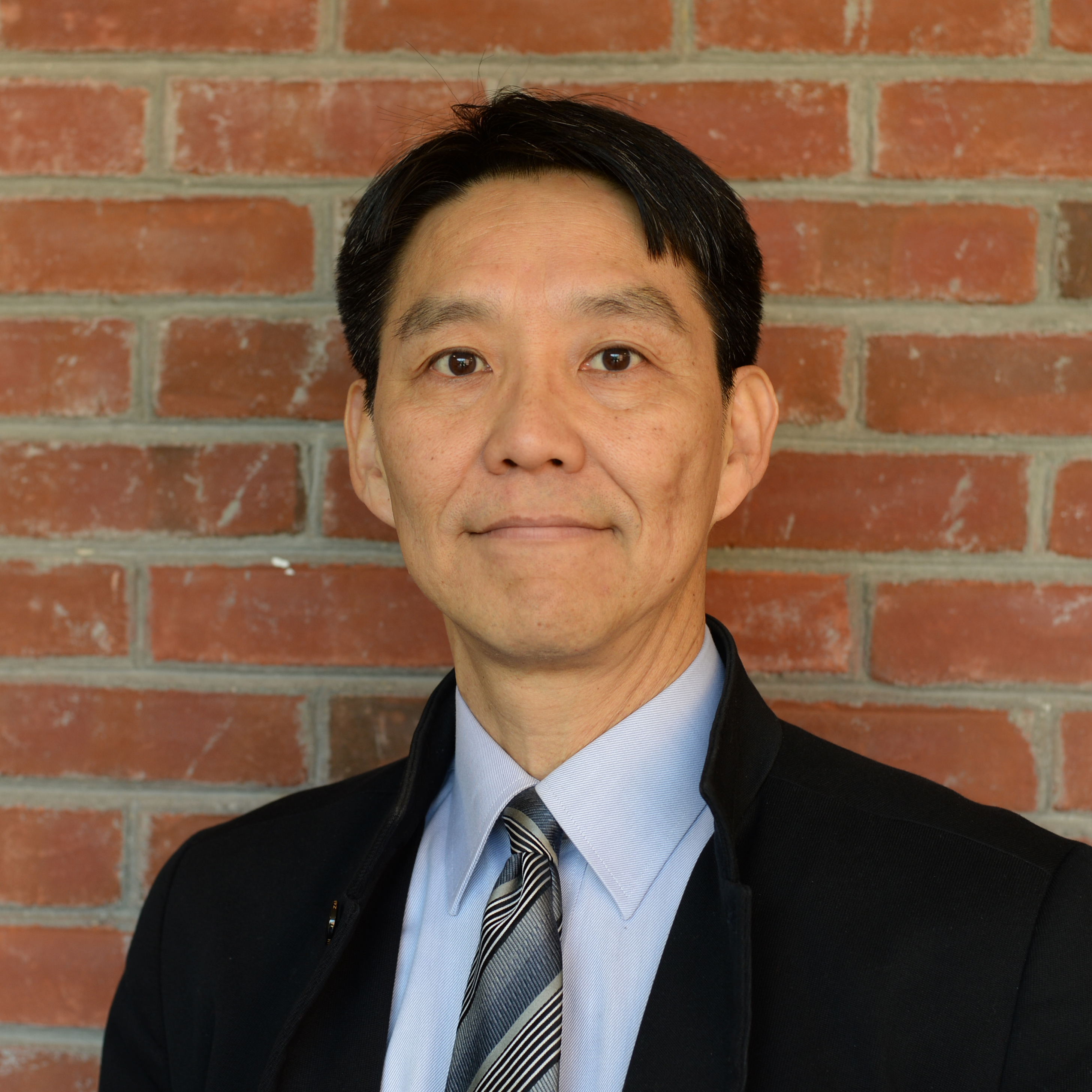
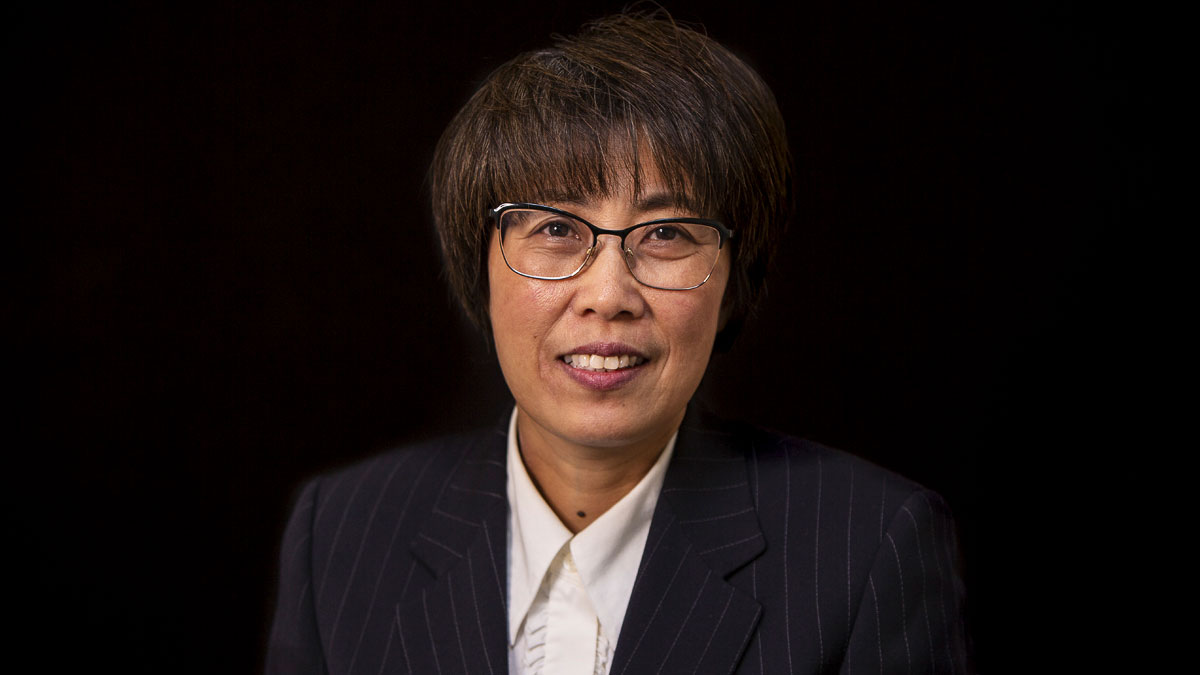
Hiroyuki Iseki is Associate Professor of Urban Studies and Planning at University of Maryland's School of Architecture, Planning and Preservation, and Research Affiliate with the National Center for Smart Growth. His work examines interactions between transportation, land use, equity, and environmental sustainability. Research focuses on: Transit-oriented development impacts on firm location Equity in public transit finance Climate policy implementation in urban planning Active transportation infrastructure analysis Recent publications analyze post-pandemic transit demand shifts, campus multimodal conflicts, and bicycle accessibility modeling. Methodological strengths include spatial econometrics, GIS analysis, and longitudinal data approaches. Work increasingly addresses climate adaptation in transportation planning and EV charging grid impacts. Research contributes to urban policy through WMATA collaborations and Japanese municipal climate planning studies. Current PhD program directorship advances urban planning analytics training.
Joshua Newell is a Professor at the School for Environment and Sustainability (SEAS) at the University of Michigan, currently on sabbatical for the 2024-2025 academic year. His work bridges human-environment geography, urban sustainability, and industrial ecology, focusing on environmental justice and sustainable urban systems. PhD in Geography, University of Washington MA in Geography, University of Washington BA in History, Brown University Newell's research explores two core areas: Metabolisms of Urban Infrastructure and Form (built environment, transport, energy, and water infrastructure) and "Ethical" Urban Consumption and Commodities (governance of product consumption and global 'green' citizenship). He employs multi-scalar approaches integrating industrial ecology (footprinting, life-cycle analysis) and spatial analysis (land use/land cover change). Recent publications highlight his focus on urban metabolism modeling, climate change denial geographies, food-energy-water nexus analysis, and environmental justice in urban agriculture and resource distribution. His work has received significant NSF funding, including projects like the FEW-Meter and the Sustainability Hoofprint of Cities. Web of Science Highly Cited Paper (Top 1% of Social Sciences, 2019) Newell leads the Urban Sustainability Research Group and contributes to interdisciplinary PhD workshops on urbanism, sustainability, and resilience. His teaching includes the undergraduate course Sustainability and Society and graduate-level Urban Sustainability .
Paul Dodds is Professor of Energy Systems at University College London's Bartlett School of Environment, Energy & Resources, where he holds joint appointments at the UCL Energy Institute and the Institute for Sustainable Resources. He serves as the Faculty Graduate Tutor for the Bartlett Faculty of the Built Environment, overseeing all doctoral research programs. His academic progression at UCL has been steady, moving from Research Associate (2011-2014) to Senior Research Associate (2014-2015), Lecturer (2015-2016), Senior Lecturer (2016-2018), Associate Professor (2018-2020), and finally to Professor. His educational background includes a PhD from the University of Leeds (2010) focused on climate change and agriculture in Senegal, where he developed a new crop model for adaptation research and created detailed meteorological datasets for West Africa. He also holds a Master of Natural Science (Honours) from the University of Nottingham (2000). Dodds specializes in energy systems modelling with particular expertise in hydrogen and bioenergy systems, and the importance of energy storage. His research examines the interactions between society and the environment, with a focus on energy and food systems. He has developed the UK TIMES energy systems model, which has replaced the UK MARKAL model and is now co-developed with the UK Department of Business, Energy and Industrial Strategy (BEIS). This model has provided underpinning evidence for the UK's Clean Growth Strategy and Net Zero Strategy. His methodological contributions include formalizing a theoretical approach to analyzing the evolution of energy system models using 'model archaeology'. Analysis of his recent publications reveals a strong focus on hydrogen energy systems, with multiple papers examining hydrogen trade pathways, integration methods, and environmental impacts. His work increasingly addresses the geopolitical dimensions of energy transition, as seen in studies about Russian gas pivots to Asia and global energy scenarios. He maintains expertise in energy system modeling techniques while expanding into practical applications for policy development, particularly regarding the UK's net-zero transition. Dodds has supervised 15 PhD students at UCL, with eight under his primary supervision. His professional activities include serving as the UK Alternate Delegate to IEA Hydrogen since 2017, acting as a PhD External Examiner at the University of Edinburgh, and participating in the EPSRC Peer Review College. He has contributed to multiple government initiatives, including the UKERC Future of the Gas Networks workshop and representing the UK Government at IEA ETSAP meetings. He teaches an undergraduate module on 'Energy and Environmental Systems Modelling' and guest lectures on several MSc courses. His research group focuses on energy system modeling, with particular emphasis on the UK TIMES model development and application. His work often involves collaboration with government bodies, particularly BEIS, and he has coordinated significant projects like seven reports on overshoot pathways for the UK Government.
Ben Amor is a Full Professor in the Department of Civil Engineering at the Faculty of Engineering, Université de Sherbrooke, where he serves as Director and Founder of the CIRMIB (Integrated Research Center on Sustainable Materials, Infrastructure and Buildings) and Director of Sustainable Development for the Faculty of Engineering. Previously, he held associate professor positions at Université Laval and Université de Sherbrooke. His research focuses on Life Cycle Assessment (LCA) methodologies applied to sustainable construction, circular economy implementation in building sectors, and building decarbonization strategies. He has pioneered regionalized LCA approaches for Arctic regions and developed frameworks for carbon budgeting in building sectors. His work bridges environmental science with practical engineering solutions for sustainable infrastructure. His recent publications reveal strong trends in building decarbonization pathways, material circularity in construction, and the integration of biogenic carbon accounting. He emphasizes both technological solutions and behavioral change strategies for achieving net-zero emissions in the built environment. ACLCA 2018 Life Cycle Assessment Leadership Award Life Cycle Academy Awards 2019 (two awards) Quebec Public Administration Excellence Prize 2023 for Scientific Collaboration Multiple university teaching awards including the Jacques-Bazinet Merit Award Professor Amor leads significant research grants totaling over $20 million, including NSERC Alliance grants for sustainable building materials and a $2 million Research Chair on Net Zero Strategies and Life Cycle Assessment. He directs the CIRMIB research center and the LIRIDE (Interdisciplinary Research Laboratory in Sustainable Engineering and Eco-design), supervising multiple doctoral candidates. His work includes developing LCA tools for Quebec's construction industry and advising government bodies on sustainable procurement policies.
Dr. Bhavna Sharma is an Associate Professor and Director of the Chase L. Leavitt Master of Building Science Program at the USC School of Architecture. Her work focuses on decarbonization, bio-based materials innovation, and sustainable healthcare infrastructure. She leads the Keck USC Sustainable Healthcare Initiative (KUSHI) to advance environmentally conscious healthcare systems. Dr. Sharma holds a Ph.D. in Civil and Environmental Engineering from the University of Pittsburgh, with additional degrees in Art History and Architecture. Her research spans structural systems optimization from material harvesting to building-scale applications, emphasizing bio-composites like bamboo and timber. She co-chairs USC's Presidential Working Group on Sustainability, contributing to Assignment: Earth climate goals. Courses taught include seismic design, structural systems, and building science integration. Key research areas include lifecycle assessment in healthcare, seismic-resistant designs, and interdisciplinary standards for non-conventional materials. Her work bridges material science, architectural practice, and policy to address global sustainability challenges.
Dr Stathis Tingas is a Lecturer at Edinburgh Napier University's School of Computing Engineering and the Built Environment. His research focuses on hydrogen fuel systems, combustion engineering, and sustainable transportation technologies. With numerous publications in high-impact journals and conference proceedings, Dr Tingas has established himself as a significant contributor to the field of alternative energy systems. Dr Tingas' research interests center on hydrogen and ammonia as alternative fuels for transportation, with particular emphasis on combustion characteristics, engine performance, and emissions control. His work spans theoretical modeling, computational analysis, and practical applications for decarbonizing various transportation sectors including aviation, heavy-duty vehicles, and maritime transport. Recent publications demonstrate his focus on hybrid propulsion systems combining fuel cells with traditional engine technologies. Dr Tingas' publication record shows consistent productivity with research outputs spanning from fundamental combustion science to applied engineering solutions. His work often employs computational singular perturbation techniques for analyzing complex combustion phenomena, with recent focus shifting toward practical applications of hydrogen and ammonia fuels in real-world engine systems. The trend in his publications indicates growing emphasis on zero-emission transportation solutions aligned with net-zero targets. Dr Tingas serves as a second supervisor for PhD students, including Richard Wallace who is working on subsurface hydrogen storage simulation. He has successfully secured multiple research grants from UK government bodies including the Department for Science, Innovation & Technology, Scottish Government, and the Royal Society of Edinburgh, with projects totaling over £500,000 in funding. His current research portfolio includes projects focused on accelerating clean energy technology development, creating sustainable cities, advancing electromobility, and developing zero-carbon hydrogen engines for heavy transport applications. These projects demonstrate his commitment to addressing practical challenges in the transition to sustainable energy systems.
S. Mohadeseh Taheri-Mousavi is an Assistant Professor in the Department of Materials Science and Engineering at Carnegie Mellon University (CMU), part of the College of Engineering. She joined CMU in September 2022 after postdoctoral appointments at MIT and Brown University. Her research is supported by major grants from NASA STRI, DARPA, the Army Research Laboratory, and the Naval Nuclear Laboratory, and she is affiliated with the NextManufacturing Center and the Wilton E. Scott Institute for Energy Innovation. Her educational background includes a Ph.D. from EPFL, Switzerland, and M.Sc. and B.Sc. degrees from Sharif University of Technology, Iran. She was awarded both early and advanced Swiss National Science Foundation fellowships during her postdoctoral studies. Taheri-Mousavi’s research focuses on the intersection of materials science, mechanical engineering, and computer science. She develops multi-scale computational models and AI-driven frameworks—such as AlloyGPT and generative AI agents—to design next-generation structural alloys, particularly for additive manufacturing and extreme environments. Her work emphasizes materials sustainability, industrial decarbonization, and uncertainty quantification in alloy design. The integration of machine learning with Integrated Computational Materials Engineering (ICME) and CALPHAD methods enables rapid exploration of high-dimensional composition and processing spaces. Her recent publications (2023–2025) show a strong trend toward AI/ML applications in alloy discovery, hydrogen embrittlement modeling, and high-temperature aluminum and tungsten alloys. These works reflect a deep commitment to accelerating materials innovation through human-AI collaboration and smart experimental validation. Her scientific honors include prestigious Swiss National Science Foundation fellowships. She has also received seed funding from the Scott Institute for Energy Innovation to study hydrogen embrittlement. She advises a dynamic team of doctoral students and a postdoctoral researcher, working on topics including hydrogen embrittlement, generative AI for welding, and gradient alloys. Her research is funded by high-impact grants from NASA, DARPA, the Army, and the Naval Nuclear Laboratory, supporting transformative projects in structural alloy design. She leads the Taheri-Mousavi Group, which operates within CMU’s Materials Characterization Facility and the NextManufacturing Center. The group focuses on developing novel AI-integrated computational frameworks to guide efficient and intelligent experimentation in alloy development.
Maria Sharmina is a Professor in Energy and Sustainability at The University of Manchester’s School of Engineering, affiliated with the Tyndall Centre for Climate Change Research and Policy@Manchester. She holds roles including Co-Director of Policy@Manchester, UKRI Digital Security & Resilience Theme advisor, and Sustainable Robotics Committee member at BSI. Her work focuses on low-carbon business models, circular economy, and climate policy, with leadership in projects like the £6M UKRI BuildZero programme. Education: PhD in the Tyndall Centre, background in economics and statistics. She advises governments (e.g., UK Government Office for Science, BEIS) and has served on University Senate and Departmental Research Leadership roles. Research Interests: Energy systems transformation, food-energy-water nexus, emission scenarios, and policy design. She emphasizes sustainable innovation, net-zero housing, and plastics circularity. Key projects include analyzing hydrogen’s role in decarbonization, SME compliance with plastics policies, and financing smart local energy systems. Awards: 2024 Social Responsibility Medal and Making A Difference Award for contributions to social/environmental impact via entrepreneurship. Her work bridges academia and policy, with outputs including 79 research publications and 16 projects. Grants/Consultancy: Principal Investigator on BuildZero (UKRI £6M), funded studies on community energy finance, and consultancy with Oxfam, Manchester City Council, and the Co-operative Group. Labs/Teams: Lead researcher at Tyndall Manchester, collaborates across disciplines (e.g., Digital Futures Institute) to address sustainability challenges through systemic approaches.
John Mandyck is an Adjunct Professor of Sustainability at the Leonard N. Stern School of Business, New York University, and the University of Connecticut School of Business. He brings over three decades of market and policy experience in sustainability, climate change, and urban resilience. His work bridges academia, corporate leadership, and public policy, with a focus on decarbonizing the built environment and advancing sustainable business practices. Education: M.P.A. in Public Administration, Syracuse University Maxwell School of Citizenship and Public Affairs B.A. in Policy Studies, Syracuse University Maxwell School of Citizenship and Public Affairs Executive Education, University of Virginia Darden School of Business John Mandyck's research and teaching center on sustainability, environmental policy, urban resilience, and climate change mitigation. His work explores the intersection of business strategy and ecological responsibility, emphasizing how corporations and cities can drive systemic change. He investigates food waste, energy efficiency in buildings, sustainable aviation, and the role of innovation in climate solutions. His interdisciplinary approach integrates public health, policy, and business leadership. The 15 most recent articles reflect a consistent focus on sustainability across sectors—urban development, business, aviation, and public health. They highlight trends in climate policy, corporate responsibility, and technological innovation. Keywords span environmental science, public policy, and business strategy, while subfields include building decarbonization, food systems, ESG, and resilient infrastructure, demonstrating a holistic view of sustainability challenges and solutions. Scientific Awards: 2024 Centennial Changemaker Award for Environmental Stewardship, Syracuse University John Mandyck has advised and contributed to major climate initiatives through his leadership roles. As CEO of Urban Green Council, he shaped landmark climate laws for buildings in New York City. He has led sustainability strategy at United Technologies Corporation, engaging stakeholders across global markets. Though no formal students are listed, his influence extends through executive education, public speaking, and policy advocacy. He has contributed to research grants and initiatives in urban sustainability, climate resilience, and food systems, often in collaboration with academic and nonprofit institutions. John Mandyck is affiliated with research and advocacy teams at Urban Green Council and has collaborated with scholars at Harvard University’s T.H. Chan School of Public Health. His work involves interdisciplinary teams focused on climate policy, building science, and public health, contributing to evidence-based solutions for sustainable cities.
Daniel Beat Müller serves as Professor at the Industrial Ecology Programme within the Department of Energy and Process Engineering at the Norwegian University of Science and Technology (NTNU), Trondheim. His office is located at Realfagbygget Gløshaugen (E4-120) with contact details daniel.mueller@ntnu.no and +4791897755. His research centers on analyzing human needs in relation to material/energy flows and environmental impacts, with two primary focus areas: (i) urban evolution and associated material flows for managing building/infrastructure stocks, and (ii) national/global metal cycles to identify supply constraint reduction strategies. His methodology integrates design, modeling, and decision-making through transdisciplinary stakeholder engagement. Müller teaches Material Flow Analysis and Systems Analysis of the Built Environment for Industrial Ecology and Civil Engineering Master's students. His research outputs demonstrate strong trends in circular cities, critical mineral management, and urban metabolism, with recent publications emphasizing building information modeling, electric vehicle battery systems, and phosphorus cycling. His work consistently addresses resource criticality within energy transition contexts. As (ad interim) chair of the International Society of Industrial Ecology’s MFA-ConAccount section, he contributes to methodological standardization. He previously served on the U.S. National Research Council’s Committee on Defense Stockpiles and remains active in Switzerland's National Research Programme 65 "New Urban Quality". Müller supervises numerous Master's and doctoral students, with thesis topics spanning lithium-ion battery recycling, building stock dynamics, and urban resource flows. His projects frequently involve industry collaboration for practical implementation of material stewardship strategies.
Dr. Behrang Vand Alimohammadisagvand is a Lecturer at the School of Computing, Engineering and the Built Environment, Edinburgh Napier University. His research focuses on sustainable energy systems, building performance, and smart energy management, with strong international collaboration across Iran, China, Finland, and the UK. B.Sc. and M.Sc. in Mechanical and Energy Engineering Ph.D. in Energy and Building Technology His research interests include sustainable development, low-carbon technologies, energy policy, thermal comfort in buildings, and energy management systems at multiple scales. He actively investigates model predictive control (MPC), demand response, energy sharing in communities, and low-temperature heating networks. His work bridges theoretical modeling and practical implementation in real-world buildings. Dr. Vand's recent publications highlight trends in integrated energy management , smart grid optimization , and decarbonization of building heating systems . His articles emphasize mathematical modeling, simulation, and control strategies to improve energy efficiency and reduce carbon emissions in the built environment. He supervises doctoral students working on smart IoT systems and low-temperature heat networks. His research is supported by funders such as the Academy of Finland and Energy Technology Partnership. Active supervisor for PhD project on smart IoT systems with real-time deep learning (since 2022) Director of Studies for PhD on heating Scottish public buildings with low-temperature networks (2018–2024) He is affiliated with the Institute for Sustainable Construction and contributes to the research theme Culture and Communities . His work aligns with global efforts toward net-zero emissions and sustainable urban development.
Professor Runming Yao is a leading academic in building and urban sustainability at the University of Reading's School of Construction Management and Engineering. He holds roles as Director of Design and Management of Sustainable Built Environments and Module Convenor for Sustainable Design and Management Principles. His research focuses on energy efficiency, urban microclimates, indoor environmental quality, and thermal comfort, with particular emphasis on UK and China contexts. Yao is an EPSRC College member and serves on editorial boards for journals like the Journal of Building Engineering and Renewable Energy . He has led numerous high-impact projects funded by bodies like the European Commission, EPSRC, and the Chinese government, addressing topics such as low-carbon cities, green building technologies, and climate-resilient urban design. His professional memberships include Fellowships of CIBSE, the Chartered Institute of Building, and FHEA. Yao’s work bridges engineering, policy, and environmental science, with contributions to international standards and guidelines for sustainable construction. Education and Qualifications: BSc, MSc, PhD Research Interests: Yao’s research integrates technical innovation with societal needs, exploring: - Energy-efficient building systems and urban-scale simulations, - Impact of climate change on building design, - Sensor technology for smart building management, - Health implications of indoor/outdoor environmental quality. His work emphasizes cross-disciplinary solutions for sustainable urban development and climate resilience. Projects and Grants: Recent initiatives include: - LoHCool (EPSRC-funded low-carbon heating/cooling of cities), - REELCOOP (EU-funded renewable energy cooperation), - Halton Foundation-funded studies on school ventilation. He has secured over £10M in research funding, spanning academic and industry partnerships. Awards and Recognition: While no formal awards are listed, Yao’s leadership in global sustainability networks and his role in shaping policy frameworks reflect his significant influence in the field. Labs and Collaborations: He leads the Energy and Environmental Research Group and collaborates internationally with institutions like Chongqing University, Cambridge University, and the China Green Building Council. His work frequently involves cross-border initiatives to address climate challenges in rapidly urbanizing regions.
Joseph G. Allen is an Associate Professor at Harvard T.H. Chan School of Public Health, where he directs the Harvard Healthy Buildings Program and serves as Deputy Director of the Harvard Education and Research Center for Occupational Safety & Health . He holds leadership roles in major public health initiatives including as Commissioner for The Lancet COVID-19 Commission and Scientific Advisor to the White House (2022-2024). His work bridges environmental health, building science, and public policy to advance human health in indoor environments. Education: D.Sc. in Exposure Assessment, Environmental Epidemiology & Biostatistics – Boston University MPH in Environmental Health – Boston University BS in Biology – Boston College Certified Industrial Hygienist (CIH) Research Focus: Dr. Allen's work centers on indoor environmental quality and its impact on human health. His research examines: 1) Airborne pathogen transmission mitigation strategies, 2) Chemical exposure pathways in built environments, 3) Climate-resilient building design, and 4) Global health equity in environmental interventions. His studies employ field measurements, computational modeling, and epidemiological approaches to develop evidence-based building standards. Publications: His recent 15 publications demonstrate consistent focus on air quality interventions, chemical exposure assessment, and health-focused building design. Key themes include pandemic-responsive ventilation standards, PFAS contamination mitigation, global health equity in environmental interventions, and technological innovations in exposure monitoring. His work appears in both scientific journals and policy-oriented outlets like Harvard Business Review. Awards & Leadership: Scientific Advisor to White House & Massachusetts Governor Chair of Lancet COVID-19 Task Force for Safe Work/Schools/Travel Co-Chair of Harvard Sustainability Committee's 2050 Subcommittee Program Direction: As Director of the Harvard Healthy Buildings Program, Dr. Allen leads interdisciplinary research translating building science into public health practice. The program collaborates with governments and industries worldwide to implement health-focused building standards and exposure reduction strategies.
Dr. Keiron Roberts is a Senior Lecturer in Sustainability and the Built Environment at the University of Portsmouth, affiliated with the School of Civil Engineering & Surveying within the Faculty of Technology. He also contributes to the Revolution Plastics Institute and the Centre for Environmental and Renewable Energy Solutions. His research focuses on plastic policy analysis, waste management, energy systems, and circular economy principles. Roberts has led projects funded by Innovate UK (e.g., SHAPE UK and SEA CHANGE) aimed at decarbonizing shipping and supporting SMEs in achieving Net Zero. He co-authored policy reports for UNEP, G20, and Defra, including the UN’s first Compass Report on plastic pollution policies. His work includes coordinating global initiatives like the G20 marine plastic litter think piece and analyzing the environmental impact of PPE during the pandemic. Roberts holds a PhD in Civil Engineering from the University of Southampton and has conducted postdoctoral research on wastewater management and biofuel production from marine algae. Education MSci (Hons) Oceanography, University of Southampton (2007–2011) PhD in Civil Engineering (Anaerobic digestion of marine microalgae), University of Southampton (2011–2015) PGCE in Secondary and Tertiary Physics, University of Southampton (2015–2016) Research Interests Roberts’ work spans plastic policy, waste management systems, energy transition, and circular economy applications. He emphasizes actionable solutions, such as developing tools like SWIMS for UK waste infrastructure modeling and advising on PPE litter impacts post-COVID-19. His interdisciplinary approach integrates environmental science, engineering, and policy to address global sustainability challenges. Grants & Awards Recipient of the 2023 Vice Chancellor's Award for Excellence (University of Portsmouth) Principal Investigator on Innovate UK projects (SHAPE UK, SEA CHANGE, Isle of Wight Energy Autonomous Community) Labs & Collaborations Active in the Revolution Plastics Institute and GreenTech South, collaborating with organizations like Southern Water and UN agencies to advance Net Zero goals and plastic policy frameworks.
Alissa Kendall is a Professor in the Department of Civil and Environmental Engineering at the University of California, Davis, with affiliations in the Energy Graduate Group, Institute of Transportation Studies, and Agricultural Sustainability Institute. She holds a Ph.D. jointly conferred by the School of Natural Resources & Environment and Department of Civil & Environmental Engineering from the University of Michigan, Ann Arbor, along with an M.S. in Natural Resource Policy and a Certificate in Industrial Ecology. Her research focuses on life cycle assessment, industrial ecology, sustainable systems, and circular economy principles applied to transportation, energy systems, and geotechnical engineering. Kendall's work bridges environmental engineering with policy-relevant solutions for sustainable resource management. Her publications demonstrate consistent focus on life cycle methodologies applied to emerging technologies, with strong emphasis on electric vehicle systems, critical minerals management, and sustainable infrastructure. Research shows increasing attention to circular economy implementation and policy integration over time. Awards: UC Davis Chancellor’s Fellow (2016) Laudis Medal, International Society of Industrial Ecology (2013) National Academy of Engineering’s Frontiers in Engineering Education (2012) UC Davis Hellman Fellow (2009-2010) 3M Award for Industrial Ecology (2005)