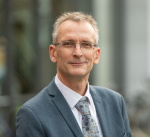
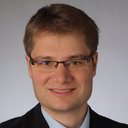
Ben McWilliams is a Research Fellow at Bruegel, focusing on Energy and Climate Policy . His work combines data-driven analysis to critique and inform European public policy, with particular emphasis on energy sector decarbonisation , industrial policy , and hydrogen-based economic geography . Recently, he has analyzed European energy crises and proposed policy responses , while tracking clean tech trends and natural gas dynamics across Europe. Education : MSc in Economic Policy (Utrecht University, thesis on carbon taxation in British Columbia); BSc in Economics (University of Warwick) with exchange year at Monash University Research Focus : Energy Security , Climate Policy , Hydrogen Economics , and Industrial Decarbonisation Key Contributions : Co-authored 15 major analyses (2021-2025) on topics including EU-Russia energy divorce , transatlantic clean investment , and hydrogen strategy Awards : No scientific awards mentioned in available records Affiliations : Bruegel (Affiliate Fellow), dual citizenship (British/Dutch)
Alan C. McKinnon is a Professor of Logistics at Kühne Logistics University (KLU) in Hamburg, Germany. He holds an MA in Geography from the University of Aberdeen, an MSc in Transportation Studies from the University of British Columbia, and a PhD from University College London. His career includes roles as Emeritus Professor at Heriot-Watt University (2014), Head of Logistics at KLU (2012–2016), and Dean of Programs at KLU (2012–2014). His research focuses on logistics sustainability, decarbonization, and the environmental impact of freight transport. Notable contributions include seminal works on low-carbon logistics and the role of freight deceleration in reducing emissions. He chairs global initiatives like the World Economic Forum’s Logistics Council and advises the EU on transport policy. McKinnon’s awards include the European Logistics Association Fellowship (2015) and the Sir Robert Lawrence Award (2003). His teaching emphasizes sustainable logistics and has been recognized with the KLU Best Teacher Award (2015).
Simone Tagliapietra is a Senior Fellow at Bruegel, Professor at the European University Institute’s Florence School of Transnational Governance, and Adjunct Professor at The Johns Hopkins University. His research focuses on EU climate and energy policy, industrial and social dimensions of decarbonisation, and global climate governance. Primary Affiliation: European University Institute (Florence School of Transnational Governance) Secondary Affiliation: The Johns Hopkins University (Adjunct Professor) Advisory Role: Board Member, Clean Air Task Force Collaboration: Payne Institute at Colorado School of Mines His research spans climate policy , energy security , trade dynamics , and industrial transformation . Recent work emphasizes electric vehicle investments , electricity market reforms , and geopolitical risks in energy transitions. Key trends in his 2022–2025 publications include: EU energy independence strategies China-EU climate-industrial interdependencies Transatlantic clean tech comparisons Critical raw materials in decarbonisation Policy frameworks for climate-defense alignment He contributes to policy debates via Bruegel and WhyAxis newsletters, testifies before EU and UK institutions, and co-authors reports on European Green Deal implementation challenges.
Jean Pisani-Ferry is a Senior Fellow at Bruegel (European think tank), Non-Resident Senior Fellow at the Peterson Institute (Washington DC), and Professor of Economics at Sciences Po, Paris. He serves on the supervisory board of Caisse des Dépôts (France) and chairs I4CE, the French institute for climate economics. His career includes founding Bruegel (2005-2013), directing France Stratégie (2013-2016), and advising Emmanuel Macron’s 2017 presidential campaign as Director of Programme and Ideas. Teaching: University Paris-Dauphine, École Polytechnique, École Centrale, Free University of Brussels Jean Pisani-Ferry’s research focuses on economic policy , European integration , climate economics , and geopolitical implications of trade . His work frequently addresses the European Green Deal , decoupling of globalization , and fiscal/monetary policy interplay. Recent publications highlight climate transition strategies , EU governance reforms , and post-pandemic recovery . Trends include EU climate leadership , energy policy , and transatlantic economic tensions . He contributes to public debates via columns in Le Monde and Project Syndicate , emphasizing climate policy , EU fiscal rules , and global governance challenges.
Professor Doris Fuchs, Ph.D., is Chair of Sustainable Development at the University of Münster’s Institute of Political Science and since 2023 also Director of the Research Institute for Sustainability (RIFS) at the Helmholtz Centre Potsdam. She co-directs the Center for Interdisciplinary Sustainability Research (ZIN) and leads the Research Lab Democracy & Sustainability, engaging in inter- and trans-disciplinary projects on consumption, governance, justice and systemic transformation. Education: 1994-1997 Ph.D. Politics & Economics, Claremont Graduate University, USA 1992-1994 M.A. International Political Economy, Claremont Graduate University 1991-1992 M.A. English, Claremont Graduate University 1990-1991 American Studies, University of Virginia 1988-1990 German & English Studies, Heinrich Heine University Düsseldorf Research interests: Her work centres on sustainable consumption and lifestyles within planetary boundaries, global sustainability governance spanning energy, climate, environment, agrifood and finance, and the intersection of democracy, power, participation and justice. She develops transformative, inter- and trans-disciplinary methodologies to foster sustainability transitions. Publication trends: Recent articles (2023-2025) investigate 1.5 °C lifestyles, consumption corridors, shared responsibility, gender dimensions of sustainability governance, and democratic innovations such as “democracy labs”. Journals span sustainability science, policy, political theory and consumption studies, emphasising structural barriers, stakeholder perspectives and policy mixes for deep decarbonisation. Grants & projects: She currently coordinates or co-investigates major EU and German federal projects including ULYSSEUS, BIOSTORE, INCITE-DEM, SUNRISE Lab, EU 1.5° Lifestyles, and the Excellence Cluster “Religion & Politics”, securing multimillion-euro funding for sustainability and participation research. Advising & labs: Prof. Fuchs supervises a select cohort of doctoral researchers working on sustainable consumption/production, climate & energy governance, corporate power and global agrifood politics. Her Research Lab Democracy & Sustainability and ZIN provide interdisciplinary infrastructure and networks for empirical fieldwork, stakeholder dialogues and transformative experiments.
Dr. Charlotte Senkpiel is a Senior Scientist in Energy System Analysis at the Fraunhofer Institute for Solar Energy Systems (ISE), Division Power Solutions. Since 2023, she holds dual roles as Deputy Secretary General and Project Lead at Germany's Expert Council on Climate Change (ERK). Her career includes membership in the German Council of Experts on Climate Change (ERK) since 2019, and prior roles as a PhD candidate and researcher at Fraunhofer ISE (2012–2023). She earned her PhD from the University of Freiburg in 2023, focusing on integrating social science with energy system modeling. Research & Projects: Her work centers on energy system modeling, technology diffusion, and policy analysis. Major projects include SOUVERÄN (sustainable supply chains), AutGrid (grid autarky risks/benefits), and Sozio-E2S (socio-cultural influences on energy transitions). Her expertise spans renewable energy integration, decarbonization pathways, and socio-technical systems analysis. Publications: Over 40 peer-reviewed articles and reports since 2013, focusing on energy policy scenarios, decarbonization strategies, and agent-based modeling of technology adoption. Recent work addresses Germany’s 1.5°C carbon budget alignment and industrial electrification pathways. Labs/Teams: Leads energy transition modeling teams at Fraunhofer ISE, collaborating on cross-sectoral decarbonization projects. Active in developing open-source tools for energy system analysis and policy impact assessment.
Univ.-Prof. Dr. Joscha Wullweber is Heisenberg Professor for Politics, Transformation and Sustainability at the University of Witten/Herdecke (Faculty of Business and Society, Department of Philosophy, Politics and Economics) and Director of the International Center for Sustainable and Just Transformation (tra:ce). His work lies at the intersection of International Political Economy, critical finance studies, and political ecology, focusing on the governance of global finance, shadow banking, central-bank politics, and the political economy of sustainability transitions. Research & Teaching Political economy of sustainable transformation Global governance of finance and shadow banking Central-bank policy and green monetary policy Carbon finance, climate finance, and ecological crisis Innovation and technology governance Urban sustainability transformations His research is currently organised around three major third-party funded projects: Climate change and global finance at the crossroads (BMFTR), the transdisciplinary RuhrortPlus urban transformation project, and the Heisenberg project Neutrality lost: The politics of central banking in the age of shadow banks . Scientific Output Since 2019, Wullweber has published two major monographs— Zentralbankkapitalismus (2021, Suhrkamp) and Central Bank Capitalism Politics: Monetary Policy in Times of Crisis (2024, Stanford University Press)—and numerous journal articles on green monetary policy, shadow money, and the discursive legitimation of central-bank activism. His 2024 Stanford book synthesises a decade of research on how central banks have become pivotal market-making actors in post-crisis capitalism. Advisory & Outreach Member of the German Federal Government’s Scientific Advisory Council on Global Environmental Change (WBGU) since November 2024 Regular media commentator (3sat scobel , Wohlstand für Alle podcast) Principal investigator on multi-million-euro federally funded projects linking climate and finance policy Research Team At tra:ce he leads an interdisciplinary team of post-docs and doctoral researchers including Dr Jan Fichtner, Dr Sonja Knobbe, Paula Haufe, Nicolás Águila, Janina Urban, Simon Schairer and Riccardo Baioni, together with student assistants.
Mahsa Bagheri is a Researcher at the Fraunhofer Institute for Systems and Innovation Research ISI, affiliated with the Department of Energy Policy and Energy Markets. She holds a PhD from the Technical University of Darmstadt (2024), where her dissertation focused on reducing residential energy consumption through behavioral changes. She earned her M.Sc. in Architecture, Building and Planning from Eindhoven University of Technology (Netherlands) and B.Sc. in Architectural Engineering from Shiraz University (Iran). Education: B.Sc. Architectural Engineering, Shiraz University, Iran M.Sc. Architecture, Building and Planning, Eindhoven University of Technology, Netherlands PhD in Energy Policy, Technical University of Darmstadt, Germany Research Interests: Her work centers on energy policy, climate change mitigation, and sustainable development. Key areas include behavioral science in energy consumption, housing policy design for sufficiency lifestyles, decarbonisation pathways for the building sector, and policy evaluation for climate neutrality. She explores intersections between socio-economic factors, technological innovation, and regulatory frameworks to achieve sustainability goals. Projects: She leads or contributes to major initiatives like CACTUS (climate targets via sufficiency), RokiG2050 (carbon-neutral buildings), and RES-H&C Pathways (renewable heating/cooling strategies). Her work often involves EU policy analysis, energy demand modeling, and cross-country sustainability comparisons. Labs/Teams: She is part of the Energy Policy and Energy Markets team at Fraunhofer ISI, collaborating with interdisciplinary groups on global energy transition challenges.
Elisabeth Dütschke is the Head of the Department of Energy Policy and Energy Markets, and Coordinator of the Business Unit 'Actors and Social Acceptance in the Energy System Transformation' at Fraunhofer ISI. She holds a PhD in psychology, business administration, and marketing, recognized with an award from Südwest Metall. Her research focuses on the social dimensions of energy transitions, including public acceptance, policy design, and behavioral drivers. She has taught at institutions like the University of Constance and KIT, and currently serves as Associate Editor of Energy Research & Social Science and Co-Editor of Zeiltschrift für Umweltpsychologie . Research interests include energy policy, sustainability transitions, and the psychological factors influencing mobility and energy consumption patterns. Her work addresses societal challenges in decarbonization, including electric vehicle adoption, hydrogen economy perceptions, and carbon pricing equity. Over 100 publications span journals like Frontiers in Political Science , Energy Research & Social Science , and Ecological Economics . Key awards include her Südwest Metall PhD award. She advises on energy policy frameworks and leads projects on CCUS (Carbon Capture, Utilization, and Storage) governance, sufficiency lifestyles, and hydrogen economy potential. Current initiatives include FULFILL (studying sufficiency) and Strategy CCUS (policy readiness analysis).
Wolfgang Eichhammer is a Professor of Energy Efficiency and Energy Systems Modelling at Utrecht University's Copernicus Institute of Sustainable Development and a Senior Scientist at the Fraunhofer Institute for Systems and Innovation Research ISI. His work focuses on energy policy, climate protection measures, and renewable energy strategies. He has extensive international experience in designing and evaluating energy efficiency policies in the EU and globally, including roles as Head of the Competence Center Energy Policy and Energy Markets until 2023. He advises governments and international organizations such as the EU Commission, World Bank, and UNIDO on energy and climate policies. His research spans hydrogen demand, decarbonization pathways, and just transition frameworks. Eichhammer has led numerous projects, including the ODYSSEE-MURE initiative on energy efficiency indicators and the EU-funded ENEFIRST project operationalizing the 'Energy Efficiency First' principle. His work bridges policy analysis with technical implementation, emphasizing practical solutions for climate neutrality. Research interests include energy policy frameworks, industrial decarbonization, and socio-technical transitions. Notable projects include analyzing green hydrogen's economic impacts in Saudi Arabia and Algeria and assessing EU energy efficiency policies. He has collaborated on global initiatives like the 5th ASEAN Energy Outlook and advised on China's sustainable heating solutions. His publications span energy storage, carbon leakage analysis, and policy evaluation methodologies. Publications highlight his contributions to energy transition pathways, cost-competitiveness of sector coupling technologies, and GIS-based analyses of district heating potentials. His work frequently addresses policy gaps and implementation challenges, emphasizing the interplay between technological innovation and societal trends. Grants and projects reflect his role in shaping evidence-based climate and energy policies globally.
Prof. Achim Wambach serves as President of the ZEW (Leibniz Centre for European Economic Research) and holds a Professorship in Economics at the University of Mannheim. He is a member of the German Ethics Council (since October 2024) and has served in key roles such as Chairman of Germany's Monopolies Commission (2016–2020) and Co-Chair of the 'Competition Law 4.0' Commission (2018–2019). His professional journey includes leadership at the Institute for Economic Policy (iwp) at the University of Cologne and roles in national committees like the National Platform for Electromobility (2015–2018). Education: PhD in Physics, University of Oxford MSc in Economics, London School of Economics Habilitation in Economics, University of Munich His research focuses on market design, competition policy, and industrial policy frameworks for decarbonization. Notable contributions include analyses of state intervention in green transitions and supply chain resilience strategies. He advocates for regulatory frameworks balancing market dynamics with climate goals, as seen in his 2024 article on Germany's industrial policy revival. Advisory Roles & Grants: Member of the Scientific Advisory Board for the Federal Ministry for Economic Affairs and Energy (2012–present) Contributed to policy reforms on risk equalization in insurance and energy sector transitions Labs/Teams: Leads ZEW's economic research initiatives and collaborates with institutions like the European Raw Materials Alliance to enhance supply chain security.
Georg Zachmann is a Senior Fellow at Bruegel, specializing in energy and climate policy since 2009. His work focuses on decarbonisation, carbon/gas/electricity market analysis, and EU climate strategies. Bruegel (2009–present) German Ministry of Finance (former) German Institute for Economic Research (former) LARSEN (former) Berlin Economics (former) Key research areas include regional impacts of decarbonisation, electricity market integration, and EU energy security. Recent publications address natural gas import strategies, electricity pricing reforms, and climate transition governance. His work spans datasets, policy briefs, and reports, with collaborations on topics like hydrogen energy, grid modernization, and sanctions on Russian energy. No students or awards listed. Affiliations highlight think tanks and policy consultancies.
Prof. Dr. Helmuth Thomas is a full Professor at the University of Oldenburg and Director of the Institute for Carbon Cycles. His work focuses on marine biogeochemistry, the ocean’s carbon cycle, carbonate chemistry and climate-change mitigation through ocean-based carbon-dioxide removal. Research interests span air–sea CO₂ exchange, ocean acidification, coastal and shelf-sea carbon processing, and the development of alkalinity-enhancement techniques for negative emissions. He combines observational campaigns in the North and Baltic Seas, Arctic shelves and fjords with numerical modelling to quantify carbon pools, fluxes and ecosystem responses. Recent publications (2023-2025) reveal three dominant themes: (i) assessing engineered ocean alkalinisation and other CO₂ removal pathways, (ii) understanding natural controls on shelf-sea carbon uptake (e.g., tides, stoichiometry, glacial runoff), and (iii) evaluating biological responses such as microbial de-oxygenation feedbacks and contaminant bioaccumulation in rapidly changing Arctic waters. Thomas has secured and coordinates large European projects, leads international working groups (e.g., SOLAS, IGBP, LOICZ) and regularly advises governments on blue-carbon policy. Although specific awards are not itemised, his extensive citation record and invitations to high-level policy papers indicate significant scientific recognition. He heads the Carbon Cycles Institute at Oldenburg, supervising multiple post-docs, PhD and MSc researchers equipped with state-of-the-art carbonate-chemistry and modelling facilities. Future work is targeting scalable, verifiable marine carbon-dioxide removal and refined forecasting of coastal ocean acidification under continuing climate change.
Dr. Anne Tittor is a Researcher at the Institute of Sociology, Friedrich Schiller University Jena. She specializes in bioeconomy, social inequalities, and environmental policy in Latin America. Her work bridges transnational perspectives, particularly focusing on the socio-ecological impacts of bioenergy sectors and global value chains. From 2016–2018, she led the BMBF Junior Research Group on bioeconomy and social inequalities. She co-leads the SFB Structural Change of Property's JRT03 project on genetic resource ownership since 2023. Her research explores pesticide pollution in Argentina and Germany, as well as neoliberalism’s socio-ecological consequences. She holds a PhD from Philipps-Universität Marburg (2011) and has held post-doctoral roles at Bielefeld and Kassel Universities. Key contributions include editing volumes on the Americas’ political economy and bioeconomy inequalities. Her articles address renewable energy justice, agribusiness roles in bioeconomy narratives, and Nicaragua’s canal project conflicts. Funded projects include ProChance’s gender-focused research and BMBF initiatives. She collaborates internationally on Latin American social policy and environmental justice.
Professor Dr. Jörn Block is a Full Professor of Corporate Management at the Department of Business Administration, Faculty IV, Trier University, Germany. He also serves as Head of the Steinbeis-Transferzentrum Technologie- und IP-Management and has held guest professorships at Jönköping International Business School and Universität Witten/Herdecke. His academic leadership includes roles as (Vice-)Division Chair of the Technology, Innovation and Entrepreneurship (TIE) Division at the German Academic Association for Business Research (VHB) and former President of the FGF-Forschungsnetzwerk Entrepreneurship, Innovation und Mittelstand. His research focuses on innovation and technology management, sustainability, decarbonisation, entrepreneurship, family firms, hidden champions, and corporate governance. He investigates these topics using both qualitative and quantitative methods, often at the intersection of management and economics. His work frequently analyzes intellectual property data, especially patents and trademarks, as indicators of innovation and sustainability. His recent publications reveal strong trends in green innovation, decarbonization strategies in medium-sized firms, the role of intellectual property in sustainability reporting, and the dynamics of family and hidden champion firms. He actively publishes in top journals such as Research Policy , Strategic Management Journal , and Entrepreneurship Theory and Practice , often employing meta-analyses, large-scale surveys, and empirical data from Europe and Japan. Guest Professor, Centre for Family Entrepreneurship and Ownership (CeFEO), Jönköping University (2023–) Guest Professor, Wittener Institut für Familienunternehmen, Universität Witten/Herdecke (2019–) (Vice-)President, FGF-Forschungsnetzwerk Entrepreneurship, Innovation und Mittelstand (2015–2022) Head, Forschungszentrum Mittelstand, Universität Trier (2016–) Professor Block advises numerous PhD and Master’s students and leads an active research lab at Trier University. His collaborative network spans Europe, with frequent co-authorship on projects related to entrepreneurial finance, venture capital, and family business. He has been involved in significant research on the impact of the COVID-19 pandemic on self-employed individuals and the role of financial aid. His research is supported by extensive data collection efforts, including large surveys of private debt funds, venture capital investors, and family firms. He is also engaged in methodological work, particularly in meta-analytic structural equation modeling (MASEM) and systematic literature reviews.