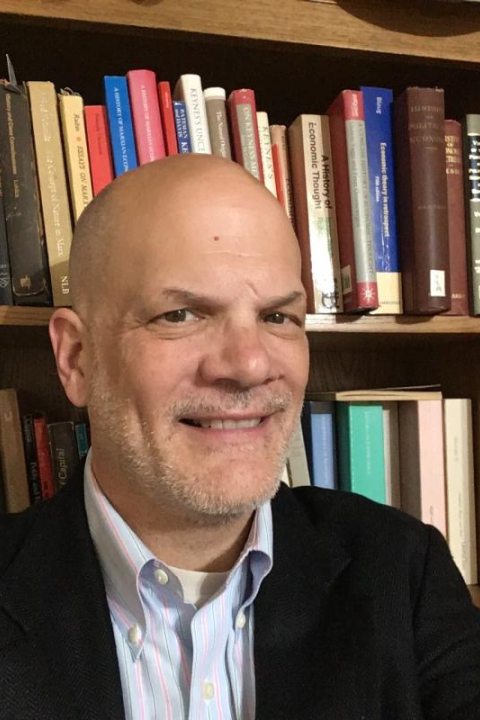
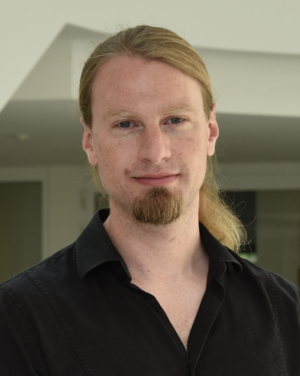
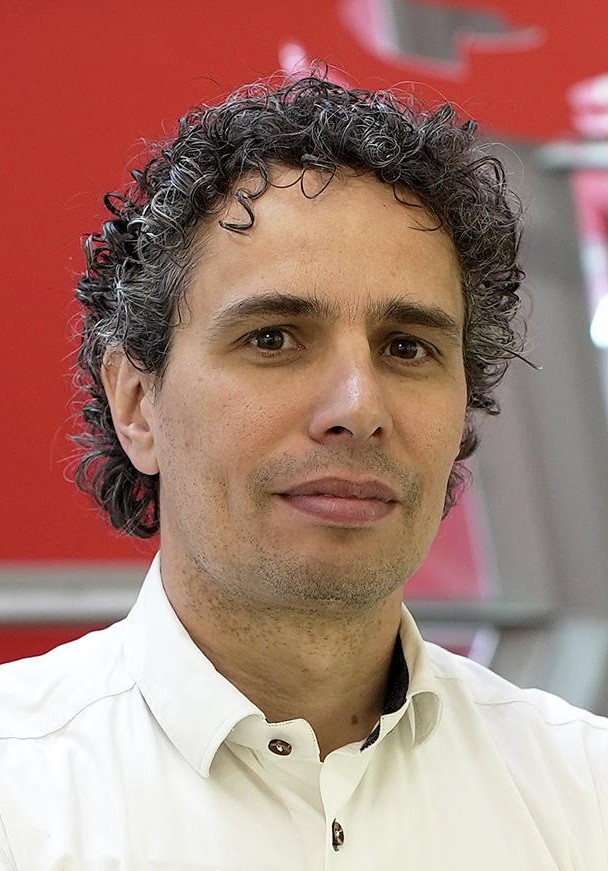
Alex M. Thomas is affiliated with Azim Premji University in Bengaluru, India, and holds a terminal degree (PhD, 2015) from the School of Economics at the University of Sydney . His work spans economics, history of economic thought, and political economy, with a focus on classical economists like Adam Smith and David Ricardo. Research interests include: History of Economic Thought Classical Political Economy Macroeconomic Theory Economic Policy Education Policy Recent publications analyze the reception of Piero Sraffa’s work, taste formation in classical economics, and the intersection of aggregate demand and market extent in classical theories. His 2025 special issue introduction highlights methodological debates in economic history. He has also contributed to discussions on economics education during the pandemic and policy implications for India. His book Macroeconomics (Cambridge University Press, 2021) synthesizes theoretical frameworks. Articles draw on interdisciplinary approaches, linking economic theory to social development and educational philosophy.
David Andrews is a Professor in the Economics Department at the State University of New York at Oswego. His research focuses on the history of economic thought, with particular emphasis on classical economists like Adam Smith, Keynesian theory, and Marxist philosophy. He holds a Ph.D. from the University of Michigan, an M.A. from the University of Denver, and a B.A. from Swarthmore College. Professor Andrews has published extensively on topics including commodity fetishism, Keynes' religious influences, and the misinterpretations of classical economic theories. His work often bridges economic theory with philosophical and historical analysis. His publications span journals such as the Journal of the History of Economic Thought and European Journal of the History of Economic Thought , reflecting his deep engagement with foundational economic ideas. He has also contributed book chapters and reviews on figures like Piero Sraffa and Malthus. Andrews serves as Alternate Faculty Assembly Representative and maintains office hours by appointment. His scholarship emphasizes interdisciplinary approaches to understanding economic history and thought.
Professor Sir Richard Blundell CBE FBA is the David Ricardo Professor of Political Economy at University College London and Co-Director and Senior Research Fellow at the ESRC Centre for the Microeconomic Analysis of Public Policy at the Institute for Fiscal Studies. He is a leading figure in microeconometrics, labor economics, and public policy analysis with extensive contributions to understanding labor supply, taxation, consumption behavior, and inequality dynamics. His research interests span microeconomics, labor supply, tax policy design, public policy evaluation, income inequality, and consumer behavior. Blundell has developed innovative microeconometric tools for analyzing dynamic panel data models and nonparametric analysis of individual decisions. His work has significantly influenced tax and welfare policy reforms, particularly through the Mirrlees Review and the IFS-Deaton Review of Inequalities in the 21st Century. Blundell's extensive publication record shows a clear progression from foundational work on labor supply models to contemporary research on inequality dynamics, particularly in the context of the pandemic. His recent work focuses on consumption responses to income shocks, lifecycle earnings volatility, gender wage gaps, and the relationship between innovation and social mobility. The research demonstrates sophisticated econometric approaches combined with policy-relevant insights. CBE (Commander of the Order of the British Empire) - 2006 Knighthood - 2014 Nemmers Prize As Principal Investigator on the Nuffield Foundation grant for the IFS Deaton Review, Blundell has led major efforts to understand inequalities in the 21st century. His work bridges academic research and policy impact, with significant contributions to tax system design through the Mirrlees Review. He has supervised numerous researchers and collaborated extensively with leading economists worldwide, shaping generations of empirical microeconomists. Blundell maintains active research programs examining the dynamics of inequality, labor market responses to policy changes, and the microeconomic foundations of public policy.
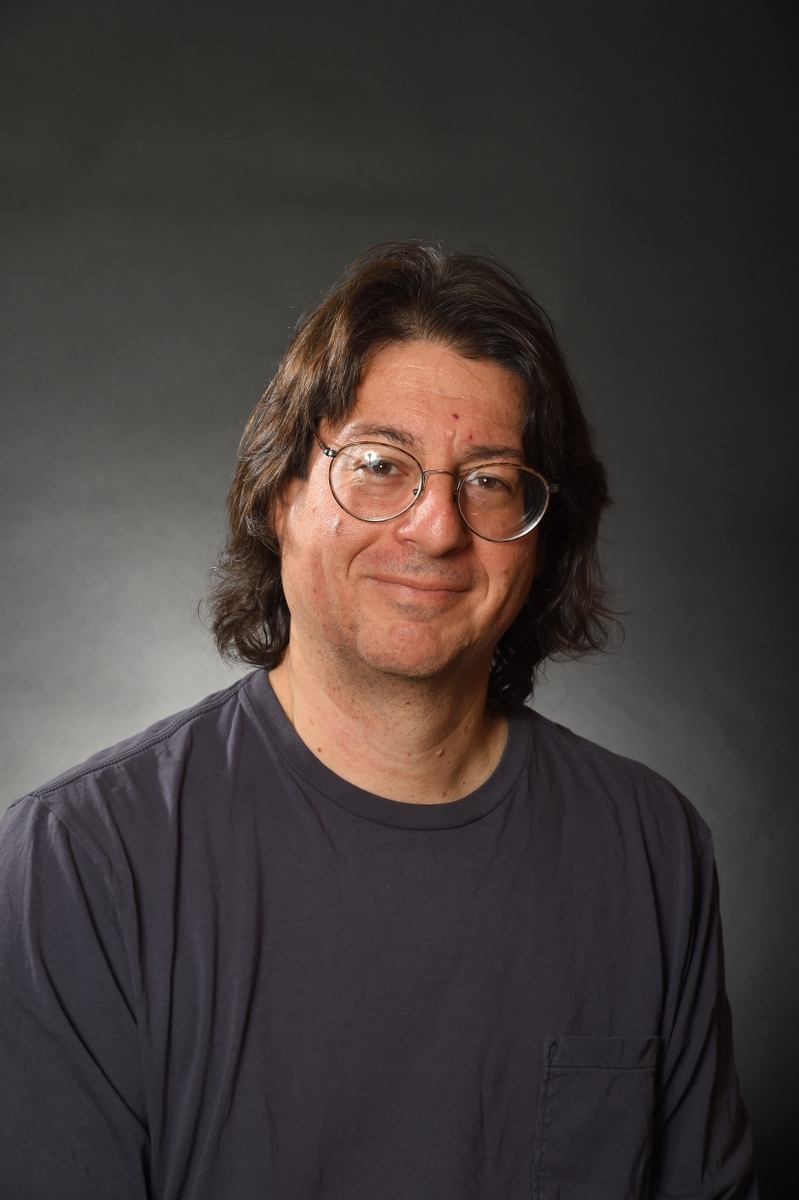
Matthew Smith is Senior Lecturer in Economics at the University of Sydney's Faculty of Arts and Social Sciences. His research specializes in the history of economic thought, classical economics, and monetary theory, with particular expertise in Thomas Tooke and David Ricardo. Education includes B.Com from University of Melbourne, M.Ec and Ph.D. from University of Sydney. Research focuses on: Historical development of economic theories Monetary economics and classical economics Growth and distribution theories Reception of economic ideas Methodological approaches in economics Publications extensively analyze Thomas Tooke's contributions to monetary economics and classical economic thought, while examining historical growth theories and their contemporary relevance. Authored 'Thomas Tooke and the Monetary Thought of Classical Economics' (Routledge, 2011).
Ryan Walter is an Associate Professor and Director of Teaching & Learning at the School of Political Science & International Studies, Faculty of Humanities, Arts and Social Sciences at The University of Queensland. His academic career spans multiple institutions with a consistent focus on the historical relationship between politics and economics, particularly examining how economists emerged as a distinctive intellectual class from the 18th century to the present. Walter received his Bachelor of Commerce and Bachelor (Honours) of Economics from Murdoch University, followed by a Doctor of Philosophy from the Australian National University. His educational background provided the foundation for his specialized research into the historical development of economic and political thought. Walter's research centers on the relationship between politics and economics, with particular attention to how economists' skill sets and ethics have evolved in relation to empirical evidence and political beliefs. His seminal work focuses on the history of economic thought in Britain, examining how the rise of political economy transformed political discourse. His scholarship on Adam Smith, Thomas Robert Malthus, and David Ricardo has clarified how early economists faced opposition because 'theorizing' was not yet established as a prestigious activity. He argues that the presumption of intellectuals to reform society based on 'theory' was perceived as philosophical enthusiasm linked to the French Revolution. His book Before Method and Models (Oxford, 2021) represents a key statement of this research program. Walter's recent publications reveal a consistent scholarly trajectory examining classical economists and their reception, with particular attention to methodological questions in economics. His work bridges political theory and economic history, frequently exploring how economic ideas have influenced political discourse and policy-making across different historical periods. A notable pattern in his scholarship is the examination of casuistry (moral reasoning about cases) in economic thought and the historical development of economic language. Walter has received significant research funding through competitive grants, including an ARC Discovery Project on Australian Political Rhetoric (2014-2018), an ARC Discovery Early Career Researcher Award for 'The rise of the national economic interest' (2014-2016), and a UQ Early Career Researcher grant for 'The Persona of the Economist' (2010). As an academic supervisor, Walter has advised numerous PhD students to completion across diverse topics including Keynesian economics, health care policy, central banking approaches to climate change, government debt framing, varieties of capitalism, and the history of political thought. His supervision portfolio demonstrates his interdisciplinary approach and commitment to mentoring emerging scholars in both historical and contemporary political economy.
Manuel Ricardo Torres Soriano is a Catedrático de Universidad (Full Professor) in Public Law at Pablo de Olavide University in Seville, Spain. His academic work focuses on political and administrative science with a specialization in terrorism studies, particularly jihadist terrorism and cyberterrorism. He serves as one of the 15 international advisors on the Advisory Council on Terrorism and Propaganda of the European Counter-Terrorism Centre (ECTC) within Europol, contributing to European counterterrorism efforts since the center's establishment nearly three years ago. PhD in Political Science from Universidad de Granada (2007), thesis: "La dimensión propagandística del terrorismo yihadista global" Academic experience at institutions including London, Stanford, and Harvard Professor at both Pablo de Olavide University and the University of Granada (UGR) Professor Torres Soriano specializes in the intersection of terrorism, technology, and political communication. His research examines jihadist propaganda ecosystems, cyberterrorism, disinformation campaigns, and the evolving nature of modern terrorism. He has pioneered work on the concept of "technophobic terrorism" as a potential fifth wave of terrorism, building on David Rapoport's theoretical framework of terrorism waves. His expertise spans both historical analysis of terrorist movements and forward-looking assessments of emerging threats in the digital age, with particular focus on how technology transforms both terrorist tactics and counterterrorism responses. His recent publications reveal a consistent analytical framework examining how terrorist organizations adapt to technological change, particularly in the digital realm. He has documented the evolution of jihadist media platforms, analyzed Russian disinformation tactics using false-flag cyber operations, and explored the relationship between technological advancement and potential future terrorist motivations. A recurring theme across his work is how digital technologies both enable new forms of terrorism while simultaneously providing tools for counterterrorism efforts, creating a complex dynamic that requires sophisticated analytical approaches. Member of the Advisory Council on Terrorism and Propaganda of the European Counter-Terrorism Centre (ECTC) within Europol Recipient of recognition from Spain's Ministry of Defense for his doctoral thesis Author of influential books including "Espejismos del mañana" and "#Desinformación. Poder y manipulación en la era digital" Professor Torres Soriano actively contributes to security policy through his work with European security institutions and Spanish government advisory bodies. He has collaborated extensively with state security forces in both analytical and training capacities, translating academic insights into practical counterterrorism strategies. His research has informed counterterrorism approaches in Spain and at the European level, particularly regarding online radicalization, digital countermeasures, and the evolving nature of terrorist propaganda. He regularly engages with policymakers through institutional reports and advisory roles, ensuring his academic work has direct relevance to contemporary security challenges. His work bridges academic research with practical security applications through collaborations with the European Counter-Terrorism Centre, Spanish security services, and international academic networks focused on extremism and counterterrorism. As digital technologies continue to transform the security landscape, his research remains at the forefront of understanding how terrorist organizations adapt their strategies and how societies can develop effective countermeasures in the digital age.
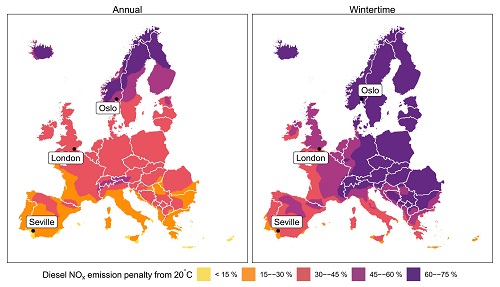
Professor David Carslaw is a leading academic in the Department of Chemistry at the University of York, specializing in urban air pollution, vehicle emissions, and receptor modeling. His research focuses on developing open-source tools (e.g., openair) and applying statistical techniques to quantify emissions and evaluate air quality interventions. Collaborations with institutions like Ricardo Energy & the Environment have advanced understanding of real-world vehicle emissions, particularly regarding NOx, ammonia, and temperature dependencies. His work has exposed critical gaps in national emission inventories and contributed to global air quality policy frameworks. Education details are not explicitly stated in the text, but his professional background indicates advanced academic training in atmospheric chemistry or environmental science. The openair project, funded by NERC, underscores his commitment to democratizing air quality data analysis through software development. Research interests include: (1) Urban air pollution dynamics, (2) Remote sensing of vehicle emissions, (3) Meteorological normalization for time series analysis, and (4) Source apportionment using statistical methods like bivariate polar plots and clustering. His team’s innovations, such as ammonia emission quantification and temperature-dependent NOx emissions, challenge conventional emission assumptions. Recent articles highlight advances in machine learning applications for air quality policy, hydrogen combustion impacts, and indoor-outdoor pollutant linkages. While no scientific awards are listed, his contributions have been widely adopted by the international air quality community. Grant activities include NERC funding for openair. Supervision of PhD students is implied through research group activities, though specific advisee names are not provided. The openair project and vehicle emission studies form core lab activities, supported by partnerships with industry and academic collaborators.
Dr. David Ricardo Sánchez Montero is an Associate Professor in the Department of Electronic Technology at the University Carlos III of Madrid. He serves as the Secretary of the Department and specializes in advanced optical fiber technologies with applications in telecommunications, aerospace, and renewable energy systems. His research focuses on Radio-over-Fiber systems, 5G/6G network infrastructure, power-over-fiber implementations, and sensor networks using polymer optical fibers. Education and professional background include expertise across multiple disciplines such as electronics, industrial engineering, and materials science. Key research areas involve optimizing fiber optic deployments for next-generation networks, analyzing signal integrity in 5G fronthaul scenarios, and developing energy-efficient solutions for telecommunication systems. Publications highlight contributions to multicore fiber designs, power delivery over optical links, and sensor applications in aerospace environments. His work bridges theoretical advancements with practical implementations in emerging technologies like 5G and IoT connectivity. Active in collaborative projects and academic activities, he maintains a research group within the Displays and Photonic Applications Group at UC3M.
Ricardo F. Vivancos-Pérez is a tenured Associate Professor at George Mason University , specializing in Hispanic and Latinx cultural production in the United States. His work bridges Chicana/o/x Studies , Migration Studies , Gender & Sexuality Studies , and Transatlantic Scholarship . Education: B.A., University of Málaga (Spain) M.A., Texas A&M University Ph.D., University of California, Santa Barbara Professor Vivancos-Pérez's research focuses on: Archival and transdisciplinary approaches to Gloria Anzaldúa’s unpublished manuscripts Spanish exile intellectuals in the U.S. Gender and queer theory in transatlantic contexts Human rights and literary form intersections His publications span social movements, displacement narratives, and masculinities in Hispanic studies, with a critical edition of Anzaldúa’s Borderlands/La Frontera (2021) and Radical Chicana Poetics (2013). Awards include: Dr. David Powers Corwin Teaching and Scholarship Award (2023) Mason LGBTQ+ Resources Center Ally Recognition Teaching includes graduate courses on Exile & Displacement , Gender Representations , and Border Narratives , alongside undergraduate Mason Core classes like Borders & Migration and Introduction to Latinx Studies . His current projects prioritize unpublished Anzaldúa manuscripts and Spanish exile cultural studies .
Professor Gary V. Mongiovi is a faculty member in the Department of Economics at The Peter J. Tobin College of Business, St. John's University. His academic background includes a PhD in Economics from The New School for Social Research, an MA in Economics from New York University, and a BS in Finance from St. John's University. His research focuses on classical political economy, heterodox economic methodologies, and the works of thinkers like Pierangelo Garegnani, David Ricardo, and Thorstein Veblen. He has published extensively on demand-led growth theories, the classical surplus approach, and critiques of economic methodological frameworks. Mongiovi teaches courses such as Principles of Economics I, Principles of Microeconomics, and Macroeconomic Theory. His scholarly contributions include journal articles and book chapters analyzing classical economic theories and their contemporary relevance.
David Ricardo Quiroga Martinez is a Postdoctoral Researcher in the Department of Psychology at the University of Copenhagen's Faculty of Social Sciences. His research focuses on the neural mechanisms underlying auditory working memory and musical imagination using intracranial EEG and MEG techniques. He investigates how the brain represents and manipulates sounds during perception and imagination, with applications for understanding psychiatric disorders and brain-computer interfaces. His research interests span Auditory Working Memory , Neural Mechanisms of Imagination , Neuroscience of Music , and Reward Coding . He employs invasive and non-invasive neuroimaging to study how musical sequences are processed in the brain, examining temporal hierarchies in predictive processing from pure tones to complex songs. His work bridges cognitive neuroscience, computational modeling, and clinical applications. Key publications reveal trends in neural representation of musical thoughts (2024), asymmetric reward prediction coding (2023), and temporal hierarchies in melody processing (2023). His research consistently explores how musical structure, predictability, and expertise shape neural responses, with implications for understanding disorders involving auditory imagery abnormalities. Reintegration Fellowship from the Carlsberg Foundation: The representation of musical thoughts in neurons of the human brain International Postdoc from DFF: The neural basis of musical imagination His collaborative network spans international institutions, with significant work on congenital amusia, atonal music processing, and neural gain modulation. Current projects involve decoding imagined musical sounds and investigating reward prediction errors in cortical networks, supported by major Danish research foundations.
David Albrecht is a postdoctoral researcher at the Max Planck Institute for the Science of Light (MPL) in Erlangen, Germany, affiliated with the Department Sandoghdar under the supervision of Dr. Vahid Sandoghdar. His research focuses on viral membranes and host interactions using advanced optical microscopy techniques, including interferometric scattering (iSCAT) and super-resolution microscopy. Education: BSc in Biochemistry, Hanover University MSc in Biochemistry, ETH Zurich PhD in Biochemistry, ETH Zurich (2016), thesis on 'The axon initial segment diffusion barrier at the nanoscopic level' under Dr. Helge Ewers David Albrecht's research interests lie at the intersection of virology, biophysics, and optical imaging. He investigates virus infection mechanisms, particularly how viruses exploit cellular processes and organize their fusion machinery at the nanoscale. His work emphasizes live imaging with molecular specificity and high spatiotemporal resolution. He has made significant contributions to understanding the spatial organization of viral proteins and the development of advanced microscopy methods for label-free and quantitative imaging. The recent trend in his publications (2019–2024) reflects a strong focus on high-resolution optical techniques applied to virology and nanoparticle analysis. His work spans from fundamental virology—such as vaccinia virus entry mechanisms—to methodological innovations in interferometric microscopy and drift correction. These studies demonstrate a consistent interdisciplinary approach combining biological questions with physical and engineering solutions. Scientific Awards: Marie Sklodowska-Curie Fellowship (awarded during postdoctoral work at University College London) David Albrecht has been involved in significant research projects funded by competitive fellowships and institutional support. While no formal advising roles are mentioned, his collaborative publications suggest active participation in team-based research. He has contributed to studies involving virus-host interactions, membrane dynamics, and imaging technology development. His current work at MPL is likely supported by institute funding and collaborative grants. Labs and Research Teams: He has worked in multiple high-profile research environments: the lab of Dr. Helge Ewers (ETH Zurich), the joint group of Dr. Jason Mercer and Dr. Ricardo Henriques (University College London), and currently in the group of Dr. Vahid Sandoghdar at the Max Planck Institute for the Science of Light. These labs specialize in advanced microscopy and biophysical analysis of cellular and viral systems.
Ricardo F Vivancos-Pérez is an Associate Professor in the Department of Spanish at George Mason University. Specializing in Chicana/o/x studies, migration, gender, and LGBTQIA+ research, they focus on Hispanic/Latinx cultural production, exile literature, and feminist/queer theory. They authored Radical Chicana Poetics and edited the critical edition of Gloria Anzaldúa's Borderlands/La Frontera . Education includes a Licenciatura from the University of Málaga, an M.A. from Texas A&M University, and a Ph.D. from UC Santa Barbara. Research explores displacement, transnational identities, and decolonial methodologies through archival work. Publications emphasize Spanish exiles, border epistemologies, and feminist praxis. Recent articles analyze intellectual migration and Anzaldúa's unpublished manuscripts. Awards include the 2023 Dr. David Powers Corwin Teaching and Scholarship Award for contributions to LGBTQ+ scholarship and allyship.
Davide Debortoli is an ICREA Research Professor at Universitat Pompeu Fabra (UPF) and a Research Professor at the Barcelona School of Economics (BSE). He holds affiliations with the Centre for Economic Policy Research (CEPR) in London and is a CREI Associate Researcher. He earned his PhD in Economics from UPF. Previously, he served as an Assistant Professor at the University of California San Diego (UCSD) and held visiting roles at Norges Bank. His research focuses on Macroeconomics, Monetary Policy, and Fiscal Policy, with notable contributions to understanding fiscal multipliers, debt management, and policy design under uncertainty. Notable achievements include the Wim Duisenberg Fellowship from the ECB. His work bridges theoretical frameworks with empirical analysis, addressing issues like optimal fiscal policy under commitment constraints, asymmetric monetary policy effects, and the role of debt maturity structures. Recent research explores heterogeneity in economic agents and its impact on aggregate fluctuations, using novel TANK models to assess consumption and macroeconomic dynamics. Debortoli’s publications appear in leading journals such as the Journal of Political Economy , Quarterly Journal of Economics , and Review of Economic Studies . His articles frequently address policy-relevant questions, such as the design of central bank loss functions and the empirical relevance of zero lower bound constraints. Collaborations with scholars like Jordi Galí and Ricardo Nunes highlight his engagement with foundational macroeconomic theory and its policy applications.
Rodolfo Signorino is an Associate Professor of Political Economy (SECS-P/01) at the Department of Law, University of Palermo, Italy. His research focuses on classical economics, with particular emphasis on the works of Piero Sraffa, David Ricardo, and Thomas Robert Malthus. He has extensively analyzed theories of competition, returns to scale, value theory, and historical economic debates. University: University of Palermo School: Law Faculty Department: Department of Law Academic Rank: Associate Professor His recent publications explore counterfactuals in Sraffa's work, methodological foundations of classical economics, and Ricardian trade models. He has contributed to the understanding of economic equilibrium, subjective utility theory, and the evolution of classical economic thought. While no explicit scientific awards are listed in the provided text, his research collaborations and editorial projects indicate significant academic engagement.