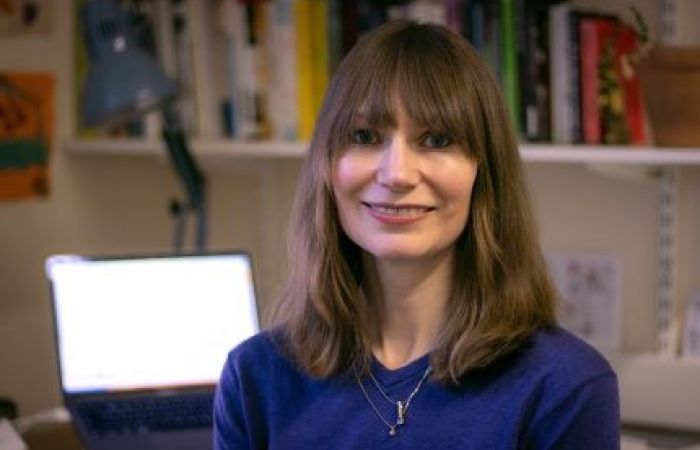
Liz Chesworth is a Senior Lecturer in Early Childhood Education at the School of Education, University of Sheffield . A Senior Fellow of the Higher Education Academy (SFHEA), her work bridges research, teaching, and professional practice. BA (Hons), PGCE, PhD Her research focuses on contemporary play cultures , dynamic curriculum approaches , and children’s participation in research . She explores power dynamics in peer cultures and digital play’s impact on well-being, with funded projects like the Lego Foundation's Responsible Innovation in Technology for Children and EU Horizon 2020’s MakEY makerspace initiative. Her work has received international recognition through keynotes and consultancy. Recent publications emphasize participatory methods, cross-cultural family engagement, and technology integration in early years. She co-edits journals and serves on editorial boards, while leading the full-time Masters in Early Childhood Education and teaching in the White Rose Doctoral Training Programme . Senior Fellow of the Higher Education Academy (SFHEA) Liz collaborates with institutions such as The Froebel Trust and contributes to policy debates on inclusive practices.
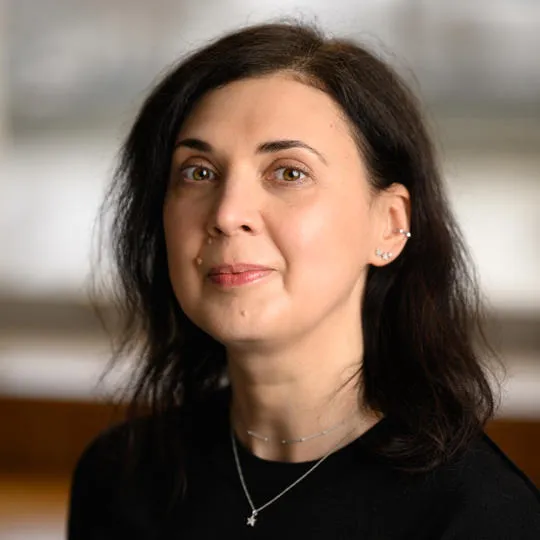
Ceren Saran Doğan is an Assistant Professor at the Faculty of Communication , Uskudar University , specializing in Radio, Television and Cinema . Her academic background includes a PhD (2022), MA (2015), and BA (2009) in Media and Communication Studies from Galatasaray University and Journalism from Istanbul University. Education: BSc in Journalism (Istanbul University, 2009) MSc in Media and Communication Studies (Galatasaray University, 2015) PhD in Media and Communication Studies (Galatasaray University, 2022) Her research focuses on the political economy of media , critical digital media studies , algorithms in journalism , and digital platform dynamics . She has published extensively on topics like algorithmic bias, media ownership, and digital inequalities, with notable works including the 2024 book chapter Reasons for News Avoidance on Mobile News Consumption and the 2022 book chapter Algorithms and Audience Monitoring in Newsrooms . Her recent 2023-2025 publications analyze digital platform trust , AI integration in newsrooms , and platform capitalism , reflecting her expertise in algorithmic systems and media sociology. She also serves as Vice Dean and chairs multiple committees at Uskudar University, including Social Media Commission and Curriculum Development Commission . She teaches courses like Digital Content Production and Graduation Project II .
Robert Prey is an Assistant Professor at the University of Groningen's Faculty of Arts, affiliated with the Center for Media and Journalism Studies. He holds a PhD from Simon Fraser University (2015) focusing on the political economy of music streaming. His research examines technology's intersection with culture, emphasizing platformization, datafication, and the music industry's transformation through streaming platforms. Prey leads the ERC-funded 'PlatforMuse' project (2023–2028), exploring global platform impacts on artists. He also investigates South Korean music ecosystems via the 'Platform Performances' project (2020–2022). Education: PhD in Communication (Simon Fraser University, 2015) Key Research Areas: Cultural Industries, Digital Platforms, Music Streaming, Political Economy Teaching focuses on media theory, digital society, and cultural industries. Awards include the ERC Starting Grant (2022) and Dean of Graduate Studies Medal (2016). His work appears in International Journal of Cultural Studies , Big Data and Society , and Information Society .
Prof Kath Albury is an ARC Future Fellow and Professor at Swinburne University of Technology's School of Social Sciences, Media, Film and Education. She leads the Digital and Data Capabilities for Sexual Health Policy and Practice project (2022-2026) and co-leads Swinburne's Platform Society + Digital Economy program. Her research focuses on digital technologies' impact on sexual health, LGBTQ+ communities, and data literacy. She co-authored Everyday Data Cultures (2022) and Data for Social Good (2023). Awards include the Swinburne Vice-Chancellor's Research Excellence Award (2022). She collaborates internationally, including with Sweden on digital sexual health projects. Her grants include funding from ARC, VicHealth, and the eSafety Commissioner. She advises on health policy and serves on committees for organizations like ACON Health and Family Planning NSW. Research interests span digital sexual health, platform governance, and inclusive AI. Recent work addresses sextech, LGBTQ+ safety online, and youth digital practices. She is unavailable for PhD supervision in 2026 due to leave. Key collaborations include the ARC Centre of Excellence for Automated Decision-Making and Society (ADMS) and the Swedish/Australian Digital Sexual Health project. She advocates for data justice and community-centred digital practices in health and disaster preparedness.
Stephen Shapiro is Professor of English Literature at the University of Warwick, specializing in American literature, cultural studies, and Marxist theory. His academic journey began with a chemistry degree in New York State before shifting to English literature, with studies at Birmingham University's Department of Cultural Studies and research at the Gramsci Institute in Rome. Prior to Warwick, he taught at Harvard University, the New School, and John Jay College for Criminal Justice (CUNY), and has held prestigious fellowships including a Fulbright at Saarland University (1997-98), a Royal Shakespeare Company/Capital Fellowship (2008-09), and fellowships at UC Irvine, Heidelberg University, and Babeș-Bolyai University. First degree in Chemistry (New York State) Graduate studies in English Department of Cultural Studies (Birmingham University, England) Research at Gramsci Institute in Rome Shapiro's research spans American literature, cultural studies, Marxism, world-systems analysis, urban studies, spatial theory, and television studies. His current book projects include The Cultural Fix: Marx and the Organic Composition of Capital , which bridges French and English editions of Marx's Capital , and The Twist: Capital, Data, and Cultures of the Intersectional Left , analyzing contemporary capitalist temporalities. He is also working on a critical edition of Charles Brockden Brown's Memories of Stephen Calvert , examining early American literature's treatment of male-male sexuality. His scholarship consistently connects literary analysis with political economy, exploring how cultural forms engage with capitalist structures. Shapiro's recent publications reveal a trajectory from traditional literary studies toward increasingly interdisciplinary work that integrates world-systems theory, digital capitalism, and intersectional politics. His scholarship demonstrates a consistent engagement with Marxist theory while expanding into analyses of algorithmic governance, zombie studies, and the cultural politics of horror. The 2020-2025 publications show particular focus on how literary and cultural forms interact with contemporary crises of capitalism, including data-driven neoliberalism, resurgent fascism, and intersectional left movements. Best Collection Award 2019, British Association for Contemporary Literary Studies (BACLS) Honorable Mention, BAAS prize for best book in American Studies published during 2008 Shapiro has been actively involved in collaborative scholarly projects, particularly through his work with Philip Barnard on Charles Brockden Brown editions and with the Warwick Research Collective (WReC). He co-founded the Warwick Centre for Global Jewish Studies and has contributed to institutional initiatives including the successful application for Warwick's Race Equality Charter Mark (Bronze). His editorial work spans numerous collections that bridge literary studies with political economy, cultural theory, and world-systems analysis. Shapiro is a founding member of the Warwick Research Collective (WReC), which has produced influential work on combined and uneven development in world literature. He serves on the university's Race Equality Taskforce and was instrumental in securing Warwick's Race Equality Charter Mark. His involvement with the WReC demonstrates his commitment to moving beyond traditional literary and cultural studies frameworks toward more globally oriented, politically engaged scholarship that connects literary analysis with economic and ecological concerns.
Dr Ana Cristina Vasconcelos is a Senior Lecturer in Corporate Information Management at the School of Information, Journalism and Communication, University of Sheffield. She holds a PhD from Sheffield Hallam University and has held academic roles at multiple institutions, including Leeds Metropolitan University and Sheffield Hallam University. Her research focuses on the intersection of knowledge management, information systems, and organizational adaptation. Education: BA in History, PGDip in Information Science (University of Lisbon), PhD in Information Systems (Sheffield Hallam University) Her research explores organizational learning, absorptive capacity, knowledge sharing, and boundary spanning practices, often applying theoretical frameworks like Arenas/Social Worlds Theory and Practice Theory. Funded by the European Community and AHRC, her work addresses challenges in information systems implementation and knowledge integration across sectors. Recent publications highlight trends in smart city datafication, interdisciplinary knowledge management, and virtual community dynamics. She supervises PhD students in areas spanning economic resilience to knowledge transfer in FinTech ecosystems. Teaching interests include qualitative research methods, organizational culture, and knowledge management systems. She has external examiner roles at multiple universities and serves on editorial boards for journals like Libri and the International Journal of Knowledge-Based Organizations.
Dr. Koen Leurs serves as an Associate Professor in Gender, Media and Migration Studies at the Graduate Gender Program, Department of Media and Culture Studies, Utrecht University, Netherlands. His research centers on digital migration studies, examining how digital technologies intersect with migration experiences, particularly focusing on gender dynamics, youth cultures, and datafication processes. Leurs has established himself as a leading scholar through influential publications including Digital Migration (Sage, 2023) and Doing Digital Migration Studies (Amsterdam University Press, 2024), with his current work focusing on Inclusive Media Education: Critical Media Literacies for Diverse Societies for Routledge. Leurs' research interests span migration studies, digital technology, gender, and youth cultures, with particular attention to how digital platforms shape migrant experiences. His work critically examines both the empowering potential and discriminatory aspects of digital technologies in migration contexts, investigating how migrants use digital tools to connect, resist, and create new forms of belonging while navigating surveillance, datafication, and border control systems. Recent projects have increasingly focused on the ethical implications of digital technologies in asylum procedures and migration management. His scholarly output reveals a consistent trajectory examining the intersection of migration, digital technology, and social justice. Leurs' work demonstrates growing attention to the material consequences of digital migration studies, particularly regarding mobile phone screening in asylum processes, the datafication of migration pathways, and how digital platforms shape the experiences of migrant women and domestic workers. His research combines theoretical innovation with practical engagement, often employing participatory methods that involve migrant communities in knowledge production. Principal Investigator for Co-designing a fair digital asylum procedure (2022-2023), funded by Digital Society program and COMMIT/ Principal Investigator for Young Connected Migrants (2016-2019), funded by Netherlands Organization for Scientific Research Principal Investigator for Media literacy through Making Media (2017-2019), funded by Dutch National Research Agenda Current member of Management Committee for COST Action DATA-MIG CA22135 on European Migration and Border Control Former chair of European Communication Research and Education Association (ECREA) Diaspora, Migration and the Media section (2016-2021) Leurs' research is situated within Utrecht University's strategic themes including Dynamics of Youth (DoY), Governing the Digital Society, and Institutions for Open Societies (IOS), with particular alignment with the IOS focus on Gender, Diversity and Global Justice. His collaborative work spans international institutions including the Chinese University of Hong Kong, National University of Singapore, Charles University, and University of Groningen, reflecting the transnational nature of his research on digital migration.
Gerwin van Schie is an Assistant Professor in New Media and Digital Culture at the Department of Media and Culture Studies , Faculty of Humanities , Utrecht University. His work critically examines the intersections of datafication, race/ethnicity, and governance in digital societies. Education: BA in Theater, Film and Television Studies (Utrecht University), MA in New Media and Digital Culture (cum laude, Utrecht University) Van Schie's research focuses on how societal institutions datafy immigrant populations, exposing biases in systems like CBS statistics. He employs postcolonial and critical data studies frameworks to analyze algorithmic governance, digital colonialism, and green metaphors in technology. His recent work explores the "greenwashing" of digital colonialism in blockchain-based forest conservation. Key research outputs include studies on racialization in data systems, the role of "roots" and "clay" metaphors in Dutch governance, and historical discourse networks. His scholarship contributes to debates on open societies, sustainable development, and institutional ethics. Van Schie actively engages in academic events, including co-organizing the 2024 Symposium on Measuring Racial Representation in Dutch Universities . He collaborates with blockchain researcher Inte Gloerich and participates in the Utrecht Data School.
Dr Matthew Cole is an Assistant Professor in Technology, Work and Employment at the University of Sussex Business School. His research focuses on unpaid labour, technological change, and platform capitalism, with significant contributions to understanding wage theft and AI ethics in workplace contexts. He serves as a Co-investigator on the ESRC Digital Futures at Work Research Centre and is on the editorial board of Work, Employment and Society . PhD in Political Economy from the University of Leeds (2014–2018) Postdoctoral Research Fellow at the University of Oxford and University of Leeds His research explores the political economy of work and technology, emphasizing wage theft in hospitality, algorithmic exploitation, and regulatory frameworks for AI. His 15 most recent publications span debates on digital labor platforms, cloudwork, and the historical evolution of unpaid work. Scientific Awards Associate Fellow of the Higher Education Association Cole leads the masters-level module 'Managing Human Resources' and has developed courses on human-industrial relations. His work intersects with labor unions like the GMB and New York Taxi Workers Alliance, advocating for fair pay and transparency in digitalized labor markets. He is actively involved in public scholarship, contributing to outlets like Jacobin and Tribune, and co-authoring policy briefs for the ESRC Centre for Digital Futures at Work.
Nina Franz is a Researcher at the Institute of Media Studies, Braunschweig University of Fine Arts, specializing in the Theory and History of Technology. She holds a doctorate in Cultural Studies from Humboldt University of Berlin and has held research positions at Bauhaus University Weimar and Humboldt University Berlin. Her research spans military imaging technologies from early modern period to computer age, climate catastrophe narratives in humanities and contemporary art, history of automation, and critical analysis of technological destruction narratives. She examines how imaging systems mediate power relations in warfare, medicine, and colonial contexts, with particular focus on ultrasound, drone warfare, and military surveillance systems. Her recent publications reveal strong interdisciplinary trends across Media Studies, Cultural History, and Critical Military Studies, with recurring themes of visual epistemology, technological mediation, and the weaponization of perception. Key subfields include drone warfare protocols, medical imaging interfaces, algorithmic control systems, and climate catastrophe representations. Doctoral Scholarship, Gerda Henkel Foundation (2015-2018) As a curator and educator, Franz has organized international conferences including 'Remote Control. Scales of Mediated Intervention' (2017) and co-curated exhibitions like 'A Better Version of You' (2016-2018) with Goethe-Institut Seoul. Her current teaching includes courses on military imaging and rearmament discourses, with mandatory participation in the 'Fascism and Mediality' workshop (2025). She regularly presents at academic conferences on military imaging technologies, including upcoming lectures at Staatliche Hochschule für Gestaltung Karlsruhe and Johannes Gutenberg-Universität Mainz. Her work bridges academic research with contemporary art curation, examining how military technologies permeate civilian perception through screen media and imaging systems.
Stephan Packard is a Professor for Cultures and Theories of Popularity at the Institute for Media Culture and Theatre at the University of Cologne, where he has held a full professorship since 2017. Previously, he served as Junior Professor for Media Cultural Studies at Albert Ludwig University of Freiburg (2010-2017) and was repeatedly an acting professor for Cultures and Theories of Popularity at the University of Cologne (2015-2017). His research focuses on media control (including censorship, surveillance, and propaganda), popular visual cultures with particular emphasis on comics research, and the complex relationships between factuality, fictionality, and virtuality. As a media semiotician and discourse analyst, Packard examines how meaning is constructed across different media forms and how power operates through media systems. Packard's scholarly output shows a clear trend toward examining the intersections of comics studies with broader media theory, political philosophy, and critical social analysis. His recent publications increasingly address digital sovereignty, algorithmic control, and the transformation of media landscapes in the digital age, while maintaining his foundational work in comics theory and media semiotics. His research connects historical analysis of media forms with contemporary concerns about digital media power structures. Heinz Maier-Leibnitz Prize of the German Research Foundation (2015) Packard leads several significant research projects including the OER-Verbundprojekt 'Comicforschung.nrw,' 'The Adventure as a Popular Nomad: Transformations of Adventure Narratives in Comics,' and the 'Glossary of Digital Sovereignty.' He is actively involved in multiple academic networks including the Global South Studies Center (since 2025), the Key Profile Area Skills and Structures in Language and Cognition (since 2024), and was the first chairman of the Society for Comics Research (ComFor) from 2013-2019. His work bridges theoretical media studies with practical concerns about digital citizenship and media literacy in contemporary society.
Morgan Currie is a Senior Lecturer in Data & Society at the University of Edinburgh's School of Social and Political Science. They lead the Culture & Communities Mapping Project and co-lead Edinburgh Futures Institute's Critical Data Studies Cluster, focusing on open data, administrative data systems, and social justice implications of datafication. PhD in Information Studies, University of California, Los Angeles (2017) MLIS, University of California, Los Angeles (2016) Masters in New Media, University of Amsterdam (2010) Bachelor of Arts in Philosophy, Smith College (2003) Research spans data justice, automated welfare systems, cultural mapping, and activist data practices. Their work examines how data-centric policies affect democratic participation and public accountability, particularly in urban governance contexts. Recent publications analyze algorithmic welfare governance (2024), AI literacy through art (2023), and administrative data burdens (2024). Current projects include EU Horizon-funded cultural industries policy development and Scottish Government data sharing studies. Best Paper Award - 2020 CHI Conference ESRC New Investigator Grant (2021-2023) EU Horizon Grant (2024) Teaching includes courses on technologies of civic participation, datafication & democracy, internet society, and AI ethics. They previously worked at Stanford's Digital Civil Society Lab and contributed to digital archive preservation efforts during the Trump administration.
Claudia Aradau is Professor of International Politics at King's College London's Department of War Studies. Awarded the 2023 Distinguished Scholar Award by the International Studies Association, she leads the ERC project SECURITY FLOWS on digital border governance. Her research analyzes algorithmic governance, mass surveillance, and border security infrastructures. The monograph Algorithmic Reason (Oxford 2022) received the 2023 Best Book Award from ISA's STAIR section. Current work examines knowledge politics in asylum data systems and digital humanitarianism. Editorial roles include Radical Philosophy collective and Security Dialogue. Teaching covers 'Critical Security Studies' and 'Risk in Global Politics'. Laboratory resources include KingsCAT social media analysis toolkit.
Sun-ha Hong is an Assistant Professor in the School of Communication at Simon Fraser University, with affiliations at Stanford’s Humanities Center, SFU’s Digital Democracies Institute, and the VINCI Institute. Her work critically examines data-driven technologies, surveillance practices, and the epistemological shifts in a machine-readable society. Hong holds a PhD from the Annenberg School for Communication (2016), and has held fellowships at MIT and Microsoft Research. Her research focuses on the limits of datafication, exploring how predictive technologies and algorithmic systems reshape knowledge production. Key themes include speculative inequality, the politics of prediction, and the societal implications of AI bias. Hong’s monograph Technologies of Speculation (2020) analyzes state surveillance and self-tracking technologies, arguing that datafication creates gaps between technological promises and social realities. Hong has secured over $280,000 in SSHRC grants and serves on editorial boards for Media Peripheries and Big Data & Society . Her teaching spans AI ethics, surveillance studies, and media historiography, with courses like AI, Algorithms and Power . She advises 11 graduate students researching topics from biopolitical surveillance in China to gendered AI violence. Her recent work explores ‘speculative drama’ in generative AI and the ritualized temporality of technological futures. Hong frequently advises Canadian government bodies on AI policy and digital governance, balancing academic rigor with public engagement.
Michiel de Lange is Assistant Professor in New Media Studies at Utrecht University, specializing in digital media's role in urban environments. Cofounder of The Mobile City research initiative examining how technology shapes urban culture and citizen engagement. Research themes include: Smart cities and citizen participation Media architectures and urban interfaces Playful civic engagement Ethical dimensions of datafied cities Leads NWO-funded projects on responsible smart cities and the Hackable City concept. Recent work analyzes controversy design in datafied urban environments and creative research methods.