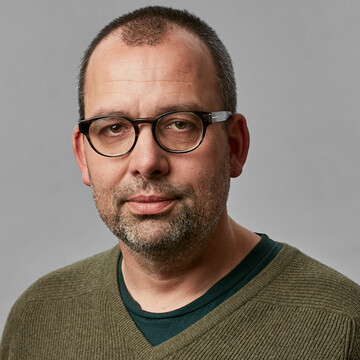
Andreas Hepp is a Professor of Media and Communications and Head of ZeMKI at the University of Bremen , Germany. His work focuses on mediatization, datafication, and communicative AI, with affiliations to the ComAI Research Unit and Commfigurations. Previously held positions include roles at the University of Trier, Karlsruhe Institute of Technology (KIT), and others. He has been a Visiting Researcher at institutions like LSE, Stanford, and Goldsmiths. Research interests span media sociology, automation of communication, and digital futures. Current projects include the ComAI coordination project funded by DFG, exploring societal implications of AI in communication. He leads the Datafication and Mediatization Lab and co-develops the molo.news platform for local journalism. Notable publications include The Mediated Construction of Reality (2017) and Deep Mediatization (2020). Active in academic networks like DFG-funded ComAI, German Communication Association (DGPuK), and European Communication Research and Education Association (ECREA). Upcoming engagements include keynote speeches at AI meets HSS (Vienna) and ZeMKI's 20th-anniversary conference. Grants include DFG funding for ComAI research. Teaching and advising focus on media-society relationships and digital transformations. Collaborates on OpenQDA software for qualitative data analysis and advocates for alternative social media platforms.
Dr. Paul Trauttmansdorff is a Research Fellow at the Chair of Philosophy and History of Science and Technology at the Technical University of Munich, and a Fellow of the Ethical Data Initiative. His research focuses on digital governance, migration, and the ethical implications of data infrastructure. He holds a PhD from the University of Vienna, where his thesis explored future visions of borders and digital migration governance in Europe. He previously worked at the University of Bologna and the European New School of Digital Studies. Education: BA Philosophy, University of Vienna BSc Socioeconomics, Vienna University of Economics and Business MSc Political Sociology, London School of Economics PhD Science and Technology Studies, University of Vienna (supervised by Ulrike Felt) Research interests include datafication practices, governance of digital infrastructures, biometric technologies, and their social/political impacts. He has contributed to projects such as the ERC StG 'Processing Citizenship' and the ENS Chair of Sociology of Technology. Key awards include the 2023 Early Career Award and 2022 sowi:doc Award. He is a member of networks like STS-MIGTEC and COST Action CA22135. His recent work emphasizes ethical data practices, resilient data systems, and controversies in digital border governance. Publications span books, journal articles, and policy manifestos analyzing EU border digitalization, data interoperability challenges, and migration governance frameworks.
Matthias Kranke is Junior Professor for Global Sustainability Governance at the Institute for Socio-Economics, Faculty of Social Sciences, University of Duisburg-Essen, within the College for Social Sciences and Humanities of the University Alliance Ruhr. His research critically examines global governance structures through socioeconomic and socioecological lenses. His educational background includes: PhD in Politics and International Studies, University of Warwick (2013-2018) MA in International Relations, Macquarie University, Sydney (2008-2009) MA in Political Science, Economics and Modern History, University of Trier (2002-2008) Kranke's research centers on the political economy of global governance, with particular focus on international organizations' role in sustainability transitions. His work interrogates how quantification practices, forecasting techniques, and indicator systems shape policy spaces and power dynamics in post-growth paradigms. He critically analyzes boundary work within international bureaucracies and the anticipatory governance of global challenges like debt sustainability and ecological transformation. Analysis of his 2021-2025 publications reveals dominant themes in post-growth political economy, anticipatory governance, and the politics of measurement. His work bridges International Relations, Political Economy, and Science and Technology Studies, demonstrating how international organizations produce knowledge that legitimizes specific policy pathways while marginalizing alternatives. The publications consistently examine power dynamics in global governance through empirical studies of IMF-World Bank interactions, sustainability indicators, and future-oriented policymaking. His scientific recognition includes: Best Graduate Student Paper Award, International Political Economy Section, International Studies Association (2017) Vice-Chancellor's Commendation for academic excellence, Macquarie University (2009) No formal advising roles or grant information is publicly documented, though his work connects to the Research Alliance Ruhr and third-party funded projects at the Institute for Socio-Economics. His research appears embedded within collaborative networks examining socio-ecological transformation and inequality, as evidenced by co-authored working papers and participation in the Doctoral Program 'Political Economy of Socio-Ecological Transformation'.
Nina Franz is a Researcher at the Institute of Media Studies, Braunschweig University of Fine Arts, specializing in the Theory and History of Technology. She holds a doctorate in Cultural Studies from Humboldt University of Berlin and has held research positions at Bauhaus University Weimar and Humboldt University Berlin. Her research spans military imaging technologies from early modern period to computer age, climate catastrophe narratives in humanities and contemporary art, history of automation, and critical analysis of technological destruction narratives. She examines how imaging systems mediate power relations in warfare, medicine, and colonial contexts, with particular focus on ultrasound, drone warfare, and military surveillance systems. Her recent publications reveal strong interdisciplinary trends across Media Studies, Cultural History, and Critical Military Studies, with recurring themes of visual epistemology, technological mediation, and the weaponization of perception. Key subfields include drone warfare protocols, medical imaging interfaces, algorithmic control systems, and climate catastrophe representations. Doctoral Scholarship, Gerda Henkel Foundation (2015-2018) As a curator and educator, Franz has organized international conferences including 'Remote Control. Scales of Mediated Intervention' (2017) and co-curated exhibitions like 'A Better Version of You' (2016-2018) with Goethe-Institut Seoul. Her current teaching includes courses on military imaging and rearmament discourses, with mandatory participation in the 'Fascism and Mediality' workshop (2025). She regularly presents at academic conferences on military imaging technologies, including upcoming lectures at Staatliche Hochschule für Gestaltung Karlsruhe and Johannes Gutenberg-Universität Mainz. Her work bridges academic research with contemporary art curation, examining how military technologies permeate civilian perception through screen media and imaging systems.
Mayra Russo is an Early Stage Researcher in the Marie Skłodowska-Curie ITN NoBIAS and a research assistant at L3S Research Center. She works in the Scientific Data Management research group at TIB while pursuing her Ph.D. in Computer Science at Leibniz Universität Hannover. Her educational background includes a Master's degree in Data Science and a Bachelor's in Accounting and Finance from the University of Valencia in Spain. This interdisciplinary foundation informs her unique approach to research at the intersection of technology, ethics and social impact. Mayra's research focuses on algorithmic bias and harm, with broader concerns about ethical implications of datafication. Her current work develops bias-centric documentation frameworks for machine learning systems using ontologies and semantic web technologies. This research is funded by the European Union's Horizon 2020 programme under grant agreement no. 860630, highlighting its significance in addressing critical challenges in AI development. Her primary research domains include: Algorithmic Bias identification and mitigation Ethical frameworks for AI development Documentation standards for machine learning pipelines Semantic technologies for bias representation Social impact assessment of datafication processes Responsible innovation in AI systems As part of the Marie Curie training network, Mayra contributes to interdisciplinary research addressing bias in artificial intelligence, with implications for fairer and more transparent AI systems across various application domains. Contact information: Email: mayra.botero@tib.eu Postal address: Welfengarten 1 B, 30167 Hannover Visitor address: Lange Laube 28, 30159 Hannover
Prof. Dr. Isabel Kusche is a Professor of Sociology with a focus on digital media at the Otto-Friedrich University of Bamberg since October 2021. She previously held academic positions at universities including Osnabrück, Kiel, and MSH Hamburg, and was a Marie Curie COFUND Fellow (2015-2018) and EURIAS Fellow (2018-2019). She is co-editor of the Journal of Sociology since 2023 and a Fellow of the Bavarian Alliance for Peace, Conflict, and Security Research since 2025. Education: Diploma in Sociology (2002), PhD in Sociology (2008) Key Research Areas: Political communication, digital transformation, AI ethics, systems theory, political sociology, policy advice Her research examines the digital transformation of political publics , focusing on AI applications in social systems, clientelism in modern politics, and uncertainty absorption in policy advising. She contributes to systems theory and analyzes the interplay between technology, governance, and societal values . Recent publications address AI safety , EU AI Act compliance , and digitization's ethical challenges . Her work spans interdisciplinary themes like urban law and technology , financial crisis governance , and deepfake misinformation . Scientific Awards & Honors Marie Curie COFUND Fellow (2015-2018) EURIAS Fellow (2018-2019) Fellow of the Bavarian Alliance (2025) Advising & Collaboration Advising doctoral candidate Jakob Wiesinger Collaboration with AIAS, University of Edinburgh, Karlsruhe Institute
Claudia Ritzi is Professor of Political Theory and History of Ideas at the University of Trier. She serves as deputy chair of the German Political Science Association (DVPW) and as Senate Commissioner for Protection against Sexual Harassment at Trier University since 2021. Since April 2023, she has been managing director of the Department of Political Science. Research Focus : Contemporary democratic theory, post-democracy, digital public spheres, participation research, and 21st-century democratic governance. Her work examines the structural transformation of public spheres under digitalization, legitimacy in post-democratic systems, and the interplay between online/offline political participation. Key Functions : Member of DVPW Executive Board (2018-2024) Co-editor of "Politics in the Digital Society" series Reviewer for political science journals and funding agencies (DFG, Humboldt Foundation)
Stephan Packard is a Professor for Cultures and Theories of Popularity at the Institute for Media Culture and Theatre at the University of Cologne, where he has held a full professorship since 2017. Previously, he served as Junior Professor for Media Cultural Studies at Albert Ludwig University of Freiburg (2010-2017) and was repeatedly an acting professor for Cultures and Theories of Popularity at the University of Cologne (2015-2017). His research focuses on media control (including censorship, surveillance, and propaganda), popular visual cultures with particular emphasis on comics research, and the complex relationships between factuality, fictionality, and virtuality. As a media semiotician and discourse analyst, Packard examines how meaning is constructed across different media forms and how power operates through media systems. Packard's scholarly output shows a clear trend toward examining the intersections of comics studies with broader media theory, political philosophy, and critical social analysis. His recent publications increasingly address digital sovereignty, algorithmic control, and the transformation of media landscapes in the digital age, while maintaining his foundational work in comics theory and media semiotics. His research connects historical analysis of media forms with contemporary concerns about digital media power structures. Heinz Maier-Leibnitz Prize of the German Research Foundation (2015) Packard leads several significant research projects including the OER-Verbundprojekt 'Comicforschung.nrw,' 'The Adventure as a Popular Nomad: Transformations of Adventure Narratives in Comics,' and the 'Glossary of Digital Sovereignty.' He is actively involved in multiple academic networks including the Global South Studies Center (since 2025), the Key Profile Area Skills and Structures in Language and Cognition (since 2024), and was the first chairman of the Society for Comics Research (ComFor) from 2013-2019. His work bridges theoretical media studies with practical concerns about digital citizenship and media literacy in contemporary society.
Carolin Gerlitz is Professor for Digital Media and Methods in the Department of Media Studies at the University of Siegen, Faculty of Arts and Humanities. She is a leading figure in digital methods, platform studies, and the sociology of data, with extensive affiliations including the DFG-funded Collaborative Research Centers Media of Cooperation (SFB 1187) and Transformations of the Popular (SFB 1472). She is Principal Investigator of subproject C01 'Fabricating the People' and co-leader of the Center for Digital Methodologies in Media, Language and Technology Research. She previously served as Assistant Professor in New Media & Digital Culture at the University of Amsterdam and is a member of the Digital Methods Initiative Amsterdam. Her research focuses on the socio-technical dimensions of digital media, including digital methods, platform and app studies, economic sociology, valuation, quantification, metrics, data infrastructures, and sensor media. She is particularly interested in inventive methodologies for interdisciplinary media research and the politics of data practices. The most recent publications reflect a consistent engagement with digital methods, datafication, platform infrastructures, and the epistemology of digital data. Themes include app ecosystems, data literacy, interface methods, and the social life of metrics. Her work bridges media studies, sociology, and science and technology studies (STS), often employing critical and inventive methodological approaches. Scientific Awards and Recognitions: NWO Veni Grant for project 'Numbering Life. Measures and Metrics in Digital Media' Visiting Fellow at the Center for Interdisciplinary Methodologies, University of Warwick (2018) Carolin Gerlitz actively supervises BA and MA theses and leads a dynamic research team within the SFBs. She has secured competitive research grants, including the NWO Veni grant, and contributes to major collaborative projects. She is involved in curriculum development, teaching digital methods at both BA and MA levels, and advancing research through tool development in the Tool Lab. She also serves as Deputy Speaker of the Department of Media Studies. Labs and Research Teams: She leads the 'Digital Methods' team at the University of Siegen, which includes postdoctoral researchers, doctoral candidates, and research associates. The team develops digital methods tools and conducts research within the SFBs, focusing on data practices, platform studies, and inventive methodologies. The group has established a practice-based 'Digital Methods Lab' as part of the BA and MA programs.
Daniela Döring is a Professor of Cultural History at Merseburg University of Applied Sciences since 2023. Previously, she served as a Postdoctoral Researcher and Academic Coordinator at the Research College "Knowledge | Exhibiting" and worked at institutions including the Stadtmuseum Berlin, Braunschweig Center for Gender Studies, and the University of Potsdam's Institute for Arts and Media. Education: PhD in Cultural Studies from Humboldt University of Berlin (dissertation: "Zeugende Zahlen: Mediocrity and Average Types in Proportion, Statistics, and Ready-to-Wear") Her research focuses on : Theory and practice of exhibiting Museum transformations Body and gender history Cultural techniques of measurement Recent publications (2021–2022) explore: Science exhibition design Epistemic uncertainty in museums Decolonizing ethnographic displays Reflexive institutional strategies Gendered approaches to technology and measurement She has contributed to projects like the BMBF-funded Gender; Technology; Museum and curated exhibitions including "uni-form? Body, Fashion, and Work Made to Measure" (2016) and Forum Wissen's "Perspectives" (2022). Her work bridges curatorial practice, academic research, and public engagement through lectures and workshops.
Susan Erikson is an SFU Distinguished Professor in the Faculty of Health Sciences at Simon Fraser University, Vancouver, where she examines global health through the lens of political economy, financialization, and datafication. Her ethnographic research in Germany and Sierra Leone investigates how anticipatory technologies and financing mechanisms reshape health governance and equity across diverse settings. Education BA, English and Education, Boston College, with honors Cert, Organizational Development, Georgetown University MA, Anthropology, University of Colorado Boulder PhD, Anthropology, University of Colorado Boulder Her research interrogates the transformation of health data from accountability tools into financial assets, revealing how speculative instruments like pandemic bonds reconfigure health priorities. She analyzes the political economies that produce health inequalities, emphasizing local sovereignty and the social production of health metrics through long-term fieldwork in West Africa and Europe. Publications demonstrate consistent focus on Ebola response data systems, prenatal diagnostics, and financialization trends, showing how digital health technologies often exacerbate inequities while creating new investment opportunities. Her work connects granular ethnographic detail with macro-level analysis of global health governance structures. Scientific Awards Graduate Teaching and Mentorship Excellence Award (2012) Michael Hayes Award for Excellence in Teaching, Research and Service (2020) Society for Medical Anthropology's Virchow Prize (2013) SMA's Basker Prize (2012) for contributed chapter SMA Council for Anthropology of Reproduction book awards (2006, 2012) Mercator Fellowship from DFG Priority Program 1448 (2016) Senior Fellow at Käte Hamburger Kolleg (2014-2015) DAAD Visiting Research Faculty (2006) Mellon Foundation Faculty Fellow (2023) Though not currently accepting new students, she has mentored researchers studying maternal health metrics, polio eradication data, and tobacco medicine. Her work receives substantial funding from major international agencies supporting critical analysis of health systems. Grant Funding SSHRC: Finance Matters and Following the Money projects NSF: Global health political economy research Mellon Foundation: Digital Democracies Institute fellowship Wenner-Gren Foundation, Volkswagen Foundation, DFG, Norwegian Research Council She co-founded the Cascadia Seminar for medical anthropology and leads the SSHRC-funded Desirable/Undesirable Health Futures project with Sierra Leonean and European collaborators, developing critical frameworks for planetary health governance.
Siri Lamoureaux is an anthropologist and Assistant Professor in the Sociology Department (Workplace Studies) at the University of Siegen, Germany. She is affiliated with the SFB 1187 project "Media of Cooperation" and participates in the "Technoscapes in Africa" project with Richard Rottenburg and other members of the Law, Organisation, Science and Technology (LOST) network. She is also an associate of the Max Planck Institute for Social Anthropology and the Centre d'études et de documentation économiques, juridiques et sociales (CEDEJ Khartoum) based in Sudan, and an active member of AOEN, the Africa Off-Earth Network. Her educational background includes: PhD in Social Anthropology (2017), Martin Luther University / Max Planck Institute for Social Anthropology, with dissertation titled "Virtuous language: gendered morality and ethnonational politics among Moro Christians in Khartoum" MPhil in African Studies (2009), Leiden University, with thesis "Message in a Mobile: mixed messages, tales of missing and mobile communities at the University of Khartoum" Master of Arts in Linguistics (2004), University of Oregon, with thesis "Applicative Constructions in Maasai" Bachelor of Arts in Linguistics (1999), University of California, Santa Barbara Lamoureaux is an anthropologist drawing inspiration from pragmatist approaches in linguistic and semiotic anthropology, Science and Technology Studies (STS), and moral and feminist philosophy. Since 2008, she has conducted extensive fieldwork in Sudan, particularly in the Nuba Mountains, focusing on digital technologies and activism, gender, social and religious movements, morality, language and literacy, sexual violence, and ethnic identity. Her current research extends these interests into the field of space science, studying how spatial and terrestrial scientific objects are identified, documented, categorized, and made actionable through sensory media technology. She examines satellite assemblages in desertification projects in the Africa Sahel and the Square Kilometer Array, a radio telescope observatory spanning Africa and Australia. Her publication record shows a clear trajectory from early work on mobile phone communication in Khartoum to sophisticated analyses of complex technoscientific assemblages in space science projects. While maintaining a consistent theoretical grounding in linguistic anthropology and STS, her research has expanded to address how values, norms, chronotopes, spirituality, emotions, and cognitive models figure in knowledge construction across diverse contexts—from the streets of Khartoum to astronomical observatories spanning continents. Dr. Lamoureaux is actively involved in multiple research projects: Technoscapes in Africa : Examines the coproduction of technicisation and spatial orders across Africa by focusing on datafication and remote sensing in health and environment domains Visualizing the electromagnetic spectrum : Explores how spatial and terrestrial scientific objects are identified, categorized and made actionable by scholars, technicians, and sensory media technology Nuba Mountains Studies : Provides a platform for research on the Nuba Mountain region Adaptation and Creativity in Africa (Completed): Examined how technologies and significations are entwined while traveling Virtuous Language (Completed): Explored identity and gendered moral enactment through Christianity among the Moro Nuba in Sudan Her teaching portfolio reflects her interdisciplinary approach, including courses such as "Artificial Intelligence: promises and practices," "Language, Media and Technology," "Telescopes, satellites, drones and the sociology of 'seeing'," and "Black Lives Matter," demonstrating her commitment to connecting anthropological theory with contemporary technological and social justice issues.
Dr. Andreas Weich is Head of the Media | Transformation department at the Leibniz Institute for Educational Media (GEI) . He leads projects such as Generative KI als Bildungsmedium and Postdigital Participation in Education , and co-founded the Forum der Gesellschaft für Medienwissenschaft . His research bridges media studies and education, focusing on the sociocultural implications of digital and postdigital media in learning environments. Research interests include media and education theory , discourse/dispositive analysis , and digital/postdigital cultures . He is a peer reviewer for journals like Zeitschrift für Medienwissenschaft and merzWissenschaft . He received a DFG scholarship for his work on profiling technologies. Projects : GeKIB (2023–): Generative AI as an educational medium in schools DigIneq (2023–2026): Digital inequalities in Germany (1970s–1990s) Leibniz-ScienceCampus (2019–2027): Postdigital participation in Braunschweig Educational Ecosystems (2023–2024): Patterns and services in educational media Recent articles explore trends in postdigital media constellations, profiling technologies, educational data privacy, and the interplay between digital media and pedagogical dispositive structures. Scientific Awards : DFG Research Training Group 'Automatisms' Scholarship Notable contributions include monographs on profiling dispositives, edited volumes on postdigital participation, and foundational work on media constellation analysis as an interdisciplinary method.
Lieven De Marez is a Professor at Ghent University, affiliated with the Faculty of Engineering and Architecture and the Department of Information Technology. His research spans human-computer interaction, quality of experience (QoE), smart homes, digital education, and social media behavior, reflecting a strong interdisciplinary approach combining technical and social sciences. His research focuses on understanding user interactions with emerging technologies, particularly in educational, healthcare, and domestic environments. Key interests include learning analytics, privacy in social media, VR/AR experiences, and the impact of digital technologies on youth and vulnerable populations. He frequently investigates how users perceive and adapt to new systems, emphasizing user-centered design and ethical implications. The most recent publications highlight a trend toward digital well-being, algorithmic transparency in education, and the integration of AI in health and urban contexts. His work often involves mixed-method studies, longitudinal data analysis, and experimental designs to assess user acceptance, behavior, and experience. Recipient of multiple collaborative research grants (inferred from sustained publication output). Active advisor and collaborator with PhD and postdoctoral researchers (inferred from co-authorship patterns). He has contributed to major projects on mobile TV, smart cities, and digital inclusion, often in collaboration with Flemish and European institutions. His work appears in top journals such as Telematics Informatics , New Media & Society , and IEEE Transactions . Lieven De Marez leads or contributes to interdisciplinary research teams focused on interactive technologies, including work on VR prototyping, personal data stores (Solid), and ambient intelligence in public spaces. His recent involvement in projects like ExperienceDNA and Art and Science Interaction Lab underscores his leadership in experimental and user-centric research infrastructures.
Andreas Bernard is a Professor at the Institute of Culture and Aesthetics of Digital Media at Leuphana University of Lüneburg. His work spans digital media, cultural studies, and contemporary poetics, with particular focus on digital self-representation and the cultural implications of media technologies. He has been actively publishing since the late 1990s and continues to produce significant scholarly work into the 2020s. Bernard's research interests center on how digital technologies reshape cultural practices, particularly in the areas of self-representation, organizational structures, and contemporary discourse. His work examines the historical and philosophical dimensions of digital culture, with special attention to profiles, hashtags, and other digital phenomena that structure contemporary life. He approaches these topics through interdisciplinary lenses that combine media theory, cultural history, and philosophical analysis. His publications reveal strong trends in analyzing how media technologies mediate human experience and organization. Bernard frequently investigates the historical precursors to contemporary digital phenomena, showing how current practices emerge from longer cultural trajectories. His recent work has increasingly focused on the poetics and epistemology of digital culture, examining how knowledge is structured and represented in digital environments. Bernard has edited several significant collections including 'Non Knowledge and Digital Cultures' (2018) and 'Theodor W. Adorno 'Minima moralia' neu gelesen' (2003), demonstrating his engagement with both contemporary digital issues and foundational philosophical texts. His work bridges theoretical analysis with concrete cultural phenomena, making significant contributions to understanding digital culture. Among his notable projects are the 'Digital Cultures Research Lab (2017-2022)', 'Making Sense(s). Die Medialität der Nahsinne', and 'Zukunftslabor Gesellschaft und Arbeit'. Through these initiatives, Bernard has helped establish interdisciplinary research frameworks for studying digital culture from multiple perspectives including media history, philosophy, and organizational studies.