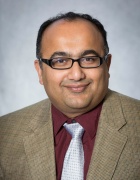
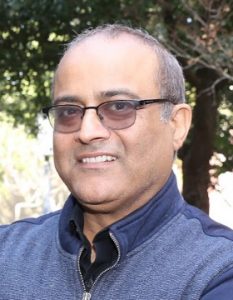
Stavros Sintos is an Assistant Professor in the Department of Computer Science at the University of Illinois at Chicago (UIC). He joined UIC after a postdoctoral fellowship at the University of Chicago, where he was part of the ChiData group under Sanjay Krishnan. He earned his Ph.D. in Computer Science from Duke University in 2020, advised by Pankaj K. Agarwal. His research focuses on designing efficient algorithms for databases, data mining, and computational geometry . Key themes include: Theoretical guarantees for practical problems Compact indexing structures for query efficiency Geometric optimization combined with database systems Fairness in algorithmic design (e.g., Fair Set Cover, FairHash) Temporal data analysis and dynamic query processing Notable scientific contributions include a Best Paper Award at ICDT 2024 for work on range entropy queries. His publications span top venues like SIGMOD, PODS, VLDB, and SODA, covering areas such as clustering algorithms, synthetic query witnesses, and temporal join optimizations.
Prasad Balkundi is an Associate Professor in the Department of Organization and Human Resources at the School of Management, University at Buffalo. His research focuses on social networks, team processes, and organizational behavior, with publications in top-tier journals like the Academy of Management Journal and Leadership Quarterly . He holds a PhD from Pennsylvania State University, a Post Graduate Diploma (MBA) from Xavier Institute of Management in India, and a BTech from Jawaharlal Nehru Technological University. His teaching spans courses on Organizational Behavior, Organizational Theory, and Social Networks for Managers. Balkundi’s research examines structural holes in teams, leader-follower dynamics, and the impact of age on professional networks. He has received awards including the Smeal Dissertation Research Award and the Penn State Graduate Student Outstanding Teaching Award. His industry experience includes roles as a Human Resource Executive at Larsen & Toubro in India (1995–1997). Balkundi has presented globally, including invited talks in Asia, and has taught MBA courses in the region. His recent work explores how age influences network effectiveness and the interplay of positive/negative ties in team performance. His research methodologies include network analysis and meta-analytic studies, contributing to understanding interdisciplinary collaboration and leadership prototypes.
Professor Kenneth M. Anderson is Chair of the Department of Computer Science and holds the Palmer Endowed Chair at the University of Colorado Boulder's College of Engineering & Applied Science. He co-directs Project EPIC, a $4M NSF-funded initiative on social media use during mass emergencies, and serves as Co-Director of the Center for Software and Society. Ph.D. in Computer Science, University of California, Irvine (1997) Joined CU Boulder in 1998; tenured in 2005 Former Associate Dean for Education (2016-2019) Former Associate Chair (2010-2013) His research bridges software engineering, crisis informatics, and human-computer interaction. Current projects focus on large-scale social media analytics, crisis response systems, and software architecture for data-intensive environments. Recent publications explore multilingual social media analysis (ML-EPIC), bug fix patterns in software development (FIXR), and collaborative big data platforms. Themes include disaster risk communication, data modeling challenges, and asynchronous analysis tools. ATLAS Fellow (2010) As department chair, he spearheaded initiatives for inclusivity, including creating a Bachelor of Arts in Computer Science and establishing the NSF Broadening Participation in Computing plan. He oversees major academic reforms and departmental operations.
Kanchana Kariyawasam serves as Associate Professor in the Department of Accounting, Finance and Economics within Griffith University's Business School. Holding a PhD in IP Law from Griffith University, an LL.M (Advanced) in IP Law from The University of Queensland, and an LL.B (Hons) from the University of Colombo, she maintains active research affiliations with the Law Futures Centre (2009-2024) and Griffith Asia Institute (2019-present). Her research spans Intellectual Property Law with specialized focus on Copyright and Artificial Intelligence, IP and Right to Repair, Patent Law in Biotechnology, and Gender Equality in IP systems. Current projects examine AI-generated works, digital exhaustion doctrine, and NFT legality under Australian copyright frameworks, reflecting strong alignment with Sustainable Development Goals 4 (Quality Education) and 9 (Industry Innovation). Professor Kariyawasam's funded research portfolio includes significant projects such as the WIPO Study on Illegal Retransmission of Live Broadcasts (2023), Queensland Government Ewaste initiatives (2022), and Griffith University's Right to Repair Workshop (2020). Her publications demonstrate consistent output in high-impact journals including European Intellectual Property Review and International Journal of Law and Information Technology , with recent works analyzing AI copyright challenges, spatial data protection, and medical device repair rights. Deputy Vice-Chancellor's 2024 Student Experience of Teaching Survey Commendation Green Impact Gold Award Recipient (2023, Griffith Repair Cafe) Highly Commended Griffith Award for Excellence in Teaching (Large Classes) Two GBS teaching citations She currently supervises five doctoral candidates researching AI data privacy, patent law intersections, and agricultural IP issues, while having successfully completed supervision of four doctoral theses including works on female entrepreneurship and agribusiness marketing. As Coordinator of Griffith Repair Cafe and Steering Committee Member of Australian Repair Network, she bridges academic research with community engagement on repair rights and e-waste reduction.
Carlos R. Rivero is an Associate Professor in the Department of Computer Science at the Rochester Institute of Technology (RIT), located within the Golisano College of Computing and Information Sciences. His primary research focuses on graph theory applications in knowledge graphs, graph databases, and computer-aided program comprehension. He holds a PhD from the University of Seville (Spain), completed in 2012, with postdoctoral work at the University of Idaho (USA). His teaching responsibilities include courses such as Principles of Data Management, Data Mining, and Big Data exploration. Rivero has advised numerous PhD and Master’s students, contributing to research projects in link prediction, knowledge graph completion, and educational technology. He actively serves on program committees for conferences like The Web Conference and SIGKDD, and has reviewed for journals including the VLDB Journal and Communications of the ACM. His research emphasizes evaluating knowledge graph embeddings, improving link prediction methodologies, and developing tools for educational feedback in programming. He has contributed to projects like AYNEXT, which streamlines link prediction evaluation, and CAFE, a neighborhood-aware knowledge graph completion tool. Rivero’s work bridges theoretical advancements with practical applications in education and industry. Notable contributions include frameworks for automated feedback in programming courses and methodologies for assessing inference patterns in knowledge graphs. His grants and service roles reflect a commitment to advancing computational methods and fostering academic collaboration in data science and education.
Robert J. Brunner is a Professor at the University of Illinois with primary appointments in the Gies College of Business (Department of Accountancy) and the School of Information Sciences. He holds affiliate roles across multiple departments including Astronomy, Computer Science, and Statistics, as well as research centers like the Beckman Institute and NCSA. His research focuses on applying statistical/machine learning to solve complex problems in astronomy, finance, and large-scale data science. Education: Ph.D. in Astrophysics from Johns Hopkins University (advisor: Alex Szalay). Postdoctoral work at Caltech on the Digital Sky project. Research Interests: Machine learning applications, computational techniques, data management/visualization, and observational cosmology. His work bridges astrophysical data analysis with modern data science methodologies. Recent work includes developing spatio-temporal neural networks for forecasting, evaluating AI-driven financial analysis tools, and planning for the Vera C. Rubin Observatory. He collaborates internationally on large-scale surveys like the Dark Energy Survey and SDSS. Labs/Teams: Leads data science initiatives at the University of Illinois Research Park. Active in interdisciplinary teams at NCSA and Beckman Institute focusing on algorithm optimization and data-intensive research.
Sharad Mehrotra is a Distinguished Professor at the University of California, Irvine (UCI), leading the Center for Emergency Response Technologies (CERT) and directing the NSF-funded RESCUE project. He previously served at the University of Illinois, Urbana-Champaign, and holds a Ph.D. from the University of Texas at Austin (1993). His research focuses on data management, IoT systems, privacy-preserving technologies, and smart spaces, with contributions to frameworks like TIPPERS and MARS. Education: Ph.D., Computer Science, University of Texas at Austin, 1993 Research Interests: His work bridges database systems, security, and IoT, emphasizing privacy in smart environments. Notable projects include sentient space technologies for disaster response, cryptographic methods for encrypted data queries, and semantic IoT integration. Recent efforts address privacy in multi-owner data systems and resilient community water infrastructure. Awards & Recognition: ACM Fellow (2024) SIGMOD Best Paper (2001), DASFAA Best Paper (2004) NAVWAR Innovation Award (2021) Outstanding Graduate Mentor (2005) Grants & Leadership: As RESCUE PI, he managed $12.5M NSF funding, developing crisis-response software deployed by emergency agencies. Collaborations include the Cal-IT2 institute (UCSD/UCI) and the US Navy’s TIPPERS platform. He co-leads initiatives like the NSF Civic Innovation Challenge for disaster resilience in aging communities. Labs & Teams: Directs UCI’s Information Systems Group and CERT, fostering interdisciplinary research with 60+ members. His teams produce open-source tools (e.g., SEMIoTIC, PrivacySphere) and engage in global partnerships via Fulbright Visiting Scholar programs.
Paul Moritz Wiegmann is an Assistant Professor in the Department of Industrial Engineering and Innovation Sciences at Eindhoven University of Technology (TU/e), where he is part of the ITEM group. He currently serves as President of the European Academy of Standardisation (EURAS). His academic career includes visiting research positions at TU Berlin (2014 & 2015), Yonsei University, Seoul (2018), and the University of California, Davis (2023). Paul holds a PhD from Rotterdam School of Management, Erasmus University, alongside additional degrees from Erasmus University and the University of Warwick. His educational background emphasizes interdisciplinary training, reflected in his research and teaching. His research focuses on the role of standardization in innovation ecosystems, particularly how explicit and implicit rules enable value creation and capture. He employs mixed-methods approaches, including case studies, grounded theory, choice experiments, and conjoint analysis. His work aligns with UN Sustainable Development Goals, addressing societal challenges like sustainability and smart technologies through collaborative frameworks. Notable awards include the Industria Education Award 2022-2023 for Best Teacher Talent (2023) and the ISPIM Dissertation Award 2020 (2020). These recognize his contributions to both education and research in standardization and innovation. In advising and grants, Paul has supervised 30 works (names not listed) and leads the Measuring societal impact of standards project (2021–2022). He also coordinates the FIQCS: FIeldlab Quantum Cryptography Solutions for Safe Society initiative (2023–2028). His activities include organizing conferences like EU-SPRI 2025 and delivering invited talks on topics ranging from standardization governance to quantum technologies. Paul teaches courses such as Methodology for IE research and Patents design rights & standards exploration course , reflecting his expertise in standardization and research methods. He contributed to the Standardization literature database (2024), an interdisciplinary review, and engages in media discussions on topics like AI adoption in SMEs and quantum threat mitigation in public safety.
Darren Jorgensen is a Lecturer at the UWA Design School , University of Western Australia, specializing in twentieth century and contemporary art. His research bridges Australian art, Aboriginal art, Chinese art, and experimental music, with a focus on critical theory and poststructuralism. PhD in Science Fiction and the Sublime Co-founder of Guan Kan journal on contemporary Chinese art Contributor to Dispatch Review and Artlink His research projects examine illustrated literature from remote Aboriginal communities and art from Australian pastoral stations. He has collaborated on ARC-funded initiatives exploring Indigenous art conditions and digital transformations of Australian art databases. Recent writings analyze post-industrial music, science fiction aesthetics, and cross-cultural art practices. Recent Research Trends : Darren's 15 most recent publications (2024-2025) span exhibition reviews, book critiques, and cultural analyses. Key themes include: Transnational Australian-Chinese art dialogues Aboriginal art's relationship to land, heritage, and decolonization Industrial/post-industrial music influences in visual art Critical theory applications to contemporary art practices Illustrated literature as cultural document Scientific Awards : Best Small Exhibition Catalogue (2019) for collaborative curatorial work Teaching & Supervision : Supervises postgraduate and honours students across diverse topics including Aleister Crowley's esoteric art, whale acoustics, and continental philosophy's impact on aesthetics. His teaching philosophy integrates Kant, Isabelle Stengers, and poststructuralist theory. Research Collaborations : Collaborates with institutions across Australia and internationally, particularly through projects like the Beijing Realism exhibition and remote Aboriginal art studies. Maintains active research networks in art history, critical theory, and experimental practices.
Wantao Yu is a Professor of Supply Chain Management at the Roehampton Business School, part of the University of Roehampton's Faculty of Business and Law. Previously, he held academic positions at the University of Kent, University of East Anglia, and Buckinghamshire New University. His expertise spans digital supply chain management, sustainability, and modern slavery prevention. He actively supervises PhD students in areas like agri-tech and LARG (Lean, Agile, Resilient, Green) supply chains. Research Interests: His work focuses on digital innovation in supply chains, sustainable practices, and ethical sourcing. Notable projects include STFC-funded initiatives in agri-food systems (UK, China, Kenya, Uganda) leveraging IoT and machine learning for sustainability and productivity. He emphasizes public-private partnerships with smallholder farmers and agribusinesses. Notable Achievements: Included in Stanford's World Top 2% Scientists (2020-2024) and recognized with multiple awards, including the Emerald/EFMD Doctoral Research Award (2010) and conference paper accolades (e.g., 2017, 2015). His pandemic-related research was featured in the WHO database. Teaching: Leads courses on Supply Chain Strategy & Processes and Digital Logistics. External roles include serving as an academic examiner at universities like Essex and Hertfordshire. Collaborations: Active in global research networks, with recent projects in Kenya, Uganda, and China. Key themes include data-driven supply chains, agri-tech, and resilience strategies for SMEs.
Claire Bishop is a Presidential Professor of Art History at the CUNY Graduate Center, widely considered an original thinker and creative interpreter of contemporary art, as well as a dynamic teacher. Her work critically examines participatory art, performance practices, and the relationship between art and politics. She has been based at the CUNY Graduate Center since 2008 and serves as a Contributing Editor to Artforum. Her publications have been translated into twenty languages, reflecting her international influence in the field of contemporary art history. Education: Ph.D. University of Essex, 2002 M.A. University of Essex, 1996 B.A. University of Cambridge, 1994 Bishop's research interests span Contemporary Art, Performance Art, Art & Politics, Exhibition History, History of Art Pedagogy, Post- and De-colonial Theory, and Museology. She is particularly known for her critical engagement with participatory art practices, questioning their political efficacy while exploring new modes of spectatorship in contemporary art. Her work examines how the digital revolution has transformed how we engage with art, arguing against simplistic narratives about technology's impact on visual culture. Bishop's scholarly contributions have been recognized with prestigious awards including the Guggenheim Fellowship (2024), the Mentoring and Teaching Award from CUNY Graduate Center (2024), and the College Art Association's Frank Jewett Mather Award for art criticism (2013). She has also received significant research support including a fellowship from the Center for Ballet and the Arts at NYU to study Merce Cunningham's Museum Events. Awards and Recognition: Guggenheim Fellowship, 2024 Mentoring and Teaching Award, CUNY Graduate Center, 2024 Andy Warhol Foundation Arts Writers Grant, 2017 Frank Jewett Mather Award for art criticism, 2013 Research Fellowship, Sterling and Francine Clark Institute, 2013 Bishop has received substantial grant support for her research, including the Andy Warhol Foundation Arts Writers Grant which enabled her to deepen her investigation into art and politics. Her work as a mentor has been formally recognized by CUNY Graduate Center, highlighting her commitment to developing the next generation of art historians. She has organized numerous academic events including the 'Post-Discipline? Contemporary Artists and Research' seminar series at the Center for the Humanities at CUNY Graduate Center. Bishop maintains an active presence in both academic and artistic communities, regularly contributing to major art publications and participating in international conferences. Her work bridges theoretical inquiry with practical engagement in contemporary art institutions and practices.
Janki Bhimani is a Professor and Director of the Data Management Research Lab (DaMRL) at the School of Computing and Information Science, Florida International University (FIU). Her research focuses on Memory and Storage Systems, Cloud Computing, Performance Modeling, and Applied Machine Learning. She holds a Ph.D. in Computer Engineering from Northeastern University (2019), an M.S. in Electrical and Computer Engineering (2016), and a B.S. in Electrical and Electronics Engineering from GITAM University (2013). Prior to FIU, she taught at Northeastern University and collaborated with Samsung Semiconductor Research Labs on flash-based SSDs. Her research interests include emerging memory technologies, high-performance computing, and datacenter reliability management. She leads innovative projects like Heimdall (machine learning for storage I/O optimization) and MoKE (modular key-value storage emulation). Awards include FIU Top Scholar and KFSCIS Excellence in Applied Research. Teaching highlights include CIS 3530 (Data Structures), CIS 5346 (Storage Systems), and EECE 2560 (Engineering Algorithms). Her work emphasizes bridging theory and practice, with patents on storage system optimization and machine learning integration.
Dr. Oliver Kennedy is an Associate Professor in the Department of Computer Science and Engineering at the University at Buffalo's School of Engineering and Applied Sciences. He serves as Co-Director of Graduate Studies and leads the Online Data Interactions (ODIn) Lab. His research focuses on databases, programming languages, and user interfaces for data science, with particular emphasis on scalable compilers and managing uncertainty in data. Kennedy holds a PhD in Computer Science from Cornell University (2011), MS from Cornell (2008), and dual BS degrees in Computer Science and Computer Engineering from NYU and Stevens Institute of Technology (2005). His work bridges theoretical computer science with practical data management challenges. His recent publications demonstrate a strong focus on improving database query processing, uncertainty management in data systems, and developing practical tools for data integration and exploration. Awarded the NSF CAREER Award in 2018, Kennedy's research has significant implications for efficient data processing in scientific and commercial applications.
Sabine C. Carey is a Professor at the School of Social Sciences, University of Mannheim, leading the Chair of Political Science, International Relations. Her research emphasizes empirical analysis of violent conflict, human rights violations, terrorism, and counterinsurgencies, focusing on actors like pro-government militias and governance-repression links. Her teaching includes courses on international relations and political violence for BA, MA, and PhD students. Former students, such as Rosa Aloisi (Trinity University) and Katrin Paula (Technical University of Munich), have pursued prestigious academic and professional careers, with some receiving awards like the Deutscher Studienpreis. Key Research Areas: Violent conflict, human rights, media freedom in conflict zones, pro-government militia dynamics. Recent Article Trends: Explored media's role in postwar societies, state violence escalation, militia impacts on postwar repression, and global human rights perceptions. She will present at University College London (April 2025) and the Mannheim Model United Nations Conference (April 2025). Contact: sabine.carey@uni-mannheim.de
Dr. Jessica Terekhov is Assistant Professor in English at Northeastern University London. She holds a BA in English from Johns Hopkins University and MA/PhD degrees in English from Princeton University. Her teaching focuses on academic writing, Victorian literature, and 18th-19th century British humanities. Her research centers on Victorian print culture, particularly fiction serialized in shilling parts, with emphasis on Charles Dickens and George Meredith. She maintains scholarly affiliations with the Bibliographical Society of America and Research Society for Victorian Periodicals, while serving as Contributing Editor for At the Circulating Library database. Her work bridges archival research and digital humanities to document historical publication practices.