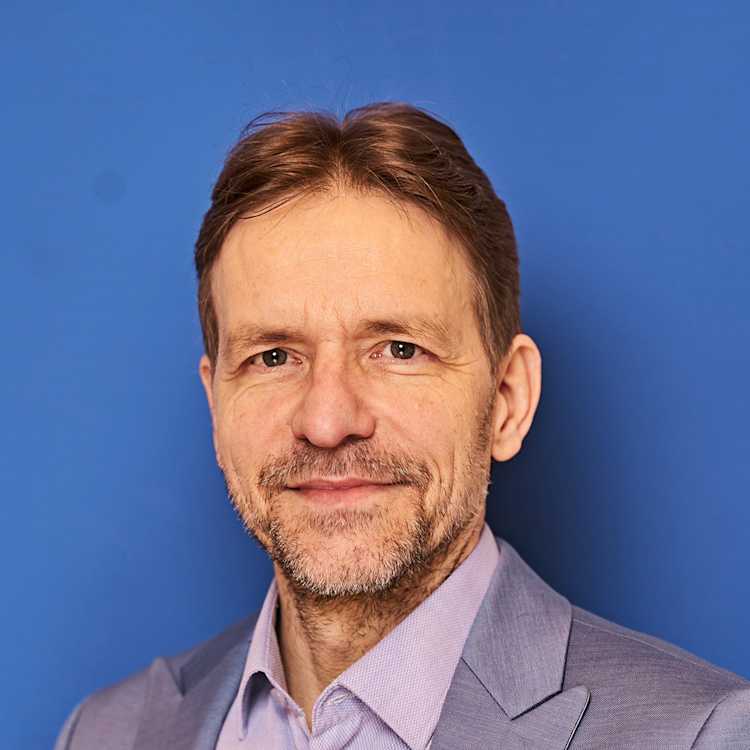
Dr. Andreas Ufen is a Senior Research Fellow at the GIGA Institute of Asian Studies since 2000, specializing in Southeast Asian politics, democratization, and digital authoritarianism. He was Spokesperson of the GIGA’s 'Democratic Institutions' research team (2021–2024) and previously served as Acting Professor at Friedrich-Alexander University (2011–2013) and Coordinator of GIGA’s doctoral program (2010–2011).
Dr. Tim Gerrits is a researcher at the Institute for Visualization (VIS) at RWTH Aachen University, where he leads the Visualization Team. His work bridges scientific visualization, high-performance computing, and immersive technologies, with a strong focus on in-situ and in-transit analysis for large-scale simulations. University: RWTH Aachen University Institute: Institute for Visualization (VIS) Role: Lead of the Visualization Team Tim Gerrits' research centers on developing tools and frameworks for efficient and interactive visualization of complex scientific data. His interests include ensemble data analysis, uncertainty visualization, virtual reality interaction techniques, and leveraging game engines like Unreal Engine for scientific applications. He is particularly active in the domain of neuronal network simulations and oceanographic modeling. His recent publications highlight a strong trend toward accessible, real-time, and hybrid visualization workflows. He has contributed to the development of DaVE, a curated database of visualization examples to support HPC users, and Insite, a lightweight pipeline for in-transit processing in neuroscience simulations. His work emphasizes usability, performance, and integration with existing scientific workflows. Scientific Awards: Best Paper Award at IEEE Uncertainty Visualization Workshop, 2024 Honorable Mention Award at Eurographics Workshop on Visual Computing for Biology and Medicine (VCBM), 2022 Dr. Gerrits actively mentors and collaborates on interdisciplinary projects involving computational neuroscience and climate modeling. He has led the curation of datasets for the IEEE SciVis Contest and promotes open science through Zenodo-hosted resources. His lab focuses on building scalable, user-centered visualization systems that empower domain scientists to gain early insights from massive simulations.
Tim Holzheim is a researcher at the Department of Computer Science, Faculty of Mathematics, Computer Science and Natural Sciences, RWTH Aachen University, affiliated with Lehrstuhl Informatik 5 (Database and Information Systems Group). He is actively involved in teaching and research, particularly in the areas of Knowledge Graphs, Semantic Web, and data integration technologies. Institution: RWTH Aachen University School: Faculty of Mathematics, Computer Science and Natural Sciences Department: Department of Computer Science Research Group: Lehrstuhl Informatik 5 (DBIS) Email: holzheim@dbis.rwth-aachen.de His research focuses on Knowledge Graphs , Semantic Web technologies , Wikidata , RDF , and GraphQL for semantic data access . He explores methods for knowledge extraction, data integration, and enabling efficient querying and hosting of large-scale semantic datasets. His work bridges theoretical semantic modeling with practical implementation in data systems. The recent publications highlight a consistent research trajectory in semantic data engineering, particularly in making knowledge graphs more accessible, interoperable, and usable through tools for bootstrapping APIs, analyzing property structures, and semantifying academic data. His contributions appear in workshops co-located with top-tier conferences such as ISWC and ESWC. There are no listed scientific awards or honors in the provided information. Tim Holzheim is involved in academic advising and teaching, offering courses such as Datenbanken und Informationssysteme and Knowledge Graph Lab . While no formal students are listed, his supervision likely includes thesis projects and lab participants. He is also engaged in research projects such as NFDI4DS, contributing to national data infrastructure initiatives. He is a member of the Database and Information Systems (DBIS) research group led by Prof. Dr. S. Decker, which focuses on scalable and semantic data management solutions. The group is active in developing tools and methodologies for knowledge graphs, data spaces, and semantic integration.
Matthias Uflacker is a Professor at the Hasso Plattner Institute (HPI), University of Potsdam, Germany, where he conducts research in database systems, in-memory computing, and data-driven enterprise applications. His work bridges systems research and practical applications in Industry 4.0, education, and bioinformatics. University: University of Potsdam School: Hasso Plattner Institute Department: Department of Digital Engineering Research Focus: In-Memory Databases, Stream Processing, Causal AI, and Database Education His research interests span in-memory database systems , real-time data stream processing , GPU-accelerated analytics , and causal structure learning . He also contributes to computer science education , particularly in agile software engineering and interactive learning tools for K-12. The recent publications reflect a strong trend in enterprise data management , with a focus on benchmarking (e.g., ESPBench), performance optimization (e.g., Kafka, Hyrise), and intelligent decision support using causal models in industrial contexts. His work increasingly integrates AI for monitoring and automation in manufacturing and e-commerce. He has co-authored numerous publications in top-tier venues such as VLDB, ICDE, EDBT, and KDD, often in collaboration with Hasso Plattner and other HPI researchers. Matthias Uflacker leads and contributes to research projects on autonomous database systems , dynamic pricing simulations , and educational technology platforms for programming exercises. His team develops tools for real-time data integration, causal analysis, and classroom software engineering assessment.
Dr. Laura Beltrán-Rubio is a Lecturer in Design Cultures at De Montfort University, affiliated with the School of Fashion and Textiles within the Faculty of Arts, Design and Humanities. Her academic and curatorial work centers on decolonizing fashion narratives, with a focus on Indigenous identities and textile arts in Latin America and the broader Americas. She actively contributes to public scholarship through her podcast Redressing Fashion and writings for The Fashion and Race Database. PhD in American Studies, William & Mary (2023) MA in Fashion Studies, Parsons School of Design (2016) BA in Economics, Universidad de los Andes (2014) Her research lies at the intersection of art history, fashion theory, and decolonial praxis. She investigates how clothing, textiles, and portraiture have historically shaped identities under colonial rule and how these dynamics persist in contemporary fashion. Her work emphasizes Indigenous epistemologies, material culture, and global equity in design. The 15 most recent publications reflect a consistent engagement with colonial and postcolonial fashion in Latin America, particularly the Viceroyalty of New Granada. Themes include Indigenous resistance, gendered dress, curatorial ethics, and the re-appropriation of cultural identity in global fashion markets. Her scholarship spans art history, material culture, and critical theory, often drawing on interdisciplinary methodologies from digital humanities and postcolonial studies. Her notable recognitions include being featured in The New York Times Best Art Books of 2022 and receiving the Association of Art Museum Curators 2023 Award of Excellence . Advised creative brands on ethical storytelling, cultural representation, and collaboration with Indigenous designers. Facilitated research on decolonial fashion curation and historical narratives in global fashion contexts. Dr. Beltrán-Rubio is actively involved in academic and public-facing initiatives, including conference presentations, invited talks, and collaborative symposia on Latin American fashion, decolonial theory, and curatorial innovation. Her consultancy work supports ethical practices in the fashion industry, emphasizing diversity, equity, and inclusion.
Prof. Dr. med. Ute Hegenbart is a Senior Physician at Heidelberg University Hospital (UKHD) and holds academic appointments at the University of Heidelberg's Faculty of Medicine. She specializes in Hematology and Oncology with a focus on Amyloidosis, particularly AL-type and transthyretin variants. Her roles include leading the Amyloidosis Center as Spokesperson, directing the Amyloidosis Diagnostics Laboratory, and serving as Deputy Spokesperson for the Center for Rare Diseases. She is an internationally recognized expert in stem cell transplantation protocols, prognostic biomarker research, and clinical trials for amyloidosis therapies. Her work bridges clinical practice and translational research, emphasizing early diagnosis, treatment optimization, and patient outcomes in rare hematological disorders. Education: Completed medical studies at Martin-Luther-Universität Halle (1983–1989), earned a PhD there in 1989, and achieved Habilitation (Venia legendi) in Internal Medicine in 2012. Clinical training included positions at Leipzig University and Heidelberg’s Medical Clinic II under Prof. Dr. W. Hunstein and Prof. A.D. Ho. Board certifications include Hematology/Internal Oncology (1997), and full specialist certification in Internal Medicine (1996). Research interests center on amyloidosis pathogenesis, novel therapeutic combinations (e.g., daratumumab, elotuzumab), and predictive models for transplant-related mortality. Her studies leverage advanced imaging (cryo-EM, T2-relaxometry) and molecular profiling to improve diagnostic precision and therapeutic strategies. Recent work addresses challenges in multi-organ involvement, including cardiac and renal responses to treatment, and the impact of cytogenetic abnormalities on prognosis. Her publications highlight contributions to clinical guidelines, including EHA-ISA recommendations for high-dose chemotherapy in AL amyloidosis, and collaborative initiatives like the EUREKA registry integrating molecular data with clinical outcomes. She actively engages in translational research through platforms like the Heidelberg Center for Rare Diseases, emphasizing interdisciplinary care and patient-centered approaches.
Vinicius de Souza Maia is a doctoral student at the Department of Economic History and affiliated with the Centre for Economic Demography at Lund University. His research focuses on neighborhood effects on fertility, family formation, and transitions into adulthood using geocoded individual-level microdata. Projects : The Long Reach of the Neighbourhood (Handelsbanken, Vetenskapsrådet, FORTE, 2021-2025) and his dissertation project. Supervisors : Finn Hedefalk, Martin Dribe, and Gabriel Brea-Martinez. His work intersects longitudinal and spatial analysis of historical and contemporary populations, with a focus on Sweden. He has presented research at conferences like the European Population Conference and Social Science History Association.
Simon B. Eickhoff is a Professor at Heinrich Heine University Düsseldorf , where he serves as Director of the Institute of Systems Neuroscience . He also holds affiliations with the Institute of Neuroscience and Medicine (INM-7) at the Research Center Jülich . His work focuses on neuroimaging, brain connectivity, and translational research into neurological and psychiatric disorders. Primary Affiliation: Institute of Systems Neuroscience, Heinrich Heine University Düsseldorf Secondary Affiliation: Institute of Neuroscience and Medicine (INM-7), Research Center Jülich Research Interests: Eickhoff specializes in coordinate-based meta-analyses of functional neuroimaging data multi-modal analyses of brain connectivity (structural, functional, effective) machine learning for predicting cognitive and clinical phenotypes translational research on systems biology of psychiatric disorders organizational principles of the human brain neural mechanisms of sensory-motor transformation and social-emotional processing Recent Publications: His work spans neuroscience and psychiatry, emphasizing meta-analytic connectivity modeling, brain mapping, and computational approaches to large-scale neuroimaging databases. Key themes include psychiatric disorder comorbidity, depression, ADHD, and brain network analysis. Scientific Awards: None listed in the provided text. Labs & Teams: Eickhoff leads the Institute of Systems Neuroscience at Heinrich Heine University Düsseldorf and contributes to the Research Center Jülich's INM-7 institute, fostering interdisciplinary collaboration between neuroimaging and systems biology.
Dr. Laurentia Schreiber is a researcher at the University of Bamberg's Faculty of Humanities and Cultural Studies, specializing in General Linguistics. She assumed leadership of the BA and MA General Linguistics programs, including the Elite-MA Cultural Studies of the Middle East, following Prof. Geoffrey Haig's retirement. Her research focuses on multilingualism, language contact, and minority languages, particularly in Western Asia and Turkey. Research Interests: Grammatical structures in contact settings, endangered languages (e.g., Romeyka, Oghuz, Gorani), corpus-based typology, and sociolinguistic vitality. Key Projects: Multi-CAST corpus, Post-predicate Elements in Iranian, documentation of Dargi, Gorani, and Romeyka languages, and collaboration on the Atlas of the Languages of Iran. Teaching: Courses on sociolinguistics, language contact, linguistic fieldwork, endangered languages, and academic writing in linguistics since 2017. Contact: Email: laurentia.schreiber@uni-bamberg.de, Phone: +49 951 863-2490, Room: SP17/01.14, Schillerplatz 17, 96047 Bamberg. Her publications include studies on Romeyka's grammar, Oghuz word order, and Turkic-Bakhtiari interactions, often using corpus-based and fieldwork methodologies. She collaborates with scholars like Geoffrey Haig, Mark Janse, and Erik Anonby.
Shahram Ghandeharizadeh is a Professor at the University of Southern California , specializing in Computer Science with a focus on databases, distributed systems, and multimedia. His research spans caching middleware, flying light specks for 3D displays, and swarm robotics. Recent work includes CAMP (cache eviction policies), Disaggregated Database Management Systems , and Flight Patterns for Swarms of Drones , reflecting his expertise in data management and swarm-based technologies. He has collaborated extensively with researchers like Hamed Alimohammadzadeh and Hieu Nguyen . His scientific awards include the ACM Software System Award (2008) , recognizing long-term contributions to software systems. Publications since 2021 highlight advancements in cache management, graph databases, and swarm robotics, with a strong emphasis on non-volatile memory and decentralized frameworks.
Dr. Cristian L. Klunk is an active researcher at the Department of Biology, Technical University of Darmstadt , focusing on the biomechanics and functional morphology of ant mandibles. His work bridges ecology, evolutionary biology, and insect physiology, with a particular emphasis on how morphological traits influence mechanical performance.
Maja Rey is a Researcher at the Scientific Databases and Visualization department of the Heidelberg Institute for Theoretical Studies (HITS). Her work focuses on data infrastructure and visualization methodologies supporting theoretical research across disciplines. Contact: Telephone +49 6221 – 533 – 215 | Fax +49 6221 – 533 – 298
Gianmaria Silvello is a researcher at the University of Padua , Department of Information Engineering. His work spans data science, biomedical informatics, algorithmic fairness, and digital libraries. Research Interests : Knowledge Graph Accuracy Estimation Ethical AI & Data Governance Biomedical Data Curation Algorithmic Fairness & Bias Auditing Digital Library Systems Provenance Tracking in Research Notable Contributions : Co-developer of the CoreKB medical knowledge base platform, TBGA gene-disease dataset, and MedTAG biomedical annotation tools. His 2025 work on database impact metrics with Buneman et al. redefines data citation analysis. Collaborative Networks : Partnerships with institutions across Italy, Switzerland, and Spain, including projects like BRAINTEASER for ALS/MS patient data and iDPP@CLEF for disease progression prediction challenges.
Martin Giese is affiliated with the University of Oslo (Department of Informatics) and the University Clinic Tübingen (Department of Cognitive Neurology). He is a researcher with a focus on semantic technologies, ontology-based data access, and visual query systems. Research Themes : Semantic Web, Ontology Engineering, Knowledge Graphs, Geological Informatics, Probabilistic Logic, Automated Reasoning Key Collaborations : Siemens, Statoil, Norwegian Petroleum Directorate, and various European research institutions Technical Contributions : Developed visual query systems (OptiqueVQS), ontology-driven geological modeling (GeoFault), and semantic data integration frameworks for industrial applications. His work spans both theoretical logic and practical implementations in big data environments. Publications : Recent articles focus on fault ontologies, process representation, and semantic embeddings. Earlier work includes foundational research in automated theorem proving and UML formalization.
Vinayak R. Borkar is a researcher and software engineer affiliated with the University of California, Irvine, where he completed his PhD in 2016. His work focuses on big data platforms, database systems, and scalable query processing frameworks. PhD in Big Data Processing (UC Irvine, 2016) Contributions to Apache AsterixDB, Hyracks, and Pregelix Industry experience at BEA Systems (2000s) Research interests include database systems , big data management , XQuery optimization , and dataflow engines . His publications analyze scalable similarity queries, memory management, and declarative approaches to machine learning. Recent articles explore Apache AsterixDB , dataflow compilation , and graph analytics . Collaborators include Michael J. Carey and Alexander Behm.