معرفی
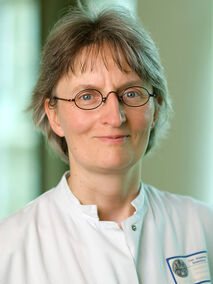
Prof. Dr. med. Ute Hegenbart is a Senior Physician at Heidelberg University Hospital (UKHD) and holds academic appointments at the University of Heidelberg's Faculty of Medicine. She specializes in Hematology and Oncology with a focus on Amyloidosis, particularly AL-type and transthyretin variants. Her roles include leading the Amyloidosis Center as Spokesperson, directing the Amyloidosis Diagnostics Laboratory, and serving as Deputy Spokesperson for the Center for Rare Diseases. She is an internationally recognized expert in stem cell transplantation protocols, prognostic biomarker research, and clinical trials for amyloidosis therapies. Her work bridges clinical practice and translational research, emphasizing early diagnosis, treatment optimization, and patient outcomes in rare hematological disorders.
Education: Completed medical studies at Martin-Luther-Universität Halle (1983–1989), earned a PhD there in 1989, and achieved Habilitation (Venia legendi) in Internal Medicine in 2012. Clinical training included positions at Leipzig University and Heidelberg’s Medical Clinic II under Prof. Dr. W. Hunstein and Prof. A.D. Ho. Board certifications include Hematology/Internal Oncology (1997), and full specialist certification in Internal Medicine (1996).
Research interests center on amyloidosis pathogenesis, novel therapeutic combinations (e.g., daratumumab, elotuzumab), and predictive models for transplant-related mortality. Her studies leverage advanced imaging (cryo-EM, T2-relaxometry) and molecular profiling to improve diagnostic precision and therapeutic strategies. Recent work addresses challenges in multi-organ involvement, including cardiac and renal responses to treatment, and the impact of cytogenetic abnormalities on prognosis.
Her publications highlight contributions to clinical guidelines, including EHA-ISA recommendations for high-dose chemotherapy in AL amyloidosis, and collaborative initiatives like the EUREKA registry integrating molecular data with clinical outcomes. She actively engages in translational research through platforms like the Heidelberg Center for Rare Diseases, emphasizing interdisciplinary care and patient-centered approaches.