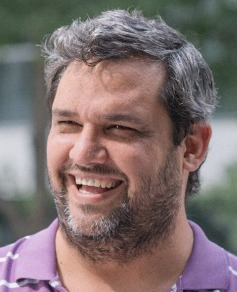
Per Lauvås is an Associate Professor at the Department of Computer Science, Faculty of Technology, Art and Design, Oslo Metropolitan University. His research and teaching focus on IT education, software engineering, and e-learning technologies. Key research areas include Software testing pedagogy Gamification in data modeling education Interactive web development tools Cloud computing and cybersecurity Assessment innovations in database courses Work-integrated learning for IT students Recent publications explore AI chatbots in education, employer prioritization of IT graduates, and gamified learning tools. His work emphasizes student-centered approaches and practical skill development. Contact: pelau8806@oslomet.no
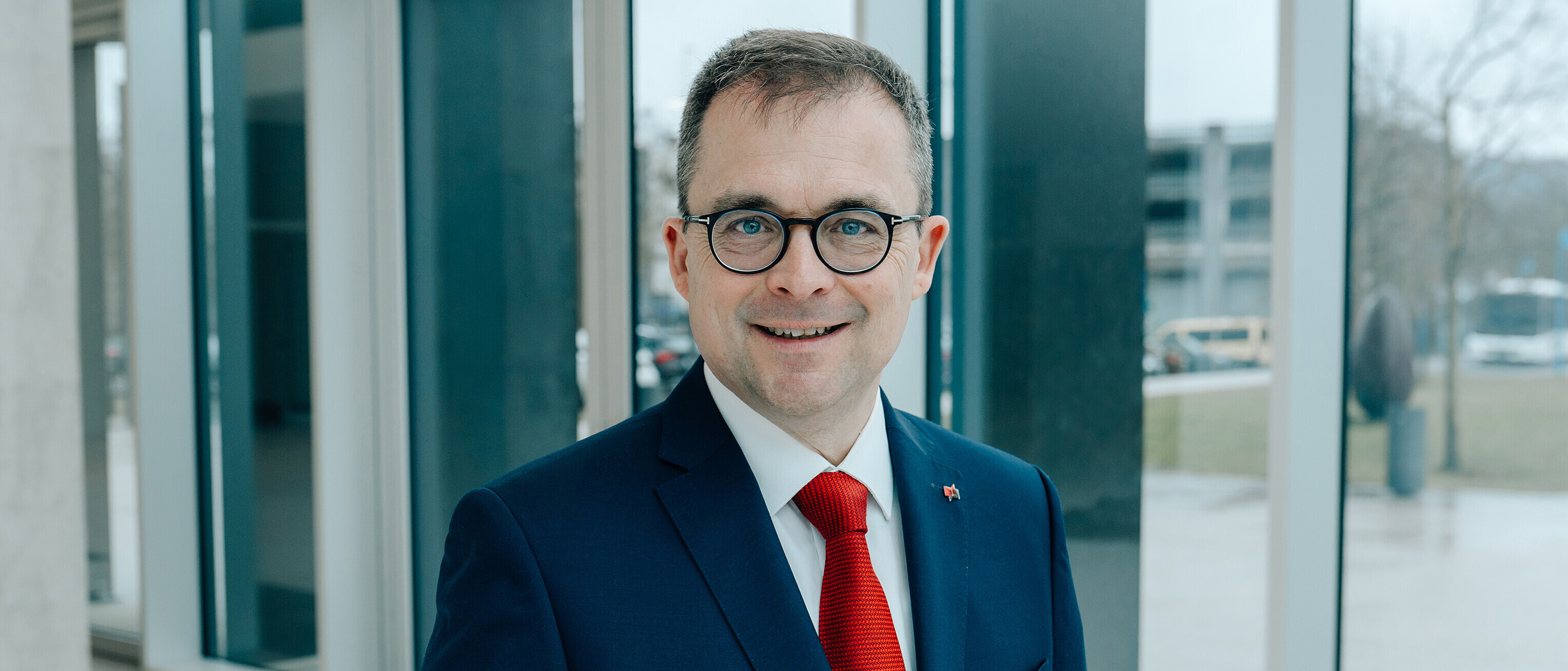
Yubao Liu is a Professor at Sun Yat-sen University's School of Data and Computer Science, Department of Computer Science, with a prolific research career spanning over two decades in computer science. His work demonstrates significant contributions to database systems, data mining, and spatio-temporal analysis. Professor Liu's research interests focus on Data Mining , Database Systems , Traffic Flow Prediction , and Graph Neural Networks . His recent work has concentrated on developing advanced techniques for large-scale traffic flow prediction, crowd flow analysis, and spatio-temporal modeling using deep learning approaches. His research bridges theoretical computer science with practical applications in transportation systems and urban computing. Liu's publication record shows consistent high-impact contributions, with recent work emphasizing graph-based neural network architectures for traffic forecasting problems. His research demonstrates a clear evolution from foundational database work to cutting-edge applications of deep learning in transportation and social network analysis. Professor Liu has collaborated extensively with researchers including Weiyang Kong, Kaiqi Wu, Sen Zhang, Genan Dai, and Youming Ge, indicating a strong research group focused on spatio-temporal data analysis and deep learning applications. His academic advising is evident through publications where his students appear as first authors, suggesting an active mentorship role in training the next generation of computer scientists specializing in data-intensive applications.
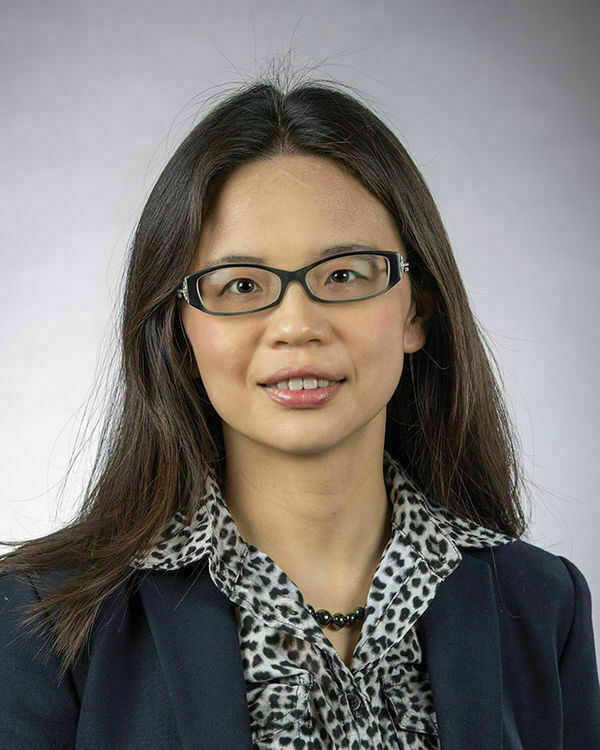
Jayant Madhavan is a researcher at Google specializing in database systems, web data extraction, and information integration. His work primarily focuses on extracting structured data from the web, schema matching, and developing techniques for managing and visualizing large datasets, particularly through projects like Google Fusion Tables and WebTables. Madhavan's research interests center around the challenges of working with web data. His work explores methods for extracting structured information from unstructured web content, particularly focusing on tables and lists. He has made significant contributions to the field of schema matching, developing techniques that enable integration of data from diverse sources. His research also extends to geospatial data processing and visualization, where he has developed algorithms for efficiently handling large geographical datasets for map visualization. His publication record shows a consistent focus on practical applications of database research to web-scale problems. The evolution of his work demonstrates a progression from foundational research on schema matching and data integration to applied work on Google products like Fusion Tables, which enable non-experts to work with structured data. His most recent work examines the ecosystem of structured data on the web and how to effectively extract and utilize this information. Madhavan has collaborated extensively with Alon Y. Halevy (43 co-authored papers) and other researchers at Google, forming a core group that has advanced the state of the art in web data management. His work bridges theoretical database research with practical applications, making significant contributions to both academic literature and real-world data management systems.
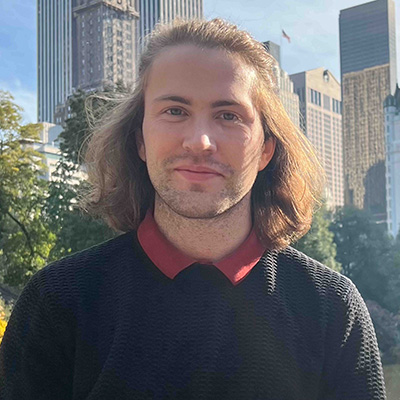
Gonzalo Navarro is a Full Professor at the Department of Computer Science (DCC) , within the Faculty of Physical and Mathematical Sciences at the University of Chile . His academic roles include coordinating the PhD Program , serving as Research Coordinator , and being a member of the Department Council . Co-created the Pizza&Chili site for compressed text indexes Co-authored two books: Compact Data Structures and Flexible Pattern Matching in Strings Research Interests: He focuses on algorithm design , compressed data structures , text/graph databases , and information retrieval . His work bridges theoretical and practical efficiency in problems like approximate pattern matching, regular expression searching, and dynamic data structure optimization. Recent Publications Trends: His 2025-2024 works emphasize space-time optimal data structures , graph database joins , trajectory compression , and regular expression indexing , often combining algorithmic theory with real-world implementation benchmarks. Scientific Awards: 7 Best Paper Awards in conferences 4 Google Research Awards Highest Cited Paper Award (Elsevier) Scopus Chile Award ACM Fellow (2022) Advising: He has advised 8 postdocs, 22 PhD students, 17 MSc students, and 29 undergraduate theses. His Algorithmic Wednesdays Group fosters collaborative research in algorithms. Labs & Projects: He participates in the Milennium Institute for Foundational Research on Data (IMFD) and the Basal Center for Biotechnology and Bioengineering (CeBiB) , advancing compressed data structures for biological and web-scale applications.
Radu Sion is a Professor at the Department of Computer Science, Stony Brook University, specializing in Computer Science , Information Security , Cloud Computing , Data Privacy , and Cryptography . His research focuses on secure data outsourcing, trusted hardware applications, and privacy-preserving systems. Recent work includes Wink: Deniable Secure Messaging (2023) and A Study of China's Censorship Evasion (2023), both exploring plausibly deniable communication. Earlier contributions like PEARL (2021) and ConcurDB (2014) address secure storage and database integrity. His 2024 paper INVISILINE introduces invisible plausibly deniable storage solutions. His research spans Oblivious RAM , History-Independent Data Structures , Trusted Execution Environments , and Flash Memory Security . Key collaboration networks include Bogdan Carbunar, Anrin Chakraborti, and Chen Chen.
Dr. Ebru Harmandar is an Associate Professor at the Department of Civil Engineering, Faculty of Engineering, Muğla Sıtkı Koçman University. She holds a Doctorate in Earthquake Engineering from Boğaziçi University (2009) and has contributed extensively to earthquake hazard assessment, structural response analysis, and ground motion modeling. Her research focuses on seismic resilience, spatial coherency of ground motions, and infrastructure risk mitigation. Key research areas: Earthquake Engineering, Seismic Hazard Analysis, Structural Engineering Major projects: EMME ground-motion logic tree, Istanbul Rapid Response Network Notable students: Soukaina Mellouk (2021), Hüssam-Almukdad (2022) Her recent work includes improving seismic resilience indices for school buildings (2024) and analyzing multi-point earthquake effects on bridges. She has served as an academic editor for journals like Soil Dynamics and Earthquake Engineering and received the 2016 Yollar Türk Milli Komitesi award.
Prof. Dr. Bernd Eisinger is a faculty member at the Baden-Wuerttemberg Cooperative State University, affiliated with the Faculty of Business Administration and Department of Economics. His roles include Head of Study Programs for Business Administration in Commerce and Digital Commerce Management. Baden-Wuerttemberg Cooperative State University Faculty of Business Administration Department of Economics Dr. Eisinger's research focuses on Educational Economics , Cost Management in SMEs , Controlling Systems , and Management of Non-Profit Organisations . He specializes in Financial and Investment Planning , Indicator-Based Weakness Analysis , and Value-Oriented Management . His work bridges business administration principles with educational policy analysis. His 200+ publications span from 1995–2009, concentrating on educational cost structures, project controlling, and non-profit management. Key themes include school funding equity , cameral accounting applications , and budgeting systems across German states. Steinbeis-Transferzentrum Wirtschafts- und Sozialmanagement (1999–2020) Member of the Senate of VWA-Hochschule
Peter van Kranenburg is an Assistant Professor in Music Information Computing at Utrecht University (The Netherlands) and a guest researcher at the KNAW Meertens Institute in Amsterdam. His work bridges computer science and musicology with a focus on computational approaches to music analysis. His research spans computational musicology, computational humanities, and music information retrieval. Van Kranenburg specializes in developing computational models for analyzing musical structures, particularly melodic similarity measures, folk song transmission patterns, and large-scale analysis of song traditions. His work often involves interdisciplinary collaboration between computer scientists and musicologists. His recent publications demonstrate consistent research in computational approaches to music analysis, with a focus on melodic similarity, folk song transmission, and computational modeling of musical traditions. His work spans both technical computer science aspects of music information retrieval and substantive musicological applications. Van Kranenburg has been involved in several significant research projects including the H2020 Polifonia-project (2021-2024), which focused on large scale analysis of European song traditions and curation of historic data on musical instruments, particularly pipe organs. His educational background combines technical and musicological expertise, having earned master's degrees in both Electrical Engineering (Delft University of Technology, 2003) and Musicology (Utrecht University, 2004), followed by a PhD from Utrecht University. His doctoral research developed melodic similarity measures and software tools for analysis of audio recordings of religious chant.
Liang Cai is the Ruth and Paul Idzik Associate Professor in Digital Scholarship at the University of Notre Dame, Department of History. She specializes in Chinese political, legal, and intellectual history of the Qin-Han dynasties (221 BCE–23 CE), with additional expertise in Confucianism, digital humanities, and social network analysis. Her research leverages archaeologically excavated manuscripts and computational methods to reevaluate foundational narratives of Chinese civilization. Ph.D., Cornell University Dr. Cai's work interrogates the interplay between law and morality in early Chinese empires, focusing on convict labor systems and their political implications. She explores how utopian ideals and amnesty policies eroded legal frameworks, leading to Confucian skepticism toward law. Her digital humanities project constructs structured biographical databases of early Chinese officials. Recent publications analyze corrective justice's absence in Han legal systems, Confucian virtue's role in governance, and the hermeneutics of omen-based political theology. Her scholarship bridges traditional historiography with computational analysis. Scientific Awards: 2014 Academic Award for Excellence (Chinese Historians in the United States) 2015 Best First Book in the History of Religions finalist (American Academy of Religion) Dr. Cai collaborates with computer scientists to model bureaucratic networks in early China. Her research has been supported by grants enabling manuscript digitization and network visualization projects.
Manuel Schechtl is an Assistant Professor of Public Policy at the University of North Carolina at Chapel Hill , with affiliations at the Carolina Population Center and Yale's Center for Empirical Research on Stratification and Inequality. As a sociologist, his work bridges tax policy, social policy, and economic inequality, focusing on how fiscal institutions shape wealth distribution and mobility. PhD, Humboldt University Berlin (2022) Postdoc, Stone Center on Socio-Economic Inequality (CUNY, 2022–2024) Research Focus: • Wealth inequality dynamics and intergenerational mobility • Inheritance/gift taxation as mobility determinant • Gender disparities in asset transfers • Municipal policy impacts on racial inequality • Comparative fiscal impoverishment analysis Recent Article Trends: His 15 most recent publications (2021–2025) span wealth inequality, gendered tax effects, place-based policy impacts, and democratic backsliding. Key themes include taxation's role in inequality reproduction, spatial mobility patterns, and policy feedback mechanisms. Scientific Recognition: University of Michigan Stone Center Visiting Fellowship (2025–2026) Collaborative projects with leading inequality centers Contributions: Co-developed wealth-transfer gender gap analysis, advanced fiscal federalism frameworks, and led place-based mortality studies. Currently exploring municipal police impacts on racial mobility gaps and GEOWEALTH-US data applications.
Xan Guilian Morice-Atkinson is a Research Software Engineer at the University of Portsmouth's Faculty of Technology, working within the Institute of Cosmology & Gravitation and the Portsmouth AI and Data Science Centre. With a PhD in Astrophysics and Cosmology completed in 2018, Xan applies machine learning methods to astrophysical research problems, developing computational tools that advance cosmological understanding. Xan earned their PhD from the Institute of Cosmology and Gravitation in 2018, focusing on machine learning applications in astrophysics and cosmology. After completing their doctorate, they worked for several years as a Data Scientist in Air Traffic Services before returning to the ICG as a Research Software Engineer where they program computers to perform astrophysics-related tasks. Research interests span machine learning applications in astrophysics, gravitational wave analysis, cosmological simulations, and galaxy formation studies. Xan specializes in developing computational tools for astrophysical data analysis, with particular expertise in applying machine learning algorithms to classify astronomical objects and model cosmological phenomena, as evidenced by their first-author publication on machine learning interpretation for source classification. Xan's publication record shows a strong focus on applying computational methods to fundamental astrophysical problems, with recent work on gravitational wave alert systems, modified gravity emulators, and galaxy classification. Their research bridges the gap between advanced computational techniques and observational cosmology, contributing significantly to large collaborative projects like the LIGO-Virgo-KAGRA observing run and the Dark Energy Survey. Xan is currently involved as a team member in the "DDME: Data discovery made easy" project funded by the Economic and Social Research Council (June 2024 to September 2025), applying machine learning to social science databases. They have also participated in interdisciplinary work, presenting at the AI in Orthopaedics conference in September 2022, demonstrating the transferability of their computational expertise across scientific domains.
Nicholas Kotov serves as the Joseph B. and Florence V. Cejka Professor of Chemical Engineering at the University of Michigan with joint appointments in Biomedical Engineering, Materials Science & Engineering, and Macromolecular Science & Engineering within the College of Engineering. His research laboratories are housed at the North Campus Research Complex (NCRC) in Ann Arbor, where he directs cutting-edge work at the intersection of nanotechnology and biomedicine. His academic foundation includes: M.S. in Chemistry from Moscow State University (1987) Ph.D. in Chemistry from Moscow State University (1990) Professor Kotov's research program centers on nanostructured materials for biological and medical applications, with particular emphasis on chiral nanomaterials and self-organizing colloidal systems. His group pioneers biomimetic approaches to material design, drawing inspiration from natural hierarchical structures. Current investigations focus on chiral quantum magnets, aramid nanofiber composites, and graph-theoretical frameworks for nanomaterial design. Recent publications demonstrate strong integration of machine learning with experimental nanofabrication, yielding breakthroughs in energy storage, biosensing, and optical devices with applications ranging from SARS-CoV-2 antivirals to terahertz radiation detection. Scientific Recognition: No major awards explicitly documented in source materials He mentors graduate researchers including Ji Young Kim and Terry Shyu, with projects spanning nanomedicine, energy storage, and advanced manufacturing. His lab maintains active industry partnerships and international collaborations, notably in African materials science capacity building. Current funding supports development of chiral optical devices, biomimetic scaffolds for tissue regeneration, and next-generation battery technologies. The Kotov Lab operates specialized facilities at NCRC B26-102S and 108S for nanomaterial synthesis, cryogenic electron tomography, and chiroptical characterization. Research teams integrate chemical engineering, materials science, and biomedical principles to create functional nanosystems with precise structural control.
Prof. Korbinian Schneeberger is a full Professor of Computational Genetics and Genome Plasticity at the Ludwig Maximilian University of Munich , embedded within the Graduate School of Life Science Munich (LSM) . He leads a multidisciplinary team of bioinformaticians, biologists, and biotechnologists, all driven by a shared curiosity in genomic technologies and plant genome evolution. Contact: k.schneeberger@lmu.de . Research Focus: Genome plasticity and mutational dynamics across plant species Development and refinement of next-generation sequencing and assembly pipelines Comparative genomics, pan-genome construction, and structural variation Epigenetic regulation and transposon biology in plant genomes Meiotic recombination and crossover patterning in holocentric plants Application of single-cell and single-nucleus technologies to dissect gamete-level variation His laboratory develops widely-used bioinformatics tools—including SHOREmap , findGSE , SyRI , and plotsr —that enable the community to assemble, compare, and interpret plant genomes at unprecedented resolution. Recent work advances understanding of centromere evolution, adaptation to extreme soils, layer-specific somatic mutation patterns in fruit trees, and large-scale Arabidopsis population genomics. Scientific Output & Impact: Since 2015, Prof. Schneeberger has published more than 60 peer-reviewed articles, many appearing in top-tier journals such as Nature Genetics , Nature Plants , and Genome Biology . His 2025 studies already tackle the mutational landscape of Arabidopsis centromeres, scalable eQTL mapping in gametes, and the phased pan-genome of tetraploid potato, underscoring a trajectory at the forefront of plant genomic science. Funding & Collaborations: Research in the Schneeberger Lab is supported by multiple national and international grants, providing resources for high-throughput sequencing, computational infrastructure, and interdisciplinary training. The group actively collaborates with leading plant research centers worldwide, sharing data and tools to accelerate discoveries in crop improvement and evolutionary biology. Team & Environment: The lab operates as a vibrant, international environment with state-of-the-art wet-lab and computational facilities. Trainees and staff benefit from the rich ecosystem of LSM, including structured doctoral programs, career mentoring, and access to cutting-edge core facilities.
Dr Jonathan Arlow is a Research Fellow specializing in comparative politics with a focus on Irish and West European politics. He currently holds a Marie Sklodowska-Curie Actions (MSCA) postdoctoral fellowship examining Sinn Féin's evolution as an all-island party since the Great Recession, while serving as Ireland's country coordinator for the Political Party Database Project and Principal Investigator for a federalism study in potential United Ireland scenarios. His research centers on radical political movements' interactions with democratic institutions, including libertarian influences on right-wing parties and Antifa's role against extreme-right electoral ambitions. Current projects analyze Sinn Féin's cross-border policy divergence, federal constitutional models (comparing Spain/Belgium), youth unemployment policies, and the 'revolving door' phenomenon in European politics. Methodologically, he employs comparative analysis of party manifestos, case studies of social movements, and institutional context evaluations. Recent publications (2020-2025) reveal consistent thematic focus on Irish political dynamics through multiple lenses: party system evolution (Sinn Féin), ideological measurement (libertarianism), social movement strategies (Antifa), and labor policy development. His work demonstrates strong methodological coherence using manifesto data, comparative case studies, and institutional analysis to examine how radical movements reshape mainstream politics in West European contexts. Scientific recognition includes: Marie Sklodowska-Curie Actions (MSCA) Postdoctoral Fellowship As Principal Investigator, he leads two major projects: UKRI-funded 'From Outsiders to the Mainstream' (2023-2025) analyzing Sinn Féin's all-island strategy, and James Madison Charitable Trust-funded 'Structuring Representation in a United Ireland' examining federal models. Though no formal advisees are documented, his Political Party Database Project role connects him to an international research network. Collaborative work includes partnership with Dublin City University's Dr. Harikrishnan Sasikumar on federalism research. His Political Party Database Project coordination places him within a transnational academic consortium analyzing European party systems, while future work will extend comparative analysis of constitutional settlements in post-reunification scenarios.
Dr. Ji Sun Shin is a Professor in the Department of Computer and Information Security at Sejong University, where she has been faculty since 2012. Her research bridges theoretical cryptography with practical security applications across multiple domains including IoT, smart devices, and critical infrastructure systems. Education: Ph.D. in Computer Science, University of Maryland at College Park (2009) B.S. in Computer Engineering, Seoul National University (2001) Professor Shin's research focuses on applied cryptography and network security with particular expertise in authentication systems. Her work spans password-based key exchanges , keystroke dynamics authentication , privacy-preserving protocols , and IoT security . She has made significant contributions to provably secure cryptographic protocols including HB/HB+ protocols, forward-secure identity-based signatures, and functional signatures. Her research addresses both theoretical foundations and real-world implementation challenges in cryptographic systems. Analysis of her recent publications reveals a strong trend toward privacy-preserving techniques in distributed systems, with significant work in federated learning security, blockchain applications for IoT, and efficient cryptographic implementations. Her research demonstrates consistent evolution from theoretical cryptography toward practical security solutions for emerging technologies like smart grids, drone systems, and smartphone authentication. Research Leadership: Principal Investigator of the Information Security Lab at Sejong University Active research collaboration across multiple domains including smart cities, healthcare systems, and critical infrastructure security Extensive patent portfolio with numerous domestic and international patents related to location verification, blockchain security, and authentication systems Professor Shin's laboratory focuses on practical security implementations with research areas spanning smartphone security, short-range communication protocols, IoT authentication mechanisms, and smart car security systems. Her team develops fundamental security technologies that address both theoretical security guarantees and real-world usability constraints.