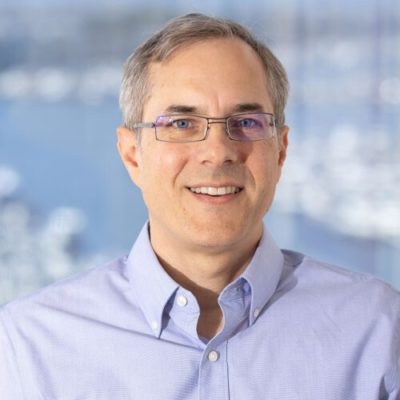
Dr. Robert Schuler is a Senior Computer Scientist and Research Lead at the Information Sciences Institute (ISI) of the University of Southern California. He serves as the technical lead for the NIH/NIDCR-funded FaceBase Data Hub ( www.facebase.org ) and has pioneered large-scale research data Grids, including the Biomedical Informatics Research Network (BIRN), the Globus Project, and the Earth System Grid. His career spans academia, industry, and entrepreneurship, with expertise in database systems, data management, and distributed computing. Education : Ph.D., M.S., and B.S. in Computer Science from USC His research focuses on advancing scientific data management frameworks for collaborative research in craniofacial biology, neuroimaging, climate science, and enterprise applications. He has also contributed to digital rights management (via Xerox/ContentGuard) and enterprise monitoring systems (Candle Corp). Email : schuler@isi.edu
Dr. Carsten Simon is a Postdoctoral Researcher at the Helmholtz-Centre for Environmental Research (UFZ) in Leipzig, Germany, where he works in the Department of Analytical Chemistry as part of the MADDOMS project since June 2022. His research focuses on environmental analytical chemistry with specialization in dissolved organic matter analysis using advanced mass spectrometry techniques. Previously, he held postdoctoral positions at ETH Zurich and the Max Planck Institute for Biogeochemistry. Current Position: Postdoc, MADDOMS project at UFZ Leipzig Previous Positions: ETH Zurich, Eawag Dübendorf, Max Planck Institute Education: PhD in Geosciences from University of Jena and Max Planck Institute Simon's research interests center on understanding soil organic matter composition and transformation processes using ultrahigh-resolution mass spectrometry. His work examines molecular changes in dissolved organic matter during soil passage, carbon cycling in various ecosystems, and the impacts of agricultural practices on soil chemistry. He specializes in Orbitrap and FT-ICR mass spectrometry techniques to analyze complex environmental samples from terrestrial, aquatic, and marine systems. His publication record reveals a strong focus on environmental biogeochemistry with particular attention to soil-plant interactions, organic matter cycling, and analytical method development. Simon's most influential work includes studies on dissolved organic matter persistence in soils, international laboratory comparisons of organic matter analysis, and molecular signatures of terrestrial environments. His recent publications demonstrate increasing focus on agricultural impacts on soil organic matter, carbon cycling in wetlands, and advanced analytical techniques for environmental samples. Simon actively contributes to the scientific community through peer review for numerous high-impact journals including Nature Communications, Environmental Science & Technology, and Biogeosciences. He is a member of both the Deutsche Bodenkundliche Gesellschaft (DBG) and the European Geosciences Union (EGU), demonstrating his engagement with the broader soil science and environmental research communities. As a postdoctoral researcher, Simon collaborates extensively with international research teams across Europe and South America, particularly on projects related to Amazon rainforest ecosystems and European soil systems. His work bridges analytical chemistry, biogeochemistry, and environmental science to address fundamental questions about organic matter cycling in natural and managed ecosystems.
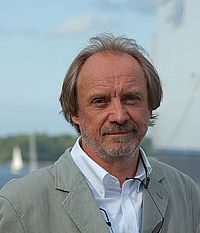
Rainer Froese is a Senior Scientist at the Helmholtz Centre for Ocean Research (GEOMAR) in Kiel, Germany, where he has been working since 2001 in the Research Division 3: Marine Ecology, specifically within the Marine Evolutionary Ecology group. Prior to his position at GEOMAR, he worked as a Senior Scientist at ICLARM in the Philippines (1990-2000) and as a Scientific Employee at the Institute of Marine Sciences in Kiel (1985-1990). He holds a Dr. rer. nat. (Doctor of Natural Sciences) in Fisheries Biology and was born on August 25, 1950. Dr. Froese's research spans several key areas in marine science, with a primary focus on fisheries biology , population dynamics and life history of fishes , biodiversity patterns and macro-ecology , and bio-informatics . He is best known for his foundational work on FishBase, a comprehensive global database of fish species, and AquaMaps, which provides predicted range maps for marine species. His research integrates empirical data with theoretical models to address critical issues in fisheries management and marine conservation, often challenging conventional approaches and advocating for evidence-based practices. The body of Dr. Froese's recent publications (2022-2025) demonstrates a strong focus on the intersection of fisheries science, climate change impacts, and sustainable management practices. His work frequently addresses the challenges of ecosystem-based fisheries management, stock assessment methodologies for data-limited fisheries, and the impacts of climate change on marine species distributions. A notable trend in his recent research is the increasing emphasis on the connections between fisheries management, carbon sequestration, and climate change mitigation, as seen in his work on the western Baltic Sea case study. His publications consistently advocate for systemic reforms in fisheries governance and highlight critical gaps between scientific evidence and policy implementation. Dr. Froese has made significant contributions to the scientific community through his leadership in developing major biodiversity databases and his extensive publication record in high-impact journals including Science, Global Change Biology, and ICES Journal of Marine Science. His work on FishBase has become an essential infrastructure for fisheries scientists worldwide, facilitating research on fish biology, ecology, and conservation across thousands of species. While specific awards are not detailed in the available information, his influential research and database development efforts have established him as a prominent figure in marine science with global recognition. Throughout his career, Dr. Froese has been actively involved in research projects addressing critical issues in fisheries management and marine conservation. His current work includes the "AWZFISH IV - Ecosystem-based fisheries management in the German EEZ" project (2025-2030), which reflects his ongoing commitment to developing sustainable approaches to fisheries governance that consider ecosystem-wide impacts rather than focusing solely on individual species. His research often involves international collaborations, as evidenced by his numerous co-authored publications with scientists from around the world addressing global fisheries challenges. As a member of the Marine Evolutionary Ecology group at GEOMAR, Dr. Froese contributes to a research environment focused on understanding the evolutionary and ecological processes that shape marine biodiversity. His work with FishBase and AquaMaps represents significant cyber-infrastructure contributions to the field, providing essential tools that have transformed how fisheries scientists access and analyze biological data globally. His approach consistently bridges theoretical ecology with practical fisheries management applications, making his work relevant to both academic researchers and policy decision-makers.
Prof. Bibekanand Mallick is a Professor at the National Institute of Technology Rourkela in the Department of Life Science . A Fellow of the National Academy of Biological Sciences (FNABS) and Member of the National Academy of Sciences, India (MNASc) , he leads the RNAi & Functional Genomics Lab focused on non-coding RNA biology in cancer. PhD in Molecular Biology (2008) from Indian Association for the Cultivation of Science Research spans RNA interference , gene silencing , and drug repurposing for cancers Editorial roles at Gene (Elsevier) and Communications Biology (Nature Portfolio) His interdisciplinary research combines molecular biology and high-throughput omics to study non-coding RNAs (microRNA, piRNA, lncRNA) in cancer progression and treatment resistance . Recent work highlights piRNA-mediated chemotherapy sensitization and microRNA networks in oncogenesis . Scientific leadership includes: 6 major research grants from Ministry of AYUSH, ICMR, DBT, and DST Author/editor of 3 books with Oxford, McGraw Hill, and Elsevier 15+ publications in 2024-2023, focusing on RNA regulatory circuits in tongue cancer and glioblastoma The lab develops computational tools like TarpiD for piRNA target prediction while exploring nano-biotechnology approaches for RNA delivery and natural compounds like Gomutra ark for cancer therapy.
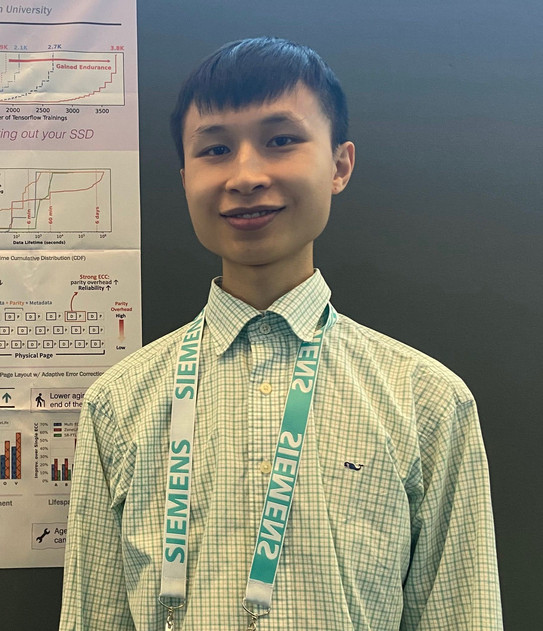
Yun-Chih Chen is a Researcher at the Department of Computer Science, Technical University of Dortmund, having received his Ph.D. in 2023 from National Taiwan University's Department of Computer Science and Information Engineering. His research centers on hardware-software co-design for storage systems, with specific expertise in file-system and database integration with storage hardware. Key interests include: In-storage computing architectures Data structures for emerging memory technologies Storage system optimization for next-generation memory Hardware-aware database design File-system innovations for persistent memory As part of the Design Automation for Embedded Systems research group, Dr. Chen actively recruits bachelor's and master's students for thesis projects on data structure design for in-memory computing and storage system integration with future memory technologies. Contact via yunchih.chen@tu-dortmund.de for academic collaboration opportunities.
Slava Novgorodov is an Associate Professor in the Department of Computer Science at Tel Aviv University's Faculty of Engineering. His research focuses on data management systems with applications in e-commerce, information retrieval, and machine learning. He leads research projects at the intersection of database systems and artificial intelligence, particularly exploring how large language models can enhance traditional data management tasks. Novgorodov's research interests center around data management, database systems, information retrieval, and e-commerce applications. His work addresses practical challenges in data cleaning, category tree construction, and product information extraction. Recent research has increasingly focused on leveraging large language models for cost-effective data processing, with applications in visual search, review analysis, and personalized recommendation systems. His approach combines theoretical algorithm design with practical system implementation, often addressing resource constraints in real-world applications. His publication record shows a clear progression from foundational data management research to increasingly sophisticated applications of machine learning and LLMs. Early work focused on data cleaning, fraud detection, and collaborative filtering, while more recent publications demonstrate a strategic shift toward LLM applications in e-commerce contexts. This evolution reflects broader trends in the field while maintaining his core expertise in database systems and information management. Novgorodov has established productive collaborations with researchers including Tova Milo, Ido Guy, and Kira Radinsky, resulting in numerous publications at premier venues like SIGMOD, VLDB, and WWW. His research has practical applications in e-commerce systems, particularly in product information management, review analysis, and visual search capabilities.
Olivier Curé is a faculty member affiliated with Université Paris Est in France, specializing in semantic web technologies and knowledge engineering. His research focuses on distributed RDF processing, knowledge graph management, and edge computing adaptations of semantic technologies. Research Focus: Dr. Curé leads significant work in RDF stream processing systems (Strider engine), knowledge graph compression (LiteMat encoding), and privacy-preserving semantic data management. His recent work explores edge computing adaptations of knowledge graphs, real-time stream reasoning, and distributed SPARQL query processing. Key innovations include privacy frameworks for RDF anonymization and resource-efficient knowledge representation for IoT environments. Publication Trends: His 15 most recent publications (2020-2025) demonstrate a strong focus on: 1) Scalable RDF processing architectures, 2) Knowledge graph optimization for edge devices, 3) Privacy-enhancing techniques for semantic data, and 4) Distributed reasoning systems. This reflects an evolution from foundational RDF storage research toward adaptive, privacy-aware semantic systems for decentralized computing. Research Infrastructure: Dr. Curé contributes to multiple open-source projects including Strider (distributed RDF processing) and ZodiacEdge (Datalog engine), indicating leadership in semantic technology tooling development.
Dr. Boris Novikov is a prominent Russian computer scientist affiliated with St Petersburg University and the Higher School of Economics . His research focuses on distributed stream processing, temporal databases, and XML query optimization. Key collaborators include Artem Trofimov , Elena Mikhailova , and Anna Yarygina . Research Areas : Distributed Systems (stream processing, substream management) Database Optimization (vertical partitioning, XML caching) Temporal Data Management Machine Learning (concept drift detection) His recent work on distributed stream processing (2023-2022) explores substream bounding, deterministic models, and resource allocation strategies. Earlier contributions (2012-2008) focused on XML query performance, similarity indexing, and access control frameworks. Technical Trends : Event time alignment in distributed architectures Dynamic residual projection for cybersecurity Bi-objective optimization in database systems Speculative execution with conflict resolution Incremental Lagrangian dual solutions Matrix clustering for partitioning problems
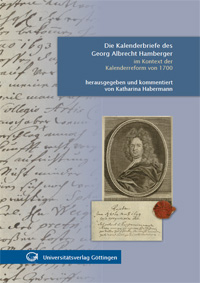
Katharina Habermann is a mathematician, lecturer, and researcher working as a subject librarian at the Göttingen State and University Library, where she is responsible for Mathematics and Computer Science. She serves as the overall project coordinator for the 'Mathematics Information Service' funded by the German Research Foundation (DFG) and is the scientific contact person for the Central Archive for German Mathematics Bequests, demonstrating her unique position bridging mathematical research and information science. PhD in Mathematics (Dr.rer.nat.) from Humboldt University of Berlin (1993) Habilitation (1999) Lecturer at Göttingen University (2005-present) Subject Librarian for Mathematics and Computer Science (2004-present) Her research spans two interconnected domains: mathematical sciences and information management. Early in her career, she focused on Differential Geometry, Global Analysis, and Mathematical Physics, particularly symplectic geometry and Dirac operators. More recently, her work has evolved toward the History of Mathematics, with special emphasis on Erhard Weigel (1625-1699), a key figure in 17th century mathematical sciences. Her information science expertise includes Mathematics Information Services, Information Literacy, Electronic Publishing, and Digital Libraries, creating a synergistic relationship between historical scholarship and contemporary information management. Her publication record reveals a clear trajectory from pure mathematics research to historical and information science topics. The earliest works focus on symplectic Dirac operators and twistor spinors, while more recent publications address Erhard Weigel's contributions, calendar reform history, and mathematical information systems. This evolution reflects her dual expertise as both a research mathematician and information specialist, with publications spanning prestigious mathematics journals and historical scholarship venues. Middle German Historian Prize in the 'History of Science' (2014) Gerhard Hess Award of the German Research Foundation (DFG) (2000) As both lecturer and subject librarian, Dr. Habermann coordinates significant DFG-funded projects that connect historical mathematical heritage with contemporary research needs. Her work on the Electronic Research Archive for Mathematics and vifamath initiative demonstrates practical applications of her research in creating accessible mathematical information resources. She has supervised numerous projects related to mathematical information infrastructure while maintaining active scholarly engagement through publications and conference organization. She leads the Central Archive for German Mathematics Bequests and coordinates the Mathematics Information Service, creating a vital link between historical mathematical heritage and current research practices. Her work with the Oxford Seminar in the History of the Exact Sciences and the Adam-Ries-Kolloquium demonstrates her commitment to fostering scholarly communities around mathematical history and information practices.
Abdelrhman Bassiouny is a Research Staff member at the University of Bremen , affiliated with the Institute led by Prof. Dr. hc. Michael Beetz PhD. His work focuses on integrating machine learning and big data methodologies into robotics, particularly through the development of SQL database pipelines for robot data processing. Research Interests His research explores the intersection of robotics , machine learning , and data engineering , with emphasis on scalable data management systems for robotic applications. This aligns with broader trends in artificial intelligence and computational science . Contact Email: bassioun@uni-bremen.de
Prof. Dr. Britta Tietjen is a W3 Professor of Theoretical Ecology at Freie Universität Berlin, leading the Theoretical Ecology group at the Institute of Biology within the Department of Biology, Chemistry, Pharmacy. Her research investigates how small-scale ecological processes impact biodiversity and ecosystem functioning under global change, with emphasis on drylands, savannas, and grasslands using mechanistic modeling approaches. Research Focus: Her group studies biodiversity-ecosystem function relationships, ecohydrological feedbacks, climate change impacts on vegetation dynamics, and ecosystem resilience. Key methodologies include spatial-explicit simulation models, differential equations, and statistical analysis to address environmental challenges like land-use change and climate variability. Publication Trends: Recent articles (2024-2025) demonstrate a strong focus on biodiversity conservation in managed ecosystems (e.g., grasslands, savannas), climate adaptation strategies, and trait-based modeling. Work frequently integrates field data with computational approaches to address scale-dependent ecological processes and restoration trade-offs. Advising & Projects: Actively supervises PhD students researching fragmentation effects, multitrophic interactions, mangrove resilience, and land-use impacts. Leads major projects including CliWaC (climate-water interactions), MASCOT (coastal wetland resilience), and ORYCS (sustainable savanna management), funded by DFG, BMBF, and Berlin University Alliance. Laboratory & Team: Heads the Theoretical Ecology group with research assistants, doctoral candidates, and student researchers, focusing on interdisciplinary approaches to ecological forecasting and environmental management.
Prof. Dr. Babett Edelmann-Singer is a University Professor of Ancient History at the Free University of Berlin (Heisenberg Professorship) since 2023. Her research spans material culture, political history, and religious networks in premodern metropolitan contexts, focusing on Roman provincial elites, epigraphic analysis, and gender in imperial cults. Current Appointments: Professor at Free University Berlin, Research Fellow at University of the Free State (South Africa), Adjunct Fellow in DFG Kolleg-Forschungsgruppe 2770 Research Projects: Materialization of Power, Elite Networks in Roman East, Religious Skepticism Intersections Methodologically , she integrates social network analysis (SNA) with epigraphic databases to explore provincial interactions. Her Heisenberg-DFG funded projects examine material culture's role in performative power structures and women's agency in religious networks. Scientific Recognition includes: DFG Heisenberg Fellowship (2018–2025) City of Regensburg Women in Science Award (2014) Multiple publication grants and peer-reviewed accolades Advising occurs via structured office hours with appointment registration at her secretariat. She collaborates with institutions in Munich, Heidelberg, and Osnabrück, and contributes to global outreach through TerraX/ZDF (2021) and Brill Encyclopedia of Early Christianity (2024).
Dr. Günther Thiele is a Junior Research Group Leader at the Institute of Chemistry and Biochemistry (Department of Inorganic Chemistry) at Freie Universität Berlin since 2017. His research focuses on inorganic solid-state chemistry , particularly chalcogenide metalates , metal-organic frameworks (MOFs) , and virtual reality tools for science education . He has received prestigious awards such as the Liebig-Scholarship and Leopoldina Postdoctoral Fellowship . Education: PhD in Inorganic Chemistry (2010–2015), Diploma Studies (2005–2010) Postdoctoral Experience: University of California, Berkeley (2015–2017) and Philipps-Universität Marburg (2015) His research spans solid-state synthesis under extreme conditions (e.g., liquid ammonia), crystallographic characterization of novel materials, and high-κ dielectrics . Recent work includes the VeRidium VR platform for immersive chemistry education and studies on metal vacancies in crystal lattices . Publications highlight his expertise in defect engineering (e.g., K2[Cr3S4] with Jahn-Teller distortions), nonlinear optical materials (K3[BiS3]), and electrochemical impedance analysis . His group develops open-access educational tools like AR/VR molecular visualizations. Scientific Awards Liebig-Scholarship (2017) Leopoldina Postdoctoral Fellowship (2015) Friedrich-Ebert-Foundation Scholarship (2010) The Thiele Group operates cutting-edge equipment like single-crystal X-ray diffractometers and 3D Maker Spaces for prototyping scientific tools. They explore earth-abundant materials (e.g., Na2[Fe3S4]) for sustainable energy applications.
Prof. Dr. Jürgen Dengler is a Professor at the Zurich University of Applied Sciences (ZHAW), Institute for Environment and Natural Resources, where he leads research in vegetation ecology and biodiversity conservation. His primary affiliation is with the Life Sciences and Facility Management school. He coordinates international projects like VegChangeCH (documenting vegetation changes in Switzerland) and GrassPlot (global grassland biodiversity database), and serves in leadership roles for scientific networks including the International Association for Vegetation Science (Council Member) and Eurasian Dry Grassland Group (Founder). His research focuses on vegetation classification systems, grassland ecosystem dynamics, biodiversity monitoring methodologies, and conservation applications across European and Asian biomes. Investigative themes include scale-dependent diversity patterns, long-term vegetation change, and anthropogenic impacts on plant communities. Dengler's recent publications demonstrate consistent focus on refining vegetation classification frameworks (e.g., EIVE indicator system), analyzing biodiversity trends from plot to continental scales, and examining functional ecology in grassland systems. Collaborative works frequently address climate-vegetation relationships and conservation prioritization.
Tal Malkin is a Professor at Columbia University's Department of Computer Science, School of Engineering and Applied Science. Her work spans cryptography, secure computation, and data privacy, with a focus on non-malleable codes, topology-hiding communication, and privacy-preserving protocols. 2025: Peony Onion Encryption for asynchronous anonymity 2024: Structural lower bounds for pseudorandom functions 2022: XSPIR for Ring-LWE-based private retrieval Research themes include: Cryptographic Foundations: Non-malleability, garbling circuits, and zero-knowledge protocols Privacy-Preserving Systems: Differential privacy, secure multi-party computation, and database anonymity Applied Security: Biometric encryption, model watermarking, and polymer-based unclonable functions Her 15 most recent publications analyze anonymity in dynamic networks, robust watermarks for AI models, and tamper-resilient encryption. Keywords span computer science, cryptography, and machine learning. Sub-fields include secure computation, lattice-based cryptography, and function-private protocols.