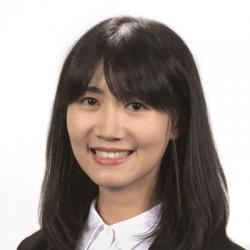
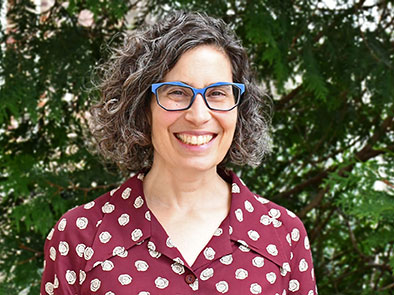
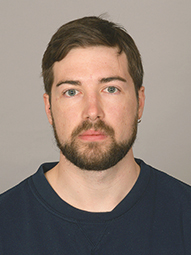
Yifan Wang is Assistant Professor of Computer Science at University of Hawaii at Manoa, specializing in database systems and information retrieval. His research develops efficient algorithms for high-dimensional data processing. Educational background: PhD in Computer Science from University of Florida (2024) Master's in Computer Science from University of Florida BS from Huazhong University of Science and Technology Research innovations include: Vector database indexing techniques Machine learning-enhanced query optimization Scalable similarity search algorithms Publications focus on improving efficiency of high-dimensional data operations, with applications in large-scale information retrieval. Wang serves on program committees for major database conferences including VLDB and ICDE.
Matthew James Sorell is a Senior Lecturer at the University of Adelaide since October 2002. He holds a Doctor's Degree from George Mason University (1998), supervised by Geoff Orsak, focusing on 'Robust Importance Sampling'. His research spans Digital Forensics, Criminal Investigation, and Computer Science, with emphasis on image/video analysis, surveillance technologies, and data provenance. Education: PhD in Computer Sciences, George Mason University, 1998 Research Interests: His work focuses on digital evidence analysis, forensic science applications, and the development of methodologies for authenticating digital media. Key areas include photo-sensor fingerprinting, mobile forensics (e.g., Snapchat surveillance protocols), and health data provenance analysis (Apple Health databases). He has contributed to advancing video motion detection, smart camera systems, and forensic photography audit logs. Publications: His recent work emphasizes digital forensics in health data and social media, with notable contributions to Forensic Science International Digital Investigation and IEEE conferences. Earlier research includes biologically-inspired video enhancement and JPEG quantization analysis. Professional Roles: From 2017-2022, he worked as a Digital Investigations Consultant (part-time). He has edited conference proceedings (e.g., e-Forensics 2009) and contributed to interdisciplinary studies like food advertising patterns on Australian TV. Labs/Teams: Collaborates with teams in digital crime forensics, surveillance systems, and multimedia forensics, reflected in his conference organizing roles and journal editorships.
Maribeth Price serves as Dean of Graduate Education and Professor at South Dakota Mines, with faculty tenure since 1995. Previously chaired Geology and Geological Engineering (2006-2011). Holds M.S./Ph.D. from Kharkov State University (Ukraine) and D.Sc. from Donetsk Physics & Technology Institute. Research expertise spans geospatial technologies , planetary remote sensing, and spatial database design. Authored instructional texts on GIS applications and taught professional workshops for over 1,300 participants. Planetary science contributions include Magellan Mission analysis of Venusian tectonics. Curates Maps at Museum of Geology and promotes online pedagogy as Quality Matters certified reviewer. Interdisciplinary collaborations include hydrogeology, forestry, carbon sequestration, and lightning pattern analysis.
Dr. Saptarshi Sengupta is an Assistant Professor in the Department of Computer Science at San José State University (SJSU), leading the Machine Intelligence and Complex Systems (MICoSys) Lab. He advises the ACM student club at SJSU and holds a 'Alien of Extraordinary Ability' visa (Einstein Visa) from USCIS. His work focuses on resilient cyber-physical systems, risk analysis, and deep learning applications in healthcare and industrial systems. Education: Ph.D. in Electrical Engineering, Vanderbilt University M.S. in Electrical Engineering, Vanderbilt University B.Tech. in Electronics & Communication Engineering, West Bengal University of Technology Research Interests: Cyber-Physical Systems Security Healthcare AI for Cancer and Chronic Disease Prediction Battery Prognostics and Energy Systems Machine Learning for Complex Systems Analysis Key Achievements: Dr. T.M.A. Pai Gold Medal Award for Healthcare AI contributions Recipient of multiple best paper awards at international conferences Author of over 30 peer-reviewed publications Labs & Teams: Leads the MICoSys Lab, developing AI solutions for healthcare diagnostics, industrial prognostics, and smart infrastructure systems. Collaborations include interdisciplinary projects with biomedical and engineering domains.
David Spiegelhalter is Professor of the Public Understanding of Risk at the University of Cambridge's Faculty of Mathematics. His research focuses on Bayesian statistics, public communication of uncertainty, biostatistics, and performance assessment in healthcare. He has contributed extensively to risk perception studies, particularly during the COVID-19 pandemic, and develops tools for statistical communication. Spiegelhalter's work bridges technical statistics with public understanding, emphasizing transparent communication of scientific uncertainty. His research interests include: Developing frameworks for trust in scientific advocacy Quantifying pandemic risks and public responses Creating accessible statistical tools for healthcare decisions His publications show consistent focus on: Public health communication strategies Philosophical foundations of probability Epidemiological modeling with recent emphasis on COVID-19 data interpretation.
Laks V.S. Lakshmanan is a Professor in the Department of Computer Science at the University of British Columbia (UBC), within the Faculty of Science. His research focuses on data management, graph computing, machine learning, and algorithms, with notable contributions to dense subgraph discovery, influence maximization, and healthcare informatics. He teaches advanced courses on databases and data management, including CPSC 404 (Advanced Relational Databases) and CPSC 534L (Topics in Data Management). His awards include the ACM SIGMOD Research Highlight Award, the IEEE Data Science Best Paper Award, and recognition as an ACM Distinguished Scientist (2016). His work bridges theoretical algorithm design with practical applications in social networks, bioinformatics, and healthcare. Key research themes include optimizing graph algorithms for large-scale data, combating misinformation through network analysis, and developing efficient methods for subgraph enumeration and influence propagation. His recent publications explore topics like clinical event prediction (TRACE), cost-effective LLM selection (ThriftLLM), and cross-modal consistency in AI systems. Education: Details not explicitly provided in sources. Grants & Funding: Recipient of NSERC Discovery Accelerator Supplements. Labs/Teams: Engaged in UBC's data management research groups and collaborative initiatives with industry partners.
Kyle Konis is an Associate Professor of Architecture and Director of the Chase L. Leavitt Master of Building Science Program at the University of Southern California's School of Architecture. He holds a Ph.D. in Architecture (Building Science) from UC Berkeley, an M.Arch from Yale University, and a B.A. in Architectural Studies from the University of Washington. His research focuses on aligning building performance with human needs through participatory evaluation techniques, data-driven design tools, and evidence-based practices in sustainability and healthcare environments. Prof. Konis has led six externally funded research projects, including grants from the AIA Upjohn Initiative and California Energy Commission. His work emphasizes occupant-centric design, with notable contributions to daylighting strategies, circadian lighting in dementia care facilities, and energy-efficient building systems. He is a licensed architect in Washington and California. Education: B.A. Architectural Studies, University of Washington M.Arch, Yale University Ph.D., Architecture (Building Science), UC Berkeley His research interests include sustainable building practices, occupant well-being, and the application of technology to improve design outcomes. Notable projects include studies on thermal comfort databases, participatory sensing frameworks (TrojanSense), and circadian design tools. He has authored or co-authored over 30 peer-reviewed articles and a Springer-published book on daylighting. Awards: 2016 ARCC New Researcher Award 2015 ACSA New Faculty Teaching Award 2015 ACSA Housing Design Education Award 2015 BTES Emerging Faculty Award Prof. Konis teaches courses on architectural sustainability, environmental systems, and interactive computing in design. His lab integrates real-world data collection with computational modeling to bridge gaps between design intent and building performance. Ongoing work explores climate-responsive interventions for at-risk communities and the role of lighting in mental health contexts.
Dr. Franjo Cecelja is a Reader in the School of Chemistry and Chemical Engineering at the University of Surrey. He holds a Dipl. Eng. from the University of Zagreb, an M.Sc. from Cranfield Institute of Technology, and a Ph.D. from Brunel University. His research focuses on systems engineering for energy and industrial applications, optimization, decision making, and semantic technologies. He has led projects such as the FP7 (Marie Curie LTN) initiative on renewable energy systems engineering (£425k, 2013–2018). His work spans ontology engineering applications in biorefining, waste valorization, and sustainable processing. Notable contributions include semantic frameworks for model and data integration in biorefineries and decision support systems for industrial symbiosis. Education: Ph.D., Brunel University (Optical Sensors for Electric Fields) M.Sc., Cranfield Institute of Technology (Control & Signal Processing) Dipl. Eng., University of Zagreb (Aerospace Technology) His research interests integrate ontology engineering with process systems engineering to address challenges in biorefining, industrial symbiosis, and sustainable resource management. Recent publications emphasize semantic technologies for waste valorization, PFAS treatment, and decision-making frameworks in biorefining. Dr. Cecelja’s FP7 project demonstrated leadership in renewable energy systems, leveraging semantic networking facilities and value chain optimization. His work bridges academic research with industrial applications, emphasizing circular economy principles and model-driven decision support. Labs/Teams: His research is conducted within the University of Surrey’s School of Chemistry and Chemical Engineering facilities, collaborating with interdisciplinary teams on biorefining and process systems engineering.
Traci J. Hess is the Douglas & Diana Berthiaume Endowed Professor of Information Systems and Senior Associate Dean at the Isenberg School of Management, University of Massachusetts Amherst. She holds a PhD (1999), MA (1997) in Information Systems from Virginia Tech, and a BS in Accounting from the University of Virginia (1988). Her academic career includes roles at Washington State University and industry experience as Senior Vice President in banking and auditing roles at Ernst & Young. Her research focuses on Human-Computer Interaction , Decision Support Systems , and Trust in Digital Technologies . She explores topics like online review dynamics, privacy mechanisms in health communities, and algorithmic labor platforms. Hess has published extensively in journals like Journal of the Association for Information Systems and MIS Quarterly , and her work bridges cognitive psychology with technology design. Hess has received prestigious awards including the Isenberg Outstanding Research Award (2012) and Transactions on Human-Computer Interaction Best Paper Award (2011). Her teaching spans Business Intelligence , Database Management , and Research Methods . She has advised numerous graduate students (not listed explicitly in texts) and contributes to digital strategy research. Her recent work (2023–2024) examines reviewer badges’ impact on consumer trust and human agency in algorithmic labor systems. She emphasizes user-centric design principles to mitigate negative emotional responses to technology (e.g., technostress).
Zhanfei Lei is an Assistant Professor of Operations & Information Management at the Isenberg School of Management, University of Massachusetts Amherst . His research focuses on user-generated content, biases in decision-making, and electronic commerce, with an emphasis on understanding how online reviews and consumer behavior interact in digital markets. Education: Ph.D. in Information Technology Management, Georgia Institute of Technology M.S. in Information Sciences, University of Pittsburgh Bachelor of Management in Information Management and Information Systems, Nanjing University Lei investigates biases and heuristics in consumer decision-making, particularly exploring how cognitive processes influence trust in online word-of-mouth and selective exposure to reviews. His work bridges information systems, marketing, and behavioral economics, with applications in e-commerce optimization and digital strategy. Publications consistently examine themes like persuasive power of reviews , attentional focus effects , and consumer psychology . His research contributes to understanding dual-process theories in digital contexts and improving platform design for user engagement. No scientific awards are listed in the provided text. Advising and grants are not detailed here, though his CV may contain further details. He teaches courses in information systems, database management, and business analytics.
Melanie Feinberg is a Professor at the School of Information and Library Science (SILS), University of North Carolina at Chapel Hill. She specializes in data modeling, critical data studies, and the history of information science. Her research examines the human dimensions of data, blending information science, design, and humanities perspectives. She holds a BA in Humanities from Stanford University, an MIMS from UC Berkeley, and a PhD in Information Science from the University of Washington. Feinberg’s work focuses on classification systems, metadata architectures, and the design of expressive information collections. Her book Everyday Adventures with Unruly Data (MIT Press, 2022) explores how data interacts with human practices. She teaches courses like Foundations of Information Science (INLS 201), Organizing Information (INLS 520), and Metadata Architectures (INLS 720). Her research has been recognized with awards including the Marie Skłowdoska-Curie Fellowship (2019-2021) and IAH Faculty Fellowship (2018-2019). Her articles span HCI, library science, and design, addressing topics like database interactions, rhetorical design, and ethical classification systems. She has advised numerous projects on digital curation, metadata standards, and data-driven storytelling. Feinberg’s interdisciplinary approach bridges technical systems and humanistic inquiry. She actively contributes to academic discourse through her work on classification ethics, data criticism, and the role of design in shaping information systems.
Associate Professor Catherine Chittleborough is an epidemiologist and Deputy Head of the School of Public Health at the University of Adelaide, affiliated with the BetterStart Health and Development Research initiative. She holds a joint appointment in the Faculty of Health and Medical Sciences. Previously, she worked at SA Health for a decade and completed a postdoctoral position at the University of Bristol. Her research focuses on reducing health inequalities in child development, leveraging causal epidemiological methods and population data from longitudinal cohorts. She teaches undergraduate public health and epidemiology courses. Education: Postdoctoral training at the University of Bristol (2009-2011) Extensive prior experience at SA Health (1990s-2010) Research Interests: Child health equity, causal epidemiology, data linkage studies, early childhood development, and interventions targeting family support programs. Her work emphasizes identifying at-risk children to improve preventive strategies. Grants & Funding: EMPOWER Project (NHMRC AUD 2.4M, 2016-2020) SA Health Data Linkage Studies (NHMRC AUD 453K, 2013-2016) Child Maltreatment and School Outcomes (Channel 7 AUD 69K, 2016-2018) Teaching: Coordinator for PUB HLTH 1001, HLTH SC 3103, and other public health modules. Active in curriculum design and delivery across undergraduate programs. Professional Activities: Chair, School of Public Health Learning and Teaching Committee Member of multiple advisory boards and review panels Labs/Teams: Lead researcher in BetterStart Health and Development Research, collaborating on interdisciplinary projects to improve child health outcomes through policy and practice.
Riccardo Simionato is a Research Fellow in the Department of Musicology at the University of Oslo (UiO), affiliated with the Faculty of Humanities. He holds a MSc and BSc in Computer Science and Information Engineering from the University of Padova, Italy, and conducted research at Aalto University, Finland (2017–2018). His research focuses on nonlinear audio modeling using deep learning, particularly addressing low-latency interactive solutions for acoustic and electronic musical instruments/devices. Education: 2018: MSc in Computer Science Engineering, University of Padova 2015: BSc in Information Engineering, University of Padova Research Interests: Deep Learning , Audio Modeling , and Sound Synthesis . He explores how deep learning can approximate complex nonlinear phenomena in audio systems, balancing computational efficiency with interpretability. Recent work emphasizes hybrid neural-audio effects, time-variant systems, and physics-informed methods for piano modeling. Publications highlight advancements in optical compressor modeling, piano analysis, and tools for generating audio effect datasets. His work bridges machine learning and music technology, aiming for practical applications in real-time audio processing and electronic instrument emulation. Grants and advising: No specific grants or student advisees listed in the provided text. Collaborations include projects with Prof. Stefano Fasciani and teams at UiO’s Department of Musicology. Labs/Teams: Active within UiO’s Sound and Music Computing research group, focusing on interdisciplinary projects combining computer science and music technology.
Johan Jansson is an Associate Professor in Scientific Computing at KTH Royal Institute of Technology and BCAM (Basque Center for Applied Mathematics). He leads research in predictive Direct FEM Simulation (DFS) for aerodynamics and multiphase flows, and co-founded Icarus Digital Math as CEO. His work includes the FEniCS open-source finite element software project and MOOC-HPFEM educational initiatives. He holds roles as Director of the Center for Digital Math and collaborates internationally in computational science. Research focuses on high-performance computing (HPC), fluid-structure interaction (FSI), biomedical modeling, and renewable energy systems. Notable contributions include adaptive FEM frameworks for turbulent flow, vocal fold simulations, and wave energy converter modeling. His work bridges academic research with industrial applications, leveraging FEniCS-HPC and Unicorn solvers. Key achievements include election to the IVA Royal Swedish Academy of Sciences 100-list and securing the Severo Ochoa Center of Excellence Award. He has pioneered open-source tools like SimTek and contributed to major projects like the Salter Sink and vocal production modeling. Teaching responsibilities include courses on database technology, computational fluid mechanics, and research methodology. He actively engages in large-scale simulation projects involving marine energy, cardiac ablation protocols, and aerodynamic optimization.
Marina Papatriantafilou is an Associate Professor in the Department of Computer Science and Engineering at Chalmers University of Technology and University of Gothenburg. Her research focuses on distributed computing, fault-tolerance, parallel algorithms, and concurrency control. She has contributed to methods for fault-tolerant distributed systems, visualization tools for distributed algorithms, and scalable overlay networks. Her academic roles include teaching advanced courses on distributed systems, computer communication, and operating systems. She advises graduate students in areas like distributed algorithms and parallel computing. Key research interests include lock-free synchronization, memory reclamation, and self-stabilizing systems. She has authored over 100 publications in top-tier conferences and journals, with recent work on data streaming frameworks, energy-sharing optimization, and vehicular network processing. Professional involvement includes roles in program committees for conferences like OPODIS, SWAT, and SSS, plus membership in research evaluation boards for Swedish and European funding agencies. She pioneered educational tools like the Lydian environment for distributed algorithm visualization.