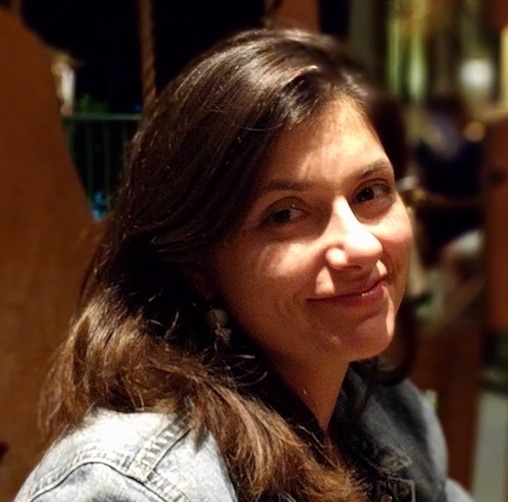
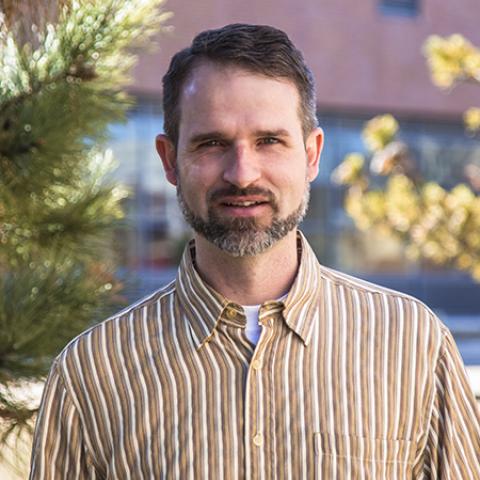
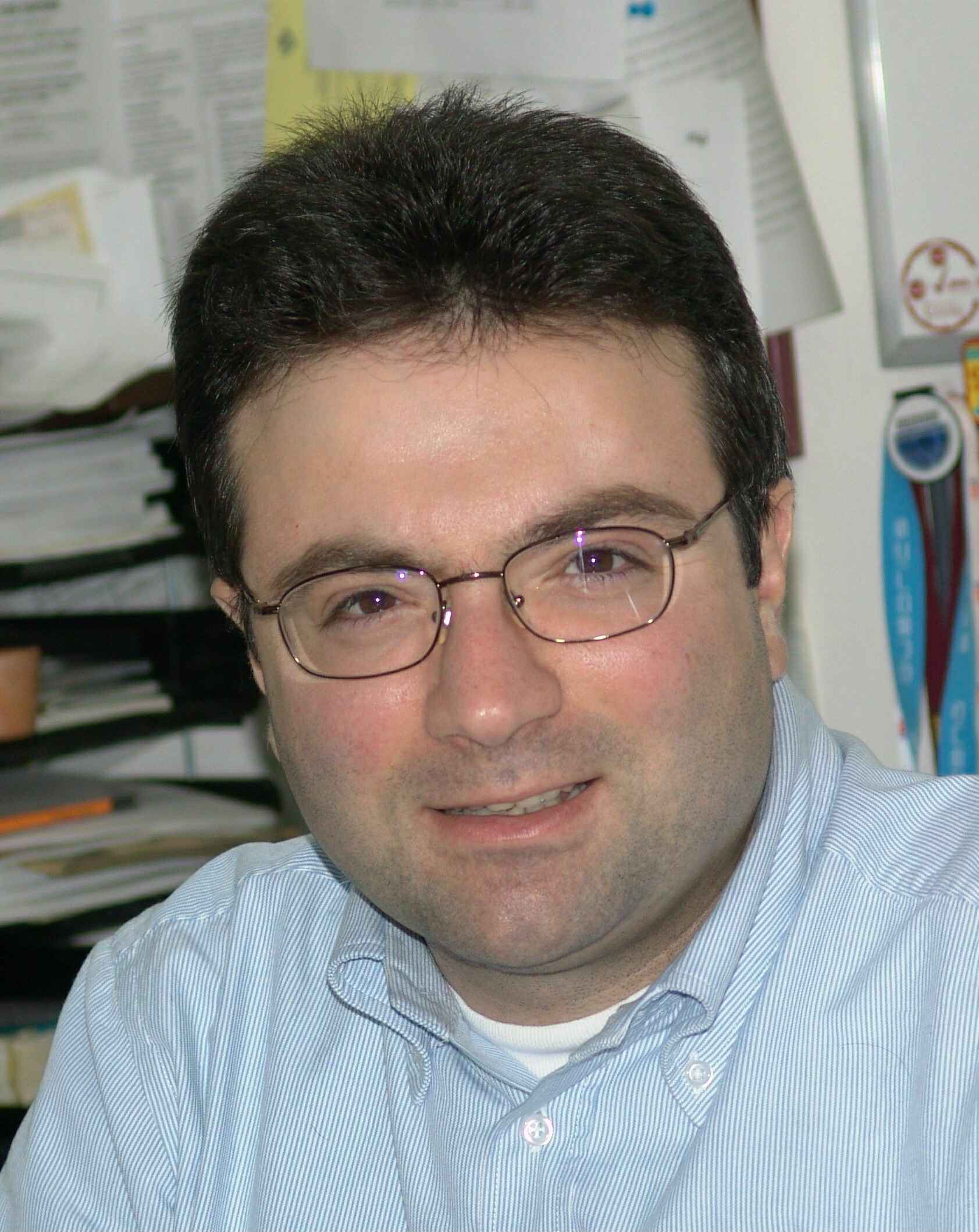
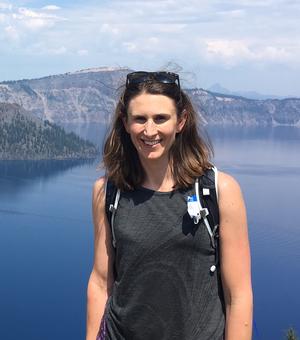
Magdalini Eirinaki is a Professor and Academic Program Coordinator for the MS in Artificial Intelligence at San José State University's Charles W. Davidson College of Engineering. With a career spanning two decades, her work bridges recommender systems , machine learning , and smart city applications . PhD in Computer Science (2006), Athens University of Economics and Business MSc in Advanced Computing (2000), Imperial College London BSc in Computer Science (1998), University of Piraeus Her research focuses on machine learning and recommender systems with extensions to generative AI , privacy-sensitive algorithms , and social network analysis . Recent publications explore federated learning , multi-resolution diffusion models , and autonomous network defense using reinforcement learning. Current projects include NSF-funded CollaborAIte (2024) EU Horizon/Marie Sklodowska-Curie's MUSIT (2024) IBM SkillsBuild Cloud Credits for Sustainability (2024) She has received multiple teaching and mentorship awards including: Newnan Brothers Award (2019) Applied Materials Award (2017) 5-time SJSU Distinguished Faculty Mentor Award Dr. Eirinaki advises students in AI , ML , and smart city projects, with recent graduates presenting at IEEE CAI (2025) and CSU Conference (2025).
Igor Wojnicki is a Professor at AGH University of Science and Technology's Faculty of Electrical Engineering, Automatics, Computer Science and Biomedical Engineering, where he serves as Vice-Dean of the Faculty of Cooperation and Education. His primary affiliation is with the Department of Applied Informatics, where he maintains an active research laboratory focused on knowledge engineering and smart systems. His research spans multiple domains with evolving focus: Early career: Deductive databases and rule-based inference engines (PhD thesis on "A Rule-based Inference Engine Extending Knowledge Processing Capabilities of Relational Database Management Systems") Mid-career: Graph-based knowledge representation and Tabular Trees (XTT predecessor) Current focus: Smart city applications, particularly energy-efficient lighting control systems and graph-based urban data integration His recent publications demonstrate a clear trajectory toward applied urban computing, with over 15 significant papers in the last five years addressing smart city infrastructure optimization. Key themes include dynamic street lighting control, graph-based computational methods for urban environments, and energy conservation in public infrastructure. Wojnicki actively contributes to academic-practical collaboration through initiatives like the Green AGH Campus Project and IBM academic partnerships. His technical leadership includes development of the ReDaReS system for relational database knowledge processing and the Jelly View technology for advanced database queries. His laboratory maintains strong industry connections, particularly with IBM through student internship programs and technology transfer initiatives. The team produces both theoretical frameworks and practical implementations, with notable outputs including the Osiris GUI system and Magellan GPS software for Poland.
Peter Mcintyre serves as an Associate Professor in the Department of Ecology and Evolutionary Biology at Cornell University's College of Arts and Sciences. He holds the Dwight Webster Sesquicentennial Faculty Fellowship and is affiliated with the Institute for African Development as a Core Faculty member and the Southeast Asia Program as a Faculty Associate. His educational background includes a B.A. in Biology from Harvard University (1998) and a Ph.D. in Ecology & Evolutionary Biology from Cornell University (2006). Mcintyre is an aquatic conservation ecologist whose research focuses on developing management approaches that balance human interests with protecting biodiversity. His work spans multiple continents, with field studies conducted in New York, the Great Lakes, East Africa, Southeast Asia, and Hawaii. His academic interests encompass Biogeochemistry and Ecosystem Science, Community Ecology and Population Biology, Evolutionary Patterns and Processes, Organismal Biology, and Sustainability, Environment and Conservation. Key research themes include fisheries, food webs, climate change, ecological stoichiometry, global biodiversity, conservation planning, river networks, and life history and migration. His recent publications reveal a consistent focus on freshwater ecosystem conservation, with particular attention to global patterns of biodiversity, climate change impacts on aquatic systems, fisheries management, and conservation planning. His work increasingly integrates molecular techniques like eDNA with traditional ecological methods, while maintaining a strong emphasis on practical conservation applications across diverse global contexts from the Amazon to Hawaiian streams. Dwight Webster Sesquicentennial Faculty Fellow Mcintyre leads the McIntyre Lab, which addresses ecology and conservation in rivers and lakes worldwide, with special focus on the organism-ecosystem interface. His lab studies how animals affect ecosystem productivity and nutrient dynamics, with particular emphasis on freshwater fisheries in the Adirondack Mountains and developing nations. His students and postdocs have received significant recognition including NSERC graduate research fellowships and Doctoral Dissertation Improvement Grants. The lab's work spans multiple major research projects including the Adirondack Fisheries Research Program, Lake Tanganyika Ecosystem Project, Great Lakes connectivity initiatives, and conservation of Native Stream Gobies in the Hawaiian Archipelago. The McIntyre Lab maintains active research sites across the globe, from the Adirondacks to Lake Tanganyika in East Africa, with particular strength in studying the connections between organismal biology and ecosystem processes in freshwater environments. Their work consistently bridges fundamental ecological questions with practical conservation applications, making significant contributions to both scientific understanding and on-the-ground management of freshwater resources.
David Bermbach is a Full Professor at Technische Universität Berlin , leading the Scalable Software Systems group since 2023. His research focuses on distributed systems, serverless computing, and benchmarking, with significant work on edge and fog computing architectures. He is affiliated with the Einstein Center Digital Future and co-chairs interdisciplinary projects like SimRa for bicycle traffic safety. Full Professor, Scalable Software Systems (2023–present) ECDF-Professor, Mobile Cloud Computing (2017–2023) Postdoctoral Researcher (2014–2017) Education : Diploma in Business Engineering (2010) – Karlsruhe Institute of Technology (KIT) PhD in Computer Science (2014, summa cum laude) – KIT Research Interests span distributed systems with emphasis on cloud, edge, and fog computing, serverless architectures, IoT platforms, and benchmarking frameworks. His work addresses consistency-performance trade-offs, resource placement, and interdisciplinary applications in urban mobility and satellite edge computing. Article Trends show a focus on serverless computing (12/15), edge-cloud integration (9/15), and benchmarking methodologies (7/15). Key themes include optimizing function placement, federated learning architectures, and low-earth orbit computing systems. Scientific Awards Best Paper Award – ShutPub (2024) Best Workshop Paper – A Research Perspective on Fog Computing (2017) Best Paper Runner Up – Benchmarking Eventual Consistency (2014) Summa Cum Laude PhD Thesis (2014) Advising & Grants include mentoring students like Tobias Pfandzelter and Trever Schirmer, leading funded projects through the Einstein Center Digital Future, and contributing to 6G network research. His team works on cloud federation, serverless optimization, and real-world IoT applications.
Dr. Wojciech Kosior is a researcher at the Department of Comparative Civilization Studies within the Centre for Comparative Studies of Civilisations at Jagiellonian University, Poland. He holds degrees in Jewish Studies from the Paideia Institute, Religious Studies, and Psychology from Jagiellonian University. Education: Jewish Studies (Paideia Institute) Religious Studies (Jagiellonian University) Psychology (Jagiellonian University) His research focuses on angelology, demonology, and apotropaism, cognitive science of religion, and digital humanities applications in religious text analysis. He specializes in Hebrew Bible, early rabbinic literature (Talmuds, Midrashes), Targums, Dead Sea Scrolls, and apocryphal texts. His work often intersects ancient religious traditions with modern quantitative and qualitative analysis. Key trends in his recent publications include systematic databases for supernatural entities (Elyonim veTachtonim project), cognitive theory of religion applications, and digital humanities tools in Jewish and Biblical studies. His work has been supported by grants from the National Science Centre (2018/31/D/HS1/00513) and Ministry of Science and Higher Education initiatives. While he has not explicitly listed scientific awards, his research has been funded through competitive grants. He manages significant projects like the Elyonim veTachtonim database and co-edits comparative religious studies outputs.
Dr. Varun Vaidya is a Professor and the Director of B.S.P.S. Pharmacy Administration Program and M.S.P.S. Health Outcomes and Socioeconomic Sciences program in the Department of Pharmacy Practice at the University of Toledo College of Pharmacy and Pharmaceutical Sciences. He serves as the faculty advisor to the UT-ISPOR chapter and holds significant roles in national organizations including the Pharmacy Quality Alliance (PQA) Data & Interoperability Advisory Group (DIAG), ISPOR, APhA, and AACP. Dr. Vaidya's educational background includes: Ph.D. in Pharmacoeconomics from University of Tennessee, Memphis (2009) B.Pharm. from Bharati Vidyapeeth, India (2002) Certification in Measurement, Design and Analysis Methods for Health Outcomes Research from Harvard School of Public Health (2010) His research program centers on quantitative assessment of health outcomes related to medication use, with particular expertise in real-world evidence (RWE) studies that inform value-based decision making and outcomes-driven healthcare delivery. Dr. Vaidya has extensive experience with claims databases including Optum, GE, MarketScan, Truven, and Clinical Practice Research Datalink (CPRD) U.K., as well as U.S. national databases such as Medical Expenditure Panel Survey (MEPS), Behavioral Risk Factor Surveillance Survey (BRFSS), and National Health and Nutrition Examination Survey (NHANES). His publication record demonstrates a strong focus on pharmacoeconomics across multiple therapeutic areas including oncology (particularly lung cancer and myelofibrosis), diabetes management, mental health, opioid use disorder, and medication adherence patterns. His work frequently examines medication utilization patterns, healthcare costs, treatment effectiveness, and the impact of social determinants on health outcomes. Dr. Vaidya actively contributes to the academic and professional community through his role as program director, faculty advisor, and national organization participation. He is frequently invited to speak at national and international venues and provides expertise to media outlets on prescription drug pricing and pharmaceutical policy issues, having featured in news segments and authored Op-Ed articles on these topics.
Dr. Viet-Huong Nguyen serves as an Associate Professor in Pharmacy Practice at Chapman University's School of Pharmacy, located at the Rinker Health Science Campus. Her expertise spans epilepsy, stroke, genetics, neuropharmacology, and epidemiology, with a focus on clinical and translational research. Her educational background includes: Bachelor of Arts in Biology and Classics with emphasis in Literature and Mythology from University of Southern California (2001) Master of Science in Cell and Neurobiology from University of Southern California (2003) Doctor of Pharmacy from University of California, San Francisco (2007) Master of Public Health in Epidemiology from University of California, Los Angeles (2014) Dr. Nguyen's research primarily focuses on epilepsy and stroke, with particular interest in the pharmacogenetics of drug response and resistance in epilepsy. She is an active member of GENESS, an international consortium dedicated to identifying genes causing genetic epilepsies including Juvenile Myoclonic Epilepsy, Childhood Absence Epilepsy, and Lafora Epilepsy to develop curative therapies. Her work bridges basic neuroscience with clinical applications, investigating molecular signaling pathways of the central nervous system and their implications for pharmacotherapy. She has contributed significantly to stroke outcomes/health services research, examining risk factor management and treatment protocols across multiple healthcare settings. Her extensive publication record demonstrates a consistent focus on neuropharmacology, with particular emphasis on epilepsy management and stroke care. The publications span clinical guidelines, pharmacogenetic research, and innovative approaches to treatment. Her work shows progression from basic pharmacokinetic studies to complex clinical applications and health services research, with increasing focus on genetic factors influencing drug response. The publications reveal a strong collaborative approach, frequently working with international research teams across multiple institutions. Her notable recognition includes: Fellowship grant from the American Foundation of Pharmaceutical Education (AFPE) to study drug transporters and pharmacogenetics in drug resistant epilepsy Dr. Nguyen has mentored and precepted over 80 students and residents from VAGLAHS, USC, UCSF, UOP, and Western University Schools of Pharmacy. She previously served as an Adjunct Assistant Professor of Pharmacy Practice at USC School of Pharmacy for 8 years, contributing to curriculum development for epilepsy and stroke education. Her clinical work has included developing the Anti-Epileptic Drug Response Phenotype Database and establishing pharmacist-managed Epilepsy and Stroke Prevention clinics with expanded scope of practice. She was instrumental in developing the PGY2 specialty pharmacy practice residency in Neurology at VA Greater Los Angeles Healthcare System (VAGLAHS), the first neurology pharmacy residency eligible for ASHP accreditation. Her clinical practice has centered around the VAGLAHS Epilepsy Center of Excellence and Stroke Program, where she implemented innovative pharmacy services that have improved patient outcomes through specialized pharmacotherapy management.
Habibe Aktay serves as a full-time Lecturer in the Department of Business Information Technologies within the Faculty of Economics, Administrative and Social Sciences at Işık University. Her academic profile bridges technological systems and human behavioral factors in organizational contexts, with teaching responsibilities spanning database systems, web programming, and customer relationship management courses delivered in both Turkish and English. Her educational trajectory demonstrates remarkable interdisciplinary breadth: PhD Candidate in Business Administration, Yıldız Technical University (2019-present) Master's in Business Administration (with thesis), Yıldız Technical University (2016-2019) Concurrent undergraduate studies in Arabic Language and Literature, Istanbul University (2022-present) Bachelor's in New Media and Journalism, Istanbul Yeni Yüzyıl University (2015-2017, full scholarship) Bachelor's in Sociology, Anadolu University (2015-2019, open education) Bachelor's in Management Information Systems, European University of Lefke (2007-2012, full scholarship, English-medium) Her research program centers on the confluence of organizational psychology and digital transformation, particularly examining how psychological constructs like intolerance of uncertainty and emotional intelligence influence decision-making in technology-driven business environments. This manifests in her dual focus on financial sector digitalization and cognitive aspects of Industry 4.0 adaptation. Publication analysis (2019-2024) reveals three dominant thematic clusters: bibliometric investigations of psychological constructs, digital transformation applications in finance, and decision-making dynamics under uncertainty. Her work consistently applies psychological frameworks to contemporary business challenges, with increasing emphasis on Industry 4.0 contexts since 2022. Course listings confirm her active role in delivering core information systems curriculum, including Database Systems, Web Design, and Advanced Java programming across multiple academic years and language mediums.
Anastasios Zafeiropoulos serves as Assistant Professor at Harokopio University of Athens, specializing in Spatial Data Management and Analysis within the Postgraduate Studies Program for “Applied Geography and Spatial Management” (Direction C: Geoinformatics). His academic role encompasses teaching “Spatial Databases” and advancing research at the intersection of geospatial technologies and distributed computing systems. His research program focuses on Spatial Databases, Internet of Things (IoT), Cloud/Edge Computing, and 6G Network Orchestration, with significant extensions into Knowledge Graph applications for Sustainable Development Goals (SDGs) and socio-emotional learning in education. Key innovations include the EduCardia methodology for student competency assessment and frameworks for climate vulnerability analysis using knowledge graphs. Analysis of his 2024-2025 publications reveals three dominant thrusts: (1) AI-driven orchestration of 6G services across the computing continuum using reinforcement learning; (2) Knowledge Graph applications for SDG interlinkage analysis and materials science; (3) EU-funded IoT/Edge Computing project ecosystems. His work consistently bridges theoretical networking concepts with practical sustainability and educational applications. Dr. Zafeiropoulos actively contributes to EU-funded initiatives in IoT and Edge Computing standardization, particularly through AIOTI WG Standardisation. His project portfolio includes NEPHELE multi-cloud ecosystem development and O-RAN slice admission control research, demonstrating strong industry-academia collaboration in next-generation networking. He leads the development of innovative tools including Palindrome.js for distributed system visualization and the EmoSocio open-access emotional intelligence model, reflecting his commitment to translating research into practical educational and environmental solutions.
Holger Schwarz is an Associate Professor (Apl. Professor) at the Institute for Parallel and Distributed Systems (IPVS) within the Faculty of Computer Science, Electrical Engineering and Information Technology at the University of Stuttgart. He serves as Head of the Infrastructure Department and is actively involved in research and teaching in the areas of data management, database systems, and data analytics. Professor Schwarz earned his doctorate (Dr. rer. nat.) from the University of Stuttgart in 2003 with a dissertation on "Integration of Data Mining and Online Analytical Processing." He later completed his habilitation (Dr. rer. nat. habil.), qualifying him as a university professor in Germany. His primary research interests focus on data management systems , particularly in the domains of data lakes, lakehouses, enterprise data platforms, and metadata management. Professor Schwarz investigates how to design efficient and scalable data architectures that support modern analytical workloads while addressing challenges in data integration, governance, and democratization. His work bridges theoretical database concepts with practical industrial applications, as evidenced by numerous collaborations with industry partners. Professor Schwarz's recent publications demonstrate a clear trend toward enterprise data management solutions, particularly focusing on data lakehouse architectures, enterprise data marketplaces, and advanced clustering techniques. His research shows a consistent pattern of addressing real-world data management challenges through innovative architectural patterns and algorithmic improvements, with strong emphasis on practical industrial implementation. Professor Schwarz supervises numerous research projects including MetaMan (metadata management in complex data landscapes), DLArchitecture (design of comprehensive data lake architecture), INTERACT (interactive rapid analytic concepts), and VALID-Partition (improving prediction quality using domain knowledge). He also coordinates the University of Stuttgart's projects within the Software Campus initiative and serves as Managing Director of the Technology Partnership Lab and as a Member of the Board of Directors of the Industrial Data Lab. His teaching portfolio includes courses on Advanced Information Management, Database Systems, and Data Science projects across multiple semesters, demonstrating his commitment to educating the next generation of data management professionals.
Dong Xie is an Assistant Professor in the field of Computer Science and Engineering , with a focus on database systems and privacy-preserving computation. His work spans indexing techniques, oblivious RAM, and high-throughput data processing. Key Research Areas: Encrypted databases, access pattern privacy, dynamic data structures, spatial analytics. Collaborations: Active in database optimization and security, with external partnerships reflected in recent publications. Over the past decade, Dong Xie has contributed to advancements in oblivious query processing , index dynamization , and spatial data management . His research addresses challenges in secure data access , concurrent updates , and storage efficiency , particularly for cloud and distributed environments. Recent publications highlight his work on low-latency transaction scheduling (2025), dynamic sampling indexes (2023), and SSD-based storage optimization (2022). His articles explore intersections of privacy , performance , and scalability .
Nectarios Koziris is a Professor at the Department of Computer Science , National Technical University of Athens (NTUA) , and former Dean of the School of Electrical and Computer Engineering . His research focuses on Parallel and Distributed Systems , Computer Architecture , and Cloud Computing . Key Research Themes: Compiler-OS-Architecture Interaction, Datacenter Hyperconvergence, Sparse Matrix Optimization, Quantum Computing, FPGA Virtualization Leadership: Founder of ~okeanos (Europe's largest public Cloud IaaS), Co-founder of GFOSS , Member of IEEE Computer Society Greece, Advisor to Arrikto Inc. His work has led to over 180 publications with 5800+ citations (h-index 33) , including two Best Paper Awards (IPDPS 2001, CCGRID 2013) and Intel Recognition (2015). He has supervised 12 PhD students and participated in 15+ EU projects as coordinator or consortium partner. Scientific Leadership: Program Co-Chair for Europar 2012 , Organizer for IPDPS , ICPP , SC conferences, and active member in Cloud Computing Expert Groups for the European Commission.
Professor Victoria C. Smith is a leading volcanologist at the School of Archaeology, University of Oxford. Her research focuses on tephrochronology, using volcanic ash layers to date and correlate sedimentary and archaeological records. She manages Oxford's electron microprobe facilities and cryptotephra laboratory, supporting global research on explosive volcanism. Research Interests : Volcanology, tephrostratigraphy, magmatic processes, and paleoenvironmental reconstruction. Geographic Focus : Italy, Mexico, Japan, Azores, Canary Islands, Ethiopian Rift, Antarctica. Her recent publications highlight collaborations in geochronology, magma evolution modeling, and tephra applications in synchronizing climate-human records. She supervises MSc and doctoral students in Archaeological Science, focusing on volcanic ash as chronological tools.
Chiara Cortinovis is a Researcher at the Department of Civil, Environmental and Mechanical Engineering, University of Trento. Her work focuses on urban planning, ecosystem services, and climate adaptation, integrating Geographic Information Systems (GIS) and Strategic Environmental Assessment (SEA) into sustainable development frameworks. Current research emphasizes nature-based solutions, urban green infrastructure, and spatial databases for territorial planning. Recent publications analyze ecosystem service hotspots, geodesign methodologies, and policy instruments for sustainable peri-urban landscapes. Teaches Introduction to Urban Planning and Ecological Land Planning Specializes in GIS applications, environmental sustainability, and urban-climate resilience
Thomas D. O'Rourke is the Thomas R. Briggs Professor in Engineering at Cornell University . A distinguished academic and professional, he is a member of the US National Academy of Engineering, Distinguished Member of ASCE, International Fellow of the Royal Academy of Engineering, Member of the Mexican Academy of Engineering, and Fellow of the American Association for the Advancement of Science. Research Focus: Geotechnical engineering, earthquake engineering, underground construction technologies, and geographic information systems. Professional Leadership: Former President of the Earthquake Engineering Research Institute (EERI), chair/membership in numerous professional society committees. Scientific Recognition: Recipient of the Stephen D. Bechtel Pipeline Engineering Award, Ralph B. Peck Award, and George W. Housner Medal. Delivered the 2009 Rankine and 2016 Terzaghi Lectures. Global Impact: Advised over 120 projects across 13 countries and testified before the U.S. House of Representatives Science Committee on infrastructure resilience.