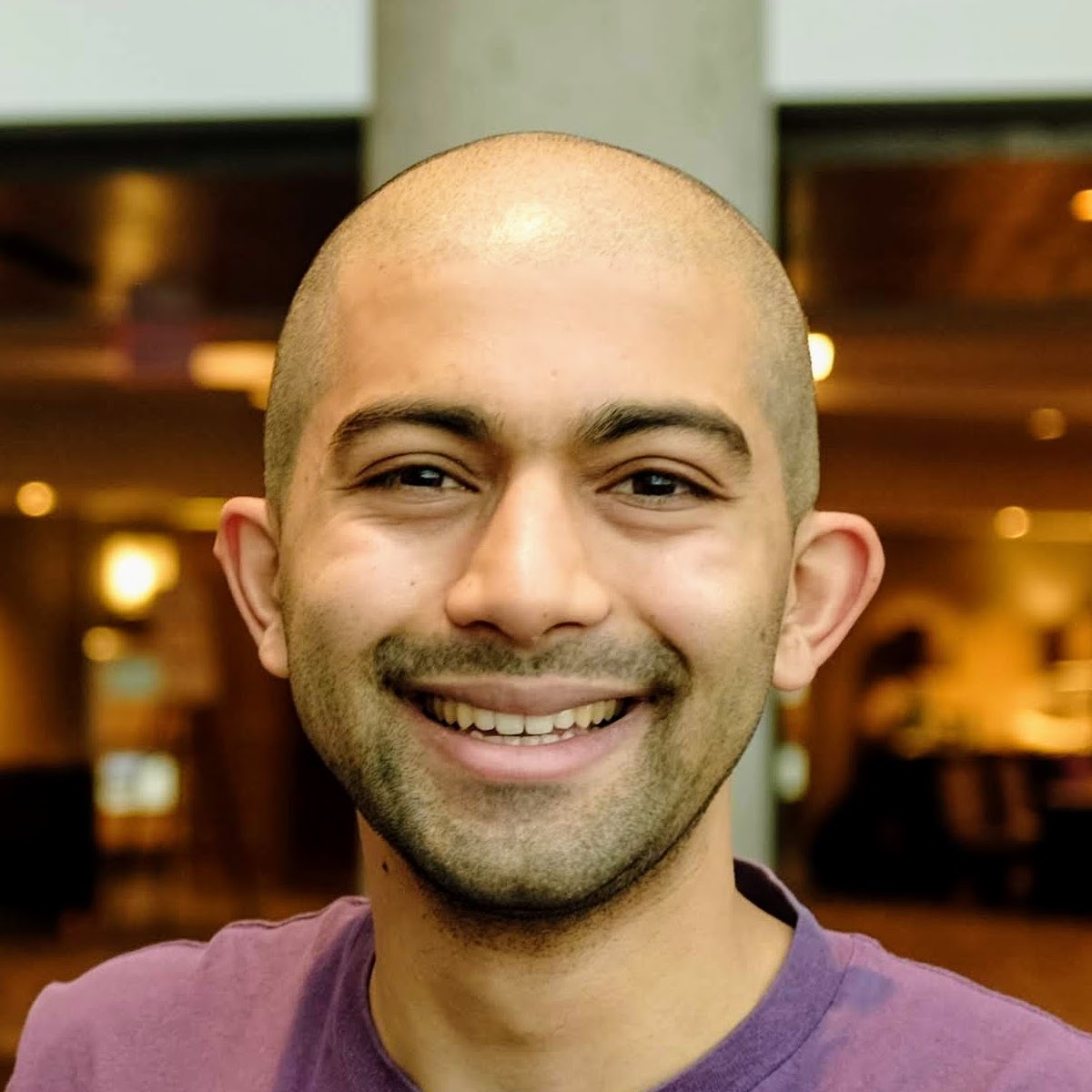
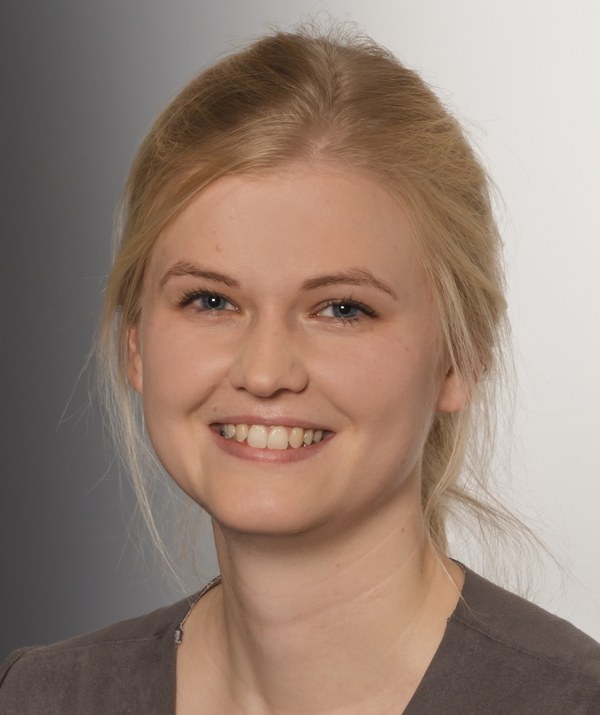
Joseph M. Zurada is a Professor in the Department of Computer Information Systems at the University of Louisville's College of Business. He has held visiting scholar positions at Edith Cowan University (Perth, Australia) and the University of Alberta (Edmonton, Canada). His academic career spans decades, with recent publications focusing on computational intelligence and data analytics applications in business and manufacturing systems. Education: DSc (Technical Sciences, Informatics) from Polish Academy of Sciences; PhD (Computer Science Engineering) from University of Louisville; MS (Electrical Engineering) from Gdansk University of Technology Research interests center on soft computing methods , streaming data analytics , and decision support systems , particularly in business intelligence and manufacturing optimization. His technical work bridges theoretical neural systems with practical enterprise solutions. Recent publications (2019-2021) demonstrate consistent focus on data-driven decision making , with innovations in text classification , adverse event detection , and price prediction models using hybrid machine learning approaches. Scientific Awards Distinguished Research and Development Award (2017, 2011) Faculty Excellence Award (2017, 1998) President's Award (2017, 1981) Outstanding Scholarship Award (2017, 1996) As an educator, he teaches core courses in Data Mining , Machine Learning , and Infrastructure Technologies , contributing to graduate programs with his technical expertise.
Tarleton Gillespie is an Adjunct Professor at Cornell University with joint appointments in the Department of Communication and Department of Information Science. He maintains a graduate field appointment in Science & Technology Studies while concurrently serving as Senior Principal Researcher at Microsoft Research New England. Gillespie earned his Ph.D. (2002) and M.A. (1997) in Communication from the University of California, San Diego, and a B.A. in English from Amherst College (1994). His research examines the sociotechnical dimensions of digital platforms, focusing on: Content moderation practices and platform governance Algorithmic systems shaping public discourse Generative AI's impact on representation and power dynamics Political controversies surrounding digital media infrastructures Gillespie's recent publications (2020-2025) demonstrate a strong focus on algorithmic governance challenges, with 73% examining content moderation systems and 67% analyzing AI's societal impacts. His work consistently addresses platform accountability, visibility politics, and the labor conditions underlying digital infrastructures. Awards & Honors: PROSE Award Finalist (2019) for Custodians of the Internet EURIAS Residential Research Fellowship (2012) SUNY Chancellor's Teaching Excellence Award (2011) Dual Outstanding Book Awards (2009) for Wired Shut Cornell Teaching Innovation Award (2008) As Principal Investigator, Gillespie leads research initiatives at Microsoft Research's Social Media Collective, examining platform governance frameworks. He maintains an active international speaking schedule, with recent keynotes addressing generative AI governance at institutions including Cornell University and University of Vermont.
Jing Li is an Assistant Professor at the Department of Computer Science in the Ying Wu College of Computing at New Jersey Institute of Technology. She holds a Ph.D. in Computer Science from Washington University in St. Louis (2017), advised by Chenyang Lu and Kunal Agrawal. Ph.D. in Computer Science, Washington University in St. Louis (2017) M.S. in Computer Science, Washington University in St. Louis (2014) B.S. in Computer Science, Harbin Institute of Technology, China (2011) Her research spans Real-Time Systems , Parallel Computing , Reinforcement Learning for System Design , and Scheduling Theory . Current projects include NSF-funded work on real-time systems with parallel resources and ARPA-E/IBM collaborations on reinforcement learning for converter design. Recent publications focus on AI-driven scheduling , parallel task optimization , and reinforcement learning applications in traffic control and circuit design. Key venues include AAAI, RTSS, PPoPP, and RTAS. Outstanding Achievement in Research (2022) Outstanding Paper Awards at RTSS (2018), RTAS (2016), ECRTS (2013) Turner Dissertation Award (2017) She advises graduate students in real-time systems and parallel computing, mentors NSF/ARPA-E projects, and leads professional services as TPC member and workshop organizer.
Jason J. Jung is a Professor in the Department of Computer Engineering at Chung-Ang University, Seoul, Korea. His academic work focuses on knowledge engineering , social media analytics , and data mining within the Knowledge Engineering Laboratory. Research Interests : Computer Science, Social Knowledge, Data Modeling, Sentiment Analysis Projects : IoT-based cultural systems, real-time social event detection, transmedia storytelling models The 15 most recent publications (2014-2018) demonstrate expertise in social network analysis , multimodal data processing , and context-aware systems applied to urban services, cultural tourism, and digital storytelling. Key trends include real-time analytics , trust modeling , and collaborative frameworks for O2O services. Professional activities include editorial contributions, invited talks, and patent developments. Students at all levels (PhD/MSc/BSc) conduct research under his supervision at the Knowledge Engineering Laboratory. Personal interests include travel, film, painting, literature, and music.
Olivier Verscheure serves as the Executive Director of the Swiss Data Science Center (SDSC), a national R&D center organizationally hosted by both École Polytechnique Fédérale de Lausanne (EPFL) and ETH Zurich. He also holds multiple Adjunct Professor appointments at EPFL, specifically within the School of Computer and Communication Sciences (SIN and SSC) and the School of Engineering (SEL). His educational background includes: Ph.D. in Computer Science from École Polytechnique Fédérale de Lausanne (EPFL), June 1999 Verscheure's research focuses on the intersection of data science and real-world applications. His work centers on stream and big data mining, geospatial analysis, and large-scale data management. These technical capabilities are applied across diverse domains including personalized health and medicine, Intelligent Transportation Systems, telecommunications, smart building technologies, Smart Grid infrastructure, healthcare analytics, and waste water management systems. His approach emphasizes creating practical data science solutions that address complex challenges in these sectors while considering the constraints of real-world deployment. An analysis of his recent publication record reveals a strong focus on real-time data processing and analytics, particularly for transportation and urban systems. His work frequently addresses challenges in handling massive time series data, developing efficient architectures for low-latency analytics, and creating practical applications for smart city infrastructure. There's a clear progression from theoretical data science contributions to production-ready systems that can process billions of data points daily, demonstrating his ability to bridge research and practical implementation. His notable achievements include: Two IBM Outstanding Technical Achievement Awards Best Paper Award for his research Student Best Paper Award Verscheure has substantial experience in research leadership and mentoring. During his tenure at IBM, he managed the Exploratory Stream Analytics research group and led a technical and management team of approximately 40 people at the IBM Research lab in Ireland. He has served on PhD committees at major universities and published nearly 100 research papers that have garnered over 2,400 citations. His work has resulted in more than 40 US and international patents, demonstrating both academic and practical impact. As Executive Director of the Swiss Data Science Center, Verscheure oversees a distributed multi-disciplinary team working across domains including personalized health, transportation, earth and environmental science, social science and digital humanities, and economics. The center aims to federate data providers, data and computer scientists, and subject-matter experts around a cutting-edge analytics platform while addressing security and privacy issues. Under his leadership, the SDSC develops embedded data science support, offers end-to-end data science services, and fosters a community to share tools and knowledge in data science.
Cristina Emma Margherita Rottondi is an Associate Professor at the Department of Electronics and Telecommunications (DET) of Politecnico di Torino . She is a member of the Photonext Interdepartmental Center and contributes to research in telecommunications, computer music, and network optimization. Her work spans privacy-preserving protocols, smart grid communication, and low-latency audio streaming. Research Interests : Networked Music Performance, Optical Networks, Smart Grid Privacy, Machine Learning. Education : Not explicitly listed. Research Areas include: Smart Grid Privacy : Developing secure protocols for data aggregation and distributed energy optimization. Optical Network Design : Investigating machine learning-driven solutions and spatial division multiplexing. Networked Music Performance : Addressing latency and inclusivity in remote musical collaboration. Publication Trends highlight interdisciplinary work at the intersection of telecommunications , machine learning , and music technology . Recent articles focus on privacy-preserving smart grids , 5G-enabled musical IoT , and UDP packet trace datasets . Scientific Awards : 2020 Charles Kao Award Best Paper Awards at IEEE Online Greencomm (2014), DRCN (2017), and others N2Women Rising Star (2020) Advising includes PhD candidates working on networked music performance , accessible musical education , and medical wearable devices . She has contributed to national patents for inclusive audio hardware.
Christopher McCarthy is an Associate Professor in the Department of Computing Technologies within the School of Science, Computing and Emerging Technologies at Swinburne University of Technology. His research focuses on computer vision algorithms applied to robotics, intelligent transport systems, and assistive technologies, particularly for people with low vision. He serves as Stream Leader in Swinburne’s Innovative Planet Research Institute, leading the Intelligent Transport stream, and is a Chief Investigator in the Australian Cobotics Centre funded by the ARC. He has held research roles at CSIRO Data61, the Bionics Institute, and the University of Melbourne, contributing to bionic eye technology under the Bionic Vision Australia consortium. His research interests include: Computer Vision and AI for real-time systems Robot perception and navigation Assistive technologies for low-vision and blind users Intelligent transport systems and video analytics Human-machine interaction and cyber-human teams His recent publications reflect strong trends in deep learning, continual learning, and real-world deployment of vision systems in transport and healthcare. He has led numerous field trials and evaluations to assess system performance in real-world contexts. His work is highly interdisciplinary, combining computer science with engineering, medicine, and urban planning. Christopher McCarthy has received multiple awards, including: FSET Research Collaboration Award Excellence in Industry Engagement Special Commendation – VC Research Impact Finalist – National Disability Award in Technology Best Paper Award (IEEE) Excellence in Teaching (University of Melbourne) He has supervised over 20 HDR students in areas including robotics, AI, assistive tech, and transport analytics. He has led major research grants from ARC, Defence, SmartCrete CRC, iMOVE, and city councils. He also served as Academic Director for Work-Integrated Learning (2016–2023) and coordinated professional placements. His teaching includes core computer science units such as Computer Systems and Object-Oriented Programming. He maintains ongoing affiliations with: Bionics Institute (Honorary Member) Bionic Vision Australia (Affiliate) Data61 (Honorary Member) Royal Children's Hospital, Melbourne International Task Force for Vision Restoration Outcomes (Chair)
Soon Myoung Chung is a computer science researcher with significant contributions in the areas of cloud computing security, parallel data clustering, and GPU-accelerated algorithms. The publications indicate long-standing research activity spanning from 2002 to at least 2022, suggesting sustained academic engagement. While no formal institutional affiliation is provided in the scraped content, the depth and consistency of work imply a faculty or research-oriented academic role. The research interests center around cloud security , especially hypervisor vulnerabilities and isolation breaches, parallel and distributed clustering algorithms for large-scale data, and 3D shape analysis using orthogonal moments. These fields reflect a strong focus on algorithmic efficiency, security in virtualized environments, and pattern recognition. The most recent articles show a trend toward leveraging GPU acceleration for real-time data processing in crisis management and enhancing anomaly detection in time series data. Earlier works emphasize foundational methods in association rule mining, text clustering, and combinatorial fusion for feature selection. Collectively, the publications demonstrate expertise in both theoretical algorithm design and practical implementation in high-performance computing contexts. Although no scientific awards are mentioned in the provided texts, the body of work has accumulated over 1,800 citations, indicating influence in the field. There is no information available about students advised, grants received, or leadership roles. No labs or collaborative teams are referenced in the scraped material.
Laxman Dhulipala is an Assistant Professor in the Department of Computer Science at the University of Maryland, College Park, and a research scientist at Google Research in the Graph Mining team. He holds a Ph.D. from Carnegie Mellon University, advised by Guy Blelloch, and was a postdoctoral researcher at MIT with Julian Shun. Ph.D., Carnegie Mellon University Postdoctoral Research, MIT His research focuses on efficient parallel algorithms, particularly for graph processing and clustering. He explores theoretical and practical models of parallel computation aligned with modern hardware. His work spans parallel graph algorithms, computational geometry, and scalable systems for massive datasets. The recent publications demonstrate a strong trend in scalable and dynamic graph algorithms, with a focus on hierarchical clustering, connectivity, and benchmarking. Key themes include batch-dynamic updates, memory-efficient data structures, and practical parallel implementations for massive-scale problems. Many works appear in top venues such as SPAA, VLDB, NeurIPS, and SIGMOD. Best Paper Award at VLDB'25 Best Paper Award at SPAA'22 Best Paper Runner Up at VLDB'22 Distinguished Paper Award at PLDI'19 Best Paper Award at SPAA'18 Memorable Paper Award Finalist at NVMW'20 Honorable Mention, CMU SCS Dissertation Award Nominated for ACM Dissertation Award Dhulipala has advised and collaborated with numerous students and researchers, including Quinten De Man, Shangdi Yu, Jessica Shi, and others, contributing to influential projects such as Aspen, ParGeo, GBBS, and ParlayLib. He has received recognition for both theoretical and practical contributions to parallel computing. He teaches courses such as CMSC858N (Scalable Parallel Algorithms and Data Structures) and CMSC451 (Design and Analysis of Computer Algorithms). He is actively involved in building tools and frameworks for parallel algorithm development and evaluation, including benchmark suites and graph processing systems. His dual affiliation with academia and Google Research enables impactful, scalable research bridging theory and practice.
Rashid Zaman is a researcher affiliated with Eindhoven University of Technology (TU/e), focusing on intersections of process mining , GDPR compliance , and event stream processing . His work addresses conformance checking, data retention constraints, and memory optimization in dynamic business processes. Research Trends: Recent publications emphasize technical solutions for aligning business processes with privacy regulations like GDPR, with specialized attention to memory-efficient algorithms for real-time conformance checking and orphan event handling in data streams. Collaborations: Active collaborator with researchers including Boudewijn van Dongen and Mohammad Hassani , contributing to projects on GDPR-compliant business process frameworks.
Dr. De Liu is the Xian Dong Eric Jing Professor of Information and Decision Sciences at the Carlson School of Management, University of Minnesota . He holds a Ph.D. in Management Science and Information Systems from the University of Texas at Austin (2004) and earned his M.S. and B.E. in Management Science from Tsinghua University (2000 and 1998 respectively). Current: Professor & Xian Dong Eric Jing Professorship (2020-present) 2017-2020: 3M Fellow in Business Analytics, University of Minnesota 2013-2014: Alan F. and Irene Bloomfield Associate Professor, University of Kentucky His research focuses on AI/Chatbots, Gamification, Social Media Manipulation, User-Generated Content, Economics of Online Platforms, Crowdfunding/Crowdsourcing , and has been published in MIS Quarterly, Management Science, Information Systems Research, Journal of Marketing , and others. He is the Academic Director of the Master of Science in Business Analytics (MSBA) program. Recent publications examine topics including bot gender in service contexts, ephemeral sharing design in dating apps, and AI streaming assistants in e-commerce . His work spans both theoretical frameworks and large-scale empirical studies, often involving randomized field experiments. Carlson School Research Award (2020) 3M Fellow in Business Analytics (2017-2020) Best Paper Nomination, Workshop on Information Technologies and Systems (2015) Associate Editor of the Year, Information Systems Research (2014) Best Paper Award, Southern Management Association Meeting (2014) Alan F. and Irene Bloomfield Professorship (2013-2014) Dr. Liu has advised doctoral students including Zhihong Ke (Clemson University) and Pei Xu (Auburn University). His service includes associate editor roles at Information Systems Research and Journal of Organizational Computing and Electronic Commerce .
Jussara M. Almeida is an established computer science researcher specializing in social network analysis, misinformation detection, and human mobility modeling. Her extensive publication record (1996–2025) demonstrates active research in web science, political communication on messaging platforms (WhatsApp/Telegram), and cloud systems. She frequently collaborates with Brazilian institutions and international partners on large-scale data projects. Research Focus: Her core interests include: Modeling information diffusion in encrypted messaging apps (WhatsApp/Telegram) Predicting human mobility patterns and privacy implications Analyzing political discourse and election-related coordination online Developing computational methods for misinformation detection Optimizing cloud/edge computing performance Publication Trends: Recent work (2021-2025) shows intensified focus on: Telegram's role in political mobilization and information dissemination Advanced techniques for identifying fake news websites and image-based misinformation Privacy-preserving mobility analysis and edge computing Child safety in live-streaming platforms Collaborations & Impact: Key collaborators include Marcos André Gonçalves, Fabrício Benevenuto, and Marco Mellia. Her research provides critical insights into real-world problems like election integrity, platform governance, and user privacy.
Jette Schumann is a researcher at Forschungszentrum Jülich's Institute for Advanced Simulation (IAS), specifically within the Civil Security Research department (IAS-7). Her work focuses on application-oriented simulations of pedestrian streams, interaction between pedestrian streams and urban traffic, and analysis of crowd movement patterns. She develops research software to support these simulations and has extensive experience in data capturing from laboratory studies on pedestrian dynamics. Dr. Schumann completed her PhD at the University of Wuppertal in 2021 with a dissertation titled 'Utilizing Inertial Sensors as an Extension of a Camera Tracking System for Gathering Movement Data in Dense Crowds.' Her educational background includes particle physics research as evidenced by her 2013 bachelor thesis on 'Development of a fast algorithm for searching particle tracks in the 'StrawTube Tracker' of the PANDA detector.' Her primary research investigates how different factors affect crowd movement, with particular attention to how people with disabilities or mobility limitations navigate through bottlenecks and crowded spaces. She combines experimental data collection with sophisticated simulation modeling to improve safety at public events and in urban environments. Her work spans both physics-based crowd modeling and social psychology aspects of collective behavior. Analysis of her publication record reveals consistent focus on pedestrian dynamics with increasing interdisciplinary integration. Recent work incorporates artificial intelligence techniques for detecting pushing behavior in crowds, with direct applications for safety at major events like the UEFA EURO 2024 in Düsseldorf. Her research demonstrates strong translation from theoretical models to practical safety applications. Dr. Schumann is actively involved in significant research projects: CroMa-PRO: Funded by BMBF, focusing on simulation-based traffic and crowd management at major events SISAME: Funded by HGF, developing simulation tools for safety at major events SiME: Funded by BMBF, studying safe evacuation of heterogeneous population groups These projects demonstrate her commitment to practical applications of research for improving public safety. Within Civil Security Research (IAS-7), she contributes to research divisions focused on Pedestrian Dynamics - Empiricism, Modeling, and Social Psychology. She participates in projects including CrowdDNA, CroMa, and the development of optical head tracking software PeTrack. Her work directly supports safety planning for large-scale events through advanced simulation techniques.
Prof. Dr.-Ing. Stefan Lechner has been full Professor of Energy Economics and Energy Systems at the Technical University of Central Hesse (THM) , Giessen, since March 2015. He is affiliated with the Department of Mechanical Engineering and Energy Technology and the Institute THESA – Institute of Thermodynamics, Energy Process Engineering and Systems Analysis . Additionally, he leads the Laboratory for Energy Economics and is a core member of the Competence Center for Energy Technology and Energy Management (etem.THM) . Education & Career Dr.-Ing., Brandenburg University of Technology (BTU) Cottbus, 2012 – Dissertation on steam-fluidized-bed drying of lignite. Dipl.-Ing. (FH) Mechanical Engineering, Georg Agricola University of Applied Sciences Bochum, 2002 – specialising in Future Energies. Supplementary doctoral studies & economics coursework at BTU Cottbus and FernUniversität Hagen. Professional experience at Vattenfall (plant management, power-plant planning & R&D) and Kreisel Umwelttechnik (Head of Development) before entering academia. Research Interests Prof. Lechner’s work centres on the techno-economic analysis and optimisation of energy systems in transition . Core themes include renewable energy integration , thermal energy storage (particularly Carnot batteries using ceramic high-temperature stores), sector coupling between electricity, heat and mobility, and 5th-generation cold district-heating networks (5GDHC). Methodologically, he combines experimental thermal engineering with open-source simulation frameworks , agent-based demand modelling , and electricity-market modelling . Recent activities expand into waste-heat recovery from data centres and transcritical CO₂ heat-pump systems for low-temperature district heating, always targeting cost-effective, grid-friendly and sustainable solutions . Publication Trends Between 2017 and 2024 his output highlights a clear evolution from fundamental studies on pressurized steam fluidized-bed drying and lignite heat-transfer toward system-level analyses of storage-based sector coupling . A dominant cluster addresses Carnot batteries , covering high-temperature storage materials, gas-turbine re-conversion concepts, and demonstration results. Parallel streams examine GIS-based rooftop PV potential , agent-based settlement energy-demand modelling , and regulatory frameworks for cross-sector energy markets. Scientific Awards & Honours No specific awards are mentioned in the provided material. Research Funding & Teams Prof. Lechner has secured and coordinates projects worth > €10 million (THM share ≈ €6.5 million) funded by BMBF, BMWK/BMWi, Hessian ministries (HMWK, HMWEVW), WI-Bank and ERDF : LOEWE 3 DUWä (2025-2027) – transcritical CO₂ dual-use heat pumps for cold district heating. EnEff:Stadt FlexQuartier2 (2023-2027) – hybrid storage optimisation in Giessen’s Philosophenhöhe district. KNW-Plus (2022-2023) – design & online tool for cold local heating networks. Innovative waste-heat use from data centres (2022-2023). FlexQuartier Gießen (2018-2023) – integrated hybrid storage & sector coupling in a new-build district. Kommun:E (2018-2022) – municipal energy-supply transformation under Germany’s Energiewende. High-T-Stor (2017-2019) – cross-sector high-temperature storage for renewable balancing. FES (2019-2021) – Research Center for Energy Storage and Sector Coupling. These projects involve interdisciplinary consortia including municipalities, grid operators, SMEs, and research partners across Germany. Teaching & Academic Leadership He lectures in Energy Economics and Sector Coupling, Energy Markets, Heat Transfer, Renewable Energy Technology and Energy System Analysis . He also serves as Programme Manager for the part-time continuing-education M.Sc. Energy Efficiency Management (StudiumPlus, Wetzlar) and contributes to advanced master’s courses on energy law and thermodynamics.
Vedat Akgiray is a Professor at Bogazici University, holding a Ph.D. from Syracuse University. His teaching and research areas focus on Derivatives , Portfolio Management , Probability , and Financial Markets , with a particular emphasis on Mathematical Finance . He has published extensively on topics such as FinTech, corporate governance, pension systems, and risk management. Education : Ph.D., Syracuse University Email: akgirayv@bogazici.edu.tr