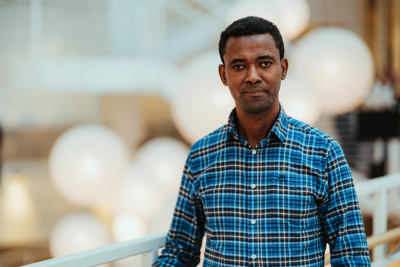
Gebremariam Assres is an Associate Professor at Kristiania University College's School of Economics, Innovation and Technology, specializing in software engineering, human-computer interaction, intelligent systems, and cybersecurity. His research spans IoT, machine learning, mulsemedia, and secure computing applications in healthcare and education. B.Sc. and M.Sc. in Computer Science from Addis Ababa University Ph.D. in Information Technology (Software Engineering) from Addis Ababa University 20+ years of teaching and research experience His work focuses on software development frameworks, telemedicine, and multisensory media. Recent publications address AI-enabled vulnerability detection, ML software engineering challenges, and telemedicine architecture reviews. Dr. Assres supervises bachelor's and master's students, teaches cybersecurity and software architecture courses, and contributes to open-source educational materials via public repositories. Labs/Teams: Mobile Technology Lab at Kristiania University College
Per Gunnar Kjeldsberg is a Professor and acting head of the Department of Electronic Systems at NTNU. He holds a PhD (Dr.ing) from NTNU (2001) and an MSc (Siv.ing) from NTH (1992). His research focuses on energy-efficient embedded systems, heterogeneous multi-processor architectures, and IoT applications. He leads the Circuit and Radio Systems group and the Energy Efficient Computing Systems (EECS) initiative at NTNU. Kjeldsberg has been principal researcher in EU projects like READEX (FET-HPC) and TULIPP (LEIT), and currently supervises the MSCA-IF project Palmera. Education: Dr.ing. (PhD), NTNU, 2001 Siv.ing. (MSc), NTH, 1992 Research Interests: Embedded systems design, low-power cache optimization, multi-media signal processing, and scenario-driven design methodologies. Collaborations include imec (Leuven), UC Irvine, and UNSW Sydney. Teaching: Master courses: TFE4141, TFE4208, TFE02 PhD course: FE8109 Key Projects: PALMERA (EU MSCA-IF): Low-power cache design READEX: Runtime optimization for exascale computing TULIPP: Ubiquitous image processing platforms HiPEAC: European HPC/Embedded Architecture Network Professional Activities: Senior Member of IEEE, Board Member roles, frequent journal/conference reviewer, and visiting researcher at imec (Belgium), UC Irvine, and UNSW Sydney.
Manuela Karola Zucknick is a Professor in the Department of Biostatistics at the University of Oslo , where she leads statistical learning research for translational and clinical cancer applications. Her work focuses on integrating multi-omics data for personalized cancer therapies, predicting drug responses, and modeling prognosis. Director of Oslo Centre for Biostatistics and Epidemiology (2023–present) Professor (2022–present) and Associate Professor (2015–2022) at University of Oslo Research Interests span high-dimensional statistical modeling, Bayesian methods for heterogeneous data integration, regularization techniques, and applications in pharmacogenomics. She develops tools for drug combination screens, survival modeling, and risk prediction incorporating prior biological knowledge. Key domains: Biostatistics, Integrative Genomics, Precision Medicine Methodological focus: Bayesian structured variable selection, Penalized Regression Publications demonstrate expertise in pan-cancer transcriptomics, proteomics for pregnancy complications, and machine learning for DNA methylation analysis. Recent work includes Tutorial on Survival Modeling (2024) and Dose-Response Prediction (2023) applied to pharmacogenomic datasets. Collaborations span clinical trials in colorectal cancer nutrition, prostate cancer screening for Lynch syndrome patients, and chronic pain research using molecular profiling.
Salvador Ortiz-Latorre is an Associate Professor in the Department of Mathematics at the University of Oslo, affiliated with the Risk and Stochastics research group and the completed project Stochastics of Renewable Energy Markets (STORE). He focuses on stochastic analysis, mathematical finance, and their applications in insurance, energy markets, and machine learning. His research integrates advanced stochastic processes, Malliavin calculus, and computational methods to model complex financial and actuarial systems. Key areas include pricing of insurance policies, stochastic volatility models (e.g., Heston-Hawkes), and numerical solutions for filtering problems. His work often bridges theoretical developments with practical applications, such as risk management and commodity market calibration. Recent articles emphasize innovations in variational methods for insurance pricing and spatial approximations of stochastic partial differential equations. Ortiz-Latorre collaborates extensively, with co-authors like David Baños and Dan Crisan. His contributions span high-impact journals like Stochastic Processes and their Applications and Advances in Applied Probability . Notably, he has pioneered techniques in particle filtering and neural network-based approximations for stochastic systems.
Dana Swarbrick is a Doctoral Research Fellow at RITMO, focusing on the social and emotional outcomes of musicking, particularly in live and virtual concert settings. Her work bridges music cognition and social psychology, examining audience engagement, motion, and technological mediation. She holds an MSc from the University of Toronto, where she studied cardiovascular exercise's impact on piano learning, and a BSc thesis on live music's effect on head movements at rock concerts. Her research encompasses Music Cognition , Social Psychology , and Human-Computer Interaction , with recent studies analyzing virtual concerts during the pandemic. Key articles explore audience motion , musical absorption , and predictive modeling of physical fatigue . She also develops datasets like the MusicLab Copenhagen Dataset for cross-modal analysis. Swarmick's work intersects Neuroscience (e.g., transcranial stimulation effects on motor learning) and Performance Studies (e.g., string quartet visualization). She investigates how live events and streaming technologies foster connection, with implications for Music Technology and Social Resilience in crises. Her studies often blend experimental psychology and biomechanics , reflecting interdisciplinary rigor.
Jan Egil Nordvik serves as Head of Department at the Department of Behavioural Science within the Faculty of Health Sciences at Oslo Metropolitan University. His research focuses on cognitive psychology and neuropsychology with particular emphasis on stroke rehabilitation and cognitive training. Based in Oslo at Pilestredet 38, he maintains an active research profile with numerous publications spanning clinical neuroscience and rehabilitation science. Nordvik's research interests center on cognitive rehabilitation following neurological injury, particularly stroke. His work investigates the relationships between physical activity, cognitive performance, and computerized cognitive training in chronic stroke patients. He has made significant contributions to understanding cerebral blood flow dynamics in aging populations and has explored innovative rehabilitation approaches including high-intensity gait training for post-COVID recovery. His research bridges clinical practice and neuroscience through rigorous methodologies including neuroimaging, randomized controlled trials, and large-scale collaborative studies. Analysis of Nordvik's publication record reveals a strong focus on stroke rehabilitation and cognitive neuroscience. His work spans clinical trials, neuroimaging studies, and implementation research with consistent emphasis on translating scientific findings into clinical practice. Key thematic areas include cognitive training efficacy, neurorehabilitation techniques, cerebral blood flow dynamics, and patient-reported outcomes in rehabilitation settings. His collaborative approach is evident through numerous multi-institutional publications addressing complex neurological conditions. Nordvik's research leadership extends to knowledge translation initiatives aimed at bridging the gap between research findings and clinical practice in rehabilitation settings. His work on implementing evidence-based practice in master's degree teaching demonstrates commitment to educational innovation. While specific grant details aren't provided in the source material, his extensive publication record in high-impact journals suggests successful acquisition of research funding to support his investigations in cognitive rehabilitation and stroke recovery. As Head of Department for Behavioural Science, Nordvik leads research and educational activities within his department. His work appears to involve collaboration with multiple research groups focusing on stroke rehabilitation, cognitive neuroscience, and clinical implementation science. The department's research environment appears to support both fundamental neuroscience investigations and applied clinical research with direct patient impact.
Dr. Jarle André Johansen serves as an Associate Professor in the Department of Automation and Process Technology within the Faculty of Engineering Science and Technology at UiT The Arctic University of Norway. His academic profile demonstrates sustained research activity from 2000 through 2021, with recent publications indicating ongoing scholarly work. His institutional affiliation appears consistently across university platforms, with contact information listing his office at Teknologibygget Tromsø 4.011 and direct communication channels including email and telephone. Professor Johansen's research focuses primarily on semiconductor physics and sensor technology, with particular expertise in low-frequency noise analysis in silicon-germanium heterojunction bipolar transistors (SiGe HBTs). His work spans fundamental device physics, noise characterization methodologies, and more recent applications in maritime navigation systems. The evolution of his research shows progression from pure semiconductor device analysis toward applied sensor systems, including biosignal processing for maritime applications as evidenced by his 2021 publication. His publication record reveals consistent scholarly output with particular concentration between 2003-2004 and 2015, suggesting periods of intensive research activity. The articles collectively demonstrate expertise in both theoretical modeling and experimental characterization of electronic devices, with strong international collaboration patterns evident in the author lists. His work bridges fundamental semiconductor physics with practical engineering applications, particularly in harsh environments as suggested by maritime-focused research. Professor Johansen's teaching responsibilities include Electronics, Control Engineering, Industrial Data Communication, and LabVIEW Programming, indicating a well-rounded engineering education profile that complements his research specialties. His position within the Automation and Process Technology department suggests integration of his semiconductor expertise with broader automation systems engineering.
Karl Joachim Breunig is a Full Professor of Strategy at Oslo Business School, Faculty of Social Sciences, Oslo Metropolitan University, a position he has held since 2015. His academic journey includes a PhD in Strategic Management from BI Norwegian Business School and a Master of Science from the London School of Economics. Breunig has established himself as a prominent scholar in strategic management and innovation through significant research contributions and international collaborations. His educational background demonstrates a strong foundation in business and strategic management: PhD in Strategic Management from BI Norwegian Business School MSc from London School of Economics Professor Breunig's research program centers on the intersection of strategy and innovation theory, with particular emphasis on service and business model innovation, entrepreneurship, and digitalization within knowledge-intensive firms. His work examines how organizations develop dynamic capabilities through social networks and how these capabilities enable successful innovation in complex business environments. The professor maintains an active international research profile with recent research visits to prestigious institutions including Stanford University (2015), University of Oxford (2022), and Harvard University (2024). Analysis of Breunig's recent publications reveals a consistent focus on strategic innovation across multiple contexts. His research demonstrates particular strength in examining innovation processes in knowledge-intensive organizations, with recurring themes around digital transformation, servitization in manufacturing firms, and the management of innovation portfolios. His work often takes a process perspective, examining the micro-level dynamics of organizational change and innovation implementation across various sectors including maritime energy, media, and professional services. Professor Breunig's scholarly achievements include: Hedlund-award 2012-2014 for his PhD dissertation on social networks and dynamic capabilities Throughout his career, Breunig has demonstrated strong leadership in research community building. He previously held an adjunct professor position (Professor II) at NTNU (2016-2018) and served as head of the DISCO research group (Digital Innovation and Strategic Competence in Organizations) from 2017-2023. Additionally, he led the PhD profile BIG (Business Administration, Innovation and Governance) from 2021-2023, demonstrating his commitment to developing the next generation of scholars in his field. His research has been organized through strategic initiatives including leadership of the DISCO research group and involvement in multiple collaborative projects examining service innovation in various industry contexts, particularly within the GCE Node organization where he contributed to several research reports on servitization in different companies.
Dirk Hesse serves as an Associate Professor at the University of Oslo with dual expertise bridging academia and industry. His academic role centers on the Data and Knowledge Management (DKM) research group, while professionally he holds the position of Vice President at Equinor, overseeing IT portfolios for commodity market sales and energy product distribution. His research spans theoretical and computational physics with strong interdisciplinary connections to data science. Key focus areas include: Lattice Quantum Chromodynamics (QCD) and Heavy Quark Effective Theory (HQET) Numerical Stochastic Perturbation Theory (NSPT) applications Gradient Flow methodologies in quantum field theory Automated lattice perturbation techniques Digital transformation in energy sectors Analysis of his publications reveals deep specialization in high-precision computational methods for particle physics, particularly in heavy-light quark systems and non-perturbative QCD calculations. His work consistently integrates advanced algorithm development with theoretical frameworks, demonstrating strong technical rigor in lattice field theory simulations. Professionally, Hesse maintains significant industry engagement through Equinor, where he drives digitalization initiatives in energy markets. This dual role positions him at the critical intersection of academic research and industrial application, particularly in data-intensive energy systems. His affiliations include active participation in the Data and Knowledge Management research group at UiO, focusing on computational methodologies applicable to both theoretical physics and industrial data challenges. Current work emphasizes the transfer of academic computational techniques to solve real-world problems in energy distribution and market systems.
Lars Ailo Bongo is a Professor at the Department of Computer Science, UiT The Arctic University of Norway. His research interests span operating systems, concurrent programming, data-intensive computing, and applications of machine learning in healthcare and bioinformatics. He has been actively involved in teaching courses such as Operating Systems, Concurrent Programming, and Algorithms, emphasizing open-access educational materials. Notably, three of his master’s students received awards for their theses: Nina Angelvik (2018), Bjørn Fjukstad (2014), and Martin Ernstsen (2013). He also advises students like Johan Ravn, whose master’s project led to a startup. Bongo’s work includes developing scalable bioinformatics pipelines (e.g., NeLS infrastructure), optimizing genomics workflows, and advancing tools for medical image analysis. He pioneered open-access course repositories on GitHub and contributed to visualization frameworks like GeneNet VR. His research bridges computer science with healthcare, focusing on tumor infiltration lymphocyte analysis, AI-driven diagnostics, and ethical AI applications in mental health. He has held roles as a postdoc at Princeton and TA at the University of Tromsø. His scientific contributions span over 50 peer-reviewed articles, covering topics from parallel computing to synthetic health data interoperability. He emphasizes reproducibility and transparency in data management, exemplified by projects like Occode for historical data transcription and MORTAL language for cross-paradigm computing. In education, Bongo advocates for accessible teaching materials and has designed courses like INF-2202 Concurrent Programming, which utilize modern tools (e.g., Go language) and GitHub repositories. His teaching philosophy integrates practical coding with theoretical foundations, fostering student innovation and open-source collaboration.
Gabriel Hanssen Kiss is currently an Associate Professor at the Department of Computer Science (IDI), Norwegian University of Science and Technology (NTNU), and Senior Engineer at the Operating Room of the Future, St Olavs Hospital. He holds a PhD in Engineering from K.U. Leuven, Belgium, with a focus on visualization and automated polyp detection in virtual colonoscopy, and a computer science engineer diploma from Technical University of Cluj-Napoca, Romania. Education: PhD in Engineering (K.U. Leuven), Computer Science Engineer (Technical University of Cluj-Napoca) Affiliations: NTNU (Associate Professor), St Olavs Hospital (Senior Engineer) His research focuses on medical image processing and visualization, extended reality (XR) systems, and ultrasound technology. Key subfields include volumetric data visualization, image registration/fusion, and XR applications in both medical and non-medical domains. Recent publications highlight AI-driven echocardiography, LiDAR-GNSS data fusion for localization, and mixed reality in surgical training. Collaborative work spans AI applications in transesophageal echocardiography for left ventricular function, 3D segmentation models, and augmented reality systems for medical education. He works with teams at NTNU and St Olavs Hospital, focusing on systems like the Operating Room of the Future (FOR).
Anna Marcuzzi is a Postdoctoral Fellow at the Department of Public Health and Nursing, Faculty of Medicine and Health Sciences, Norwegian University of Science and Technology (NTNU). Her research focuses on musculoskeletal pain epidemiology and digital health interventions, with significant contributions to AI-based pain management tools and population health studies using Norwegian registry data. Her research portfolio centers on: Musculoskeletal pain mechanisms and comorbidities Digital therapeutics for low back/neck pain Physical activity and sedentary behaviour determinants Chronic pain interactions with mental health and metabolic conditions Cross-cultural pain measurement validation Epidemiological methods using large cohort studies Analysis of her 15 most recent publications (2021-2025) reveals a dominant focus on developing and evaluating AI-driven self-management applications for musculoskeletal pain, particularly through randomized clinical trials. She has made substantial contributions to systematic reviews on physical activity determinants in children (DE-PASS project) and investigates complex pain comorbidities using longitudinal data from the Norwegian HUNT study, examining relationships between multisite pain, insomnia, diabetes risk, and mental health outcomes. No scientific awards were documented in the available information. Details regarding student advising, research grants, or laboratory affiliations were not specified in the provided materials.
Edvard Pedersen is an Associate Professor in the Department of Computer Science at UiT The Arctic University of Norway. His research focuses on bioinformatics, machine learning applications in medical imaging, and data management systems for biological datasets. He has contributed to projects involving genomics pipelines, metagenomic analysis, and VR visualization of biological networks. Pedersen also engages in educational research, such as improving course evaluation methods through student panels. His work spans interdisciplinary areas including computational biology, cloud computing infrastructure for scientific workflows, and synthetic data ethics. Notable contributions include the GeStore system for metagenomic pipelines and collaborative studies on tumor-infiltrating lymphocytes quantification using machine learning. Pedersen frequently collaborates with researchers in medicine, marine biology, and computer science. Recent research highlights include ethical challenges in synthetic data usage (2023), VR-based biological network visualization (2021), and pragmatic machine learning approaches for cancer diagnostics (2022). His publications demonstrate a strong emphasis on practical solutions for large-scale biological data challenges.
Belal Medhat Mostafa Abdalrheem serves as a PhD Fellow in the Department of Informatics at UiT The Arctic University of Norway, Tromsø campus. His academic affiliation places him within Norway's northernmost research-intensive institution focused on Arctic studies and technological innovation. Research interests span core computing disciplines with emphasis on: Artificial Intelligence methodologies Large-scale data analysis systems Software architecture development Machine learning applications His scholarly profile is maintained through ResearchGate and ORCID (0000-0002-0834-2174), though no specific publications or awards are publicly documented in institutional records. Current work appears centered on foundational informatics research within UiT's technical framework.
Anniken Susanne Thoresen Karlsen is an Associate Professor in the Department of ICT and Science at the Faculty of Information Technology and Electrical Engineering, Norwegian University of Science and Technology (NTNU). She has extensive experience in research and teaching, with a focus on digital transformation, software-intensive systems, and emerging technologies. Karlsen holds leadership roles including deputy chair of the interdisciplinary NTNU research group SHAPE and active participation in multiple research centers. Her educational background includes: PhD in Information Science from the University of Bergen (UiB) Master's degree in Information Technology from Aalborg University (AAU) in Denmark Master of Science in Economics from the Norwegian School of Economics (NHH) Computer Engineering degree from Møre og Romsdal School of Engineering (MRIH) One-year practical-pedagogical education from NHH and UiB NTNU's UniPed program for employees Professor Karlsen's research spans a wide spectrum of digital transformation topics. Her work focuses on the integration of concepts from multiple domains to design and develop software-intensive systems. She explores modern software development methodologies, socio-technical systems thinking, and systems engineering approaches. A significant portion of her research addresses emerging technologies such as digital twins, virtual reality, and service robots as building blocks for innovative solutions. She also investigates the digital economy and sustainable development through digital transformation, with particular emphasis on business modeling and change management. Her recent publications demonstrate a strong focus on applying digital technologies to solve real-world problems across multiple sectors. There's a clear trend toward using digital twin technology in various contexts including urban planning, offshore wind farms, and healthcare. Her work in search and rescue operations shows consistent application of AI and knowledge management techniques. Karlsen's research bridges theoretical concepts with practical applications, particularly in sustainability-focused domains like renewable energy and healthcare. Professor Karlsen actively supervises students at all academic levels and has been involved in numerous research projects. She has held various academic leadership positions including vice-dean, head of department, and research group leader. Her collaborative work spans multiple sectors including healthcare, search and rescue, offshore, banking, food, and construction industries. She is affiliated with several research groups and centers: SHAPE - SamHandlingsArena for Prosjektledelse og Endring (2023-present), Deputy Chair The Norwegian Open AI Lab (NAIL) (2023-present) Green2050 - The Centre for Green Shift in the Built Environment (2022-present) Forskningsarena for bærekraftsanalyse (2020-present), Deputy Leader Forskningsgruppen for bærekraftig digital transformasjon, SDT (2017-present), Founder and former Leader