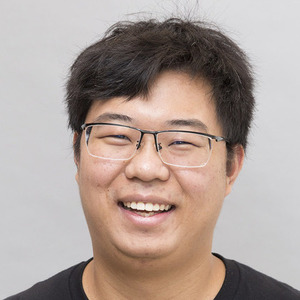
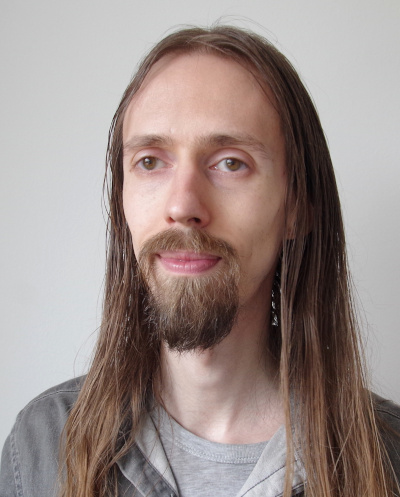
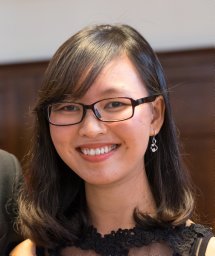
Zhen Liu is an Assistant Professor at the School of Data Science, CUHK-Shenzhen. His research focuses on generative models, 3D representations, and the synergy of spatial and semantic understanding in AI systems. With a PhD from Mila and Université de Montréal, he develops foundational methods for physics simulation, 3D assembly, and semantic reasoning in neural networks. His work bridges machine learning with applications in computer vision and graphics, emphasizing: Generative architectures for 3D content creation Diffusion model alignment techniques Efficient parameter finetuning strategies Dr. Liu mentors students in AI research and contributes to advancing 3D generative modeling paradigms.
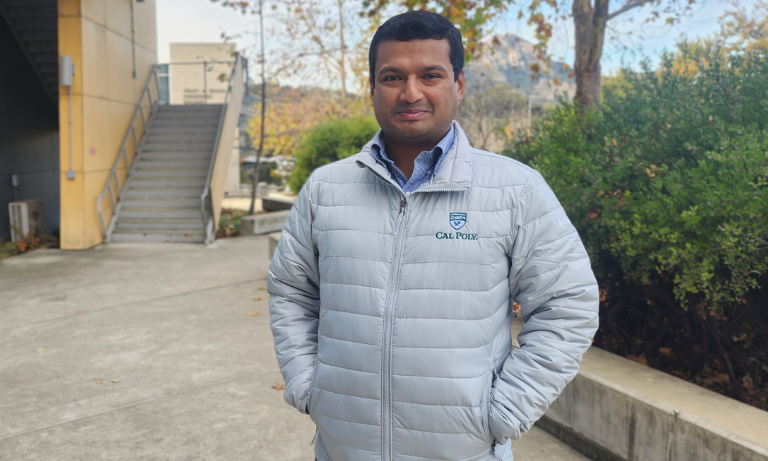
Fahim Khan is an Assistant Professor in the Department of Computer Science and Software Engineering at California Polytechnic State University’s College of Engineering. He specializes in computer graphics, data visualization, computer vision, and machine learning, with a focus on applying these technologies to education, environmental monitoring, and public safety. His research emphasizes making complex data accessible through advanced tools, bridging the gap between raw data and actionable insights. He is deeply committed to inclusive education and fostering interdisciplinary collaboration. His work often integrates citizen science initiatives, empowering communities through mobile applications and machine learning. Notable projects include real-time rip current detection systems and platforms for high school students to engage in research. Khan advocates for equity in technology, designing inclusive learning environments and promoting diversity in STEM. He actively supports the university’s Learn by Doing philosophy, blending practical education with theoretical rigor. Professionally, he contributes to coastal observation networks and autonomous vehicle datasets while maintaining a balance through outdoor activities like exploring Pismo Beach. His research trends reflect a strong focus on mobile computing, environmental applications, and education technology, with recent efforts emphasizing citizen science and data-driven solutions. While no formal grants or advising records are detailed, his projects implicitly involve collaborative efforts. He is affiliated with labs focused on environmental monitoring and mobile technology development, though specific lab names are not mentioned.
Naim U. Rashid, PhD, is an Associate Professor with tenure in the Department of Biostatistics at the UNC Gillings School of Global Public Health and holds a joint appointment as Research Associate Professor at the Lineberger Comprehensive Cancer Center. He serves as Associate Director of the Lineberger Biostatistics Shared Resource and co-directs the Biostatistics Cores of the UNC Pancreatic and Breast Cancer SPOREs. His work bridges statistical methodology development with collaborative cancer research, focusing on translating genomic discoveries into clinical applications. Dr. Rashid's research spans precision medicine, genomics, statistical computing, and machine learning with specific applications to pancreatic and breast cancers. His lab develops novel statistical methods for high-throughput genomic data analysis, cancer subtyping, missing data problems in deep learning, and clinical trial design. Recent work includes developing an AI tool that recommends optimal clinical trials to pancreatic cancer patients, funded by a $311,000 Department of Defense grant in 2024. His methodological contributions focus on improving replicability in gene signature selection and clinical prediction, with emphasis on addressing racial disparities in cancer outcomes. His publication record shows consistent output in top statistical and medical journals, with recent work focusing on high-dimensional statistics, missing data methods, and cancer genomics. His research demonstrates a clear trajectory from methodological innovation to clinical implementation, particularly in pancreatic cancer where his PurIST classifier has gained recognition. The work increasingly incorporates machine learning approaches while maintaining strong statistical foundations. Delta Omega Faculty Award (2021, UNC Chapel Hill) IBM and R.J. Reynolds Junior Faculty Development Award (2017, UNC Chapel Hill) Barry H. Margolin Dissertation Award (2013, UNC Chapel Hill) Training Grant recipient (2006-2011, Genomics and Cancer) Dr. Rashid actively mentors graduate students and serves as trial statistician on multiple cancer clinical trials. He teaches BIOS 735, a doctoral-level course on statistical computing, and is involved with the Translational Breast Cancer Research Consortium Statistical Working Group. His lab collaborates extensively with clinicians at UNC Lineberger and beyond, with recent work including the PROCLAIM Study examining mHealth apps to improve diverse recruitment in pancreatic cancer trials. The Rashid Lab focuses on developing computational tools that directly impact clinical decision-making while addressing methodological challenges in genomic data analysis.
Professor Brian Surgenor is a faculty member at Queen's University's Department of Mechanical and Materials Engineering, part of the Smith Engineering faculty. He holds a B.Sc. (1977), M.Eng. (AECL/Whiteshell), and Ph.D. (1983) in Mechanical Engineering from Queen's University. His research focuses on machine vision systems for automation, autonomous vehicle navigation, and mechatronic system design education. He has held key administrative roles including Department Head (1993-2002), Associate Dean (2008-2013), and Vice-Dean (2013-2016). His work emphasizes interdisciplinary innovation, such as the Mitchell Hall design project and contributions to Ingenuity Labs. Education: B.Sc. Mechanical Engineering, Queen's University (1977) M.Eng. Engineering Physics, McMaster University (AECL/Whiteshell) Ph.D. Mechanical Engineering, Queen's University (1983) Research interests include: - Pneumatic servosystems - Intelligent algorithms for machine vision - Off-road autonomous vehicle systems - Mechatronics education methodologies - Hybrid powertrain systems for vehicles His recent publications (2017–2024) explore autonomous systems, machine vision applications, and fuel cell hybrid technologies. Notable trends include advancements in UAV-based infrastructure inspection, terrain-adaptive autonomous driving, and low-cost machine vision solutions for small part sorting. His work bridges theoretical control systems with practical industrial automation challenges. He has contributed to laboratory design for CDIO curricula and pioneered mechatronics education through problem-based learning. His administrative leadership has shaped Queen's engineering graduate programs and research infrastructure. Currently involved in Ingenuity Labs, fostering cross-disciplinary innovation.
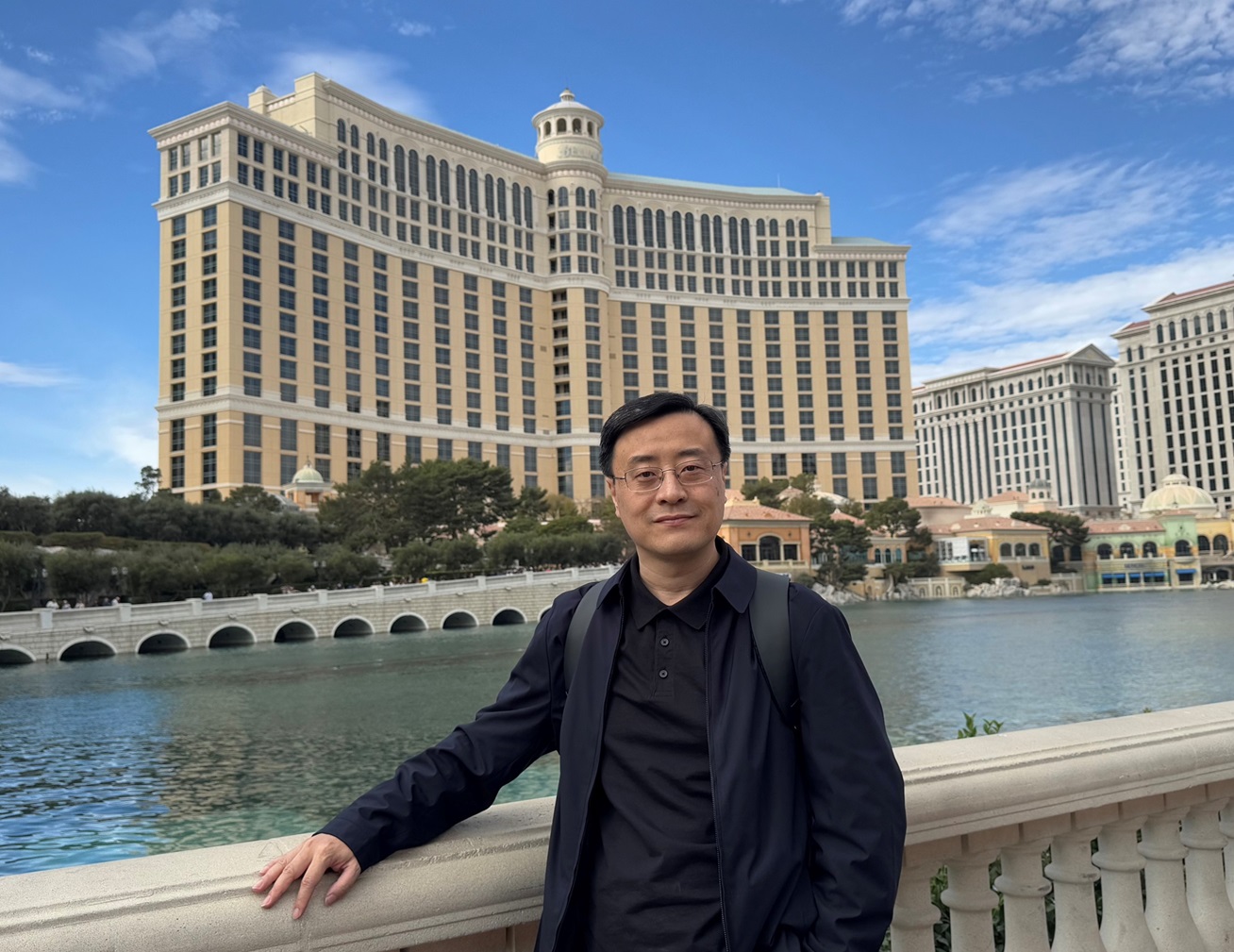
Lu Su is an Associate Professor at the School of Electrical and Computer Engineering , Purdue University , with prior appointments at SUNY Buffalo . His research spans Internet of Things , cyber-physical systems , mmWave sensing , and crowd-sourced data validation , focusing on quality-of-information aware distributed sensing and security in autonomous systems . Ph.D. in Computer Science (2013) and M.S. in Statistics (2012) from University of Illinois at Urbana-Champaign M.E. and B.E. from Harbin Institute of Technology Research Interests: IoT , cyber-physical systems , crowd sensing , security and privacy , and machine learning for sensor networks. His work addresses quality-aware information integration , adversarial attacks in autonomous vehicles , and privacy-preserving crowd-sourced systems . Recent publications focus on mmWave-based sensing (e.g., 3D pose reconstruction), federated learning (driver monitoring), and data poisoning attacks in crowd-sourced systems. His research also extends to traffic optimization and human activity recognition using wireless networks. Professional Roles: Workshop Chair (INFOCOM 2023, 2022) TPC Vice Chair (INFOCOM 2021) Program Committee Member for top conferences Editorial Board, ACM Transactions on Sensor Networks Teaching: Courses on Embedded Systems , Internet of Things , and Network Concepts at both undergraduate and graduate levels.
Yuntian Deng is an Assistant Professor at the University of Waterloo and a Visiting Professor at NVIDIA. He holds affiliations with Harvard SEAS as an Associate and the Vector Institute as a Faculty Affiliate. He completed his PhD in Computer Science at Harvard under Professors Alexander Rush and Stuart Shieber, followed by a postdoc under Yejin Choi. His research focuses on Natural Language Processing and Machine Learning, with notable contributions in chatbot interaction analysis (WildChat), implicit reasoning models, and markup-to-image generation. He has developed influential tools like OpenNMT and WildVis, and his work has been featured in outlets like the Washington Post and used by OpenAI and Anthropic. Education: PhD in CS (Harvard), Postdoctoral Research (University of Washington). Key achievements include the ACM Gordon Bell Prize for GenSLMs, Best Demo Runner-up at ACL 2017, and Best Paper at DAC 2020. His research emphasizes scalable datasets, efficient reasoning techniques, and real-world applications of AI models. Research interests span NLP, machine learning algorithms, and their applications in areas like dialogue systems, generative models, and ethical AI evaluation. Notable projects include WildChat (1M ChatGPT interactions), implicit chain-of-thought reasoning, and neural steganography for text-based information hiding. His articles explore topics ranging from knowledge distillation to diffusion models, with a focus on bridging theoretical advancements and practical implementations. He actively collaborates with industry partners like NVIDIA and maintains open-source tools to advance AI research accessibility.
Olga Vitek is a Professor at Northeastern University's Khoury College of Computer Sciences, with affiliated faculty status in the Department of Chemistry and Chemical Biology. Her research bridges statistical science and machine learning with mass spectrometry-based proteomics and systems biology, focusing on developing open-source software tools like MSstats and Cardinal for quantitative proteomic analyses and imaging. Education: PhD in Statistics (Purdue University), Postdoc at the Ruedi Aebersold Lab (Institute for Systems Biology) Leadership: Director of the Barnett Institute for Chemical and Biological Analysis Her work emphasizes: Statistical experimental design Signal detection in complex mass spectrometry data Causal inference in biomolecular networks Reproducible computational infrastructure Recent publications highlight advancements in quantitative proteomics , mass spectrometry imaging , and causal modeling , with applications spanning cancer research, immunology, and clinical diagnostics. Notable trends include deep learning integration for image analysis and open-source tool development for scalable, transparent workflows. Scientific accolades: Elected Fellow of the American Statistical Association 2021 Gilbert S. Omenn Computational Proteomics Award NSF CAREER award Chan-Zuckerberg Essential Open-source Software award Senior Member, International Society for Computational Biology
Prof. George Magoulas is a Professor of Computer Science at the University of London's School of Computing and Mathematical Sciences and Director of the Birkbeck Knowledge Lab. He specializes in machine intelligence, machine learning algorithms, and AI system architectures, with applications in healthcare (e.g., neurodegenerative disease diagnosis) and educational technologies. His research has received awards from IEEE, ACM, and others. He holds a PhD in Nonlinear Optimization for Neural Networks and a PGCE in Higher Education. Education: BEng/MEng (Integrated Master's in Systems & Control Engineering), University of Patras, Greece PhD in Nonlinear Optimization for Neural Networks Learning, University of Patras, Greece PGCE in Teaching and Learning (Higher Education) Research & Leadership: He leads the Birkbeck Knowledge Lab, focusing on AI's impact on learning and communication. His work includes designing learning algorithms for psychophysiological data modeling and developing the cloudUPDRS app for Parkinson's disease assessment. He has supervised over 12 PhD students and contributed to 200+ publications. Awards & Recognition: Stanford’s “World’s top 2% of Scientists” (2024) Best Paper Awards at IEEE, ACM, and EUNITE Keynote speaker at major AI and e-learning conferences Honorary membership in the Hellenic Artificial Intelligence Society Administrative Roles: Director of Teaching & Learning Quality (2016–2023) Chair of Postgraduate Programmes Exam Board (2010–2022) Editor-in-Chief, International Journal on Artificial Intelligence Tools Teaching: He teaches courses on Artificial Intelligence, Neural Networks, and Project Management at both undergraduate and postgraduate levels. Labs & Collaborations: He directs the Birkbeck Knowledge Lab and is a member of the Data Science and AI Research Group. His projects include analyzing violent cycles using AI and collaborating on EU-funded initiatives.
Baishakhi Ray is an Associate Professor at Columbia University, specializing in improving software reliability and developers' productivity for both traditional and AI-driven systems. She leads the ARiSE Lab, focusing on interdisciplinary research at the intersection of software engineering and artificial intelligence. Her research interests include software testing for AI systems, adversarial robustness, automated testing of autonomous systems, and leveraging AI techniques such as neural networks for dynamic analysis and fuzzing. Notable projects include DeepTest for autonomous car testing and NEUZZ for efficient fuzzing. Awards: VMware Early Career Faculty Award (2020), IBM Faculty Award (2019), NSF CAREER Award (2019), and multiple best paper awards including EAPLS FASE (2020) and ACM Distinguished Papers (FSE 2017, MSR 2017). Grants: NSF CAREER grant (2019-2024) for deep learning testing, NSF grants for workshops and security bug detection, and collaborative grants on persistent memory and SSL/TLS implementations. Her recent work emphasizes advancing code generation with large language models (LLMs), evaluating model robustness under data contamination, and developing tools like CodeSense and CrashFixer for code semantics and kernel debugging. The ARiSE Lab also explores causal performance debugging and transfer learning for configurable systems.
Dr. Paul Henderson is a Lecturer in Machine Learning at the School of Computing Science, University of Glasgow. He holds a BA in Mathematics (University of Cambridge, 2009), an MSc in Informatics (University of Edinburgh, 2010), and a PhD in Computer Vision (University of Edinburgh, 2018). His research focuses on generative AI, probabilistic machine learning, and minimally-supervised approaches to 3D computer vision, with applications in healthcare, computer graphics, and physical sciences. Education: PhD in Computer Vision (University of Edinburgh, 2018) MSc in Informatics (University of Edinburgh, 2010) BA in Mathematics (University of Cambridge, 2009) His work spans generative models, medical imaging, and robotics. Notable contributions include datasets like Flat’n’Fold and techniques in diffusion models for text-to-image retrieval. He has received grants including the Royal Society Research Grant (2022-2023) and the Vesuvius Challenge Autosegmentation Prize (2025). He supervises PhD students in topics such as medical image segmentation and generative AI. Teaching: CS5002 Advanced Programming, CS4061/CS5014 Machine Learning.
Dr. Ying Zhu is an Associate Professor in the Department of Marketing and Consumer Studies at the Lang School of Business and Economics, University of Guelph. She holds a Ph.D. in Marketing from Texas A&M University, alongside master’s degrees in Computer Science (Minzu University, China) and Management (University of Lethbridge, Canada). Previously, she served as an Associate Professor at UBC Okanagan. Her research focuses on digital marketing, consumer behavior, marketing analytics, and the impact of technology (e.g., AI, Metaverse) on consumer decisions. She has published 19 peer-reviewed articles since 2017, many in top-tier journals like American Psychologist and European Journal of Marketing . Her work explores themes such as brand extension strategies, digital advertising effectiveness, and sustainability initiatives. Dr. Zhu has received significant funding through SSHRC grants and has been recognized for her teaching excellence, including the Golden Apple Award. She actively advises graduate students and volunteers with community organizations like the Kelowna Museums Society. Her research on smartphone-induced consumer behavior has garnered media attention in outlets like Time Magazine , Global News , and Science Daily .
Jiannan Wang is an Associate Professor in the School of Computing Science at Simon Fraser University (SFU). He holds a Ph.D. from Tsinghua University (2013) and a B.Sc. from Harbin Institute of Technology (2008). His research focuses on database systems, data management, and data science, with particular emphasis on data cleaning, crowdsourcing, and big data technologies. He leads the SFU Data Science Research Group, aiming to accelerate data science workflows through innovative tools like DataPrep and ConnectorX. Education: Ph.D. in Computer Science and Technology, Tsinghua University, China (2013) B.Sc. in Computer Science and Technology, Harbin Institute of Technology, China (2008) Research Interests: Dr. Wang's work spans database systems, data cleaning, crowdsourcing, and big data education. He develops open-source tools for data scientists to streamline data preparation and analysis. His lab's mission is to make data science more efficient through technologies like DataPrep and ConnectorX . Awards: IEEE TCDE Rising Star Award (2018) CS-Can|Info-Can Outstanding Early Career Researcher Award (2020) VLDB Best Experiments, Analysis & Benchmark Paper Award (2021) PVLDB Distinguished Review Board Member Award (2020) Advising & Leadership: Director of SFU's Professional Master's Program in Big Data and Visual Computing. Supervised over 20 graduate and undergraduate students, many of whom have gone on to roles at top companies like Google, Amazon, and Huawei. Lab & Teams: Part of the SFU Data Science Research Group and the SFU Big Data Academic Advisory Committee. His lab collaborates with industry partners and contributes to open-source projects in data management and machine learning.
Joseph Alejandro Gallego Mejia is an Assistant Teaching Professor in the Department of Computer Science at Drexel University's College of Computing and Informatics. He holds a PhD with meritorious distinction in Systems and Computing Engineering from the National University of Colombia, along with a Master’s and dual Bachelor’s degrees in Systems and Computing Engineering and Industrial Engineering. PhD in Systems and Computing Engineering, National University of Colombia (Meritorious Distinction) Master of Systems and Computing Engineering, National University of Colombia Bachelor of Engineering in Systems and Computing Engineering, National University of Colombia Bachelor of Engineering in Industrial Engineering, National University of Colombia His research focuses on artificial intelligence, machine learning, computer vision, quantum machine learning, natural language processing, and cybersecurity. He explores robustness estimation, anomaly detection, incremental learning, and scalable software architectures for AI systems. His work bridges theoretical foundations and practical applications in health, remote sensing, and edge computing. The recent publications reflect a strong trend in interdisciplinary AI research, combining machine learning with quantum computing, cybersecurity, and natural language understanding. His work spans domains such as satellite imagery analysis, medical diagnostics, IoT security, and conversational AI, demonstrating a commitment to scalable and robust intelligent systems. Keywords across publications include Computer Science, Machine Learning, Quantum Computing, and Cybersecurity, with subfields ranging from adversarial robustness to hybrid quantum-classical models. Scientific distinctions include: PhD with meritorious distinction, National University of Colombia Postdoctoral fellow, Frontier Development Lab (Trillium), supported by NASA and ESA He has served as a reviewer for top-tier journals and conferences including Neurocomputing, IEEE Access, Radioscience, NeurIPS, and NLDL. Though no formal grants are listed, his postdoc was funded by NASA and ESA, indicating significant external support. He teaches courses in programming, data science, machine learning, deep learning, NLP, and software engineering. He founded the tech company Sammu and mentors students through instruction and research supervision. He is actively involved in research and teaching, contributing to innovative programs in AI and computing education. His lab and team affiliations are not explicitly stated, but his work suggests collaboration with AI, quantum computing, and cybersecurity research groups.
Peter Karsmakers serves as Associate Professor at KU Leuven's Department of Computer Science within the Faculty of Engineering Technology, based at the Geel Campus. He coordinates the Declarative Languages and Artificial Intelligence (DTAI) research group and holds leadership roles including coordinator of Research and Education for Computer Science across Geel and Diepenbeek Campuses. Karsmakers earned his PhD in Engineering Science in May 2010, focusing on kernel-based learning algorithms for sparse modeling and efficient predictions from large datasets. His doctoral work established foundations for his current research trajectory in resource-constrained machine learning systems. His research integrates machine learning with signal processing for real-time sensor data interpretation, specializing in anomaly detection from acoustic, radar, and accelerometer signals on embedded devices. Current projects address industrial condition monitoring, elderly care systems, and livestock facility monitoring through three main tracks: acoustic monitoring (e.g., SINS, WATCHDOG), radar-based systems (e.g., FARADAY, NextPerception), and smart electronics for power converters. Recent publications demonstrate strong trends in constraint-guided deep learning architectures for industrial applications, cross-environment robustness in sensor systems, and domain-knowledge integration to reduce data requirements. His work consistently bridges theoretical machine learning with practical implementations in resource-constrained environments. No scientific awards or fellowships were mentioned in the provided materials. Karsmakers supervises over 10 master's theses annually and coordinates a research team of 10 PhD students and a post-doc within DTAI-ADVISE. He has secured approximately 2.3 million euros in funding through VLAIO, EU-ECSEL, and bilateral industry contracts, including 10 active projects such as AutoEdgeML (2024-2028) and Fault Tolerant Neural Networks for Space Applications (2024-2027). He leads the DTAI-ADVISE research group focused on developing software that attaches semantics to sensor data on resource-constrained devices. The team operates across multiple campuses with specialized labs for acoustic monitoring (Geel), radar-based systems (in collaboration with ESAT-TELEMIC), and smart electronics (with Electrical Engineering department), maintaining strong industry partnerships with companies in healthcare, manufacturing, and agriculture sectors.
Nguyen Dang is a Lecturer at the School of Computer Science, University of St Andrews, actively supervising PhD students and teaching AI-related modules including Artificial Intelligence (CS3105), Artificial Intelligence Practice (CS5011), Machine Learning (CS5014), and Uncertainty in Artificial Intelligence (CS5016). He leads the Centre for Interdisciplinary Research in Computational Algebra and maintains an active research profile with numerous publications in top conferences. University of St Andrews, School of Computer Science Lecturer (equivalent to assistant professor) Supervising PhD students including Tai Nguyen Teaching multiple AI and Machine Learning courses Dr. Dang's research focuses on the intersection of machine learning and optimization, particularly automated algorithm configuration and design. His work centers on leveraging machine learning techniques to automate the development of optimization algorithms, with special emphasis on deep reinforcement learning for Dynamic Algorithm Configuration and integrating machine learning into constraint programming. His research has significant applications across various domains, especially in automated constraint modeling. The publications reflect strong activity in combinatorial optimization, algorithm selection, and benchmark instance generation. His recent publications demonstrate consistent output in top venues including Artificial Intelligence Journal, GECCO, FOGA, and CP conferences, with notable achievements including Best Paper Awards at GECCO'2025 and GECCO'2022. The research spans theoretical foundations of parameter control, practical applications in constraint programming, and innovative approaches to algorithm configuration. Best paper award at GECCO'2025 Best paper award at GECCO'2022 Nomination for best paper award at FOGA'2023 Best paper award at GECCO'2017 Dr. Dang holds a Leverhulme Early Career Fellowship (2020-2023) worth £90,000 for his project on constraint-based automated generation of synthetic benchmark instances. He has secured additional funding including EPSRC High Performance Computing grants totaling over 2.2 million CPU hours and a COST Action grant. His research group actively develops tools and frameworks for automated algorithm configuration and benchmark instance generation, with several open-source datasets available on GitHub. He is involved with multiple research groups including the Centre for Interdisciplinary Research in Computational Algebra and collaborates extensively with researchers at University of St Andrews and internationally, including at Université de Paris I Panthéon-Sorbonne where he conducted visiting research.