Blake Miller is an Assistant Professor of Computational Social Science in the Department of Methodology at the London School of Economics (LSE), affiliated with the Data Science Institute. Their research focuses on computational methods applied to political communication in authoritarian regimes, particularly China, and the intersection of social media with political violence and identity politics. They hold a PhD from the University of Michigan (2018) and conducted postdoctoral research at Dartmouth College. Key substantive areas include: China's surveillance-driven security state and information control mechanisms Political mobilization through moral outrage and outgroup targeting Technological adaptations in authoritarian governance Methodological expertise spans machine learning, text analysis, and fairness in AI applications. Their book project Platforms and Power examines how authoritarian states delegate censorship to private platforms. Teaching focuses on quantitative text analysis and machine learning in political contexts. Research outputs include influential work on: Censorship patterns during China's zero-COVID protests Moral-emotional triggers for violence support Evaluation of active learning algorithms for text labeling Blake's work has been featured in The Washington Post , China File , and the CSIS Pekingology Podcast. They maintain an active presence in interdisciplinary research communities.
Tamme van der Wal is an external researcher affiliated with Agrosystems Research at Wageningen University & Research. His work focuses on integrating remote sensing and crop modeling to enhance agricultural sustainability and precision farming technologies.
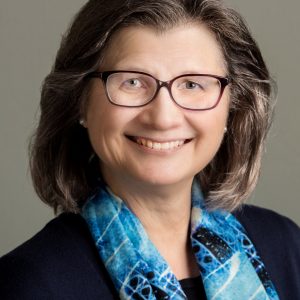
Maryellen L. Giger, Ph.D. is the A.N. Pritzker Distinguished Service Professor of Radiology, Committee on Medical Physics, and the College at the University of Chicago. She serves as Vice-Chair of Radiology (Basic Science Research) and was the immediate past Director of the CAMPEP-accredited Graduate Programs in Medical Physics/Chair of the Committee on Medical Physics. Her career spans over 30 years of pioneering research in computer-aided diagnosis, machine learning, and deep learning applications in medical imaging. Dr. Giger's research focuses on computational image-based analyses for cancer risk assessment, diagnosis, prognosis, and response to therapy, particularly in breast cancer, lung cancer, prostate cancer, lupus, bone diseases, and more recently, COVID-19. Her work has evolved from developing computer-aided diagnosis systems to utilizing 'virtual biopsies' in imaging genomics association studies for discovery. She has made significant contributions to quantitative imaging, radiomics, and AI applications in medical imaging, with emphasis on translating research into clinical practice. Her publication record shows a clear trajectory from foundational work in computer vision for medical imaging to cutting-edge AI and deep learning applications. The recent publications demonstrate her leadership in large-scale collaborative efforts like the Medical Imaging and Data Resource Center (MIDRC), focus on health equity through AI analysis, and expansion into diverse applications including gynecological imaging, lung cancer screening, and trauma assessment. Her work consistently bridges technical innovation with clinical relevance. Dr. Giger has received numerous prestigious honors including membership in the National Academy of Engineering, the William D. Coolidge Gold Medal (the highest award from AAPM), and being named one of the 50 most impactful medical physicists in the last 50 years. She is a Fellow of multiple professional societies including AAPM, AIMBE, SPIE, SBMR, and IEEE. Her 2019 TIME magazine recognition for QuantX, the first FDA-cleared machine-learning-driven system for cancer diagnosis, highlights her translational impact. As an educator and mentor, Dr. Giger has guided over 100 graduate students, residents, and medical students throughout her career. She has secured substantial research funding including NIH R01 grants and serves as contact PI for the NIH NIBIB-funded & ARPA-H-funded Medical Imaging and Data Resource Center (MIDRC). Her leadership extends to former presidencies of the American Association of Physicists in Medicine and SPIE, and she was the inaugural Editor-in-Chief of the SPIE Journal of Medical Imaging. Dr. Giger co-founded Quantitative Insights, Inc. through the University of Chicago's New Venture Challenge, which developed QuantX - the first FDA-cleared AI system for cancer diagnosis. She leads the Medical Imaging and Data Resource Center (MIDRC), a critical resource for AI development in medical imaging that received the 2023 DataWorks Prize. Her research laboratory bridges engineering, physics, and clinical medicine to develop and validate quantitative imaging biomarkers and AI tools for precision medicine.
Daehyeok Kim is an Assistant Professor in the Department of Computer Science at The University of Texas at Austin, where he co-leads the UT Networked Systems Research Group and participates in the Wireless Networking and Communications Group and 6G@UT. He serves as co-PI for the LDOS NSF Expeditions in Computing project, a major initiative rethinking operating systems through AI. His educational background includes a Ph.D. in Computer Science from Carnegie Mellon University under advisors Vyas Sekar and Srinivasan Seshan, where his dissertation introduced abstractions for elastic in-network computing. He also earned B.S. and M.S. degrees in Computer Science and Engineering from POSTECH, South Korea, followed by research scientist work at KAIST prior to his Ph.D. Kim's research centers on hardware-software co-design for cloud and edge data centers, targeting speed, efficiency, and resilience. Key projects include resource management for programmable infrastructure, robust cellular network design, end-to-end network transport frameworks, and learning-directed operating systems. His work bridges computer networks, operating systems, distributed systems, and 5G/6G technologies, with emphasis on virtualized radio access networks (vRAN) and edge computing challenges. Analysis of his recent publications reveals a dominant focus on enhancing 5G/6G infrastructure reliability—particularly in virtualized RANs—through innovations in failover mechanisms, integrity protection, and latency-sensitive resource allocation. His research consistently addresses critical industry pain points like sub-second availability requirements, fronthaul security vulnerabilities, and end-to-end service-level objective (SLO) guarantees for mobile-edge applications. Notable scientific awards include: NSF CAREER Award (2025) for advancing cloud hardware efficiency Microsoft Research PhD Fellowship (2019) Bronze Award at Samsung HumanTech Paper Awards (2018) Qualcomm Innovation Awards (2016) His grant portfolio features leadership in the $10M+ LDOS NSF Expeditions project and the NSF CAREER award, both driving transformative work in AI-integrated operating systems and resilient network infrastructure. These projects demonstrate strong industry-academia collaboration with Microsoft Research, wireless vendors, and cloud providers. Kim co-leads the UT Networked Systems Research Group, which operates within the Wireless Networking and Communications Group and 6G@UT consortium. These labs maintain a 5G/6G testbed for Open RAN validation and focus on solving real-world problems in cellular infrastructure, edge computing, and network security through close partnerships with industry leaders.
Fabrizio Esposito is an Associate Professor of Private Law at the NOVA School of Law (NOVA University Lisbon), where he coordinates the Master's in Law Applied to Technology (Law&Tech) and the NOVA Data-Driven Law Knowledge Center . He is also a Librarian Professor and researcher at the NOVA Consumer Lab , and directs the MetaLawEcon network while serving as an analyst for EU Law Live . Education: LL.B. in Law (2011) from Bocconi University; LLM (2015) and PhD (2018) in Comparative, European and International Law from the European University Institute. Research Areas focus on the intersection of Private Law, Economic Law, European Law, and Legal Theory , particularly analyzing Consumer Law, Data Protection, Competition Law , and sector-specific legislation to address technological challenges in the Attention Economy . Current work explores price personalization and harm theories in Consumer Law, emphasizing consumer data collection and regulatory innovation. Publications span journals like Computer Law & Security Review , Journal of Consumer Policy , and European Competition Journal , alongside co-edited volumes on Research Methods in Consumer Law (2018) and Economics in Legal Reasoning (2020). His forthcoming monograph redefines Law and Economics research paradigms by prioritizing consumer interests.
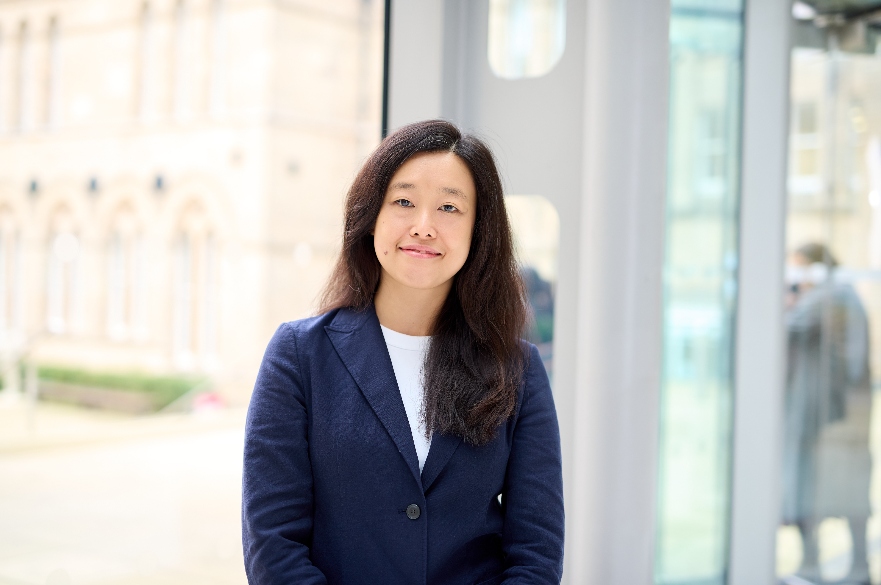
Dr. Elaine Chen serves as Senior Lecturer in Business Analytics and Course Leader for the MSc Business Analytics and Artificial Intelligence at Nottingham Business School, Nottingham Trent University. Her teaching emphasizes practical applications of data and AI technologies for business decision-making, with dedicated focus on accessibility for diverse student backgrounds across technical and strategic domains. Her academic credentials include: PhD in Computing Science MSc in Business Information Technology Postgraduate Certificate in Academic Practice BTech (Hons) in Business Information Systems Chen's research bridges educational and business contexts through data-AI integration: Generative AI adoption in higher education, particularly for neurodivergent/disabled students Human-AI collaboration frameworks in organizational settings SME applications for AI-driven efficiency and competitiveness Workforce analytics and talent management systems Her work consistently connects technical AI capabilities with real-world implementation challenges. Publication analysis (2023-2025) reveals accelerating focus on generative AI's educational impact and business strategy integration, evolving from her foundational work in social recommender systems (2014-2020) which established methodologies now applied to contemporary AI challenges in business contexts. Her professional recognition includes: Senior Fellow of the Higher Education Academy (HEA) Chen actively supervises PhD candidates in AI education, human-AI collaboration, and workforce analytics domains. Her pedagogy leadership includes designing accredited business analytics curricula and securing teaching innovation projects with documented outcomes in student engagement metrics. Prior industry experience as an automation engineer at Intel informs her practical approach to AI implementation. Current initiatives focus on generative AI ethics frameworks and longitudinal SME adoption studies, extending her established research trajectory into emerging business technology challenges.
Nathan Johnson is an Associate Professor at Arizona State University (ASU) within the Ira A. Fulton Schools of Engineering's Polytechnic School. He directs the Laboratory for Energy And Power Solutions and the ASU-Starbucks Center for the Future of People and the Planet, while serving as Assistant Director of Research for the Global Futures Laboratory. His work focuses on sustainable development through energy decarbonization, microgrid innovation, and public-private partnerships. Ph.D. Mechanical Engineering, Iowa State University (2012) M.S. International Development & Mechanical Engineering, Iowa State University (2008, 2005) B.S. Mechanical Engineering, Iowa State University (2004) Research interests span microgrid resilience , energy-water-food nexus , grid modernization , and resource circularity , with applications in defense energy security, global energy access, and climate adaptation. His recent publications examine cascading infrastructure failures, hydrogen's role in decarbonization, and AI-driven solar panel diagnostics, reflecting interdisciplinary work in energy economics , control systems , and climate-resilient infrastructure . Over $70 million in funding includes projects like: DoD-funded microgrid resilience programs ($1.05M, 2022) World Bank climate-adaptive energy solutions in West Africa ($39.95M, 2021) NSF grants for urban resilience modeling ($3.6M, 2019) As leader of ASU's LEAPS initiative, he develops deployable energy solutions for disaster relief and underserved communities, combining hardware innovation with workforce development programs for veterans and civilians.
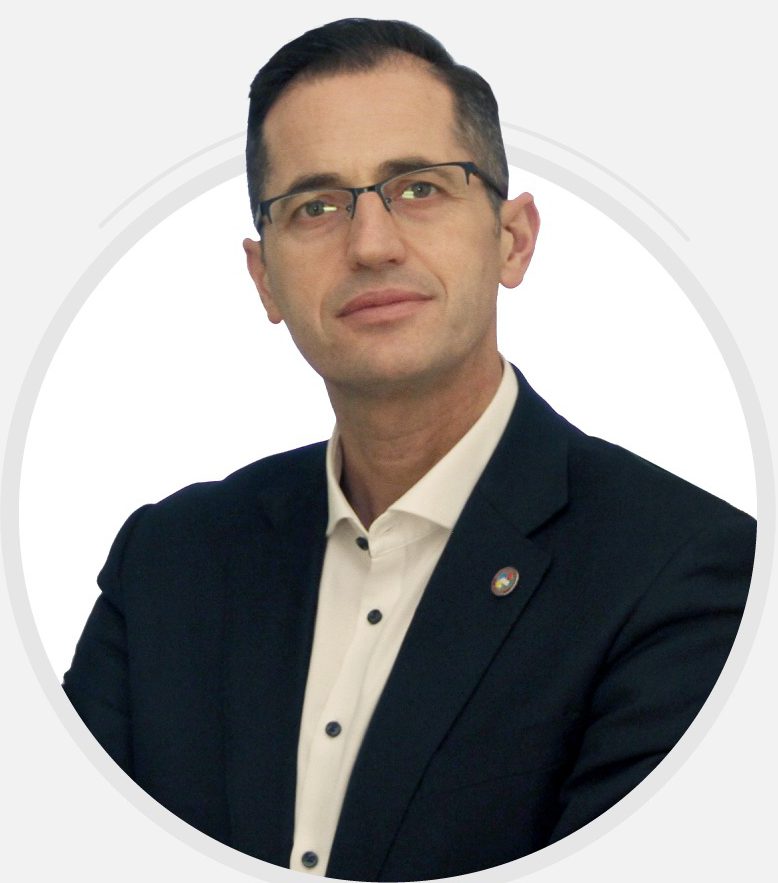
Mislav Balković is an Associate Professor at Algebra University of Applied Sciences, where he has served as Director and Dean since 2000 and 2009, respectively. He drives strategic development for the Algebra Group and contributes to national education policy through roles in expert bodies like the National Council for Science, Higher Education and Technology, and the Accreditation Council of the Agency for Science and Higher Education. Education: PhD (2016) from Faculty of Electrical Engineering and Computing, University of Zagreb Bachelor’s and Master’s degrees from Faculty of Electrical Engineering and Computing, University of Zagreb Research Interests: Mislav’s work bridges Data Science with applications in labor market dynamics , education policy , qualification frameworks , and energy systems . His projects focus on smart grid optimization, digital identity protection, and AI-driven educational reforms. Publications Trends: His recent articles emphasize cross-disciplinary applications , including brain-computer interfaces for image generation, EU labor market analysis , and smart grid resilience . Earlier works explore blockchain-based academic credentials and data analytics in auditing . Grants and Projects: He has led ~50 EU and domestic projects , spanning smart tourist management , lean methodologies for screen creators , and ICT services for alternative communication . His policy work includes drafting laws on adult education and higher education reform. Leadership: Vice President of the Croatian Employers' Association in Education (HUP-UPO) and past President of the Sectoral Council for Electrical Engineering and Computing.
Assoc. Prof. Savaş DURMUŞ is affiliated with Kafkas University , where he has held the position of Associate Professor in the Department of International Trade and Logistics since 2021. He previously served as a Department Head (2019–present) and Deputy Institute Director (2012–2015). His academic journey includes a PhD in Economics (2007–2011) and MSc in Business Administration (2001–2004) from Turkish institutions. Education : PhD, Economics, Celâl Bayar University (2007–2011) MSc, Business Administration, Selçuk University (2001–2004) BA, Business Administration, Atatürk University (1988–1993) Research Interests focus on Development Economics , Macro Economics , and Business Cycles , with a strong emphasis on empirical analysis of economic policy, international trade, and financial systems. His work spans topics like tourism economics, energy sector performance, and regional development. Scientific Contributions include 15+ peer-reviewed articles (2020–2024) on themes such as financial development, Dutch disease, and Industry 4.0. He has co-authored studies on tourism’s impact on growth and cross-country analyses of economic complexity. Editorial Work includes roles as editor for international books like Banka ve Finansal Sistem (2016) and Analysis of Economics Applications (2023). He has collaborated extensively with academics such as Dilek Şahin (27 joint publications) and Hasan Ayaydın (17 joint publications).
Margaret Garcia is an Associate Professor at the School of Sustainable Engineering and the Built Environment , Arizona State University (ASU). She is affiliated with multiple research centers, including the Center for Behavior, Institutions and the Environment (CBIE) , Central Arizona-Phoenix Long Term Ecological Research , Earth Systems Science for the Anthropocene , Water Institute , and Global Futures Scientists and Scholars . Education: Ph.D., Civil and Environmental Engineering, Tufts University (2017) M.S., Civil and Environmental Engineering, University of California-Los Angeles B.S., Civil and Environmental Engineering and B.A., International Studies, Lafayette College (2004) Her research focuses on the sustainability and resilience of urban water systems , using systems analysis to study feedbacks in coupled human-hydrological systems . Key themes include reservoir operations , adaptive infrastructure , water policy , and real-time flood monitoring . Recent work explores equity in water management , institutional dynamics , and green infrastructure optimization . Her 15 most recent publications span topics in socio-hydrology , water policy analysis , climate change adaptation , and urban flood modeling , with applications to the Western Water Network , Colorado River Basin , and transboundary regions like Ambos Nogales. Collaborative projects include NSF-funded initiatives on adaptive reservoir operations , cross-scale interactions , and community-based flood awareness . Scientific Awards: NSF CAREER Grant 1942370 (2020) She mentors students in Ph.D. programs (e.g., Ashish Shrestha , Behshad Mohajer ) and Master’s programs (e.g., Dillon Nys , Krista Lawless ). Her teaching includes graduate courses on research, reading, and thesis advising, alongside undergraduate hydrology classes.
Miroslaw Staron is a Professor of Interaction Design and Software Engineering at Chalmers University of Technology. He maintains a unique 50/50 work arrangement, spending half his time on field research at Ericsson while holding his academic position. His research bridges academic theory with industrial practice through collaborations with major companies including Volvo Car Corporation and Volvo Information Technology. His research spans several key areas in software engineering: Software metrics and measurement systems in industry Model driven software development and empirical studies Defect prediction in software projects Requirements engineering in model-based development Applications of AI and machine learning in software engineering Automotive software development and security Staron's recent work demonstrates a strategic shift toward integrating AI technologies into software engineering processes, with particular focus on automotive applications. His publications from 2024-2025 reveal expertise in generative AI applications for code review automation, testing methodologies, and requirements engineering, showing how these technologies can transform traditional software development practices while addressing domain-specific challenges in automotive systems. Current research projects include: Kvantdatorer för framtidens mobilitetslösningar (2025-2027) Automatiserad och designoptimerad programvarukonstruktion/kodgenerering (2025-2029) Förvandla fordonsarkitektur med hjälp från AI (2021-2023) Arkitektonisk design och verifiering/validering av system med maskininlärning komponenter (2020-2024) With 78 publications documented in Chalmers' research database, Staron has established himself as a significant contributor to evidence-based software engineering research with strong industrial relevance.
Brenna Argall is an Associate Professor at Northwestern University with joint appointments in the Departments of Computer Science, Mechanical Engineering, and Physical Medicine & Rehabilitation . She is also a Faculty Research Scientist at the Shirley Ryan AbilityLab , the nation’s premier rehabilitation hospital. Her research focuses on robotics autonomy, machine learning, and human rehabilitation , particularly in developing assistive and rehabilitation robotics that utilize shared control and interface-aware intelligence to enhance user autonomy. Education: Ph.D. in Robotics (2009), Carnegie Mellon University M.S. in Robotics (2006), Carnegie Mellon University B.S. in Mathematics (2002), Carnegie Mellon University Research Interests: Argall's work sits at the intersection of robotics, artificial intelligence, and rehabilitation . Key themes include trust-based control systems, dynamic autonomy allocation, and human-in-the-loop machine learning . Her lab, the Assistive & Rehabilitation Robotics Laboratory (argallab) , develops semi-autonomous wheelchairs, robotic arms, and adaptive control systems tailored to users’ physical and cognitive abilities. Projects emphasize customizable shared control, intent inference, and human-robot collaboration . Article Trends: Recent publications highlight advancements in shared autonomy, interface-aware robotics, and human-robot co-adaptation . Key areas include 7-DoF robot arm teleoperation, eye gaze tracking for control, high-dimensional body-machine interfaces, and trust-based dynamic control allocation , reflecting her lab’s focus on user-centric AI and rehabilitation technology . Scientific Awards: NSF CAREER Award (2016) Crain's Chicago Business 40 under 40 (2016) NSF Convergence Accelerator Phase 1 & 2 Awards (2022, 2024) AIMBE College of Fellows (2023) Office of Naval Research (ONR) Grant Advising & Grants: Argall advises students in the Masters of Science in Robotics program and has secured significant funding from NSF, NIH, and ONR for projects on self-driving wheelchairs, intent disambiguation, and trust-aware autonomy . Labs & Teams: As founder and director of the argallab , she leads a multidisciplinary team at the Shirley Ryan AbilityLab . The lab’s mission is to advance human ability through robotics autonomy , focusing on motor-impaired users and human-robot co-adaptation .
Dr. Olga Oleinikova is an Associate Professor and Director of the Social Impact Technologies and Democracy Research Hub (SITADHub) within the School of Communication at the University of Technology Sydney (UTS), Australia. Internationally recognized for her contributions to research and social impact, she has been named among Forbes Top 40 Global Ukrainians and Forbes 30 Under 30 Asia. She was also a finalist for the Australian Council of Humanities, Arts and Social Sciences (CHASS) Future Leader Award. Her educational background includes a PhD in Sociology from the University of Sydney (2016), with prestigious research fellowships at Oxford University's European Studies Centre (2018-2019), Charles University in Prague (2023-2024), and the WZB Berlin Social Science Center (2015). Dr. Oleinikova's research focuses on migration studies (particularly Eastern European migration to Australia), democracy studies, diaspora politics, and social impact technologies. Her work examines life strategies of migrants navigating displacement, democratic performance in Ukraine and Europe, and the intersection of technology and democracy. She has developed a theoretical framework distinguishing between 'achievement life strategies' and 'survival life strategies' among migrants from crisis regimes. Her publication portfolio includes several acclaimed works, with her most recent book 'New Eastern European Migration to Australia: From Ukraine, Czech Republic and Hungary' (Palgrave, 2023) examining new migration patterns. Her research demonstrates consistent focus on Eastern European migration, diaspora politics, and democratic development, with increasing attention to technology's role in democratic processes. Forbes Top 40 Global Ukrainians Forbes 30 Under 30 Asia CHASS Future Leader Award Finalist Visa People's Choice Award Anthill 30 Under 30 Winner Dr. Oleinikova has secured over $3 million in funding for social and commercial initiatives. She serves on several nonprofit boards, acts as an advisor to the Australia-Ukraine Chamber of Commerce, and mentors through the 1991 Open Data Incubator and Future Schools Australia. She founded the SITAD Visiting Fellowship Program, supporting Ukrainian early-career researchers and postgraduate students. Her media reach is substantial, with expert commentary featured in BBC News, Bloomberg, ABC News, CNA, The Conversation, Politico, SBS, and KyivPost, reaching an estimated 9.1 million people. She has delivered more than 30 keynote and invited talks at leading institutions worldwide. SITADHub, which she founded and directs, is a dynamic networked research center with 170 associates across 16 countries actively researching democracy, human-computer interaction, and global mobility, with a focus on Ukraine and broader Eastern Europe. The hub conducts unique research and maintains university partnerships throughout Europe and the Asia Pacific, including with WZB Berlin Social Science Research Centre, University of Oxford, and University of Sydney.
Damon P. Coppola is an Adjunct Assistant Professor at the School of Public Health , specializing in disaster management and emergency preparedness. His work bridges academic theory with practical application through publications and educational campaigns. Key Roles : Adjunct faculty, Author, Emergency Preparedness Educator Research Focus : Coppola’s research emphasizes global disaster management frameworks, risk communication, and climate change adaptation. His publications explore: Incident command systems in international contexts Technological and intentional hazards Humanitarian spending and stakeholder coordination Practical strategies for public and private sector preparedness Climate resilience and geospatial technologies Publications : His works span recent to historical analyses, including: The Path of Flames (2023) on wildfire response Introduction to Homeland Security (2020) on national security frameworks Communicating Emergency Preparedness (2017) on behavioral change campaigns Living with Climate Change (2017) on adaptation strategies
Prof. Blerim Rexha is a full professor at the University of Prishtina's Faculty of Electrical and Computer Engineering, Kosovo. With a Ph.D. in Computer Engineering from Vienna University of Technology (2004), he has led research in cybersecurity, blockchain, machine learning, and electronic voting systems. His teaching portfolio includes data, computer, and internet security courses. Education : Ph.D. in Computer Engineering (Vienna), Electrical Engineer MSc (Prishtina), specialized certifications in software engineering, biometrics, and .NET programming. His research spans cybersecurity (DDoS mitigation, face authentication attacks), blockchain applications (electronic voting bridges, transaction privacy), and machine learning integration (boosted trees for intrusion detection, LSTM for vulnerability scanning). He has contributed to cloud security through novel encryption methods and AI-driven attack detection. Recent publications focus on energy efficiency in cloud vs on-premises systems, XGBoost/CatBoost/LightGBM comparisons for network security, and blockchain bridges for e-voting. His work has addressed privacy preservation in video data, SMS encryption, and eID card pseudo-profiles. Awards include the 2024 Marin Barleti Prize for academic contributions and Best Paper Awards in election security (2015) and Kosovo website vulnerabilities (2013). Honors : Marin Barleti Prize (2024) Cyber Security Ambassador (2018) ICT Academician of the Year (2016) Best Paper Awards (2015, 2013) As academic advisor to the KosovaCyberTeam , he mentors students like Korab Keqekolla and Abian Morina. His leadership extends to Kosovo's Cyber Security State Training Center curriculum development and jury roles in Albanian ICT Awards .