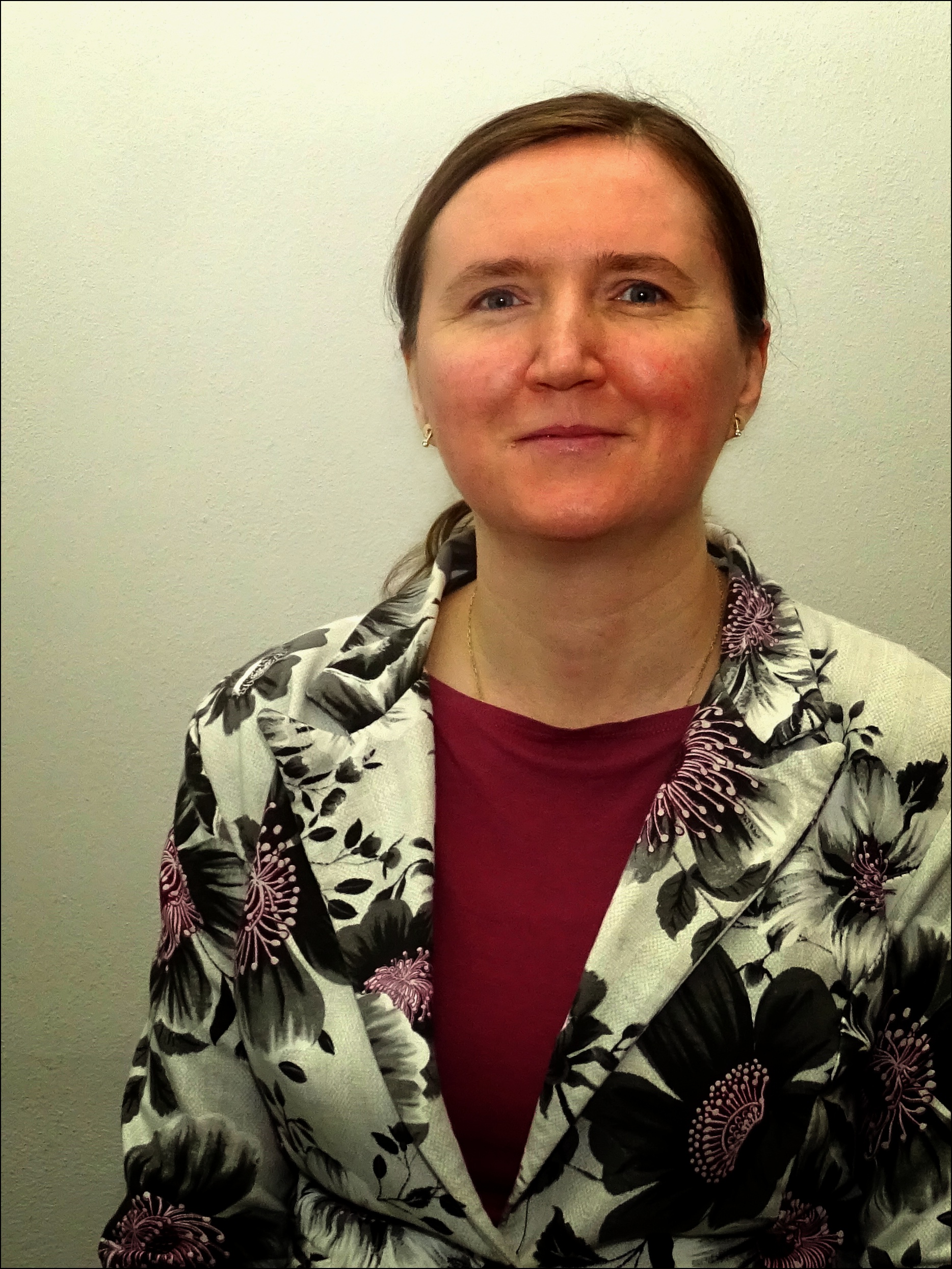
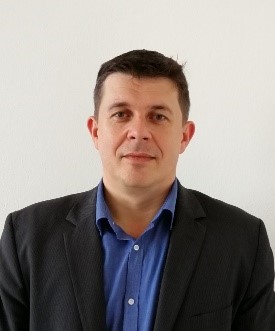
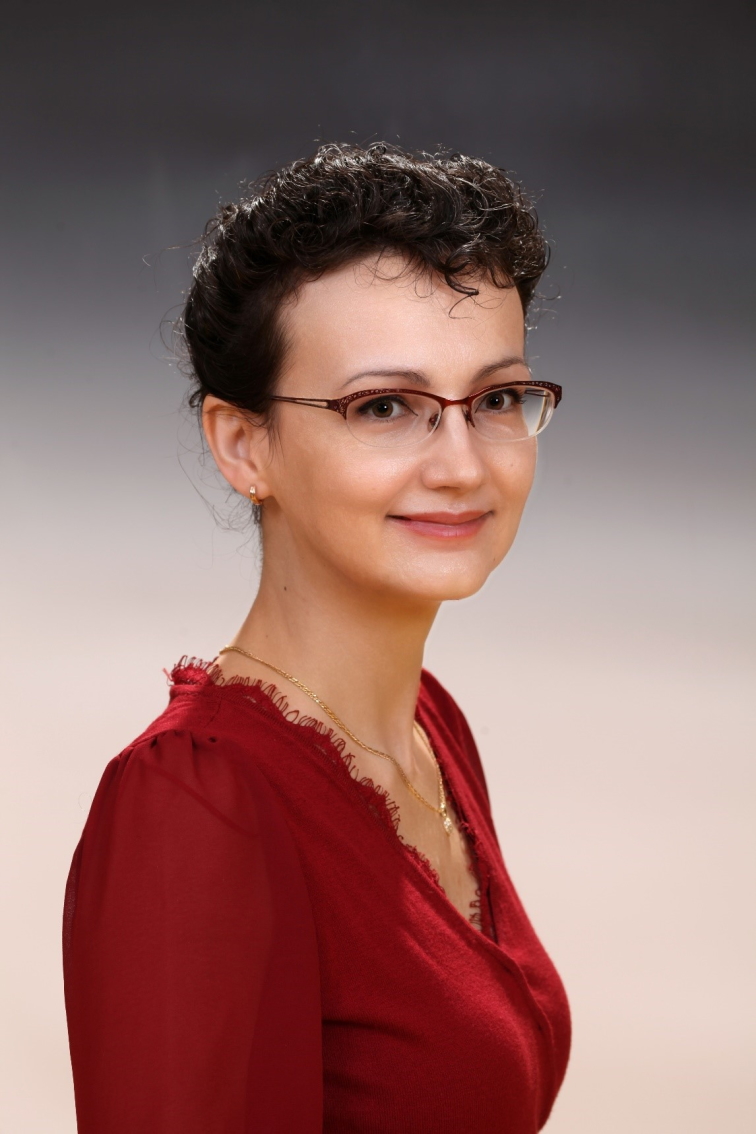
Zita Jenisová is an Associate Professor at the Department of Chemistry, Faculty of Natural Sciences, University of Nitra, where she has worked since 1998. Her habilitation thesis Teaching Chemistry in the Digital Age (2015) established her as a leading figure in chemistry education and ICT integration. Education: Comenius University (1997), UKF Nitra (2000, 2009) Research Focus: Chemistry Education, ICT in Teaching, Science Experimentation Her publication trends emphasize the use of digital tools and empirical methods in chemistry education. She has authored monographs like Teaching Chemistry in the Context of Contemporary Requirements (2015) and textbooks on safe laboratory practices. Her work often bridges traditional pedagogy with modern technology, including computer-aided experiments and multimedia resources for secondary schools. Jenisová's contributions extend to environmental education through works like Environmental Aspects of the Urban Environment (2013). While no scientific awards are listed in the provided text, her habilitation process (completed in 2015) underscores her academic authority. She has no listed advisees or grants in the available data.
Adam Dudáš is an Assistant Professor at the Department of Computer Science within the Faculty of Economics at Matej Bel University . His roles include teaching, research, and project participation in data analysis and computational theory. Current academic affiliation: Matej Bel University, Faculty of Economics, Department of Computer Science PhD studies completed at Department of Computer Science, Faculty of Mathematics, Physics and Informatics, Comenius University in Bratislava Research interests focus on visual, correlation, and predictive data analysis combined with pattern recognition. He specializes in using hybrid approaches to identify critical dataset structures for analytical models. Teaching contributions include courses on: Bachelor's level: Database Systems 1 & 2, Analysis of Sizeable Data, Operating Systems 1 Master's level: Compilers, Computability Theory, Analysis of Multidimensional and Big Data, Artificial Intelligence Research projects participated in: VEGA 1/0487/17 (2017-2019) KEGA 009ŽU-4/2020 (2020) KEGA 018UMB-4/2020 (2020-2022) ERASMUS+ 2021-1-RO01-KA220-HED-000030286 (since 2022)
Blažej Bucha is a Lecturer at the Department of Theoretical Geodesy and Geoinformatics , Slovak University of Technology in Bratislava. His research focuses on high-degree spherical harmonic synthesis, gravity field modeling of celestial bodies, and computational geodesy. Developed open-source software packages: GrafLab (gravity field visualization), CHarm (spherical harmonic transforms), and SRBF (regional gravity modeling). Key research areas include planetary geodesy (Moon, asteroid Bennu), divergence-free spherical harmonic expansions , and high-resolution gravitational mapping at scales down to 2 arc-seconds. Highest academic contributions involve ultra-high-degree harmonics (n=21600) and 256-digit precision calculations for resolving divergence effects. His work has applications in geoid determination, gravitational tensor analysis, and geophysical interpretation. Co-authored 15+ peer-reviewed papers in Journal of Geodesy , Geophysical Research Letters , and Computers & Geosciences . Developed grav-sr-2arcsec (Slovak Republic's gravitational maps) and GMSQ2019 (gravimetric quasigeoid at 2" resolution). Teaching activities include co-authoring the textbook Fyzikálna geodézia (2023) and delivering lectures on Physical Geodesy .
Marek Kvetan, an Assistant Professor at the Academy of Fine Arts, Bratislava, Slovakia , specializes in Visual Communication , Intermedia Art , and Digital Media . His work interrogates the intersection of technology , urban environments , and psychological states , often employing installations , drawings , and photographic series . Kvetan’s exhibitions, such as Reconfiguration (2020) and ECHO (2018), explore cybernetic aesthetics and digital erasure . His research and practice span digital art , new media , and spatial objects , with a focus on urban peripheries and technological interfaces . Articles like www.google.com (2000) and New City (Prague) (2002–2004) analyze information membranes and corporate abstraction . Scientific Awards : Laureate, Novum Foundation (2016); Finalist, Henkel Art Award (2010); Laureate, NG 333 Award (2008); Grand Prix, Triennial of Contemporary Slovak Graphics (2003).
RNDr. Zuzana Gibová, PhD is a Lecturer at the Department of Physics , Faculty of Electrical Engineering and Informatics , Technical University of Košice , Slovakia. She specializes in physics education with a focus on mechanics, thermodynamics, and educational technology . Teaches Mathematics II and Numerical Methods, Probability and Mathematical Statistics Develops interactive teaching materials including applets and video experiments Research Interests : Her work concentrates on enhancing physics instruction through: Dynamic modeling in Coach software Video measurement techniques Development of laboratory exercises Didactic material creation Improving physics education via technology Recent Publications highlight her contributions to physics teaching, including: Interactive physics applets Rotational motion analysis Thermodynamics education Video-based experimental physics Conservation laws in mechanics Teaching Materials available include: Mechanical motion of particles and bodies (2014) Physics with applets video series Supplementary materials for waves and fields
Jozef Bucko is an Associate Professor and Head of the Department of Applied Mathematics and Economic Informatics at the Technical University of Košice's Faculty of Economics. With expertise spanning information security, consumer behavior analytics, and graph theory, he leads research initiatives in digital transformation and contributes to electronic commerce education. Professional interests include: Digital data analysis and decision support systems Electronic marketing and business security Graph theory applications in computer science Smart supply chain data sharing Current research focuses on consumer behavior modeling in e-commerce, energy consumption analytics, and security frameworks for digital services. He coordinates EU-funded projects like NICE (Inter-Institutional Cooperation in Entrepreneurial Education) and national VEGA research on socio-economic data sharing. Notable projects include: Erasmus+ NICE Network (2020-2023) as researcher VEGA 1/0873/21 Smart Supply Chain Data Sharing (2021-2022) as researcher VEGA 1/0201/19 Decision Support Systems (2019) as Deputy Project Leader OPVal-MH/DP/2018 Machine Learning in Health Insurance (2020-2022) as coordinator His teaching portfolio includes: Informatics I Economic Information Systems Decision Support Systems Electronic Services in Banking Contact: jozef.bucko@tuke.sk
Professor Tibor Kmeť is a distinguished academic at J. Selye University's Faculty of Economics and Informatics, where he serves as a Professor in the Department of Informatics. He has been affiliated with the university since 2006 and holds significant responsibilities as the person responsible for multiple study programs including Teaching of Informatics, Applied Informatics, and Theory of Teaching Mathematics and Informatics. Dr. Kmeť completed his higher education at Comenius University in Bratislava, where he earned his degree in Mathematics from the Faculty of Science (1975-1980), followed by rigorous examinations (1981), doctoral studies (1984-1987), and habilitation (1996), all in Mathematics. In 2006, he completed his professorial inauguration at Constantine the Philosopher University in Nitra in the Theory of Mathematics Education. His research spans multiple domains at the intersection of mathematics, computer science, and education. Professor Kmeť has made significant contributions to neural network applications in solving complex mathematical problems, particularly in optimal control theory and epidemiological modeling. His work on applying computational methods to educational contexts, especially in mathematics education, demonstrates his commitment to bridging theoretical research with practical applications. He has also conducted important research in geometry education, developing methods for visual explanation in dynamic geometry environments. An analysis of his recent publications reveals a consistent focus on applying neural networks and computational methods to solve complex mathematical problems. His research trajectory shows progression from foundational work on neural network solutions for optimal control problems to more applied work in epidemiological modeling and educational technology. The interdisciplinary nature of his work is evident in publications spanning computer science, mathematics, epidemiology, and education journals. Professor Kmeť has successfully led multiple research projects including 'Digital Smart Household' (2019-2020), 'Creation of 3D Model Based on Drone Photographs Using Photometric Method' (2019-2021), and 'Modeling Stock Market Rates Using Neural Networks' (2020-2021), demonstrating his ability to secure research funding and lead projects with practical applications. His academic career includes previous positions at Constantine the Philosopher University in Nitra (1992-2017) and the Institute of Experimental Biology and Ecology SAS Bratislava (1980-1992), where he served as an independent scientific worker and researcher. This diverse background has informed his interdisciplinary research approach that combines mathematical rigor with practical applications in various domains.
Ondrej Takáč, PhD is an Associate Professor and Head of the Department of Informatics at the Faculty of Economics and Informatics, J. Selye University. He has been actively contributing to academia since 2012, advancing from Senior Lecturer to his current position as Associate Professor in 2023. His leadership extends beyond teaching as he serves in multiple administrative roles including CEEPUS Local Coordinator for Engineering as Communication Language in Europe since 2012, Member of the Faculty Senate since March 2021, and Member of the Quality Assurance Board since November 2021. His educational background includes dual degrees from Slovak University of Agriculture in Nitra: a degree in Agricultural Engineering from the Faculty of Engineering (2008-2012) and Supplementary Pedagogical Studies from the Faculty of Economic (2010-2012). He completed his PhD in Transport Machinery and Equipment at the Technical Faculty of Slovak University of Agriculture (2008-2012). Takáč's research focuses on three primary areas: Navigation of Mobile Robots, Image Processing, and Didactics Informatics. His work bridges theoretical computer science with practical educational applications, particularly through the development of animation-simulation models for educational purposes. His research demonstrates a consistent trajectory toward increasingly sophisticated educational technologies, culminating in current work on intelligent animation-simulation models for deep learning applications. His publication portfolio shows significant productivity with 116 total publications including 56 scientific outputs (28 book chapters and 28 journal articles), 8 professional outputs, and 47 other monitored publications. His work has garnered 189 citations, with 24 appearing in citation indexes, indicating growing international recognition of his contributions to educational technology and informatics. In his administrative capacity, Takáč serves as Study Advisor for the master's degree program Applied Informatics since 2022, and as of 2024, he has joined both the Commission for the Doctoral Study Program in Teaching Theory of Mathematics and Informatics and the Disciplinary Committee for Students at the Faculty of Economics and Informatics. His grant activity centers around KEGA projects focused on educational simulation models, with continuous funding from 2011 through 2024. Takáč leads the Department of Informatics and has been instrumental in developing educational simulation resources. His ongoing research projects suggest a strong commitment to advancing deep learning applications in educational contexts, with the most recent project (014TTU-4/2024) focusing on intelligent animation-simulation models for deep learning environments.
Vladimír MUCHA serves as an Associate Professor in the Department of Mathematics and Actuarial Science at the Faculty of Economic Informatics, University of Economics in Bratislava. His academic career began in 2001 as an assistant, progressing to odborný asistent (assistant professor) in 2002, and achieving associate professor status in 2015. He teaches core courses including Mathematics for Economists, Probability Theory I/II, Non-Life Insurance, Risk Theory in Insurance I/II, and Software Applications for Actuaries. Education: Master's degree in Teaching of General Education Subjects (Mathematics-Physics), Faculty of Mathematics and Physics, Comenius University in Bratislava (1994-1999) PhD in Statistics, Faculty of Economic Informatics, University of Economics in Bratislava (2002-2007) Habilitation (docent) in Quantitative Methods in Economics, Faculty of Economic Informatics, University of Economics in Bratislava (2015) Research Interests: Professor MUCHA specializes in Actuarial Science with emphases on Risk Theory in Insurance, Stochastic and Simulation Processes in Non-Life Insurance, and Software Applications for Actuaries. His work bridges theoretical modeling with practical computational implementation, particularly in claim distribution analysis, risk quantification (CVaR), and capital requirement calculations. He actively develops tools using Microsoft Excel, VBA, and R for actuarial data visualization and simulation. Publication Trends: His 2012-2016 publications reveal a consistent focus on non-life insurance risk modeling using advanced statistical techniques. Key methodologies include Monte Carlo simulation for solvency assessment, bootstrap methods for risk measurement, extreme value theory for threshold analysis, and dynamic data visualization. His research demonstrates strong industry relevance through applications of quantitative finance principles to real-world insurance portfolio management. Scientific Awards: No specific awards are documented in the available information. Advising and Grants: While no student names or grant details are listed, his departmental research profile indicates active involvement in projects under the "Science and Research" section of the Department of Mathematics and Actuarial Science. His computational focus suggests participation in software-driven research initiatives. Labs and Teams: He operates within the Department of Mathematics and Actuarial Science, which maintains external partnerships with the Slovak Society for Economic Informatics, Slovak Society of Actuaries, Slovak Chamber of Auditors, and Slovak statistical and demographic Society. The department participates in international conferences including the Managing and Modelling of Financial Risks series.
Peter Schmidt is an Associate Professor at the Department of Applied Informatics, Faculty of Economic Informatics, University of Economics in Bratislava. His work focuses on computer networks , distributed data processing , and education technology , particularly in e-learning and digital transformation . He has co-edited proceedings for the TIEES conference series and contributed to research on business process modeling gamification in education cloud computing security . His research trends emphasize digital tools in education , with recent work analyzing Microsoft Teams , Skype for Business , and Office 365 . He explores data security challenges, including tokenization and privacy risks in virtual environments. Publications also address public administration digitization, such as local government data systems and process improvements . Key collaborations include Jaroslav Kultan, Pavol Jurík, and Igor Košťál. While no awards are explicitly listed, his grant projects (e.g., KEGA 019EU-4/2020) highlight funding for education technology . He teaches Distributed Data Processing and Computer Networks , advising on integrating informatics into economics and management.
Pavol Jurík serves as an Assistant Professor at the Department of Applied Informatics within the Faculty of Economic Informatics at the University of Economics in Bratislava. He holds the additional role of Secretary of the department. His academic work focuses on advancing information systems and educational technologies. Research Interests: Jurík's research spans distributed systems, e-learning methodologies, business process optimization, and emerging technologies. Key areas include: Innovations in educational technology and networked learning systems Distributed database architectures and sensor network optimization Business process modeling using composition diagrams Impact of big data analytics on decision-making processes Development of ERP systems and supply chain management tools Publication Trends: Recent works (2019-2022) demonstrate a strong focus on e-learning effectiveness, distributed computing solutions, and business process modeling. Jurík frequently collaborates on international publications examining technological innovations in education and industry applications. Grants and Projects: Actively participates in research grants including VEGA 1/0373/18 (Big Data processing) and KEGA 019EU-4/2020 (Networked Education). Contributes to international conferences such as TIEES and AIESA.
Pavol Sojka is a PhD student at the Department of Applied Informatics , Faculty of Economic Informatics , University of Economics in Bratislava. He teaches courses such as Algoritmy a programovanie 1 , Jazyk R , and Python , focusing on programming and data analysis.
RNDr. Ján Lacko, PhD is the Dean of the Faculty of Informatics at Paneurópska Vysoká Škola and heads the Laboratory of Virtual and Augmented Reality (part of the global VR First network). His teaching focuses on web technologies, visual computing, multimedia, 3D modeling, animation, and virtual/augmented reality. His research centers on applications of virtual reality in healthcare, museum data presentation, education, and industry. He has led multiple research projects including: InovEduc (Nórsky fondy, 2015) Multimedia & Communication in Education & Science (NAWA, 2019) Methods of virtual reality for stroke rehabilitation (GAAA, 2015) Early Warning of Alzheimer (OPVaI, 2020) Advanced AI applications in industrial/medical domains (GAAA, 2015) With 50 publications and 116 citations, his work is accessible through Google Scholar and ResearchGate.
Dr. Karin Patúcová Lunterová is an Assistant Professor at the Department of Applied Arts - Studio of Ceramics, Slovak University of Visual Arts (VSVU) in Bratislava. Her academic work focuses on ceramic techniques and artistic craftsmanship. She teaches ceramic art and material studies, emphasizing sculptural ceramics and applied arts. Education details are not explicitly provided in the text, but her ArtD. (Artist Doctor) qualification suggests advanced academic training in artistic disciplines. No listed research awards or grants are mentioned in the available data. Her professional profile includes a website ( patuc-art.sk ) and active social media presence. No current lab affiliations or collaborative teams are documented in the provided text.
Melinda Nagy is a Professor at the Department of Biology, Faculty of Education at Selye János Egyetem (János Selye University) in Komárno, Slovakia. She holds academic titles including Dr. habil., PaedDr., and PhD. Her research focuses on biology, anthropology, genetics, physiology, and pedagogy. She has been affiliated with the university since 2004. Education: PhD in Biology from Prešov University Habilitation in Anthropology from Eszterházy Károly University Doctoral studies in Anthropology at Prešov University Initial teacher training in Biology and Art Education at Prešov University Research Interests: Dr. Nagy's work spans multiple disciplines, emphasizing genetic studies of Roma populations, health pedagogy, and livestock biology. Her projects include analyzing mastitis in dairy sheep, bioimpedance for sarcopenia prevention, and sleep habits in schoolchildren. She actively collaborates on EU-funded initiatives like Horizon2020 projects addressing educational inequality and health literacy. Grants & Projects: School-Community Partnership for Reversing Inequality (Horizon2020) Innovative Digital Development of Health Pedagogics (Erasmus+) Genetic Studies on Bone Mineral Density in Roma Women (VEGA) Labs/Teams: Leads interdisciplinary teams in health pedagogy and molecular genetics research. Active in international collaborations through Visegrad Fund and Erasmus+ programs.