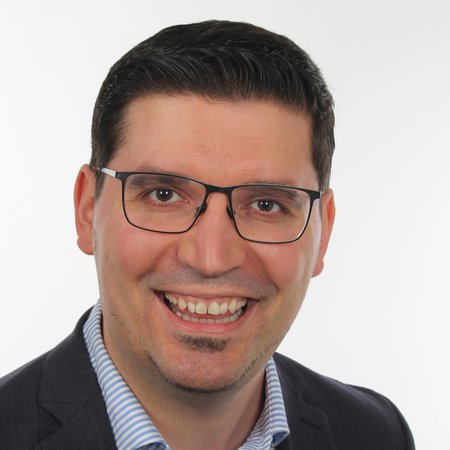
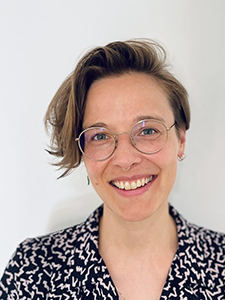
Odile Sauzet is an Adjunct Professor at Universität Bielefeld , affiliated with the Faculty of Health Sciences and the Working Group 3 Epidemiology & International Public Health . She also holds positions in the Faculty of Economics (Chair of Statistics and Data Analysis) and the Faculty of Business Administration and Economics (Department of Empirical Methods).
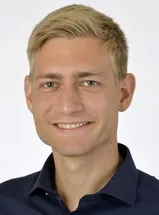
Andreas Gollenstede is a researcher at Jade University's IAPG Institute (Oldenburg campus). He contributes to projects focused on digitization, geospatial analysis, and visualization, including the DiViAS research network (2023-2026) funded by *zukunft.niedersachsen* and the WorldPop project (2023-2025) supported by the Bill & Melinda Gates Foundation. His work addresses challenges in optical 3D metrology, GIS workflows for disaster management, and augmented reality applications in tourism. Research interests include: Digitization of collection items from colonial contexts Geospatial data infrastructure (e.g., Lower Saxony's GDI-NI evaluation, 2007-2008) Automated GIS raster data processing Augmented reality map development using OpenCV and .NET He collaborates with institutions like the Federal Office for Cartography and Geodesy and supervises student theses in geoinformatics and related fields. Contact details include phone +49 441 7708-3370 and room G 109.
Mario Nadj is a full Professor holding the Chair for Information Systems and Artificial Intelligence (AI) in Marketing at the University of Duisburg-Essen's Faculty of Computer Science. Previously, he served as an assistant professor and chairholder for Business & Information Systems Engineering at TU Dortmund University and held two deputy professorships at the Karlsruhe Institute of Technology (KIT), where he was also head of the Intelligent Enterprise Systems department. Bachelor's degree in Information Systems from the University of Bamberg Master's degree in Finance and Information Management from Goethe University Frankfurt Doctorate from KIT with highest praise (summa cum laude) Professor Nadj's research spans the intersection of artificial intelligence, information systems, and cognitive science. His work primarily focuses on three interconnected areas: understanding information systems through AI and neuroscience tools, investigating explainability of AI decisions to open the 'black box,' and exploring effective human-AI interaction paradigms. His research integrates methods from neurophysiology and cognitive psychology to study workplace phenomena like flow states and cognitive load in knowledge workers. His publication portfolio shows a clear trend toward human-centered AI systems, with recent work emphasizing interactive explainable AI, physiological computing for flow detection, and human-in-the-loop machine learning systems. The research spans disciplines including information systems, human-computer interaction, cognitive psychology, and data science, with a strong emphasis on empirical validation through laboratory experiments and eye-tracking studies. Vinton G. Cerf Best Student Paper Award at the International Conference on Design Science Research in Information Systems and Technology (2025) Judges' Award for the Accessibility Challenge of the International Web for All Conference (2023) Best Demo Paper Award of the International Conference on Advanced Information Systems Engineering (2021) Business Intelligence Systems among the eleven best rated lectures at KIT Department of Economics and Management (WS 2020/2021) Teaching Award of the Hector School of Engineering & Management - 2nd Place (Intake 2019) Professor Nadj's research is supported by major German companies from the automotive and software industries. His work on interactive labeling systems, physiological computing for workplace flow, and explainable AI has attracted significant industry interest. He collaborates extensively with researchers across Europe, particularly with Alexander Maedche and colleagues at the University of Mannheim. His projects often bridge theoretical information systems research with practical applications in business intelligence, data science, and human-AI collaboration. His research group at Duisburg-Essen focuses on neuro information systems, combining traditional information systems research with neuroscience methodologies. The team has developed tools like brownieR, an R-package for neuro information systems research, and has conducted pioneering work on using EEG to detect flow states in knowledge workers. Current projects emphasize making AI systems more transparent and interactive while optimizing human-AI collaboration in business contexts.
Felix Gessert is a Researcher at the University of Hamburg's Department of Computer Science, affiliated with the Visual and Semantic Information Systems (VSIS) group. He is the CEO and co-founder of Baqend, a company developing web acceleration technology based on his PhD research on caching for cloud computing. His work focuses on cloud systems, NoSQL databases, and scalable data architectures. Research Interests: Cloud Computing, Polyglot Persistence, Scalable Database Systems, Distributed Systems, Web Protocols, Microservices, Probabilistic Data Structures, Stream Processing. Key Projects: Baqend (co-founder), InvaliDB (push-based real-time queries), Orestes (low-latency caching middleware), and Speed Kit (GDPR-compliant caching solution). Publications: Author of 31+ papers on web performance, cloud data management, and NoSQL systems. Notable works include cross-entity delta encoding in web compression, polyglot persistence architectures, and real-time query frameworks. Honors: Junior Fellow of the German Informatics Society (GI); winner of Heureka 2018 (10,000 Euro) and Startups@Reeperbahn 2017 (100,000 Euro). Academic Service: Organizer of workshops and symposia on scalable cloud data management; member of program committees for IEEE Big Data, VLDB, and BTW conferences.
Stefan Adami is an Adjunct Professor at the Institute of Aerodynamics and Fluid Mechanics, Technical University of Munich (TUM), where he leads the 'Nanoshock' research group. He holds a Ph.D. in Mechanical Engineering from TUM and was awarded habilitation in 2022, followed by appointment as Privatdozent in 2023. His academic career at TUM includes roles as research associate, Akademischer Rat, and group leader. Research Interests: Compressible and multiphase flows Numerical modeling and simulation Smoothed Particle Hydrodynamics (SPH) High-speed aerodynamics and shock wave dynamics Applications in additive manufacturing and biomedical fluid mechanics His recent research employs advanced solvers like ALPACA for high-resolution simulations of bubble dynamics, shock interactions, and interfacial flows. He has contributed to modeling in laser-based 3D printing and cavitation-based drug delivery systems. Recent Publication Trends: His 2023–2025 publications emphasize compressible multiphase flows, high-order numerical schemes (WENO-THINC), and applications in materials processing and biomedical engineering. He frequently collaborates on solver development and benchmarking, including large-scale datasets for Riemann problems. Teaching: Lecturer for 'Numerical Methods for Conservation Laws' (Winter Semester) Lecturer for 'Turbulent Flows' (Summer Semester) Previously served as Teaching Assistant for Continuum Mechanics and Computational Solid and Fluid Dynamics Research Leadership: Leader of the 'Nanoshock' research group since 2015 Key contributor to the development of the ALPACA solver for compressible multiphase flows Active in interdisciplinary projects involving fluid-structure interaction and industrial applications
Dr. Johannes Zink is a Post-Doc researcher at the Chair of Efficient Algorithms (Prof. Kobourov) at Technical University of Munich (TUM), Campus Heilbronn since October 2024. Previously, he was a Post-Doc at University of Würzburg (2023-2024) and completed his PhD there under the supervision of Prof. Alexander Wolff. His research focuses on graph drawing, computational geometry, and algorithmic complexity problems. Zink's research interests span multiple areas within theoretical computer science, with particular emphasis on graph drawing algorithms, computational geometry problems, and complexity analysis. His work often involves finding efficient algorithms for geometric representations of graphs, analyzing the segment number of planar graphs, and developing techniques for polyline simplification. He has made significant contributions to understanding upward planar drawings, tangle complexity, and level planarity problems. His publication record shows a strong trend toward geometric graph representations, with many papers focusing on visualization techniques, algorithmic solutions for drawing problems, and complexity analyses. His research combines theoretical insights with practical applications, particularly in visualization systems and geometric data processing. Awards and Recognition Multiple 1st place wins at Graph Drawing Live Challenges (2018, 2020, 2023, 2024) PhD prize from Lower Franconian Memorial Year Foundation (2024) PhD prize from University of Würzburg Institute of Computer Science (2023) Deutschlandstipendium scholarship (2015-2017) Bachelor's thesis prize from University of Würzburg (2016) Zink has supervised numerous bachelor's and master's theses, demonstrating his commitment to mentoring the next generation of researchers. His teaching portfolio includes courses on computational geometry, advanced algorithms, and graph visualization. He has also served on program committees for major conferences including EuroCG 2025 and GD 2023, reflecting his standing in the academic community.
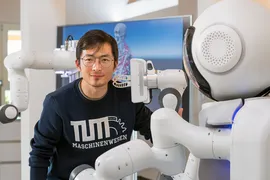
Hao Xing is a scientific researcher and post-doctoral fellow at the Institute for Cognitive Systems (ICS), Technical University of Munich (TUM), working with Prof. Gordon Cheng since May 2024. Previously, he served as a research assistant at the Munich Institute of Robotics and Machine Intelligence (MIRMI) and completed his PhD under Prof. Darius Burschka from 2019. His educational background includes: Master of Science in Mechanical Engineering from Technical University of Munich Bachelor of Engineering in Mechanical Engineering from Hefei University of Technology, China Xing's research focuses on Robot Vision , Human Action Recognition , and Graph Convolutional Networks , with significant contributions to Human-Object Interaction Recognition , Scene Understanding , and Visual Depth Estimation . His work leverages machine learning to develop robust algorithms for human activity analysis and robotic perception, emphasizing spatio-temporal modeling and uncertainty handling in real-world scenarios. Analysis of his 13 recent publications (2019-2025) reveals a dominant focus on graph-based approaches for action recognition and segmentation, with increasing emphasis on open-world applications, uncertainty modeling, and healthcare integration. His research spans computer vision, robotics, and medical applications, demonstrating strong interdisciplinary impact through collaborations in surgical robotics and patient monitoring systems. Xing actively mentors students through master's thesis projects in Stereo Matching, Human Activity Segmentation, and Monocular Depth Estimation, requiring expertise in deep learning frameworks and computer vision algorithms. While no major grants are explicitly mentioned, his thesis topics indicate active research funding in geometric vision and human activity analysis. He operates within the Institute for Cognitive Systems (ICS) at TUM, a key unit in MIRMI's robotics ecosystem focused on advancing human-robot interaction through vision-based scene understanding and motion generation capabilities.
Elena Pilipets is a postdoctoral researcher in Digital Media and Methods at the Collaborative Research Center "Media of Cooperation" and currently serves as the Deputy Professor of Media Aesthetics at the Department of Media Studies, University of Siegen. Her research focuses on methodological innovations for analyzing digital phenomena through mixed-methods approaches. Key areas include: Empirical investigations of internet subcultures and platform dynamics Development of analytical frameworks for multimodal data Exploration of affective environments in digital platforms Critical analysis of synthetic media and generative AI applications Her empirical work specifically examines Tumblr memes, TikTok videos, Instagram bots, Twitter comment cultures, synthetic media, and participatory war propaganda, combining qualitative visual methods with digital and AI-based approaches. Dr. Pilipets holds significant academic appointments: Member of NFDI4Culture Steering Board (since 2023) Vice Chair of ECREA Digital Culture and Communication Section (since 2021) Editorial Researcher for Theory, Culture & Society (since 2021) In teaching, she collaborates with students in project seminars and workshops to develop digital research methods, extending these activities to international Summer and Winter Schools. Her pedagogical approach emphasizes hands-on, collaborative learning in digital media studies methodology. She has participated in major research collaborations including "Screening European Populisms" (2008-2020) examining audiovisual fiction and political affect, and the /CAT Network of European Institutes for Advanced Study.
Zhaoping Li is a Professor at the University of Tuebingen and a Max Planck Fellow at the Max Planck Institute for Biological Cybernetics in Tübingen, Germany. She holds a PhD in Physics from Caltech (1989) and has held postdoctoral positions at Fermi National Laboratory, Institute for Advanced Study (Princeton), and Rockefeller University. B.S. in Physics, Fudan University (1984) Ph.D. in Physics, California Institute of Technology (1989) Her research spans Computational and Experimental Neuroscience , focusing on Pre-attentive Vision , Visual Attention , Sensory (Visual) Coding , Visual and Olfactory Object Recognition , and Nonlinear Neural Dynamics . She is renowned for proposing a theory of the Primary Visual Cortex creating a Saliency Map for visual attention, which has been extensively tested since the late 1990s. Her 2014 book Understanding Vision: Theory, Models, and Data (Oxford University Press) synthesizes her work, offering a computational framework for biological vision. This book is widely cited and serves as a reference in vision science and computational neuroscience.
Prof. Dr. Christiane Solte-Gresser is a Professor of General and Comparative Literature at Saarland University's Faculty of Humanities. She currently serves as Director of the Käte Hamburger Kolleg "Cultural Practices of Reparation (CURE)" and was recently re-elected as Chair of the German Society for General and Comparative Literature (DGAVL) on June 13, 2025. Her leadership positions reflect her significant contributions to the field of comparative literature and her commitment to addressing contemporary societal challenges through literary scholarship. Prof. Solte-Gresser's research spans multiple interconnected domains. Her work on world literature examines how texts circulate across national and cultural boundaries, while her postcolonial scholarship challenges dominant narratives, as evidenced by her editorial work on "The True Size of Africa" which presents Africa through multiple cultural perspectives beyond stereotypes. She has also pioneered digital approaches to comparative literature, founding the working group "Digitale Komparatistik" (Digital Comparative Literature) to explore how digital methodologies can transform literary studies. Her scholarship consistently bridges historical perspectives with contemporary cultural challenges, addressing how literature and cultural practices respond to societal transformations. Her recent publications reveal a consistent engagement with questions of evidence, trace-reading, and cultural practices across different historical periods and media. Prof. Solte-Gresser's work demonstrates a sophisticated interdisciplinary approach, connecting literary studies with law, digital humanities, visual culture, and psychoanalytic theory. She has made significant contributions to understanding how literary works function as cultural artifacts that both reflect and shape societal values and practices. As Chair of the DGAVL, Prof. Solte-Gresser has demonstrated strong advocacy for the discipline, notably protesting the potential discontinuation of the Fachinformationsdienst AVL (FID AVL), a specialized information service for comparative literature. Her leadership priorities include internationalizing the field, supporting early-career scholars through the "Forum Junge Komparatistik," and developing comparative literature as a discipline that addresses the complex societal challenges of our time.
Irina Nikishina is a postdoctoral researcher at the University of Hamburg's Department of Informatics, working in the Language Technology Group under Prof. Chris Biemann. As a researcher in computational linguistics and natural language processing, she contributes to projects like ACQuA-2.0, focusing on semantics, argument mining, taxonomies, and knowledge graphs. PhD in Computational and Data Science and Engineering (2022), Skolkovo Institute of Science and Technology Bachelor's and Master's degrees from National Research University Higher School of Economics (NRU HSE) Her research spans taxonomy enrichment, comparative question answering systems, and biomedical concept representation. She organizes shared tasks like RUSSE’2020 and RuArg-2022, and co-founded the RusNLP semantic search engine for Russian NLP conferences. She chairs the Network Analysis track at the International Conference on Analysis of Images, Social Networks and Texts (AIST) and has served as secretary for AIST 2020 and 2021. Recent publications focus on large language models' performance in lexical semantics, multilingual comparative argumentation systems, and knowledge graph integration for QA tasks. Her work includes developing tools like TaxFree for candidate-free taxonomy enrichment and exploring cross-modal approaches for taxonomic graph expansion.
Dr. Martin Semmann serves as the Managing Director of the Hub of Computing and Data Science (HCDS) at the University of Hamburg since 2023. Previously, he worked as a Postdoctoral Researcher & Managing Director at ahoi.digital (2018-2023) and as a Scientific Staff Member in the IT Management and Consulting (ITMC) department at the University of Hamburg (2011-2018). His academic background includes an M.Sc. and B.Sc. in Business Informatics from Georg-August-Universität Göttingen. Dr. Semmann's research spans multiple interdisciplinary domains with a strong focus on Artificial Intelligence applications for social good , including democratic discourse monitoring, hate speech detection, and equitable access to medical knowledge. His work bridges Natural Language Processing with political science, ethics, and low-resource language processing, particularly focusing on Amharic language applications. He has made significant contributions to Digital Transformation research, especially in sustainable mobility and public transportation systems. His publication portfolio demonstrates expertise across multiple domains including Retrieval-Augmented Generation systems, multilingual polarization analysis, interdisciplinary collaboration frameworks, and decolonial AI approaches. These works show a consistent pattern of addressing societal challenges through technological innovation while emphasizing ethical considerations and cultural relevance. Dr. Semmann actively supervises numerous final theses across diverse topics including Digital Transformation, Benefit Management, and Service Systems. His current research projects include WizARd (knowledge networking through augmented reality) and Rescue-Mate (dynamic situation creation for emergency responders). Previously, he contributed to projects such as IGT (Information Governance Technologies), ExTEND, PROMIDIS, and ProduSE. As an active member of the academic community, Dr. Semmann serves on editorial boards and as a reviewer for prominent journals including Business & Information Systems Engineering, Communications of the AIS, and the European Conference on Information Systems. He is also a founding member of the Artificial Intelligence Center e.V. since 2019.
Lars Bernard is Full Professor for Geoinformatics at the Faculty of Environmental Sciences, Technische Universität Dresden since 2015. He also holds the position of Chief Digitalization and Information Management Officer (CDIO) at TU Dresden since 2020 and serves as member of the TUD Rectorate. PhD in Geoinformatics (University of Münster, 2001) Diploma in Physical Geography (University of Münster, 1995) His research focuses on (Geo-)Information Infrastructures , Distributed Geoprocessing , and Smart Environmental Monitoring . He has extensive experience in developing geospatial standards through roles in AGILE, EuroSDR, and INSPIRE initiatives. His publications demonstrate a consistent emphasis on: Metadata provision and data quality frameworks Interoperability solutions for geospatial systems Climate information service architectures User-driven provenance mechanisms As co-chair of RFII (2020-) and spokesperson for NFDI4Earth (2019-), he leads major German research data initiatives. He has advised numerous students and coordinated TU Dresden's Master Geoinformation Technologies program until 2018. Current leadership roles include serving on scientific editorial boards for Environmental Modelling & Software and International Journal of Spatial Data Infrastructures Research .
Constanze Langer is Professor of Visual Interface Design at Potsdam University of Applied Sciences, where she has held academic positions since October 2012. She currently serves as Vice President for Digitalization and International Affairs (term: April 2022 - March 2028) and is an Honorary Professor at National Taipei University of Technology (Taipei Tech) in Taiwan since 2020. She is also a Member of the Advisory Board of the Weizenbaum Institute for the Networked Society (2023-2027) and Member of the Standing Commission on Digitalization of the German Rectors' Conference (since May 2024). Her academic journey began with industrial design studies at Magdeburg-Stendal University of Applied Sciences, with a focus on interface and interaction design. Prior to her professorship, she gained professional experience working for global industrial corporations and research institutions in Germany, Belgium, and England, primarily in product and software development for industrial applications. Langer's research focuses on digital sovereignty, specifically on the conception and design of artifacts and formats that strengthen individuals' competencies to handle data informedly. Her work investigates educational and participation formats while developing and evaluating innovative interfaces, infographics, and visualizations. She has held various leadership roles within the Department of Design, including International Affairs Officer, Department Council member, Equal Opportunities Officer, Head of the Interface Design Program, Vice Dean, and Dean of the Department of Design (2018-2020). Her publications demonstrate consistent focus on design education methodologies, intercultural collaboration in design, and the intersection of design with information science. The research trajectory shows increasing emphasis on digital sovereignty, data visualization, and international educational frameworks. Key projects include DataSkop (BMBF-funded), which explores how innovative interfaces can promote user digital sovereignty, and Unfolding Spaces, which develops intercultural online design education between German and Taiwanese institutions. Member of the Advisory Board of the Weizenbaum Institute for the Networked Society (2023-2027) Member of the Standing Commission on Digitalization of the German Rectors' Conference (since May 2024) Member of the Council of IT Officers (RIT) of the Center of Brandenburg Universities for Digital Transformation (ZDT) Principal investigator for BMBF-funded DataSkop project Lead for DAAD HAW.International Module A project FL²@Int'lFlex Langer is an active member of the Interaction Design Lab (IDL) at Potsdam University of Applied Sciences and has contributed to institutional development through curriculum reform initiatives like the 'Design nicht 0815' project, which integrates key competencies for the digitally influenced workplace into design degree programs. Her work bridges theoretical design research with practical applications in digital education and user interface development.
Florence Oloff is a Professor for German Linguistics and Multimodal Interaction at the University of Mannheim and a Researcher in the Department of Pragmatics at the Leibniz Institute for the German Language. She leads significant research projects including 'Navigating the digital everyday life: Elderly participants' use of mundane technologies in and for social interaction (DigiLife)' (2022-2026) and 'Smart Communication: The situated practices of mobile technology and digital literacies' (2019-2023). Her primary research interests center on conversation analysis, interactional linguistics, and multimodal analysis of embodied resources in social interaction. She investigates technology use in face-to-face communication, response particles and responsive actions, cross-linguistic comparison, and multilingual encounters. Her work bridges linguistic theory with practical applications in understanding how people interact with digital technologies in everyday contexts. Her recent publications demonstrate a strong focus on smartphone use in social interaction, multimodal analysis of technology-mediated communication, and cross-linguistic studies of conversational structures. She has published extensively in leading journals and edited volumes, with a particular emphasis on how digital technologies reshape social interaction across different contexts and age groups. As an active member of the academic community, she serves on the board of Gesprächsforschung eV, is part of the DFG network on Interactional Linguistics, and contributes to the scientific board of the transnational graduate school LOGOS. She also serves on the editorial board of the journal Slovo a Slovesnost. Professor Oloff actively supervises doctoral students, including Iuliia Avgustis (who defended her dissertation on smartphone use by young adults in August 2024), Tianyi Bai, Helena Budde, and Ivana Leinonen, demonstrating her commitment to mentoring the next generation of scholars in interactional linguistics and multimodal analysis.