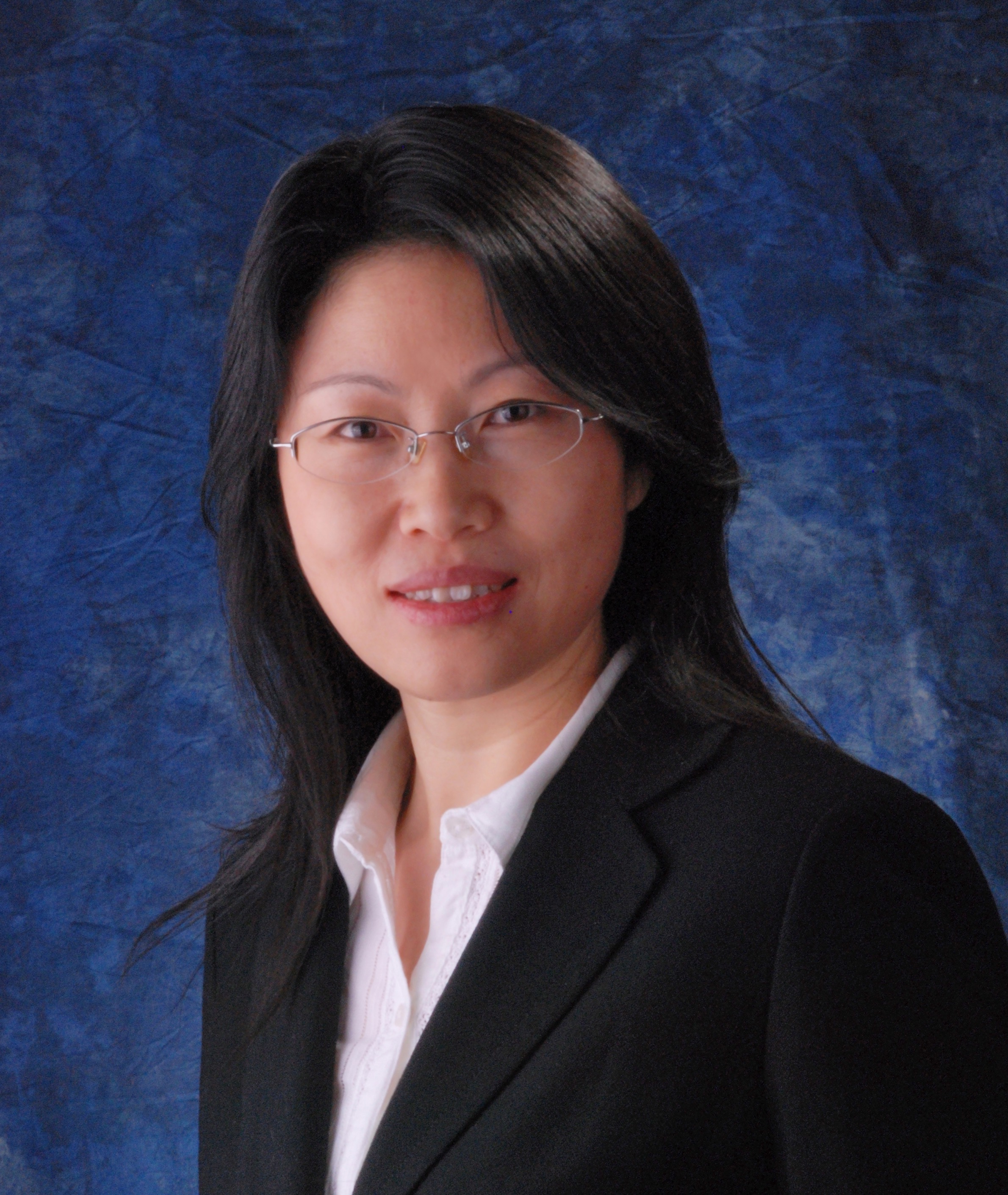
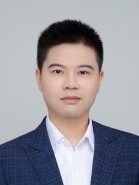
Wang Yingji is a tenured professor and doctoral supervisor at the School of Art and Media, Tongji University. He holds a PhD in Literary Studies and has served as director of the China Culture and Art Communication Research Center, member of the China Artists Association, and editorial board member of "Media Criticism" journal. BA: Chinese Language and Literature, Renmin University of China (1995) MA: Journalism, Beijing Normal University (2004) PhD: Literary Studies, Beijing Normal University (2007) His research focuses on the intersections between Journalism and Communication, Media Phenomenology, Philosophy of Technology, and Traditional Chinese Culture. His work explores embodied cognition in media interaction, technological mediation of human perception, and historical epistemology of media systems. The articles demonstrate his expertise in media phenomenology (Hubert Dreyfus analysis), digital reading behavior studies, VR technology ideologies, and historical reconstruction of Chinese communication theories. His publications span from 2016-2022 with consistent CSSCI indexing. National Social Science Fund General Project: "Chinese Modern Public Opinion Thought History" (2021) Major Project Subtopic: "Chinese Media Archaeology in Civilizational Diversity" (2020) Ministry of Education Project: "Husserl's Media and Communication Thought" (2020) Completed NSFC Project: "Rumor Propagation and Governance in Public Emergencies" (2011) As educator, he teaches courses like "Chinese Classical Media Art", "Media Research Methods", and "Communication Theory". His administrative roles include leadership positions in the Chinese Society of Journalism History and multiple journal editorial boards.
Bian Qing serves as an Associate Professor and Master's Supervisor in the Department of Communication at Tongji University's School of Art and Media. His research centers on media sociology, media convergence, and news production dynamics, with affiliations including the Health Communication Professional Group of the Chinese Preventive Medicine Association. He has held visiting positions at City University of Hong Kong (2017) and the University of Cambridge (2019-2020). Education: PhD in Radio and Television, Fudan University School of Journalism (2009-2012) MA in Radio and Television Journalism, Communication University of China (2004-2007) BE in Recording Engineering, Beijing Broadcasting Institute (2000-2004) Research Focus: Professor Bian investigates algorithmic governance in social media , hate speech regulation , and newsroom transformations in digital ecosystems. His work critically examines emotional drivers of online collective action and the sociopolitical dimensions of Chinese media landscapes, bridging theoretical frameworks with empirical analysis of platform dynamics. Publication Trends: Recent works (2021-2022) analyze algorithmic bias and cyber hate in global social platforms, while earlier research (2012-2016) explores Chinese social media's role in public diplomacy and journalism evolution. His scholarship consistently addresses media's societal impacts through convergent journalism frameworks and digital discourse analysis. Awards: National and university research grants including National Social Science Fund Youth Project (150,000 yuan) Multiple Outstanding Advisor Awards for China Data Journalism Competition (2019, 2021, 2022) Tongji University Young Talent Program recognition (2011, 2013) Shanghai European Society Youth Paper Award (2014) Mentorship & Grants: He has secured significant funding from national and provincial sources for projects on online public discourse and media convergence. His student guidance has yielded award-winning data journalism projects, and he serves as an SSCI journal reviewer while teaching courses including 'Converged Media Reporting' and 'Frontiers of Global Journalism Practice'. Research Infrastructure: Affiliated with Tongji University's Media Experiment and Practice Teaching Center and Omnimedia Research Institute, his work integrates experimental media production with sociological analysis of digital communication systems.
Professor Liu Hongyan is a full-time Professor in the Department of Management Science and Engineering at Tsinghua University's School of Economics and Management, where he has served since 1994, achieving the rank of Professor in 2011 after previously holding positions as Associate Professor (2003-2011) and Teacher. His research bridges theoretical data science with practical applications across e-commerce, healthcare, and social media platforms. Education: PhD in Management, School of Economics and Management, Tsinghua University (2001) His research focuses on big data management , machine learning , and business intelligence with specialized expertise in personalized recommendation systems , medical/financial data analysis , and computer vision applications . Recent work integrates large language models and causal inference to solve complex problems in short video platforms, live streaming, and healthcare analytics, emphasizing real-world impact through industry collaborations. Analysis of his 15 most recent publications (2023-2025) reveals a strong trajectory toward multimodal AI systems combining recommendation engines with computer vision, particularly in 3D animation for advertising and healthcare. Key trends include LLM-enhanced display advertising, emotion-aware facial animation, and medical image annotation using adversarial learning, while maintaining core contributions to behavioral data mining in social networks. Scientific recognition includes: National Archives Administration's Outstanding Scientific and Technological Achievement Award Multiple Best Paper Awards at international conferences Outstanding Doctoral Dissertation Supervisor designation from the Society for Management Science and Engineering Special Award for National Natural Science Foundation project on user behavior pattern discovery Professor Liu has secured leadership roles in major National Natural Science Foundation projects including Innovation Research Groups and international cooperation initiatives. His industry impact is demonstrated through patented recommendation systems adopted by multiple companies, particularly in personalized content delivery for live streaming and short video platforms. As an Outstanding Doctoral Dissertation Supervisor, he mentors the next generation of data science researchers. He serves as Deputy Director of Tsinghua University's Center for Artificial Intelligence and Management Research and holds key positions in national academic societies including the E-Commerce and Cyberspace Management Committee (China Management Modernization Research Association) and the Information Systems Engineering Committee (Chinese Society for Systems Engineering).
CHEN Wei is a Chair Professor at the Department of Biology, School of Life Sciences, Southern University of Science and Technology (SUSTech), Shenzhen, China. He holds a Ph.D. from the Max Planck Institute for Molecular Genetics (2006) and previously served as a Full Professor (W3) at the Max-Delbrück Center for Molecular Medicine and Charité – Universitätsmedizin Berlin (2015-2016). Prior to joining SUSTech, he led research groups at prestigious German institutions, contributing to large-scale genome centers and the Berlin Institute of Health. Education : Ph.D. (2006, Max Planck Institute), M.S. (2002, Sichuan University), B.S. (1993, Xiamen University) His research focuses on systems biology and genomics, particularly post-transcriptional gene regulation mechanisms and their roles in human diseases. His lab integrates next-generation sequencing technologies with computational approaches to study non-coding RNA functions, alternative splicing, and chromatin dynamics. Key projects include CRISPR-based functional studies, 3D genome analysis, and RNA editing in neurological and metabolic disorders. Recent publications highlight his work in Drosophila developmental genomics, chloroplast translation control, and cancer biology. The 2025 study on spatiotemporal multi-omics in Drosophila and 2024 articles on MatK's role in tRNA splicing and CRISPR-activated transcriptional regulation exemplify his interdisciplinary approach. Earlier works (2023-2022) address immune cell trafficking, alternative polyadenylation, and chromatin remodeling in cancer metastasis. At SUSTech, he leads a team with 4 research assistant professors, 2 postdoctoral fellows, 3 research assistants, and 7 graduate students. His lab has secured significant funding from EU and German agencies (€7M+), though specific awards are not detailed in the provided text. Teaching responsibilities include General Biology and Principles of Cell Biology.
Dr. Bai Ziqian is an Assistant Professor in the School of Automation and Intelligent Manufacturing at Southern University of Science and Technology (SUSTech) in Shenzhen, China. Recognized as a Pujiang Scholar and Shenzhen Pengcheng Peacock Talent, she has established herself as a leading researcher at the intersection of wearable technology, textile engineering, and human-computer interaction. Her work bridges technical innovation with practical design applications, focusing on user-centered solutions that enhance human experience through technology integration. Dr. Bai's educational background includes: PhD in Smart Wearable Product Design (2011-2015), Hong Kong Polytechnic University MA in Fashion and Textile Design (2005-2006), Hong Kong Polytechnic University BA in Fashion Design and Engineering (2001-2005), South China Agricultural University Her research spans wearable technology, tangible interactive interfaces, IoTs, ergonomics, functional garments, wearables for healthcare, material innovation, smart home applications, and user-centered design. Dr. Bai has pioneered work in smart wearable fabrics and sensing mechanisms based on flexible materials, with a particular focus on human-computer interaction theory and practice. She has established a research team that has mastered key technologies in smart fabrics, interactive textiles, physiological signal monitoring, and human-computer interaction systems. Her approach consistently emphasizes user-centered design principles, ensuring that technological innovations serve practical human needs while maintaining aesthetic appeal. Dr. Bai's publication record demonstrates a clear evolution from foundational work in photonic textiles toward increasingly sophisticated wearable healthcare and human-computer interaction systems. Her recent publications focus on advanced sensor technologies, energy harvesting for wearables, and sophisticated data analysis for human motion and physiological monitoring. The interdisciplinary nature of her work is evident in publications spanning materials science, biomedical engineering, textile technology, and design methodology, with papers appearing in high-impact journals including Advanced Functional Materials (IF: 19.5), ACS Sensors (IF: 8.9), and Computers in Industry (IF: 10). Dr. Bai has received numerous prestigious awards that highlight both the technical and artistic dimensions of her work: 2024 German Red Dot Design Award for Best Design 2013 Neo-Neon, permanent collection at China Silk Museum (State grade 1 museum) 2019 Finalist, ThermoBlanket, TechStyle for Social Good International Competition 2017 1st Prize Teaching Award, Donghua University 2017 China National Textile and Apparel Council Teaching Award Multiple Service Learning Awards from Hong Kong Polytechnic University She has successfully secured research funding from prestigious sources including the National Natural Science Foundation of China and Guangdong Province's General Project. Her projects include a collaborative effort with the Guangdong Provincial Department of Education and Li Ning Company on a 'flexible wearable lower limb functional electrical stimulation system.' Dr. Bai has extensive teaching experience across multiple institutions and has guided student teams to success in national competitions. She currently leads the Human-Computer Interaction Design Laboratory (HCID) at SUSTech, which focuses on advanced design, engineering, and technology research at the intersection of disciplines, training the next generation of interdisciplinary designers and engineers.
Jin Yunshui is an Associate Professor at the Media Experiment and Practice Teaching Center within Tongji University's School of Art and Media. He holds a PhD in Digital Design and Technology from the University of the Arts London (2022) and has extensive experience in digital animation, interactive media, and immersive technologies. Education PhD in Digital Design and Technology (2017-2022), University of the Arts London, UK MFA in Media Art and Design (2011-2012), Bauhaus University Weimar, Germany Master of Arts (2010-2013) and Bachelor of Animation (2006-2010), Tongji University Research Interests Jin's work spans virtual reality (VR) , augmented reality (AR) , serious games , cultural heritage digitization , 3D visualization , and natural user interfaces . He focuses on applying immersive technologies to education, mental health, and historical preservation. Research Trends His recent publications highlight comparative studies of VR/AR systems, immersive education applications, and ethical design of interactive media. Key themes include digital storytelling , user engagement metrics , and technological frameworks for generative art . Scientific Awards 金曦奖-创新印象艺术奖 (2022) The Rookies奖沉浸式媒体组冠军 (2019) 全国计算机设计大赛一等奖 (2009) 同济大学优秀教师 (2018) Grants & Projects Jin leads major initiatives like the Shanghai Educational Research Project on Mental Health Intervention (2024), Ministry of Education's National Golden Course in Shadow Puppetry (2023), and international collaborations with Brunel University on creative industries (2023). Labs & Teams He heads the Non-planar Imaging Laboratory at Tongji and contributes to the Forever Project with Holocaust survivor holography (2017).
Ma Xufeng is an Assistant Professor in the Animation Department at the School of Art and Media, Tongji University , Shanghai. She earned her PhD in Image Arts from Chung-Ang University, South Korea , and completed a postdoctoral fellowship at the School of Journalism and Communication, Tsinghua University . Her research bridges intelligent imaging, animation games, AIGC, new media art, and the metaverse , focusing on intelligent image production and dissemination, AI-driven art therapy, and serious games . Education: PhD in Image Arts, Chung-Ang University, South Korea (2018.09–2021.02) Master of Image Arts, Chung-Ang University, South Korea (2016.09–2018.06) Bachelor of Art Design (Animation), Zhongnan University of Economics and Law, China (2011.09–2015.07) Research Interests: Dr. Ma’s scholarship sits at the intersection of artificial intelligence, digital media, and therapeutic applications . She explores how AI-generated content (AIGC) can revolutionize animation, game design, and immersive storytelling . A second strand investigates serious games and VR systems for autism rehabilitation and emotional therapy , leveraging game psychology to craft interventions that blend aesthetics, technology, and mental health . Publications & Research Trends: Her most recent work (2021-2024) charts a trajectory from VR-based rehabilitation games to AI painting for art therapy , demonstrating a shift from interactive technology prototypes toward critical and aesthetic theories of AI art . Collectively, her publications map the evolution of intelligent media ecosystems and their societal impact. Scientific Awards & Grants: Principal Investigator, Korean BK21+ CFT Convergence Research Project – VR immersive game for autistic children (2020) Principal Investigator, Korean BK21+ CFT Convergence Research Project – Fitness-bicycle functional game (2019) Special Selection Award, Seoul International Animation & Cartoon Festival (2020) Nomination, Golden Kuker–Sofia International Animation Festival (2020) Teaching & Labs: At Tongji University, Dr. Ma contributes to undergraduate and postgraduate curricula in animation, new media art, and game design . She is affiliated with the Omnimedia Research Institute and the Media Experiment and Practice Teaching Center , where she guides students in AI-driven content creation and VR/AR prototyping .
Pengcheng An is an Assistant Professor at the School of Innovation and Creative Design at Southern University of Science and Technology (SUSTech) in Shenzhen, China. His research sits at the intersection of Design and Human-Computer Interaction (HCI), focusing on the design and implications of intelligent interactive systems in everyday contexts such as smart classrooms, offices, and other learning environments. Education: Ph.D. in Industrial Design, Eindhoven University of Technology, Netherlands Postdoctoral Research, Eindhoven University of Technology Postdoctoral Research Fellow and Sessional Lecturer, School of Computer Science, University of Waterloo, Canada An's research interests center on creating interactive systems that enhance learning, education, and support for children, families, and underprivileged groups. His work explores how emerging technologies like IoT, intelligent systems, and multimodal interfaces can be seamlessly integrated into real-world settings to improve user experiences without disrupting natural workflows. He particularly focuses on peripheral and unobtrusive interaction techniques that support busy practitioners like teachers and healthcare workers. His publication record demonstrates consistent contributions to top-tier HCI venues, with a focus on educational technology applications, assistive systems, and novel interaction techniques. The research trajectory shows increasing sophistication in understanding real-world deployment challenges and developing solutions that respect existing workflows while providing meaningful augmentation. Scientific Awards: Best Paper Honorable Mention Award (ACM CHI) Reviewers' Choice Award (INTERACT) Red Dot Design Award: Best of the Best (twice) iF Design Talent Award An serves as an active member of the HCI community, having been Associate Chair for the "Learning, Education, and Family" track at ACM CHI since 2021. He has secured research funding including a National Social Science Fund Youth Project exploring AI technology in art therapy for special children. His service extends to reviewing for major conferences (CHI, DIS, TEI, IDC) and journals (Behavior & Information Technology, Experimental Results). His laboratory work focuses on real-world deployments of interactive systems, particularly in educational settings, where he collaborates with teachers and students to develop and evaluate technologies that support learning without disrupting classroom dynamics.
Jianke Zhu is a Professor at the College of Computer Science and Technology of Zhejiang University . He obtained his Ph.D. in Computer Science and Engineering from The Chinese University of Hong Kong and conducted postdoctoral research at the BIWI Computer Vision Lab, ETH Zurich . His research focuses on Computer Vision and Machine Learning , with a particular emphasis on 3D scene understanding, LiDAR-based mapping, and neural rendering. Dr. Zhu’s research spans several subfields, including 3D Reconstruction , Semantic Segmentation , Multimodal Learning , and Autonomous Driving . His work integrates Neural Networks , LiDAR Processing , and Uncertainty Quantification to address challenges in real-time and adverse conditions. Selected Recent Trends: 2025 publications highlight his work in Hexagonal Mesh-based Neural Rendering , Instance-aware 3D Scene Understanding , and Efficient Visual Projectors for Multimodal LLMs . Earlier works include Box2Mask for Instance Segmentation (2024) and Token Selection for Point Cloud Learning (2025). Scientific Awards : Senior member of the IEEE Advising and Grants : As a Doctoral Supervisor , he mentors students in advanced topics like LiDAR Odometry and Multi-view Stereo Recovery . His projects have attracted funding for autonomous driving , 3D scene modeling , and neural rendering .
Dr. Shaobo (Kevin) Li is a Tenured Associate Professor at the School of Business, Southern University of Science and Technology (SUSTech), with secondary appointment in the Department of Information Systems & Management Engineering. He holds a PhD in Business Administration from Nanyang Technological University (2019), Master of Business Administration (University of Virginia, 2014), Master of Finance (West Virginia University, 2012), and Bachelor of Business Administration (Lanzhou University, 2011). National High-Level Youth Talent Program awardee Overseas High-Caliber Personnel in Shenzhen City Recipient of 2018 China Scholarship Council’s Excellent Self-Funded Student Scholarship His research focuses on the intersection of digital economy, social welfare, and technology-driven marketing, employing experimental methods, empirical models, and neuroscience. He serves as Associate Editor for the Journal of Business Research and has published in top UTD-24 journals including Journal of Consumer Research, Information Systems Research, and Production and Operations Management. His work examines platform economics, brand management during crises, and consumer behavior related to AI, sustainability, and health decisions. He has led 10+ research projects (National Natural Science Foundation, Ministry of Science and Technology 2030 Program) and received multiple research awards, including Academy of Marketing Science Best Doctoral Dissertation Proposal Award (2019) and Best Paper Awards at China Marketing Science (2020,2024), China Marketing International Conference (2023), and CMAU Annual Conference (2023,2024). Teaching accolades include SUSTech’s Premier Teaching Award, Top 10 Most Popular Professor among undergraduates, and Nanyang Business School’s Best Graduate Teaching Award (2017). Teaches Financial Marketing (undergraduate) Teaches Frontiers of Management & Research Methods (PhD) Actively recruiting research assistants, postdocs, and joint PhD candidates with Hong Kong Polytechnic University
Maggie Wenjing Liu is a tenured Associate Professor in the Department of Marketing at Tsinghua University's School of Economics and Management (SEM). She holds leadership roles as Associate Director of the Computational and Behavioral Science Lab and China Retail Research Center, and Chair of the Marketing Department's Academic Seminar Committee. Education: Ph.D. in Marketing, Rotman School of Management, University of Toronto M.S. in Marketing, NUS Business School, National University of Singapore Bachelor in Economics, University of International Business and Economics Research Focus: Her work centers on consumer behavior , product/service experience , decision science , and pricing , examining psychological mechanisms through experimental and analytical methods. Key themes include ritualistic consumption, AI-human interaction in marketing, visual branding effects, and cross-cultural service responses. Publication Trends: Recent work (2017-2025) appears in top journals like Production and Operations Management (UTD) and Journal of Consumer Psychology (FT50), revealing strong interdisciplinary connections between behavioral science, marketing strategy, and data-driven consumer insights with increasing focus on AI applications and crisis response. Scientific Awards: National Natural Science Foundation Youth Project Outstanding Evaluation (2017) National Natural Science Foundation General Project Outstanding Evaluation (2021) Tsinghua University teaching reform project Grade A (2020) Beijing Higher Education Young Elite Scholar Award Two-time Outstanding Expert Reviewer (Journal of Marketing Science) Society of Asian Retailing and Distribution Best Paper Award Advising & Grants: As a doctoral advisor, she mentors PhD candidates who frequently co-author publications. She secured three National Natural Science Foundation General Programs, one Youth Project, three provincial/ministerial grants, and multiple Tsinghua projects, with two NSFC projects rated Outstanding upon completion. Labs & Leadership: She co-directs Tsinghua SEM's Computational and Behavioral Science Lab and China Retail Research Center, driving research at the intersection of marketing analytics, consumer neuroscience, and retail innovation while serving on editorial boards for Marketing Letters and Journal of Business Research .
Zhuoren Jiang is a tenure-track Assistant Professor and Doctoral Supervisor at the Department of Information Resources Management, School of Public Affairs, Zhejiang University. He holds a Ph.D. and serves as a key faculty member in the department, with his office located in Room 612-2 of the School of Public Affairs building at Zhejiang University's main campus in Hangzhou. Dr. Jiang's research spans multiple interdisciplinary domains, with primary focus on Information Science & Library Science, Computational Social Science, Policy Simulation, and Artificial Intelligence Algorithms and Applications. His work bridges social science, data science, and computer science, creating innovative approaches to understanding complex social phenomena through computational methods. He has developed expertise in graph representation learning, large language models, and their applications in scientific impact prediction, legal reasoning, and policy analysis. His publication record reveals a strong trajectory in high-impact venues, with recent work focusing on multimodal business analysis, legal judgment prediction, policy style measurement, and scientific peer review systems. His research demonstrates an increasing emphasis on integrating large language models with graph-based approaches to solve complex interdisciplinary problems, particularly in the domains of legal informatics and scientific communication. Zhejiang University Teaching Excellence Award, 2024 Best Short Paper Awards Nominee, SIGIR Conference, 2024 Alibaba Research Fellowship, 2019 & 2020 Boya Postdoctoral Fellowship, Peking University, 2016 Best Poster Award, JCDL, 2013 Dr. Jiang actively mentors students and seeks highly self-motivated PhD and master's candidates interested in interdisciplinary research. He has served as principal investigator or sub-project lead for multiple research projects including National Key R&D Program, Major Projects of the National Social Science Foundation of China, and Projects of the National Natural Science Foundation of China. His academic service includes editorial board membership for Frontiers in Big Data and peer reviewing for numerous top journals including Information Processing & Management and Journal of the Association for Information Science and Technology. He maintains active collaborations with industry, having previously served as a consultant (visiting professor) at Alibaba DAMO Academy and currently as a collaborating expert at Tongyi Lab. His professional memberships include ACM (Association for Computing Machinery), ACM SIGIR, ACL (Association for Computational Linguistics), and ASIS&T (Association for Information Science and Technology).
Yuhui Hu is an Associate Professor and Doctoral Supervisor in the Department of Pharmacology, School of Medicine at Southern University of Science and Technology (SUSTech) in Shenzhen, China. She joined SUSTech in August 2016 as an independent PI and was promoted to Associate Professor in the Department of Pharmacology in March 2022, having previously served as a Research Associate Professor in the Department of Biology, School of Life Sciences at SUSTech from 2016-2022. Dr. Hu earned her Ph.D. in Functional Genomics from the Max Planck Institute for Molecular Genetics in Berlin, Germany in 2006. Prior to joining SUSTech, she led her own research group on pharmacogenomics and chemical genetics at the same institute from 2007-2009, then moved to the Berlin Institute for Medical Systems Biology (BIMSB) at the Max Delbrück Center for Molecular Medicine where she served as a Senior Research Scientist until 2016. Her research focuses on integrating diverse systems biology approaches in transcriptomics, genomics/epigenomics, proteomics, CRISPR gene editing, single-cell and spatiotemporal omics to decipher gene regulations in cancer precision medicine and developmental biology. She has pioneered high-throughput platforms for protein subcellular localization, apoptosis detection, and protein-protein interaction analysis. Her work bridges traditional Chinese medicine compounds with modern systems biology approaches to develop new drugs, particularly through the investigation of natural compounds for anticancer and anti-COVID applications. Her recent publications show a strong focus on cutting-edge single-cell and spatial transcriptomics technologies, with multiple high-impact papers in journals like Cell, Nature Communications, and Developmental Cell. Her research group has developed several innovative protocols for sample multiplexing and cell death quantification compatible with single-cell sequencing. Excellent Patent Award, Southern University of Science and Technology (2020) Industrial Development and Innovative Talent Award, Shenzhen (2021) Shenzhen Peacock Talent Award As a Doctoral Supervisor, Dr. Hu leads a research group that has secured significant funding, including six national/provincial projects totaling over ¥7.14 million. She serves as a core PI in the Shenzhen Key Laboratory of Gene Regulation and Systems Biology and holds several academic society positions, including committee member of the division of anti-inflammatory and immunological pharmacology of the Chinese Pharmacological Society, council member of Guangdong Pharmacological Society, and executive director of Guangdong Overseas Returnees Association. Her lab continues to develop novel systems biology approaches for gene regulation and pharmacology research, with a particular focus on cancer genomics and chemical genomics for early diagnosis, therapy, and prognosis.
Hai Lin is a Professor at the State Key Lab of CAD&CG (Zhejiang University, China). His research spans computer graphics, scientific visualization, volume rendering, virtual reality, and graphical electromagnetic computing. He earned B.Eng and M.Eng degrees from Xidian University (1987, 1990) and a Ph.D. in Computer Science from Zhejiang University. Current Position: Professor, Zhejiang University (1990–Present) Research Fellow, Medical Visualization, De Montfort University (2000–2003) Visiting Professor, University of Bedfordshire Research Focus includes: Medical Imaging: AI-driven tumor segmentation (colorectal, liver), retinal disease classification (SatFormer), and mandible segmentation via LRVRG. Electromagnetic Computing: Shape deformation optimization, GPU-based wave propagation prediction, and scattering analysis. Scientific Visualization: Graph convolutional networks for volume data, voxel2vec representations, and dynamic network exploration. Collaborations involve PhD students (Huan Liu, Yiming Li, YanKai Jiang, Han Wang) and teams at Zhejiang University. His work integrates AI with electromagnetic and medical imaging domains, emphasizing GPU acceleration and novel algorithm design.
Dr. Fengwei An is an Associate Professor at the Shenzhen-Hong Kong Institute of Microelectronics , Southern University of Science and Technology (SUSTech). He earned his Ph.D. in Engineering from Hiroshima University (2013) , following a Master's (2010) and Bachelor's (2006) from Qingdao University of Science and Technology. Current Role : 2025-Present - Associate Dean and Associate Professor, SUSTech Shenzhen-Hong Kong Institute of Microelectronics Prior Academic Roles : 2017-2018 - Associate Professor, Hiroshima University; 2013-2017 - Assistant Professor, Hiroshima University Industry Experience : 2018-2019 - Chief Engineer, Panasonic Semiconductor Co., Ltd., Japan Research Interests focus on low-power edge artificial intelligence chip design for computer vision, including: Ultra-large-scale digital integrated circuit design System-on-Chip (SoC) integration Image processing and recognition Machine learning hardware Autonomous driving applications High-speed motion tracking systems Publications include over 80 top-tier journal/conference papers (e.g., TCAS-I/II, ESSCIRC, APCCAS) on AI accelerators, stereo vision processors, and sensor interfaces, with 15 recent articles highlighting advancements in stereo matching, video denoising, and reconfigurable coprocessors. Scientific Awards : 2023 - SUSTech Outstanding Teaching Award 2022 - APCCAS Best Paper Nomination 2022 - PrimeAsia Bronze Leaf Award 2020 - Wu Wenjun Artificial Intelligence Science and Technology Award (Second Prize) Patents : 9 Chinese and 3 Japanese inventions in AI chip design, stereo matching systems, and sensor interfaces.