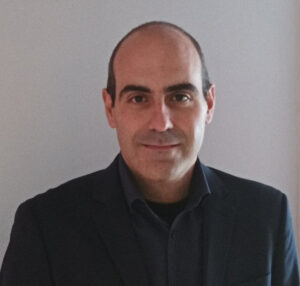
Alex Koutis serves as a Lecturer at Deree, The American College of Greece, leveraging twenty-five years of industry experience gained in the United Kingdom across diverse sectors including Food Retail, Telecoms, and Gaming. His research expertise centers on practical business analytics applications: Development of customer segmentations (Value, Behavioural, Headroom) Propensity modeling for predictive analytics Ad hoc analytical solutions for business intelligence Koutis excels in translating stakeholder requirements into implementable analytical frameworks, with strong emphasis on solution embedding within organizational structures. His industry background provides unique perspective on real-world data challenges across multiple commercial domains. A dedicated educator, he focuses on developing analytical talent through both academic instruction and practical training methodologies, bridging the gap between theoretical knowledge and industry application.
Professor John P. Makris is a distinguished academic at the Hellenic Mediterranean University where he serves in the Department of Electronics Engineering. With over 25 years of experience in geophysics and seismology, Professor Makris has established himself as a leading researcher in earthquake prediction and seismic monitoring, particularly in the seismically active Hellenic Arc region of Greece. His academic journey began with a BSc in Physics (1992) followed by a PhD in Applied Geo-Electromagnetism (1997), both from the National and Kapodistrian University of Athens (NKUA). Professor Makris has held significant leadership roles including Head of the Department of Electronics Engineering (2008-2012) and Head of the Institute of Natural Resources and Natural Hazards (2005-2015). Professor Makris's research spans several interconnected domains: Seismoelectromagnetic phenomena and earthquake prediction through VAN method Magnetotelluric studies of the Hellenic subduction zone Development of seismic monitoring networks (HC-SNC) Structural health monitoring systems for earthquake zones Integration of machine learning and IoT technologies with seismic monitoring His recent publications (2024) demonstrate a strategic evolution toward incorporating modern computational methods with traditional geophysical approaches. This work focuses on laboratory studies of rock fracturing, smart sensor networks, and analysis of recent seismic sequences in Central Crete. Professor Makris has secured significant research funding throughout his career, with '25+ research projects (funding ~4.5M€)'. His work has resulted in '60+ articles in refereed journals and conference proceedings, 7 monographs' with 815 citations according to ResearchGate metrics. As supervisor of HC-SNC (2002-2024), Professor Makris has led the development of critical seismic monitoring infrastructure in Crete. His laboratory work bridges theoretical modeling and practical instrumentation development, creating comprehensive research opportunities for students and collaborators.
Giakoumidakis Konstantinos serves as an Associate Professor at Harokopio University, maintaining active academic engagement through teaching and research. His institutional affiliation is confirmed via official university email correspondence. Research interests span core domains of Computer Science with specialized focus on Informatics and Telematics systems. This aligns with Harokopio University's academic structure housing a dedicated Department of Informatics and Telematics, though specific departmental assignment isn't explicitly stated in source materials. Methodological approaches likely integrate theoretical frameworks with applied telematics solutions. Current academic service includes faculty responsibilities without indication of laboratory leadership or external affiliations. Professional activities center on university-based instruction and scholarly work within computational disciplines.
Dr. Minas M. Stylianakis is an Assistant Professor at the Department of Nursing, Hellenic Mediterranean University (since December 2021) and Research Scientist at the Hybrid Nanostructures Group, Institute of Electronic Structure and Laser (IESL), Foundation for Research and Technology (FORTH) - Hellas (since July 2020). He holds a PhD in Chemistry from the University of Crete (2015) with expertise in synthesis, processing, and characterization of nanomaterials including graphene derivatives, 2D materials, metal oxides, and organic compounds. His interdisciplinary research spans: Biomedical applications : Regenerative nanomedicine, targeted drug delivery systems, tissue engineering scaffolds, and antimicrobial biomaterials Environmental technologies : Water treatment systems, biodegradable nanocomposites, and waste valorization Advanced materials : 2D material functionalization, self-healing polymers, and graphene-based nanocomposites Energy systems : Perovskite solar cells, printed electronics, thermoelectric generators, and energy storage solutions Publication analysis reveals strong focus on nanomaterial applications in energy (45% of recent papers), biomedicine (30%), and environmental technologies (25%), with consistent emphasis on graphene-based material innovation. Recent work demonstrates growing interest in scalable manufacturing techniques like ink formulation and 3D printing. As a certified evaluator for Greece's General Secretariat for Research and Technology (since 2017), he contributes to national research policy. His editorial engagements include refereeing, guest editing, and editorial board membership for high-impact journals, complementing his academic leadership. At FORTH's Hybrid Nanostructures Group, he leads research on functional nanomaterials with demonstrated applications in solar energy conversion, targeted drug delivery, and environmental remediation. The lab's work emphasizes practical implementation through industry collaborations.