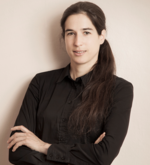
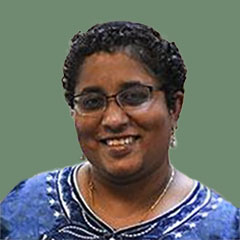
Arild Torolv Søetorp Waaler is a Professor in the Reliable Systems group at the Department of Informatics , University of Oslo. His research focuses on semantic technologies, ontology-based data access (OBDA), and systems engineering for industrial applications, particularly in the oil & gas and manufacturing sectors. Research Interests: Semantic Web, Knowledge Graphs, Ontology Engineering, Machine Learning for Condition Monitoring, Data Variety Challenges, and Industrial Systems. Waaler has co-authored 15 recent publications (2017–2024) spanning semantic frameworks for digital twins, identifier management, and analytics-aware ontologies. These works emphasize data integration , query optimization , and sustainable data systems in collaboration with industry partners like Statoil and Siemens. Contact: arild@ifi.uio.no | Room 9465, Gaustadalléen 23B, Oslo.
Associate Professor Gustavo Batista is a prominent researcher in the School of Computer Science and Engineering at the University of New South Wales, where he joined in 2018 after more than a decade at the University of Sao Paulo (USP). He previously served as a visiting researcher at the University of California, Riverside (2010-2012) working with Professor Eamonn Keogh. Education: Habilitation in Computer Science, University of São Paulo at São Carlos (2016) PhD in Computer Science, University of São Paulo at São Carlos (2003) MSc in Computer Science, University of São Paulo at São Carlos (1997) BS in Computer Science, São Paulo State University (1994) Professor Batista's research focuses on practical applications of Machine Learning, particularly in supervised machine learning, data mining, time series analysis, data streams, and imbalanced data. His work bridges theoretical computer science with real-world applications, especially in developing lightweight models for embedded devices and sensors. His research approach emphasizes identifying gaps in literature through challenging applications, leading to contributions in both Computer Science and application domains. His publication record demonstrates consistent contributions across time series analysis, data streams, and quantification, with notable emphasis on developing algorithms that function effectively in resource-constrained environments. His work on the UCR suite for time series matching under warping earned the KDD Best Research Award in 2012, while his more recent work on quantification algorithms received the Best Research Paper Award at DSAA-2020. Scientific Awards: Best Research Paper Award, IEEE International Conference on Data Science and Advanced Analytics (2020) Research Fellow, level 2, National Council for Scientific and Technological Development, CNPq (2017-2020) Research Fellow, level 2, National Council for Scientific and Technological Development, CNPq (2014-2017) Google Research Award in Latin America (2015-2016) Best Research Paper Award, ACM SIGKDD Conference on Knowledge Discovery and Data Mining (2012) Professor Batista has successfully secured significant grant funding as principal investigator, including a $500,000 USAID Combating Zika and Future Threats Grand Challenge award and multiple FAPESP and CNPq grants. He currently supervises PhD students Tiago Pinho da Silva (working on Election Forensics) and Antonio Parmezan (working on Hierarchical Classification of Data Streams), contributing to the next generation of data science researchers. His research group has developed innovative tools like EmbML, which converts scikit-learn and Weka classifiers into C++ code for low-power microcontrollers, demonstrating his commitment to practical implementations of machine learning in resource-constrained environments.
Jerzy Stefanowski is a Full Professor at the Institute of Computing Science, Poznan University of Technology. He specializes in Machine Learning, Data Mining, and Knowledge Discovery, with a focus on imbalanced data, data streams, and explainable AI. His research addresses challenges in classifier learning from skewed datasets and has led to contributions like the BRACID algorithm. He has supervised multiple PhD students and holds grants such as the NCN-funded project on imbalanced data (2014–2017). A corresponding member of the Polish Academy of Sciences and Editor-in-Chief of the journal Foundations of Computing and Decision Sciences , he has organized numerous conferences and workshops in AI and data mining. Education: M.Sc./Eng. in Control Engineering (1987) Ph.D. in Computer Science (1994) Habilitation Thesis (2001) Research Interests: Machine learning, data streams, imbalanced classification, rough sets, medical informatics, and interpretable AI. His work emphasizes overcoming algorithmic biases in imbalanced datasets and developing robust classification strategies. Awards: Includes recognition from the Polish Information Processing Society, Foundation for Polish Science, and the Polish Academy of Sciences. He has also received medals and grants from national educational bodies. Grants: Led projects such as Learning Classifiers from Imbalanced and Evolving Data (NCN, 2014–2017) and Algorithms Transforming Data Representation for Machine Learning Systems (KBN, 2004–2007). Labs/Teams: Leads the Machine Learning Group at Poznan University of Technology and chairs the Scientific Council of the Institute of Computer Science, Polish Academy of Sciences.
Mohd Farhan Md Fudzee is an academic researcher with a focus on interdisciplinary computational research spanning multimedia systems, bioinformatics, and network engineering. His work emphasizes service-oriented architectures, data fusion techniques, and optimization of complex systems. Key contributions include advancements in content adaptation policies for distributed multimedia, machine learning methods for disease gene prediction, and disaster management protocols in mobile ad-hoc networks (MANET). He has collaborated extensively with institutions on projects involving fuzzy logic applications, healthcare informatics, and safety-critical system development. Research interests are driven by practical applications in: Multimedia Adaptation: Developing QoS-aware service selection frameworks and dynamic path determination policies for content delivery networks. Health Informatics: Leveraging machine learning for disease module identification and medical systems reliability assessment. Data Science: Innovating classification methods using fuzzy soft set theory and multi-agent systems for data fusion challenges. Recent work (2022-2024) highlights trends in bioinformatics pathway analysis, social network prediction algorithms, and hybrid routing approaches for disaster response systems. His publications consistently address real-world system optimization across domains like transportation, healthcare, and energy sectors.
Luiz Bonino is an Associate Professor at Leiden University Medical Center and an International Technology Advisor at GO FAIR International Support and Coordination Office. He holds a PhD in Computer Science from the University of Twente (2011), specializing in semantic service provisioning. His research focuses on ontology engineering, semantic interoperability, and FAIR data principles, with applications in healthcare and distributed data systems. Key research interests include ontology development, cybersecurity in data systems, service-oriented computing, and the implementation of FAIR (Findable, Accessible, Interoperable, Reusable) principles across domains. He contributes to initiatives like the Personal Health Train architecture and the FAIR Data Point framework, emphasizing distributed data platforms and metadata standards. Recent publications highlight work on large language models for ontology creation, interoperability challenges in healthcare data, and methodological frameworks for FAIRification. Bonino has organized conferences like the 2024 FOIS workshop and contributed to datasets such as the FAIRDataTeam/FAIRDataPoint project. He actively promotes FAIR principles through workshops and collaborative projects.
Wenwen Dou is an Associate Professor in the Department of Computer Science at the University of North Carolina at Charlotte. She leads research in Visual Text Analytics, focusing on integrating statistical methods with interactive visualization to analyze large-scale textual data. Her work spans social media analysis (e.g., studying movements like Occupy through Twitter streams) and science impact analysis (assessing federal funding effects on research trends). She is affiliated with the Charlotte Visualization Center and holds a Ph.D. in Computer Science from her current institution. Her research interests emphasize visual analytics applications in social media, policy impact, and data-driven decision-making. Notable projects include developing systems like Crystalball for event prediction from social media and Urban Space Explorer for urban planning. She explores how visualizations influence public perception, trust, and decision-making, particularly in contexts like medical misinformation and railroad safety. Publications highlight interdisciplinary approaches, combining machine learning with visualization techniques to address challenges in healthcare, infrastructure safety, and ethical leadership. Her work often bridges computational methods with human factors, aiming to enhance transparency and informed decision-making through innovative visual frameworks.
Dr. Semih Yumusak is a Research Fellow at the University of Southampton, focusing on interdisciplinary research at the intersection of data science, cybersecurity, and network systems. His current work emphasizes data marketplace architecture, privacy-preserving techniques, and applications of machine learning in finance and social analysis. He contributes to projects like the Universal Platform Components for Safe Data Exchange (UPCAST), aiming to enhance interoperability and security in data monetization. His research interests include modular data systems, maritime migration pathways analysis through cellular data, and academic collaboration networks. Recent publications highlight innovations in privacy negotiation frameworks, financial text mining, and network topology optimization. Dr. Yumusak collaborates with international teams on topics ranging from knowledge graph construction to sentiment analysis in product reviews. While no formal awards are listed, his active involvement in funded research projects underscores his academic impact. His work bridges technical challenges in data governance with societal applications, such as leveraging big data for refugee migration safety and improving stock market speculation analysis through social media insights.
Pauline Rafferty is a Senior Lecturer in the Department of Information Studies at Aberystwyth University. She holds a PhD from the University of Nottingham and has extensive teaching experience across multiple UK institutions including City University London and the University of Central England. Her research focuses on image analysis, multimedia retrieval, social tagging systems, and critical theory approaches to cultural representation. Education: - MA (Hons) from University of Glasgow - MSc from University of Strathclyde - PhD from University of Nottingham - PGCED from Northumbria University Research Interests: Dr. Rafferty's work bridges theoretical and applied information science, exploring topics like genre classification in music and digital archives, semiotic analysis of cultural artifacts, and critical approaches to knowledge organization systems. Her recent projects examine Spotify's playlist curation algorithms and challenges in printed music cataloging. Collaborations: Active collaborations include work with Abertec Ltd on digital cultural object management and organizing academic events like the 'Supporting Discovery of Archival Collections' workshop (2016). Teaching: Courses span information retrieval systems, digital humanities methods, and critical theory applications in librarianship.
Lisa Ehrlinger is a Senior Researcher at the Information Systems Research Group within the Digital Engineering Faculty of the University of Potsdam. She holds a PhD in Engineering Sciences ("passed with distinction") and an MSc in Computer Science from Johannes Kepler University Linz (JKU), both with distinction. Her work bridges academic research and industrial application. Her research focuses on Data Quality , Knowledge Graphs , Ontologies , Semantic Technology , Data Catalogs , and Data Integration , particularly with NoSQL databases. She has over 7 years of applied research experience at the Software Competence Center Hagenberg GmbH (SCCH), including project management and team leadership. Her recent publications emphasize SHACL validation , Data Stream Pollution , Dashboard Design , and Ontology-Driven Analysis , reflecting trends in data quality automation , semantic modeling , and industrial data governance . She co-chaired the Quality of Databases (QDB) workshop (2023, 2024) and serves on the MIT CDOIQ Symposium review board (since 2023). Her outreach includes lecturing at JKU and reviewing for journals like ACM Journal of Data and Information Quality (JDIQ) and Elsevier Journal of Information Fusion .
Sanjukta Bhowmick is an Associate Professor in the Department of Computer Science and Engineering at the University of North Texas, part of the College of Engineering. Her research focuses on network analysis, graph algorithms, parallel computing, and scalable data systems. She is actively involved in collaborative projects such as LEGAS (Learning Evolving Graphs At Scale) and MLN-DIVE (Multilayer Network Data Infrastructure for Visualization and Exploration), emphasizing interdisciplinary applications like precision agriculture and cybersecurity. Her work bridges theoretical foundations with practical implementations, addressing challenges in dynamic networks, community detection, and high-performance computing. Notable contributions include efficient algorithms for motif counting, centrality disruption analysis, and checkpointing systems optimized for GPU acceleration. She has co-authored numerous papers presented at conferences like SIAM Data Mining and HPC Symposium, showcasing her commitment to advancing computational methods for complex systems. Grants & Collaborations: Collaborative Research projects funded by NSF (SHF: Small, CSSI: CANDY), ANACIN-X framework for nondeterminism analysis, and multilayer network infrastructure initiatives. Key Themes: Network robustness, scalable parallel algorithms, graph-based machine learning, and interdisciplinary data-driven solutions. Her research emphasizes real-world applications, such as optimizing variable rate spraying in agriculture and enhancing fault tolerance in distributed systems. She actively contributes to workshops and symposiums, promoting co-design approaches for deep learning accelerators and high-performance computing systems.
Pnina Soffer is a Professor at the University of Haifa. She specializes in Business Process Management (BPM), Process Mining, and Information Systems. Her research focuses on process-aware systems, data impact analysis, and decision support mechanisms. She has contributed to advancing techniques for analyzing business processes, including workarounds detection, data inaccuracy mitigation, and process model quality improvement. Her work integrates interdisciplinary approaches, combining computer science with organizational behavior and healthcare informatics. She frequently collaborates with leading researchers in BPM and process mining, contributing to conferences like CAiSE and BPMDS. Her recent efforts emphasize the intersection of process mining with cybersecurity and human factors, exploring how cyber risks propagate through business processes and how facial expressions can predict task performance in process mining tasks. Key research areas include conceptual modeling, event log analysis, and the application of database principles to normalize process logs. Her work aims to bridge theoretical frameworks with practical applications, such as improving clinical decision support systems through layered guideline models and enhancing process robustness against data inaccuracies.
Nikos Pelekis is a Lecturer at the Department of Statistics and Insurance Science and a researcher at the Information Management Group in the Department of Informatics at the University of Piraeus. His research specializes in mobility data management, spatiotemporal databases, and knowledge discovery from moving objects. Research Focus: Design of trajectory database engines (HERMES) Semantic-aware mobility data mining Privacy-preserving techniques for sensitive trajectory data Key Achievements: Best Paper Award at ER'13 and IEEE ICDM'09 Author of "Mobility Data Management and Exploration" monograph Principal researcher in EU projects including GeoPKDD and MODAP
Prof. Wenny Rahayu is the current Dean of the School of Computing, Engineering & Mathematical Sciences (SCEMS) at La Trobe University, Australia. Previously, she held leadership roles including Head of the Department of Computer Science and Information Technology (2012–2014) and Head of School for Engineering and Mathematical Sciences (2015–2021). Her research focuses on data engineering, cybersecurity, IoT systems, and predictive analytics, with over 300 publications and 7,500+ citations. She has led major grants from the Australian Research Council (ARC), industry partners like Airservices Australia, and international collaborations. Prof. Rahayu has supervised 30 PhD students, now working globally in academia and industry. Her work spans IoT security frameworks, privacy preservation, and smart manufacturing solutions. Research Highlights: Data Integration & Optimization Cybersecurity for IoT and Cloud Environments Predictive Maintenance in Industry 4.0 Privacy-Preserving Technologies Adaptive Learning Systems Grants & Collaborations: ARC Industry Linkages and International Grants (Open Geospatial Consortium, Japan JSPS) Industry Partners: IPL, CSIRO, Army Research Victorian Government Technology Innovation Programs Awards & Roles: Appointed as Lead Assessor for New Zealand MBIE Endeavour Fund (2019–present). Recognized for contributions to data science and interdisciplinary research. Labs & Teams: Leads cross-disciplinary teams in SCEMS focusing on IoT, cybersecurity, and smart systems. Collaborates with global partners on industrial and health-related projects.
Zoi Kaoudi is an Associate Professor at the IT University of Copenhagen, affiliated with the Data, Systems, and Robotics school and the Data-intensive Systems and Applications department. Her research focuses on advancing data systems, knowledge graphs, and large-scale data analysis. She leads the Rank4QO project (2024–2027), funded by the Carlsberg Foundation, which explores query optimization using ranking algorithms. Her work emphasizes machine learning integration in data management systems, including frameworks like Apache Wayang, which unifies diverse data analytics platforms. Key collaborations include projects with Volkswagen Group and SAP, addressing dynamic graph processing and knowledge graph embeddings. Notable contributions include innovative approaches to parameter management (e.g., Good Intentions ), automated data science pipelines ( DORIAN ), and efficient graph processing algorithms. Her recent publications (2023–2025) highlight advancements in machine learning systems, distributed data processing, and adaptive optimization techniques. Current projects aim to bridge machine learning and data management through frameworks like Wayang and Dorian, with applications in air cargo revenue management and semantic web systems.
Tamer Özsu is a University Professor at the David R. Cheriton School of Computer Science, University of Waterloo, where he previously served as Director (2007-2010) and currently holds the role of Associate Dean of Research. He is also a Distinguished Visiting Professor at Tsinghua University. Professor Özsu's research spans distributed data management, graph/RDF systems, and database fundamentals. His current work focuses on: Distributed graph processing algorithms SPARQL query optimization for RDF systems Streaming graph analytics Indexing techniques for modern hardware Distributed database architectures He has authored the seminal textbook Principles of Distributed Database Systems and co-edited the Encyclopedia of Database Systems . As founding Editor-in-Chief of ACM Books, he has shaped computing literature. His recent publications demonstrate continued innovation in graph partitioning, streaming graph algorithms, and scalable RDF processing. Özsu maintains active research leadership in database systems with over 30 years of influential contributions.