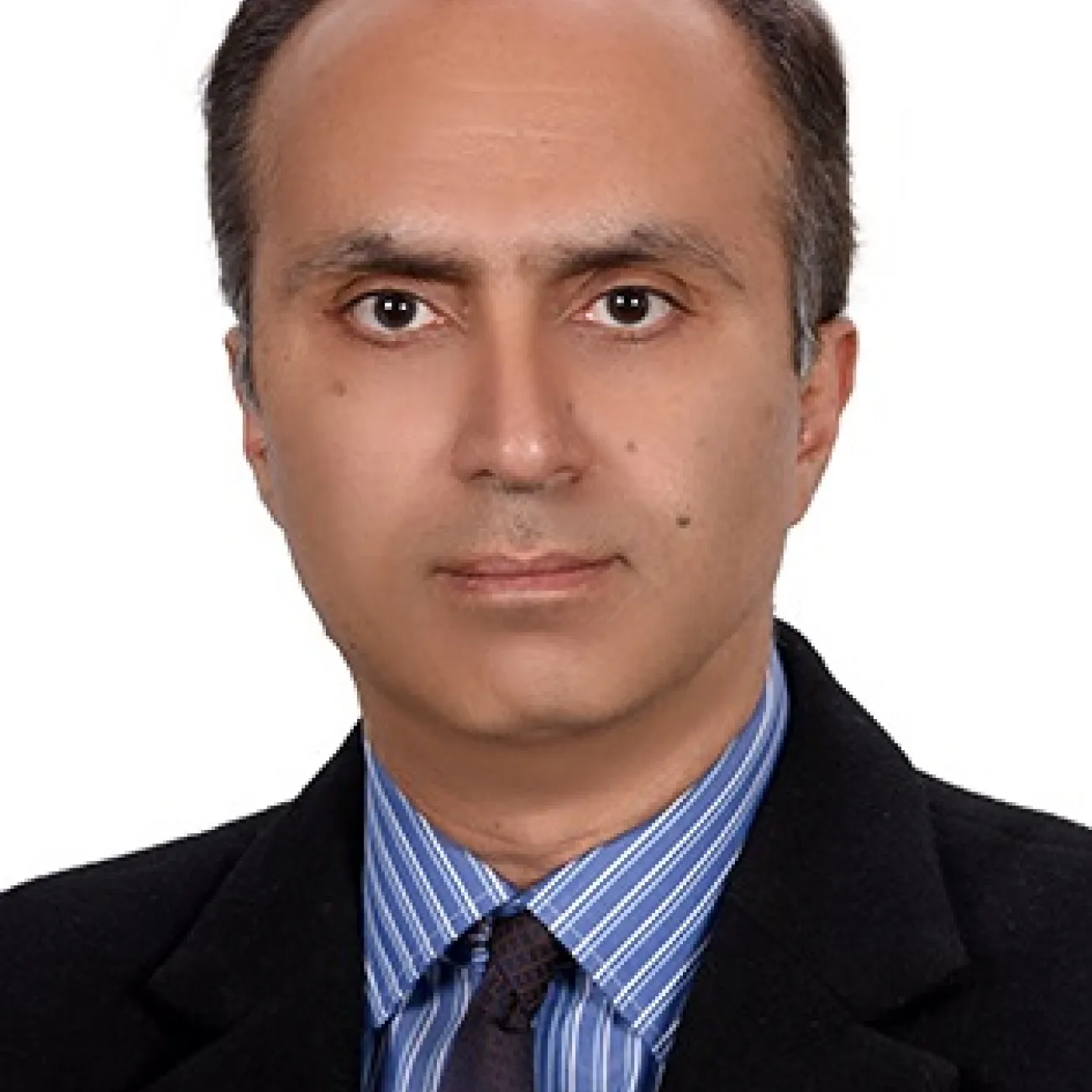
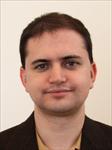
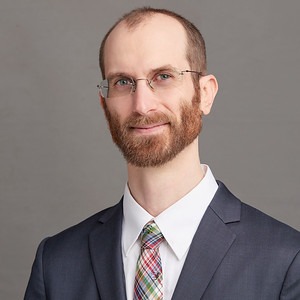
Dr. Sasan Mahmoodi is an Associate Professor at the School of Electronic and Computer Science , University of Southampton. His research focuses on Medical Image Analysis , Biometrics , and Computer Vision , with applications in healthcare and security systems. Research Groups: Vision, Learning and Control; Institute for Life Sciences; Centre for Machine Intelligence His work spans deep learning , rule-based AI , and pattern recognition in medical imaging, including applications for neonatal brain injury prognosis and radiographic knee osteoarthritis classification. He also contributes to biometric technologies like facial profile recognition and gait analysis. Recent publications highlight his expertise in: Domain adaptation for biometric systems Infrared gait recognition databases Motion artefact correction in HRpQCT imaging Histopathology image segmentation using U-Net variants Dr. Mahmoodi supervises PhD students in computer science and human health development and collaborates on interdisciplinary projects involving machine learning and medical imaging.
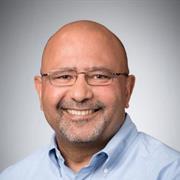
Ridha Khedri is a Professor in the Department of Computing and Software at McMaster University . His research spans formal methods in software engineering, cybersecurity, information security ontology, network segmentation, and covert channels analysis. Full Professor since 2000 Contact: khedri@mcmaster.ca Research Interests : Prof. Khedri develops algebraic frameworks for software security, with recent work on network segmentation , ontology engineering , and covert channel detection . His interdisciplinary efforts include hybrid machine learning-ontology models for environmental predictions (e.g., river ice breakup) and digital twin healthcare systems . Article Trends : His 15 most recent works (2016-2025) focus on network security , knowledge representation , and formal verification . Notable trends include automated security testing , ontology modularization , and multi-context reasoning systems . Teaching : He has taught courses like Software Design (CAS 703), Discrete Mathematics (SFWRENG 2DM3), and Algebraic Methods in Software Engineering (CAS 738) since 2017.
Professor Jae Kyung Woo is a distinguished academic in the School of Risk and Actuarial Studies at the UNSW Business School, University of New South Wales. She holds multiple prestigious professional designations including Fellow of the Institute of Actuaries of Australia (FIAA), Fellow of the Society of Actuaries (FSA), and Chartered Enterprise Risk Analyst (CERA). Her educational background includes MMath and Ph.D. degrees from the Department of Statistics and Actuarial Science at the University of Waterloo. She has held academic positions at Columbia University as Assistant Professor in the Department of Statistics (2011-2012), and at the University of Hong Kong as Assistant Professor in the Department of Statistics and Actuarial Science (2012-2017) before joining UNSW in July 2017. Research interests focus on risk theory, reliability theory, aggregate claim analysis, queueing theory, and dependence modelling Editorial Board member for ASTIN Bulletin (2021-present), European Actuarial Journal (2025-present), Probability in the Engineering and Information Sciences (2018-present), and Risks (2020-present) Principal investigator for ARC Discovery Projects (2020-2023) and Casualty Actuarial Society grants (2018-2020) Her research output includes 35 journal articles, 1 book, 1 thesis/dissertation, and 1 other publication, with recent work emphasizing shock models for correlated large losses, credibility theory under dependency structures, and advanced dependence modeling techniques in insurance contexts. Her work bridges theoretical stochastic analysis with practical applications in insurance and risk management. Fellow of the Institute of Actuaries of Australia (FIAA), since May 2018 Fellow of the Society of Actuaries (FSA), since Oct 2013 Chartered Enterprise Risk Analyst (CERA), since Jan 2012 Fellow Member of Actuarial Society of Hong Kong (ASHK), since Dec 2018 Professor Woo has secured significant research funding including an ARC Discovery Project grant of AUD 334,000 (2020-2023) for developing shock model-based frameworks for correlated large losses, and a Casualty Actuarial Society grant of USD 20,000 (2018-2020) for credibility theory research under general dependency structures. She served as Nominated Accreditation Actuary at UNSW until 2024.
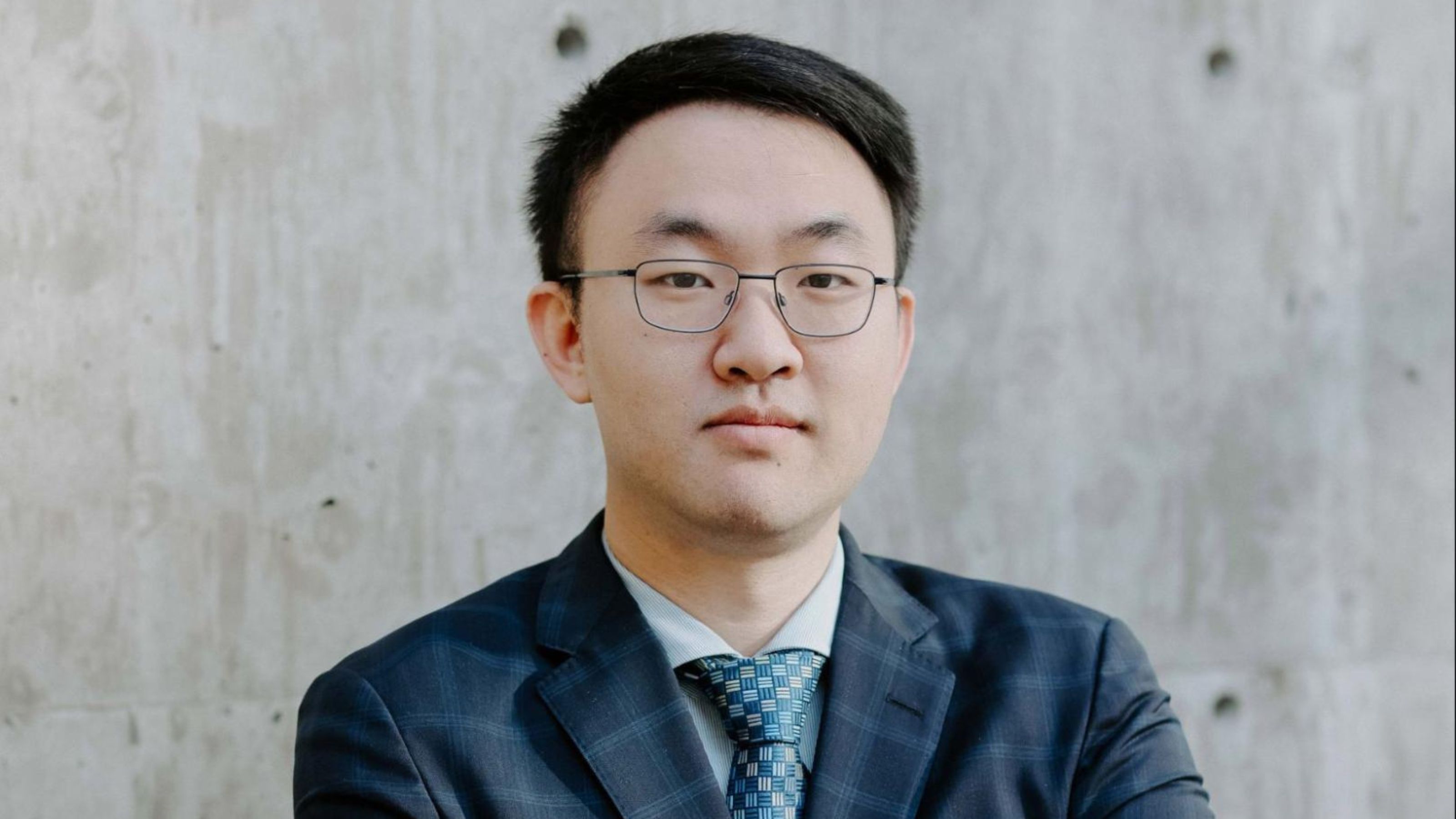
Qipei Mei is an Assistant Professor in the Department of Civil and Environmental Engineering at the University of Alberta's Faculty of Engineering. With an MSc in Computer Science and a PhD in Structural Engineering, he bridges civil engineering with artificial intelligence to enhance infrastructure productivity and sustainability. His research spans AI-driven design automation, robotics for construction safety, and IoT-based condition assessment. PhD, Structural Engineering - University of Alberta (2020) MSc, Computer Science - Georgia Institute of Technology (2018) MSc, Structural Engineering - University of Alberta (2014) B.E., Civil Engineering - Huazhong University of Science and Technology (2011) Mei's work focuses on three key areas: leveraging data-driven methods for design automation, applying sensing/robotics to construction operations, and using digital twins for infrastructure assessment. His team explores generative AI for housing design, robotic construction in remote communities, and smart monitoring systems. Recent publications highlight advancements in: lateral capacity prediction for monopile foundations, transformer-based architectural layout analysis, large language models for building code compliance, vision-language models for safety hazard detection, and sensor networks for bridge monitoring. These works demonstrate interdisciplinary integration of AI, structural engineering, and IoT. Mei actively collaborates with diverse researchers and welcomes graduate students to his Smart Infrastructure Technologies (SITE) Research Group, part of the Infrastructure and Human Tech Lab (IHT-Lab). He teaches advanced topics in structural and civil engineering while pursuing industry-funded projects through NSERC, CFI, and Alberta Innovates.
Tae J. Kwon is an Associate Professor in the Department of Civil and Environmental Engineering at the University of Alberta . His research spans Winter Transportation Engineering , Intelligent Transportation Systems (ITS) , Traffic Optimization , and Geospatial Information Science . Developed LoRWIS , a web-based decision support system for road weather sensor optimization Recipient of multiple awards including ITS Canada Excellence in Research and Development Award (2024) , KOFST Scientist of the Year (2024) , and Early Career Research Award (University of Alberta, 3 times) Active in professional committees like the TRB Surface Transportation Weather Research Group (2016–present) Research Highlights : Winter Road Maintenance : Advanced geostatistical and deep learning techniques for road condition monitoring Location Optimization : Pioneered models for RWIS sensor placement using hybrid geostatistical methods Intelligent Transportation Systems : Focused on big data applications for traffic safety and connected vehicles Climate Resilience : Integrated ecological vulnerability into fire hazard modeling Scientific Awards : ITS Canada Excellence in Research (2024) KOFST Scientist of the Year (2024) Donald Stanley Best Paper Award (2023) AKCSE Early Achievement Award (2021) University of Alberta Early Career Research Award (2020) Great Supervisor Award (2019) Teaching & Leadership : Teaches courses like CIV E 419 (Transportation Engineering: Highway Planning and Design) and CIV E 612 (Transportation Planning: Methodology and Techniques) Leads the Geospatial Transportation System & Sensing Solutions Lab (GeoTrans) , mentoring PhD students Juan Cuellar and Jiehao Bi Collaborates with agencies including Alberta Transportation , NSERC , and Iowa DOT
Jungeun (Jenny) Won is an Assistant Professor of Research in the Department of Biomedical Engineering at the School of Engineering and Applied Sciences, University at Buffalo. Her research focuses on optical imaging , biomedical device development , medical image analysis , and artificial intelligence in OCT . She leads the Translational Biophotonics Laboratory , where she develops advanced OCT techniques for medical applications such as diabetic retinopathy , otitis media , and biofilm analysis . Contact: 215J Bonner Hall, Buffalo NY 14260, jungeunw@buffalo.edu Related Links: CV PDF , Google Scholar , Lab Website Her recent work involves high-resolution OCT for longitudinal studies on retinal degeneration, VISTA OCTA for blood flow analysis, and 3D motion correction algorithms to enhance image quality. She also explores multimodal imaging combining OCT with Raman spectroscopy for bacterial differentiation and microplasma-based therapies for ear infections.
Dr. Armin Mustafa is an Associate Professor in Computer Vision and AI at the University of Surrey, where he holds a prestigious Royal Academy of Engineering Research Fellow position. He is affiliated with the Centre for Vision, Speech and Signal Processing (CVSSP), the School of Computer Science and Electronic Engineering, and the Surrey Institute for People-Centred Artificial Intelligence (PAI). His research focuses on developing AI systems for visual understanding of complex dynamic scenes, with applications in entertainment, autonomous systems, and augmented/virtual reality. Dr. Mustafa completed his PhD in general dynamic scene reconstruction from multi-view videos in 2016 from the University of Surrey under the supervision of Prof. Adrian Hilton. Prior to his doctoral studies, he worked for three years (2010-2013) at Samsung Research Institute in Bangalore, India, in the field of Computer Vision. His research expertise spans Computer Vision, Scene Understanding, 3D/4D Vision, Virtual Reality, Light Fields, Machine Learning, Video Captioning, Augmented Reality, Artificial Intelligence, and Audio-visual Video Understanding. Dr. Mustafa has pioneered advances in 4D vision, NLP, and Scene Understanding over the past decade, with a particular focus on enabling machines to model and interpret real-world environments for socially beneficial applications. His work bridges theoretical advances in computer vision with practical applications in media production, virtual reality, and autonomous systems. Analysis of Dr. Mustafa's recent publications reveals a strong focus on multimodal learning, particularly the integration of audio and visual information for scene understanding. His work spans diverse areas including shadow detection and removal, audio event classification, video captioning, person image generation, and dynamic scene reconstruction. A notable trend is his exploration of transformer architectures for both vision and audio tasks, as well as the application of self-supervised learning techniques to reduce dependency on labeled data. Dr. Mustafa has received numerous prestigious awards: 2018 - Research Fellowship, The Royal Academy of Engineering, UK 2017 - Young Researcher award, CVPR 2016 - Doctoral Consortium grant, CVPR 2015 - BMVA travel grant for ICCV 2014 - Set-Squared Research to Innovator grant 2013 - Overseas Research Scholarship, FEPS, The University of Surrey 2010 - Cadence Silver Medal, Indian Institute of Technology, Kanpur As a dedicated mentor, Dr. Mustafa supervises several PhD students working on cutting-edge topics including multi-person reconstruction, audio-visual scene understanding, and automatic storyboard generation. His research is supported by significant grants including a £15 million UKRI Prosperity Partnership with the BBC (AI4ME), a 5-year Royal Academy of Engineering fellowship (4D Vision for Perceptive Machines), and multiple projects with industry partners such as Figment Productions and Foundry. Dr. Mustafa is an active member of the Centre for Vision, Speech and Signal Processing (CVSSP), one of the world's leading research centers in vision, speech, and signal processing. He also contributes to the Surrey Institute for People-Centred Artificial Intelligence (PAI), where he serves as a Surrey AI Fellow. His work often involves collaboration with industry partners and other academic institutions across Europe.
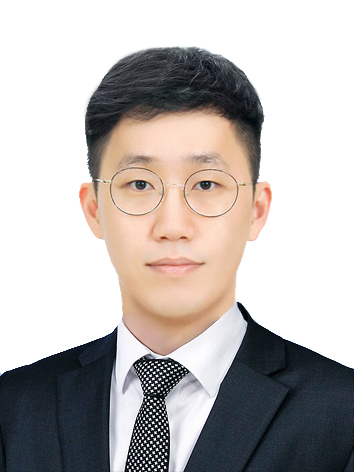
Hoseung Song is an Assistant Professor at KAIST (Korea Advanced Institute of Science & Technology), affiliated with the Department of Industrial and Systems Engineering and the Graduate School of Data Science. His research focuses on statistical data science, decision making, and biomedical applications, particularly in areas like change-point analysis, two-sample tests, and spatial clustering. His work bridges theoretical statistics with practical biomedical and healthcare challenges. Research interests include advanced statistical methodologies for analyzing complex biological and healthcare data, such as viral genomics, microbiota associations, and immune cell clustering. He develops scalable algorithms and kernel-based methods to address high-dimensional and non-Euclidean data challenges. Recent work highlights applications in infectious diseases (e.g., HSV-2) and postmenopausal health through association studies and differential analysis. His publications emphasize robust statistical testing frameworks, including permutation-based limitations, batch effect corrections, and graph-based methodologies. These contributions enhance reliability in biomedical research and safety-critical data applications. His lab likely integrates computational statistics with real-world healthcare datasets to drive translational insights.
Griffin Weber, M.D., Ph.D., is an Associate Professor of Medicine and Biomedical Informatics at Harvard Medical School (HMS) and Beth Israel Deaconess Medical Center (BIDMC). He directs the Biomedical Research Informatics Core (BRIC) at BIDMC. His research focuses on expertise mining, social network analysis, and biomedical informatics. Key contributions include developing Profiles RNS (an open-source research networking platform) and i2b2 / SHRINE federated query tools for clinical data. He holds MD and PhD degrees from Harvard (2007), and earlier degrees in bioengineering and computer science. Education: SB in Bioengineering (Harvard, 2000), SM/PhD in Computer Science (Harvard, 2004/2005), MD (Harvard, 2007). He served as Harvard Medical School's first Chief Technology Officer, building educational platforms for 500+ courses. His work spans DNA microarrays, breast cancer tumor modeling, and EHR bias analysis. Research Interests: Leveraging informatics to improve healthcare through federated data systems, team science dynamics, and EHR analysis. Projects include Profiles RNS for researcher networks and i2b2 for clinical data queries across institutions. He explores biases in EHR data filtering and visualizing healthcare system dynamics in biomedical data. Grant Leadership: Principal investigator on NIH grants addressing EHR biases (R01LM013345), healthcare system dynamics (U01CA198934), and scientific workforce networks (U01GM112623). Collaborator on PCORI and NIH-funded initiatives. Awards: 2020 Fellow of the American College of Medical Informatics; 2011 Top Podium Presentation (AMIA); 2007 Medical Technology Award (Massachusetts Medical Society). Labs/Teams: Leads BRIC at BIDMC, collaborates on i2b2/SHRINE, and contributes to the 4CE consortium for federated healthcare data analysis.
Soora Rasouli is Full Professor of Urban Planning and Transportation at Eindhoven University of Technology, leading research on mobility behavior and sustainable cities. Education: PhD in Built Environment, Eindhoven University of Technology MSc in Civil Engineering (Transport) Her group develops behavioral models integrating emerging technologies like autonomous vehicles and MaaS. Research focuses on decision-making frameworks for urban policies that balance sustainability with human needs. Recent articles analyze activity-travel patterns, household mobility decisions, and EV adoption barriers using advanced statistical methods. Awards: Best Poster Award (2019) Veni Grant for outstanding early-career research (2018) She directs projects like LEVERAGE and NEON, collaborating with European partners on data-driven mobility solutions. As editor of Transportation Letters, she promotes interdisciplinary urban mobility research.
Fabien Postel-Vinay is a Professor of Economics at the Department of Economics, University College London (UCL), and concurrently serves as Research Director at the Institute for Fiscal Studies (IFS). His research focuses on labor market dynamics, unemployment, wage determination, and the interplay between economic policies and labor markets. He holds dual affiliations with UCL and IFS, contributing to both academic research and policy analysis. Postel-Vinay’s work emphasizes understanding labor mobility, wage posting mechanisms, and the impact of business cycles on employment. His recent studies address post-pandemic job opportunities, mental health effects on labor trajectories, and structural labor market analysis. He has extensively published on topics such as public versus private sector wage gaps, temporary employment dynamics, and employer-employee matching processes. His research often combines theoretical models with empirical data, focusing on macroeconomic implications of labor market policies. Key themes include the role of age in policy design during crises, the cyclical job ladder dynamics, and the measurement of employer-to-employer reallocation. Despite his prolific output, no scientific awards or grants are explicitly mentioned in the provided text. Postel-Vinay collaborates with institutions like IFS to inform policy through studies on labor market responses to economic shocks, such as the pandemic’s impact on employment structures. His work bridges theoretical microeconomics with applied policy analysis, addressing both academic and societal challenges in labor economics.
Dr. Yizi Chen is a Researcher affiliated with the Professorship for Cartography at ETH Zurich's Department of Civil, Environmental and Geomatic Engineering. Their work focuses on advancing cartographic techniques through AI-driven methods, historical map analysis, and geospatial technologies. Key contributions include automated map vectorization, semantic segmentation of historical maps, and integrating multimodal data for robotic systems. They have published extensively in top-tier journals and conferences, addressing challenges in deep learning applications for geomatic engineering. Education details are not explicitly provided in the text. Research interests include semantic segmentation, generative AI for cartography, and steganography in image translation. Notable publications span topics from eye-tracking segmentation to urban land use mapping, reflecting a strong interdisciplinary approach. Dr. Chen collaborates on projects involving historical map digitization and benchmarking datasets for computer vision tasks. No awards or grants are mentioned. Their work contributes to advancing geomatic engineering through innovative solutions in digital mapping and spatial data analysis.
Dr. Rafeef Garbi is a Professor at the Department of Electrical and Computer Engineering, University of British Columbia, and the Founder/Director of the Biomedical Signal and Image Computing Laboratory (BiSICL). Her multidisciplinary research integrates artificial intelligence, computer vision, and medical imaging for clinical applications in pediatric orthopedics, oncology, and neurology. PhD (Chalmers University, Sweden), MSc (with distinction), Technical Licentiate Research Focus: Specializing in Medical Image Computing and Visual Computing , her lab develops AI-driven solutions for: Automated segmentation and analysis of multi-dimensional biomedical data Clinically-translatable biomarkers for disease assessment Computer-aided intervention systems in surgical contexts Scientific Leadership: UBC Killam Faculty Research Fellow Peter Wall Institute for Advanced Studies Early Career Scholar Senior IEEE Member & Founding IEEE EMBS Vancouver Section Member Key Collaborations: Active in the Medical Image Computing and Computer Assisted Intervention (MICCAI) Society and CAIDA: UBC ICICS Centre for Artificial Intelligence Decision-making and Action. Her team bridges engineering, medicine, and computational biology through translational research.
Andrew M. Olney is Professor in both the Institute for Intelligent Systems and Department of Psychology at the University of Memphis. His work bridges artificial intelligence, cognitive science, and education, with a primary focus on natural language interfaces for learning. His educational background includes a Ph.D. in Computer Science from the University of Memphis (2006), an M.S. in Evolutionary and Adaptive Systems from the University of Sussex (2001), and a B.A. in Linguistics with Cognitive Science from University College London (1998). Dr. Olney's research centers on intelligent tutoring systems and natural language processing applications in education. His specific interests include vector space models, dialogue systems, unsupervised grammar induction, and computational representations of meaning. He has made significant contributions to conversational intelligent tutoring systems and task-oriented natural language interfaces, with particular emphasis on dyadic interaction and engagement in learning contexts. Analysis of his recent publications reveals a consistent focus on leveraging AI for educational enhancement, particularly through automated content creation, question generation, and adaptive learning systems. His work spans multiple disciplines including computer science, cognitive science, linguistics, and education, demonstrating strong interdisciplinary integration. Scientific Awards and Recognition: Best Paper Award, Proceedings of Empowering Education with LLMs (2023) Associate Editor, International Journal of Artificial Intelligence in Education (Impact Factor 4.9) Dr. Olney has been actively involved in mentoring graduate students and securing research funding. He has served as Principal Investigator on $6M of federal grants within a total of $18M in federal grant funding. His service includes former editorship of the Journal of Educational Data Mining (2017-2022) and former leadership roles as Director/Associate Director of the Institute for Intelligent Systems (2006-2017). He currently coordinates both the Cognitive Science Graduate Certificate and Undergraduate Minor in Cognitive Science at the University of Memphis. His BrainTrust project, funded by the NSF, addresses the knowledge engineering bottleneck for intelligent tutoring systems through innovative approaches to virtual student simulation and knowledge representation.
Roy Wollman is a Professor at the University of California, Los Angeles (UCLA) in both the Department of Integrative Biology and Physiology and the Department of Chemistry and Biochemistry within the College of Letters and Science. His work bridges experimental and computational approaches to study dynamic signaling networks and their impact on cellular decisions. Research Focus: Computational and systems biology of signaling pathways Key Techniques: Single-cell analysis, spatial transcriptomics, quantitative modeling Major Themes: Information transmission in biochemical networks, cellular decision-making, epigenetic regulation Recent work has emphasized spatial transcriptomics mapping of brain regions, wound response signaling, and multi-scale analysis from cell biology to physiology. His lab has developed computational tools like scPNMF for gene selection and JSTA for cell segmentation and annotation. Key findings include mechanisms of TNF-induced cell death tradeoffs and laminin scarring effects in stem cell function. Roy Wollman has received continuous NIH funding since 2009, including grants for studying NFκB dynamics (R01GM117134), corneal wound signaling (R01EY024960), and single-cell technologies for traumatic brain injury (R01NS117148). His research combines high-throughput microscopy with computational modeling to understand how cells process dynamic signals.