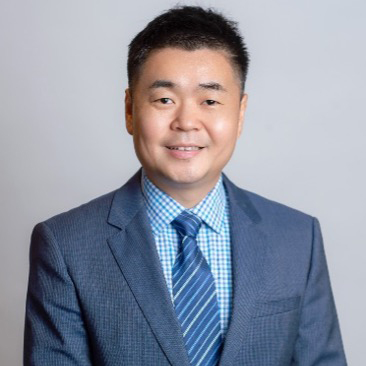
Matthew Louis Mauriello is an Assistant Professor in the Department of Computer and Information Sciences at the University of Delaware , where he directs the Sensify Lab . He holds a PhD in Computer Science from the University of Maryland (2018) and completed postdoctoral work at Stanford University (School of Medicine, 2020; School of Public Policy & Environmental Engineering Department, 2019). Research interests span Human-Computer Interaction (HCI), Ubiquitous Computing, and User-Centered Design with applications in: Sustainability Human-Building Interaction Wearable Technology Personal Informatics Educational Game Design Mental Health Interventions Recent publications highlight trends in stress monitoring (skin-like biosensors, workplace wellbeing), energy auditing (thermography systems), and educational technology (block-based programming tools for teachers). His work appears in ACM CHI, ACM Human-Computer Interaction, and Building and Environment. Scientific awards include: Best Paper Honorable Mention, CHI 2016 Best Paper Honorable Mention, CHI 2015 Best of WebSci'18 Teaching at University of Delaware encompasses courses like Educational Game Design Operating Systems Advanced Web Technologies Computing for Social Good with a focus on project-based learning and systems thinking.
Gierad Laput is a Senior Engineering Manager at Apple, leading the Perception and Interaction Engineering organization under Machine Intelligence Neural Design (MIND) at Apple AI/ML (AIML). He is also an Adjunct Professor at Carnegie Mellon University's School of Computer Science and Human-Computer Interaction Institute. His research sits at the intersection of sensing systems, interactive technologies, and machine learning, with applications in ambient intelligence, wearables, and AI-driven interactive experiences. Ph.D. in Computer Science from Carnegie Mellon University Founding member of CMU's Future Interfaces Group Former Google Ph.D. Fellow, Disney Imagineer, and recipient of 10 Best Paper Awards/Nominations His research agenda at Apple leverages cutting-edge hardware to develop multimodal ML systems for vision, audio, and motion sensors, enabling features like head gesture detection for AirPods, Apple Intelligence integrations, and health monitoring tools. Recent collaborative projects include Vision Pro hand interaction systems and WatchOS updates for cycling/fall detection. Key research areas include human-computer interaction , machine learning for sensor fusion , and smart environment sensing . Over 35 publications cover transformative technologies like ViBand (bio-acoustic sensing), EM-Sense (touch recognition), SkinTrack (arm as touchpad), and ElectroDermis (stretchable electronics). Scientific honors include: Fast Company Innovation by Design Award (2017) Google PhD Fellowship (2018) Swartz Entrepreneurial Fellowship (2018) Best Paper Awards at ACM UIST (2016) and ACM CHI (2015) As an educator, he has taught courses at CMU and the University of Michigan on on-device machine learning , signal processing , and human-centered design . His lab has mentored numerous researchers now pursuing PhDs at MIT, UW, CMU, and Northwestern.
Dr. Chengmo Yang is a Professor in the Department of Electrical and Computer Engineering at the University of Delaware, with a joint appointment. She received her PhD and MSc in Computer Science from the University of California, San Diego, and a BSc in Microelectronics from Peking University, China. PhD, University of California, San Diego MSc, University of California, San Diego BSc, Peking University, China Her research focuses on enhancing security, reliability, non-volatility, and energy efficiency in embedded systems, cyber-physical systems (CPS), and Internet-of-Things (IoT). She leads the Computer Architecture, Reliability, and Security (CARES) group and has authored over 70 peer-reviewed publications. Recent publications emphasize neural network accelerators, non-volatile memory (NVM) optimization, and security frameworks for embedded systems. Her work explores fault tolerance, wear leveling, and side-channel attack mitigation in NVM-based FPGAs, STT-RAM, and SSDs. National Science Foundation Career Award (2013) University of Delaware Mid-Career Faculty Excellence in Scholarship Award (2020) Best paper award at ICESS (2019) Three best paper nominations at DAC, DATE, and GLSVLSI (2019) Dr. Yang serves as Associate Editor for IEEE TCAD and ACM TODAES. She is the Diversity & Inclusion Representative for IEEE CEDA and has organized numerous conferences including Technical Program Chair for CODES-ISSS 2022. Her lab has hosted current and former students like Fanruo Meng (PhD candidate), Fateme Hosseini (Qualcomm), and Patrick Cronin (Intel), focusing on graduate-level research in hardware security and reliability.
Dr. Corey T. Callaghan is an Assistant Professor in the Department of Wildlife Ecology and Conservation at the University of Florida . Based at the Fort Lauderdale Research and Education Center , his research focuses on global change ecology using big data from citizen science platforms like eBird and iNaturalist, combined with geospatial analyses and macroecological theory . Ph.D. (2019) from UNSW Sydney M.S. (2015) from Florida Atlantic University B.S. + B.S. (2013) from Canisius College His work examines urban ecology , including how species traits influence urban tolerance across birds, amphibians, and butterflies. He develops adaptive sampling frameworks to optimize citizen science data collection while addressing biases. Current projects analyze human-nature interactions through citizen science participation, secondary data in photographs, and machine learning for biodiversity monitoring. He actively contributes to conservation strategies for urban biodiversity and data-driven restoration efforts . Recent publications highlight his expertise in cross-taxa comparisons , continental-scale analyses , and ecosystem service quantification . He leads the Global Ecology Research Group at the University of Florida, emphasizing collaborative science and open-source methodologies .
Stefano Ermon is an Associate Professor in the Department of Computer Science at Stanford University, affiliated with the Artificial Intelligence Laboratory and a Senior Fellow at the Woods Institute for the Environment. His research focuses on advancing machine learning and generative AI techniques to address societal and environmental challenges, including computational sustainability, geospatial analysis, and climate science. He holds a Ph.D. from Cornell University (2015). Education: Ph.D. in Computer Science, Cornell University (2015). Research Interests: Ermon’s work bridges foundational machine learning (e.g., diffusion models, generative AI, and optimization) with applications in sustainability, geospatial analysis (via satellite imagery), and earth observation systems. Notable contributions include predicting poverty using satellite data and developing scalable methods for molecule generation. Articles Trends: His recent work emphasizes diffusion models for generative tasks (e.g., text-to-image, molecule design), geospatial AI (e.g., environmental monitoring), and ethical AI (e.g., bias mitigation in LLMs). He also explores applications in robotics and scientific computing. Awards: He has received prestigious awards, including the ICML 2024 Best Paper Award, Sloan Research Fellowship, Microsoft Research Faculty Fellowship, and the IJCAI Computers and Thought Award. Advising and Grants: Ermon teaches courses like Probabilistic Graphical Models (CS228) and has secured grants from NSF, ONR, AFOSR, and private foundations. His lab develops tools for climate science and sustainable development. Labs/Teams: Leads the Stanford AI Lab group focused on computational sustainability and generative AI, collaborating with institutions like the Woods Institute for environmental applications.
Carl Vondrick is a Professor in the Department of Computer Science at Columbia University. His research focuses on creating robust and versatile perception systems that leverage video and interaction with the natural world, with applications in 3D reconstruction, visual question answering, and robot manipulation. Former research scientist at Google Visiting researcher at Cruise Education: PhD (2017) from MIT, advised by Antonio Torralba BS (2011) from UC Irvine, advised by Deva Ramanan His research explores multimodal approaches for cross-task and cross-modal transfer, scene dynamics, audiovisual perception, interpretable models, and spatial awareness systems. The lab emphasizes zero-shot generalization and neuro-symbolic methods while addressing safety and robustness in AI systems. Key publication trends include: 2025: Video generation for robotics 2024: Differentiable rendering and cross-modal reasoning 2023: Robust perception and 3D modeling Scientific Awards: 2024 PAMI Young Researcher Award 2021 NSF CAREER Award Teaching Roles: Teaching Computer Vision II (2021-2025), Computer Vision I (2018-2019), and Representation Learning (2020-2022). Advising: Advises 8 current PhD students and has mentored 5 graduated students now at institutions like MBZUAI and UMD. The lab recruits 1-2 PhD students annually through Columbia’s PhD program. Grants and Collaborations: Funded by NSF, DARPA, Toyota Research Institute, Amazon Research, and Google.
Prof. Konrad Schindler holds the position of Full Professor at the Department of Civil, Environmental and Geomatic Engineering at ETH Zürich. He is also the Head of the Institute of Geodesy and Photogrammetry (IGP), leading research and educational activities in geomatics and computer vision. His career spans roles as a Photogrammetric Engineer, scientific assistant, postdoc researcher, and academic faculty across institutions including Graz University of Technology, Monash University, and TU Darmstadt before joining ETH Zürich in 2010. Education: Undergraduate studies in Geodesy (1992–1995), Graz University of Technology, Austria MEng in Photogrammetry and Geoinformation (1995–1999), Vienna University of Technology, Austria PhD in Computer Science (2001–2003), Graz University of Technology, Austria Research focuses on Photogrammetry , Remote Sensing , Computer Vision , and Image Understanding with interdisciplinary applications in environmental monitoring, geospatial analysis, and disaster response. He develops computational methods for 3D reconstruction, fusion of multi-modal data, and AI-driven solutions for satellite imagery interpretation. His work bridges geomatic engineering and machine learning to address challenges in urban mapping, climate modeling, and biological systems analysis. Publications reflect expertise in geospatial AI, diffusion models, and benchmarking datasets for disaster resilience. Notable works include Marigold (image analysis adaptation) and BRIGHT (building damage assessment). His research emphasizes practicality and scalability, such as affordable depth estimation and global biomass datasets. He has received the 2013 Marr Prize Honourable Mention (IEEE) and the 2012 U.V. Helava Award (ISPRS), alongside several Best Presentation Awards. His contributions span technical leadership, editorial roles (ISPRS Journal), and service to Swiss remote sensing commissions. Advising and grants: While no specific advisee names or grant details are listed, his career trajectory includes mentoring postdocs and junior faculty. He teaches advanced courses in Photogrammetry , Image Interpretation , and Machine Vision , integrating cutting-edge AI techniques into curricula. His research group collaborates on global-scale projects like canopy height mapping and satellite-based climate variable assessments. Labs/Teams: As Institute Head, he oversees the IGP lab at ETH Zürich, with prior affiliations including the Digital Perception Lab (Monash University) and the Computer Vision Lab (ETH Zurich). His work often involves multi-institutional collaborations focused on geospatial AI and environmental science.
Shrikanth (Shri) Narayanan is a University Professor and holder of the Niki and Max Nikias Chair in Engineering at the University of Southern California (USC), serving as the inaugural Vice President for Presidential Initiatives. He leads the Signal Analysis and Interpretation Lab (SAIL) and holds joint appointments in Computer Science, Linguistics, Psychology, Neuroscience, Pediatrics, and Otolaryngology-Head and Neck Surgery. His research focuses on speech and audio processing, behavioral signal processing, and real-time MRI of speech production, with applications in healthcare, education, and technology. Education: B.E. in Electrical Engineering from College of Engineering, Guindy (Chennai, India, 1988); M.S., Engineer, and Ph.D. in Electrical Engineering from UCLA (1990, 1992, 1995). Research interests span computational linguistics, machine learning, and multimodal human behavior analysis. He pioneered technologies for speech biomarkers in mental health, real-time MRI of speech production, and wearable sensor systems for longitudinal health studies. His work in speech emotion recognition, forensic interviews, and clinical applications has been recognized through over 40 awards, including the IEEE Flanagan Award and ISCA Medal. He has published extensively in journals like Proceedings of the IEEE , Journal of the Acoustical Society of America , and PLOS One . Key Grants: NSF CAREER, Okawa Research, IBM Faculty, Google/Amazon awards. Labs/Teams: Signal Analysis & Interpretation Lab (SAIL), USC Information Sciences Institute (ISI), Google Visiting Faculty Researcher.
Dr. Guillermo Amador is an Assistant Professor in the Experimental Zoology department at Wageningen University & Research. His research focuses on understanding how animals interact with complex environments through locomotion, adhesion, and fluid dynamics. He investigates biological systems like insects, plants, and marine organisms to inspire bio-engineered solutions for robotics, microfluidics, and material science. Amador received his PhD in Mechanical Engineering from Georgia Institute of Technology (USA), followed by postdoctoral research at the Max Planck Institute for Intelligent Systems (Germany) and a Marie Sklodowska-Curie fellowship at TU Delft (Netherlands). His expertise spans biophysics, biomaterials, and biomechanics, with a focus on self-cleaning mechanisms and bioadhesion. He collaborates with the 4TU consortium on Dutch Soft Robotics to develop bio-inspired designs. His work bridges fundamental biology with engineering applications, emphasizing interdisciplinary approaches to solve challenges in robotics and environmental science. Amador teaches courses including Biomimetics and Functional Zoology , integrating his research into education. His research highlights include studies on cuttlefish suction cups, stick insect adhesion, and pollen transport mechanisms in pollinators.
Laurent Demanet is a Professor of Applied Mathematics at the Massachusetts Institute of Technology (MIT), with a primary appointment in the Department of Mathematics and a joint appointment in Earth, Atmospheric, and Planetary Sciences (EAPS). He served as Director of MIT’s Earth Resources Laboratory from 2018 to 2024, focusing on seismic imaging and wave propagation to visualize Earth's subsurface structures. Undergraduate: Mathematical Engineering and Theoretical Physics, Université de Louvain, Belgium PhD: Applied and Computational Mathematics, California Institute of Technology (Caltech), 2006 (advisor: Emmanuel Candès, William P. Carey Prize for best dissertation in mathematical sciences) Postdoctoral: Szegö Assistant Professorship, Stanford University (2006-2009) His research centers on applied mathematics and scientific computing for geophysics, particularly inverse problems, wave propagation, and signal processing. He develops numerical algorithms and machine learning tools to analyze indirect, incomplete, and noisy data, enabling accurate subsurface modeling for environmental monitoring, carbon sequestration, hydrogen storage, and geothermal energy. His work also addresses seismic hazards induced by resource exploration and storage activities. Scientific awards and honors include: National Science Foundation CAREER Award (2012) Alfred P. Sloan Research Fellowship (2011) Air Force Young Investigator Award (2011) MIT Class of 1954 Career Development Professorship (2013-2016) As Director of MIT’s Earth Resources Laboratory and through his research group, Demanet has advanced computational methods for geophysical imaging, mentored students, and secured grants for interdisciplinary projects. His work bridges applied mathematics, computational science, and geophysics to solve pressing environmental and energy challenges. He leads research on subsurface visualization, integrating machine learning and numerical algorithms to improve seismic imaging and quantify predictive uncertainty. His lab's applications span natural hazard assessment, resource management, and sustainable energy solutions.
Arti Singh is an Assistant Professor in the Department of Agronomy at Iowa State University. Her research focuses on plant breeding, soybean diseases, genomics, and phenomics, with a strong emphasis on integrating artificial intelligence and high-throughput technologies into agricultural systems. She leads projects involving AI-driven disease identification, precision agriculture, and crop improvement strategies. Her expertise includes developing machine learning models for real-time weed and insect classification (e.g., WeedNet and InsectNet), deploying drones and ground robots for crop phenotyping, and leveraging genomic data to map traits like flowering time and disease resistance in legumes. Singh collaborates on initiatives like the AIIRA Institute for Resilient Agriculture and the BioTrove biodiversity dataset. Singh’s work spans plant stress phenotyping, digital twin technologies for plant sciences, and multi-sensor phenotyping for early disease detection. Her research bridges computational methods with traditional agronomy, aiming to enhance crop resilience and sustainability in the face of environmental challenges. Her recent projects include optimizing robotic navigation for precision agriculture, improving soybean yield estimation via video analysis, and dissecting genetic architectures of traits in mungbean and soybean using GWAS and genomic tools. She actively contributes to conferences and publishes in high-impact journals, advancing both foundational and applied aspects of agricultural science.
Tanzeem Choudhury is a Professor at the Jacobs Technion-Cornell Institute at Cornell Tech, specializing in Information Sciences. She co-founded HealthRhythms Inc. and directs the People-Aware Computing lab, focusing on machine learning for human activity and social network analysis. Her work pioneered the 'Reality Mining' field, leveraging mobile sensors to model social interactions. Choudhury holds a Ph.D. from MIT's Media Lab and B.S. in Electrical Engineering from the University of Rochester. Her research spans wearable tech, mental health interventions, and ubiquitous computing. Notable projects include affective touch wearables for anxiety reduction, stress detection systems (e.g., StressSense), and the BeWell app for well-being monitoring. Choudhury has been recognized as an ACM Fellow and SIGCHI Academy member, with impactful contributions to healthcare technology and sensor-based behavioral analysis. Current lab initiatives include developing closed-loop interventions for mental health, equity-driven sensing systems, and exploring AI integration in psychotherapy. She advises PhD students on topics like digital biomarkers, burnout detection in healthcare workers, and smartphone-based mental health assessment. Education: Ph.D. in Media Arts & Sciences (MIT), M.S. (MIT Media Lab), B.S. in Electrical Engineering (University of Rochester) Lab Team: Includes PhD candidates (Dan Adler, Yiran Zhao) and researchers focusing on health AI, wearable devices, and clinical applications. Major Awards: ACM Fellowship (2020), SIGCHI Academy (2018), Best Paper Awards at Ubicomp and MobileHCI conferences. Key Projects: OptoBeat (skin-tone calibrated blood oxygen sensor), EmotionCheck (anxiety intervention), and Affective Touch devices.
Sean Cao serves as Associate Professor (with tenure) at the Robert H. Smith School of Business, University of Maryland, where he is Director and Co-founder of the AI Initiative for Capital Market Research. He also holds an affiliation as professor at Harvard Business School's D 3 Institute. His academic journey began with a Ph.D. from the University of Illinois at Urbana-Champaign. Dr. Cao's research focuses on the intersection of artificial intelligence and capital markets, with particular expertise in how machine learning transforms financial analysis, corporate disclosure practices, and investment decision-making. His work examines the evolving relationship between human analysts and AI systems, blockchain applications in financial reporting, and the strategic adaptation of corporate communications for machine readership. He has pioneered research on the "AI divide" among investor groups and developed frameworks for human-AI collaborative stock analysis. His publication portfolio spans top journals including Journal of Financial Economics, Review of Financial Studies, Journal of Accounting Research, and Management Science. The research demonstrates consistent thematic progression toward increasingly sophisticated AI applications in finance, with recent work exploring distributed ledger technologies for auditing, machine learning for extracting private information from disclosures, and the economics of greenwashing in ESG funds. His studies frequently combine textual analysis with traditional financial metrics to uncover novel market insights. Fama-DFA Prize from Journal of Financial Economics for best paper in capital markets and asset pricing Michael J. Brennan Award from Review of Financial Studies Deloitte Initiative for AI and Learning award for developing trustworthy AI for social equity PanAgora Asset Management's Dr. Richard A. Crowell Memorial Prize Multiple best paper awards from Midwest Finance Association, Global AI Finance Conference, and Asian Finance Association Dr. Cao has delivered over 200 invited research talks at major institutions including the Central Bank of Japan, Central Bank of Thailand, and U.S. Securities and Exchange Commission. He serves as Guest Associate Editor for Management Science and has co-chaired Review of Financial Studies conferences on FinTech and Machine Learning. His educational initiatives include a widely adopted free AI textbook for finance and accounting that has been implemented at universities worldwide including Indiana University, UT Dallas, and University of Minnesota. As Director of the AI Initiative for Capital Market Research, Dr. Cao leads a multidisciplinary team exploring practical AI applications in finance. The initiative has secured significant funding including a $150,000 grant from GRF CPAs & Advisors. His research group maintains strong industry connections through partnerships with regulatory bodies, financial institutions, and technology companies, facilitating the translation of academic research into practical financial applications.
Dr. James McDonald serves as a Lecturer and Research Fellow at the University of New South Wales (UNSW) within the School of Civil and Environmental Engineering's Water Research Centre (WRC). His work at the Vallentine Annexe (H22), Room 102, Kensington Campus focuses on advancing water treatment technologies and understanding contaminant behavior in water systems. His position bridges academic instruction with cutting-edge research in environmental engineering. McDonald's research spans multiple critical areas in water science and engineering, with particular emphasis on trace organic contaminants, membrane technologies, and advanced water treatment processes. His work investigates the fate and removal of pharmaceuticals, personal care products, and industrial chemicals in various water treatment systems. He has made significant contributions to understanding disinfection by-product formation, chiral inversion of pharmaceuticals, and the development of novel membrane technologies for improved water purification. His research combines experimental approaches with computational modeling to address complex water quality challenges. Analysis of McDonald's recent publications reveals a strong focus on emerging contaminants, particularly PFAS compounds and chiral pharmaceuticals, and their behavior in water treatment systems. His work demonstrates expertise in both conventional and advanced water treatment technologies, with increasing emphasis on sustainable approaches including green infrastructure and novel membrane processes. The interdisciplinary nature of his research connects environmental engineering, chemistry, microbiology, and materials science to address contemporary water quality challenges. McDonald actively collaborates with researchers across multiple institutions and has contributed to numerous significant studies on water quality and treatment. His work supports the development of more effective water recycling systems and safer drinking water supplies. While specific grant information isn't detailed in the available text, his extensive publication record suggests sustained research funding in water treatment technologies and contaminant fate studies. As part of UNSW's Water Research Centre, McDonald contributes to one of Australia's leading water research facilities. The WRC provides a collaborative environment for addressing complex water challenges through interdisciplinary research that integrates engineering, chemistry, and environmental science perspectives.
Dr. Kaya de Barbaro is an Associate Professor in the Department of Psychology at the University of Texas at Austin (College of Liberal Arts). She holds a Ph.D. from the University of California San Diego. Her research focuses on bridging computer science and developmental/clinical psychology, particularly maternal mental health and infant social-emotional development. She directs the Daily Activity Lab, which uses mobile/wearable sensors and machine learning to analyze real-world interactions, aiming to develop just-in-time interventions for new mothers. Key research areas include maternal-infant dynamics, physiological synchronization, and the impact of environmental chaos on development. She has pioneered methods for analyzing high-density data, such as Granger causality and machine learning algorithms to detect behaviors like crying and holding. Recent work emphasizes leveraging ecological momentary assessment surveys and 24-hour LENA audio recordings to understand proximal mechanisms of development. Dr. de Barbaro teaches Psychology 333D (Introduction to Developmental Psychology) and has developed curricula for both in-person and online formats. She is actively involved in training students through the Eureka program at UT Austin. Her lab collaborates on tools like chatbots for postpartum mental health and has published extensively on sensor-based methodologies in developmental science.