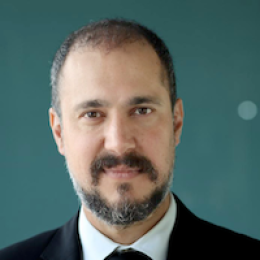
Dr. Cathy Reidy Liermann is a Senior Lecturer and Internship Coordinator for Western Washington University's College of the Environment, based at Everett & Western on the Peninsulas campuses. As an ecohydrologist, she studies human dependencies and impacts on freshwater systems, with focus areas including dam effects on inland fisheries, hydrological classification, and environmental flow analysis. Her research has contributed to global assessments of river fragmentation and freshwater biodiversity conservation. She co-developed frameworks for evaluating river connectivity loss from dams and mapping free-flowing rivers worldwide. Recent investigations examine climate change impacts on river basins and sustainable management of freshwater resources. Dr. Reidy Liermann holds a PhD from Umeå University and MS from University of Washington. She teaches courses in Water Quality, Stream Ecology, Climatology, and Ecosystem Management at WWU.
Natalia Jones is an academic at the University of East Anglia (UEA), holding roles as an Associate Tutor in the Faculty of Medicine and Health Sciences and Faculty of Science, and a Senior Research Associate in the School of Environmental Sciences. She is also a member of the Tyndall Centre for Climate Change Research. Her work bridges environmental science, public health, and climate change impacts. Key research interests include disease surveillance systems, climate-driven infectious diseases, environmental contaminants, and public health policy. Recent research highlights include studies on wastewater-based epidemiology for SARS-CoV-2 monitoring, climate-induced Vibrio vulnificus infections in North America, and the evolution of real-time syndromic surveillance in England. She has contributed to projects funded by organizations like WaterAid, the Food Standards Agency, and the National Institute for Health and Care Research, focusing on cholera transmission, food safety, and transport health impacts. Dr. Jones has published widely in journals such as Science of the Total Environment , Scientific Reports , and The Lancet Public Health . Her work emphasizes interdisciplinary collaboration, with notable contributions to understanding pandemic response mechanisms and environmental health risks. She holds no explicitly stated part-time roles but maintains active involvement in both teaching and research.
Prof. Kaveh Madani is a global leader in environmental science and policy, serving as Director of the United Nations University Institute for Water, Environment and Health (UNU-INWEH) and Research Professor at City University of New York's Remote Sensing Earth Systems Institute (CUNY CREST). His career spans academic leadership (e.g., tenured faculty at Imperial College London), governmental roles (e.g., Deputy Head of Iran’s Department of Environment), and international diplomacy (e.g., UN Environment Assembly Bureau Vice President). He pioneered the Sustainability Nexus AID Programme to integrate analytics and informatics for sustainable development. Research focuses on complex human-natural systems modeling, addressing water management, climate change adaptation, and environmental diplomacy across North America, Europe, Africa, Asia, and the Middle East. Over 350 publications and 70+ mentored students highlight his contributions to actionable policy insights. Awards include the Arne Richter Award (EGU) and Walter Huber Prize (ASCE). Education: Not explicitly stated in text but held academic positions at Imperial College London, Cornell University, and other institutions Grants: Extensive funding for transboundary water projects, climate tech innovation, and data-driven policy initiatives Labs/Programmes: Leads UNU-INWEH’s global water initiatives and directs the UNU Sustainability Nexus AID Programme, focusing on soil health, groundwater, and climate resilience analytics. Collaborates with organizations like AGU, EGU, and ASCE.
Associate Professor Merrick Mahoney is an Honorary Associate Professor in the School of Engineering at the University of Newcastle. He is affiliated with the Centre for Ironmaking Materials Research, part of the College of Engineering, Science and Environment. His research focuses on metallurgical coke properties, coal coking processes, and material behavior under high-temperature conditions. Key interests include coke abrasion resistance, mineral-matrix interactions, and the structural evolution of carbon during coking. Research highlights include advanced techniques such as CT scanning, X-ray imaging, and rheometry to analyze coke microstructure and reactivity. His work bridges fundamental material science with industrial applications, addressing challenges in coal blending, coking pressure management, and coke quality prediction. Publications from 2024 focus on gas-atmosphere effects on coke abrasion in blast furnaces, while 2023 studies employ xenon K-edge subtraction to map porosity. Earlier works (2020–2022) explore plastic layer chemistry, mineral dispersion (Ca/Fe interactions), and 3D microstructural analysis. His contributions emphasize linking microstructural features to macroscopic material properties and process optimization. No scientific awards are explicitly listed, though his extensive publication record reflects sustained research excellence. Advising and grants sections remain unspecified in the provided data. Mahoney is based at the Newcastle Institute for Energy and Resources (NIER), contributing to interdisciplinary energy and materials research.
Yuke Wang is an Assistant Research Professor in the Hubert Department of Global Health at Emory University. Their research focuses on understanding human-environment interfaces in infectious diseases through statistical/mathematical modeling, particularly in low- and middle-income countries (LMICs). Key projects include the Shedding Hub (pathogen shedding data/statistical models) and Sentinel Wastewater Surveillance (human behavior/water monitoring). Education: PhD (Georgia State University), MSPH (Emory University), Bachelor (South China U. of Technology). Research Interests: Wastewater-based epidemiology, pathogen transmission dynamics, biostatistical modeling, and infectious disease prevention. Current work emphasizes quantitative tools for public health decision-making, including open-source frameworks deployed globally. Publications Trends: Recent work focuses on SARS-CoV-2 surveillance (wastewater monitoring in universities/jails), norovirus dose-response studies, and Vibrio cholerae exposure pathways. Methodologically, emphasizes Bayesian analysis and environmental surveillance system cost-effectiveness. Funding: NIH, Bill & Melinda Gates Foundation, Wellcome Trust, and Rockefeller Foundation grants support cross-disciplinary projects. Strong partnerships with LMIC institutions. Labs/Teams: Leads Shedding Hub initiative and collaborates on global wastewater surveillance networks. Active in team science for complex public health challenges.
Prof. Nynke Hofstra is a Professor at Wageningen University, affiliated with the Earth Systems and Global Change Group. Her expertise spans environmental management, water quality, climate change, and interdisciplinary research. She holds a MSc (cum laude) in Environmental Sciences from Wageningen University and a D.Phil. from the University of Oxford. Education: MSc in Environmental Sciences (Wageningen University) D. Phil. in Environmental Science (University of Oxford) Research Interests: Focus on water quality modeling, microbial contamination in surface water, antibiotic resistance dynamics, and climate change impacts on water systems. She leads projects on nitrogen cycling, reservoir antibiotic modeling, and global waterborne disease scenarios. Her work integrates scenario analysis and spatial modeling to address SDG 6 goals. Projects: Includes the WaterPath toolkit for waterborne disease modeling, multi-pollutant assessments in China’s Three Gorges Reservoir, and antibiotic modeling in Indonesia’s Cirata Reservoir. She also explores climate adaptation strategies for sustainable water management. Professional Activities: Serves on the World Water Quality Alliance’s Advisory Committee and contributes to the ‘Samenwerkingsverband Rijn en Gelderse Vallei’. She teaches courses on circular economy, climate change mitigation, and water systems analysis. Labs/Teams: Leads the Earth Systems and Global Change Group, collaborating on initiatives like the GloWPa model for pathogen emissions and interdisciplinary water quality research.
Richard G. Zytner is a Professor and Interim Dean of the College of Engineering and Physical Sciences at the University of Guelph. He holds a PhD from the University of Windsor (1988) and has been with the University of Guelph since 1991. A Professional Engineer of Ontario and Fellow of the Canadian Society for Civil Engineering, his work spans soil remediation, landfill gas management, and wastewater treatment in the fresh-cut fruit and vegetable sector. Education: PhD, University of Windsor, 1988 Research Interests: Soil Remediation: Focuses on bioventing and soil vapor extraction (SVE), including scale-up factors for field applications. Landfill Gas Management: Develops passive methane oxidation barriers to mitigate fugitive methane emissions. Wastewater Treatment: Explores cost-effective solutions for vegetable/fruit wash-water recycling, using technologies like membrane bioreactors (MBR) and electrocoagulation. Publications Trends: Recent work emphasizes methane emissions mitigation, machine learning for wastewater quality prediction, and hydrothermal conversion of biomass. Collaborations with industry partners highlight applied solutions for environmental challenges. Awards: Fellow, Canadian Society of Civil Engineering (2017) Outstanding Associate Editor, Canadian Journal of Civil Engineering (2017) Member of the PEO Order of Honour (2010) Grants & Advising: Secured NSERC Alliance/Discovery grants (2019) and OMAFRA funding. Currently advises PhD/MSc students on topics like 3D bioventing models, fugitive methane treatment design, and wastewater treatment technologies. Labs & Teams: Active in interdisciplinary research teams addressing environmental engineering challenges, including partnerships with German and industry collaborators.
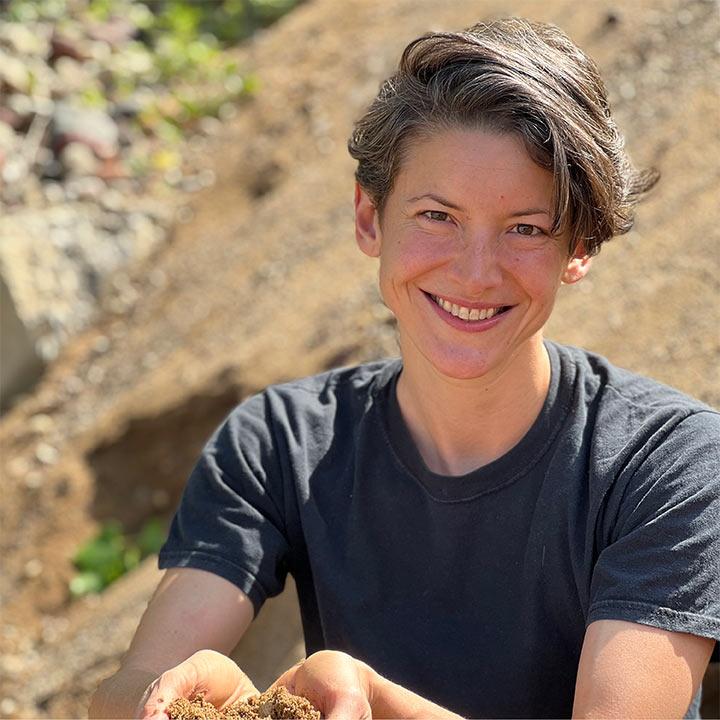
Sara Perl Egendorf is an Assistant Professor in the Department of Environmental Studies at Pace University's Dyson College of Arts and Sciences. Their research bridges urban soil science, food justice, environmental justice, and climate justice through participatory and anti-colonial frameworks. Perl collaborates closely with urban gardeners, farmers, composters, and community organizations in New York City and beyond. PhD, Earth and Environmental Sciences, The Graduate Center of the City University of New York, 2020 MS, Earth and Environmental Sciences, Brooklyn College, 2016 MA, Teaching, University of Washington, 2012 BA, Education Studies, Brown University, 2007 Perl's research focuses on the biogeochemistry of urban soils, particularly lead contamination and the use of constructed soils to promote safe urban agriculture. They employ systems science, participatory action research, and art-science collaborations to develop community-driven solutions. Their work has directly informed policy, including the NYC Clean Soil Bank initiative. Their recent publications demonstrate a strong trend in urban soil contamination, lead exposure pathways, compost science, and community-based remediation strategies. The interdisciplinary nature of their work spans environmental science, public health, urban planning, and social justice. Scientific Awards: Women in Science Incentive Prize, The Story Exchange, 2023 Perl has advised and collaborated with numerous community scientists, urban growers, and interdisciplinary researchers. They have received support from institutions such as the Cornell Atkinson Center for Sustainability and the NYC Department of Sanitation. Their work is deeply rooted in community engagement and environmental justice advocacy. Perl is actively involved in multiple collaborative projects, including the Legacy Lead coalition, the Greenpoint Bioremediation Project, and the Urban Farmer-to-Farmer Summit, all aimed at empowering urban communities through soil health and food sovereignty.
Luke Juran serves as Associate Professor in Virginia Tech's Department of Geography within the College of Natural Resources and Environment. He holds a joint appointment at the Virginia Water Resources Research Center and is Affiliate Faculty at the Center for Emerging, Zoonotic, and Arthropod-borne Pathogens. His work bridges human-environment interactions with practical applications in water security and disaster resilience across global contexts. His academic foundation includes: Ph.D. from University of Iowa (2012), with research at Indian Institute of Technology, Madras M.A. from University of Iowa (2008) B.A. from University of Northern Iowa (2003) Dr. Juran's research centers on three interconnected domains: human-water resource dynamics, human-disaster interactions, and the nexus where these systems converge. He specializes in water access/sanitation infrastructure, post-disaster reconstruction of WASH systems, and community-level water security. His fieldwork spans 15+ countries including India, Bangladesh, Nepal, and the United States, employing mixed-methods approaches from geospatial analysis to household surveys. Current projects examine disaster-resilient infrastructure in India, school water disinfection in Haryana, and Virginia well-water quality. His publication record reveals strong thematic continuity in water-poverty metrics, multi-hazard risk assessment, and socio-ecological disaster recovery. Key trends include the development of participant-driven vulnerability indices, critical analysis of cultural barriers to sanitation adoption, and geospatial modeling of infrastructure resilience. The work consistently integrates technical water-quality analysis with political ecology perspectives. Dr. Juran actively mentors graduate students and has secured significant research funding including a $5M USAID partnership for disaster-resilient infrastructure. His grant portfolio demonstrates expertise in disaster response (multiple COVID-19 rapid-response awards), international collaboration (India-focused projects), and interdisciplinary water research (NASA, Virginia Space Grant). He leads the Water & Hazards Working Group and collaborates with Virginia Tech's Center for Geospatial Information Technology, developing frameworks for water-security assessment that integrate hydrological data with social vulnerability metrics across multiple spatial scales.
Johannes Kriegel is a Professor at the University of Applied Sciences Linz (FH-Linz), focusing on Societal & Social Innovation. His research emphasizes healthcare logistics, digital transformation in hospitals, and process optimization within healthcare systems. He has led multiple interdisciplinary projects, including PenAAL (Key Performance Measurement for Ambient Assisted Living solutions) and DALIA (Personal Virtual Assistant for Daily Activities), addressing challenges in elderly care and healthcare service models. His work spans strategic hospital management, sustainable healthcare practices, and the integration of technology in patient flow and resource allocation. Notable contributions include applying Lean methodologies to hospital pharmacies and operating theaters, as well as leveraging analytics for green hospital strategies. Kriegel actively engages in academic talks, presenting on topics such as robotics in hospital logistics and customer-oriented patient management. As a principal investigator (PI), he has secured funding for projects like BF-TeleMoniCare, exploring telemonitoring in outpatient care. His research outputs include peer-reviewed articles and conference contributions, with a focus on transforming healthcare operations through data-driven and technology-enhanced solutions.
James Hunter is a Senior Lecturer in Public Policy at Nottingham Trent University within the School of Social Sciences. He serves as Head of Research for the Sociology Department and leads the Quantitative and Spatial Criminology Research Group. Additionally, he coordinates the REF2020 C22 Social Work and Social Policy submission for the university. Prior academic experience includes Lecturer/Senior Lecturer in Public Administration at the University of Glamorgan before joining NTU in 1994. His research focuses on the geography of social problems and public policy provision, particularly crime victimisation and health inequalities . Current projects involve: ESRC-funded KTP project developing retail-specific shoplifting risk profiles in Nottingham. Community engagement area classification for East Midlands policing initiatives. Research on victimisation risk related to anti-social behaviour. James collaborates extensively with external partners including Nottingham Crime and Drugs Partnership , Chartered Institute for Environmental Health , and Public Health England . His work bridges academic research with policy making and practice across social, health, and criminal justice sectors. Key research outputs include policy toolkits for public health assessment and crime prevention strategies. He has supervised PhD candidates such as C. De Voshlin (2023) and D. Gkiontsi (2023) on topics related to immigration policy and workforce management.
Aaron Lawson is a Lecturer in Environmental Health at Ulster University’s Belfast School of Architecture & the Built Environment. His research focuses on hand hygiene practices, public health compliance, and environmental health policy, with a strong emphasis on the Global South and sustainable development goals. Education: PhD (Environmental Health), PgCert in Higher Education, Bachelor in Environmental Health Key Research Areas: Hand Hygiene, Pandemic Response, Housing Regulation Recent Work: Analysis of public health preparedness during the COVID-19 pandemic, innovative use of 360 technology in training 2023: Received the Accessible Education Award for his contributions to teaching His publications span peer-reviewed journals and commissioned reports, addressing critical issues in health behavior, disease prevention, and policy evaluation. He has actively engaged in media commentary on handwashing practices during the pandemic.
Jinfei Sheng is an Assistant Professor of Finance at the Merage School of Business, University of California, Irvine, where he joined in July 2018. He holds a PhD in Finance from the University of British Columbia, an MS from Texas A&M University, and BA and MA degrees from Nankai University. His research is centered on empirical asset pricing, behavioral finance, and FinTech, with a focus on information processing in markets using big data and machine learning. Education: PhD, University of British Columbia MS, Texas A&M University BA and MA, Nankai University His research interests include empirical asset pricing, behavioral finance, FinTech, textual analysis, AI in finance, and labor finance. He investigates how various forms of information—such as macroeconomic news, earnings reports, online reviews, and cryptocurrency whitepapers—influence investor behavior and asset prices. His work bridges traditional finance with modern data science techniques. The most recent publications highlight trends in political polarization in markets, the performance of high-fee mutual funds, the impact of generative AI on asset management, and the role of geopolitical risk. These articles demonstrate a consistent focus on information asymmetry, investor behavior, and the application of advanced analytics in financial economics. Scientific Awards: XiYue Best Paper Award at CICF AMTD FinTech Centre Prize, Asian Finance Association Conference Jinfei Sheng has advised several working papers and research projects, though no formal PhD or Master’s students are listed. He is actively involved in academic service as a reviewer for top finance journals and conferences. At UCI, he created a new FinTech course and serves as founding faculty advisor for the Anteater Crypto Association and Irvine FinTech Association. He has won teaching awards at both UCI and UBC. His research has been presented at leading academic venues and financial institutions, including the American Finance Association, NBER, Citadel, and BlackRock. He leads research on datasets such as the Macroeconomic Attention Index (MAI) and the Geopolitical Risk Index (GRI), which are publicly shared for academic use. His work in progress includes studies on mutual fund disclosures, FOMC announcements, and investor attention.
Karen Kosinski is an Associate Teaching Professor at Tufts University, holding dual appointments in the Environmental Studies and Community Health departments within the School of Arts and Sciences. She specializes in educating undergraduates on infectious diseases, global health, environmental justice, and the climate crisis. Her expertise includes water-sanitation-hygiene (WASH) interventions, risk mapping for urogenital schistosomiasis (UGS), and pedagogical innovation. Education: PhD in Environmental and Water Resources Engineering, Tufts University MSPH in Parasitology, Tulane University BS in Biotechnology, Worcester Polytechnic Institute Her research focuses on designing and evaluating engineering interventions to prevent UGS in Ghana and mapping disease distribution. She has also contributed to understanding climate-related health risks and equitable resource distribution. Awards: 2018 Lerman-Neubauer Prize for Teaching and Advising Her work bridges public health, environmental science, and community engagement, emphasizing interdisciplinary approaches to global health challenges. No specific grants or lab affiliations are listed in the provided text.
Dr. Jiyoon Yi is an Assistant Professor in the Department of Biosystems and Agricultural Engineering (BAE) at Michigan State University's College of Engineering. Her research focuses on AI-driven solutions for sustainable food systems, integrating biosystems engineering with data science to address microbiological challenges. She holds a Ph.D. in Food Science from UC Davis (2021), and dual B.S. degrees in Mathematics and Food Science & Engineering from Ewha Womans University (2014). Key research areas: Rapid pathogen detection via hyperspectral microscopy AI analysis of soil microbiome interactions Generative AI modeling of microbial stress responses Teaching: HEAT 401: Heat and Mass Transfer in Biosystems (undergraduate) BAE 890: Machine Learning for Biosystems Engineering (graduate) Her lab employs both wet-lab and dry-lab approaches, with recent work emphasizing domain adaptation in imaging, attention-based AI for microbiome analysis, and computational simulations of microbial behavior. Current studies include developing antimicrobial coatings for food contact surfaces and optimizing sanitizer distribution in agricultural processing systems. Notable Contributions: Pioneering AI-enabled frameworks for real-time pathogen detection, including label-free cell analysis and adversarial domain adaptation across imaging modalities. Her work bridges gaps between computational methods and practical food safety applications, with applications in both food/health and agriculture domains.