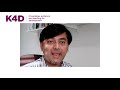
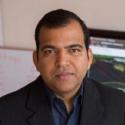
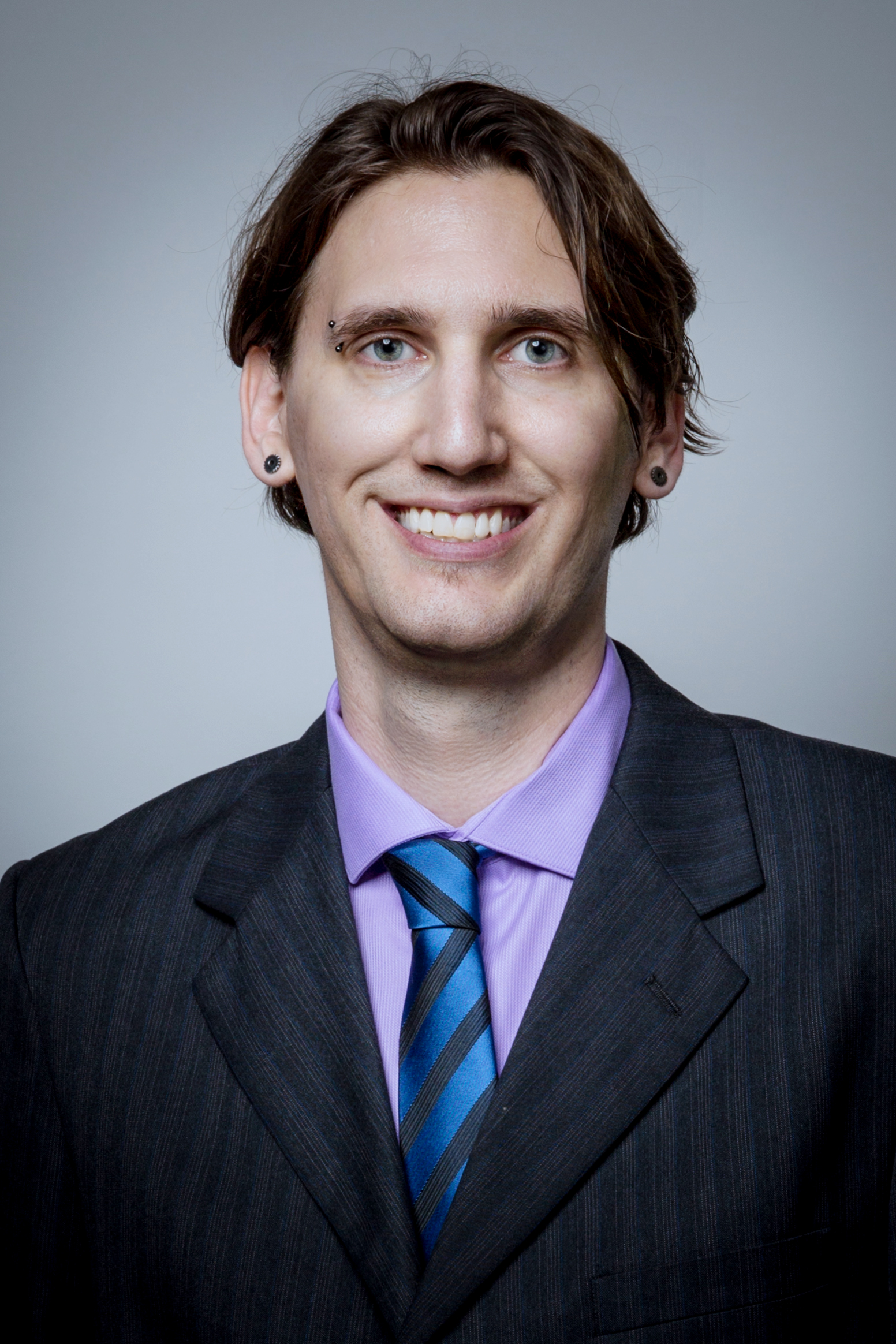
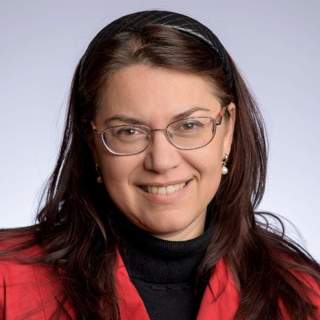
Dr. Mohammad Iftekhar Husain is a Professor and Graduate Coordinator in the Department of Computer Science at California State Polytechnic University, Pomona (Cal Poly Pomona). He serves as the Inaugural Director of the PolySec Cyber Lab, a federally funded center for cyber security and forensics education, research, and outreach (~$2.5M in grants), and directs the university's Virtual Reality Lab. His career spans over a decade of leadership in cyber security program development, extramural funding, and academic governance. Education: B.S., Computer Science, Yamagata University (Japan) M.S. & Ph.D., Computer Science and Engineering, SUNY-Buffalo Dr. Husain's research focuses on data privacy in social networks, neurophysiological cyber security solutions, and blockchain applications. He has secured $18.4M in principal investigator grants, including NSF SFS, EAGER, and REU Site projects, and trained students placed in top institutions like UC campuses, MIT Lincoln Lab, and government agencies such as NSA and DHS. His work on brainwave authentication earned a US patent (USPTO 10,198,566) and media coverage in Time Magazine and PC Magazine . Scientific Awards: 2016 College of Science Distinguished Teaching Award Early Promotion and Tenure (2016) 2020 Faculty Learning Community for Leadership Pipeline Development Cohort As academic leader, he founded the Cal-Bridge CS Ph.D. pathway program for underrepresented students, chairs the CPP Academic Senate Academic Programs committee, and led university IT initiatives including Cyber Security Cluster Hiring and High-Performance Computing Lab development.
Sophia Besch serves as a Senior Fellow in the Europe Program at the Carnegie Endowment for International Peace and teaches as an adjunct lecturer at Johns Hopkins School of Advanced International Studies (SAIS). Her expertise centers on European defense policy, with particular focus on transatlantic relations, German defense policy, and the EU's role in European security architecture. She frequently contributes to major policy discussions on European strategic autonomy and defense integration. Dr. Besch holds a doctorate in European Studies from King's College London, and additional degrees from Sciences Po Paris and the London School of Economics. Her academic background provides a strong foundation for her work analyzing European security challenges and transatlantic relations. Her research interests span European defense policy, international security, transatlantic relations, German foreign policy, and subsea infrastructure security. She has published extensively on European defense integration, the geopolitical implications of subsea cable infrastructure, and the evolving transatlantic security relationship. Her work often examines how European nations can enhance their defense capabilities while navigating complex relationships with the United States. Dr. Besch's recent publications reveal a strong focus on European strategic autonomy, particularly in the context of changing US commitments under potential Trump administration policies. She has produced significant work on subsea cable security, European conscription models, and German defense policy shifts following Russia's invasion of Ukraine. Her research consistently addresses how European nations can strengthen their defense capabilities while maintaining transatlantic cooperation. As a regular commentator in major media outlets including Foreign Affairs, Foreign Policy, and Politico, Dr. Besch has established herself as a leading voice on European security issues. She has served as an expert witness for the UK House of Commons Defence Select Committee, the German Bundestag EU Committee, and the European Parliament Subcommittee for Security and Defence. Dr. Besch has been affiliated with several prominent research institutions, including the Centre for European Reform (CER) in London and Berlin, the American Institute for Contemporary German Studies, and the Atlantic Council's Europe Centre. She is also a member of the Atlantik Brücke Young Leaders program, which fosters transatlantic dialogue and cooperation.
Farinaz Koushanfar is a Professor in the Department of Electrical and Computer Engineering at the Jacobs School of Engineering, University of California San Diego (UCSD) . She holds the Siavouche Nemat-Nasser Endowed Chair and serves as Founding Co-Director of the Center for Machine-Intelligence, Computing and Security . Her affiliations include NSF Trust-Hub (Co-PI) and NSF TILOS AI Institute . She also serves on the Editorial Board of The Proceedings of the IEEE . Research Focus: Prof. Koushanfar leads research in secure and efficient computing , including robust/safe AI , hardware/system security , AI-based optimization , and cryptographically secure privacy-preserving computing . Her work pioneered logic obfuscation/locking for chip security, automated co-design of AI systems , watermarking/tracing of deep learning models , and physical proofs of provenance . She explores co-design with cryptographic constructs for privacy preservation and manages nonlinearities in ciphertext domains. Article Trends: Recent publications show expertise in neural watermarking (deepfakes, media authentication), zero-knowledge proof frameworks , Trojan attack defenses in ML models, secure federated learning , and hardware acceleration of cryptographic protocols . Her work combines machine learning , cryptography , and physical design security across 2022-2025 publications. Scientific Awards: Fellow of ACM Fellow of IEEE Fellow of National Academy of Inventors (NAI) Fellow of Kavli Foundation of NAS Inducted to NAI 2024 Fellows Advising & Leadership: She has advised multiple PhD students who became faculty at top universities (e.g., Stanford, Purdue). She chairs conferences like ACM WiSec 2024 and co-led the NSF SaTC decadal review. Her lab ( ACES Lab ) produces award-winning graduates like Bita Rouhani (DAC Under-40 Innovators) and Shehzeen Hussain (UCSD Best Dissertation Award).
Tejendra Pherali is a Professor of Education, Conflict and Peace at University College London's Institute of Education (IOE - Education, Practice & Society). As Co-Research Director of Education Research in Conflict and Protracted Crisis (ERICC) and former Chair of the British Association for International and Comparative Education (BAICE), he bridges academic leadership with practical peacebuilding initiatives. His establishment of the open-access journal Education and Conflict Review underscores his commitment to translating research into policy. Academic Affiliations: UCL IOE, Academy of Social Sciences Fellow, Higher Education Academy Fellow Research Leadership: ERICC program, BAICE chairmanship, Compare Journal editorial board Pherali's research integrates education policy , political sociology , and peacebuilding in conflict zones. His work spans Myanmar , South Sudan , Nepal , and Syria , analyzing how educational systems both suffer from and contribute to conflict dynamics. Recent publications focus on teacher professional development during displacement, curriculum reform in divided societies, and the paradox of education as both victim and perpetrator in conflict settings. He advocates for teacher-centered peacebuilding , emphasizing their often-neglected role in crisis contexts. His Laboratories of Learning framework highlights grassroots educational initiatives in Colombia, Nepal, and Turkey that challenge dominant epistemic traditions. Current empirical work in Myanmar and Syria examines systemic educational fragmentation and pathways for integrating marginalized communities through locally-driven pedagogies. Key scientific recognitions include: Fellow of the Academy of Social Sciences (FAcSS) Fellow of the Higher Education Academy (FHEA) Editorial leadership in Education and Conflict Review His educational background spans four countries with a PhD from Liverpool John Moores University (2012), MEd from University of Sydney (2005), and MA in Sociology from Tribhuvan University, Nepal (2002). The MA Education and International Development: Conflict, Emergencies and Peace program he developed at UCL exemplifies his integrated approach to education policy and practice in unstable environments.
Helder Carvalho is an Associate Professor at the University of Minho's School of Engineering, Campus de Azurém, where he also serves as Director of the Department of Textile Engineering and Director of the Master's program in Textile and Accessories Product Design and Innovation. His academic career spans over three decades, with a focus on textile engineering and its intersection with electronics and automation systems. His educational background includes: PhD in Textile Engineering (2004) from University of Minho, School of Engineering MSc in Textile Engineering (1998) from University of Minho, School of Engineering BSc in Electrotechnical and Computer Engineering (1992) from University of Porto, Faculty of Engineering Professor Carvalho's research primarily focuses on smart textiles, textile sensors, and instrumentation systems for industrial sewing machines. His work bridges the gap between traditional textile manufacturing and modern electronics, creating innovative solutions for interactive textiles and wearable technology. He has particular expertise in developing flexible sensors that can be integrated into fabrics for applications ranging from sports performance monitoring to healthcare. His recent publications demonstrate a strong trend toward sports applications of smart textiles, with numerous papers on fencing apparel, karate body protectors, and general athletic performance monitoring. The research spans material science, sensor development, and user experience design, showing a comprehensive approach to creating functional and attractive smart textile products. Professor Carvalho has received recognition through research funding from major institutions: BE@T Bioeconomy Textile and Clothing (current) Greenauto - Green Innovation for the Automotive Industry (current) Factor ST+ (2021-2023) FAMEST (2017-2020) TSSIPRO (2016-2019) He has directed multiple academic programs including the Master's in Textile and Accessories Product Design and Innovation, and coordinated educational initiatives like the CET 'Fashion Commerce' program. His work at the Textile Science and Technology Centre demonstrates a commitment to translating research into practical applications across sports, healthcare, and industrial manufacturing sectors.
Professor Vlad Mykhnenko is Professor of Geography and Political Economy in the University of Oxford Department for Continuing Education, and a Research Fellow in Sustainable Urban Development at St. Peter's College, Oxford. He serves as Academic Director for Social Sciences at Oxford Lifelong Learning and has been with the Department since January 2017, initially taking up an Associate Professorship in Sustainable Urban Development. His academic career spans multiple institutions including the University of Birmingham, Al-Farabi Kazakh National University, the University of Nottingham, the University of Glasgow, and the Central European University. Professor Mykhnenko's educational background includes: PhD in Political Economy from Darwin College, the University of Cambridge (2005) MA in International Relations and European Studies from the Central European University (1999) MA (1998) and BA (1996) in International Relations from Taras Shevchenko National University of Kyiv As an economic geographer specializing in geographical political economy, Professor Mykhnenko challenges conventional wisdom about urban and regional development. His research initially focused on transition economies of Eastern Europe (particularly Polish Upper Silesia and the Ukrainian Donbas) before expanding to cities and regions worldwide. He has produced over 140 research outputs and secured £16 million in external research funding, with £2 million as Principal Investigator. His current research initiatives focus on green steel - rebuilding Ukraine's iron and steel sector post-war without fossil fuels - and sustainable urban development in Kazakhstan. His publication record demonstrates significant scholarly impact across diverse areas including urban shrinkage, post-war reconstruction, geopolitical analysis, and future trends in technology and governance. The breadth of his research interests spans from analyzing spatial economic patterns in African cities to examining the implications of the metaverse for future business practices. Professor Mykhnenko has substantial policy impact, with research quoted in at least 79 policy documents by 49 organizations across 21 countries. His work contributes to UN Sustainable Development Goals, with 30% directly attributed to SDG11: Sustainable Cities and Communities. He has advised governments, intergovernmental organizations, and multinational enterprises, including serving on a UN expert group to shape the New Urban Agenda and providing expert evidence to the UK House of Commons on Ukraine's recovery. In early 2025, he was appointed a commissioner for the Lancet Commission on Ukraine. Professor Mykhnenko has taught over 3,100 students across various institutions and currently contributes to Oxford's MSc in Sustainable Urban Development program. He has supervised numerous doctoral students and received recognition for his teaching excellence, including Fellow of the Higher Education Academy status and a Postgraduate Certificate in Academic Practice. His commitment to research-led teaching has resulted in innovative pedagogical approaches documented in peer-reviewed academic publications.
Deepak R Mishra is the Merle C. Prunty, Jr. Professor of Geography at the University of Georgia, where he serves as Professor and Head of the Department of Geography. He directs both the Center for Geospatial Research (CGR) and the UGA Small Satellite Research Laboratory (SSRL), demonstrating leadership across multiple significant research initiatives. His academic career spans geospatial science, remote sensing applications, and environmental monitoring with particular focus on coastal ecosystems. Dr. Mishra earned his PhD in Natural Resources from the University of Nebraska, Lincoln in 2006 and completed his M. Tech in Civil Engineering at the Indian Institute of Technology, Kanpur in 2002. His research focuses on combining field-based remote sensing with satellite technologies to monitor and study coastal and inland water resources. His work addresses critical environmental challenges including harmful algal blooms, salt marsh conservation, carbon sequestration in tidal wetlands, and sea level rise impacts. Dr. Mishra's research portfolio reveals strong trends in geospatial analytics for environmental monitoring, with increasing integration of artificial intelligence and small satellite technologies. His recent publications show a growing emphasis on climate change impacts on coastal ecosystems, particularly salt marsh vulnerability and carbon sequestration capacity. The work demonstrates innovative applications of remote sensing for tracking cyanobacterial blooms and developing early warning systems through platforms like CyanoTRACKER. Outstanding Service Award, SEDAAG 2019 Creative Research Medal, University of Georgia, 2017 Best Poster Award, TROPMET 2016, India Article ranked #4 in Altmetric Attention Score in Nature Climate Change 2016 Mississippi State University Faculty Research Award (2012) GRI Academic Faculty of the year (2011) Dr. Mishra has secured substantial research funding, including a $7.5 million NSF LTER grant and a $4.7 million Army Research Lab grant for autonomous navigation systems. His lab actively mentors graduate students including Tyler Lynn, Lishen Mao, and Chintan Maniyar, who contribute to projects spanning coastal monitoring, small satellite development, and AI applications. The Small Satellite Research Laboratory recently achieved a historic milestone with the launch of SPOC satellite to the International Space Station, marking UGA's first satellite deployment.
Bryce Westlake is an Associate Professor in the Department of Justice Studies within the College of Social Sciences at San Jose State University. He is a leading researcher in digital forensics and child sexual abuse material detection, with significant contributions to both forensic science education and alternative sexuality studies. Education: Ph.D. in Criminology from Simon Fraser University (2015) Master's degree in Criminology from Simon Fraser University Bachelor of Arts degree in Psychology and Sociology (double major) from University of British Columbia Dr. Westlake's research spans two primary areas with significant societal impact. In digital forensics, he focuses on developing automated tools to detect, collect, analyze, and match child sexual abuse material disseminated online. His work involves international collaboration with researchers, law enforcement agencies, and government partnerships to create more effective detection systems. In his secondary research area, he explores alternative sexuality, particularly BDSM communities, conducting multi-phasic, kink-positive studies examining health and safety within these communities. His research aims to destigmatize participation through a deeper understanding of the social and emotional enrichment practitioners receive from activities. His recent publications demonstrate a clear trend toward increasingly sophisticated technical approaches to combating child sexual exploitation while simultaneously advancing understanding of alternative sexual practices. The technical publications focus on biometric identification, file structure analysis, and ethical web scraping methods, while his BDSM-related work emphasizes community safety, education pathways, and mental health benefits. This dual focus positions him uniquely at the intersection of technology, law enforcement, and human sexuality research. Scientific Awards: The Storytellers Award (Social Sciences and Humanities Research Council) - April 2014 Canadian Graduate Scholarship (Social Science and Humanities Research Council) - May 2012 Dr. Westlake has been heavily involved in developing the forensic science program at SJSU, creating six undergraduate courses, revising two graduate courses, and introducing one graduate course. In Fall 2020, he created and implemented a new concentration in digital evidence (computer forensics) for forensic science majors - one of the first in-person digital forensic bachelor of science degrees in the United States meeting FEPAC standards. He has developed and directs the Silicon Valley Digital Forensics Laboratory, which began accepting students for internships in Fall 2024. He was awarded a three-year $497,948 grant from the National Science Foundation in 2023 to study 'Training digital forensics examiners through hands-on education investigating live criminal investigations.' Through the Silicon Valley Digital Forensics Laboratory and partnerships with criminal justice agencies (district attorneys offices, law enforcement agencies, etc.), Dr. Westlake provides students with training and practical experience conducting digital forensic investigations from start (evidence collection) to finish (report writing and testimony). He also co-hosted the first annual Child Sexual Abuse Reduction Research Network workshop in Adelaide Australia in December 2023.
Mila N. Koeva is a Vice Dean Research and senior Associate Professor at the University of Twente's Faculty of Geo-Information Science and Earth Observation (ITC), Department of Urban and Regional Planning and Geo-Information Management. Her research focuses on 3D modeling and Digital Twins for land management and urban planning, integrating geospatial technologies, UAV data, and AI/ML methods. PhD in architectural photogrammetry MSc in Engineering (Geodesy) Research Themes: Digital Twinning for urban ecosystems AI-driven cadastral boundary extraction 3D modeling with LiDAR and satellite data Global partnerships in Rwanda, Kenya, and Ethiopia Interoperability standards for local digital twins Scientific Contributions: Geospatial World Innovation Award 2021 Copernicus Masters Competition (3rd place 2016) Editorial roles in Photogrammetric Records and MDPI journals Keynote speaker at 3D GeoInfo, GI Forum, and FIG events Her educational impact includes developing courses, lecturing, and supervising students whose work has received top awards in The Netherlands and international competitions.
Mark Davison is an Emeritus Professor and Adjunct Professor in the Faculty of Law at Monash University, specializing in intellectual property law. He holds dual roles as a legal academic and a practicing lawyer with Knightsbridge Lawyers. His expertise spans trade marks, WTO agreements, and public health regulation, particularly tobacco plain packaging. He has authored seminal works such as Shanahan's Australian Law of Trade Marks and Passing Off and contributed to landmark cases including Australia’s successful defense of tobacco plain packaging laws at the WTO. Research Interests: Intellectual Property Law, Trade Marks, Geographical Indications, WTO Dispute Resolution, Public Health Policy, Database Protection, Competition Law. His work intersects international trade law, health policy, and legal reform. Awards: Recognized globally as one of the 50 most influential figures in IP (2014) and awarded the Vice-Chancellor's Distinguished Teaching Prize (2001). His research has been cited in over 100 court decisions and 250 IP office rulings, including a landmark High Court of Australia ruling in 2023. Advisory Roles: Member of the Advisory Council on Intellectual Property, Commonwealth Department of Health’s Plain Packaging Expert Group, and Intellectual Property Committee of the Law Council of Australia. He advised the Australian government during WTO tobacco litigation and contributed to free trade agreement negotiations involving geographical indications. Projects: Led ARC-funded research on geographical indications in Australian trade agreements and the impact of venture capital on innovation. Collaborated internationally on studies about the New Plurilateralism in global governance and the ‘Human Rights in Three Minutes’ video project. Media Engagement: Regularly commented on IP disputes, EU trade negotiations, and public health policy in media outlets, emphasizing the intersection of law, trade, and societal welfare.
Marco Panesi is a Professor in the Department of Aerospace Engineering at the University of Illinois at Urbana-Champaign and Director of the Center for Hypersonics and Entry Systems Studies (CHESS). His research focuses on non-equilibrium phenomena in high-enthalpy flows, plasma dynamics, and uncertainty quantification. He holds a Ph.D. from the von Kármán Institute for Fluid Dynamics (2009) and M.S. degrees from Università di Pisa (2003) and VKI (2005). Roles: Faculty Member, Research Director, Principal Investigator Key Affiliations: CHESS, University of Illinois, VKI Research Interests: Hypersonic flow modeling, non-equilibrium plasmas, radiation effects, machine learning applications in aerothermodynamics, ablation processes, and state-to-state chemistry. His work bridges computational fluid dynamics with experimental validation in facilities like the Plasmatron X wind tunnel. Publications: Over 100 peer-reviewed articles on topics ranging from plasma kinetics to thermal protection systems. Recent work emphasizes adaptive neural operator models and Bayesian uncertainty quantification. Awards: Includes the Vannevar Bush Faculty Fellowship (2021), NASA Groundbreaker Award (2021), and multiple early-career recognitions from AFOSR, NASA, and ESA. Grants & Leadership: Secured funding from NSF, NASA, and DOD. Leads multidisciplinary teams on projects like the CHyPS material response solver and hypersonic entry modeling. Labs & Facilities: Principal investigator for the UIUC Plasmatron X facility, a key resource for studying high-enthalpy plasma flows.
Professor Megan Richardson is an Honorary Professor at the University of Melbourne's Law School, specializing in intellectual property, privacy rights, and legal theory. She has contributed significantly to privacy law reform through advisory roles with the Australian Law Reform Commission and NSW Law Reform Commission. Research focuses on: Evolution of privacy rights in digital contexts Intellectual property intersections with personality rights Data governance frameworks Legal responses to automated decision-making Historical development of privacy doctrines Publication trends show increasing engagement with technology-law interfaces, particularly algorithmic systems and data rights. Recent work examines AI's impact on privacy, blockchain applications, and pandemic surveillance technologies, often employing interdisciplinary approaches combining law with cultural studies. Scientific Awards: No awards mentioned in provided materials. Research Leadership: Serves as Coordinating Editor for Cambridge Elements Series: Data Rights and Wrongs. No specific student advising information available.
Nyeema Harris is the Knobloch Family Associate Professor of Wildlife and Land Conservation at the Yale School of the Environment (YSE), part of Yale University. She focuses on wildlife conservation, urban ecology, and the socio-ecological dimensions of human-wildlife interactions. Her work examines how urbanization impacts predator behavior, diets, and biodiversity, while advocating for inclusive sustainability approaches that address equity and justice in environmental scholarship. Education includes a PhD from North Carolina State University, an MS from The University of Montana, and a BS from Virginia Polytechnic Institute and State University. These degrees span wildlife science and conservation biology. Her research interests emphasize urban carnivore ecology, community-based conservation strategies, and systemic racism’s ecological consequences. She integrates spatial modeling with social equity frameworks, as seen in her publications on textured species range maps and critiques of environmental landscapes of fear. Publications highlight trends in urban wildlife adaptation, interdisciplinary methods, and ethical considerations in conservation. Key themes include dietary shifts in predators due to environmental changes, the role of historical data in species forecasting, and mitigating health risks linked to urbanization and gentrification. Dr. Harris actively advises doctoral students and is involved in initiatives like SNAPSHOT USA and Michigan ZoomIN, leveraging citizen science for ecological monitoring. She has not been noted for specific scientific awards in the provided texts. Her office is located in Kroon Hall, Room 223, at 195 Prospect Street, New Haven, CT. She contributes to environmental justice discourse and has been featured in news articles discussing her work on African carnivore range loss, urban rodent control, and systemic racism in urban ecosystems.
Li Yang is an Assistant Professor in the Department of Information Technology , part of the Faculty of Business and Information Technology at Ontario Tech University. His research focuses on applying AI and machine learning to cybersecurity, particularly in intrusion detection and anomaly detection for 5G/6G networks and IoT systems. He holds a PhD in Electrical and Computer Engineering from Western University (2022), and has held roles such as Vice Chair of IEEE Computer Society, London Section (2022–2023). Education: PhD in Electrical and Computer Engineering, Western University (2022) Master of Science, University of Guelph (2018) Bachelor of Engineering, Wuhan University of Science and Technology (2016) Research Interests: His work spans cybersecurity, machine learning, deep learning, AutoML, model optimization, network automation, IoT security, intrusion detection, and adversarial machine learning. He develops frameworks for concept drift adaptation and online learning to enhance cybersecurity measures, with a focus on trustworthy AI and defense strategies against adversarial attacks. Awards: Graduate Student Award for Excellence in Research (2022) Graduate Symposium Award for Best Presentation (2022) Mitacs Accelerate Fellowship (2021) OC2 Lab Industrial Research Excellence Award (2020) Ranked in Stanford/Elsevier's Top 2% Scientists (2024) Grants & Involvement: Li Yang has contributed to conferences like IEEE GlobeCom and IEEE CCECE, and authored patents such as 'Convenient primary-secondary barrels' (2009). His work has garnered thousands of citations and GitHub stars, emphasizing practical applications of AI in cybersecurity.
Dr. Assela Pathirana is a Professor at the IHE Delft Institute for Water Education, specializing in water infrastructure asset management (WIAM), climate resilience of Small Island Developing States (SIDS), and sustainable urban water systems. His work bridges academia, policy, and practice, focusing on digitalization, data-driven decision-making, and nature-based solutions. Key roles include Chief Technical Advisor for the Maldives’ water systems and leadership of a MOOC on SIDS climate adaptation. He holds a BSc (First Class Honours) from the University of Peradeniya and advanced degrees from the University of Tokyo, specializing in hydrology and water resources engineering. Education: Bachelor of Science in Civil Engineering (First Class Honours), University of Peradeniya, Sri Lanka Master’s and Doctoral Degrees in Civil Engineering (Hydrology and Water Resources), University of Tokyo, Japan Research Interests: Dr. Pathirana’s work emphasizes climate resilience, SIDS adaptation, urban flood risk management, and sustainable infrastructure. He develops decision-support tools for flood forecasting, evaluates land-use changes in Jakarta, and promotes equity in water rationing systems. His interdisciplinary approach integrates hydrological modeling, open-source software development, and policy analysis. Advising & Capacity Building: He leads training-of-trainers programs and capacity-building initiatives, enhancing postgraduate education in technical disciplines. His efforts focus on didactics and pedagogy, ensuring graduates gain both theoretical knowledge and practical expertise. Key Projects: Developed the WIAM curriculum at IHE Delft MOOC on SIDS climate adaptation and water security Consultancy for the Maldives’ Ministry of Environment and UNDP Labs & Collaborations: Engages in cross-disciplinary teams addressing urban water challenges, including sponge cities in China and flexible adaptation planning in Melbourne and Pune. His work with UNESCO-ICHARM and UNU underscores global water security and disaster risk reduction.