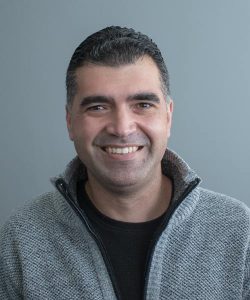
Violetta Raffay is an Assistant Professor of Medical Education at the School of Medicine, European University Cyprus , and serves as Coordinator for Physiology I . She holds an MD (1997) and PhD (2017) from the University of Kragujevac, specializing in Emergency Medicine. Her career includes roles as National Coordinator for major European resuscitation studies (EuReCa TWO, EuReCa ONE) and leadership positions in the European Resuscitation Council (ERC) , including Chair of the BLS International Course Committee and current President of the Serbian Resuscitation Council . Her research focuses on cardiopulmonary resuscitation (CPR) outcomes, OHCA epidemiology , and resuscitation guideline development . Key areas include geographic disparities in emergency response, ethical decision-making in end-of-life care, and training methodologies for healthcare providers. She has led over 20 research projects and contributed to ERC’s international consensus documents on resuscitation science. Notable achievements include the 2010 ERC Fellowship and pioneering work in integrating generative AI into medical education . She actively promotes public health initiatives like the Restart a Heart Day and has trained thousands of clinicians across Europe through ERC courses.
Thalia Prastitou Merdi is a Lecturer at European University Cyprus, specializing in European Private Law and European Environmental Law. She holds a PhD in Law from the University of Bristol, UK. Education: PhD, University of Bristol (UK), Law (2013) LL.M., University of Bristol (UK), Commercial Law (2006) LL.B., University of Warwick (UK), Law (2004) Research Interests: Her work focuses on European Contract Law, Consumer Protection Law, Business Law, Data Protection and Privacy Law, Information Security Law, E-commerce Law, European Environmental Law, and European Comparative Law.
Philippe Jougleux is an Associate Professor at the Department of Law, European University, Cyprus, specializing in EU Law, Internet Law, and Digital Rights. He holds a PhD in Law from the University of Aix-Marseille III and has taught at multiple institutions including the Open University of Cyprus and the National School of Judges (Greece). His research focuses on cybersecurity, intellectual property, data protection (GDPR), and the intersection of technology with legal frameworks. He has authored/co-authored over 20 books and numerous articles on topics like cybercrime, copyright law, and open justice. Key achievements include the 2016 EUC research award and advisory roles in EU projects like MANDOLA and INSPEC2T. He serves on editorial boards for journals like Chronicles of Computer Law and chairs the law journal ENTHA at EUC. Education: PhD in Law (Aix-Marseille III, 2002) Postgraduate in Media Law (Aix-Marseille III, 1999) LL.B. (Lille II, 1993) Research: Explores digital transformation impacts on justice systems and privacy Expert on EU legal harmonization challenges in cybercrime and intellectual property Grants & Projects: EU-funded cybersecurity initiatives (e.g., Center of Excellence for Cybercrime) Advisory roles in GDPR training and hate speech moderation Labs/Teams: Founder of the EDPI organization promoting copyright law Member of the Digital Rights Foundation’s evaluation board
Christiana Markou is an Associate Professor of European Law specializing in Consumer Protection & E-Commerce at the School of Law, European University Cyprus (EUC). She concurrently serves as an Instructor at the Open University of Cyprus (OUC). Her legal qualifications include a PhD from Lancaster University (2011), LL.M and LL.B from the University of Sheffield (2000/1998), and Cyprus Bar membership (2000). Her research focuses on digital economy regulations, EU consumer protection frameworks, data protection laws, and tort liability in online contexts. Key projects include GDPR implementation studies, evaluations of EU consumer programs, and analyses of online marketplace liabilities. She has authored monographs on Cyprus Tort Law and consumer protection in automated systems, and contributed to major commentaries on EU directives. Markou has led over 10 European Commission-funded research projects, including studies on product safety directives and judicial training programs. She serves on expert groups such as the Observatory on the Online Platform Economy (EU Commission) and coordinates EUC's LLB program. Notable recognitions include U.S. State Department IVLP nomination (2020) and HRDA's 'distinguished expert' accreditation in consumer law. Recent work emphasizes AI-driven consumer interactions and post-GDPR data protection challenges Active in transnational legal education through guest lectures at institutions like City University Hong Kong Member of multiple editorial boards and legal advisory committees
Athina Kontogianni serves as Assistant Professor of Greek Civil Law at the School of Law, Department of Law, European University Cyprus, while maintaining active roles as Acting Member of Greece's National Commission on Human Rights (2015-today), Research Fellow to the Hellenic Parliament's Scientific Council (2009-today), and member of critical medical oversight bodies including the Advisory Board of the Greek National Organization of Medicines (2019-today) and Supervisory Board of the Greek National Authority of Medical Assisted Reproduction (2021-today). Her academic credentials include a PhD in Civil Law (2005), MA in Civil Law (1999), and BA in Law (1997), all from the National and Kapodistrian University of Athens. These qualifications underpin her expertise in both Greek civil law foundations and European legal harmonization. Dr. Kontogianni's research centers on Consumer Protection Law, European Civil Law, and Medical Law, with significant contributions to understanding EU consumer directives' implementation, medically assisted reproduction regulations, and human rights case law interpretation. Her work bridges theoretical scholarship with practical legislative impact, particularly evident in her advisory roles for Greek government bodies on consumer protection and family law reforms. Analysis of her 15 most recent publications (2018-2023) reveals three dominant research trajectories: consumer protection mechanisms (especially online dispute resolution under EU Regulation 524/2013), medically assisted reproduction regulations (focusing on traceability and cross-border healthcare), and human rights jurisprudence (detailed commentaries on European Court of Human Rights judgments concerning privacy, vaccination mandates, and family rights). Her scientific recognition includes: Scholar awardee of the State Scholarship Foundation (1998-2000) Scholar awardee of the European Commission's Program for Civil Law Consolidation (1999-2000) Election as rapporteur for Greece before the European Parliament's IMCO Committee on the 'New Consumer Agreement' proposal (2019) Dr. Kontogianni has secured and led significant research funding including the European Commission's Consumer Protection Program (2014-2019) as Program Director and the Conflict Resolution with Equitative Algorithms project (2018-2019) as researcher. Her governmental advisory work spans legislative committees for Family Law reform (1999-2000) and Consumer Protection Law reform (2016), where she provided legal drafting expertise that shaped national legislation. She actively contributes to scholarly communities through membership in the Hellenic Association for European Law (promoting research on European civil law responsibility concepts) and the Association of Greek Civil Law (critical analysis of contemporary civil law issues), while serving on editorial committees including the quarterly journal 'European Law'.
Dr. Stelios Ioannou is a Lecturer and Course Leader of the BEng (Hons) Electrical and Electronic Engineering program at the University of Central Lancashire Cyprus (UCLan Cyprus). He holds a PhD in Electrical Engineering from the University of South Florida (2008), alongside multiple advanced certifications in wireless engineering and technology management. His research focuses on controls/robotics, energy systems for unmanned platforms, power electronics, and power quality optimization. Dr. Ioannou has extensive industry collaboration experience and has contributed to projects funded by the EU, Research Promotion Foundation (Cyprus), and private entities. Research Interests: Unmanned robotic systems (ground/aerial), energy storage solutions for mobile applications, power system stability, and embedded systems integration. He emphasizes practical, cost-effective technologies with commercialization potential. Key Publications (2019–2020): Focused on power converter efficiency, adaptive load shedding for grid stability, and PV system optimization. Recent grants include the IREEDER Erasmus+ project (€53,000) and contributions to the APAESO research initiative (€689,300). Awards: First-Class Licensed Engineer in Cyprus (ETEK/EMS), Full Academic Scholarship (USF), Teaching Excellence Awards (2008). Teaching: Leads modules in power systems, digital electronics, and robotics. Supervises senior design projects and contributes to curriculum development. Outreach: Serves as a journal reviewer for Frontiers in Electronics and Applied Sciences , with active participation in international conferences.
Pinelopi A. Charalampous is a PhD Research Scholar at the University of Central Lancashire – Cyprus (UCLan Cyprus), affiliated with the School of Law. Her academic qualifications include a PhD (via MPhil) from UCLan (expected March 2024), an M Commercial and Corporate Law from Queen Mary University of London (Merit), and a B degree from Frederick University of Cyprus (First Class Honors, Scholarship Student). She is a qualified Lawyer in Cyprus (ID 7771) and a Member of the Cyprus Bar Association since 2020. Her research interests focus on the intersection of Law and Technology, particularly Artificial Intelligence and its regulatory challenges, alongside Immigration Law, Data Protection, and Investment Law. She has professional experience as an Immigration Lawyer at Andreas Demetriades & Co LLC since 2020, specializing in Residence Permit procedures and citizenship matters. Pinelopi has extensive teaching and mentorship experience, including teaching Mediation at Frederick University (2020–2021) and mentoring debate techniques at Alperton Community School (2017–2018). She is an Associate of the Chartered Institute of Arbitrators (ACIArb, ID 6074236) and holds certifications in Mediation from KEBE (Cyprus Association of Mediators). Her leadership roles include organizing the FredMUN Model UN conference, managing 500+ participants from 30 countries, and chairing high-profile committees like the Security Council. Her professional accolades include debating awards at international Model UN conferences and contributions to interdisciplinary research on legislative drafting for emerging technologies. She actively engages in public policy discussions on AI governance and human rights frameworks.
Professor Maria Michailidis is a faculty member at the School of Business, Department of Management, University of Nicosia, Cyprus. She also holds part-time positions at the Mediterranean Institute of Management (Organizational Behavior & Human Resource Management) and Cyprus Police Academy (Communication, Team & Group Work). With a Doctorate in Educational Leadership from the University of Massachusetts Lowell and dual Master's degrees in Psychology, her research bridges business and social sciences. Education: PhD in Educational Leadership (2002), University of Massachusetts Lowell Education: MA in Clinical Psychology (1996), University of Indianapolis Education: MA in Community-Social Psychology (1988), University of Massachusetts Lowell Education: BS in Business Administration (1983), University of Massachusetts Lowell Her research focuses on occupational stress , women entrepreneurs , and intercultural studies . Recent work explores AI applications in education and blockchain technology in human resources . She has received grants for European Union projects (Leonardo da Vinci, Erasmus, COST actions) and maintains an h-index of 7. Current research trends include: AI ethics and responsible use in higher education institutions Generative AI tools' impact on learning Blockchain applications for HR data confidentiality Professional affiliations: Board Member, A.G. Leventis Scholars Association Board Member, Elpida Foundation for Children with Cancer
John Bush Idoko is an Assistant Professor in the Computer Engineering Department at Near East University, North Cyprus. He earned his BSc in Computer Science from Benue State University, Nigeria (2010), followed by MSc (2017) and PhD (2020) in Computer Engineering at Near East University. His research focuses on machine learning , computer vision , and signal processing , with applications in IoT systems , healthcare devices , and smart infrastructure . He has contributed to 15 recent publications spanning topics such as UAV routing protocols, image encryption, and medical prosthetics. BSc: Computer Science, Benue State University (2010) MSc: Computer Engineering, Near East University (2017) PhD: Computer Engineering, Near East University (2020) His work emphasizes deep learning optimization , chaotic encryption , and intelligent sensor networks . Recent projects include IoT-based infant monitoring, sleep apnea detection, and voice-controlled prosthetics. He is affiliated with the Applied Artificial Intelligence Research Centre and leads the Cyber Security Engineering Department.
Valentina Baú is a Senior Research Fellow and Co-Director of the Humanitarian and Development Research Initiative (HADRI) at the Institute for Culture and Society, Western Sydney University. Her work focuses on Communication for Development in Peacebuilding, particularly in conflict-affected and displacement contexts. Ph.D. in Communication for Development in Peacebuilding from Macquarie University (2019) Alumna of University of Reading and Bournemouth Media School Her research explores participatory media, digital communication, and youth engagement in refugee camps (Kakuma, Za'atari, Philippines) and post-conflict settings (Kenya, Italy, Sierra Leone). She evaluates how media interventions foster social cohesion, human rights awareness, and sustainable peace. Recent publications analyze: Refugee camp radio's role in community building Reality TV as civic engagement platforms in Palestine Facebook's (mis-)use by refugee youth Communicative ecologies in protracted displacement Virtual timeline methodologies for remote fieldwork Scientific recognition includes the 2019 Senesh Fellowship. Her work bridges academic research with practical applications for UN agencies (UNICEF, IOM, UNHCR) and NGOs, emphasizing citizen-led communication strategies.
Dr. Andreas M. Savvides is an Associate Research Scientist at the Energy, Environment & Water Research Centre (EEWRC) of The Cyprus Institute. His expertise spans plant ecophysiology, environmental plant physiology, and abiotic stress responses in plants. He holds a PhD from Wageningen University & Research and has extensive experience in academic roles, including postdoctoral research at Cyprus University of Technology and teaching at European University of Cyprus. His research focuses on plant-environment interactions, greenhouse gas emissions in agricultural systems, and climate change mitigation strategies. He has contributed to studies on Mediterranean medicinal plants, chemical priming for stress tolerance, and innovative technologies like IoT in agriculture. His work bridges fundamental plant biology with applied environmental science, emphasizing sustainable solutions for ecological challenges. Dr. Savvides has co-authored over 20 peer-reviewed publications and actively participates in international conferences. His research tools include computational models for GHG flux analysis, spectral quantification of plant stress biomarkers, and experimental methods for crop modeling under climate change scenarios. His academic journey includes collaborations with institutions in Cyprus, Bulgaria, and Greece, particularly in protected forest ecosystems and agricultural sustainability. He has mentored students in plant physiology and environmental science, emphasizing hands-on research and interdisciplinary approaches.
Markos Asprou is a Research Lecturer at the KIOS Research and Innovation Center of Excellence, University of Cyprus. He holds a B.Sc. and Ph.D. in Electrical Engineering from the University of Cyprus (2009, 2015). His expertise includes power systems monitoring using synchronized measurements, transmission line parameter estimation, wide area control, and cybersecurity of power systems.
Dr. Vasiliki Danilatou is an Assistant Professor in the Department of Medicine at the University of Crete School of Medicine. She holds a Medical Degree (1996) and a PhD in Medical Science (2001, University of Crete), specializing in photodynamic therapy for pediatric malignancies. Her career includes roles as an Attending Hematologist at General Hospital Venizeleio (2011–present) and a researcher at FORTH’s Metagenomics Lab (2007–2010). Her research focuses on hematology, biomedical informatics, and machine learning applications in healthcare, particularly in venous thromboembolism risk assessment and critical care outcomes. Key projects include the HERCULES initiative (2009–2011), integrating genetics and informatics for neurological disorder management, and a 2021 project on big data analytics for venous thromboembolism prediction. She has been certified as an International Board Certified Lactation Consultant (2008, 2013, 2018) and received the Odysseus Kaligiannis Award (1998). Her recent work emphasizes AI-driven healthcare solutions, including mortality prediction in ICU stroke patients and transparency metrics for clinical AI systems. She collaborates on interdisciplinary teams, such as the ACGT-Advanced Clinicogenomic Trials in Cancer FP6 project.
Bjørnar Borvik is a Professor at the Department of Accounting and Law at the University of Stavanger and concurrently holds a Professorship at the Faculty of Law at the University of Bergen. His research focuses on legal compliance, human rights, technology law, and media law. He has published extensively on topics such as confidentiality obligations in financial institutions, artificial intelligence regulations in Europe, and freedom of expression. His recent work emphasizes balancing technological advancements with legal frameworks, particularly in the context of human rights and governmental accountability. Key areas of interest include privacy law, legal ethics, and regulatory challenges in emerging technologies. Borvik has contributed to interdisciplinary discussions on AI governance, EU legal policies, and media law through academic articles and conference presentations. His work often bridges theoretical legal analysis with practical regulatory challenges. His publications highlight a trend toward addressing modern legal dilemmas, such as ethical considerations in AI development, safeguards for minors in digital spaces, and the interplay between free speech and institutional confidentiality obligations. While no specific grants or awards are explicitly mentioned, his academic output reflects a commitment to contemporary legal issues.
Irini Stamatoudi is a Professor at the Department of Law, University of Athens. She specializes in Copyright Law, Intellectual Property, and Cultural Heritage Law. Her work contributes to UN Sustainable Development Goals, particularly in fostering innovation and protecting cultural assets. She has held leadership roles including President of the EU Council's Working Party on Copyright (2014), Director of the Hellenic Copyright Organization (2007–2018), and academic roles at the WIPO Academy. Education: EU TMR Marie-Curie Research Fellow at the University of Leicester (1997–1999). Research focuses on digital cultural heritage, information technology law, and cross-border intellectual property disputes. Recent projects include 'Blue Shield Greece' (cultural heritage protection) and a sustainability model for heritage preservation. Her publications in 2024 address informatics in heritage management, dubbing rights, and repatriation of cultural artifacts. She advises on EU programs for law students and leads initiatives to integrate technology with legal frameworks.