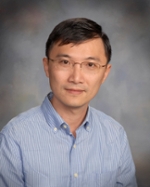
Shen-Shyang Ho is a Full Professor in the Department of Computer Science at Rowan University's College of Science & Mathematics. His work spans machine learning, data mining, and edge computing with applications in urban mobility, precision agriculture, and data privacy. He leads NSF-funded research projects on dynamic graph analysis and spatiotemporal anomaly detection. Ph.D. in Computer Science, George Mason University Post-Doctoral Associate, Caltech & NASA JPL B.S. in Mathematics with Computational Science, National University of Singapore Research expertise includes graph-based machine learning, conformal prediction, cooperative inference, and privacy-preserving ML. Current work focuses on federated learning for edge devices and anomaly detection in evolving systems. He has developed tools like SplitTracer for cooperative inference evaluation and ParkGauge for urban mobility monitoring. Recent publications highlight his contributions to 2026 Pattern Recognition journal (martingale-based graph analysis), 2025 IEEE ICAIC conference (blockchain gas optimization), and 2024 ACM SAC symposium (shared mobility systems). His work integrates machine learning with real-world constraints across energy grids, transportation, and agricultural technology. NSF Grant (2022) for Dynamic Graph Anomaly Detection NSF Grant (2018) for Spatiotemporal Analysis Google Scholar Classic Paper Recognition (2017) for 2006 Radar Micro-Doppler Study Professional memberships include the Association for Computing Machinery (ACM). His teaching portfolio ranges from introductory programming to advanced ML courses. He previously held positions at Nanyang Technological University before joining Rowan in 2016.
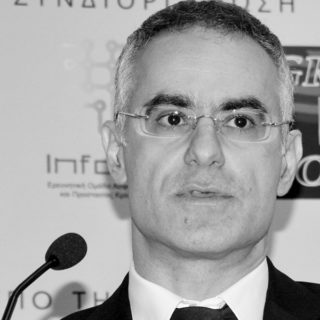
Neal Newman is a Professor of Law at Texas A&M University's College of Law, specializing in Business & Corporate Law , Securities Law , and Financial Regulation . His research bridges legal frameworks with contemporary issues in finance, cybersecurity, and sports law. Expertise: Business & Corporate Law, Securities Law, Financial Regulation, Financial Accounting, Transactional Law, Sports Law, Environmental Law, Cybersecurity Law Recent publications (2021-2023) focus on retail investor protection (e.g., GameStop-Robinhood controversies), ESG governance , SPACs , and SEC cyber data disclosure policies . His work emphasizes regulatory evolution in response to technological and market shifts. Scientific awards include: 2016 Texas A&M Association of Former Students Distinguished Achievement Award 2009-2010 Upper-Level Division Professor of the Year 2005-2006 Upper-Level Day Division Co-Professor of the Year Neal Newman advocates for a problem-solving approach in legal education, emphasizing the use of law as a tool to achieve client goals within broader societal and business contexts.
Dr. Abdelrahman Abuarqoub is a Senior Lecturer in Computer Security at the Cardiff School of Technologies , Cardiff Metropolitan University . He holds a PhD in Computer Science (2014) from Manchester Metropolitan University and an MSc (Distinction) in Data Telecommunications and Networks (2011) from the University of Salford . Research focuses on Computer Security , IoT Networks , and Lightweight Encryption Active member of IEEE TSUSC , MTAP-Springer , and other technical program committees Published extensively in IEEE , Springer , and ACM venues
Dr. Bassam Al-Shargabi serves as a Senior Lecturer in Software Engineering at Cardiff School of Technologies, Cardiff Metropolitan University. His academic credentials include a PhD in Computer Information Systems (2009) and an MSc in Computer Information Systems from AABFS (2004). His research focuses on critical intersections of technology and security: Lightweight encryption methods for resource-constrained IoT healthcare devices Innovative DNA-based cryptographic techniques Blockchain technology applications in auditing systems E-learning platform adoption in educational contexts Dr. Al-Shargabi's scholarly contributions demonstrate a consistent trajectory in developing secure, efficient solutions for emerging technological challenges, particularly in healthcare environments. His work bridges theoretical computer science with practical implementations to address real-world security concerns in increasingly connected systems. He actively participates in the academic community as a guest editor and technical program committee member for international conferences and leading journals. His publications appear in prestigious venues from major publishers including Elsevier, IEEE, Springer, and ACM, reflecting the quality and relevance of his research contributions.
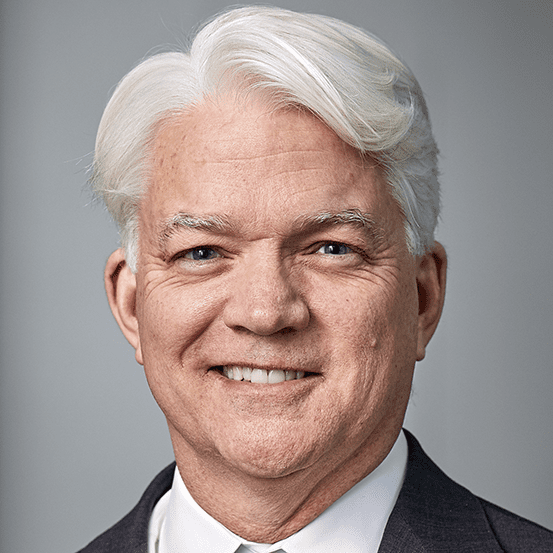
Leonard A. Kahn currently serves as the Dean of the College of Arts and Sciences and Professor of Philosophy at Loyola University New Orleans. He also holds the ex officio position of Gerald N. Gaston Distinguished Professor in Religion & Science. Prior to joining Loyola, Kahn taught in the Department of Philosophy at the U.S. Air Force Academy in Colorado Springs, Colorado, and served as the 2021-2022 Donald and Beverely Freeman Fellow at the U.S. Naval Academy's Stockdale Center for Ethical Leadership. Kahn completed his DPhil at Oxford University (Magdalen College) under the supervision of Derek Parfit and Roger Crisp. His academic journey includes being a Post-Doctoral Research Fellow at the University of Calgary, a Visiting Scholar at both the Yale University Center for Bioethics and the Hastings Center for Bioethics, and a Visiting Lecturer at the University of North Carolina at Chapel Hill and the University of Reading in the UK. His primary research focuses on moral theory and applied ethics , particularly the ethics of technology and just war theory . Kahn's teaching portfolio spans political philosophy, philosophy of law, philosophy of mind and action, feminist philosophy, and both decision and game theory. He has taught courses including Ethics, Making Moral Decisions, Philosophy of the Human Person, Seminar: Matters of Life and Death, Philosophy and Feminism, Seminar: The Ethics of War, Global Ethics, and Ethics and Artificial Intelligence. Analysis of Kahn's 15 most recent publications reveals a consistent focus on applied ethical dilemmas across multiple domains. His work spans military ethics (particularly just war theory and autonomous weapons systems), technology ethics (especially AI and cybersecurity), medical ethics, and political philosophy. A recurring theme throughout his scholarship is the application of consequentialist frameworks to contemporary ethical challenges, with particular attention to how theoretical principles translate to real-world decision-making in complex situations. Donald and Beverely Freeman Fellow at the U.S. Naval Academy's Stockdale Center for Ethical Leadership (2021-2022) Editor of John Stuart Mill's On Liberty (Broadview Editions, 2014) While specific information about his advisees is not provided in the available materials, Kahn's extensive teaching experience across numerous philosophy courses suggests significant mentorship of undergraduate students. His position as Dean of the College of Arts and Sciences at Loyola University New Orleans places him at the center of academic administration, where he oversees faculty development, curriculum design, and strategic planning for the university's liberal arts programs. Kahn's research appears to be supported through academic fellowships such as his Naval Academy appointment, though specific grant details are not mentioned in the provided materials. Kahn maintains active scholarly engagement through his editorial work (including co-editing Consequentialism and Environmental Ethics with Avram Hiller and Ramona Ilea) and contributions to edited volumes on topics ranging from autonomous vehicles to medical deportation. His professional affiliations include connections with major bioethics centers (Yale, Hastings) and military education institutions (U.S. Naval Academy, U.S. Air Force Academy), reflecting the interdisciplinary nature of his work at the intersection of philosophy, technology, and public policy.
Prof. Christos Xenakis is a Professor at the Department of Digital Systems of the University of Piraeus, where he has been a faculty member since 2007. He is also the director of the Postgraduate Degree Programme on "Digital Systems Security" and a member of the Systems Security Laboratory at the University of Piraeus. Prof. Xenakis received his B.Sc. in Computer Science in 1993, M.Sc. in Telecommunication and Computer Networks in 1996, and Ph.D. in 2004, all from the Department of Informatics and Telecommunications at the University of Athens. His research interests focus on systems, networks and application security . He has participated in numerous European (ACTS, ESPRIT, IST, AAL, DGHOME, Marie Curie, Horizon2020) and National research programs, coordinating several Horizon2020 projects including CUREX, SealedGRID, INCOGNITO and SECONDO. He has also served as Principal Investigator for Horizon Europe projects like ENTRUST and ERATOSTHENES. Prof. Xenakis has authored over 90 publications in peer-reviewed journals and international conferences, focusing on cybersecurity topics such as blockchain security, smart contracts, self-sovereign identity, adversarial machine learning, smart grid security, cyber insurance, phishing detection, wireless security, and authentication protocols. He has served on editorial boards of several scientific journals including Computers & Security , Computer Communications , and IET Information Security . He is also a member of the steering committee of the European Cyber Security Challenge and leader of the Hellenic Cyber Security Team.
Pedro Lind is a Professor at Oslo Metropolitan University's Faculty of Technology, Art and Design, where he serves in the Department of Information Technology with a focus on Artificial Intelligence. His academic appointments include active participation in research groups for Applied Artificial Intelligence and Mathematical Modeling. Dr. Lind's research spans interdisciplinary domains including: Biomedical AI applications (EEG classification, ECG analysis, eye tracking) Stochastic processes and complex systems modeling Trustworthy machine learning for security/privacy Physics-inspired computational methods Renewable energy statistics and modeling His recent publications demonstrate strong focus on developing novel AI methodologies for medical diagnostics (2024-2025), particularly using generative models and interpretable AI approaches for physiological data analysis. He leads significant research initiatives including the AI-Mind project developing diagnostic tools for dementia. Additional projects include international technology transfer collaborations with Czech Republic institutions. Dr. Lind maintains active research teams and labs focused on computational neuroscience and applied AI.
Markos Kounalakis, Ph.D., is a Visiting Fellow at Stanford University’s Hoover Institution , Senior Fellow at the Center on Media, Data, and Society at Central European University , and Senior Research Fellow at the University of Oregon-UNESCO Crossings Institute . An award-winning foreign affairs columnist, author, and scholar, his expertise spans International Relations , Media Diplomacy , and Global Security . Education Ph.D. in Political Science (International Relations), Central European University (summa cum laude) MSc in Journalism, Columbia University BSc in Political Science, University of California, Berkeley International Journalism Fellow, Annenberg School, USC Robert Bosch Foundation Fellow in Europe His research focuses on US Foreign Policy , Global Media Manipulation , and Authoritarian Influence . Notably, his 2018 book Spin Wars & Spy Games analyzed how Chinese and Russian media function as intelligence tools. He advocated for FARA compliance, influencing US policy. Scientific contributions include analyses of disinformation , cyber intelligence , and media’s role in diplomacy , with recent works (2022) examining Putin’s Ukraine war alliances and global trade-offs in Freedom Isn’t Free . Affiliations include the Fulbright Foreign Scholarship Board (2017), The Asia Foundation (2020), and Greece’s Council for International Relations (2021).
Ramadan Abdunabi is a Senior Clinical Professor in the Department of Computer Information Systems at Colorado State University's College of Business, joining in 2015. He holds a Ph.D. and MCS in Computer Science from the same university. Education: Ph.D. and MCS in Computer Science (Colorado State University) Research Interests: Primary: Software engineering, computer security, access control frameworks for mobile applications Secondary: Information systems education, pedagogy, curriculum design, and technological influences on learning Key projects: Spatiotemporal access control, secure resource access in mobile environments Article Trends: His work spans access control (15+ publications), software testing (e.g., test case prioritization), and educational research (programming self-efficacy in CIS students). Recent articles focus on body area networks, safety-critical systems, and software supply chain security, reflecting his dual emphasis on cybersecurity and pedagogical innovation. Advising: Mentored graduate and undergraduate students in thesis projects, including Rejina Basnet (M.S.) and Wisdom Senolos (BSBA).
Abbas Razaghpanah is a Researcher at the International Computer Science Institute (ICSI) , focusing on Internet privacy, security, and network measurement . He earned his PhD at Stony Brook University and previously interned at ICSI, leading the Haystack Project and developing the Lumen app . Research Focus: Mobile app security, TLS deployment, censorship measurement, and traffic differentiation Key Projects: Haystack, Lumen, ICLab Scientific Awards : ACM Research Competition Runner-Up Award Open Technology Fund Information Controls Fellowship ACM IMC 2018 Distinguished Paper Award His work involves collaboration with Citizen Lab at the University of Toronto and includes grants for studying global information controls. Abbas develops tools for user-space network monitoring to enhance transparency and regulatory compliance.
Dr. Viktor Melnyk serves as an Assistant Professor in the Department of Applied Computer Science at the Institute of Mathematics, Informatics and Landscape Architecture within the Faculty of Natural Sciences and Technology at John Paul II Catholic University of Lublin. His academic activities span teaching, research, and extensive student supervision across multiple years. His research interests focus on cybersecurity, cryptography, and FPGA-based systems, with particular expertise in wireless network security (especially IEEE 802.15.4), hardware acceleration, and machine learning applications in electronic design. His work bridges theoretical computer science with practical security implementations, evident in his numerous publications and student thesis topics. Analysis of Dr. Melnyk's recent publications reveals a consistent focus on hardware security implementations, particularly for low-rate wireless networks and reconfigurable computing systems. His research trajectory shows increasing integration of machine learning techniques with traditional security protocols, reflecting broader trends in the field. The publications demonstrate both theoretical depth and practical implementation focus, with many papers addressing specific hardware implementations. Dr. Melnyk has served as an Independent External Expert for evaluating grant proposals in the European COST Open Call competition, indicating professional recognition of his expertise. His contributions to the academic community extend to reviewing numerous scientific articles across various domains including biomedical data processing, cyber-physical systems, and cloud computing. His academic advising is exceptionally active, with documentation of supervising over 100 diploma theses from 2015 through 2025 across both Bachelor's and Master's levels. The thesis topics consistently align with his research interests, covering cybersecurity, cryptography, network security, and hardware implementations. He teaches courses including 'Operating Systems,' 'Network Data Protection Technologies,' and 'Multimedia Systems,' with teaching materials adapted for remote delivery during the pandemic period.
Chen Feng is an Associate Professor in the Department of Electrical Engineering at the School of Engineering, University of British Columbia (UBC), Okanagan campus. He holds the Tier-2 Principal's Research Chair in Blockchain and serves as the Co-Cluster Lead for Blockchain@UBC. Dr. Feng joined UBC in July 2015 after completing postdoctoral fellowships at Boston University and EPFL. Dr. Feng received his B.Eng. degree from Shanghai Jiao Tong University in 2006, and his M.A.Sc. and Ph.D. degrees from the University of Toronto in 2009 and 2014, respectively. Dr. Feng's research focuses on the intersection of information theory, coding theory, and blockchain technology. His work spans several key areas including: Information and Coding Theory for wireless communications Blockchain and distributed ledger technologies Quantum communications and cryptography Cloud computing optimization and analysis Stochastic analysis of distributed systems His recent research output demonstrates a strong trajectory in blockchain consensus protocols, private information retrieval, and the application of information theory to distributed systems. Dr. Feng has been actively publishing in top-tier venues with a focus on improving the performance, security, and scalability of blockchain systems. Dr. Feng has received several prestigious awards including: Best Paper Award at IEEE MSN (2021) Tier-2 Principal's Research Chair Award (2020) Visiting Fellow Scholarship at the University of Melbourne (2019) Emerging Professor Award from UBC-Okanagan School of Engineering (2017) Teaching Excellence Award (2017/18) As a graduate student supervisor, Dr. Feng teaches a range of courses from undergraduate to graduate levels, with a particular emphasis on blockchain technologies, wireless communications, and advanced engineering topics. He serves as a Senior Research Consultant for Subspace Labs and a Scientific Consultant for Creative Destruction Lab, bridging academic research with industry applications. Dr. Feng leads the Blockchain@UBC initiative, which focuses on advancing blockchain research and applications across multiple domains including clean energy, distributed systems, and secure communications.
Stephen B. Wicker is a Professor in the Department of Electrical and Computer Engineering at Cornell University, with affiliations in the graduate fields of Computer Science, Information Science, and Applied Mathematics. He is a Fellow of the Institute of Electrical and Electronics Engineers (IEEE) and has received multiple teaching awards at Cornell, including the College of Engineering Teaching Award (2012) and the Douglas Whitney '61 Excellence in Teaching Award (2010). Education: B.S., Electrical and Communications Engineering, University of Virginia (1982) M.S., Electrical and Communications Engineering, Purdue University (1983) Ph.D., Electrical and Communications Engineering, University of Southern California (1987) Wicker's research spans privacy and security in information networks , wireless systems , and network science . His work integrates game theory and mechanism design to address privacy challenges in consumer internet models. He has pioneered frameworks to balance data collection with user rights , influencing policy discussions on digital surveillance and Fifth Amendment protections . Research Trends: Recent publications highlight intersections between 5G/IoT and healthcare systems , blockchain applications in IoT, and algorithmic fairness . His 2022 work on 5G in Healthcare explores network optimization, while 2018–2020 studies focus on surveillance ethics and cyber-physical security . Scientific Awards: 2012 IEEE Fellow College of Engineering Teaching Award (2012, 2000, 1998) Douglas Whitney '61 Excellence in Teaching Award (2010) Cornell School of ECE Teaching Award (2009) Wicker has mentored prominent researchers like Dipayan Ghosh , whose work on digital privacy builds on Wicker’s earlier studies. His contributions include six books , Cellular Convergence and the Death of Privacy (2013), and over 50 peer-reviewed articles, reflecting his focus on privacy-aware design and policy reform in technology.
Professor Phillip Morgan is a leading academic in Human Factors and Cognitive Science at Cardiff University's School of Psychology, holding a Personal Chair since 2020. He directs the Human Factors Excellence (HuFEx) Research Group and serves as Director of Research for the Centre for Artificial Intelligence, Robotics & Human-Machine Systems (IROHMS) . Since March 2019, he has been seconded part-time to Airbus as Director of their Centre of Excellence in Human-Centric Cyber Security . BSc (Hons) Psychology, Cardiff University (2001) PGDip Research Methods, Cardiff University (2002, Distinction) PhD in Cognitive Psychology, Cardiff University (2005) PGCHE, University of Wales (2012, Distinction) His research merges Human Factors with Cognitive Science to address real-world challenges in: Human-machine interaction in autonomous systems Cyberpsychology and security behavior Transport human factors (connected/autonomous vehicles) Interruption/distraction effects on cognition Trust and blame dynamics in AI systems Industry 5.0 human-centric manufacturing Recent publications show AI and cybersecurity as dominant themes, with specific focus on autonomous vehicle interfaces, human fatigue analysis, and trust calibration in human-machine systems. His work integrates behavioral experiments, driving simulators, and human-state monitoring. Scientific Recognition: Associate Fellow of the British Psychological Society Best Paper Award at AHFE 2021 Member of Experimental Psychology Society Keynote speaker at multiple international conferences As supervisor, he leads projects on cybersecurity frameworks, fatigue detection, and human-AI interaction. His grants portfolio exceeds £37m from sources including EPSRC, ESRC, Airbus, and Wellcome Trust. Current supervisees include Victoria Marcinkiewicz, George Raywood-Burke, and Nicola Turner.
Dr. Aryan Pasikhani is a Lecturer in Cybersecurity at the University of Sheffield , affiliated with the Security of Advanced Systems research group . Holding a PhD from the same institution, his research focuses on Intrusion Detection Systems , Reinforcement Learning , and Quantum Computing applications in security. Specializes in securing Embedded Systems and Internet of Things architectures Active in Adversarial Machine Learning and Privacy-Preserving Technologies Peer-reviewer for IEEE Internet of Things Journal and IEEE Transactions on Industrial Informatics His recent work explores 6LoWPAN security through reinforcement learning and Federated Learning frameworks for privacy-preserving data analysis. Awards include Fellow of the Higher Education Academy . Current grants involve real-time ransomware detection (CipherGrit) and automated threat modeling for AI systems. He supervises four PhD students and teaches Security of Control and Embedded Systems .