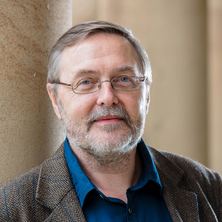
Sam Clark is a Postdoctoral Research Associate at the Electron Bio-Imaging Centre (eBIC) of Diamond Light Source, where he has been working since January 2024. He is a member of Dr. Yuriy Chaban's research group, focusing on innovative computational approaches to enhance cryo-electron microscopy (cryo-EM) data analysis, including particle picking, denoising, 3D reconstruction, and post-processing. His academic journey includes a Ph.D. from the University of Manchester under the supervision of Professor Curtis Dobson, where he investigated antimicrobial peptides using scanning electron microscopy, atomic force microscopy, biophysical assays, and machine learning to establish sequence-activity relationships. Following his doctorate, he held a postdoctoral position at the University of York with Professor Reidun Twarock, studying single-stranded virus assembly and RNA-viral protein interactions, during which he also developed data analysis software for laboratory collaborators. Clark's research integrates structural biology, computational methods, and machine learning to tackle complex problems in biological imaging. His current work aims to improve the efficiency and accuracy of cryo-EM data processing pipelines, which are critical for high-resolution structural determination of macromolecular complexes. As part of the eBIC team at Diamond Light Source, he contributes to the center's mission of providing world-leading cryo-EM infrastructure and expertise to the scientific community.
Oleksandr Yefanov is a Senior Scientist at the Center for Free-Electron Laser Science (CFEL) in Hamburg, Germany, affiliated with DESY and XFEL.EU. His work focuses on advancing X-ray crystallography techniques using free-electron lasers and synchrotrons. He has contributed to data reduction methods, high-resolution imaging, and sample delivery systems for structural biology. Key Affiliations: CFEL, DESY, XFEL.EU Research Interests: X-ray crystallography, serial femtosecond crystallography, diffraction imaging, structural biology, data analysis algorithms. Article Trends (2017-2025): Yefanov's publications emphasize improving resolution in X-ray microscopy, developing computational tools for diffraction data, and optimizing sample delivery for XFEL experiments. Recent work explores sub-3nm focusing, in situ monitoring of chemical processes, and multi-dimensional serial crystallography. Advising: Supervised Galchenkova M.'s 2024 PhD dissertation on diffraction analysis methods.
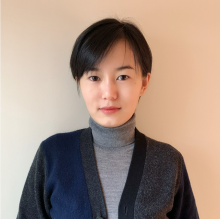
Dr. Raita Laura Oana is a Senior Researcher at the National Institute for Research and Development of Isotopic and Molecular Technologies in Cluj-Napoca, Romania. She also serves as Cluster Executive Manager for the Transylvania Energy Cluster (TREC) and has 16 years of experience in research and project management. Education: BSc in Physics (2000), Babeș-Bolyai University Advanced Studies in Oxide Materials Physics (2001) PhD in Physics (2006), Babeș-Bolyai University Her research focuses on renewable energy , energy efficiency , magnetic resonance , and advanced materials . She specializes in developing nanomaterials for energy applications and environmental protection. Her work includes core-shell nanoparticles with tunable magnetic properties and magnetic nanowires for hyperfrequency domains. Recent research trends show her involvement in: 2020-2022 projects on microwave field detection and environmental pollution conversion 2016-2020 work on Pt/Fe core-shell nanoparticles 2010-2013 studies on magnetic oxides and spintronic applications 2004-2006 foundational work in magnetic resonance characterization Her projects demonstrate continuous development of nanotechnology applications in energy systems and environmental protection. Advisory & Management Roles: Project Coordinator for ESR lab modernization (2007-2010) Partner Team Leader for multiple EU and national projects Key Expert in various nanotechnology and materials science initiatives Program Manager for Transylvania Energy Cluster (TREC) Laboratory Infrastructure: Electronic Spin Resonance (ESR) laboratory modernization (2007-2010) Active participation in nanometric scale characterization facilities Contributions to magnetic resonance research base development in Northwest Romania
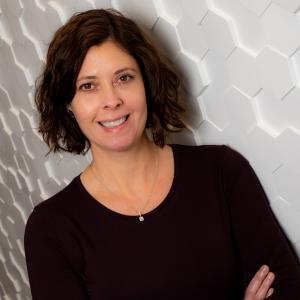
Prof. Benjamin Berkels is affiliated with the Aachen Institute for Advanced Study in Computational Engineering Science (AICES) at RWTH Aachen University. His research focuses on advanced image processing techniques tailored for electron microscopy data, including innovations in non-rigid registration, denoising algorithms, and multi-phase segmentation. His work addresses critical challenges in atomic-scale imaging, such as sub-picometre precision measurements, leveraging crystalline periodicity through primitive unit cell extraction, and analyzing materials with discontinuous periodicity via high-dimensional feature vectors. These methods are being extended to hyperspectral data like EELS/EDX, demonstrating their applicability to complex material analyses.
Jan Pieter Abrahams is a Professor and Group Leader of the Nanodiffraction group at the Laboratory for Multiscale Bioimaging, Paul Scherrer Institute (PSI) in Switzerland. His work focuses on developing electron diffraction technologies for atomic-resolution imaging of frozen hydrated biological samples, leveraging PSI's detector expertise to advance structural biology beyond conventional microscopy limitations. Current applications target mitochondrial stress mechanisms in neurodegeneration and aging, with active collaborations across international institutions. Research Interests: Abrahams pioneers electron diffraction and cryo-EM methodologies, emphasizing computational-phasing innovations and machine learning integration. His group specializes in: Overcoming dynamical scattering for atomic-level cellular visualization Hybrid pixel detector applications (JUNGFRAU, EIGER) in electron microscopy Deep learning frameworks for diffraction data processing (e.g., DiffraGAN) Structural analysis of protein nanocrystals in disease contexts Mitochondrial protease mechanisms in aging Bacterial cell division and sporulation structures Publication Trends: Recent work (2020–2024) reveals heavy emphasis on AI-driven structural biology, including generative networks for diffraction phasing and lossless data compression. Instrumentation advancements (e.g., Boersch phase shifters) and disease-focused studies (Alzheimer’s amyloid-beta, malaria heme processing) dominate, showcasing interdisciplinary convergence of physics, computation, and biomedicine. Scientific Awards: No specific awards or fellowships documented in source text Advising and Collaborations: Abrahams has mentored PhD students including Thakkar, Pooja; Rheinberger, Jan; Schärer, Martin; and Wennmacher, Julian. His team collaborates with PSI's detector group on sensor development (GaAs/CdTe) and international labs for structural studies. Funding likely stems from PSI instrumentation projects and disease-focused research initiatives. Labs and Teams: He directs the Nanodiffraction group under PSI's Center for Life Sciences, comprising scientists (van Genderen, Latychevskaia) and postdocs (Blum). The lab integrates cryo-EM, electron diffraction, and computational modeling to visualize cellular processes at nanometer scales, with strong ties to detector engineering and pharmaceutical structural analysis.
Devrim Unay is a Professor in the Department of Electrical-Electronics Engineering at İzmir Democracy University. His research focuses on biomedical signal processing, medical imaging, and AI-driven solutions for healthcare and agriculture. He leads the AIDA (Artificial Intelligence and Data Analytics) Research and Application Center, advancing interdisciplinary projects such as automated cell analysis, tumor suppression nanomedicines, and fruit grading systems. Unay has authored over 50 peer-reviewed publications and contributed to initiatives like the EURASIP Journal on Advances in Signal Processing as an Associate Editor. His work includes datasets like WHAD/CAMAD and software frameworks like BIAFLOWS. He holds roles such as Chair of the IEEE Signal Processing Society’s Challenges and Data Collections Subcommittee. Education: Not explicitly stated in provided texts, inferred via academic rank and publications. Research interests span AI applications in microscopy, CT imaging for disease detection (e.g., COVID-19), and nanomedicine. He leads projects funded by TEYDEB, including cloud-based image analysis tools for industrial applications. His articles emphasize image segmentation, deep learning pipelines, and interdisciplinary collaborations in neuroscience and agriculture. Key Projects: SSNOMBACTER database, Neubias bioimage analysis framework, and AI-driven fruit grading systems. Unay’s contributions include organizing conferences like TıpTekno’22 and serving on technical committees such as IEEE BISP TC and Tübitak ARDEB.
Jan Seidel is a Professor in the School of Materials Science and Engineering at UNSW Sydney. He holds a doctorate from TU Dresden (2005) and has held positions at UC Berkeley, Lawrence Berkeley National Laboratory, and as a Visiting Fellow at the University of Oxford. His research focuses on advanced scanning probe microscopy for studying functional materials, including domain walls, topological structures, and energy-related applications like photovoltaics and quantum materials. He has authored over 200 peer-reviewed papers with 16,000+ citations and an h-index of 50. Education: Doctorate in Materials Science, TU Dresden, Germany (2005). Key Positions: Research Scientist at Lawrence Berkeley National Laboratory (2008–2011), Research Associate at UC Berkeley (2006–2007), and Research Associate at TU Dresden (2001–2006). Research Interests: Ferroelectrics, multiferroics, 2D materials, nanotechnology, and energy materials. His group develops novel microscopy techniques and explores optoelectronic and data storage applications, including nonvolatile memories and nanoelectronics. Awards: UNSW Outstanding Research Supervisor Award (2019), ARC Postgraduate Council Supervisor Awards (2017–2018), and a Future Fellowship from the Australian Research Council (2011). Teaching: MATS6008 Advanced Functional Materials, NANO3001 Advanced Nanomaterials. He leads the Seidel Research Group, affiliated with ARC’s Centre of Excellence in Future Low-Energy Electronics Technologies (FLEET). Advising: Openings for PhD students; contact via jan.seidel@unsw.edu.au. Grants and collaborations span synchrotron techniques, neutron scattering, and international partnerships.
Affiliations & Roles Professor Roger Wepf holds roles as Director of the Centre for Microscopy and Microanalysis and Pro-Vice-Chancellor (Research Infrastructure) at the University of Queensland (UQ). He is affiliated with the Faculty of Science and the Faculty of Health, Medicine and Behavioural Sciences. His academic rank is Professor. Education He earned a Doctoral Diploma of Science (Advanced) from the Swiss Federal Institute of Technology ETH Zürich. Research Interests His research focuses on advanced microscopy techniques, nanostructure characterization, and energy materials. Key areas include cryo-microscopy, electron tomography, and the development of imaging infrastructure. He explores applications in materials science, catalysis, and biomedical imaging. Grants & Funding Current: Structure-guided optimisation of light-driven microalgae cell factories (ARC Discovery Projects, 2024-2027) Advanced Surface Characterisation for Minerals (RTCM Trailblazer, 2024-2025) Microscopy Australia - Australian Microscopy and Microanalysis Research Facility (2023-2028) Labs & Infrastructure He leads the Centre for Microscopy and Microanalysis, overseeing state-of-the-art facilities like the 3DED/MicroED facility and cryo-microscopy suites. His work integrates correlative microscopy and FAIR-compliant data repositories.
Sebastian Wood is a Principal Scientist at the National Physical Laboratory (NPL), specializing in nanoscale measurement techniques for emerging semiconductor materials. He holds a PhD in Physics from Imperial College London and leads projects in semiconductor metrology, standardization, and advanced materials research. His work focuses on developing scanning probe microscopy (SPM), optical spectroscopy, and wafer-scale metrology for semiconductor quality assurance. He chairs the BSI EPL/47 committee for semiconductor standards and contributes to international committees like IEC and ISO. Education: PhD in Physics, Imperial College London Undergraduate studies in Physics, Imperial College London Research Interests: Nanoscale metrology of 2D materials, hybrid perovskites, and compound semiconductors Advanced SPM and optical spectroscopy techniques Wafer-scale measurement systems for semiconductor manufacturing Pre-standards research for AI, quantum, and telecoms convergence Key Projects: Coordinator of the EMPIR 'PowerElec' project on wide bandgap power electronics metrology International interlaboratory comparisons for graphene and semiconductor characterization Labs & Facilities: Leads NPL's unique facility for nanometrology of emerging electronics, integrating structural, functional, chemical, and optical measurement modes.
Xiaotang Lu is an Assistant Professor in the Department of Chemistry at the University of Illinois Urbana-Champaign, with affiliations at the Beckman Institute for Advanced Science and Technology and the Carl R. Woese Institute for Genomic Biology. She holds a PhD in Materials Science and Engineering from the University of Texas at Austin and completed postdoctoral training in neuroscience at Harvard University under Jeff Lichtman. Her research focuses on developing biochemical tools and advanced imaging techniques to study brain connectivity, particularly in connectomics and correlated light-electron microscopy. Research interests include biochemical tools for brain imaging, spatial omics, and systems neuroscience. She leads the Lu Lab, which works at the chemistry-neuroscience interface to address challenges in understanding brain circuitry and neuropsychiatric diseases. Notable achievements include the development of NATIVE (Nanobody-assisted tissue immunostaining for volumetric EM) and contributions to NIH BRAIN Initiative projects. Education: PhD in Materials Science and Engineering, University of Texas at Austin M.S. in Chemistry, Tsinghua University Postdoctoral Fellowship, Harvard University Awards include the NIH BRAIN Initiative K99/R00 Award (2022–2024), Cornell FIRST Scholar (2022), and Leading Edge Fellow (2022). She teaches Chem 588: Physical Methods for Materials Chemistry and actively recruits graduate students, postdocs, and undergraduates for interdisciplinary research projects. Key publications focus on multiplexed molecular imaging, connectomics methodologies, and advanced microscopy techniques to map brain circuitry. Her work bridges chemical innovation with neurobiological applications, aiming to clarify how brain structure enables function and disease.
Charles M. Schroeder is a James Economy Professor in the Department of Chemical & Biomolecular Engineering at the University of Illinois at Urbana-Champaign. He holds the Ray and Beverly Mentzer Faculty Scholar title and is affiliated with Materials Science and Engineering, Bioengineering, and the Beckman Institute. His research focuses on molecular engineering, soft materials, and single-molecule biophysics, with over 150 peer-reviewed articles and patents in DNA data storage, polymer dynamics, and biophysical systems. Education : B.S. (Carnegie Mellon, 1999), Ph.D. (Stanford, 2004). Postdoctorates at Harvard (2004-2007) and UC Berkeley (2007-2008). Research : Develops microfluidic tools for high-throughput biomolecular analysis, studies non-equilibrium polymer dynamics, and designs bio-inspired materials. Key areas include DNA-based data storage, single-molecule charge transport in peptides, and rheology of ring polymers. Techniques span fluorescence microscopy, microfluidics, and AI-driven discovery. Publications : Recent work emphasizes DNA storage systems, photostable light-harvesting molecules, and vitrimer electrolytes. His articles bridge biophysics and engineering, with applications in energy, healthcare, and nanotechnology. Awards : Packard Fellowship, NSF CAREER Award, APS Fellow, and multiple UIUC excellence recognitions. Leads interdisciplinary groups at the Beckman Institute and collaborates across materials science, bioengineering, and chemistry.
Vladimir Stojanović is an Adjunct Professor in the Department of Electrical Engineering and Computer Sciences at the University of California, Berkeley. His research focuses on integrated electronic-photonic systems-on-chip, emerging technologies, and VLSI design. He has held positions at MIT (2005–2013) and Rambus, Inc. (2001–2004). Stojanović leads research initiatives in the Berkeley Deep Drive (BDD), Berkeley Emerging Technologies Research (BETR), and Center for Energy Efficient Electronics Science (E3S). Education: Ph.D. (2005, Stanford), M.S. (2000, Stanford), and Dipl. Ing. (1998, University of Belgrade). Awards include the IEEE Fellow (2024), NSF CAREER Award (2009), and multiple best-paper recognitions. He co-founded Ayar Labs, Numericcal, and MaxLinear (formerly NanoSemi). Key research areas include silicon photonics integration, nanoelectromechanical systems (NEMS), and energy-efficient computing architectures. His work spans optical interconnects, quantum photonics, and biomedical sensors, with emphasis on co-design of electronics and photonics in advanced CMOS processes.
Christy Landes is a Professor of Chemistry , Electrical & Computer Engineering , and Chemical & Biomolecular Engineering at Rice University . She directs the Center for Adapting Flaws into Features (CAFF) and develops advanced spectroscopic tools to study single-molecule and interfacial dynamics for predictive materials design. Ph.D. in Chemistry from Georgia Institute of Technology (2003) B.S. in Chemistry from George Mason University (1998) NIH Postdoctoral Fellow at University of Texas-Austin (2004-2006) Postdoctoral Researcher at University of Oregon (2003-2004) Her research focuses on single-molecule spectroscopy , nanoscale interfacial dynamics , and data science-driven imaging to decode biological and synthetic structure-function relationships. She applies these methods to predictive separations , photocatalysis , and breaking the Abbe diffraction limit for nanoscale resolution. Recent publications highlight trends in plasmonics , machine learning for nanoparticle synthesis , substrate effects on nanomaterials , and interfacial charge transfer , reflecting her interdisciplinary work bridging physical chemistry , nanotechnology , and materials engineering . Scientific awards include: 2023 Fellow of the American Association for the Advancement of Science 2024 Kazuhiko Kinosita Award in Single-Molecule Biophysics She has advised students like Emily Searles (Ph.D. defense, 2023), Jagriti Chatterjee, and Zhenyang Jia, who have won departmental awards. Her lab also emphasizes innovative educational initiatives , such as undergraduate data science and instrumentation labs. Current research includes collaborations and grants from the National Science Foundation to advance nanomaterials and synthetic design principles.
Dr. Ali Mohammadi is a Senior Lecturer in the Department of Electronic & Electrical Engineering within the Faculty of Engineering & Design at the University of Bath. He leads innovative research in Micro-electromechanical Systems (MEMS) and serves as an Associate Editor for IEEE Sensors. His work is supported by multiple EPSRC-funded research projects with strong industry collaboration, totaling over £1.5 million across five projects. Dr. Mohammadi is embedded within several key research units: Electronics Materials, Circuits & Systems Research Unit (EMaCS), The Foundry: Centre for Digital, Manufacturing & Design, Centre for Bioengineering & Biomedical Technologies (CBio), and the Bath Institute for the Augmented Human. Dr. Mohammadi's academic background includes postdoctoral research at the Department of Engineering Science, University of Oxford (2016-2017) and the Department of Electrical and Computer Systems Engineering, Monash University, Australia (2014-2016). This foundation has enabled his interdisciplinary approach to micro/nano-electromechanical systems and electronic circuit design. His research program addresses fundamental challenges in micro/nano-electromechanical transducers and electronic interface circuits, with specific innovations in on-chip atomic force microscopy, implantable energy harvesters, and high precision coupled resonator sensors. These contributions span multiple UN Sustainable Development Goals, particularly advancing clean energy technologies and healthcare solutions. Dr. Mohammadi's work uniquely bridges electrical engineering, mechanical systems, and materials science to develop next-generation sensing and energy harvesting technologies with real-world applications. Analysis of his 48 research outputs reveals a clear trajectory from fundamental MEMS device development toward integrated sensor systems with practical applications. His most recent publications (2023-2025) demonstrate increasing integration of machine learning with precision sensing technologies, particularly for manufacturing condition monitoring and biomedical applications. The research shows progression from individual components to complete systems, with growing emphasis on real-time data processing at the sensor edge and human-machine interfaces. Dr. Mohammadi's professional standing includes: Member of the Institute of Electrical and Electronics Engineers (IEEE) Associate Editor of IEEE Sensors Journal As a doctoral supervisor, Dr. Mohammadi actively mentors students in Microelectromechanical Systems and Electronic Integrated Circuits. His research portfolio includes two active EPSRC projects: 'Transforming the use of Ansys simulation software within engineering curricula' and 'SENSYCUT- Sensor Enabled Systems for Precision Cutting,' demonstrating strong industry-academic collaboration. These projects focus on practical engineering solutions for manufacturing optimization, condition monitoring, and human-computer interaction, with direct applications in industrial settings. Dr. Mohammadi's research ecosystem spans multiple interdisciplinary centers at Bath. Within EMaCS, he advances fundamental electronic materials and circuit design. Through The Foundry, he contributes to digital manufacturing innovation. His CBio affiliation enables medical applications of his sensor technologies, while the Bath Institute for the Augmented Human provides context for human-centered applications of his tactile display research. This multi-faceted institutional integration allows his work to progress from laboratory prototypes to real-world implementations across healthcare, manufacturing, and human augmentation domains.
Dr. David T. Fullwood is Professor of Mechanical Engineering at Brigham Young University (BYU), with a focus on composites/nano-composites, microscopy, and computational methods in materials science. He holds a PhD in Applied Mathematics (1991) and MS in Mechanical Engineering (2005) from BYU, alongside advanced degrees in Mathematics from the University of Utah (1989) and University of York (1987). His 25+ year career at BYU has produced 150+ peer-reviewed publications and patents, including a 2015 US patent for composite strain gauges and a 1994 flywheel patent. Education: 2005 MS (BYU), 1991 PhD (Applied Mathematics, London University) Employment: 2007–present (BYU Professor), 2006–07 (Drexel Research Assistant Professor) His research spans microstructure-sensitive design, twin transmission modeling in magnesium alloys, dislocation characterization via EBSD, and innovative sensor development using piezoresistive nanocomposites for biomechanical applications. He serves on technical committees for SAMPE and ICOTOM conferences, with 2016–2017 roles as General Chair. Recent work (2024–2025) explores strain gradient effects in aluminum alloys, viscoelastic modeling of nanocomposite sensors, and environmental factors influencing sensor drift. His 2025 publications include percolation theory for conductive composites and slip system identification in titanium alloys using coupled EBSD/HRDIC. Scientific Awards: SAMPE Best Paper (2011), CAMX Student Symposium 1st Place (2016), ICOTOM Keynote (2017) Dr. Fullwood teaches ME courses on composites, materials design, and computational methods while mentoring 13+ graduate students. His lab develops tools for EBSD-based dislocation analysis and contributes to the MagNET Research Network (2013) and multiscale mechanics studies in hexagonal metals.