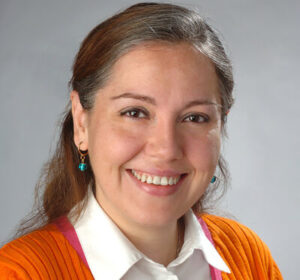
Senem Velipasalar is a Professor in the Department of Electrical Engineering and Computer Science (EECS) at Syracuse University, affiliated with the Smart Vision Systems Laboratory and the Aging Studies Institute. She holds a Ph.D. and M.A. from Princeton University, an M.S. from Brown University, and a B.S. from Bogazici University. Her research focuses on machine learning, computer vision, and wireless smart camera systems, with applications in human activity classification, driver behavior analysis, and defense against adversarial attacks. Her honors include the NSF CAREER Award (2011), 2021 IEEE Technological Innovation Award, and multiple doctoral prizes for her advisees. She leads grants totaling over $4M, including ARPA-E projects on occupancy detection and DOE-funded research on aerial energy modeling. Research interests span embedded vision, distributed multi-camera tracking, and energy-efficient algorithms. Her lab develops technologies like wearable camera-based fall detection and autonomous UAV navigation. Notable publications include works on adversarial attacks, fNIRS brain activity analysis, and thermal pedestrian detection.
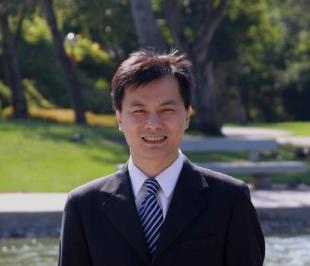
Qun Li is a Professor of Computer Science at the College of William and Mary, leading the Edge Computing Laboratory. He holds an IEEE Fellow distinction and has served as Graduate Director (2010-2011). His research focuses on edge computing, operating systems, distributed systems, and security & privacy, with over 100 publications in top venues like ACM CCS, ICSE, and NSDI. Li has advised numerous PhD students, including Zhengrui Qin and Ed Novak, who now hold academic positions. He chairs conferences including ACM/IEEE Symposium on Edge Computing (SEC'22) and has editorial roles at IEEE Internet Computing and Transactions on Computers. Key awards include an NSF Career Award. His work emphasizes building prototype systems and addressing real-world challenges in edge computing and quantum networks. Education: PhD from Dartmouth College under Daniela Rus Research interests span edge computing architecture, secure deep learning, federated learning, and quantum computing applications. His Edge Computing Group explores scalable solutions for distributed systems and privacy-preserving technologies. Recent publications (2022-2024) focus on quantum networks, federated learning robustness, and privacy-preserving algorithms. A notable trend is integrating quantum computing with edge systems for enhanced security and efficiency. Awards: NSF Career Award (year unspecified), IEEE Fellow (year unspecified) Advised students have transitioned to academia and industry roles, reflecting Li's mentorship impact. Active in conference organization, he has led program committees for ACM SEC and IEEE ICDCS, while steering editorial boards in computer networks and systems. Current projects include quantum network routing and Byzantine-tolerant federated learning.
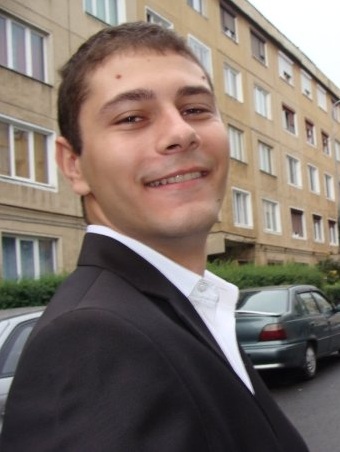
Ashiq Anjum is a Professor of Distributed Systems at the College of Science and Engineering. His research focuses on cybersecurity, privacy-preserving technologies, blockchain applications, machine learning, and IoT systems. He has contributed to advancements in distributed systems, vehicular networks (VANETs), smart grids, and federated learning frameworks. His work emphasizes integrating blockchain for secure data aggregation and leveraging AI techniques for data interpretation and privacy protection. Key research areas include secure communication in drone networks, privacy in vehicular systems using IOTA ledgers, and federated learning with differential privacy. He explores graph models for genomic data analysis and healthcare applications. His publications span journals like Elsevier Information Sciences , Future Generation Computer Systems , and Neurocomputing . Collaborations include projects on data imputation for environmental sensing, deep learning pipelines in cloud computing, and optimizing video analytics for smart cities. His work bridges theoretical computer science with practical applications in IoT, healthcare, and urban sustainability.
Dr. Shinichi Nakajima is a Senior Research Lead at the Technical University of Berlin, affiliated with the BIFOLD (Berlin Institute for the Foundations of Learning and Data) and the AIP – RIKEN Center of Advanced Intelligence Project . He leads the research group “Probabilistic Modeling and Inference” at BIFOLD. His academic journey includes a Master’s in Physics from Kobe University (1995) and a PhD in Computer Science from Tokyo Institute of Technology (2006). Prior to academia, he worked at Nikon Corporation (1995–2014) on statistical analysis, image processing, and machine learning. His research focuses on Bayesian inference , generative modeling , explainable AI , and quantum computing , with applications in computer vision, natural language processing, and scientific computing. Notable projects include developing NeuLat (a neural sampling toolbox for lattice field theories) and advancing techniques for symbolic XAI to enhance AI transparency. Dr. Nakajima has published extensively on topics such as diffusion models, federated learning, and physics-informed neural networks. His work bridges theoretical foundations (e.g., Bayesian learning) with practical applications in quantum computing and biomedical imaging. He actively contributes to open-source tools and collaborates with industry and academic institutions globally. Key technical achievements include improving sampling efficiency in quantum eigensolvers, enhancing brain source reconstruction via 3D neural networks, and developing anomaly detection systems using self-supervised autoencoders. His research emphasizes computational efficiency and robustness against adversarial attacks, leveraging Langevin dynamics and gradient-based optimization methods.
Zheng Chang is a Professor at the Institute of Computing Technology, School of Computer Science and Technology, University of Chinese Academy of Sciences in Beijing, China. With a PhD from the University of Jyväskylä (2013), Chang has established a prolific research career with over 240 publications spanning from 2011 to 2025. Chang maintains strong collaborative ties with researchers at the Chinese Academy of Sciences' Shenyang Institute of Automation and has developed significant international collaborations, particularly with Finnish researchers including Timo Hämäläinen. Chang's research focuses on cutting-edge areas at the intersection of wireless communications, artificial intelligence, and edge computing. Their work prominently features federated learning, UAV networks, resource allocation, and privacy-preserving techniques for IoT applications. Recent publications demonstrate a strong emphasis on vehicular edge intelligence, split learning architectures, and RIS-assisted communications. The research output shows consistent growth with 42 publications in 2024 alone, indicating an active and expanding research program. Chang's 15 most recent publications reveal a clear research trajectory toward addressing the challenges of resource-constrained edge environments through innovative learning architectures. The work spans theoretical frameworks for privacy preservation in federated learning to practical implementations for UAV networks and vehicular systems. A notable trend is the integration of AI-generated content techniques with traditional federated learning approaches to overcome data scarcity issues in edge environments. While specific awards aren't documented in the provided text, Chang's extensive publication record in top-tier IEEE journals including IEEE Transactions on Wireless Communications, IEEE Internet of Things Journal, and IEEE Transactions on Vehicular Technology demonstrates significant scholarly impact. The research has been widely cited, with multiple highly cited co-authors including Timo Hämäläinen (66 co-authored papers), Zhu Han (38 papers), and Geyong Min (31 papers). Chang's work shows strong practical applications across multiple domains including intelligent transportation systems, smart agriculture, healthcare IoT, and next-generation 6G networks. The research program appears well-funded through collaborations with major institutions and demonstrates clear translational potential for real-world deployment in edge computing environments.
Gavin Taylor is a Professor of Computer Science at the United States Naval Academy (USNA), where he chairs the development of the new Data Science major. His research focuses on Machine Learning, including neural network vulnerabilities, reinforcement learning for IoT devices, and adversarial machine learning. He is currently on sabbatical as a Visiting Professor at the Norwegian OpenAI Lab (NTNU), collaborating with institutions like the University of Maryland and NTNU. Professor Taylor has been recognized with the 2022 Class of 1951 Civilian Faculty Teaching Excellence Award, emphasizing his commitment to education. He teaches courses such as SD312: Machine Learning and has developed curricula across Data Science, Cyber Operations, and Operations Research. His sabbatical work in Norway involves advancing AI research through interdisciplinary collaborations. His research trends emphasize practical AI applications—such as autonomous IoT systems—and ethical concerns like adversarial attacks and data poisoning. He actively seeks partnerships to engage students in real-world data science projects through the new major, scheduled to graduate its first class in 2025.
Nandini Sidnal serves as Senior Learning Facilitator and National Academic Course Coordinator for Torrens University's Master of Software Engineering program through the Centre for Artificial Intelligence Research and Optimisation (AIRO). With over 20 years of international teaching experience in Computer Science, Engineering, and Networking, she has established herself as a key academic figure in AI and blockchain applications. Her educational foundation includes: PhD in Computer Science and Engineering (Cognitive Computing using Intelligent Agents) from Visvesvaraya Technological University (2012) M.Tech in Computer Science and Engineering (Parallel and Distributed Computing using Intelligent Mobile Agents) (2003) Bachelor of Engineering (1993) Nandini's research spans Artificial Intelligence, Blockchain Security, and Cognitive Computing , with strong emphasis on practical implementations in agriculture and healthcare. Her work integrates intelligent agents with distributed systems to solve real-world problems like food supply chain security and medical diagnostics, demonstrating consistent innovation from her early best paper award-winning thesis to current cutting-edge applications. Recent publications reveal a pronounced trend toward AI-driven agricultural optimization (dairy quality, aeroponics, nut farming) and healthcare diagnostics (epilepsy detection), alongside critical work in edge security. These outputs consistently bridge theoretical frameworks with tangible industry solutions, particularly in blockchain-secured IoT systems and deep learning applications. Her scientific recognition includes: Best Paper Award at an international conference for distributed computing research Nandini actively mentors high-impact projects including 'Strengthening Mobile-Based Services for Agriculture' and 'Enhancing VANET Performance with Cloud and Edge Technology.' Her industry collaborations with Intel (Parallel Programming integration) and Nokia (Mobility Research Lab establishment in Finland) demonstrate exceptional academic-industry synergy. The AIRO Centre serves as her primary research hub where she guides PhD candidates in blockchain-secured agri-supply chains and semantic recommender systems. Her Mobility Research Lab in Finland remains a cornerstone of her practical innovation legacy, focusing on next-generation mobile application development that continues to influence current VANET and edge computing research directions.
Razvan Stanica is an Associate Professor at the Telecommunications department of INSA Lyon and a member of the CITI laboratory and Inria Agora team. His research focuses on wireless networks, cellular architectures, energy efficiency, and mobile data analytics. He holds a PhD from the National Polytechnic Institute of Toulouse and has supervised numerous PhD and master's students in areas like vehicular networks and IoT. Education: Bachelor's and Master's from Politehnica University of Bucharest and National Polytechnic Institute of Toulouse (2008) PhD in Vehicular Networks from National Polytechnic Institute of Toulouse (2011) Research Interests: 5G/6G cellular networks, IoT, and energy-efficient designs Mobile data analytics and urban mobility modeling Vehicular networks (VANETs) and disaster communication systems Network slicing and privacy-preserving technologies Awards: Recognized as one of France's best junior researchers in computer networks (2021). His PhD was nominated for the Léopold Escande Prize (2011). Key Projects: ECOMOME (CHIST-ERA-funded project on energy consumption in cellular networks) SafeCityMap (Inria-funded pandemic mobility analysis) PEPR NAI (self-deployable mobile networks) Labs/Teams: CITI Lab and Inria Agora team at INSA Lyon, collaborating with institutions like ETS Montreal and Nokia Bell Labs.
Vincenzo Deufemia is a Full Professor at the Department of Computer Science of the University of Salerno . His work focuses on cybersecurity, IoT security, data analytics, machine learning, and end-user development in smart environments. He has been actively involved in interdisciplinary research spanning database systems, human-computer interaction, and ethical AI applications. Key research interests include: Automation rule security and coherence Unsupervised learning for IoT interference detection End-user customization of smart systems Functional dependency discovery in data streams Social media analysis for geopolitical perception studies Recent work has explored leveraging generative AI for ethical phishing defense mechanisms and developing tools like EFESTO-5W for non-expert security rule specification. His contributions also include visualization frameworks for dependency analysis and spatial integrity constraints verification. No formal awards are explicitly listed in the provided material, though his extensive publication record indicates significant contributions. His research has practical applications in both academic and industrial contexts, particularly in improving end-user security awareness and system usability in smart environments.
Dr Wencheng Yang is a Senior Lecturer in Computing at the School of Mathematics, Physics and Computing , University of Southern Queensland. He holds a PhD in Computing from UNSW, an MSc from Korea, and a BMgmt from Wuhan University of Technology. His research spans multiple domains including machine learning security , biometric authentication , privacy-preserving systems , and IoT applications . Education : BMgmt (Wuhan University of Technology), MSc (Korea), PhD (UNSW) Yang’s work emphasizes privacy and security in AI systems, particularly in biometric authentication (e.g., fingerprint, face, ECG) and IoT security. His recent publications focus on model inversion attacks , homomorphic encryption , and federated learning for healthcare applications. Key trends include secure face-swapping , Alzheimer’s disease prediction , and anti-forensic detection . His research has been cited 3378 times, with 1458 total downloads and 31 monthly views. While no explicit scientific awards are listed, his interdisciplinary work bridges computer science , healthcare , and cryptography . Current projects include privacy-preserving frameworks for implantable medical devices and military health systems .
ZGHAL Mourad is a Researcher-Lecturer at CESI LINEACT, holding an HDR (2008) from Sup’Com, Carthage University and a PhD in Electrical Engineering (2000) from University Tunis Manar. He specializes in Optimization, IoT, Sensors, and Smart Healthy Cities , with a strong focus on Photonic Crystal Fibers and Nonlinear Optics . Education: HDR in Engineering (2008), Sup’Com, Carthage University PhD in Electrical Engineering (2000), University Tunis Manar Engineering Degree in Telecommunications (1995), Sup’Com, Carthage University Research Interests: Mourad’s work bridges IoT sensor networks with optical communication systems . He pioneers mid-infrared supercontinuum generation in chalcogenide fibers and explores optical mode multiplexing for high-speed communications. His recent work integrates federated learning for intrusion detection in smart grids and optimizes photovoltaic energy systems for building decarbonization . Publications Trends: His 2023–2025 work emphasizes AI-driven energy management , cybersecurity for IoT , and federated learning frameworks . Earlier contributions (2016–2019) focused on nonlinear optical effects in photonic fibers and high-bit-rate networks . Awards: Elected Vice-Präsident of the International Commission for Optics Fellow Optica (ex OSA) and SPIE Associate scientist at ICTP (UNESCO Category 1 Institute) Advising & Grants: Supervised 9 PhD students (e.g., Z. MONLA’s work on BIM/VR in building maintenance). Active member of the LINEACT Scientific Council and CTI Commission des Titres d’Ingénieurs. Labs & Teams: Leads the Engineering and Numerical Tools research team at CESI LINEACT. Collaborates with IMT Télécom SudParis as an Adjunct Professor.
Lukas Esterle is Associate Professor at Aarhus University's Department of Electrical and Computer Engineering. His research focuses on enabling collaboration among autonomous systems through computational self-awareness, collective learning, and autonomous decision-making. His work draws inspiration from natural systems, psychology, and anthropology to develop resilient distributed systems. Key research areas include: autonomous multi-agent coordination, digital twin architectures, computational trust models, and distributed learning frameworks for robotic systems. His investigations target applications in smart cities, industrial automation, and edge computing environments. Professor Esterle teaches courses in Software Engineering, Computer Games Technologies, and Autonomous Agents & Multi-Agent Systems. He coordinates multiple European research projects including DIAMOND (Developing Personalized Capabilities), FLOCKD (Federated Learning for Collaborative Knowledge), and MARVEL (Multimodal Data Analytics for Smart Cities).
Shaahin Angizi is an Assistant Professor in the Department of Electrical and Computer Engineering at the New Jersey Institute of Technology (NJIT). His research focuses on next-generation computing systems, emphasizing energy-efficient architectures, in-memory computing, and secure AI hardware. He leads multiple National Science Foundation (NSF)-funded projects, including initiatives on robotic vision systems, in-cache AI acceleration, and edge computing. His work spans hardware security, emerging memory technologies, and interdisciplinary applications of AI in healthcare and IoT. Notable projects include developing secure imaging sensors (SenGuard/iSEW), adversarial attack defenses for neural networks, and AI-driven accelerator design automation using large language models (LLM-IMC/TPU-Gen). Angizi has authored over 136 publications and secured 4 active NSF grants between 2022-2027. His research bridges device-level innovations (e.g., magnetoelectric FETs) with system-level designs, aiming to reduce computational carbon footprint while enhancing reliability. Key Projects: Infrared Retinomorphic Vision (2024-2027) Toward Opportunistic In-Cache AI Acceleration (2023-2025) Integrated Sensing & Normally-off Computing (2022-2026) Research Themes: Processing-in-Memory Architectures Edge Intelligence Hardware Hardware Security & Trust Non-Volatile Memory Systems Angizi’s contributions include pioneering sensor-embedded watermarking (iSEW), adversarial attack analysis on LLMs, and energy-efficient in-sensor processing frameworks (PISA/HyperSense). His work frequently explores synergies between photonics, analog computing, and AI to create sustainable high-performance systems.
Dr. Lei Yang is an Assistant Professor in the Department of Information Sciences and Technology at George Mason University, focusing on Hardware/Software Co-Exploration for Neural Network Architectures, Embedded Systems, and High-Performance Computing. Previously, she served as an Assistant Professor at the University of New Mexico and held post-doctoral and research scholar positions at Notre Dame, UC Irvine, and the University of Pittsburgh. Research Interests: System-Level Optimization for Applied Machine Learning Automated Machine Learning (AutoML) Federated Learning for Medical AI and Drug Discovery Quantum Neural Networks and Dark Silicon Many-Core Systems Thermal-Aware and Energy-Efficient Computing Award Trends: 50+ publications in premier venues like DAC, ICCAD, and IEEE Transactions, with multiple Best Paper Awards and Nominations. Notable recognitions include the 2021 IEEE TCAD Donald O. Pederson Best Paper Award and the 2017 ICCD Best Paper Award. Honors & Service: General Chair, SIGDA Student Research Forum at ASP-DAC 2023 Organizer, E2ML Workshop at GLVLSI 2021 Registration Chair, ICCD 2021 TPC Member, DAC 2022, ICCAD 2021, and IEEE SOCC 2020
Sonja Bidmon is an Associate Professor at the Department of Marketing and International Management within the Alpen-Adria-Universität Klagenfurt. She is affiliated with the university's economics discipline and actively contributes to the Curricular Commission for the Extension Curriculum Gender Studies. Her research interests span marketing strategies, international management dynamics, and digital communication in political contexts. She has published extensively on topics including political microtargeting avoidance, sustainable business models, and interdisciplinary migration methodologies. Her work integrates theoretical frameworks with practical applications, addressing contemporary challenges in digital ecosystems, media literacy, and entrepreneurial sustainability. Bidmon has collaborated on projects such as the Erasmus+ education initiatives and contributed to studies on media trust and crisis communication. Her academic engagements include editorial roles in journals and presentations at international conferences like the European Media Management Association. With a focus on innovation and societal impact, her research bridges academic rigor with real-world relevance in global and local contexts.