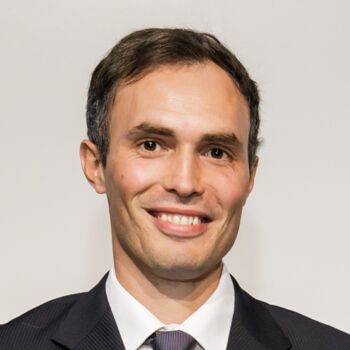
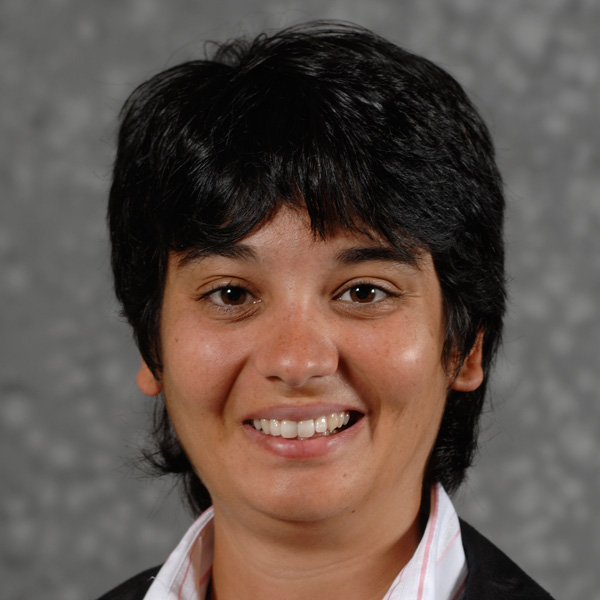
Pieter Ballon is a Full Professor at Vrije Universiteit Brussel (VUB) and Director of imec-SMIT, part of the Studies in Media, Innovation and Technology (SMIT) research group. He holds dual affiliations in Communication Sciences and SMIT. His roles include leadership in interdisciplinary research projects and academic administration. Research expertise focuses on Smart Cities, Digital Platforms, and ICT business models. Key interests include platform urbanism, data ecosystems, and algorithmic systems' societal impacts. He has supervised 122 academic works, including 8 master’s theses listed here. Notable awards include the 1st Brussels Smart City Ambassador (2016-2017) and multiple Best Paper Awards. His work spans over 300 publications and 75 research projects, with active grants like SHALGO (2024-2028) and AMAI 5 (2025-2026). He frequently engages in public debates, academic conferences, and media discussions on topics like algorithmic governance and smart city technologies.
Overview Prof. Harris Kyriakou is an Associate Professor and Chair Holder of the Media & Digital Chair at ESSEC Business School. His research focuses on leveraging artificial and collective intelligence to enhance organizational value creation, digital strategy, and data-driven decision-making. He has advised multinational firms like Airbnb, Facebook, and Yelp, and his work is supported by grants from NSF and the Spanish government. Education Ph.D. in Management Sciences (Stevens Institute of Technology, 2016) M.S. in Engineering & Technology Innovation Management (Carnegie Mellon University, 2010) B.Sc. in Digital Systems (University of Piraeus, 2007) Research Focus His research explores intersections between AI/collective intelligence, blockchain, sharing economy regulations, and platform governance. Key themes include data network effects, algorithmic regulation, and digital transformation. Recent work on ChatGPT vs. Google examines AI-driven competitive dynamics in search markets. Recognition Awarded the 2024 Case Centre Triple Award, 2022 Early Career Award (AIS), and multiple best paper awards (AoM, INFORMS). Recognized as a 40-Under-40 MBA Professor by Poets & Quants. Teaching & Leadership Co-leads the 'Algorithmic Governance in Platform Economy' thesis Teaches courses on AI, digital strategy, and IT management at ESSEC and IESE Former Assistant Professor at IESE Business School (2016–2021) Professional Contributions Serves as a European Commission advisor on digitalization, reviewer for top journals (MIS Quarterly, Academy of Management Review), and mentor for doctoral candidates.
Hemant K. Bhargava is a Distinguished Professor at the Graduate School of Management, University of California Davis, where he holds the Jerome and Elsie Suran Chair in Technology Management. He serves as Associate Dean for Academic Affairs and Director of the Center for Analytics and Technology in Society (CATS), and previously served as Associate Dean for Instructional Programs (2010–2013) and Faculty Chair. He co-founded and was the first Academic Director of the UC Davis Master of Science in Business Analytics (MSBA) program. His educational background includes: Ph.D. in Decision Sciences, The Wharton School, University of Pennsylvania (1989) MBA, Indian Institute of Management Bangalore (1986) B.S. in Mathematics, University of Delhi (1984) Bhargava is a leading scholar in technology management, information systems, and decision analytics. His research focuses on the economics of digital goods and platforms, pricing strategies, AI in business, healthcare IT, and platform ecosystems. He builds economic models to study operations, marketing, and competitive strategy in tech-driven markets, with applications in healthcare, media, electric vehicles, and generative AI. His recent publications reveal a strong trend toward platform business models, data sharing, AI’s impact on research and education, and healthcare cost transparency. He explores how digital platforms shape competition, how data can be leveraged across markets, and how real-time decision tools can reduce prescription drug costs. His work bridges theory and practice, often involving collaboration with industry and policy makers. His scientific awards include: INFORMS Journal on Computing Test of Time Award (2023) INFORMS CIST Best Paper Award (2021) Google Research Excellence Gift (2017–18) Distinguished Alumni Award, IIM Bangalore (2024) INFORMS ISS President's Service Award (2023) Global 100 Top Academic Data Leaders (2020) Bhargava has played a pivotal role in academic leadership and program development. He co-founded the Theory in Economics of Information Systems (TEIS) workshop and has served on editorial boards of top journals including Management Science (where he is Department Editor for Information Systems), Operations Research, and Marketing Science. He has advised numerous campus initiatives, including the UC Davis Data Lab and Religions of India Initiative. His grants and collaborations include work with Google and healthcare organizations on real-time price transparency tools. He leads the Center for Analytics and Technology in Society (CATS), which focuses on the societal implications of data and AI. He also co-founded the MSBA program and continues to shape the future of business education in the age of AI through strategic planning committees.
Oliver Gasser is a researcher at the Max Planck Institute for Informatics (MPI-INF) and the Technical University of Munich (TUM), where he has co-lectured courses such as Advanced Computer Networking and Master Course Computer Networks. His research focuses on Internet measurement, security, and privacy, with a strong emphasis on IPv6, DNS, BGP, and web tracking technologies. His research interests include Internet measurement, IPv6 deployment, BGP security, DNS infrastructure, web tracking, privacy technologies, and network resilience. He has made significant contributions to understanding IPv6 hitlists, router fingerprinting, hypergiant content delivery networks, and consent banner manipulation on the web. His work combines large-scale active measurements with data analysis to uncover systemic issues in Internet infrastructure and privacy practices. The recent publications highlight a consistent focus on measurement-driven research across networking, security, and privacy. Trends include analyzing IPv6 adoption patterns, detecting covert tracking mechanisms in web cookies, evaluating security of Internet protocols like DNS and BGP, and improving measurement methodologies for large-scale network studies. His work often involves developing open tools and datasets that advance reproducibility in networking research. PAM 2023 Best Paper Award TMA 2023 Best Paper Award TMA 2023 Fast Track Award PAM 2018 Best Paper Award IRTF Applied Networking Research Prize 2018 IMC 2017 Community Contribution Award TMA 2017 Best Dataset Award CoNEXT 2023 Community Contribution Award Oliver Gasser has advised or co-advised over 40 master’s and bachelor’s theses at MPI-INF and TUM, demonstrating strong mentorship in academic research. He has led several measurement projects that have received external funding, including development of the IPv6 Hitlist Service and tools for analyzing web tracking. His community service includes extensive participation in program committees for major networking conferences such as IMC, CoNEXT, PAM, and TMA. He leads and contributes to several open research initiatives including the IPv6 Hitlist Service, SNMPv3 Measurement Service, MPTCP Measurement Service, DNS Observatory, and the BannerClick tool for automated cookie banner interaction. These platforms provide valuable resources for the global networking research community and support reproducible science.
Shuaishuai Wang is a Lecturer in Digital Media and Culture at the University of Manchester, specializing in platform studies, critical algorithm studies, and queer media. His research explores queer communities' digital presence across platforms like Douyin, TikTok, and Blued, with a focus on algorithmic governance, data-driven social media operations, and geopolitical-economic contexts. He holds a PhD in Media Studies from the University of Amsterdam and previously served as Assistant Professor at Xi’an Jiaotong-Liverpool University and Lecturer at the University of Amsterdam. Shuaishuai leads two university-funded projects: 'Douyin Data Economies' (100,000 CNY) and 'Algorithmic Configurations of Sexuality' (30,000 Euros). His work appears in journals like Big Data & Society , Television & New Media , and Social Media + Society , and he contributes to media outlets including The Conversation and Sixth Tone. His research interests emphasize the interplay between algorithms, queer identities, and platform economies. Recent studies analyze Douyin's shift to e-commerce, LGBTQ+ visibility challenges in algorithmic systems, and the political dimensions of TikTok. He has also examined business models of LGBTQ platforms and the impact of censorship on digital queer spaces. Key grants include projects investigating data economies and algorithmic configurations of sexuality, reflecting his commitment to understanding technology's societal implications. Collaborations span global institutions, with notable work on misinformation, playful political performances, and transgressive digital cultures.
Giacomo Calzolari is a Full-time Professor of Economics at the European University Institute (EUI) in Florence, Italy, and serves as Provost for Research and External Relations. He holds a Ph.D. from the University of Toulouse. His research focuses on Industrial Organization, Competition Policy, Artificial Intelligence, and Banking Regulation, with notable contributions to understanding algorithmic pricing, collusion, and regulatory frameworks. Education: Ph.D. in Economics from the University of Toulouse. Research Interests: Artificial Intelligence and Market Dynamics Competition Policy and Antitrust Economics Algorithmic Pricing and Collusion Banking Regulation and Supervision Behavioral and Experimental Economics Publications: Recent work includes studies on AI-driven markets, algorithmic collusion, and regulatory policy. His research emphasizes the intersection of technology and competition, with over 50 publications in top-tier journals like the American Economic Review and International Journal of Industrial Organization. Awards: Recognized with the 'Best Paper Award' from the Association of Competition Economics (2013) and the 'Young Economist Award' (2005). Advisory Roles: Advises the European Commission on competition policy and the European Parliament on AI in financial markets. Serves as Editor of the International Journal of Industrial Organization and European Economy - Banks and Regulation. Research Groups: Leads projects on digital transformations, technological change, and AI's impact on competition. Supervises numerous graduate students and collaborates with institutions like the Centre for Economic Policy Research (CEPR).
Gaia Rubera is a Full Professor at Bocconi University and SDA Bocconi School of Management, where she serves as Head of the Marketing Department and Director of the online program Fundamentals of Python . Her research focuses on Business Analytics, Social Media Marketing, Innovation, and Strategic Marketing. Education: PhD in Business Administration and Management from Bocconi University Her academic contributions include publications in top-tier journals such as Marketing Science , Journal of Marketing , and Strategic Management Journal . She also holds leadership roles in editorial boards, including Associate Editor at the Journal of the Academy of Marketing Science . Recent research trends emphasize Generative AI applications in marketing, data-driven innovation , and social media analytics . Her work bridges advanced technologies with traditional marketing frameworks. Scientific Awards: Excellence in Research Award (Bocconi, 2024) Teaching Award (Bocconi, 2022) AMA Best Paper Award (2017) Emerald Citations of Excellence (2017) Rubera's career spans roles at Marshall School of Business (University of Southern California) and Michigan State University, reflecting her global academic impact.
Associate Professor Anton Didenko is a leading academic at UNSW Sydney's School of Private & Commercial Law, specializing in FinTech regulation, banking law, and central bank digital currencies (CBDC). He holds law degrees from Russia and the UK, including an MJur and DPhil from the University of Oxford. His research focuses on CBDC design, regulatory sandboxes, open banking frameworks, and cybersecurity in finance. University Affiliation: UNSW Sydney Key Academic Roles: Author of Banking Law in Australia (11th ed, 2024) and lead author of Customer Data Sharing Frameworks (2024) Global Engagement: Adviser to G20, Asian Development Bank, and UN agencies Research Interests: - CBDC policy and design implications - Regulatory frameworks for FinTech innovation - Cybersecurity in financial systems - Transnational commercial law and secured transactions - Open data and customer consent mechanisms Recent Articles: Focus on CBDC adoption in Pacific economies, weaponization of digital currencies in geopolitical conflicts, and comparative analysis of blockchain liabilities. His work bridges legal, technological, and policy dimensions of financial innovation. Awards : Australian Academic of the Year in Digital Finance (2023) Advising & Grants: - No listed advisees - Collaborations include Asian Development Bank-funded Pacific CBDC studies - Co-authored policy reports for UN Capital Development Fund and CPA Australia Labs/Teams: - Editor-in-Chief of the Cape Town Convention Journal - Co-leader of UNSW's FinTech regulation research initiatives
Douglas Laney is an Adjunct Clinical Assistant Professor of Accountancy at the University of Illinois at Urbana-Champaign's Gies College of Business, where he teaches courses in infonomics and business analytics. He also serves as the Data & Analytics Strategy Innovation Fellow at West Monroe Partners, advising leaders on data-driven value creation. Laney holds a BS in Liberal Arts & Sciences from the University of Illinois (1986). His research focuses on infonomics, data valuation, and strategic data use. He authored the seminal book Infonomics: How to Monetize, Manage, and Measure Information as an Asset for Competitive Advantage and pioneered the field of infonomics. Laney's work spans academic, corporate, and public-sector applications, including high-profile collaborations with Highways England and Mars Inc. Key achievements include three Gartner Annual Thought Leadership Awards and contributions to data monetization frameworks. His recent articles address flawed supply chain metrics, digital transformation, and data's role as a strategic asset. Laney frequently publishes in Forbes and industry journals, emphasizing actionable insights for C-suite executives.
Brett Hemenway Falk is a Researcher in the Department of Computer and Information Science at the University of Pennsylvania. He serves as director of the Crypto and Society Lab, focusing on privacy and security in digital environments and facilitating transparency and trust. His work combines rigorous mathematical approaches with practical implementations in cryptography and blockchain technology. Education: Sc.B. in Mathematics from Brown University Ph.D. in Mathematics from UCLA Research Interests include: Cryptography and secure multi-party computation protocols Blockchain technology (cross-chain interoperability, financial network stability, on-chain governance) Privacy-preserving algorithms and data security Coding theory applications in secure systems Scientific Contributions include: Developing practical secure computation protocols Advancing ORAM (Oblivious RAM) architectures Analyzing decentralized governance mechanisms Exploring DeFi network stability and token economics His teaching activities feature the popular MCIT 582 Blockchain course at Penn. Research funding comes from NSF, DARPA, IARPA, ONR, ARL, NIH , and the Laura and John Arnold Foundation.
Damon McCoy is a Professor of Computer Science and Engineering at NYU Tandon School of Engineering and Co-Director of the NYU Center for Cybersecurity (CCS). He holds a Ph.D. in Computer Science from the University of Colorado, Boulder (2009) and a B.S. in the same field (1999). His research focuses on empirically measuring the security and privacy of technology systems, with a current emphasis on online payment systems, cybercrime economics, automotive security, privacy-enhancing technologies, and censorship resistance. He co-directs Cybersecurity for Democracy , a multi-university initiative addressing online threats to democratic processes. His research has examined topics such as the monetization of YouTube conspiracy content, toxic online discourse targeting election officials, and vulnerabilities in automotive systems. He has collaborated with institutions like the International Computer Science Institute and led studies on social media platforms' content moderation practices, including Facebook's handling of political ads and YouTube's ecosystem of deceptive advertising. McCoy's work often bridges cybersecurity with societal impacts, analyzing how technology intersects with democracy, misinformation, and economic exploitation. His contributions include developing frameworks for securing automotive software updates (Uptane) and methodologies to combat cybercrime supply chains. He has received funding from the National Science Foundation and other agencies to pursue projects addressing emerging cyber threats. Key affiliations include the NYU Center for Cybersecurity and the Center for Automotive Embedded Systems Security (CAESS), where he contributed to early automotive security analysis. He advises on cybersecurity policy and has published extensively in top-tier journals and conferences, focusing on real-world applications of security research.
Fabrice Le Guel is a Full Professor of Economics and researcher at the University of Paris-Saclay, affiliated with the RITM Research Center. He serves as Director of the Master 2 'IREN' (Network Industries and Digital Economy) and leads interdisciplinary research groups across law, economics, management, and computer science. His research focuses on digital economics, privacy economics, AI ethics, and computational economics. He has overseen numerous research contracts and contributed to high-impact publications in economics and technology fields. Teaching includes courses at L1/L3/M1/M2 levels on Privacy Economics, Digital Economics, Computational Economics, and Industrial Economics. He has secured grants such as ANR DAPCODS (2017–2021), HUMAAINE Chair (2021–2025), and multiple CNRS-funded projects. His work spans topics including algorithmic bias, digital market governance, and sustainable consumption. Professional service roles include Co-Director of RITM Research Center, membership in the DATAIA Institute’s program committee, and refereeing for journals like Technological Forecasting & Social Change and IEEE Internet of Things Journal . His interdisciplinary approach bridges economic theory with digital technology challenges.
Professor Ashish Sinha is a leading academic in Marketing at the UQ Business School, holding concurrent roles as Visiting Professor at the Indian School of Business and Research Fellow at the Hong Kong Polytechnic University. His career spans senior leadership in academia (e.g., Academic Dean of Executive Education at ISB, Interim Dean at UTS Business School) and industry (Vice President at IRI, Chicago). His research bridges theory and practice, focusing on digital transformation, AI-driven strategies, ESG impact analysis, and marketing analytics. He has pioneered frameworks for retail optimization, category management, and B2B innovation adoption, with over 30 journal articles in top-tier outlets like Journal of Marketing and Marketing Science . Research Impacts: Sinha’s work has transformed executive education programs (e.g., ISB’s #38-ranked custom programs) and driven research excellence at UTS. He is a serial entrepreneur, having founded two analytics firms acquired for their practical impact. His $240M Food Agility CRC participation highlights his role in agribusiness innovation. Awards include the Davidson Award and twice runner-up for the Gary Lilien Practice Award for applied marketing science. Key Research Themes: AI in Marketing, Digital Transformation, ESG Strategies, Consumer Sentiment Analysis Leadership Roles: Academic Dean (ISB), ADR (UTS), Head of Marketing (UNSW) Industry Experience: Analytics leadership at IRI, strategic consulting across sectors Grants/Partnerships: CI in Food Agility CRC ($240M), multiple ERA-recognized research collaborations. Advises on AI ethics, sustainable marketing, and global business strategy.
Milan Miric is an Associate Professor in the Department of Data Sciences and Operations at the University of Southern California's Marshall School of Business. He joined USC in 2016 after completing his PhD at Copenhagen Business School. His research focuses on digital strategy, artificial intelligence, platform ecosystems, and innovation dynamics, with particular attention to gender disparities in technology entrepreneurship and strategic implications of digital markets. His expertise spans areas like freemium business models, platform competition, and the impact of imitation on product demand. Miric has been frequently cited in media outlets such as the San Francisco Chronicle and Mashable for his insights on Federal Reserve policies, tech industry regulation, and tariff impacts on consumer electronics. Recent research trends in his articles emphasize platform-based ecosystems, M&A strategies in digital markets, and the gender gap in tech entrepreneurship. His work bridges theoretical frameworks with practical implications for startups, established firms, and policymakers. Miric teaches courses on big data strategies and has contributed to multiple industry reports and policy discussions. He is a recognized voice in understanding how digital tools and standardized technologies affect innovation and employee mobility across industries.
Tesary Lin is the Isabel Anderson Career Development Assistant Professor of Marketing at Boston University's Questrom School of Business. She is also a Dean’s Research Scholar, a Junior Faculty Fellow at the Hariri Institute for Computing, and a Faculty Affiliate of the Technology & Policy Research Initiative. Her research centers on the interplay between consumer privacy, data sharing, and marketing strategy. Key interests include how firms adapt analytics in a privacy-first world, how choice architecture influences data consent, and the impact of regulations like COPPA on digital content. Her work integrates behavioral economics, marketing science, and public policy. Her recent publications explore consumer privacy preferences, identity fragmentation bias, and the role of dark patterns in data sharing. These works span venues such as Marketing Science and the ACM Conference on Economics and Computation, reflecting interdisciplinary engagement with computer science, policy, and behavioral research. John D.C. Little Best Paper Award Alessandro di Fiore Best Paper Award Sheth Foundation ISMS Doctoral Dissertation Award MSI Alden G. Clayton Doctoral Dissertation Award Professor Lin advises on data policy and consumer behavior, with ongoing collaborations involving regulatory bodies such as the FTC and academic institutions like MIT and Brookings. She does not currently list formal advisees. She is involved in research teams at the Hariri Institute and the Technology & Policy Research Initiative, focusing on ethical data use and digital governance.