Tianyi Zhangمشاهده پروفایل
استادیار
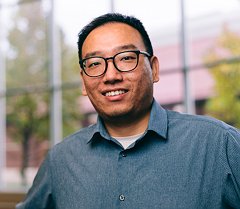
Tianyi Zhang is a Tenure-Track Assistant Professor of Computer Science and Societal Impact Fellow at Purdue University's College of Science, where he leads the Human-Centered Software Systems Lab. His research focuses on building interactive intelligent systems that synergize human expertise with machine intelligence to improve programming productivity and software robustness. Dr. Zhang's research interests span Software Engineering, Human-Computer Interaction, and Artificial Intelligence. His work centers on developing systems that augment human intelligence with data-driven insights and augment machine intelligence with human guidance, primarily for programming domains including software developers, novice programmers, and computer end-users. His research on code mining and visualization helps programmers make more informed decisions through GitHub and Stack Overflow analysis, while his work on program synthesis assists novices with enriched feedback loops and interpretability. His recent publications (2024-2025) demonstrate a strong focus on leveraging large language models for code generation, program repair, and data wrangling, with particular emphasis on interactive systems that incorporate human feedback. This research direction shows consistent growth in understanding the intersection between human cognition and AI capabilities in programming contexts. Awards and Recognition: NSF Career Award for research on safe and reliable LLM-based code generation Amazon Research Award for human-in-the-loop deep learning optimization Best Paper Honorable Mention Award from SIGCHI for visualizing examples of deep neural networks Best Paper Honorable Mention Award from VAHC for interactive cohort analysis Dr. Zhang actively serves the research community as Program Committee member for major conferences including ICSE, ASE, FSE, CHI, and UIST. His service includes chairing workshops and student research competitions, demonstrating his commitment to mentoring the next generation of researchers. His lab develops systems that address real-world challenges in programming productivity and software safety, with applications spanning from autonomous driving systems testing to data science workflows.