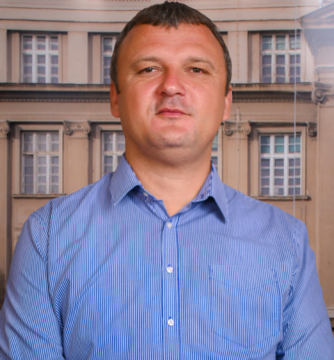
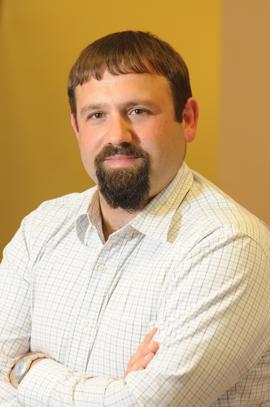
Rosanna Vaschetto is an Associate Professor at the University of Eastern Piedmont (UPO) in the Department of Translational Medicine, with primary research focus on mechanical ventilation and sepsis biomarkers . Her work spans both in vitro/in vivo pathophysiological studies and clinical trials. Specialty: Anesthesia, Intensive Care, and Pain Management Location: Bellini Palace, Corso Mazzini 18, Novara Contact: rosanna.vaschetto@med.uniupo.it | +39 0321 3733406 Research Interests: Investigations into ventilator-induced lung injury mechanisms, noninvasive ventilation optimization, and novel sepsis diagnostic pathways. Developing alveolar matrix monitoring techniques Improving weaning strategies from mechanical ventilation Exploring extracellular vesicle roles in inflammatory diseases Multi-center collaborations on ARDS and trauma management Key Contributions: Participated in international trials (WEAN SAFE), developed peri-partum respiratory protocols for neuromuscular disorders, and pioneered noninvasive ventilation interface rotation studies.
Dr James Woodforde serves as a Lecturer in the School of Human Movement and Nutrition Sciences at the University of Queensland's Faculty of Health, Medicine and Behavioural Sciences. His academic appointment focuses on physical activity research within educational contexts, particularly examining movement behaviors in children and adolescents. Woodforde's research specialization centers on physical activity in children and young people with specific emphasis on school settings. His doctoral work investigated before-school physical activity patterns through multi-method approaches including accelerometer/GPS data collection and stakeholder engagement. Key research themes include: Sociodemographic correlates of adolescent physical activity Measurement methodologies for movement behaviors School policy impacts on physical activity practices Vulnerable population health (LGBTQA+ youth, hospitalized adults) High-intensity interval training implementation in schools His publication record shows concentrated output since 2018 with notable acceleration in 2023-2024, primarily in high-impact journals like International Journal of Behavioral Nutrition and Physical Activity and Health and Place . Research demonstrates methodological diversity spanning systematic reviews, mixed-methods studies, and objective measurement techniques. Woodforde actively supervises postgraduate research and collaborates extensively with interdisciplinary teams including public health researchers, sports scientists, and education specialists. His work contributes to evidence-based physical activity promotion strategies within Australian school systems.
Panos Kypros Chrysanthis is a Professor of Computer Science at the University of Pittsburgh's School of Computing and Information, where he directs the Advanced Data Management Technologies Lab (ADMT Lab). He also holds adjunct professorships at Carnegie Mellon University and the University of Cyprus. Education: BS in Physics with concentration in Computer Science, University of Athens (1982) MS in Computer and Information Sciences, University of Massachusetts Amherst (1986) PhD in Computer and Information Sciences, University of Massachusetts Amherst (1991) Research Focus: Chrysanthis pioneers innovations in data management systems, with core expertise in Big Data, distributed/mobile computing, and real-time analytics. His work bridges theoretical advances with practical applications in sensor networks, workflow management, and urban data exploration, emphasizing architecture-aware optimizations and user-centric interfaces for complex data environments. Publication Trends: Recent works (2016-2018) reveal a strategic shift toward interactive data exploration, where his team develops frameworks for visual query recommendation (MuVE, REQUEST), architecture-aware graph processing (ARGO, PARAGON), and energy-conscious computing. These contributions address critical gaps in scalability, latency, and usability for modern data-intensive systems. Scientific Recognition: NSF CAREER Award (1995) for mobile data management ACM Distinguished Scientist and IEEE Senior Member Seven teaching awards and 2015 Provost Award for Excellence in Mentoring Funding & Leadership: Secured $1.8M NIH U01 grant for causal discovery in TOPMed data and multiple NSF awards. As Program Co-Chair for ICDE 2018 and General Co-Chair for BIRTE 2018, he shapes community standards while mentoring doctoral students through the ADMT Lab. Research Infrastructure: Founded the ADMT Lab in 1996 (celebrating 25 years in 2021), creating a hub for cutting-edge data management research with strong industry-academic partnerships focused on real-world deployment challenges.
Claudia Egher is a Researcher at the Copernicus Institute of Sustainable Development , part of the Faculty of Geosciences , Utrecht University, Netherlands. Her work synthesizes science and technology studies (STS) , medical sociology , innovation studies , and philosophy to analyze the social , cultural , and ethical dimensions of digital healthcare innovations and patient engagement in pharmaceutical development. She focuses on participatory practices, affective labor in expertise, and value reconfiguration in research infrastructures for rare cancers . Primary Affiliation: Utrecht University Sub-Units: Faculty of Geosciences, Copernicus Institute, Innovation Studies Her research explores: Patient engagement in drug development through dialogical problematization and standardization Affective labor in expert practices Moral labor and value negotiation in digital health infrastructures Knowledge representation in participatory healthcare Public participation dynamics in contemporary societies Digital biocommunities for mental health support Recent publications analyze co-creation of data infrastructures for rare diseases , ethics of AI in clinical settings, and hybrid expertise in online mental health forums . She contributes to journals like Science and Technology Studies , Science as Culture , and Health Expectations .
Nienke Endenburg is an Associate Professor at the Faculty of Veterinary Medicine , Utrecht University, Netherlands. She works within the Department of Population Health Sciences , focusing on the Human-Animal Bond , Animal Welfare , and Veterinary Behavioral Medicine . Her career spans over 30 years, with roles in research, teaching, and clinical practice. Specializes in Human-Animal Interaction and Companion Animal Welfare Teaches Child Development , Animal-Assisted Interventions , and Grief Counseling in Germany since 2001 Co-founder of the Certipet Foundation (2010) and member of the World Small Animal Veterinary Association (2011) Active in Veterinary Forensic Expertise and Animal Welfare Policy globally Her research explores the psychological impact of companion animals on children , animal abuse and domestic violence links , and stress physiology in service animals . Key methodologies include longitudinal studies, physiological measurements (e.g., cortisol), and cross-cultural surveys. Notable recent publications address global veterinary education trends , service dog efficacy for PTSD , and forensic animal abuse indicators . She contributes to WSAVA guidelines on animal welfare and professional wellness.
Marina Sirota is a Professor of Pediatrics at the University of California, San Francisco (UCSF) School of Medicine and the Acting Director at the Bakar Computational Health Sciences Institute. She leads the UCSF March of Dimes Prematurity Research Center and co-directs ENACT, a center focused on precision medicine for endometriosis. Dr. Sirota is also the founding director of the AI4ALL program at UCSF, which introduces high school girls to AI applications in biomedicine. Education: B.S. in Biomedical Computation, Stanford University (2006) M.S. in Biomedical Informatics, Stanford University (2006) Ph.D. in Biomedical Informatics, Stanford University (2010) Dr. Sirota's research focuses on developing computational integrative methods for disease diagnostics and therapeutics, with special emphasis on women's health. Her work spans biomedical informatics, integrative genomics, clinical data analysis, immune informatics, and data science. She applies advanced computational approaches to understand complex biological systems and translate findings into clinical applications, particularly in the areas of preterm birth, endometriosis, and Alzheimer's disease. Her recent publications demonstrate a strong focus on precision medicine applications across multiple disease areas including women's health, neurodegenerative disorders, and immunology. Dr. Sirota frequently employs cutting-edge techniques like single-cell genomics, transcriptomics, and AI-driven approaches to analyze complex biological data. Her research shows particular strength in sex-specific analyses and the application of computational methods to understand disease heterogeneity. Scientific Awards: AMIA Young Investigator Award (2017) Dr. Sirota has secured significant research funding from multiple sources including NIA, NLM, NIAMS, Pfizer, March of Dimes, and the Burroughs Wellcome Fund. Her current projects include studies on endometriosis, preterm birth, Alzheimer's disease, and immune-related disorders. She mentors numerous students and researchers in computational health sciences and has co-authored over 170 scientific publications. Her laboratory actively collaborates with clinical and basic science researchers across UCSF and other institutions. Dr. Sirota directs the Bakar Computational Health Sciences Institute at UCSF and leads multiple research centers focused on women's health, including the March of Dimes Prematurity Research Center and ENACT (Endometriosis: Novel Clinical Approaches Through Technology). Her team combines expertise in bioinformatics, machine learning, clinical medicine, and basic science to advance precision medicine approaches for complex diseases.
Christopher Orban is an Associate Professor in the Department of Physics at The Ohio State University. His research spans plasma physics, computational physics, and physics education, with notable work on laser-plasma interactions, particle acceleration, and virtual reality (VR) applications in education. Key Research Areas: Plasma Physics Computational Physics Physics Education Virtual Reality in Teaching Laser-Plasma Interactions Astrophysical Jets Selected Publications (2025-2021): Laser-driven mixed radiation sources Machine learning in proton acceleration PIC code validation for ion acceleration VR-based physics education tools High-repetition-rate fusion experiments Object tracking algorithms for physics data
Assoc. Prof. Saša Todorović serves as an Assistant Professor in the Department of Agribusiness Management at the Faculty of Agriculture, University of Belgrade. His academic appointment was confirmed on April 23, 2024, and he maintains active teaching responsibilities across multiple agricultural engineering and economics programs. His teaching portfolio includes: Management of agricultural business systems (Agroeconomics) Management of agricultural business systems (Environmental Protection in Food Production) Management of business systems (Food Technology) Management of labor and production in agriculture (Biotechnology and Information Engineering) Organization of labor in agriculture (Agribusiness Management) Todorović's research centers on organizational management and production economics within agricultural and food industry business systems. His work demonstrates consistent focus on Serbian family farms, crop production economics, labor management, and risk assessment in agricultural operations. Key research themes include technical efficiency analysis, subsidy impacts, energy economics in farming, and climate risk management. His publication record shows strong continuity in agricultural economics research since 2009, with particular emphasis on Serbian agricultural sector challenges. Recent work (2020-2021) addresses contemporary issues like extreme weather impacts and technical efficiency in arable farming. His research methodology combines economic modeling with empirical field data from Serbian agricultural operations. Todorović actively contributes to academic knowledge through publications in both SCI-indexed journals (such as NEW MEDIT and ENERGIES) and specialized agricultural economics journals. His collaborative research approach is evident through consistent co-authorship with Serbian agricultural economists and international partners.
Josh Speagle is an Assistant Professor jointly appointed in the Department of Astronomy & Astrophysics and the Department of Statistical Sciences at the University of Toronto. He maintains strong affiliations with the Dunlap Institute for Astronomy & Astrophysics, which forms part of Canada's leading concentration of astronomers at the University of Toronto. Dr. Speagle received his Ph.D. from Harvard University in 2020, establishing a foundation for his interdisciplinary career at the intersection of astronomy and statistics. His educational background bridges these two critical fields for modern data-intensive astronomy. His research focuses on astrostatistics and data science with multi-wavelength, large-area surveys, with specific interests in Galactic structure and dynamics; stars and stellar populations; dust and the interstellar medium; galaxy formation and evolution; scalable inference; and Monte Carlo sampling. Dr. Speagle combines astronomy, statistics, and computer science to analyze billions of stars and galaxies from wide-field imaging and spectroscopic surveys to better understand how galaxies like the Milky Way form, behave, and evolve over time. His recent publications demonstrate a strong emphasis on developing and applying advanced statistical methods to astronomical problems, particularly simulation-based inference, Bayesian methodology, 3D dust mapping, and stellar population analysis. His work frequently leverages major astronomical datasets from Gaia, DESI Legacy Imaging Surveys, and the James Webb Space Telescope. Banting-Dunlap Postdoctoral Fellowship Dr. Speagle collaborates extensively with researchers across the University of Toronto's three campuses and internationally. His work has significant implications for understanding galactic evolution and developing statistical frameworks for astronomical data analysis. He contributes to the vibrant research environment at the Dunlap Institute, which includes over 50 faculty, postdocs, students, and staff dedicated to innovative technology, groundbreaking research, and world-class training in astronomy. As a member of the Dunlap Institute community, Dr. Speagle participates in research spanning optical, infrared and radio instrumentation; Dark Energy studies; large-scale structure; the Cosmic Microwave Background; the interstellar medium; galaxy evolution; cosmic magnetism; and time-domain science.
Dr. Simon Bates serves as Vice-Provost and Associate Vice-President, Teaching and Learning at the University of British Columbia, a position he assumed permanently in July 2024 after serving pro tem since 2022. Previously, he held roles as Associate Provost (2018-2024) and Academic Director of the Centre for Teaching, Learning and Technology (2012-2018). He maintains his academic appointment as Professor of Teaching in the Department of Physics and Astronomy within UBC's Faculty of Science, having joined the university in 2012 as part of the inaugural cohort for this teaching-focused professorship rank. His research program investigates the advancement of education-focused academic roles and institutional responses to artificial intelligence in teaching and learning. Current work includes leadership of an Association of Pacific Rim Universities project on generative AI in higher education. His scholarship demonstrates a clear evolution from physics education research toward broader higher education leadership studies, with consistent emphasis on student engagement mechanisms and faculty development. Analysis of his publication trajectory reveals three distinct phases: early physics education research (2009-2014) featuring PeerWise and gender studies in mechanics; a transitional period (2015-2018) examining faculty teaching practices across institutions; and current work (2021-present) addressing AI integration and pandemic-era interdisciplinary collaborations including surgical outcome studies. This progression mirrors his administrative trajectory from departmental educator to university-wide academic leader.
Yehua Dennis Wei is a Professor at the School of Environment, Society & Sustainability at the University of Utah since 2007. He holds a PhD in Geography from UCLA (1998) and has held visiting professorships at Zhejiang University and East China Normal University. Education: BS in Economic Geography and Urban Planning (Zhejiang University, China, 1984), MS in Human Geography (Nanjing Institute of Geography, CAS, 1987), MA in Urban Planning (University of Akron, 1991), MA in Geography (University of Akron, 1993). His research spans Human Geography , Urban and Regional Planning , and Environmental Policy . Recent work explores the links between teleworking and well-being , socio-spatial polarization and health , and polycentric urban development in China . He investigates how urban form and environmental factors influence mental health , intergenerational mobility , and industrial sustainability through spatial analysis and global-local dynamics. His scientific awards include: Highly Cited Researcher (2024, Clarivate) World's Top 2% Scientist (2024, Stanford) Fellow (2024, American Association of Geographers) Distinguished Scholar Award (2006, AAG) He teaches courses on Global Economic Geography , Geography of China & Asia , and Geography and Business , with a focus on thesis research advising. His grants include multiple awards from the Ford Foundation , Lincoln Institute of Land Policy , and National Science Foundation on topics like urban housing, transit-oriented development, and industrial eco-efficiency in China. Professional roles include serving on committees for the Regional Science Association of China and Association of American Geographers .
Professor Tibor Besedes of the School of Economics at Georgia Institute of Technology specializes in international trade, behavioral economics, and decision-making processes. His work bridges empirical trade analysis with experimental studies on consumer and firm behavior. Education: PhD and MA in Economics, Rutgers University Education: BSc in Economics, Texas Christian University His research explores trade duration dynamics, financial sanctions' collateral effects, and behavioral responses to large choice sets. He is a leading expert on trade cost elasticity and policy impacts on global markets. Recent publications focus on transportation costs in gravity models, post-sanction market adjustments, and regulatory effects on EU beer exports. His experimental work examines age-related heuristics and optimal choice architectures. As director of the Forum for Research in Empirical International Trade , he oversees collaborative studies on trade friction reduction. He also serves as co-editor of The Journal of International Trade and Economic Development and associate editor for Southern Economic Journal . Active grants from the National Institutes of Health and National Science Foundation support his behavioral economics research. His media contributions address contemporary issues like supply chain disruptions, inflation, and trade wars.
David Nouya Zaya is an Associate Research Scientist in the Department of Botany at the University of Illinois, affiliated with the Illinois Natural History Survey. His work bridges plant genetics, conservation biology, and ecological modeling, focusing on rare and invasive plant species. Research Interests: Plant genetics and hybridization Conservation of endangered species Impact of invasive species on ecosystems Phenology and climate change Ecological modeling and data validation Recent Publications highlight trends in invasive shrub detection via LiDAR, genetic diversity studies in endemic plants, and long-term phenological shifts linked to climate change. His contributions span peer-reviewed journals in Urban Forestry , Ecology and Evolution , and Natural Areas Journal . Collaborations include partnerships with Brenda Molano-Flores, Greg Spyreas, and others, emphasizing field validation, conservation planning, and ecological data analysis. No scientific awards or student advisories are documented in the provided data.
Professor Kenneth Heller is a faculty member in the School of Physics and Astronomy at the University of Minnesota, where he conducts research in high energy physics and physics education. His office is located in the Physics and Nanotechnology Building on the Minneapolis campus. Position: Professor Department: Physics Contact: helle001@umn.edu | 612-624-7314 Professor Heller's research spans two major domains: experimental particle physics and physics education. In particle physics, he specializes in neutrino and muon experiments that probe beyond the Standard Model of particle physics. His work with the NOvA neutrino experiment investigates neutrino oscillations, mass hierarchy, and potential explanations for the matter-dominated universe. He is also involved in the Mu2e experiment, which searches for charged lepton flavor violation through muon-to-electron conversion. In physics education, Heller leads research on effective teaching methods, problem-solving approaches, and computational integration in physics curriculum. His recent publications demonstrate strong focus on neutrino physics, particularly through the NOvA experiment, with methodological advances in statistical analysis and detector technology. The research shows consistent involvement in major collaborations at Fermilab and emphasizes precision measurements to detect potential new physics phenomena. His educational research complements his experimental work by exploring how students learn physics concepts and how computational tools can enhance understanding. Professor Heller has been PI or CoI on multiple significant research grants, including: Mechanical Manager Effort for Assembly of Power Supply Modules (2024-2025) Sustainably Integrating Computation Throughout the Physics Major Degree (2023-2026) Tracker Straw Preparation, Tracker Panel Construction, Panel QC (2019-2025) Experimental Research at the Intensity Frontier in High Energy Physics (2014-2026) Heller leads research groups focused on both high energy experimentation and physics education. His experimental work involves detector development and analysis for neutrino and muon experiments, while his education research group investigates student problem-solving approaches and computational integration in physics instruction. His current projects indicate active engagement through 2025 with ongoing detector construction and data analysis efforts.
Anouk Waeijen-van Diepen is a PhD candidate at the Biomedical Diagnostics Lab within the Signal Processing Systems group at Eindhoven University of Technology (TU/e), focusing on integrating machine learning with mechanical ventilation systems. Her work aims to address patient-ventilator asynchrony through advanced algorithms and simulated clinical data . Education : MSc in Electrical Engineering (2017, TU/e) BSc in Bioinformatics/Biostatistics (2014, TU/e) Pre-Master in Electrical Engineering (2015, TU/e) Her research spans biomedical signal processing , machine learning applications in healthcare, and ventilator system optimization . She specializes in asynchrony detection using clinical and simulated data , with a focus on intensive care unit (ICU) environments. Key trends in her publications include adversarial learning for waveform generation, model-based approaches for patient effort estimation, and automated detection algorithms validated through peer-reviewed journals like Computer Methods and Programs in Biomedicine and Heliyon . She has contributed to IEEE symposia and European Signal Processing Conferences . Projects include: STW Zero 15-06 P2 (2017–2024): Autonomous Acoustic Systems Smart Monitoring (2015–2020): Real-time healthcare data analysis