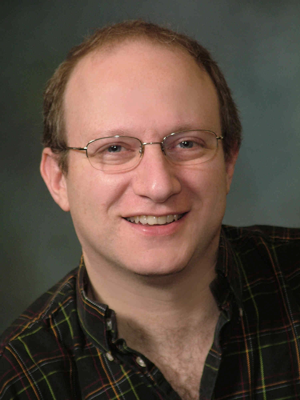
Tamás Budavári is an Associate Professor in the Department of Applied Mathematics and Statistics at Johns Hopkins University (JHU), with joint appointments in Physics and Astronomy and a secondary appointment in Computer Science. He is affiliated with the Whiting School of Engineering and the Institute for Data-Intensive Engineering and Science (IDIES). His research focuses on computational and statistical methods for big data in astronomy and interdisciplinary applications such as urban blight analysis. Education: PhD in Astrophysics (2001), Eötvös Loránd University, Budapest Master’s in Theoretical Physics (1997), Eötvös Loránd University Research Interests: Budavári develops algorithms for handling large astronomical datasets, including Bayesian inference, streaming algorithms, and GPU-accelerated processing. His work includes SkyQuery (an online astronomy data tool), photometric redshift estimation, and cross-matching catalogs. He also applies computational methods to urban planning, such as optimizing strategies to address vacant housing in Baltimore City. Publications & Tools: Budavári’s recent work spans topics like deep learning for astronomical image restoration, combinatorial optimization for urban policy, and probabilistic catalog matching. His tools, such as CUDAHM and NWAY, enable scalable analysis of multi-epoch survey data and N-way catalog cross-identification. Awards & Grants: Recipient of the Gordon and Betty Moore Fellowship and SAMSI Research Fellowship Funded by NSF, STScI, NIH, and others Leadership & Outreach: He serves on the Steering Committee of the 21st Centuries Cities Initiative and is a founding editor of the Journal of Astronomy and Computing. His interdisciplinary work bridges astrophysics, data science, and urban systems.
Nicolas Federico Martin is an Associate Professor in the Department of Crop Sciences at the University of Illinois at Urbana-Champaign, with additional appointments as Associate Professor in the Center for Latin American and Caribbean Studies, Center for Digital Agriculture, and the National Center for Supercomputing Applications (NCSA). His interdisciplinary work bridges traditional agricultural science with cutting-edge computational approaches. Dr. Martin's research focuses on the intersection of agriculture and data science, with particular emphasis on: Precision agriculture and on-farm experimentation methodologies Machine learning applications for crop management and yield prediction Nitrogen and nutrient management optimization Soybean and corn breeding and production systems Remote sensing and UAV applications in agriculture Sustainable agricultural practices including cover crop management His publication record demonstrates a clear trajectory toward increasingly sophisticated integration of artificial intelligence with agricultural science. Recent work shows heavy emphasis on using machine learning algorithms (particularly reinforcement learning, convolutional neural networks, and generalized additive models) to solve practical farming challenges related to crop management decisions, yield prediction, and resource optimization. This research has significant implications for both scientific understanding of crop-environment interactions and practical farm management. Dr. Martin actively collaborates across disciplines and institutions, as evidenced by his extensive co-authorship network spanning agronomy, computer science, environmental science, and economics. His work has garnered attention from numerous news outlets and social media platforms, indicating its relevance to current agricultural challenges. He is a key contributor to the Data-Intensive Farm Management project, which aims to transform agronomic research through on-farm precision experimentation. His affiliation with NCSA provides access to high-performance computing resources essential for processing large agricultural datasets. Additionally, his work in Latin American agriculture (particularly in Mexico and Argentina) reflects his commitment to addressing global food security challenges.
Dr. Daniel J. Bauer is a Professor and Director of the Quantitative Psychology Program and L.L. Thurstone Psychometric Laboratory at the University of North Carolina at Chapel Hill. His research focuses on advancing quantitative modeling techniques for studying negative social behaviors, health outcomes, and psychopathology, with expertise in generalized and nonlinear latent variable models, including multilevel models, structural equation models, and mixture models. His work emphasizes methodological innovations such as Bayesian regularization, measurement invariance evaluation, and the integration of deep learning with psychometrics. Bauer advises doctoral students in quantitative psychology and collaborates with developmental psychology programs. He leads the Thurstone Laboratory, one of the oldest quantitative psychology training programs in the U.S., emphasizing rigorous methodological training and applications in behavioral sciences. Bauer’s research trends span computational advancements in latent variable analysis, regularization for bias detection, and dynamic modeling of developmental processes. His advising includes over a dozen doctoral students now in academia and industry roles. He contributes to labs and initiatives like the Center for Developmental Science, advancing interdisciplinary research in psychological measurement and intervention evaluation.
Sascha Struwe serves as a Postdoctoral Researcher at Aalborg University Business School within the Faculty of Social Sciences and Humanities, actively contributing to the International Business Research Group. Based at Fibigerstræde 11 in Aalborg Øst, Denmark, Struwe operates at the intersection of service innovation theory and business practice with international focus. Research expertise centers on service innovation , value co-creation , and digital servitization , particularly examining B2B contexts and open banking ecosystems. Work consistently explores institutional influences through German-Chinese case studies, addressing how cultural and regulatory frameworks shape service design. Recent trajectories reveal evolution from foundational service design challenges (2019-2021) toward digital transformation implications (2022-2023), with emphasis on value co-destruction mechanisms in financial ecosystems. Struwe led the PhD project Innovating the Invisible and Intangible: Value Creation in B2B service (2018-2021) investigating co-creation capabilities across industrial sectors. Academic engagement includes conference participation at EIBA and CICALICS events, plus a visiting researcher appointment at Fudan University's Nordic Centre (2019-2020). Current work continues through the International Business Research Group, focusing on digital literacies and service ecosystem resilience.
Professor Alessandra Russo leads the Structured and Probabilistic Knowledge Engineering (SPIKE) research group at Imperial College London's Department of Computing. With expertise spanning computational logic, symbolic machine learning, and neuro-symbolic AI, she develops foundational AI techniques applied to security, network management, healthcare, and adaptive systems. Professor Russo holds a PhD in Computing from Imperial College London and an MSc in Computer Science from Ionian University. Her research pioneers logic-based learning systems for intelligent adaptive technologies, with projects including declarative networking for security management, privacy-preserving federated learning, and hybrid neuro-symbolic approaches for robust reasoning. Her current work focuses on developing interpretable AI systems through neuro-symbolic integration, creating frameworks that combine neural networks with symbolic reasoning for explainable decision-making. Recent publications explore rule learning from knowledge graphs, transformer-based world models, and formal methods for representation learning. Professor Russo teaches courses on Logic-Based Learning and AI Applications, and has received the Google PhD Fellowship for her research contributions. She mentors numerous PhD students in areas spanning theoretical foundations and practical applications of computational logic and machine learning.
Dr Anandadeep Mandal is an Associate Professor in Finance and the Scotcoin Distinguished Chair of Digital Finance at the University of Birmingham , within the Birmingham Business School and the Department of Finance . He is the founding director of the MSc Financial Technology programme and the Programme Director for the MBA (Distance Learning), demonstrating significant leadership in academic program development. Education: PhD in Probability Distribution Fitting, Cranfield University (2016) MRes in Management Science, Cranfield University (2012) MSc in Finance and Investments, Durham University (2008) Bachelor’s in Electronics Engineering Research Interests: Dr Mandal’s interdisciplinary research lies at the intersection of mathematical modelling, artificial intelligence, finance, and digital innovation . His work focuses on AI-enabled investment strategies , blockchain for financial transparency , ESG performance measurement , and the development of the Sustainable Efficiency Index (SEI) . He also pioneers AI applications in digital education , including a patent-pending platform for automated grading of multi-modal student submissions using ensemble AI methods. Publication Trends: His recent scholarly output spans high-impact journals and conferences, reflecting a strong focus on digital finance , climate and social media analytics , cryptocurrency regulation , and AI in financial forecasting . His work combines advanced data science techniques with real-world policy and financial applications, particularly in sustainability and public health. Scientific Awards: No specific awards are mentioned in the provided text. Advising and Grants: Dr Mandal has secured over £2 million in research funding from sources including UKRI, UoB QR Funding, and industry partners. While specific students are not listed, his role as programme director and research leader suggests active mentorship. His research has direct policy impact through collaborations with the NHS Trusts , NIHR , and the UK Government . Labs, Teams, and Impact: Dr Mandal leads a research agenda that bridges academia and public policy. His work extends beyond the university through public engagement at science festivals, outreach for young learners, and expert contributions to UK Parliamentary consultations on AI, sustainability, and financial innovation. He is a key figure in advancing digital finance education and research at the University of Birmingham.
Dr. Stephanie Spahr is a Research Group Leader at the Leibniz Institute of Freshwater Ecology and Inland Fisheries (IGB) in Berlin, Germany, where she leads the Organic Contaminants research group within the Department of Ecohydrology and Biogeochemistry. Previously, she served as a Junior Research Group Leader at the University of Tübingen's Center for Applied Geoscience (2019-2021) and as a Postdoctoral Researcher at Stanford University's Department of Civil and Environmental Engineering (2016-2019). Dr. Spahr earned her PhD in Environmental Chemistry from the Swiss Federal Institute of Technology Lausanne (EPFL) and the Swiss Federal Institute of Aquatic Science and Technology (Eawag) in 2016. Her doctoral research focused on the formation of N-nitrosodimethylamine during water disinfection with chloramine. She completed her MSc in Geoecology at the University of Tübingen in 2012, with thesis work on carbon and nitrogen isotope analysis of benzotriazoles conducted at Eawag, and her BSc in Geoecology/Ecosystem Management at the same institution in 2010. Dr. Spahr's research focuses on trace organic contaminants in aquatic systems, with particular expertise in transformation processes of contaminants in natural and engineered systems, advanced oxidation processes for water treatment, urban blue-green infrastructure, and compound-specific isotope analysis. Her work bridges environmental chemistry, engineering, and ecology to address water quality challenges in urban and natural water systems. She employs advanced analytical techniques to track contaminant sources and transformation pathways, with a strong emphasis on practical applications for water treatment and environmental protection. Her recent publications demonstrate a strong focus on biochar-based water treatment technologies, particularly for stormwater management. She investigates how biochar amendments can remove trace organic contaminants from urban runoff, with recent work examining persulfate activation mechanisms, the role of chloride in reactive species formation, and the performance of engineered media filters under dynamic conditions. Her research also extends to understanding contaminant transport in rivers, the ecological impacts of pollutants, and developing analytical methods for environmental monitoring. The interdisciplinary nature of her work connects chemical processes with ecological outcomes. Outstanding Review Paper Award 2023 in Environmental Science: Water Research & Technology Selected for the Falling Walls Female Science Talents Intensive Track 2023 Selected mentee in the Leibniz Mentoring Programme 2022-2023 Best poster award (1st prize) at the Wasser 2022 of the Water Chemistry Society Selected fellow in the Postdoc Academy for Transformational Leadership 2020-2022 (Robert Bosch Stiftung) Selected fellow in the Athene Program for early female career researchers at the University of Tübingen, 2020-2021 As a Research Group Leader, Dr. Spahr supervises multiple research projects including 'POllution in UrbaN ponds, eco-evolutionary Dynamics, and Ecosystem Resilience (POUNDER)', 'Dynamic hyporheic zone', 'NYMPHE', and the 'Incident-related special investigation programme for the environmental disaster in the Oder River'. She serves on the Executive Board of the German Water Chemistry Society and heads its Expert Committee on 'Oxidative Processes'. Her collaborative work spans numerous institutions across Germany and internationally, addressing critical water quality challenges through interdisciplinary approaches. Dr. Spahr leads the Organic Contaminants research group at IGB Berlin, which focuses on understanding the fate and treatment of organic pollutants in water systems. Her team employs advanced analytical techniques including compound-specific isotope analysis to track contaminant sources and transformation pathways. The group collaborates extensively with other departments at IGB and with international partners on projects addressing urban water challenges and ecological impacts of pollution. Current research emphasizes innovative water treatment technologies, particularly biochar-based systems for stormwater management, and investigating the complex interactions between contaminants, aquatic ecosystems, and human activities.
Professor Kunal Mankodiya is a faculty member in the Department of Electrical, Computer and Biomedical Engineering at the University of Rhode Island. He holds the rank of Professor and is affiliated with the College of Engineering. His research focuses on wearable technologies, smart textiles, and medical IoT systems, with notable contributions in neural engineering and body sensor networks. Education Ph.D., University of Luebeck, Germany (2010) M.S., Biomedical Engineering, University of Luebeck, Germany (2007) B.S., Biomedical Engineering, Saurashtra University & C.U. Shah College (2003) Postdoctoral Researcher, Carnegie Mellon University (2011-2014) Postdoctoral Researcher, University of Pittsburgh (2011) Research Interests Mankodiya’s work emphasizes innovative wearable sensor systems for healthcare applications, including smart textiles for medical monitoring and IoT-enabled telemedicine solutions. His research integrates electrical engineering, biomedical engineering, and computer science to address challenges in neurological disorders, neonatal care, and movement disorders. Grants & Awards 2017 NSF CAREER Award 2017 40 under 40 Award, Providence Business News Lead PI on grants totaling over $5M, including NSF CAREER and NIH-funded projects Labs & Teams Mankodiya leads the Smart Wearable and IoT Lab at URI, focusing on interdisciplinary research in healthcare technology. His team collaborates with clinical partners on projects like neonatal monitoring systems and Parkinson’s disease tele-assessment tools.
Qizhen Zhang is a Professor in the Department of Computer Science at the University of Toronto's Faculty of Arts and Science. Specializing in hyperscale data processing systems, Zhang leads research at the intersection of cloud computing, distributed systems, and data center networking. Recent work focuses on network-centric designs for efficient large-scale data processing, including pioneering contributions to disaggregated data center architectures. Research interests center on hyperscale data processing , network-aware system design , and disaggregated infrastructure . Current projects investigate DPU-accelerated systems (dpBento, DPDPU), memory disaggregation (Cowbird, Redy), and blockchain scalability (FlexChain). Zhang's approach systematically integrates network characteristics into distributed system optimization, addressing challenges in trillion-item workloads through novel shuffle layers (TeShu) and compute pushdown mechanisms (TELEPORT). Zhang advises multiple graduate students working on satellite networking (SaTE), federated learning, and DPU-optimized storage (DDS). Professional service includes program committees for SIGMOD, VLDB, NSDI, and EuroSys (2023-2026), plus journal reviews for ACM TODS and IEEE/ACM Transactions on Networking. Industrial collaborations with Microsoft Research have yielded production-oriented systems like Redy and CompuCache. Key contributions include MimicNet for scalable network simulation (SIGCOMM 2021), GraphRex for network-aware graph processing (SIGMOD 2019), and foundational work on disaggregated data centers (CIDR 2020, VLDB 2020). Teaching responsibilities encompass graduate courses CSC2235 (Cloud-native Data Management) and undergraduate CSCC43 (Databases) at the University of Toronto.
Yongjoo Park is an Assistant Professor in the Department of Computer Science at the University of Illinois at Urbana-Champaign (UIUC), affiliated with the Grainger College of Engineering. He leads research in data-intensive AI systems as a member of the Data and Information Systems (DAIS) lab, focusing on novel data systems that bridge database theory and practical AI applications. His work emphasizes open-source contributions through GitHub and direct societal impact. Research interests center on systems for data-intensive AI , particularly efficient Retrieval-Augmented Generation (RAG) systems for exploratory AI, data science versioning, and in-storage computing. Key projects include Kishu (the world's first undoable Jupyter notebook with time-travel capabilities), CARE (a causal-relational system for structured/unstructured data), and AirDB/AirIndex (serverless transactions and automatic index optimization). His group develops tools enabling scalable, optimized AI workflows from storage layers to LLM inference. Recent publications reveal a strong focus on interactive data systems (85% of recent work), with significant contributions to notebook environments (Kishu), vector databases (ISCA'25), and RAG optimization. Awards highlight technical innovation, including SIGMOD 2025 Best Demo Award and NSF CAREER funding. His open-source philosophy drives GitHub releases of all major systems. SIGMOD 2025 Best Demo Award (Kishu) NSF CAREER Award (Novel data science systems) SIGMOD'23 Best Artifact Award Honorable Mention (DeepOLA) IBM-Illinois Project Selection (VectorDB/RAG) Mentorship spans 12 current PhD/MS students and 6 graduated advisees, including Supawit Chockchowwat (now Postdoc at Google, future Assistant Professor at CMKL University). He teaches advanced courses like CS511 (Advanced Data Management) and recruits 1-2 new PhD students annually, prioritizing data systems research. His lab emphasizes diversity, individual respect, and concrete outcomes in a collaborative workspace.
Filip Johnsson is a Full Professor in Energy Technology at Chalmers University of Technology, where he leads research on measures to reduce the climate impact of the energy system. His work addresses both technical issues regarding electricity and heat production and how the entire energy system can be transformed by 2050 through technical-economic studies. Professor Johnsson's research spans multiple critical areas in the transition to sustainable energy systems: Energy Systems Analysis: Comprehensive modeling of energy systems to identify cost-effective pathways for decarbonization Industrial Decarbonization: Electrification of energy-intensive industries and carbon capture technologies Renewable Energy Integration: Grid stability, storage needs, and system flexibility with high shares of variable renewables Transportation Electrification: Real-world EV usage patterns and infrastructure requirements Fluidized Bed Technology: Advanced combustion and carbon capture processes Energy Policy: Critical analysis of Swedish and European climate policies and implementation strategies Johnsson's extensive publication record demonstrates a consistent focus on practical, implementable solutions for deep decarbonization across multiple sectors. His recent work shows increasing emphasis on industrial decarbonization pathways, grid integration challenges with high renewable shares, and critical evaluation of policy mechanisms. The research often employs technical-economic modeling approaches, combining engineering analysis with economic evaluation to identify cost-optimal pathways for climate mitigation. Professor Johnsson actively engages with Swedish energy policy debates, contributing to public discourse through newspaper articles and government reports. His work frequently addresses the practical implementation challenges of Sweden's ambitious climate goals, particularly regarding industrial decarbonization and grid infrastructure requirements.
Ping Yang is a Professor and Associate Director for Research and Graduate Programs in the School of Computing at Binghamton University (SUNY). She holds a Ph.D. in Computer Science from Stony Brook University, an ME from the Chinese Academy of Sciences, and a BS from Zhongshan University. Her research focuses on cybersecurity, AI-based security, virtual machine security, privacy policy analysis, and formal methods. She directs the Center for Information Assurance and Cybersecurity and coordinates cybersecurity programs at both undergraduate and graduate levels. Education: BS in Computer Science, Zhongshan University ME in Computer Science, Chinese Academy of Sciences MS and PhD in Computer Science, State University of New York at Stony Brook Research Interests: Dr. Yang's work spans information and systems security, security in virtualized computing, access control mechanisms, privacy policies, and formal methods for security verification. Her projects include blockchain-based provenance storage, real-time anomaly detection in workflows, and privacy-preserving virtual machine migration. She has led NSF-funded initiatives on security in cloud environments and scientific workflows. Awards: Not explicitly listed in the provided materials. Advising & Grants: Advised over 30 PhD/Master’s students and contributed to grants including NSF Scholarship for Service and GenCyber programs. Her team develops tools like RBAC-PAT for access control analysis. Labs/Teams: Leads the Center for Information Assurance and Cybersecurity and collaborates on projects involving secure data workflows and blockchain applications in scientific research.
Kenneth Ross is a Professor in the Computer Science Department at Columbia University in New York City. His primary appointment is within the Department of Computer Science, with affiliations including the Foundations of Data Science Committee. His work bridges theoretical database research and practical system implementation. His research focuses on database systems with particular expertise in query processing, query language design, data warehousing, and architecture-sensitive database system design. Additional research spans computational biology, especially analysis of large genomic data sets. Current projects include Linear Algebra Operators in Databases for machine learning workloads and Repeats and Somatic Mutation analysis in genomics. His work consistently addresses the intersection of hardware capabilities and database system design. Ross leads the Database Research Lab at Columbia, which has produced significant work on query optimization, GPU database processing, and hardware-conscious database systems. His recent publications demonstrate strong focus on adapting database systems to modern hardware including GPUs, SIMD processors, and persistent memory. His scientific recognition includes: Packard Foundation Fellowship Sloan Foundation Fellowship NSF Young Investigator Award Distinguished Faculty Teaching Award (2008) Ross actively advises undergraduate engineering students (juniors with last names P-Z) and has taught foundational courses including Introduction to Databases and Programming and Problem Solving for over two decades. His teaching portfolio shows consistent engagement with both theoretical concepts and practical implementation challenges in computer science education.
Dr. Muhammad Rashed is an Assistant Professor in the Department of Computer Science and Engineering at the University of Texas at Arlington, within the College of Engineering. He holds a Ph.D. in Computer Engineering from the University of Central Florida (2024) and a B.S. in Electrical and Electronics Engineering from Bangladesh University of Engineering and Technology (2015). Ph.D. : Computer Engineering, University of Central Florida, 2024 B.S. : Electrical and Electronics Engineering, Bangladesh University of Engineering and Technology, 2015 His research focuses on electronic design automation (EDA), in-memory computing, AI acceleration, and sustainable computing. He explores novel computing paradigms to overcome the limitations of traditional architectures, particularly in data-intensive applications such as AI and scientific computing. His work emphasizes hardware-software co-design and leveraging emerging non-volatile memories for energy-efficient processing. The 15 most recent publications highlight a consistent focus on in-memory computing, particularly in path-based and flow-based architectures, logic synthesis, and AI acceleration. Key themes include optimization, fault tolerance, verification, and the use of advanced data structures like sentential decision diagrams. His work is published in top-tier venues such as DAC, ICCAD, ASP-DAC, and IEEE/ACM journals. Scientific Awards: UTA CARES Grant for OER Creation Research Experiences for Undergraduates (REU) Grant Alireza Seyedi Doctoral Research Innovation Endowed Scholarship David T. & Jane M. Donaldson Memorial Scholarship IEEE/ACM William J. McCalla ICCAD Best Paper Award Nomination Best Research Video Award, Design Automation Conference (DAC) Dr. Rashed advises several graduate and undergraduate students in the NextGen Computing Lab and is involved in research grants including the UTA CARES Grant and REU funding. He actively contributes to academic service through roles such as conference TPC member, journal reviewer (e.g., IEEE TCAD, ACM TODAES), and committee participation in the department and college. His lab, the NextGen Computing Lab, is dedicated to building scalable, energy-efficient computing systems for next-generation AI and scientific workloads, aligning with national initiatives in advanced computing.
Yi Ding is an Assistant Professor in the Elmore Family School of Electrical and Computer Engineering at Purdue University, where they lead the STYLE (Sustainable computing Systems and LEarning) Lab. Dr. Ding joined Purdue in August 2023 after completing a postdoctoral fellowship at MIT CSAIL as an NSF Computing Innovation Fellow, mentored by Michael Carbin. During their postdoc, they also held a visiting position at Meta Infra Data Center to improve server maintenance efficiency in hyperscale datacenters. They received their Ph.D. in Computer Science from the University of Chicago, advised by Henry Hoffmann. Dr. Ding's research focuses on computer systems, computer architecture, and AI/ML, with strong emphasis on applications in sustainability and healthcare. Their work spans sustainable computing, including energy efficiency in datacenters and LLM serving, as well as healthcare applications such as mental health prediction and EEG analysis. Their recent publications demonstrate a strong trend toward addressing environmental impacts of computing, particularly in datacenters and AI systems, while also exploring innovative healthcare applications. Their research bridges systems, sustainability, and health domains, creating novel solutions for pressing societal challenges. Dr. Ding has received notable recognition including the Seed Funding for High-Impact Review Papers (2024), the Meta Research Award (2021), and was selected as a Computing Innovation Fellow by CRA/CCC (2020). Seed Funding for High-Impact Review Papers (2024) with Inez Hua 1st Place in Research Talk in CoE at Fall 2024 Undergrad Research Expo (awarded to Gavin Fortwendel) 2020 Computing Innovation Fellow by CRA/CCC Meta Research Award on Statistics for Improving Insights, Models, and Decisions (2021) Dr. Ding is actively recruiting self-motivated Ph.D. students interested in AI/ML systems research. They have secured funding for undergraduate research projects through DUIRI, focusing on sustainable AI computing and energy use in training autonomous vehicles. Their lab collaborates with various institutions including MIT, Meta, and interdisciplinary partners at Purdue. The STYLE Lab under Dr. Ding's leadership is actively engaged in multiple research initiatives addressing sustainable computing and healthcare applications, with strong industry connections and funding support from both internal university sources and external partners.