Laura Barnes is a Professor in the Department of Systems and Information Engineering at the University of Virginia, and Associate Director of the Link Lab. She directs the Sensing Systems for Health Lab, focusing on technology-enabled health solutions. Her academic background includes a B.S. in Computer Science from Texas Tech University (2003), and M.S. (2007) and Ph.D. (2008) in Computer Science from the University of South Florida. Research interests span wireless health , human-machine interfaces , biomedical data sciences , and machine learning applications . Current projects include wearable sensor systems for mental health monitoring, clinician-patient communication frameworks (CommSense), and mobile interventions for anxiety reduction. Funding sources include NIH, National Institute of Aerospace, and the U.S. Army. Recent publications emphasize real-time monitoring , digital phenotyping , and context-aware interventions . Key themes include leveraging large language models for health analysis, developing scalable mobile sensing frameworks, and addressing health equity through technology. Labs/Teams : Sensing Systems for Health Lab, Link Lab Grants : NIH-funded projects on medication adherence and sleep disturbance analysis
Narges Mahyar is an Associate Professor at the University of Massachusetts Amherst in the Manning College of Information and Computer Sciences (CICS) . She is currently on sabbatical with the Aviz team at the Inria Center, University of Paris-Saclay . Her research focuses on Human-Computer Interaction (HCI) , Information Visualization , and Digital Civics , aiming to empower communities through technology. Education: She holds a PhD in Computer Science from the University of Victoria, an MS in Information Technology from the University of Malaya, and a BS in Electrical Engineering from Tehran Azad University. She completed postdoctoral fellowships at the University of British Columbia (2014–2016) and the University of California San Diego (2016–2018). Research Interests: Her work addresses complex societal challenges like climate change, urban planning, and healthcare by designing inclusive technologies. Key areas include civic engagement, data visualization for equity, and integrating AR/VR for public participation. Notable projects include CommunityClick and RisingEMOTIONS , which enhance public input in decision-making. Publications & Awards: With over 50 publications, her work has received prestigious awards including Best Paper Awards at CHI 2023 , Eurovis 2022 , and CSCW 2020 . Her research emphasizes ethical design and inclusivity, particularly involving marginalized communities. Grants & Advising: She has secured grants totaling over $1.4 million, including NSF funding for projects like "Mapping Instability" . Advises PhD student Mahmood Jasim and collaborates with Ali Sarvghad and Pari Riahi on interdisciplinary research. Labs & Teams: Leads the HCI-VIS Lab at UMass, focusing on social computing and visualization. Collaborates internationally with teams like Aviz and Inria on civic tech initiatives.
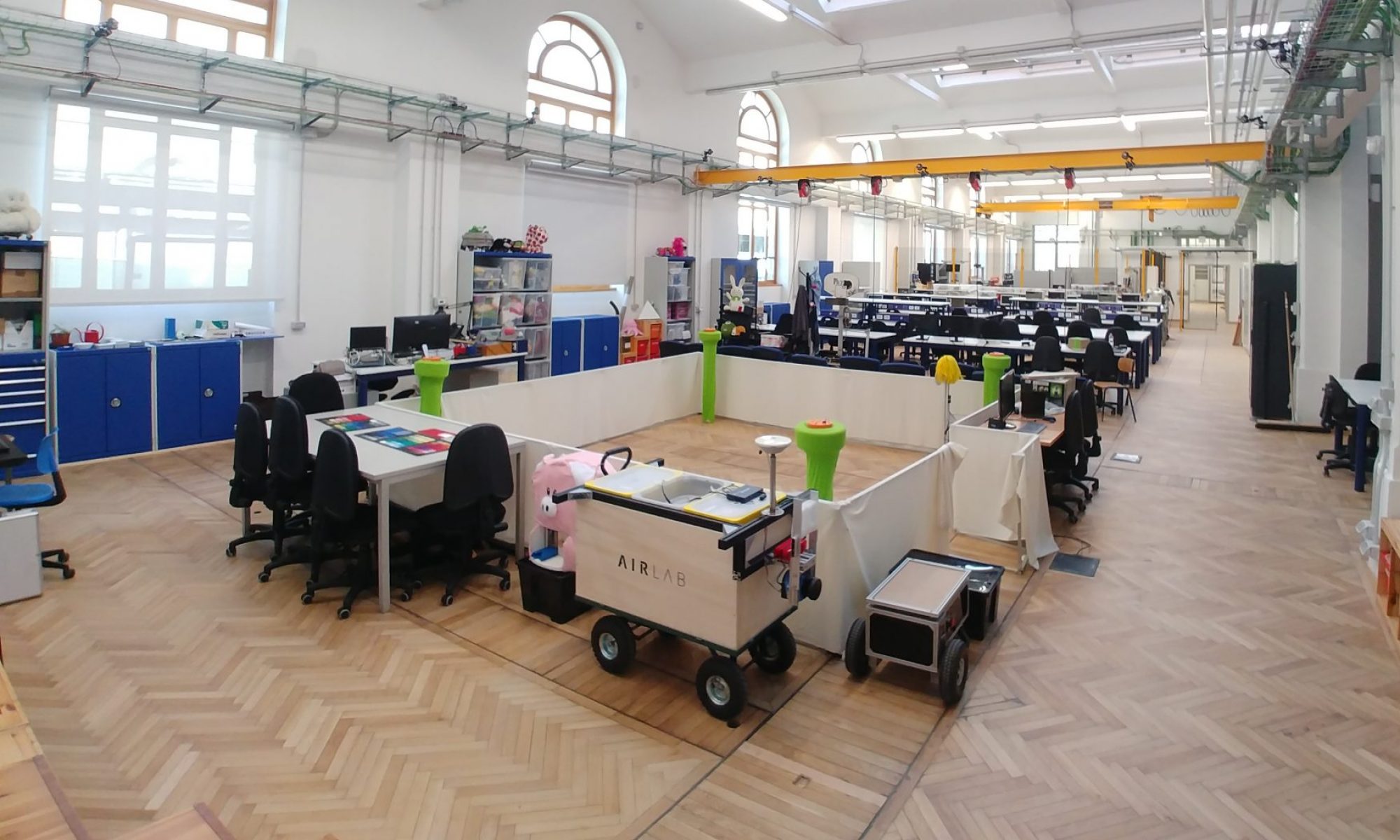
Andrea Bonarini is a Professor at the Department of Electronics, Information, and Bioengineering (DEIB) within the School of Industrial and Information Engineering at Politecnico di Milano. His research focuses on Artificial Intelligence , Robotics , and Human-Robot Interaction , particularly in assistive technologies for children with disabilities and autism therapy. Key Research Areas: Reinforcement Learning, Social Robotics, Affective Computing, Accessibility in Robot Design Notable Projects: Development of frameworks like Mushroomrl and datasets like POLIMI-ITW-S for robotics research His recent publications highlight advancements in playful robotics for neurodevelopmental disorders, emotion projection in non-bio-inspired robots, and safety experiments for small social robots interacting with children. He also contributes to ethical, social, and psychological challenges in robotics applications.
Michele Ewing is a Professor in the School of Media and Journalism at Kent State University, part of the College of Communication & Information. With over 30 years of experience in public relations practice and education, she specializes in integrating digital and social media strategies into curricula. She teaches courses like PR Tactics, PR Campaigns, and pioneered the Digital Public Relations course. As PRSSA Kent faculty adviser, she led the chapter to national awards, including 2019 and 2014 Outstanding Chapter distinctions. Her research focuses on internal communication, leadership development, and digital engagement, addressing challenges like fake news management and AI ethics in PR. Education: B.A. in Speech Communication/Telecommunications from Youngstown State University and M.A. in Public Relations from Kent State University. She previously served as vice president at Marcus Thomas LLC, contributing to healthcare and internal communication strategies. Research highlights include exploring data analytics in PR leadership, social media's role in employee engagement, and mitigating fake news crises. Her work emphasizes bridging academic and professional PR practices, with notable contributions to PRSA's standards and pedagogy innovation. Awards include the 2014 Davis Young Award for mentoring and induction into PRSA College of Fellows. Advocacy and grants: Advised student teams achieving national recognition, such as the 2019 PRSA East Central District Diamond Award for the Donate Life Ohio campaign. She has shaped PRSSA Kent into a model chapter, fostering student leadership and professional readiness. Labs/Teams: Actively involved with the Public Relations Student Society of America (PRSSA) and the School of Media and Journalism's academic leadership committees. Her research collaborates with industry practitioners to address modern PR challenges like AI ethics and data-driven strategies.
Carlos Lopezosa is a Visiting Professor at the University of Barcelona (UB) under a Margarita Salas postdoctoral fellowship. Previously, he held an Associate Professor position at the Pompeu Fabra University (UPF), where he taught across the Faculty of Communication, including Journalism, Advertising, and Audiovisual Communication. He also coordinated the Online Master's in SEO/SEM at the Barcelona School of Management (UPF). His research focuses on web visibility strategies (SEO, voice search, social media curation), qualitative methodologies (systematic reviews, semi-structured interviews), and AI applications in digital journalism. He is affiliated with the UB's Faculty of Information and Audiovisual Media, contributing to research groups like Professorat GIDD. His work bridges academic research with practical media strategies, emphasizing ethical AI integration and algorithmic transparency. Key research areas include news curation, AI-driven data analysis, and digital media ethics. Lopezosa has published extensively in journals like Future Internet , DOXA Comunicación , and El Profesional de la Información , with over 50 peer-reviewed articles since 2018. His current projects explore AI's role in newsrooms, Google News algorithms, and multidimensional journal evaluation frameworks. Education: Doctor in Information Sciences Research Interests: SEO strategies, content curation, AI in media, systematic reviews Grants: Margarita Salas Postdoctoral Fellowship (UB) His work often addresses challenges in digital media visibility, ethical AI implementation, and the evolving role of algorithms in news dissemination. Lopezosa collaborates with institutions like the CRICC research center and frequently presents at international conferences on digital media trends.
Prof. Dr. Andreas U. Lanz is a marketing professor at the University of Basel since 2023, joining from HEC Paris. His research focuses on social networks and micro-influence strategies , with award-winning work on digital content dissemination. Education : Doctoral degree from the University of Mannheim Research Interests : Andreas Lanz specializes in influencer marketing , network dynamics , and digital consumer behavior . His work explores how micro-influencers drive content virality, status-based network seeding, and economic models for creator platforms. He co-chairs the Creator Economy Retreat and EMAC Creator Economy Special Interest Group . Recent Publications : His 2025 Management Science paper examines creator economy value chains, while 2024 Journal of Marketing studies optimize influencer targeting through triadic closure. Earlier works in MIS Quarterly and Journal of Marketing Research address social capital formation and adaptive modeling techniques. Scientific Awards : Outstanding Reviewer Award (Journal of Marketing, 2024) ISMS Early-Career Fellowship (2023) AMA Don Lehmann Award (2021, 2025) SAMS Rigour & Relevance Award (2020) EMAC/Sheth Foundation Dissertation Runner-up (2018) Academic Service : Editorial board member for Journal of Marketing and Marketing Science , organizer of the EMAC Job Market Simulation , and contributor to digital marketing education frameworks.
Mihalis Giannakis is a full Professor of Operations and Supply Chain Management at Audencia Business School in France (HDR certified). He holds a BSc/MSc in Mechanical Engineering from Patras University, followed by an MSc in Engineering Business Management and a PhD in Industrial and Business Studies from the University of Warwick. His career includes roles as Head of Research (2022-2023) and Head of Major in Supply Chain Management (2016-2017) at Audencia, alongside visiting professorships at institutions like Texas A&M University and the University of Cyprus. His research focuses on supply chain sustainability, digitalization, risk management, and innovation, with active engagement in sectors like energy, defense, and telecommunications. Giannakis has published over 60 peer-reviewed articles, guest-edited journals, and contributed to academic associations such as the European Decision Sciences Institute. He has received awards for research and teaching excellence, including the AGORA training initiative (2023) and a research grant on supply chain risk management (2013). His work emphasizes the integration of technology (e.g., AI, IoT) into supply chains and explores societal impacts of emerging technologies like the metaverse. Giannakis has advised organizations on supply chain resilience and led projects on big data analytics in humanitarian logistics. He maintains roles in editorial and review boards for top journals such as Journal of Purchasing and Supply Management and Technological Forecasting and Social Change .
Salmaan A. Keshavjee, MD, PhD, ScM, serves as Professor of Global Health and Social Medicine at Harvard Medical School and Director of the Center for Global Health Delivery. He concurrently holds appointments as Associate Professor of Medicine at Brigham and Women's Hospital and Faculty Dean of Adams House at Harvard University. His leadership targets critical global health delivery challenges in regions including the Middle East, North Africa, and sub-Saharan Africa through research, training, and policy engagement. Dr. Keshavjee's interdisciplinary foundation combines medical (MD), anthropological (PhD), and public health (ScM) training. This unique background informs his approach to health systems analysis and policy implementation across diverse cultural contexts. As a leading expert in drug-resistant tuberculosis treatment and the anthropology of health policy, his research examines the intersection of infectious disease control, social determinants of health, and structural barriers to care. Additional interests include mental health integration in TB programs, health economics, and digital health applications for disease screening. His fieldwork spans 16 years in Russia, Lesotho, and Pakistan, with extensive collaboration through Partners In Health. Analysis of his recent publications reveals consistent focus on tuberculosis prevention and treatment optimization, with growing attention to mental health comorbidities and artificial intelligence applications. His work addresses diverse populations including prisoners and household contacts across multiple continents, emphasizing regimen feasibility, health system barriers, and economic consequences of inadequate TB control. Key initiatives include the Zero TB Cities project aiming for tuberculosis elimination. Dr. Keshavjee has held influential policy roles including chair of the WHO/Stop TB Partnership’s Green Light Committee for MDR-TB Treatment (2007-2010) and co-authorship of U.S. Institute of Medicine policy papers, though no formal scientific awards are specified in source materials. Through the Center for Global Health Delivery, he mentors fellows in programs such as the Paul Farmer Global Surgery Research Fellowship and Global Mental Health Delivery Fellowship. These initiatives support implementation research in resource-limited settings through structured training and field placements. The Center operates six core programs—Infectious Disease, Mental Health, Noncommunicable Disease, Primary Care, Public Policy, and Surgery—developing evidence-based interventions through partnerships with institutions worldwide. Current priorities include scaling depression screening in TB care, optimizing preventive therapy regimens, and strengthening health systems in the Middle East and North Africa.
Mandy Savitz-Romer serves as the Nancy Pforzheimer Aronson Senior Lecturer in Human Development and Education at Harvard Graduate School of Education (HGSE), where she leads the school counseling strand. Her work critically examines school counseling systems and conditions for effective practice, with focused expertise in college access for students of color and first-generation college students. Her educational foundation includes a Ph.D. from Boston College (2004), which informs her scholarship on developmental approaches to student success. Research interests center on reimagining school counseling through college and career readiness frameworks, addressing systemic barriers for marginalized students. She pioneers intersections of counseling systems, noncognitive skill development, and technology-enhanced support structures that promote equitable outcomes across K-12 and higher education transitions. Publications reveal consistent emphasis on data-driven counseling practices, technology integration for first-generation students, and the critical role of noncognitive skills in college success. Her work bridges research-practice partnerships to transform counseling systems through evidence-based innovation. Recognition includes: ASHE 2018 Book Award for Technology and Engagement NACAC Excellence in Education Award (2016) Her advisory impact spans school districts, foundations, and universities through consultation and research projects expanding access to student support programming. She actively shapes future counseling leaders through HGSE's Human Development and Education program. As faculty lead for school counseling, she directs curriculum development and strategic initiatives advancing the profession's capacity to serve diverse student populations through institutional change.
Prof. Dr. Markus Strohmaier holds the Chair of Data Science in Economics and Social Sciences at the University of Mannheim's Business School. His research focuses on applying machine learning and data science to understand socio-economic systems and human behavior, leveraging text, relational, and emerging data types. He teaches graduate courses and supervises theses in these areas. Research interests include algorithmic fairness, behavioral analysis via computational methods, and the societal implications of AI. Notable work addresses demographic representativeness in large language models, bias mitigation in rankings, and gender gaps in blockchain adoption. His team is located at L15, 3rd floor – Room 307 in Mannheim, adjacent to the central station. Collaborations span interdisciplinary topics like social media analysis, network dynamics, and computational social science. Key contributions include developing benchmarks for neural network similarity (Resi) and frameworks for measuring algorithmic fairness perceptions (FairCeptron). Research often bridges technical innovation with societal impact, addressing ethical challenges in AI and data-driven decision-making.
Heeseung Andrew Lee is an Assistant Professor at the Naveen Jindal School of Management, University of Texas at Dallas, specializing in Information Systems. His research explores the economics of information technology and human-AI collaboration, with applications in digital marketing and content consumption. Affiliation: Assistant Professor, Information Systems Department (UTD) Education: PhD & MS from KAIST (2022), BS from KAIST (2017) Teaching: Business Analytics with R, Colloquium in Management Information Systems Research interests span multiple domains in digital transformation: Economics of IT: Quantifying technology ROI in modern organizations AI-Human Collaboration: Understanding human-AI interaction dynamics Digital Marketing: Analyzing consumer behavior in online environments Content Consumption: Studying digital media engagement patterns Recent publications focus on digital content partitioning strategies (2025), behavioral nudges in e-commerce (2024), pandemic mobile tracing effectiveness (2023), and book consumption patterns (2021). These works demonstrate expertise in combining empirical analysis with digital platform research.
Roziana Ramli is an academic affiliated with Northumbria University, holding a PhD in Computer Science. Her research focuses on medical imaging techniques, cybersecurity in healthcare systems, and bio-inspired optimization algorithms. She has contributed to advancements in retinal fundus image registration and IoT security protocols. Her work integrates computer vision with biomedical applications, addressing challenges in healthcare monitoring and assistive technologies. Key research areas include federated learning in healthcare networks, prosodic feature analysis for language recognition, and secure communication for drone networks. Her systematic literature reviews and algorithmic innovations highlight her interdisciplinary approach to solving technical and clinical problems. Though no formal awards are listed, her active publication record from 1999 to 2024 demonstrates sustained academic engagement.
Beth King is an Associate Teaching Professor in the Department of Geography and Assistant Program Manager for Online Geospatial Education at the John A. Dutton e-Education Institute, Pennsylvania State University. She oversees the Master of Geographic Information Systems (MGIS) program, managing student progress, communication, and capstone projects. Her expertise spans GIS data management, geospatial analysis, and online education design. Education: M.Ed. Adult Education (2003) and B.S. Geography (1996), both from Penn State. Research interests focus on effective online education strategies, GIS pedagogy, and supporting adult learners in geospatial programs. She co-authored courses like GEOG 483 and GEOG 482, emphasizing problem-solving and practical GIS applications. Awards : Most Outstanding Online Teaching & Learning Program (Sloan-C, 2009) Special Achievement in GIS Award (ESRI, 2004) She actively advises MGIS students, coordinates program logistics, and mentors peers. Her service includes roles in the Penn State Faculty Senate and leadership in the Dutton Institute.
Richard Silberglitt is a Senior Physical Scientist at RAND and Professor of Policy Analysis at the RAND School of Public Policy, where he conducts interdisciplinary research at the nexus of science, technology, and public policy. With over 50 years of experience across academia, government, and industry, he is a leading expert in technology foresight, energy systems, and R&D portfolio management. His research focuses on emerging technologies , science and innovation policy , energy security , and nanotechnology . He has developed influential methodologies such as an energy scenario analysis framework and the PortMan portfolio management system, both widely applied in U.S. and international contexts. His work supports strategic planning in defense, public safety, and economic development. His recent publications reflect a strong trend toward technology foresight , critical materials supply chains , quantum technology assessment , and public sector innovation . These works often employ scenario planning, Delphi methods, and data-driven analytics to inform high-stakes policy decisions. Member, American Physical Society Member, Materials Research Society Member, American Ceramic Society As a subject matter expert, Silberglitt has advised the United Nations, U.S. Department of Defense, National Security Agency, and multiple federal agencies. He has chaired the International Advisory Board of the APEC Center for Technology Foresight and delivered testimony to U.S. Congressional committees on critical materials and technology policy. His research has been supported by grants and contracts from the U.S. Army, Navy, CDC, and National Institute of Justice. He has led major initiatives on law enforcement technology, transportation safety ( The Road to Zero ), and international technology foresight. His work often involves collaborative teams and cross-sector partnerships to address complex technological and policy challenges.
Dr. Devery J. Rodgers is an Assistant Professor of Educational Leadership in the College of Education at California State University, Long Beach. Her work centers on equity, educational technology leadership, and culturally responsive practices in PK–12 and higher education. With over 20 years of experience as a K–12 administrator and teacher, she brings deep practical insight to her academic role. Education: Doctor of Education in Educational Leadership – University of Southern California Master of Arts in Education – Curriculum & Instruction – California State University, Dominguez Hills Bachelor of Arts in English and African-American Studies – University of California, Los Angeles Research Interests: Dr. Rodgers’ scholarship focuses on tech equity, leadership in education technology, culturally responsive leadership in STEM, and racial justice in education. She explores how digital tools can be leveraged equitably and how identity, particularly of Black students and educators, shapes educational outcomes. Publications and Research Trends: Her recent work spans pandemic pedagogy, AI bias, digital leadership, and mentorship. She frequently publishes in top journals and presents at AERA, ISTE, and NCORE. Her research consistently emphasizes equity, identity, and systemic change in education. Scientific Awards and Recognition: Recipient of the President’s/Provost’s EDI Grant Her graduate students have won 2nd place at the university-wide Grad SLAM competition (Melanie Gerner and Jaclyn Caballero) Advising and Grants: Dr. Rodgers actively mentors graduate students and leads research teams. She has secured institutional funding to study the experiences of Black graduate students and leads a data science team exploring algorithmic fairness in image diversity. She co-advises the Black/Pan-African Graduate Student Association, fostering community and support. Labs and Teams: She leads a data science research team focused on image diversity and algorithmic fairness, which has presented at the CSULB College of Natural Sciences and Mathematics Symposium. Her collaborative work integrates education, technology, and social justice.