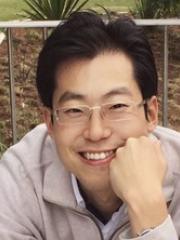
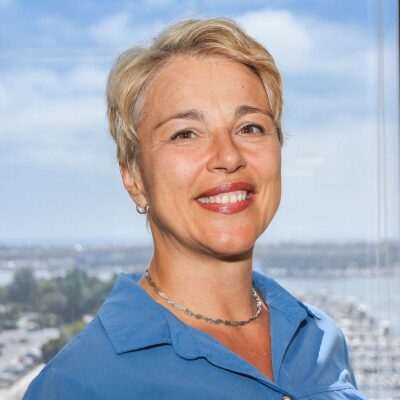
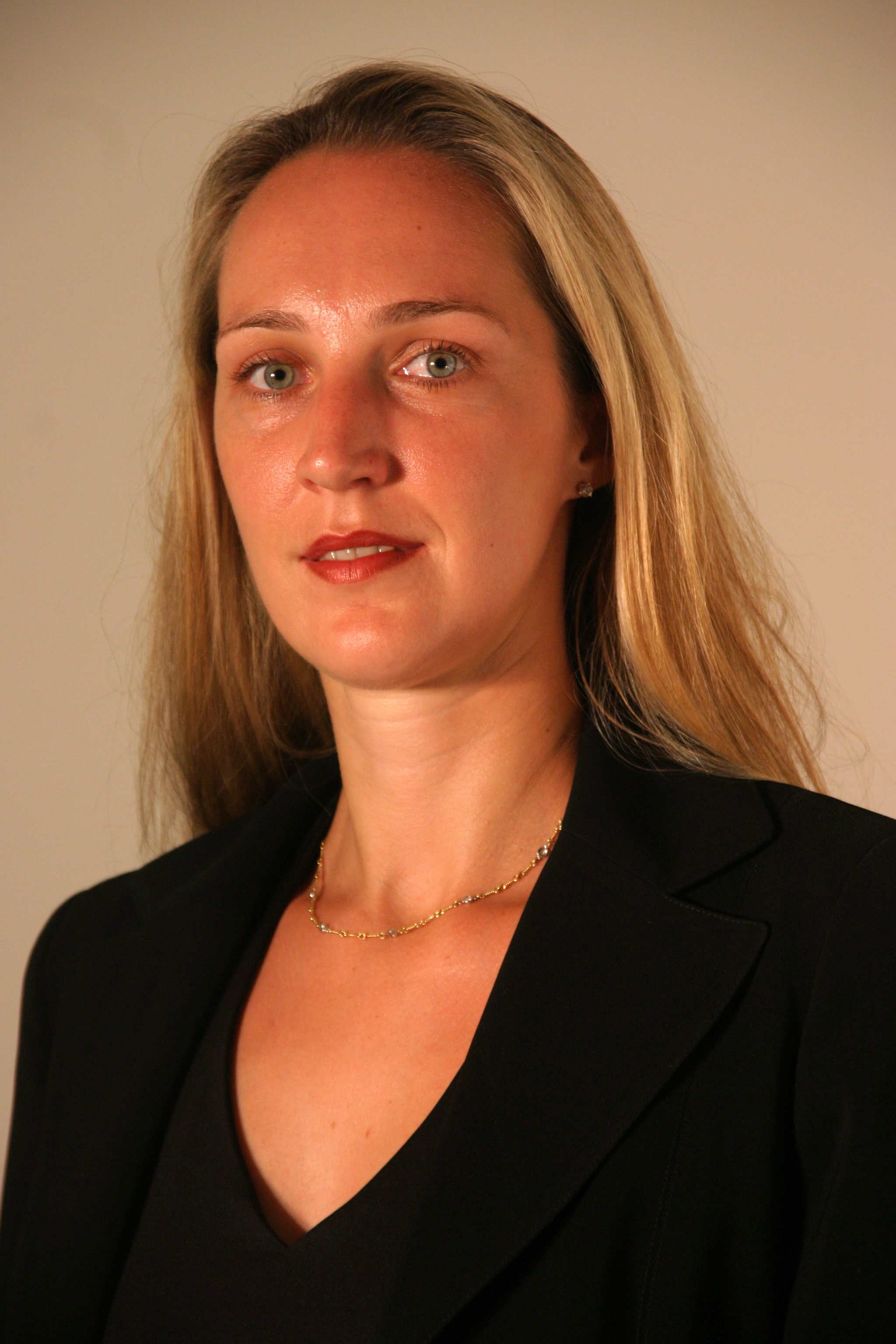
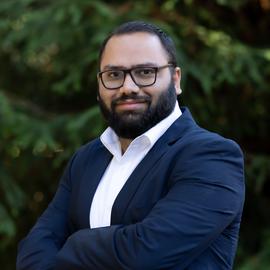
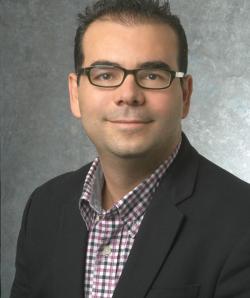
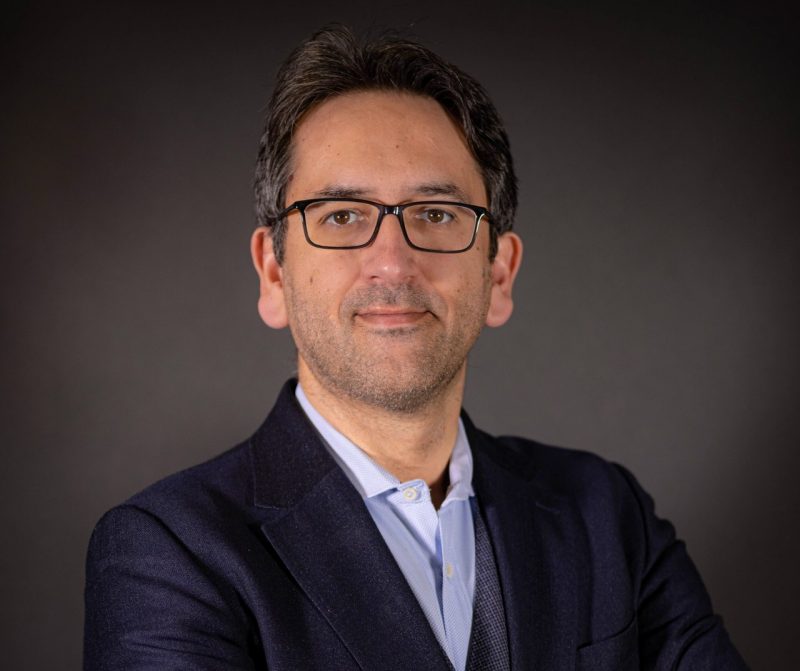
Dan Spielman is the Sterling Professor of Computer Science and holds joint appointments as Professor of Statistics and Data Science and Mathematics at Yale University. He is affiliated with the Department of Mathematics within the Faculty of Arts and Sciences. His research focuses on spectral graph theory, algorithms, linear systems, and their applications in computer science, mathematics, and statistics. He has been recognized as an ACM Fellow for his contributions to theoretical computer science and mathematics. Dr. Spielman's work bridges theoretical and applied domains, with notable advancements in graph sparsification, Laplacian solvers, and the resolution of the Kadison-Singer problem. His research also encompasses algorithmic design, optimization, and probabilistic methods. Key grants include NSF funding for projects like 'Generalized Algebraic Graph Theory: Algorithms and Analysis' (2016). His scientific awards include the ACM Fellowship (2011), acknowledging his impactful contributions to algorithms and complexity theory. Spielman’s interdisciplinary approach integrates spectral graph theory with practical applications, addressing fundamental problems in computation and mathematics.
Prof. Dr.-Ing. Weihan Li is a Junior Professor at RWTH Aachen University, specializing in Artificial Intelligence and Digitalization for Batteries. He is affiliated with the Institute for Power Electronics and Electrical Drives (ISEA) and the Center for Ageing, Reliability, and Lifetime Prediction of Electrochemical and Power Electronic Systems (CARL). His research bridges informatics, electrochemistry, and power electronics to advance battery technology through AI. B.Sc. in Automotive Engineering (Tongji University, 2014) M.Sc. in Automotive Engineering and Transport (RWTH Aachen, 2017) Ph.D. in Electrical Engineering and Information Technology (RWTH Aachen, 2021, summa cum laude) Prof. Li’s research focuses on AI-driven battery modeling, diagnostics, and optimization. Key areas include digital twin technology, electrochemical parameterization, and lifetime prediction using field data. He explores multi-scale kinetic processes, thermal management, and mechanical-electrochemical coupling effects in battery systems. The articles listed reflect his leadership in AI-powered battery analytics, spanning degradation prediction, fast charging, failure mode analysis, and grid-scale storage. His work emphasizes both theoretical innovation (e.g., diffusion models, physics-informed neural networks) and practical applications (e.g., second-life battery screening, automotive integration). Clarivate Highly Cited Researcher 2024 BMBF BattFutur Research Group (€2M+) German Thesis Award (Körber Foundation) Reichart Prize vgbe Innovation Prize Battery Young Research Award Umbrella Award RWTH Innovation Award Prof. Li leads an interdisciplinary research group with over €6 million in grants from BMBF, BMWK, BMDV, European Commission, and industry partners. His teams focus on battery informatics, AI-driven diagnostics, and digitalization of testing processes at CARL and ISEA.
Nicole Wein is an Assistant Professor in the Department of Electrical Engineering and Computer Science at the University of Michigan, where she is a member of the Theory of Computation Lab within the Computer Science and Engineering Division. Her research focuses on theoretical computer science, particularly graph algorithms and lower bounds across various domains including distance-estimation, dynamic, parameterized, distributed, and online algorithms. Education: PhD in Computer Science from MIT, advised by Virginia Vassilevska Williams Master's in Computer Science from Stanford University B.S. in Computer Science/Mathematics from Harvey Mudd College Nicole's research centers on theoretical aspects of graph algorithms and computational complexity. She investigates fundamental questions about how algorithms can efficiently handle changing data, extract information from graphs in linear time, and understand the structure of shortest paths, especially in directed graphs. Her work spans multiple algorithmic paradigms including dynamic algorithms that adapt to changing inputs, parameterized approaches for hard problems, and fine-grained complexity that establishes precise relationships between problem difficulty. Analysis of Nicole's recent publications reveals a strong focus on graph algorithms, particularly shortest path problems, spanners, and hardness results. Her work often bridges theoretical insights with practical implications, developing novel techniques for distance estimation, dynamic graph processing, and approximation algorithms. A significant portion of her research examines the structural properties of graphs that enable or constrain efficient computation, with applications across computer science. Nicole actively mentors students at various levels. She currently advises PhD student Jubayer Nirjhor and has worked with undergraduate researchers including Sam Hiken (now a pre-doc at MIT), Michael Wang, and Tony Zhang. Her teaching includes foundational courses like EECS 376: Foundations of Computer Science and specialized courses such as EECS 598: Graph Algorithms. Nicole contributes to the academic community through service as a program committee member for major conferences including SOSA 2025, FOCS 2025, SODA 2025, and others. She co-organized the June 2023 DIMACS workshop on Modern Techniques in Graph Algorithms and previously organized Algorithms Office Hours at MIT to improve communication between theory and applications of algorithms.
Dr. Kezhi (Ken) Li is an Associate Professor of AI in Healthcare at the Institute of Health Informatics, University College London (UCL). He leads the AI for Health research group and has established himself as a leading expert in applying artificial intelligence to solve complex problems in healthcare, with over 130 publications in leading journals (total impact factor greater than 400). Dr. Li earned his Doctor of Philosophy from Imperial College of Science, Technology and Medicine in 2013, followed by research positions at the Medical Research Council (2015-2017), University of Cambridge (2014-2015), and Royal Institute of Technology (KTH) (2013-2014). His academic journey reflects a consistent trajectory from technical AI research toward increasingly healthcare-focused applications. Dr. Li's research focuses on solving physiological, medical, clinical, and operational problems in healthcare using AI techniques. His specific expertise includes AI in healthcare using electronic health records (EHR), biomedical time series analysis using monitors/wearables, diabetes management, large language models (LLM) in healthcare (especially mental health), patient flow optimization, and digital health with federated learning. His work bridges the gap between cutting-edge AI methodologies and practical healthcare applications, with a strong focus on improving patient outcomes and healthcare system efficiency. Analysis of Dr. Li's publication history reveals a strong emphasis on diabetes management technologies, particularly blood glucose prediction systems using advanced neural network architectures. More recently, his work has expanded into mental health applications of large language models, blockchain-based federated learning for healthcare data, and mortality prediction in critical care settings. His research demonstrates a clear evolution from purely technical AI development toward increasingly clinically impactful applications, with growing emphasis on explainability, privacy preservation, and real-world implementation challenges. Dr. Li has received numerous prestigious awards recognizing his contributions to healthcare AI: Best Application Award of IEEE Global Blockchain Conference (2025) Fellow of British Computer Society (2025) Fellow of the Royal Society for Public Health (2024) Healthcare Partnership of the Year category at the London Higher Awards (2024) ECR Promising Project Award (2023) Gallivan Award finalists (2022) Stylianos Kalaitzis PhD Award Winner (2022) HDR UK Team of the Year (COVID-19) Award (2021) As an educator, Dr. Li serves as the Director of MRes study (AI-enabled Healthcare Systems) at UCL. He leads multiple key modules including Healthcare Artificial Intelligence Journal Club, Dissertation in Artificial Intelligence Enabled Healthcare, and Advanced Machine Learning for Healthcare. His supervision extends across dissertation projects and junior researchers in his AI for Health group. His research has been supported by various grants, including those from HDR UK, focusing on translating AI innovations into practical healthcare solutions. Dr. Li leads the AI for Health research group (https://ai4hucl.github.io/ai4h_webs/), which comprises researchers with diverse expertise in machine learning, healthcare systems, and clinical domains. The group maintains strong collaborations with healthcare providers and industry partners to ensure their research addresses real-world healthcare challenges and can be effectively translated into clinical practice.
Xiang Yin is a Research Associate at the Department of Computing in Imperial College London , affiliated with the Computational Logic and Argumentation group (CLArg) . His work bridges Explainable AI (XAI) and Computational Argumentation (CA) , focusing on the explainability of Quantitative Bipolar Argumentation Frameworks (QBAFs) through attribution and counterfactual explanations. Research Interests: Explainable AI (XAI) Computational Argumentation Quantitative Bipolar Argumentation Frameworks Model Interpretability Human-AI Interaction Logical Reasoning for AI Publication Trends reveal a focus on argumentation-based explainability, with 2025-2024 works addressing large language models for claim verification, truth-discovery frameworks, and counterfactual explanations. Earlier works (2023-2022) explore random forest explanations, faithfulness criteria, and QBAF analysis. His 2018 publications on aircraft prediction systems demonstrate applied machine learning expertise. Education PhD in Artificial Intelligence under Prof. Francesca Toni and Dr. Nico Potyka Pre-PhD: Machine Learning R&D Engineer at Baidu Labs & Teams Xiang is part of the CLArg group at Imperial College London, focusing on integrating computational argumentation with AI explainability and contestability.
SangHyung Ahn is a Lecturer at the School of Civil Engineering , University of Queensland (UQ), since 2017. He joined UQ as a postdoctoral research fellow in 2015 after earning his PhD in Civil Engineering (Construction Engineering and Management) from Purdue University, USA. Prior to his academic career, he worked as an assistant manager at Hyundai Engineering and Construction Co., Ltd. (2003-2007) and holds an MBA in international business from Hanyang University and a B.Sc in Civil Engineering from Korea University. Research Focus: Construction process modelling with virtual reality, decision support systems for construction, automation of data-driven simulation modelling, sensor-based operations analysis, and integration of Building Information Modelling (BIM). Teaching: Coordinates undergraduate courses Introduction to Project Management (CIVL3510) and Construction Engineering Management (CIVL4522) . Research Trends: His recent publications highlight interdisciplinary work in transportation engineering, structural design, and AI-driven simulation tools. Key themes include application of machine learning to car-following models, drone-based vehicle identification, and optimization of public transport systems using agent-based simulations. Supervision: Available for supervision, with completed supervision of PhD and Master’s theses on topics such as BIM-LCA integration, pedestrian trajectory analysis, and AI-driven driving behavior models.
Jelena Mirkovic serves as Principal Scientist at USC Information Sciences Institute (USC/ISI) and Research Associate Professor at the University of Southern California's Thomas Lord Department of Computer Science. She has held faculty positions at USC since 2010, progressing from Research Assistant Professor to her current role as Research Associate Professor since 2017, while also serving as Project Leader at USC/ISI. Her educational background includes: PhD in Computer Science from UCLA (2003) MS in Computer Science from UCLA (2000) B.Sc. in Computer Science from University of Belgrade, Serbia (1998) Mirkovic's research spans network security, human-centered attacks, and cybersecurity experimentation infrastructure. Her work focuses on critical security challenges including botnets, denial-of-service attacks, IP spoofing, vulnerability scanning, and user-centric privacy. She has pioneered methodologies for security experiments and led major infrastructure projects including the DETER testbed and SPHERE (Security and Privacy Heterogeneous Environment for Reproducible Experimentation). Analysis of her recent publications reveals consistent innovation across multiple security domains. Her work demonstrates strong technical depth in DDoS defense systems (particularly DNS protection), binary vulnerability analysis, privacy-preserving systems, and security experimentation infrastructure. A notable trend is her focus on bridging theoretical security concepts with practical implementation through large-scale testbeds and real-world data analysis. Her significant scientific achievements include: IEEE Senior Member distinction Best paper award at IEEE COMSNETS 2023 for DNS DDoS defense research Mirkovic has secured substantial research funding as Principal Investigator or Co-PI on numerous grants from NSF, DHS, and other agencies. Current major projects include SPHERE (Security and Privacy Heterogeneous Environment for Reproducible Experimentation), DISCERN (Datasets to Illuminate Suspicious Computations), and modernizing DeterLab education infrastructure. She has successfully led multiple REU sites focused on cybersecurity education and workforce development. She directs the STEEL (Security Research Lab) at USC/ISI, which develops innovative security solutions through interdisciplinary research in network security, human factors in security, and cybersecurity experimentation infrastructure. The lab emphasizes practical implementations that address real-world security challenges while advancing theoretical understanding of security systems.
Pierre-Henri Paris is an Associate Professor (Maître de Conférences) at Paris-Saclay University since September 2024. Previously, he worked as a Postdoctoral Researcher at Telecom Paris (Institut Polytechnique de Paris) from September 2020 to August 2024. His academic journey includes a PhD in Artificial Intelligence from Sorbonne University and CNAM (Conservatoire National des Arts et Métiers) completed in 2020. Education: PhD in Artificial Intelligence, 2020, Sorbonne University and CNAM M.Sc. in Artificial Intelligence, 2016, CNAM M.Sc. in Mathematics, 2008, CY Cergy Paris University (incomplete) Pierre-Henri Paris's research focuses on the intersection of artificial intelligence, knowledge representation, and natural language processing. His work particularly emphasizes knowledge graphs, entity linking, and data quality. He has made significant contributions to projects like YAGO 4.5, which enhances knowledge bases with cleaner, logically consistent structures, and MAFALDA, a benchmark for fallacy classification. His research often bridges theoretical foundations with practical applications, particularly in how knowledge can be effectively represented, extracted, and utilized in complex systems. His recent publications reveal a strong focus on knowledge graph enhancement, semantic representation, and natural language understanding. The work on YAGO 4.5 demonstrates his commitment to creating more robust knowledge bases, while MAFALDA shows his interest in the intersection of language understanding and logical reasoning. His research trajectory indicates a consistent exploration of how structured knowledge can be integrated with linguistic analysis to create more intelligent systems. Advising: PhD students: Simon Coumes (2022-), Chadi Helwe (2022-2024), François Amat (2022-) Master's students: Syrine El Aoud (2021), Ayoub Mountassir (2013-2015) Bachelor's students: Khalil Halloul (2013-2014) Pierre-Henri Paris is actively involved in teaching at Paris-Saclay University, where he instructs courses including Introduction to Machine Learning, Introduction to Neural Networks, Algorithms for Data Science, Databases, and Data Warehousing. His teaching reflects his research expertise, providing students with both theoretical foundations and practical applications in artificial intelligence and data science.
Chang Hyun Park is an Assistant Professor at the Department of Information Technology, Uppsala University, where he is part of the Uppsala Architecture Research Team. His research focuses on computer architecture with emphasis on memory systems, virtualization, and system software optimization. Dr. Park completed his doctoral studies at KAIST (Korea Advanced Institute of Science and Technology) in South Korea, where he was advised by Professor Jaehyuk Huh. Prior to his current position, he served as a post-doctoral researcher at Uppsala University working with Professor David Black-Schaffer. Dr. Park's research spans several critical areas in computer architecture and systems: Virtual memory systems and address translation mechanisms Cache hierarchy optimization and memory systems design Support for non-volatile memory and heterogeneous memory systems Virtualization technology and optimizations for cloud environments High-speed I/O device integration and accelerator support His publication record demonstrates a consistent focus on improving memory system performance, particularly in virtualized environments. Over the past decade, his work has evolved from fundamental virtual memory optimizations to addressing challenges in emerging memory technologies and large-scale system architectures. Recent publications show increasing emphasis on heterogeneous memory systems, graph processing workloads, and hardware-software co-design approaches. Dr. Park actively collaborates with researchers at Uppsala University, particularly with Professor David Black-Schaffer, and maintains connections with his alma mater KAIST. His work appears regularly in top-tier computer architecture conferences including ISCA, MICRO, ASPLOS, and MEMSYS.
Ada Gavrilovska is a Professor at Georgia Tech's School of Computer Science under the College of Computing. Her work focuses on systems software for emerging technologies, including hybrid memory systems, edge computing, and cloud infrastructure. She leads projects in the PRISM Center and ADA Center , with funding from NSF, DoE, SRC, and industry leaders like Cisco and VMware. Education: PhD in Computer Science, Georgia Tech (2004) Research Interests: Designing systems for new hardware and applications, including edge computing, heterogeneous memory management, and LEO satellite platforms. Her work bridges low-level OS mechanisms with high-level distributed systems challenges. Recent Publications highlight trends in LEO satellite resource scheduling Edge-based ML preprocessing Hybrid memory OS abstractions Disaggregated graph analytics Compiler-assisted performance optimization Scientific Awards: Best paper, NFV World Congress (2016) Spotlight paper, IEEE Transactions on Cloud Computing (2014) ISCA-50 25-year retrospective (2023) Advising & Grants: Ada has mentored over 15 PhD students and 10 MS students, with research supported by NSF, DoE, SRC, and industry grants. She serves as PI in the SRC/DARPA PRISM Center.
Sainyam Galhotra is an Assistant Professor in the Department of Computer Science at Cornell University. His research focuses on developing data science tools for effective and responsible analytics, leveraging techniques from causal inference, data management, theoretical computer science, machine learning, and human-computer interaction to address challenges in trustworthy system design including robustness, explainability, and fairness. Education: Postdoc: University of Chicago PhD: University of Massachusetts Amherst (supervised by Barna Saha) BTech: Indian Institute of Technology Delhi (IIT Delhi) (supervised by Prof. Amitabha Bagchi) Research Interests: Dr. Galhotra's research spans several interconnected areas in data science and artificial intelligence. His work primarily focuses on Responsible Data Science , where he develops methods to ensure that data-driven systems operate fairly and transparently. Within this broad area, his specific interests include: Causal Inference techniques for understanding cause-effect relationships in complex data Algorithmic Fairness approaches to mitigate bias in machine learning systems Explainable AI methods that make black-box models more interpretable Data Management systems for efficient and reliable data processing Entity Resolution techniques for integrating data from multiple sources Trustworthy System Design that addresses robustness, explainability, and fairness His recent publications demonstrate a clear trend toward developing frameworks that combine causal reasoning with practical data management systems, particularly focusing on how to make data-driven decisions more transparent and equitable. The intersection of database systems with fairness considerations appears to be a particularly active area of his research. Scientific Awards: Rising Star in Data Science at the Data Science Institute, UChicago (Oct 2021) Computing Innovation Fellowship Award Recipient (by CRA, CCC and NSF) (Apr 2021) DAAD AInet Fellow (Feb 2021) ACM SIGMOD Entity Resolution Programming Contest – Top 5 finalist (May 2020) Most reproducible paper award in SIGMOD 2018 and 2019 (Jun 2019) First recipient of Krithi Ramamritham Computer Science Scholarship (Jun 2019) Best paper award in SIGSOFT FSE 2017 (May 2017) Dr. Galhotra is actively seeking students to collaborate with on his research projects. His work has been supported by various fellowships and awards, including the prestigious Computing Innovation Fellowship. He has mentored several students through his research projects, with a focus on developing the next generation of data scientists who can build responsible and trustworthy systems. His research group appears to focus on the intersection of database systems and responsible AI, developing tools like HypeR for causal reasoning, Ver for view discovery, and Nexus for correlation discovery in spatio-temporal data. This work suggests a cohesive research agenda centered around making data systems more transparent, fair, and user-friendly.
Mehmet Koyutürk serves as the Andrew R. Jennings Professor in the Department of Computer and Data Sciences at Case Western Reserve University's Case School of Engineering, with additional affiliation as a Member of the Cancer Genomics and Epigenomics Program at the Case Comprehensive Cancer Center. His computational research bridges algorithm development with biological applications, focusing on network-structured data analysis to address complex biomedical challenges. Dr. Koyutürk earned his Ph.D. in Computer Science from Purdue University following B.S. and M.S. degrees in Electrical Engineering and Computer Engineering from Bilkent University. His primary research domains include high-throughput biological data analysis, systems/network biology methodologies, data mining algorithms, and scientific computing optimization, with particular emphasis on phosphorylation networks, genomic interactions, and multi-omics integration. Recent publication trends reveal expanding applications of his network science expertise into Alzheimer's disease phosphoproteomics, bipolar disorder biomarker discovery, and intimate partner violence analysis, while maintaining core contributions to graph neural networks and biological link prediction. His group actively develops open-source analytical tools like RokaiXplorer for phospho-proteomic data accessibility. Scientific Recognition Andrew R. Jennings Professorship Dr. Koyutürk leads multiple NIH-funded initiatives including R01-LM012980 for phosphoproteomics analysis, U01-CA198941 (BD2K program) for big network integration, and R01-LM011247 for GWAS enhancement, complemented by NSF CAREER Award CCF-0953195. He serves on the steering committee for CWRU's Systems Biology and Bioinformatics graduate programs and as Associate Editor for IEEE/ACM Transactions on Computational Biology and Bioinformatics (TCBB), with extensive collaboration through Mark Chance's Center for Proteomics and Bioinformatics. His laboratory specializes in developing scalable algorithms for biological network analysis, currently advancing projects on kinase-substrate association prediction, co-phosphorylation network characterization in cancer, and network-based approaches to intimate partner violence data mining, with strong emphasis on translating computational methods into biomedical insights through open-source software dissemination.
Yang P. Liu is an Assistant Professor in the Computer Science Department at Carnegie Mellon University's School of Computer Science. Previously, he was a Postdoctoral Member at the Institute for Advanced Study and earned his PhD from Stanford University under the supervision of Aaron Sidford. He completed his undergraduate studies at MIT, graduating in May 2018. His educational background includes: PhD in Computer Science, Stanford University (Advisor: Aaron Sidford) Bachelor's degree, Massachusetts Institute of Technology (graduated May 2018) Dr. Liu's research spans the intersection of mathematics and computer science, with particular focus on graph algorithms , optimization , high-dimensional geometry , and additive combinatorics . His work often develops novel algorithmic techniques that bridge theoretical insights with practical applications. He has made significant contributions to areas such as convex optimization, linear programming, and combinatorial problems. His teaching includes courses like "A Principled Approach to Optimization" (CS 15-759), which covers rigorous treatments of convex optimization topics including gradient descent, interior point methods, linear regression, linear programming, and sparsification. His extensive publication record in top-tier conferences (FOCS, STOC, SODA) demonstrates a consistent focus on developing almost-linear time algorithms for fundamental graph problems, optimization techniques, and combinatorial theorems. Recent work shows increasing emphasis on combinatorial lines, corners theorem, and k-CSP approximability, while maintaining strong connections to optimization theory and graph algorithms. Dr. Liu has received notable recognition for his work: National Defense Science and Engineering Graduate (NDSEG) Fellowship (2018-2021) Google PhD Fellowship (2022-2023) Best Paper award at FOCS 2022 for "Maximum Flow and Minimum-Cost Flow in Almost Linear Time" Best Student Paper at STOC 2021 for "Discrepancy Minimization via a Self-Balancing Walk" His research has been supported by prestigious fellowships including the NDSEG Fellowship and Google PhD Fellowship. His work on graph algorithms, optimization, and combinatorics involves collaborations with researchers across theoretical computer science and mathematics. His publications often involve co-authors from multiple institutions, suggesting active research collaborations across the field. Dr. Liu maintains an active research program with a focus on developing efficient algorithms for fundamental computational problems. His recent work continues to push the boundaries of what's computationally feasible in graph algorithms, optimization, and combinatorial mathematics, with particular emphasis on achieving almost-linear time complexity for challenging problems.
Maximilian Egger is a Doctoral Researcher at the Institute for Communications Engineering under Prof. Antonia Wachter-Zeh at the Technical University of Munich (TUM). His research focuses on distributed machine learning, privacy-preserving computing, and information theory. He holds an M.Sc. in Electrical Engineering and Information Technology (2022, TUM) and a B.Eng. in Electrical Engineering (2020). He has conducted research stays at École Polytechnique Fédérale de Lausanne (2024) and Imperial College London (2023). Egger has received several awards, including the DAAD Scholarship (2023) and the VDE Award Bavaria (2020). His work emphasizes secure federated learning, Byzantine-resilient systems, and efficient distributed algorithms. He is affiliated with the Chair of Coding and Cryptography and actively contributes to advancements in decentralized learning systems. Recent publications highlight breakthroughs in privacy preservation, channel capacity estimation, and scalable federated edge learning.
Murat Kantarcioglu is a Professor of Computer Science at Virginia Tech, affiliated with the College of Engineering. He is also a Faculty Fellow at the Commonwealth Cyber Initiative (CCI) and directs the Data Security and Privacy Lab. Previously, he held the Ashbel Smith Professorship at the University of Texas at Dallas. His research focuses on data and AI security, privacy, blockchain, and cybersecurity. He has received notable awards, including the NSF CAREER Award and IEEE Technical Achievement Award, and is a Fellow of AAAS and IEEE. Education: Ph.D. in Computer Science (Purdue University), B.S. in Computer Engineering (Middle East Technical University). Research Interests: Privacy-preserving machine learning and data analytics Adversarial machine learning and cybersecurity Blockchain technology and applications Healthcare data security and genomics privacy Risk and incentive models for assured data sharing Awards and Recognition: NSF CAREER Award AMIA Homer R. Warner Award IEEE ISI Technical Achievement Award Fellow of AAAS and IEEE Distinguished Member of ACM Advising and Labs: Directed over 20 PhD/Master’s students, many in cybersecurity and privacy domains. Founder and director of Virginia Tech’s Data Security and Privacy Lab. Associate at Harvard’s University Data Privacy Lab. Service and Leadership: Extensive program committee roles in top conferences (KDD, AAAI, IEEE ICDE). Former CCI co-chair for IEEE TrustCom. Co-authored influential textbooks on adversarial machine learning.