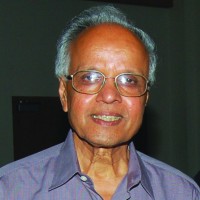
Jorge Martinez Carracedo is a Lecturer in Computer Science (Internet of Things) at the School of Computing , Ulster University. His research focuses on IoT applications in digital health, human activity recognition, and data analytics. Role: Lecturer in Computer Science (Internet of Things) University: Ulster University School: School of Computing Key research areas include Internet of Things , Human Activity Recognition , and Digital Health . His work spans algorithm development for wearable sensors and cross-disciplinary collaborations in emotional wellbeing monitoring. Recent publications highlight trends in digital mental health interventions , dynamic activity recognition , and health app clustering . Awards include an honorary recognition (2021) and a BCS award shortlisting (2023). Scientific Awards: 2021: Honorary award for 'A Robust Martingale Approach for Detecting Abnormalities in Human Heartbeat Rhythm' 2023: Shortlisted for BCS & Computing UK IT Industry Awards 'Security Innovation of the Year' Active in consultancy projects, including the Fusion Project: Smart Client Assistance (2024–2026) and AI-driven initiatives for large language models. Supervised work includes collaborations on wearable technology and neonatal cardiac diagnostics.
Vinkle Srivastav is a Research Scientist (Chargé de recherche R&D) at the CAMMA group, a collaborative research team between IHU Strasbourg and the University of Strasbourg, where he focuses on advancing surgical data science through novel computer vision and machine learning approaches. His work bridges the gap between clinical practice and artificial intelligence, developing methods for surgical video analysis, 3D medical imaging, and surgical workflow understanding. Education PhD in Computer Science (2018-2021) from University of Strasbourg, France. Thesis: "Unsupervised Domain Adaptation Approaches for Person Localization in the Operating Rooms." Master of Science in Computer Science (2014-2017) from Indian Institute of Technology, Delhi, India. Thesis: "Computerized evaluation of neurosurgery skills using image processing and computer vision techniques." Bachelor of Technology in Electronics and Communication (2007-2011) from Punjab Technical University, Jalandhar, India. Research Interests Vinkle's research spans surgical data science, with particular focus on multi-modal learning approaches for surgical computer vision. His work addresses fundamental challenges in medical AI including domain adaptation, self-supervised learning, and privacy preservation in clinical environments. He develops methods for 3D medical image analysis, multi-view human pose estimation in operating rooms, and surgical activity recognition. His recent work emphasizes multi-modal pretraining frameworks that leverage both visual and textual information to improve surgical workflow understanding. He also investigates scientific simulation techniques, particularly for therapeutic ultrasound applications, where physics-aware deep learning models can accelerate computational processes while maintaining accuracy. Publication Trends Vinkle's recent publications demonstrate a strong trajectory toward multi-modal surgical AI systems that integrate vision, language, and physics-based modeling. His work increasingly focuses on few-shot and zero-shot adaptation techniques to address the data scarcity problem in surgical AI. The publications reveal a progression from basic pose estimation to holistic surgical scene understanding, incorporating team communication analysis and surgical safety protocols. Scientific Awards IPCAI 2024 Best paper award (co-author) IPCAI 2019 Runner-up award in the bench-to-bedside category (co-author) Joint winner for the best paper award in the machine learning for CAI track, IPCAI 2025 Advising and Grants Vinkle actively mentors multiple PhD students and research interns at various levels, supervising thesis work on topics including large-scale multi-modality learning, holistic surgical scene analysis, and self-supervised video representation learning. He serves as Co-PI on two ITI-HealthTech projects: one focused on multi-modality learning for 3D medical imaging (2023), and another on physics-aware deep-learning approaches for therapeutic ultrasound simulation (2024). Laboratories and Teams Vinkle is a key member of the CAMMA research group at IHU Strasbourg, a collaborative team focused on computer-assisted medical modeling and analytics. He co-organizes the Surgical Data Science Summer School, an interdisciplinary program that brings together clinicians and computer scientists to develop AI-driven solutions with clinical impact. His work involves close collaboration with surgical teams at University Hospitals of Strasbourg and international partners including Johns Hopkins University and Technical University of Munich.
Andrea Cristofaro is an Associate Professor at the Department of Computer, Control and Management Engineering, Sapienza University of Rome. He holds an M.Sc. in Mathematics (2005) from Sapienza University of Rome and a Ph.D. in Information Science and Complex Systems (2010) from the University of Camerino. His academic trajectory includes postdoctoral positions at INRIA Rhône-Alpes (France) and the Norwegian University of Science and Technology, followed by faculty appointments at the University of Camerino and University of Oslo before joining Sapienza in 2019. His research spans: Robotic systems : Fault-tolerant control, multi-agent coordination, and hybrid dynamics Distributed parameter systems : Stability analysis, observer design, and optimal control of PDEs Hybrid systems : Control synthesis for systems with state-driven jumps and switching logic Recent publications (2024-2025) predominantly explore fault-tolerant control architectures for multi-robot systems, decentralized task allocation, adaptive observer designs for biological and thermal systems, and optimal control of reaction-diffusion equations. This reflects a consistent focus on robustness in complex dynamical systems with applications ranging from industrial robotics to biomedical engineering. He serves as Associate Editor for Automatica and IEEE Transactions on Control Systems Technology , and is a member of the IEEE CSS Conference Editorial Board.
Lennart Svensson is a Professor at Chalmers University of Technology in the Signal Processing research group. His work focuses on nonlinear filtering, multi-object tracking, Bayesian statistics, and deep machine learning with applications in autonomous systems and sensor fusion. Research Interests Nonlinear Filtering and Bayesian Inference Multi-Object Tracking and Sensor Fusion Deep Learning for Autonomous Systems Performance Metrics (GOSPA, T-GOSPA) Lidar-Camera Fusion and Radiance Fields 5G SLAM and mmWave Sensing Publications Trends Recent work emphasizes uncertainty-aware multi-object tracking metrics, trajectory estimation using Poisson Multi-Bernoulli Mixtures, and sensor fusion techniques for autonomous driving. His research integrates Bayesian methods with deep learning for applications in automotive radar, lidar, and 5G positioning systems. Contact Email: lennart.svensson@chalmers.se
Norman Kerle is a Professor at the Faculty of Geo-Information Science and Earth Observation (ITC) of the University of Twente, holding the chair of Geoinformatics for Disaster Risk Management within the Earth Systems Analysis department. He earned Masters degrees in geography from the University of Hamburg and Ohio State University, and a PhD in volcano remote sensing from the University of Cambridge (2002). His research spans volcanology, landslide detection, and quantitative geomorphology, with a focus on object-oriented remote sensing methods for disaster risk management. He leads the ITC Object-Based Image Analysis research group and coordinates EU-funded projects like RECONASS and INACHUS , emphasizing UAV-based structural damage mapping. Recent work includes post-disaster recovery assessment using remote sensing and macro-economic modeling. His scientific contributions include over 221 research outputs (peer-reviewed articles, book chapters, conference papers) and datasets such as Evaluating Resilience-Centered Development Interventions with Remote Sensing (2020). He has received the 2011 Lloyd's Science of Risk Prize (Natural Hazards) and served as Associate Editor for journals like Remote Sensing and Natural Hazards and Earth Systems Sciences . Prof. Kerle’s professional affiliations include the European Geosciences Union (EGU), American Geophysical Union (AGU), International Society for Photogrammetry and Remote Sensing (ISPRS), and Remote Sensing and Photogrammetry Society (RSPS). He has examined PhD theses and reviewed proposals for Horizon 2020, STEREO, and UNESCO.
Maurice van Keulen is an Associate Professor affiliated with the University of Twente's research institutes including Datamanagement & Biometrics, Digital Society Institute, and TechMed Centre. His multidisciplinary work bridges computer science, healthcare, and social systems. Research Focus: Van Keulen specializes in artificial intelligence applications with emphasis on: Data management (quality, integration, probabilistic databases) Explainable AI and interpretable machine learning models Healthcare informatics (cancer prediction, medical imaging, outcome analysis) Natural language processing and social media analytics His recent work explores dynamic sparse training, meta-learning for data imputation, and ethical AI frameworks. Publication Trends: Recent articles (2023-2025) show strong focus on: Interpretable AI methods in healthcare diagnostics Robust machine learning under data corruption Meta-learning approaches for data preprocessing 3D medical imaging and reconstruction techniques Awards: Beste paper award (2018) for work on probabilistic data conditioning Supervision & Activities: Has supervised 14 research projects and serves on executive boards including EDBT (Extending DataBase Technology) and IFIP WG 2.6. Leads research on ethical dimensions of AI systems.
Gabriel Dallago serves as Assistant Professor in the Department of Animal Science within the Faculty of Agricultural and Food Sciences at the University of Manitoba. His research integrates advanced data analytics with livestock production systems to enhance animal welfare and farm decision-making processes. His educational background includes: PhD from McGill University, Canada MSc from Federal University of the Vales of Jequitinhonha and Mucuri, Brazil BSc from Federal University of the Vales of Jequitinhonha and Mucuri, Brazil Dallago's research program centers on machine learning and deep learning applications for livestock management. Key initiatives include developing predictive models for animal bio-responses, integrating multimodal data streams to analyze complex farm systems, and optimizing dairy cow longevity through data-driven interventions. His work bridges computational science with practical agricultural challenges, focusing on tangible improvements in production efficiency and animal well-being. Precision monitoring of dairy cow behavior and welfare Early-life management impacts on herd productivity Computer vision applications for livestock assessment Economic modeling of livestock production systems Analysis of his 15 most recent publications (2022-2025) reveals strong thematic concentration in dairy science (47%), swine production (20%), and animal nutrition (20%), with consistent application of computational methods. Notable trends include increasing use of machine learning for welfare assessment (evident in 60% of recent works), growing emphasis on economic sustainability metrics, and innovative sensor integration for real-time livestock monitoring. Dallago teaches ANSC 7500 (Methodology in Agricultural and Food Sciences) and AGRI 4100 (Current Issues in Agricultural Systems), though specific advising relationships and grant details remain unreported in available materials. His research appears to operate through interdisciplinary collaborations leveraging computational tools and on-farm data collection systems, though dedicated laboratory descriptions are absent from current documentation.
Juliana Pacheco Duarte serves as an Associate Professor in the Department of Nuclear Engineering & Engineering Physics at the University of Wisconsin-Madison, where she leads research in nuclear safety analysis, thermal-hydraulics, and risk assessment of advanced nuclear systems. Her expertise spans experimental design for high-pressure two-phase heat transfer phenomena and computational thermal-hydraulic analysis using industry-standard codes including COBRA, CTF, TRACE, and MELCOR. Her educational background includes a PhD in Nuclear Engineering from the University of Wisconsin-Madison (2018), an MS from the University of São Paulo (2014), a BS from State University of Campinas (2016), and a BS from the Federal University of Rio de Janeiro (2013). Prior to her doctoral studies, she contributed to critical heat flux experiments for nuclear propulsion reactors at the Brazilian Navy’s thermal-hydraulics division. Dr. Duarte's research program integrates traditional nuclear engineering methodologies with cutting-edge machine learning techniques, focusing on accident-tolerant fuels, severe accident progression in small modular reactors, and fire safety analysis in electrical enclosures. Her work addresses critical challenges in post-critical heat flux phenomena, density wave instabilities, quenching behavior, and uncertainty quantification for nuclear safety applications. Analysis of her 15 most recent publications (2023-2025) reveals a pronounced trend toward machine learning integration in nuclear safety analysis, with 60% of articles applying AI/ML methods to thermal-hydraulic challenges, accident progression modeling, and fire risk assessment. Her research bridges experimental validation with computational modeling, particularly in chromium-coated cladding performance, electrical fire dynamics, and natural circulation stability. Her scientific contributions have been recognized through prestigious awards including: 2023 DOE Nuclear Energy University Program Distinguished Early Career Program Award 2022 American Nuclear Society ATH’22 Best Paper Award 2019 US NRC Nuclear Education Program Faculty Development award 2014 CREA/RJ IV Oscar Niemeyer Award for Scientific Projects CAPES Science without Borders Fellowship (2014) Dr. Duarte actively mentors graduate students through thesis research courses (NE 790/890/990) and teaches advanced courses including Methods for Probabilistic Risk Analysis of Nuclear Power Plants. Her research is supported by grants from the Department of Energy (NEUP program), Nuclear Regulatory Commission, and Brazilian funding agencies including CAPES and CNPq. Her experimental work leverages high-pressure thermal-hydraulic facilities at UW-Madison, with collaborations extending to national laboratories and industry partners in nuclear safety validation studies. Current projects focus on fusion machine design applications and next-generation accident-tolerant fuel performance under extreme conditions.
Vinh Nguyen is an Assistant Professor in the Department of Mechanical and Aerospace Engineering at Michigan Technological University, where he directs the Michigan Tech Center for AI and coordinates the NIST-PREP program. His research focuses on advanced manufacturing through Industry 4.0, human-robot-machine interaction, and physics-based/data-driven modeling. He has developed solutions for machining, additive manufacturing, metal forming, and robotic assembly to promote smart and sustainable manufacturing. Prior to joining Michigan Tech in 2022, he was a National Research Council Postdoctoral Fellow at NIST (2020–2022). Dr. Nguyen earned his PhD (2020), MS in Mechanical Engineering (2017), and MS in Electrical & Computer Engineering (2017) from Georgia Institute of Technology. He received dual bachelor’s degrees in Electrical and Mechanical Engineering from Rensselaer Polytechnic Institute (2014). His research portfolio spans Advanced Manufacturing Industry 4.0 and 5.0 Human-Robot Interaction Physics-Based/Data-Driven Modeling Industrial Automation based on his lab’s interdisciplinary focus on human-centric, resilient solutions. His recent publications address trends in Machine Learning for Manufacturing Autonomous Vehicle Sensors Hybrid Additive/Subtractive Manufacturing Augmented/Mixed Reality Interfaces Industrial Robot Diagnostics Material-Specific Machining with keywords spanning Robotics, Data Science, and Industrial Engineering.
Andrey Vladimirovich Savchenko is a prominent researcher and educator in computer vision and artificial intelligence at the National Research University Higher School of Economics (HSE) in Nizhny Novgorod. He holds multiple positions including Professor at the Faculty of Informatics, Mathematics, and Computer Science, Leading Researcher at the Faculty of Computer Science and Institute of Artificial Intelligence and Digital Sciences, and Academic Director of the "Artificial Intelligence and Computer Vision" educational program. His educational background includes: 2016: Doctor of Technical Sciences from Nizhny Novgorod State Technical University 2015: Academic title of Associate Professor 2011: Candidate of Technical Sciences 2008: Specialist degree in Applied Mathematics and Computer Science Savchenko's research focuses on computer vision, pattern recognition, and artificial intelligence, with particular emphasis on facial recognition, emotion analysis, and efficient deep learning algorithms. His work bridges theoretical foundations with practical applications, especially in mobile computing environments where computational resources are limited. He has developed innovative methods for making AI systems more efficient without significant loss in accuracy. His recent publications demonstrate a strong trend toward multimodal analysis, combining visual, audio, and textual data for more robust recognition systems. There's a clear emphasis on making AI systems more efficient, especially for mobile devices, and on developing methods that can work with limited computational resources while maintaining high accuracy. His work spans fundamental research on neural network architectures and practical applications in education, healthcare, and human-computer interaction. Among his notable scientific achievements: Gratitude from the Governor of Nizhny Novgorod region (2022) Multiple gratitude awards from HSE (2021-2022) Best Teacher Award (2018-2019) Leaders of IT Industry Award from NEYMARK IT Campus (2023) Academic Success Bonus at HSE (2011-2013) Savchenko has successfully supervised numerous master's students and currently mentors PhD candidates working on cutting-edge topics like large language models for recommendation systems and document analysis. He has secured significant research funding, including projects with Huawei, Sberbank, and the Russian Science Foundation, totaling millions of rubles. His laboratory focuses on developing efficient algorithms for computer vision and multimodal data analysis. He leads the Laboratory of Theoretical Foundations of Artificial Intelligence Models and has established strong industry partnerships that ensure his research has practical impact. His NVIDIA Deep Learning Institute certification demonstrates his commitment to staying current with the latest AI technologies.
Jingling Xue is a Scientia Professor at the School of Computer Science and Engineering at the University of New South Wales (UNSW) in Sydney, Australia. As an IEEE Fellow of the Computer Society, he leads the Programming Languages and Compilers research group, focusing on practical applications of compiler optimization and program analysis techniques. His work bridges theoretical foundations with real-world software systems, particularly in developing open-source tools for large-scale program analysis. Professor Xue received his B.Eng and M.Eng degrees from Tsinghua University in 1984 and 1987, respectively, followed by a PhD from the University of Edinburgh in 1992. His academic journey has established him as a leading figure in programming languages and compiler technology. Xue's research spans programming languages, compiler technology, and program analysis with emphasis on practical relevance. His current projects include compiler techniques for improving parallelism and locality, pointer/alias analysis for million-line-scale programs, and static/dynamic analysis for detecting bugs and security vulnerabilities in real-world applications like web browsers and Android apps. His group actively develops open-source tools to support scientific replicability and reproducibility in these areas. His recent publications demonstrate a strong focus on applying program analysis techniques to modern challenges including AI compilers, homomorphic encryption, security vulnerability detection, and graph processing systems. The work shows evolution from traditional compiler optimization to addressing emerging domains like privacy-preserving computation and deep learning systems while maintaining rigorous theoretical foundations. Scientific Awards: Best Paper Award at CGO'13 Best Paper Award at CGO'16 Distinguished Paper Award at ECOOP'16 Distinguished Paper Award at ICSE'18 Distinguished Paper Award at ISSTA'19 Distinguished Paper Award at ASE'19 Distinguished Artifact Award at ISSTA'23 Best Artifact Award at FSE'23 Distinguished Paper Award at ASE'23 Test-of-Time Award at CGO'21 Professor Xue has successfully supervised 30 PhD students to completion, many of whom now work as professors or researchers in academia and industry. He has served as Program Chair for major conferences including LCTES'13, CC'18, CGO'20, and General Chair for LCTES'20. His group currently focuses on memory safety in Rust, smart contract analysis, AI compilers, compilation for privacy-preserving computation, and adversarial attacks in deep learning. The Programming Languages and Compilers group maintains strong connections with industry partners, translating theoretical advances into practical tools for real-world software development challenges. Their work on pointer analysis, memory safety, and compiler optimizations continues to influence both academic research and industrial practice.
Marcello Pietri is a Researcher (td art. 24 c. 3 lett. A) and Contract Professor at the Department of Engineering Sciences and Methods (DISMI) at the University of Modena and Reggio Emilia. His work focuses on Information Processing Systems, with expertise in IoT, Edge Computing, and Digital Twins. He teaches courses like 'Sistemi Informativi' (Information Systems) for the Engineering Management program, emphasizing database design, SQL, and web application development with Python. His research explores advanced topics including Digital Twin integration in Industry 5.0, Fluid Computing in IoT ecosystems, and Smart City data fusion using 5G MEC architectures. He collaborates with institutions like the DIPI Lab (Distributed and Pervasive Intelligence Group), contributing to projects on telecom security, energy forecasting, and human-centric manufacturing systems. Recent publications highlight innovations in operator digital twins for workplace well-being, distributed data mesh models for IoT-edge-cloud systems, and adaptive monitoring algorithms for large-scale cloud environments. His work bridges theoretical advancements with practical implementations, addressing challenges in scalability, real-time data processing, and interdisciplinary collaboration.
Freja Stær Hincheli serves as a Lecturer at the Department of Computer Science , University of Copenhagen. Her work intersects multiple domains within machine learning, with a particular emphasis on quantum-inspired algorithms, medical imaging, and sustainable AI development. Keywords : Machine Learning, Quantum Computing, Medical Imaging, Natural Language Processing, Computational Biology Key Collaborations : SCIENCE AI Centre Her research spans quantum-enhanced neural networks, explainable AI for medical diagnostics, and energy-aware model design. Recent publications highlight applications in cross-cultural recipe adaptation, emotion-aware dialogue systems, and climate-conscious AI strategies. The Machine Learning Section at DIKU focuses on theoretical foundations and applications including medical image analysis , biological data modeling , and quantum computing , aligning with her contributions.
Timothy H. Webster is an Assistant Professor in the Department of Anthropology at the University of Utah, where he directs the Primate Evolution and Genomics Lab (PEGL). He holds an adjunct faculty position at Arizona State University's School of Life Sciences. Webster earned his PhD in Anthropology from Yale University in 2015, following an M.Phil from Yale and a BA in Anthropology and Zoology from Miami University. His research integrates genomics, computational biology, and evolutionary anthropology to study primate behavior, ecology, and adaptation. Key focus areas include: Primate genomics and speciation mechanisms Evolution of immune genes in response to pathogens Development of bioinformatics tools for NGS data Conservation genomics of endangered species 3D genome architecture in hominids Webster's publications emphasize computational approaches to evolutionary questions, with recurring themes in comparative genomics, host-pathogen interactions, and methodological innovations. His work spans diverse taxa including primates, reptiles, and humans. He has secured multiple grants including NSF funding for projects on social integration in primates and Leakey Foundation awards for microbiome and X-inactivation studies. Current doctoral students focus on primate genomics and desert tortoise ecology. The PEGL lab develops open-source bioinformatics tools and collaborates internationally on conservation genomics initiatives.
J.N.K. Rao is a Distinguished Research Professor in the Department of Mathematics & Statistics at Carleton University. A leading expert in survey sampling and statistical inference, he has made groundbreaking contributions to small area estimation (SAE) and data integration methodologies. Research Focus: Specializes in survey methodology, poverty mapping, Bayesian inference, and empirical likelihood techniques. Honors: Gold Medal of the Statistical Society of Canada (1993), Fellow of the Royal Society of Canada (1991), Waksberg Award (2005), SAE Outstanding Achievement Medal (2017). His recent work explores model-based SAE, combining probability and non-probability samples, and improving inference validity through robust calibration. Awards highlight his decades-long impact on statistical theory and practice. Email: jrao@math.carleton.ca