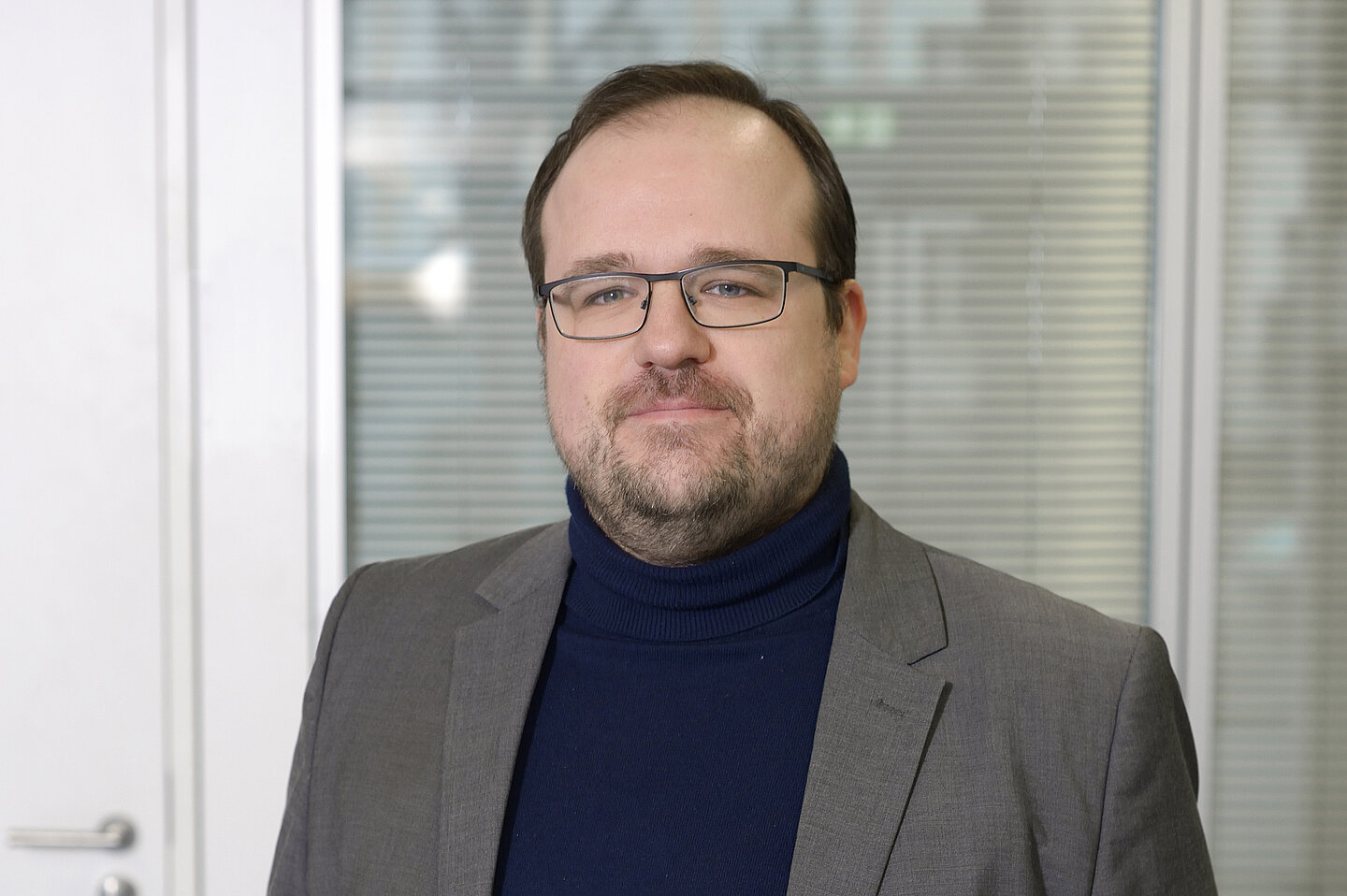
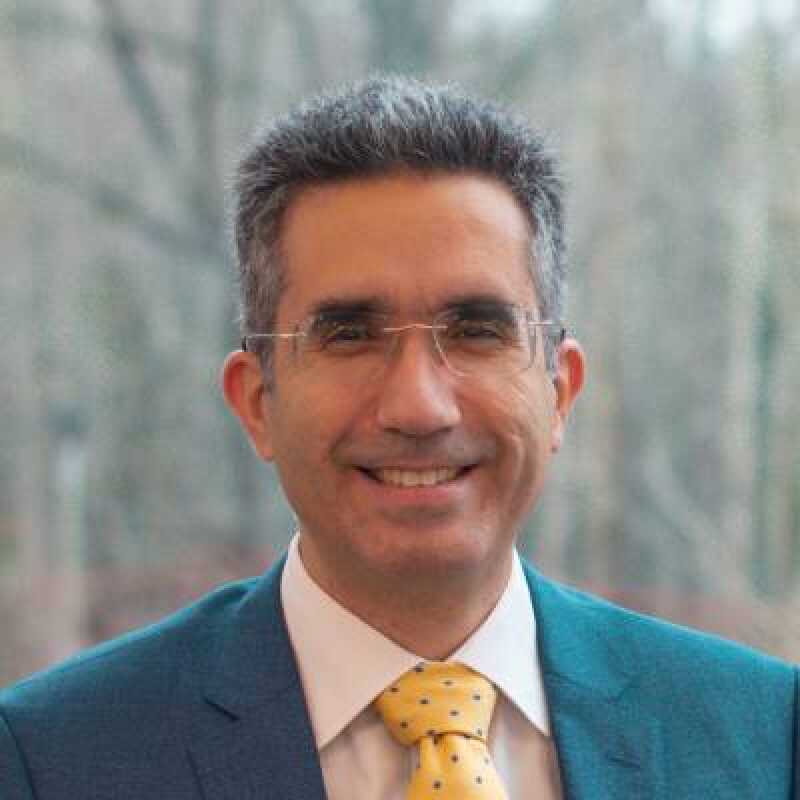
Professor Phil Purnell is a Professor of Materials and Structures at the School of Civil Engineering, University of Leeds. His expertise spans materials science, infrastructure systems, circular economy, and interdisciplinary research. He leads projects addressing decarbonization, waste-to-resource systems, and sustainable construction materials. His roles include Deputy Head of School and advisor to UKRI, DEFRA, and the UK Government’s Circular Economy Taskforce. He holds visiting positions at the Royal College of Art and University of Cambridge. Education: PhD, BEng (Civil), and teaching qualifications (PCPCE, ACTLHE). His research focuses on circular economy applications in textiles, offshore wind, and foundational industries. Notable projects include the Textiles Circularity Centre, Yorkshire Circular Economy Living Lab, and Complex Value Optimisation for Resource Recovery (C-VORR). He advocates for systemic approaches to sustainability, integrating economic, technical, and environmental values. Research outputs emphasize decarbonization pathways, material lifecycle assessments, and robotics in infrastructure management. Collaborations with industry and policy bodies drive practical solutions for resource efficiency. His work bridges engineering, economics, and environmental science to address global challenges like waste management and climate change.
Jesper Rindom Jensen is an Associate Professor in the Department of Electronic Systems at Aalborg University, Denmark, under the Technical Faculty of IT and Design. He is the Head of the Audio Analysis Lab, a leading research group in audio signal processing, since 2023. His work bridges theoretical signal processing and practical applications in artificial intelligence and audio systems. Full Name: Jesper Rindom Jensen Institution: Aalborg University School: The Technical Faculty of IT and Design Department: Department of Electronic Systems Research Lab: Audio Analysis Lab Email: jrj@es.aau.dk Office: Fredrik Bajers Vej 7B, B5-206, 9220 Aalborg Øst, Denmark Education: M.Sc. in Electronic Systems, Aalborg University (cum laude, 2009) Ph.D. in Signal Processing, Aalborg University (2012) Research Interests: Jesper Rindom Jensen's research centers on audio signal processing, with a strong emphasis on artificial intelligence, speech enhancement, noise reduction, beamforming, and multichannel systems. His work applies to diverse domains including robot and drone audition, spatial audio, and active noise control. He develops novel filtering techniques, including variable span linear filters and harmonic beamformers, to improve speech quality and intelligibility in noisy and reverberant environments. Publication Trends: His recent publications (2023–2025) show a strong trend toward integrating deep learning with classical signal processing, particularly in direction-of-arrival estimation, underwater acoustics, and robust multichannel systems. There is a clear focus on real-world applications, including sound zone control, active noise control, and limited-data scenarios using knowledge distillation. His work consistently emphasizes robustness, efficiency, and practical deployment. Scientific Awards and Recognition: AAU Talent for emerging research leaders Recipient of a competitive postdoc grant from the Danish Independent Research Council Advising and Grants: Jesper has supervised multiple PhD and master’s students, including Nørholm, Karimian-Azari, Zhang, and Wang. He has led significant research projects such as 'Sound Processing for Robots and Drones' (2018–2020) and participated in others related to joint audio-visual tracking and speech enhancement. His research has been supported by national funding bodies, reflecting its innovation and impact. Labs and Teams: He is a founding and core member of the Audio Analysis Lab at Aalborg University, which focuses on cutting-edge audio signal processing and AI-driven solutions. The lab fosters interdisciplinary collaboration and has produced numerous publications, datasets, and real-world applications. Jensen’s leadership since 2023 underscores his pivotal role in shaping the lab’s research direction.
Caroline Trippel is an Assistant Professor in the Departments of Computer Science and Electrical Engineering at Stanford University. Her research focuses on ensuring correctness and security in computer systems through formal methods, with particular emphasis on hardware verification, memory consistency models, and mitigating vulnerabilities like Spectre/Meltdown. She previously worked at Facebook’s FAIR SysML group before joining Stanford. Education: PhD in Computer Science, Princeton University BS in Computer Engineering, Purdue University Her work has influenced the RISC-V ISA memory consistency model and produced tools like CheckMate, which automatically synthesizes hardware exploits for security verification. She explores privacy-preserving ML, ML-driven hardware optimizations (e.g., neural recommendation), and datacenter reliability. Her research has earned awards including the 2020 ACM SIGARCH Dissertation Award and NVIDIA Fellowship. Key contributions include: Formal analysis of RISC-V memory models Exploitation synthesis frameworks (CheckMate) Hardware-software contracts for security Defenses against microarchitectural side-channel attacks Current projects include: VeriCoder: LLM-enhanced RTL code verification Multi-μPATH synthesis for security validation Near-data processing (RecSSD) for recommendation systems
Prof. Dr. Oliver Crönertz serves as Dean and Professor of Business Administration and IT-Supported Business Processes at the Faculty of Digital Transformation , HTWK Leipzig. His work bridges digital transformation with business management, focusing on interdisciplinary project management, digital business models, and sustainability. Current roles: Dean, supervising professor for HTWK Robots/nao Team Research areas: Digital Transformation, Business Analytics, Industry 4.0, Stoffstrommanagement Research Trends : Recent publications emphasize digital solutions for environmental management, business process optimization, and smart urban logistics. His work connects Industry 4.0 with financial sustainability and societal impacts of digitalization. Projects : Leads Mittelstand-Digital Zentrum Leipzig-Halle, involved in EXIST-Potentiale, Future Parking, and FAssMII (Feedback-based E-Assessment in STEM).
Satadru Dey serves as an Assistant Professor in the Department of Mechanical Engineering at Penn State University, where he leads research at the intersection of energy infrastructure and smart city systems. His work spans battery technology, transportation networks, and cyber-physical security, with institutional affiliations including the Integrated Energy Systems and Equitable Communities research initiatives. His primary research focuses include battery safety and security (covering fault diagnosis, thermal management, and fast charging protocols), second-life applications for batteries/supercapacitors, secure autonomous transportation systems, and socio-technical traffic modeling. He employs advanced control theory, machine learning, and physics-based modeling to address critical challenges in energy storage and urban mobility infrastructure. Analysis of his 15 most recent publications (2022-2024) reveals a consistent trajectory toward cyber-physical security in battery and transportation systems, with 60% of works addressing battery fault detection and 40% focused on transportation security. His methodologies increasingly integrate partial differential equations, reinforcement learning, and socio-technical data fusion across electrical engineering, mechanical engineering, and computer science domains. Scientific Awards: No awards or fellowships were documented in the source material. Advising and grant activities are not explicitly detailed in the provided information, though his editorial leadership for the 2024 Special Issue on Energy in Smart Infrastructures indicates academic service responsibilities. The absence of student listings suggests either early-career status or non-publication of advising relationships. Dr. Dey directs a specialized research laboratory focused on integrated energy systems within smart city frameworks, with documented projects spanning battery management, transportation security, and equitable infrastructure development. His lab maintains active collaborations across mechanical engineering, electrical systems, and urban planning disciplines as evidenced by multi-departmental publication venues.
Sara Vinco is an Associate Professor at the Department of Control and Computer Engineering (DAUIN), Politecnico di Torino, Italy. She specializes in battery simulation, digital twins, and energy-efficient design automation for heterogeneous embedded systems, aligning with Industrial and Information Engineering (Area 0009) and ERC sectors including Computer Architecture and Machine Learning . Her research focuses on advancing cyber-physical systems through simulation frameworks like SystemC-AMS, enabling holistic modeling of analog, digital, and thermal domains. Key projects include data-driven digital twins for EV batteries and low-area digital circuits in industrial/medical applications, supported by commercial contracts such as C-based virtual prototyping. Her recent publications (2022-2023) emphasize machine learning for battery SOH/SOC estimation , energy monitoring in production lines , and multi-domain fault modeling . These works span journals like IEEE Transactions and conferences including DATE and ISLPED. Awarded the FFABR 2017 grant and IEEE FDL Best Paper Award 2011 , she also chairs editorial boards for IEEE Transactions on CAD and DATE Conference. She supervises PhD students Giovanni Pollo (Digital Circuits) and Khaled Alamin (EV Battery Twins), reflecting her leadership in smart systems design.
Marshall L. Fisher is the UPS Professor of Operations, Information and Decisions at the Wharton School, University of Pennsylvania. His research focuses on retailing and supply chain management, with notable work in dynamic pricing, omnichannel operations, and workforce optimization. Academic Affiliation: Wharton School, University of Pennsylvania Research Themes: Retail innovation, supply chain responsiveness, labor economics Recent Trends: Real-time pricing algorithms, inventory-demand interactions, digital transformation Scientific Recognition: INFORMS Kimball Medal (2007) POMS Fellow (2005) INFORMS Fellow (2002) NAE Election (1994) Academic Contributions: Pioneering work on Lagrangian relaxation in integer programming (1981), Edelman Prize-winning liquid gas optimization, and groundbreaking research on retail staffing and training effectiveness. His teaching includes courses on global supply chain management and AI in business.
Professor Lydia Bourouiba is a faculty member at the Massachusetts Institute of Technology (MIT), affiliated with the Department of Civil and Environmental Engineering and the Institute for Medical Engineering and Science (IMES). Her research focuses on the intersection of fluid dynamics and disease transmission, with a strong emphasis on biophysics, interfacial flows, turbulence, and multiphase systems. Ph.D. in Applied Mathematics from McGill University (2008) Research on fluid fragmentation, droplet/bubble dynamics, and pathogen transport Co-Founder and Associate Director of the NSF Center for Pandemic Prevention (APPEX) Her work spans fundamental and applied domains, including: Biophysics of pathogen transport in air and water Turbulent multiphase flows in respiratory events Fluid-plant interactions in agricultural disease Nonlinear dynamics in public health contexts Key article trends highlight: Biomedical fluid mechanics Climate and environment-driven disease modeling High-risk/high-reward public health innovations Interdisciplinary approaches combining physics, biology, and engineering Scientific awards include: Fellow of the American Physical Society (2021) American Institute for Medical and Biological Engineering Fellow (2022) Smith Family Foundation Odyssey Award for biomedical research Ole Madsen Mentoring Award She serves as Associate Editor for the journal FLOW and has founded conferences like the Gordon Research Conference on Fluids in Disease Transmission. Her lab (Fluids and Health Network) develops experimental and theoretical frameworks to address contamination, pandemic control, and fluid-health-environment interactions.
Jiawei Zhang is an Assistant Professor in the Department of Computer Sciences at the University of Wisconsin–Madison since May 2025. His research focuses on optimization algorithms for machine learning, adversarial training, reinforcement learning, and distributed systems. Ph.D. in Computer and Information Engineering, Chinese University of Hong Kong, Shenzhen (2021) B.Sc. in Mathematics (Hua Loo-Keng Talent Program), University of Science and Technology of China His work spans nonconvex optimization , robust machine learning , and data-driven decision-making , with applications to AI and sustainable energy systems. Recent publications at ICML 2025 address stochastic primal-dual methods and contextual optimization robustness, while earlier works explore bilevel optimization, reward learning, and distributed consensus algorithms. Scientific awards include: MIT Postdoctoral Fellowship For Engineering Excellence (2023) CUHK-Shenzhen Presidential Award for Outstanding Doctoral Students (2021) SRIBD PhD Fellowship (2020-2021) CUHK-Shenzhen Outstanding Teaching Assistant (2023) He supervises undergraduate researchers and seeks graduate students with strong mathematical or algorithmic backgrounds for 2025 admission, emphasizing optimization and AI-driven applications.
Kunihiko Kaneko is a Professor at the Niels Bohr Institute, University of Copenhagen, with a distinguished career in theoretical biophysics and complex systems. He received his PhD and MSc in Physics from the University of Tokyo, and has held leadership roles at the Universal Biology Institute and Center for Complex Systems Biology. PhD Physics, 1984 - University of Tokyo MSc Physics, 1981 - University of Tokyo His research spans five primary areas: Universal Biology, Evolutionary Constraints, Ecosystem Dynamics, Neural Cognition, and Universal Anthropology. He has published extensively on multi-level consistency principles, dimensional reduction in biological systems, and reciprocity between robustness and plasticity across scales. Recent publications show strong focus on microbial ecosystems (2025), evolutionary game theory (2025), neural modular architectures (2024), and dimensional reduction in cellular systems (2024). His work bridges physics and biology through dynamical systems theory applied to diverse phenomena from protocells to human societies.
Mitchell L.R. Walker II is a tenured Professor and the W.R.T. Oakes Chair at the Daniel Guggenheim School of Aerospace Engineering , Georgia Institute of Technology . He serves as the Associate Chair for Graduate Studies and Director of the Joint Advanced Propulsion Institute . His research focuses on electric propulsion , plasma physics , and hypersonic aerodynamics/plasma interaction , with expertise in Hall thrusters, ion engines, and plasma diagnostics. Education : Ph.D. (2004), M.S.E. (2000), B.S.E. (1999) in Aerospace Engineering from the University of Michigan. Labs : Leads the High-Power Electric Propulsion Laboratory (HPEPL) , one of the largest academic vacuum test facilities for propulsion research. Dr. Walker has authored over 130 technical publications and holds patents in ion focusing and cold cathode technology . His 15 most recent articles focus on Hall thruster performance under varying propellants, advanced diagnostics (THz spectroscopy, Thomson scattering), and plasma-material interactions. His research trends highlight plasma stability , vacuum facility effects , and non-invasive diagnostics . Awards : AIAA Fellow (2023), Georgia Power Professor of Excellence (2017), AFOSR Young Investigator (2006), Lawrence Sperry Award (2010), NASA Faculty Fellow (2005). Service : Chair of AIAA Electric Propulsion Technical Committee, member of NASA Advisory Council, and contributor to national standards for electric propulsion testing .
Joel Zylberberg is an Adjunct Assistant Professor at the University of California, Los Angeles (UCLA), affiliated with the Department of Ophthalmology within the School of Medicine . His research bridges Computational Neuroscience , Neural Networks , and Machine Learning , focusing on how neural activity and biological mechanisms inform artificial intelligence and visual cortex dynamics . Joel's work explores retinal computation , population coding , and neural adaptation , often analyzing mouse visual cortex and neurophysiological data . His recent publications highlight trends in dynamic retinal processes , stimulus-driven network topology , and brain-inspired machine learning , emphasizing the interplay between biophysics and computational modeling . Collaborators include Greg Field (UCLA), Richard Born (Harvard), and Michael DeWeese (UC Berkeley), with affiliations spanning institutions like University of Washington and University of California, San Diego (UCSD). His work appears in journals such as Nature Neuroscience , Neuron , and PLOS Computational Biology .
Arash Joorabchi is an Assistant Professor at the Department of Electronic and Computer Engineering, Faculty of Science and Engineering, University of Limerick, Ireland. His research focuses on the intersection of machine learning, educational technology, and digital library systems, with particular emphasis on automated assessment, text mining, and knowledge organization techniques. Research Trends: Analysis of his publications reveals sustained contributions to automated short-answer grading, Arabic text classification, and semantic integration of Wikipedia with academic resources. Key methodologies include sentence transformers, hybrid text representation models, and citation-based indexing techniques. Technical Domains: His work spans natural language processing, educational data mining, metadata management, and semantic web technologies. Specific applications include Q&A platform analysis, library resource discovery, and curriculum development systems.
Professor Thanos Papadopoulos is a faculty member at the University of Kent , serving as Deputy Dean and Head of the Department of Analytics, Operations & Systems. He is affiliated with the Centre for Logistics and Sustainability Analytics (CeLSA) . PhD : Warwick Business School, University of Warwick MSc : Informatics, Athens University of Economics and Business Diploma : Computer Engineering and Informatics, Patras University His research focuses on Operations and Information Management , with emphasis on digital technologies in supply chains , resilience , and sustainability . Recent work explores AI, metaverse, and data-driven strategies. He has authored 150+ peer-reviewed publications and collaborates with journals like British Journal of Management as Associate Editor. Awards include Stanford's Top 2% Researchers and Clarivate Highly Cited distinctions. Professor Papadopoulos supervises students in supply chain management , big data , and sustainability . His projects address geopolitical disruptions and digital transformation in manufacturing and retail.
Associate Professor Ernest Ekpo is affiliated with the University of Sydney's Sydney School of Health Sciences, within the Discipline of Medical Imaging Sciences. He holds academic roles as a Scholarly Teaching Fellow and Co-Director of the Medical Image Optimisation and Perception Group (MIOPeG). He is also an Associate Editor of the Journal of Medical Imaging and Radiation Sciences and a member of the Sydney Southeast Asia Centre and Cancer Research Network. Education: Earned BSc (Hons) in Radiography/Sonography from the University of Calabar, Nigeria, and a PhD from the University of Sydney. His research focuses on breast density, cancer biomarkers, medical image perception, radiation dose optimization, and radiology education. He explores applications in low-resource settings and emerging technologies like AI for diagnostic accuracy. Research interests include breast cancer treatment outcomes, image-based phenotypes, and improving imaging pathways for acute abdominal pain. Key themes are Cancer and Medical Imaging, with an emphasis on Women's Health and Chronic Disease. His work combines clinical practice, public health strategies, and technological advancements to enhance diagnostic efficacy and reduce unnecessary procedures. Articles from 2021–2024 highlight his contributions in mammography optimization, radiographer training, and AI-driven diagnostic tools. Recent grants include a 2024 project on CT examination education and a 2023 initiative to streamline breast cancer screening pathways. His awards recognize peer review excellence, early-career teaching, and research leadership. He supervises multiple students investigating breast density biomarkers, imaging modalities for dense breasts, and radiation dose management. His educational efforts aim to improve radiographers' capabilities in identifying urgent findings across CT and X-ray modalities, leveraging blended learning approaches.