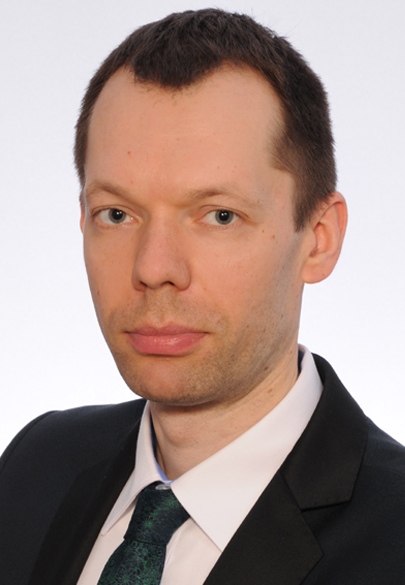
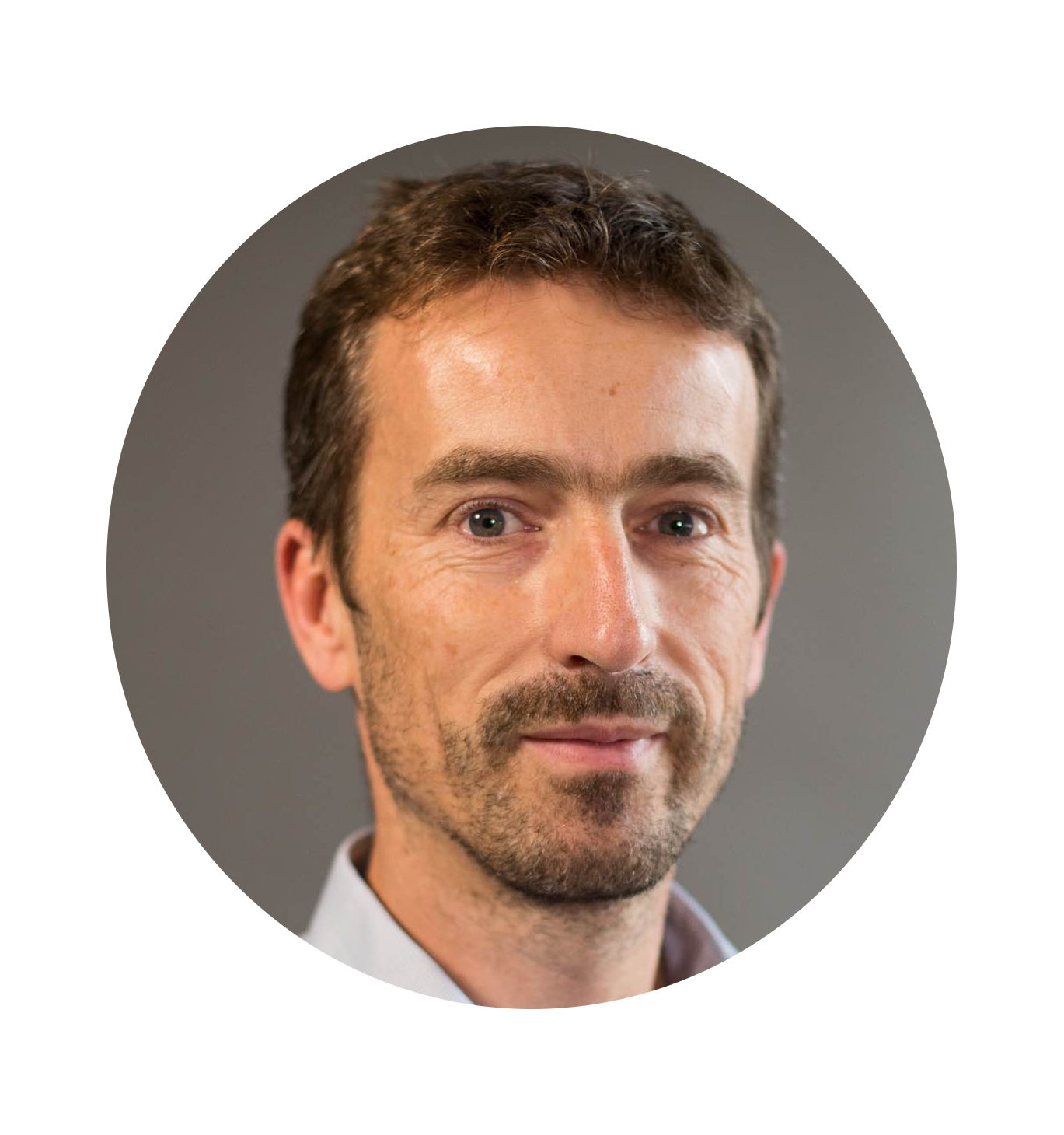
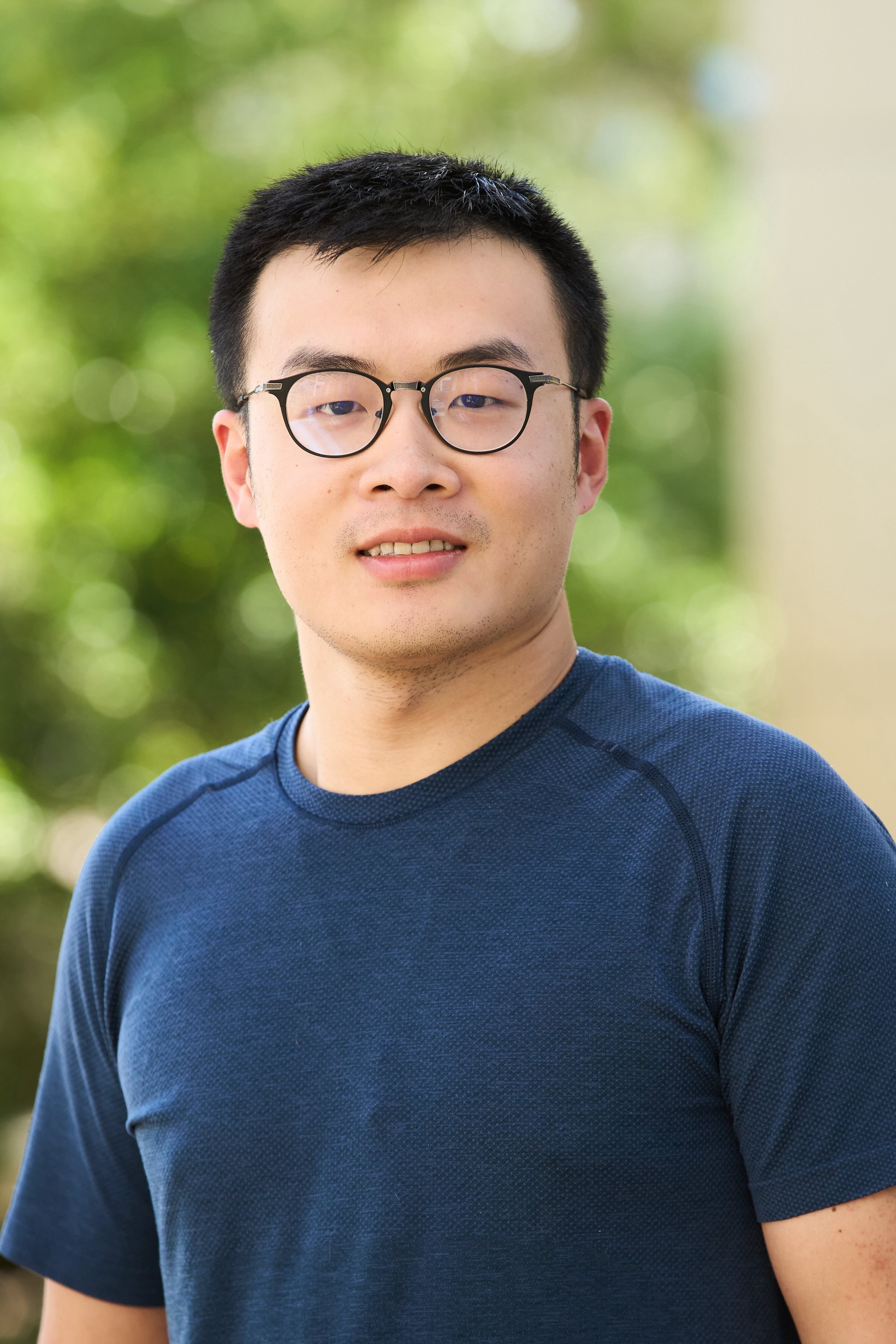
Zhenyun Deng is a Researcher in the Department of Computer Science and Technology at the University of Cambridge, specializing in Natural Language Processing (NLP) and Machine Learning. His work focuses on advancing automated fact-checking systems, logical reasoning in large language models, and graph-based reasoning techniques. Key research themes include document-level claim extraction, logic-driven data augmentation, and multi-hop question answering. His recent contributions span automated verification of textual claims , abstract meaning representation-based data augmentation , and robust node classification on graph data . He collaborates on initiatives like the FEVER workshop and develops datasets such as TaKG for table-to-text generation enhanced with knowledge graphs. Notable trends in his publications include: Integration of logical reasoning into NLP systems Improving model interpretability for multi-step reasoning tasks Handling noisy data in graph neural networks His research bridges foundational machine learning theory with real-world applications in information retrieval and causal inference. No awards or grants are explicitly listed in the provided materials.
Zhu (Drew) Zhang is a Courtesy Associate Professor at the Department of Information Systems and Business Analytics, Ivy College of Business, Iowa State University. He holds a Ph.D. in Information and Computer Science from the University of Michigan (2005) and has professional experience at IBM, Microsoft, and Google. His research focuses on computational models for textual data, including AI, machine learning, and big data applications in business and healthcare. He also explores data/text/web mining and semantic analysis techniques. Dr. Zhang’s expertise spans artificial intelligence, big data analytics, and text mining. He has been recognized with the 2015 Schulze Award for his contributions. His work bridges theoretical research and practical applications, emphasizing real-world relevance in teaching and industry collaboration. Key research trends in his articles include advancements in dialog systems, financial forecasting using news data, and biomedical text analysis. His publications reflect a strong focus on integrating computational methods with domain-specific challenges in business and healthcare. While no lab affiliations are explicitly mentioned, his collaborative projects likely involve interdisciplinary teams given his research scope.
Peter Finn serves as Senior Lecturer and Events Officer in the Department of Criminology, Politics and Sociology at Kingston University's School of Law, Social and Behavioural Sciences. With over a decade of teaching experience at Kingston and Goldsmiths, University of London, he holds a PhD and MSc from Kingston University alongside a BA from Liverpool University. His research centers on the intersection of national security and human rights, particularly examining the logic underpinning policies at this nexus. Key interests include US electoral systems, the relationship between national security and official records, executive power (especially the US presidency), and the impact of generative AI on political processes. Finn actively investigates how democratic oversight functions within security frameworks and analyzes electoral dynamics through projects like '50 States or Bust!' Finn's scholarly impact spans 15+ recent publications analyzing 2024 US elections, Trump-era politics, and AI's role in democracy. His work reveals consistent focus on election integrity, historical documentation of political events, and emerging challenges from artificial intelligence in political communication. Notable patterns include real-time analysis of electoral developments and critical examination of official record-keeping during crises. As Project Lead for the 'Covid-19 and Democracy Project' and Web Lead for the American Politics Group of the Political Studies Association, Finn bridges academic research with public engagement. His media contributions to The Guardian, The Conversation, and LSE USAPP demonstrate significant knowledge transfer. Academic leadership includes managing module teaching teams, research assistants, and editorial roles for edited volumes on national security and democracy. Finn also serves as Academic Misconduct Lead and holds Fellowships from the Higher Education Academy.
África Presol Herrero holds a PhD in Advertising and Public Relations from UCJC, specializing in interactive multimedia content and educational innovation. She currently serves as Director of the Degree in Creative Advertising at Universidad Camilo José Cela, where she also teaches in the Master's program in Digital Marketing. Her academic career includes roles such as Director of Advertising and Public Relations at Universidad Antonio de Nebrija and Publicity & International Coordinator at UCJC. Her research focuses on digital technologies, educational methodologies, and advertising ethics. Key contributions include studies on flipped classroom techniques, aesthetic education in graphic design, and ethical analysis of Nike's feminist campaigns. She has been awarded for excellence in teaching practices (2012/13 and 2016/17). Presol Herrero combines formal education teaching (over 1,000 hours in 20 years) with professional experience in graphic design and project management. She has published extensively on topics like user experience design, AI-driven marketing strategies, and cross-cultural brand perception. Key Research Themes: Digital pedagogy, interactive media, advertising ethics, and aesthetic education Teaching Roles: Undergraduate, master's, and postgraduate courses in Advertising & PR Professional Experience: 曾任职于Buenavista Home Entertainment and Talante de Comunicación
Christina Elmer is a Professor of Digital Journalism and Data Journalism at Technische Universität Dortmund. She previously served as Deputy Head of Development and Science Editor at DER SPIEGEL, leading the Data Journalism Department. Her work focuses on algorithmic accountability, media innovation, and the ethical implications of AI in journalism. Elmer holds a dual background in Journalism and Biology, blending scientific rigor with media practice. She is a board member of Netzwerk Recherche and a shareholder in Algorithm Watch, advocating for transparency in algorithmic systems. Her research explores modular journalism, user-centered design, and the societal role of media in an AI-mediated information ecosystem. Awards include the 2023 scoop award for media innovation and the Helmut Schmidt Journalist Prize (2019). She lectures globally on topics like AI in journalism and hosts workshops on data-driven storytelling. Her recent work analyzes disinformation dynamics and the transformation of journalistic formats in the digital age.
Dr. Włodzimierz Lewoniewski is an Assistant Professor at the Department of Information Systems, University of Economics in Poznań. His primary research focuses on information quality in collaborative platforms like Wikipedia, AI-driven fact-checking, and natural language processing. He leads the OpenFact project, which develops AI tools for detecting fake news and verifying information sources. His work often intersects with open data analysis, multilingual content evaluation, and the societal impact of digital technologies. In education, he supervises the diploma seminar 'Exploring Wikipedia and Other Open Information Sources,' emphasizing multilingual information analysis, semantic processing, and data visualization. His academic contributions span over 50 peer-reviewed publications, with recent highlights including advancements in adversarial text generation, sentiment analysis of corporate Wikipedia entries, and quantifying 'Americanization' trends in Wikipedia content. Key achievements include first-place wins in international competitions like CLEF-CheckThat! (2023, 2024) and a PhD in computer science with distinction. He actively collaborates with Wikimedia projects, presenting at global conferences like Wikimania and KES. His team’s work on early risk prediction in social media and cross-lingual transfer learning further highlights his interdisciplinary approach to information science challenges.
Yoo Ji Suh is a Lecturer and Ph.D. candidate at the University of Wisconsin-Madison School of Journalism and Mass Communication (SJMC), with minors in Political Science and Psychology. Her research focuses on the intersection of media effects, moral psychology, and public opinion, particularly exploring how media and morality shape civic culture, social movements, and pro-social behaviors. She employs computational, experimental, and survey methods to address these questions. In Spring 2025, she teaches JOURN 677: Concepts & Tools for Data Analysis and Visualization. Education: Ph.D. candidate at UW-Madison SJMC, with minors in Political Science and Psychology. Her research interests include: Moral psychology’s role in political persuasion and democratic culture Backlash dynamics against social movements Designing interventions to promote tolerance and compromise Gender biases in AI-generated media Fact-checking efficacy and audience engagement in news media Her recent work analyzes moral framing strategies, algorithmic bias in AI systems, and the psychological mechanisms behind misinformation acceptance. While no scientific awards are explicitly listed, her publications reflect innovative interdisciplinary approaches to media studies. Her teaching and advising activities are centered on data literacy and critical media analysis, with no grants or labs explicitly mentioned in the provided text.
Mohammad Yousuf is an Associate Professor in the Department of Communication and Journalism at the University of New Mexico (UNM), where he teaches courses in computational text analysis, data tools for media professionals, and journalism ethics. He holds a Ph.D. from the University of Oklahoma (2016) and has established himself as an interdisciplinary scholar bridging journalism, computer science, and data analytics. Dr. Yousuf's research focuses on the intersection of journalism practices, misinformation studies, and computational methods. His work examines how news organizations can maintain quality and financial independence while meeting 21st century audience needs, with particular attention to the creation and dissemination of misinformation. He employs interdisciplinary and multimethod approaches, collaborating with scholars from computer science and business disciplines. His research spans computational text analysis, AI applications in journalism, and the ethical implications of data-driven media practices. His publication record demonstrates a strong trajectory in computational journalism, with recent work exploring AI-generated content, social media analysis, fact-checking systems, and the impact of digital platforms on news ecosystems. His research appears in top journals including Journalism & Mass Communication Quarterly , Journalism Practice , and Journal of Media Ethics , as well as interdisciplinary venues like Proceedings of the ACM on Human-Computer Interaction and the World Wide Web Conference . 2022 SWECJMC Educator Award Seven top paper awards from various conferences Editorial board member for Newspaper Research Journal Research co-chair of Media Management, Economics and Entrepreneurship Division, AEJMC Dr. Yousuf has secured grant funding to support undergraduate research assistants and has taken students to conferences including the Computation+Journalism symposium and IRE conference. He has developed multiple courses incorporating data and computation into journalism curricula and served as faculty advisor for student organizations. In summer 2022, he taught a pre-conference workshop on computational text mining at the Association for Education in Journalism and Mass Communication conference with participants from universities in multiple countries. Dr. Yousuf actively engages with the community beyond academia, serving on the advisory panel of the New Mexico Local News Fund and volunteering as a newsletter consultant for a nonprofit news organization. His dedication to preserving local news reflects his belief that declining local journalism contributes to rising misinformation and eroding democratic principles.
Dr. Gregor Dutz is a Researcher at the University of Hamburg's Faculty of Education, specializing in Vocational Education and Training and Lifelong Learning (EW 3). His work focuses on adult literacy, critical digital competences, socio-political participation, and the impact of artificial intelligence on education. He is currently leading the project "Artificial Intelligence in Care Counseling" and has contributed extensively to the LEO 2018 study on low literacy in Germany. His research spans domains such as digital literacy, political education, and migrant language learning, with a particular interest in how literacy affects lifelong learning and social inclusion. He has published numerous articles in journals like the International Journal of Lifelong Education and Journal of Open Psychology Data , analyzing topics from AI-generated text awareness to the role of literacy in political participation. His work often intersects with policy, emphasizing the need for improved fact-checking skills and digital competences in adult education. The 15 most recent articles highlight his contributions to literacy studies, political participation, and AI's educational implications. Keywords include Adult Literacy, Digital Literacy, Political Education, and Migration Studies, while sub-fields cover critical media literacy, data capitalism, socio-political inclusion, and non-formal education. No scientific awards are documented, but he actively collaborates on large-scale surveys and data-driven research projects. Dr. Dutz has not explicitly listed advisees or grants. He participates in lectures on topics like "Literalität und politische Grundbildung" and "Digitaler Wandel – wer nimmt daran teil?" , and has presented at conferences including the DGfE Annual Meeting and AEGT 2021. Data records from the LEO 2018 study are publicly accessible via GESIS archives.
Dr. Naeemul Hassan is an Associate Professor at the Philip Merrill College of Journalism and the College of Information Studies at the University of Maryland, with an affiliate appointment in the Department of Computer Science. He directs the Computational Journalism Lab and focuses on Big Data, Data Science, and Natural Language Processing, particularly in areas like Computational Journalism, Social Sensing, and Misinformation Detection. His research includes developing technologies such as BaitBuster and ClaimBuster to aid fact-checking and combat misinformation. Previously, he was an Assistant Professor at the University of Mississippi and earned his Ph.D. in Computer Science from the University of Texas at Arlington (2016). Education: Ph.D. in Computer Science, University of Texas at Arlington (2016). Research Interests: His work spans automated fact-checking, health information credibility, and social media analysis. Key projects include analyzing misinformation in health contexts (e.g., TikTok, Reddit), detecting misleading headlines, and exploring AI-driven solutions like LlamaLens for multilingual news analysis. He also examines societal impacts of digital platforms in contexts like Bangladesh and the U.S. Lab and Collaborations: Directs the Computational Journalism Lab and collaborates with the Computational Linguistics and Information Processing (CLIP) Lab and the Human-Computer Interaction Lab (HCIL). Recent grants include SaTC: CORE funding for BaitBuster 2.0 and RAISE support for a Credible Open Knowledge Network. Grants and Projects: Notable funding includes NSF grants for misinformation research and collaborative projects on clickbait mitigation and health information systems. Currently, he is not accepting new Ph.D. students. His work bridges computer science, journalism, and public health, emphasizing ethical AI applications and societal impacts of digital media.
Md Main Uddin Rony is an Assistant Professor in the Department of Computer Science at Bowling Green State University, Ohio. His research focuses on computational approaches to enhance information quality, equitable access to knowledge, and societal impacts of AI. He completed his PhD in Information Studies at the University of Maryland, College Park, under Dr. Naeemul Hassan, exploring misleading news headlines and their detection through AI methods. Rony holds an MS in Engineering Science (Computer Science) from the University of Mississippi and a BSc in Computer Science and Engineering from Bangladesh University of Engineering and Technology. His research interests include Machine Learning, AI, Computational Linguistics, and Data Science. Key projects include developing systems like ClaimViz for factual claim verification and analyzing health disinformation patterns. He has authored over 20 publications in top conferences and journals. Rony has received awards including the 1st Runner Up in the Intra class Artificial Intelligence Game Development Competition (2018), and Outstanding Adoption of New Technologies (2016). His work bridges computer science, information science, and journalism to address real-world challenges in media and AI ethics.
Ihab F. Ilyas is a Professor and holds the Thomson Reuters–NSERC Industrial Research Chair in Data Quality at the University of Waterloo's Department of Computer Science. His research focuses on data quality, machine learning for data enrichment, probabilistic data management, and knowledge graph systems. He leads projects like Holoclean (a probabilistic data repair system) and Data Civilizer (a data unification platform). His work bridges database systems and machine learning to address challenges in data integration, error detection, and large-scale knowledge representation. Education: PhD in Computer Science from Purdue University (2004), MSc and BSc from Alexandria University, Egypt (1999 and 1995). His publications span vector search, knowledge graph construction, and data curation techniques, with recent emphasis on adaptive indexing and scalable systems. He has contributed to open-source tools and frameworks for data cleaning and machine learning integration. Research interests include probabilistic data management, machine learning applications for data quality, and scalable systems for big data. His work often addresses real-world challenges in data integration and semantic representation, with a focus on practical, deployable solutions.
Dr. Ehsan Dehghan is a Senior Lecturer in Digital Media at the School of Communication, Queensland University of Technology (QUT), and a Chief Investigator at the Digital Media Research Centre (DMRC). He holds a PhD in Digital Media from QUT (2020) and has expertise in Discourse Studies and Philosophy. His research focuses on the intersection of social media and democracy, employing mixed-methods approaches combining social media analytics, network analysis, corpus linguistics, and discourse theory. Education: PhD in Digital Media (QUT, 2020) Background: Discourse Studies, Philosophy Research Themes: Polarization dynamics, political discussions on social media, fake news, information flows, discursive struggles His work investigates polarization in the Australian Twittersphere, including case studies on immigration discourse, 'fake news', and platform-driven information dynamics. He has contributed to projects like the Disinformation Risk Assessment of Australia's online news market and studies on alt-tech ecosystems (e.g., Gab Social). Dr. Dehghan collaborates with institutions like the ARC Centre of Excellence for Automated Decision-Making and Society (ADM+S). He actively supervises PhD candidates exploring topics such as digital publics, online radicalization, and platform governance. His affiliations include the DMRC and the Association of Internet Researchers (AoIR). Labs/Teams: Digital Media Research Centre (DMRC), QUT.
Thomas Bonald is a Professor at Telecom Paris, part of the Institut Polytechnique de Paris, and heads the DIG (Data, Intelligence and Graphs) team within the LTCI laboratory. His research focuses on data analysis, machine learning, graph theory, knowledge bases, and natural language processing. He leads projects like the YAGO knowledge base and develops open-source tools such as scikit-network and torch-kge for graph analysis and knowledge graph embedding. Key achievements include advancing link prediction, knowledge base refinement using LLMs, and contributions to fair resource allocation in networks. His work integrates theoretical insights with practical applications, including enhancing adaptive streaming performance in mobile networks. Scientific awards include recognition of his former students Céline Comte (Telecom Paris award) and Mathieu Feuillet (Gilles Kahn award). Bonald advises numerous PhD students and has supervised over 20 doctoral candidates. His research spans algorithmic fairness, network science, and large-scale data integration. Labs/Teams: DIG team at LTCI, contributing to projects like YAGO and NetSet datasets. His teaching includes probability, statistics, graph learning, and reinforcement learning, with lecture notes on topics like PageRank and spectral embedding.
Xuanjun (Jason) Gong is an Assistant Professor in the Department of Communication and Journalism at Texas A&M University. His research focuses on media selection, computational modeling, communication networks, and information diffusion. He teaches courses such as COMM 303: Communication Data Applications and COMM 304: Digital Communication Analytics and Metrics. His research has been published in journals like Journal of Communication , Human Communication Research , and Computational Communication Research . Key themes include sequential media choice, mood management theory, and the impact of exogenous events on social media discourse. Notable publications include studies on computational modeling of media selection, drift-diffusion models for valence/arousal preferences, and the role of AR/EEG hyperscanning in media neuroscience. His work bridges communication science with computational and behavioral methodologies. Xuanjun’s research explores the intersection of media behaviors and technological innovation, with applications in understanding decision-making processes and network dynamics. He advocates for advancing behavioral experimentation methods in digital environments.