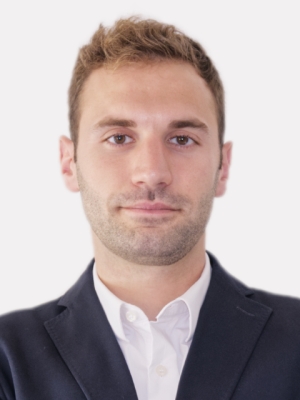
Fabiano Pallonetto is a Professor at Maynooth University's School of Business, with affiliations to the Hamilton Institute and Innovation Value Institute (IVI). He combines academic research with industry experience in energy, IT, and transport sectors. Role: Professor Location: Room 314, Maynooth University Contact: Fabiano.Pallonetto@mu.ie His research focuses on smart grid integration, energy system optimization, and sustainable development. Key projects include: NexSys (Funded Investigator): Developing net-zero energy pathways FLOW (Principal Investigator): Flexible EV-grid integration RES4CITY (Coordinator): Workforce upskilling for renewables Recent publications analyze energy flexibility software, deep learning optimization models, phase change materials for thermal storage, and blockchain security frameworks. His work spans smart cities , renewable integration , and AI-driven energy systems . Student Supervision: Currently advising MR B. Mohseni-Gharyehsafa (PhD research).
Stefan Decker is a full University Professor (Universitätsprofessor) at RWTH Aachen University, Germany, where he heads the Chair of Information Systems and Databases (Informatik 5) within the Faculty of Mathematics, Computer Science and Natural Sciences. He is actively involved in teaching, research, and the supervision of numerous ongoing and completed doctoral, master’s, and bachelor theses. Education & Academic Background Doctorate (Dr. rer. pol.) – field of Information Systems or related (exact institution/year not stated in text). Appointed as University Professor and Chair of Information Systems and Databases at RWTH Aachen University. Research Interests Prof. Decker’s work lies at the intersection of databases, knowledge graphs, semantic web technologies, data science, and cybersecurity . He investigates architectures and algorithms for large-scale, privacy-preserving, decentralized data analytics , develops ontology-driven information systems , and explores the use of large language models (LLMs) for educational technology, anomaly detection, and incident-response playbooks. Additional focal areas include smart energy systems, mixed-reality learning environments, FAIR data principles, and federated machine learning . Scientific Contributions & Trends His recent publications (2022-2025) demonstrate a clear trend toward explainable AI, LLM-enhanced systems, secure data spaces, and semantic interoperability . Key contributions include novel anomaly-detection frameworks for encrypted power-grid communications, knowledge-graph-driven chatbots for higher-education support, and methodological advances in decentralized analytics and FAIR data sharing. These works are disseminated in top-tier venues such as AAAI, IEEE ISGT Europe, ESWC, IDEAL, and various Springer LNCS and IEEE Transactions. Supervision & Grants Doctoral Theses Advised: A. T. Neumann – “Chatbots as professional companions in large-scale community information systems” (2024) S. M. Welten – “Methods for practical data sharing and decentralized analytics” (2025) Master’s Theses Co-Advised: A. R. Küsters – “Object-centric process constraints using variable bindings” (2025) Additionally supervising more than 30 ongoing bachelor, master, and doctoral projects covering topics such as LLM-driven cybersecurity playbooks, knowledge-graph construction for German law, privacy-preserving analytics in smart grids, and mixed-reality learning agents. Principal investigator or senior researcher in large collaborative projects including NFDI4DS, WestAI, champI4.0ns and several EU/national initiatives on sovereign data spaces and AI services. Labs & Teams Prof. Decker leads the Information Systems & Databases (DBIS) Research Group . The group operates well-equipped laboratories for knowledge-graph engineering, mixed-reality applications, privacy-enhancing technologies, and secure distributed analytics . Current team size exceeds 30 researchers including PhD candidates, postdocs, and scientific programmers, supported by national and EU funding streams.
Melissa Parker is a Professor in the Department of Global Health and Development at the London School of Hygiene & Tropical Medicine. With a DPhil in Human Sciences from Oxford University, her work bridges social and biological anthropology to address global health challenges in conflict zones and epidemic contexts. Affiliated with the Centre for Epidemic Preparedness and Response and Health in Humanitarian Crises Centre, she co-founded the Social Science in Humanitarian Action Platform after the 2014 Ebola epidemic. Her research spans: Legacies of war in Uganda, South Sudan, and post-LRA dynamics Epidemic response frameworks (Ebola, COVID-19, mpox) across Africa Biosocial approaches to neglected tropical diseases in Sudan, Tanzania, and Uganda Recent publications focus on vaccine enforcement efficacy, militarisation of epidemic response, and adaptive localised health interventions. Over 15 major articles since 2016 examine NTD control, epidemic authority structures, and post-conflict health systems. Scientific contributions include: Geoffrey Harrison Prize Lecture (2017) Member of WHO Guidelines Development Group on Mass Drug Administration Contributor to UK Government's SAGE ethnicity subgroup (2020-2021) She supervises PhD students on topics like epidemic preparedness in refugee settings and impact of Ebola on West African health systems , while teaching modules in social research, conflict health, and medical anthropology.
Ben Wilkowski is a Full Professor in the Department of Psychology at the University of Wyoming. His research focuses on the intersection of goals, emotions, and social behavior, particularly through the ASPIRE Lab, which explores self-regulation, goal-content structure, and the role of emotions in binding social relationships. He holds a Ph.D. (2008) and M.S. (2005) from North Dakota State University and a B.A. (2002) from Ohio University. Research Interests: The ASPIRE Lab investigates how goals and emotions coordinate social behavior. Key projects include examining higher-order goal-content structure (PINT taxonomy), dynamics of self-regulation in daily life, role models for disadvantaged groups, and identity narratives in political party changes. Publications span topics in political psychology, behavioral regulation, and lexical analysis of goals. His recent work uses experience-sampling protocols to study habit formation and self-control. Teaching: He teaches courses on Social Psychology, Personality Science, Research Methods, and Advanced Theories of Social Psychology. Labs & Teams: He directs the University of Wyoming Cognitive/Developmental, Legal, & Social Psychology graduate programs and co-edits the Personality and Social Psychology Bulletin .
Dr. Xiong Yi is an Assistant Professor at the School of System Design and Intelligent Manufacturing (SDIM) at Southern University of Science and Technology (SUSTech) in Shenzhen, China. He leads the Computational Design and Fabrication (CoDeFab) research group, focusing on the integration of computational design methods with advanced manufacturing technologies, particularly in the field of additive manufacturing. Dr. Xiong has established himself as a leading researcher in computational design for additive manufacturing, with a strong international research background spanning Europe and Asia. Dr. Xiong's educational journey includes: Doctor of Science (DSc) in Engineering Design and Production from Aalto University, Finland (2012-2016) Master of Science (MSc) in Machine Automation from Tampere University of Technology, Finland (2010-2012) Bachelor of Engineering (BEng) in Mechanical Engineering from Hubei University of Technology, China (2006-2010) Dr. Xiong's research primarily focuses on computational design and fabrication methodologies, with particular emphasis on design for additive manufacturing (DfAM), intelligent manufacturing systems, and smart materials. His work bridges the gap between theoretical design principles and practical manufacturing constraints, developing novel approaches for the production of complex engineered products. He has pioneered research in continuous fiber-reinforced composite additive manufacturing, developing innovative process planning and optimization techniques that enable the production of high-performance structural components. His research in electrothermally controlled origami and 4D printing of smart materials represents cutting-edge work at the intersection of materials science, mechanical engineering, and computational design. Dr. Xiong's recent publications reveal a strong focus on continuous fiber-reinforced composites, with significant contributions to 4D printing, metamaterials, and intelligent process planning. His work integrates computational design with manufacturing constraints, creating novel approaches for topology optimization, toolpath planning, and structural design that consider both performance requirements and manufacturability limitations. The research demonstrates increasing sophistication in materials science applications, particularly in programmable materials and multi-functional structures. Dr. Xiong has received multiple prestigious awards for his research contributions, including: Best Presentation Award at the 24th Chinese Conference on Mechanisms and Machine Science (IFToMM CCMMS2024) Best Presentation Award at the International Conference on Frontiers of Additive Manufacturing Research (RAAM 2024) Best Paper Award at the International Conference on Design for 3D Printing (ICD3DP 2023) PhD Scholarship from Aalto University (2016) Research Travel Grant from the International Association for Vehicle System Dynamics (IAVSD) (2013) National Scholarship from the Ministry of Education (2008) As a dedicated educator and mentor, Dr. Xiong serves as a PhD supervisor at SUSTech and has successfully guided students who have gone on to pursue advanced studies and careers at prestigious institutions including Hong Kong Polytechnic University, Beihang University, DJI Innovations, and Singapore's A*STAR research institute. His research is supported by multiple competitive grants, including key projects from the National Key R&D Program of China, the National Natural Science Foundation of China, and provincial and municipal funding agencies. Dr. Xiong also serves on the editorial board of the Journal of Engineering Design and as a guest editor for Composites Communications, contributing to the advancement of his field through scholarly service. Dr. Xiong leads the CoDeFab research group, which maintains a strong collaborative culture focused on 'design leading manufacturing, manufacturing driving design, and digital-intelligent integration.' The group has developed several advanced manufacturing platforms, including multi-axis continuous fiber-reinforced composite additive manufacturing systems, smart composite additive manufacturing platforms, and multifunctional soft matter open manufacturing platforms. With a focus on practical applications and innovation, the CoDeFab group actively collaborates with industry partners and has established a joint laboratory to bridge academic research with industrial implementation.
Mustafa Onur is the McMan Professor and Chair of Petroleum Engineering at The University of Tulsa, where he directs the TU Petroleum Reservoir Exploitation Projects (TUPREP). He holds a Ph.D. and M.S. in Petroleum Engineering from The University of Tulsa and a B.S. from Middle East Technical University. Previously, he held professorships at Istanbul Technical University and Universiti Teknologi Petronas (Malaysia), including a Schlumberger Chair position. Research Focus: Dr. Onur specializes in inverse problem theory, mathematical optimization, and data science applied to reservoir management, geothermal systems, and uncertainty quantification. His work integrates machine learning with traditional reservoir engineering to solve complex problems in energy extraction and carbon sequestration. Publication Trends (2024-2025): His 15 most recent articles emphasize deep learning-based reservoir surrogates, CO₂ storage optimization, geothermal energy extraction, and constrained production optimization. Key innovations include Embed-to-Control frameworks, physics-driven interwell simulators, and stochastic optimization algorithms for uncertainty management in subsurface systems. Awards & Recognition: 2010 SPE Formation Evaluation Award 2014 SPE Distinguished Member 2018 SPE Reservoir Description and Dynamics Award Leadership: As TUPREP director, he leads advanced research in reservoir exploitation, focusing on practical applications of AI and optimization in petroleum and geothermal engineering. He serves as Associate Editor for SPE Journal and Journal of Petroleum Science and Engineering .
Pasquale Scarlino is a Tenure Track Assistant Professor in the Institute of Physics at École Polytechnique Fédérale de Lausanne (EPFL), where he founded and leads the Hybrid Quantum Circuits (HQC) Laboratory. He holds a dual appointment with the School of Basic Sciences (SB) and the Physics Section (SB-SPH), conducting research at the intersection of semiconductor and superconducting quantum technologies. His laboratory develops hybrid quantum hardware for advanced quantum information processing. His educational background includes a Master's degree in Physics from the University of Salento (Italy, 2011), where he was a student of Scuola Superiore ISUFI, followed by a Ph.D. from TU Delft (2016) in the Spin Qubits group of Prof. L.M.K. Vandersypen at the Kavli Institute of Nanoscience-Qutech. His doctoral work focused on Si/SiGe spin qubits in collaboration with the M. Eriksson Group at Wisconsin University. Scarlino's research centers on experimental quantum physics using hybrid superconductor/semiconductor devices with electrostatically defined quantum dots coupled to high-impedance microwave resonators. He investigates light-matter interactions in unconventional regimes, quantum transport in low-dimensional systems, and spin/charge qubit implementations. His work aims to merge semiconductor and superconducting platforms to expand quantum information capabilities, with applications in quantum computing, quantum optics, and analog quantum simulation. Early career achievements include establishing the first coherent interface between superconducting and semiconducting quantum systems using high-impedance resonators. His publication record shows strong focus on microwave photon-mediated interactions between quantum systems, with recent work exploring quantum acoustics, topological band engineering, and criticality-enhanced sensing. The articles demonstrate increasing specialization in hybrid quantum hardware, with a shift toward germanium-based systems and advanced resonator designs in the latest publications. Scarlino has advised eleven Ph.D. students at EPFL and teaches courses including General Physics (Electromagnetism), Solid State Systems for Quantum Information, and Introduction to Quantum Science and Technology. His teaching emphasizes experimental quantum hardware approaches and critical assessment of quantum computing platforms. The Hybrid Quantum Circuits Laboratory operates within EPFL's Institute of Physics, utilizing state-of-the-art nanofabrication facilities and cryogenic measurement setups. The team collaborates extensively with leading quantum research groups worldwide, maintaining strong ties with previous institutions including ETH Zurich, TU Delft, and Microsoft Station Q Copenhagen.
Cheng Huang is an Assistant Professor in the Department of Aerospace Engineering at the University of Kansas. His research focuses on computational fluid dynamics, aerospace propulsion, turbulent combustion modeling, and reduced-order modeling techniques. He is affiliated with the Computational AeroPropulsion Laboratory and can be contacted at chenghuang@ku.edu. Education: B.S. from Shanghai Jiaotong University M.S. and Ph.D. from Purdue University Research Interests: LES Modeling of Turbulent Reacting Flows Data-Driven and Reduced-Order Modeling of Complex Fluid Flows Combustion Instability Analysis in Aerospace Propulsion Recent Work Trends: His publications emphasize reduced-order modeling techniques for rocket combustion dynamics, rotating detonation engines, and multiscale fluid systems. Key methodologies include projection-based models, data-driven approaches, and nonlinear approximations of latent dynamics.
Dr Francesca Pianosi is an Associate Professor in Water & Environmental Engineering at the University of Bristol 's School of Civil, Aerospace and Design Engineering. She contributes to the Cabot Institute for the Environment and leads research on data analysis, mathematical modelling, and uncertainty quantification for hydrology and water engineering. Specialises in simulation and optimisation methods for water resource management Focuses on uncertainty propagation in natural hazard models Developed the open-source SAFE Toolbox for sensitivity analysis Research Trends Her recent publications (2023-2025) demonstrate expertise in: Groundwater flow and recharge in data-scarce regions Digital Twin applications for watershed management Climate change impact on landslides and droughts Multi-objective optimisation for reservoir operations Integration of machine learning with hydrological models Scientific Awards Arne Richter Award for Outstanding Young Scientists (2015) Best Research Oriented Paper - Journal of Water Resources Planning and Management (2024) Early Career Research Excellence (ECRE) award (2014) Francesca leads the Water Management and Adaptation based on Watershed Digital Twins project (2024-2027) and contributes to the USARIS project on uncertainty quantification for infrastructure systems (2023-2025).
Dong Kyoo Shin is a Professor at Sejong University's Department of Computer Science and Engineering, where he has been employed since 1998. He holds a Ph.D. from Texas A&M University (1997), an M.S. from Illinois Institute of Technology (1992), and a B.S. from Seoul National University (1986). His professional background includes roles as a Researcher at the Korea Institute of Defense Analyses (1986-1991) and Senior Researcher at Hyundai Electronics (1997-1998). Shin leads research in cybersecurity, machine learning, and ubiquitous systems , with specialized interests in intrusion detection, data mining, cyber warfare frameworks, and adversarial ML defense. His recent publications focus on AI-driven security solutions, ransomware analysis, and resilience quantification in critical infrastructure. He directs the Cyber Warfare Research Institute (established 2017) and the Multimedia & Internet Lab , focusing on defense technologies and smart systems. His team has executed projects for the Ministry of National Defense, ADD, and ETRI, including cyber threat response systems and military security frameworks. Service includes advisory roles for the Ministry of National Defense, Defense Acquisition Program Administration, and editorial duties for defense journals. He holds patents in malware detection, data encryption, and sensor-based interfaces.
Vlahogianni Eleni is a Professor and Dean of the Department of Transportation Planning and Engineering at the National Technical University of Athens (NTUA). Her research focuses on integrating machine learning , quantum computing , and reinforcement learning with urban mobility and traffic engineering , addressing challenges in eco-routing , congestion pricing , and autonomous vehicle interactions . Her work emphasizes data-driven approaches to traffic forecasting, including quantum neural networks and theory-aware unsupervised learning . Recent publications explore mixed traffic environments , shared space modeling , and parking occupancy prediction , highlighting her commitment to advancing intelligent transportation systems . Professor Vlahogianni leads the Traffic Engineering Laboratory at NTUA and contributes to policy frameworks for connected and automated transport , wildfire resilience , and dynamic mobility solutions . She is actively involved in the LEVITATE project and advocates for explainable AI in transportation applications.
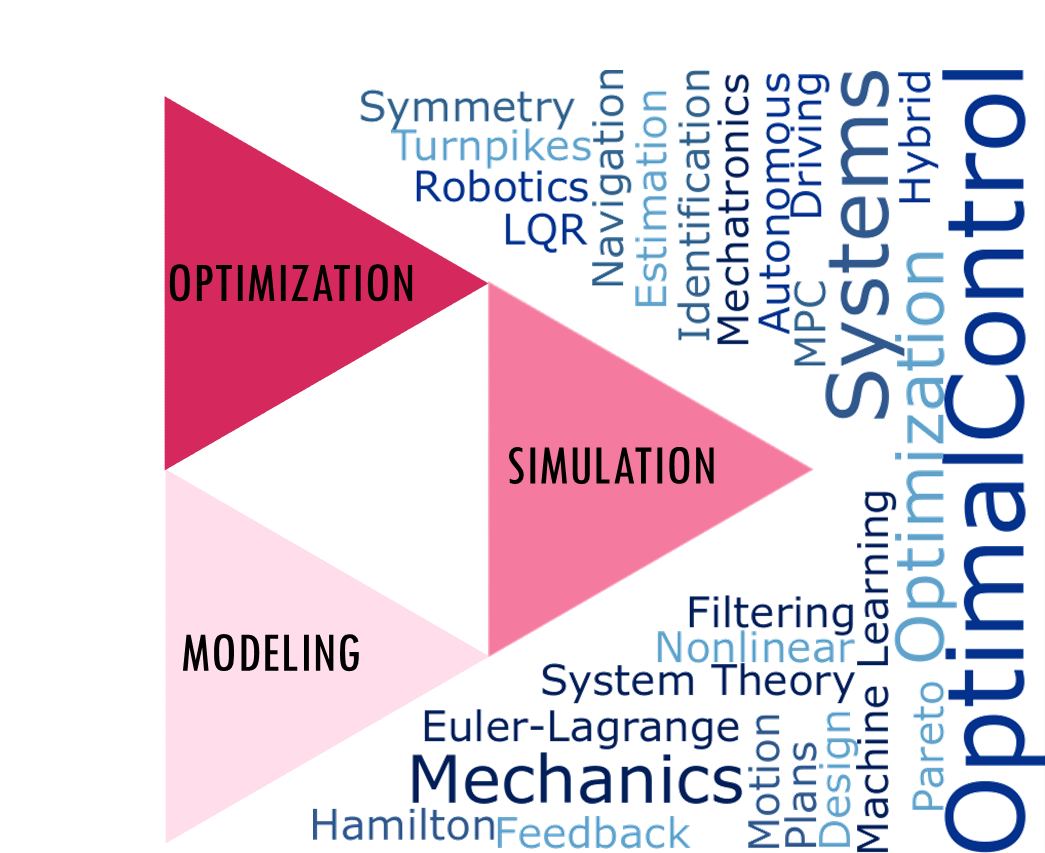
Kathrin Flaßkamp is a Professor at Saarland University, specializing in the Department of Systems Engineering. Her work focuses on modeling and simulation of technical systems, with applications spanning robotics, optimal control, and biomedical engineering. She is based at Campus A5 1, Room 1.04, Saarbrücken. Her research integrates control theory, artificial intelligence, and optimization to address challenges in mobile robotics, autonomous vehicles, and medical devices. A key trend in her recent articles involves leveraging model predictive control, neural networks, and Koopman operators for energy-efficient and cooperative trajectory planning. She also explores applications in stereotactic neurosurgery using continuum robots, emphasizing precision and adaptability. Her work frequently bridges theoretical advancements with real-world engineering problems, including systems with symmetries, multi-agent coordination, and data-driven methods for dynamical systems. Despite no explicit awards listed, her contributions to optimal control and robotics are evident in her extensive publication record.
Professor Jeffrey W. Bode serves as Full Professor at the Department of Chemistry and Applied Biosciences at ETH Zurich, Switzerland, and maintains a secondary affiliation with the Institute of Transformative Biomolecules at Nagoya University, Japan. His internationally recognized research laboratory develops novel chemical reactions that operate under physiological conditions, bridging synthetic organic chemistry with biological applications. The Bode Research Group specializes in creating chemical methodologies that function in water and biological environments, including proteins, cells, and tissues. Their major research thrusts include acylboronate chemistry (particularly potassium acyltrifluoroborates or KATs), protein synthesis through ketoacid-hydroxylamine (KAHA) ligation, synthetic fermentation for drug discovery, and SnAP chemistry for N-heterocycle synthesis. These innovations enable applications in wound healing, drug delivery, cellular encapsulation, and artificial tissue development. The group's work on chemoselective ligation reactions has fundamentally advanced amide bond formation without traditional coupling reagents. Recent publications demonstrate a strong trajectory toward automated synthesis platforms, protein engineering, advanced bioconjugation techniques, and applications in chemical biology. The group has successfully commercialized SnAP chemistry through Sigma Aldrich and developed KAHA ligation into a robust method for synthesizing large proteins. Their research consistently focuses on creating molecules inaccessible through existing technologies, with particular emphasis on physiological compatibility and biological relevance. Professor Bode leads an international research team of approximately thirty PhD students and postdoctoral researchers from twenty different countries. The Bode Research Group maintains extensive collaborations across disciplines, contributing significantly to chemical biology, medicinal chemistry, and materials science. Their laboratory is equipped with advanced automation platforms for organic synthesis and maintains strong connections with pharmaceutical and biotechnology industries for translational applications of their chemical methodologies.
Mattia Bianchi is a Lecturer at the Department of Information Technology and Electrical Engineering, ETH Zurich, Switzerland. He is affiliated with the Automatic Control Laboratory under Prof. Florian Dörfler, with office location at ETL I 34, Physikstrasse 3, Zurich. His research focuses on developing distributed, efficient, and robust methods for decision and control problems in complex network systems, including power grids and cognitive radio networks. Bachelor’s degree in Information and Communication Engineering (2016), University of L’Aquila, Italy Master’s degree in Systems Engineering (2018), University of L’Aquila, Italy PhD in Systems and Control (2018–2023), TU Delft, The Netherlands Postdoctoral researcher (2023–present), ETH Zurich, Switzerland His methodological approach integrates operator theory, learning algorithms, game theory, and data-driven control. Key research themes include uncovering common structures in optimization and control algorithms, with applications in distributed feedback optimization, Nash equilibrium seeking, and stabilization of constrained systems. Current work explores partial-decision information frameworks and linear convergence guarantees. For detailed information on his publications, visit his Google Scholar profile . Mattia actively supervises Master’s theses and semester projects, inviting candidates to contact him with their academic credentials.
Haoming Shen is an Assistant Professor in the Department of Industrial Engineering at the University of Arkansas, College of Engineering. He received his Ph.D. in Industrial and Operations Engineering from the University of Michigan, Ann Arbor, along with master's degrees in Electrical and Computer Engineering and Mathematics from the same institution. His bachelor's degree is in Electrical Engineering from Xi'an Jiaotong University. Dr. Shen's research focuses on stochastic optimization and integer programming with applications in power grids and transportation systems. His work centers on data-driven decision-making under uncertainty, particularly using Wasserstein ambiguity sets for chance-constrained programming. His research has significant implications for optimizing critical infrastructure systems where uncertainty must be rigorously accounted for. His publications demonstrate a strong trajectory in optimization theory with applications to power systems. His work on Wasserstein ambiguity models for chance constraints has been published in top venues including Mathematical Programming and the IEEE Conference on Decision and Control. His 2022 paper on Wasserstein two-sided chance constraints with application to optimal power flow received an Honorable Mention in the INFORMS Optimization Society Best Student Paper Competition. Honorable Mention award in the 2022 INFORMS Optimization Society Best Student Paper Competition Rackham Professional Development DEI Certificate Dr. Shen actively engages in Diversity, Equity and Inclusion initiatives. While specific information about his advisees is not provided in the available materials, his research program appears to be actively developing with multiple recent publications in optimization theory and applications.