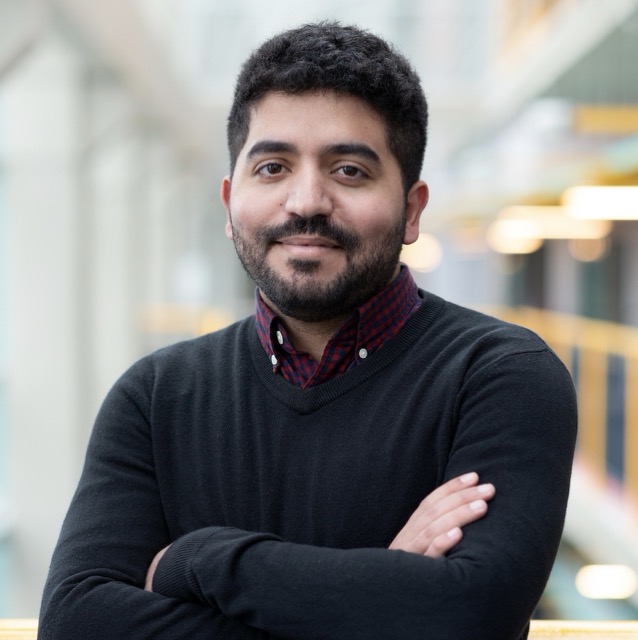
Professor John W. O'Neill is a Professor of Hospitality Management at Pennsylvania State University's School of Hospitality Management. He serves as Director of the Hospitality Real Estate Strategy Group, focusing on real estate, asset management, and strategic management in the hotel industry. His research bridges financial analysis with operational strategies in hospitality. Education : B.S. in Hotel Administration from Cornell University M.S. in Real Estate from New York University Ph.D. in Business Administration from University of Rhode Island O'Neill's research explores hotel financial performance, debt servicing, brand affiliation, work-family dynamics, and market disruption from platforms like Airbnb. His work combines empirical analysis with strategic frameworks to address industry challenges. Leadership and Research Groups : Director, Hospitality Real Estate Strategy Group Active researcher in hotel valuation and operational risk
Aleksandar Mihajlovic is a researcher and Art Director at Singidunum University, Serbia. With a doctoral degree in Contemporary Business Decision-Making (2022), a master's in Business Economics (2014), and a bachelor's in Computer Graphics and Design (2008), he combines academic rigor with creative leadership in the university's marketing strategy. Doctoral studies: Contemporary Business Decision-Making, Singidunum University (2022) Master studies: Business Economics, Singidunum University (2008–2014) Undergraduate: Computer Graphics and Design, Faculty of Informatics and Management (2005–2008) High school: Robotics and Flexible Production Systems Technician, Polytechnic Academy (1995–1999) His research spans visual communication , digital marketing , and artificial intelligence applications in creative industries. Key contributions include Co-authoring 11 academic papers (2015–2025) on topics like Instagram ad effectiveness, techno-feudalism, and responsive logo design. Developing the scientific research portal 'Singipedia' and international magazine 'SingiLogos'. Participating in 7 global projects including Erasmus+ and TEMPUS initiatives. His scientific awards include the JISA Discobolos Special Award (2010), IT Globus Award (2010), and Grafima Fair Special Award (2025). He serves on the organizing committee for conferences like Sinteza and Sitcon , and has judged marketing competitions while volunteering for NGOs like the City Organization of the Deaf of Belgrade.
Katarina Domijan is an Associate Professor in Statistics at the Department of Mathematics and Statistics, Maynooth University, Ireland. She holds a PhD in Statistics from Trinity College Dublin (2008) and has been affiliated with Maynooth University since 2008, transitioning from Lecturer/Assistant Professor to her current role in 2024. Her academic career includes editorial roles as Associate Editor for The R Journal (2021–present) and the Journal of Computational and Graphical Statistics (2015–2024). Research Interests focus on Bayesian methods for high-dimensional data, particularly in classification problems. She specializes in feature selection and model visualization, with applications spanning agricultural data analysis (e.g., hyperspectral imaging for lactose prediction), medical diagnostics (e.g., sepsis and cancer detection), and space physics (e.g., Saturn Kilometric Radiation classification). Her work bridges theoretical statistics with real-world challenges, including socio-economic studies and forensic science. Key Research Areas Bayesian statistical inference Machine learning for large feature spaces Statistical computing and model interpretability Data visualization and chemometrics Scientific Contributions include leading projects like VistaMilk Phase II (2024–2030, €152,300) and Measuring Carbon Sequestration (2024–2028, €174,788.90). Her 15 most recent publications highlight advancements in ensemble modeling, spatial statistics, and medical diagnostics. Scientific Awards Associate Editor, The R Journal (2021–present) Associate Editor, Journal of Computational and Graphical Statistics (2015–2024) Student Supervision includes PhD and MSc graduates such as Dr. Bruna Wundervald (2024) and Dr. Mark O’Connell (2017). She also collaborates with researchers across disciplines, including Dr. Nadim Akasheh in food hypersensitivity studies.
Dr. Eunice Eunhee Jang is a Professor in the Department of Applied Psychology and Human Development at the Ontario Institute for Studies in Education (OISE), University of Toronto. Her research focuses on synergistic learner modeling, dynamic assessment systems, and the intersection of language testing with educational measurement. PhD with specializations in language testing, educational measurement, and program evaluation Develops interactive digital assessment interfaces for struggling readers Author of "Focus on Assessment" (2014) and co-author of OECD Reviews on Evaluation and Assessment in Education Research Interests Dr. Jang's work explores prismatic assessment analytics to understand learner potential and predict learning pathways. She integrates natural language processing and machine learning to create diagnostic feedback systems that support cognitive, metacognitive, and affective growth in technology-rich classrooms. Scientific Awards Jacqueline Ross TOEFL Dissertation Award Caroline Clapham IELTS Master’s Award Tatsuoka Measurement Award Professional Contributions She has served on major advisory boards including EQAO provincial assessments and TOEFL Committees of Examiners. Currently, she is an elected board member for the International Language Testing Association and contributes to the Broader Measures of Success Advisory Committee for People for Education.
Associate Professor Chengguo Zhang is a researcher at the University of New South Wales (UNSW Sydney) specializing in Mining Engineering and Geomechanics . His work focuses on improving mining safety and sustainability through fundamental and applied research on dynamic rock mass failures , groundwater-mining interactions , and data-driven visualization technologies . He currently serves as the Postgraduate Research Coordinator for the School of Mining Engineering. PhD in Mining Engineering from UNSW Sydney (2015) Coordinates postgraduate research programs Recipient of multiple teaching and research awards Research Interests: Zhang's work addresses critical mining industry challenges through: Quantification of energy sources and dissipation in rock masses for rockburst management Integration of AI data analytics and 3D visualization for geotechnical risk assessment Mine subsidence and coupled hydro-mechanical behavior of rock discontinuities Development of digital ground control management systems Article Trends: His recent publications demonstrate expertise in: Numerical modeling of rock fracturing mechanisms Nonlinear fluid flow analysis in fractured rock masses Shotcrete and ground support system evaluation Hydro-mechanical coupling during shear processes Energy-based coal burst risk classification Scientific Awards: Tim Shaw Award for Innovation in Teaching (2024) International Outstanding Young Scholar Award (2023) UNSW Education Excellence Award (2021) UNSW Research Excellence Award (2018) Research Supervision: Supervises 12 active PhD students (9 as primary/joint supervisor) and has guided 11 PhD completions (7 as primary/joint supervisor), including 3 Dean's Award recipients. Focuses on numerical modeling, data visualization, and machine learning applications in mining geomechanics.
Prof. Dr. Wolfgang Lutz is a Full Professor and Head of the Department of Clinical Psychology and Psychotherapy at the Faculty of Psychology, University of Trier, Germany. He also serves as Director of the Outpatient Clinic and Postgraduate Clinical Training. Additionally, he holds an Adjunct Professor position at the University of Western Australia and is a Fellow of the Association for Psychological Science (APS). Dr. Lutz's research focuses on advancing clinical psychology and psychotherapy through precision mental health care, treatment personalization, and feedback-informed psychological therapy. His work emphasizes using data-driven approaches to optimize treatment outcomes, with particular attention to depression, anxiety disorders, and PTSD. He has pioneered the development of the Trier Treatment Navigator (TTN), a system for feedback-informed treatment that helps match patients to the most effective therapeutic approaches. His recent publications reveal a strong emphasis on integrating technology and artificial intelligence into psychotherapy research and practice. This includes developing algorithms for personalized therapy, using large language models to analyze therapy sessions, and implementing routine outcome monitoring systems. His research shows how temporal dynamics in therapy processes affect outcomes and how clinical microskills can predict therapeutic alliance and success. Fellow of the Association for Psychological Science (APS) Editor of Psychotherapy Research He leads initiatives to develop a European Psychotherapy Consortium (EPoC) to standardize outcome measurement across countries and promote cooperation in psychotherapy research. His laboratory focuses on precision mental health care, developing tools for treatment personalization, and investigating the mechanisms of change in psychotherapy.
Dr. Amir Javed is a Lecturer in the School of Computer Science and Informatics at Cardiff University, where he has been employed since 2019. Previously, he served as a Research Associate at the same institution from 2015 to 2019, working on projects including WEFO collaboration with Airbus, the EPSRC Ebb and Flow Energy Systems project, and the ESRC HateLab project. His research spans cybersecurity, machine learning, and IoT security, with particular focus on intrusion detection systems for in-vehicle networks, adversarial machine learning, cloud security, and cybersecurity education. He investigates malware propagation on social networks, drive-by download attacks on Twitter, and the application of machine learning for real-time cyberattack forecasting. His recent work explores generative AI integration in cybersecurity education and adversarial attacks on autonomous vehicle security systems. Dr. Javed's publication trends reveal a strong emphasis on automotive cybersecurity (particularly intrusion detection for connected vehicles), adversarial machine learning techniques, and innovative approaches to cybersecurity education. His work increasingly focuses on federated learning applications for vehicle security and the educational challenges of integrating generative AI into cybersecurity curricula. He leads the Social Data Science Lab (ESRC-funded, £1.5 million, 2020-2022) and teaches the CMT116 Cyber Security and Risk course. His supervisory portfolio includes doctoral research on in-vehicle network security, cloud service abuse detection, and adversarial attacks in intrusion detection systems.
Juan Alcacer is the James J. Hill Professor of Business Administration at Harvard Business School. He holds a PhD in International Business and Strategy from the University of Michigan, an M.A. in Economics, an MBA in Finance, and a Computer Engineering degree. His research focuses on international strategies, location decisions, and agglomeration economies. PhD - University of Michigan (Ross School of Business) MA - Economics, University of Michigan MBA - IESA Computer Engineering - Universidad Simon Bolivar Alcacer’s work examines how firms build competitive advantage through geographic choices, supply chain dynamics, and knowledge transfer. Recent projects analyze Brexit’s impact on investment and the role of internal/external agglomeration economies. His publications span top journals like Strategic Management Journal , Management Science , and Journal of International Business . Awards include the 2024 HBS Student Association Faculty Teaching Award and the 2016 Michigan Ross Distinguished PhD Alumni Award. 2024 HBS Student Association Faculty Teaching Award 2019 Greenhill Award for Field Global Immersion program 2016 Michigan Ross Distinguished PhD Alumni Award 2013 Meritorious Service Award from Management Science At HBS, he teaches required MBA strategy courses, Executive Education programs, and PhD seminars. His consulting spans global corporations on competitive advantage and location strategy.
Li Yin is an Associate Professor in the Department of Urban and Regional Planning at the School of Architecture and Planning, University at Buffalo. Her research integrates spatial modeling, GIS, and simulation methods to study urban systems, with applications in environmental planning, urban design, and sustainable development. She actively collaborates across disciplines to develop strategies for smart urban growth. Her educational background includes a Ph.D. in Design and Planning from the University of Colorado, an M.S. in Urban Planning from the Asian Institute of Technology, and a B.S. in Architecture from Kunming University of Science and Technology. Ph.D., University of Colorado, Design and Planning M.S., Asian Institute of Technology, Urban Planning, Land and Housing Development B.S., Kunming University of Science and Technology, Architecture Dr. Yin's research focuses on applying innovative analytical methods to urban planning and design, particularly through the use of GIS, 3D modeling, and simulation tools. She explores how amenities influence urban growth patterns and location choices, aiming to enhance planning efficiency and communication. Her work emphasizes data-driven approaches to understanding urban dynamics and supports sustainable community development. She teaches courses in computing for environmental analysis, GIS applications, and planning support systems, reflecting her commitment to technological integration in planning education. Dr. Yin is also engaged in public service, particularly in examining the relationship between public health and the built environment in the Buffalo-Niagara region. She leads the Urban Analytics Lab, a research group focused on leveraging data and technology to improve urban planning outcomes. Dr. Yin has played a key role in several multi-million-dollar funded research projects, collaborating with researchers from engineering, medicine, science, and public health. These interdisciplinary efforts have focused on the interactions between technology, society, and urban planning, contributing to smarter and more resilient urban communities. The Urban Analytics Lab, which she is affiliated with, brings together researchers passionate about applying advanced data methods to urban challenges. The lab benefits from recent advancements in data availability and computational tools to deepen understanding of how cities function and are planned.
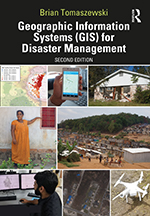
Brian Tomaszewski is a Professor at the Rochester Institute of Technology (RIT) within the School of Interactive Games and Media , Golisano College of Computing and Information Sciences. He also holds an Adjunct Professor position at the Centre for Disaster Management and Mitigation, Vellore Institute of Technology, India. Education : BA (University at Albany), MA (University at Buffalo), PhD (Pennsylvania State University) Research Interests focus on Geographic Information Science applications for Disaster Management , Forced Displacement , and Geovisual Analytics . His work bridges Spatial Thinking with Serious Games for crisis response and mitigation. Recent Publications (2023-2014) emphasize LLM-driven refugee camp analysis , geospatial resilience modeling , and serious games for disaster education , with fieldwork spanning Rwanda, Jordan, and Poland. Scientific Awards : Fulbright Scholar (2018) Grants & Collaborations include US National Science Foundation (NSF) funding for international projects and partnerships with UNHCR and IEEE . He leads the RefuGIS project and the Center for Geographic Information Science and Technology at RIT.
Janille Smith-Colin is the J. Lindsay Embrey Trustee Assistant Professor of Civil & Environmental Engineering at Southern Methodist University (SMU), where she leads the Smith-Colin Research Group. As a licensed Professional Engineer (P.E.) and Jr. Editor for the ASCE Journal of Infrastructure Systems, her work bridges infrastructure management with social equity. She serves on the Transportation Research Board Standing Committee on Transportation Planning Analysis and Application (AEP15). Her educational background includes: Ph.D. in Civil and Environmental Engineering from Georgia Institute of Technology Master of Science in Civil and Environmental Engineering from University of Wisconsin-Madison Bachelor of Arts in Engineering Studies from Lafayette College Smith-Colin's research centers on sociotechnical systems modeling to advance equity, sustainability, and resilience in transportation infrastructure. She employs system dynamics and spatial analysis to examine transportation as a social determinant of health, with emphasis on underserved communities. Her engineering education work integrates community-based participatory research and design thinking to develop inclusive pedagogical approaches. Recent publications reveal a strong trend toward data-driven equity assessment, utilizing social media mining, mobile trajectory data, and spatial analytics to investigate infrastructure deserts, micromobility access, and health impacts. She pioneers social return on investment (SROI) frameworks for transportation solutions, connecting civil engineering with public health and disaster resilience through interdisciplinary methodologies. Scientific recognition includes: Best Poster Award, International Conference on Transportation & Development (2023) Golden Mustang Teaching Award, SMU (2023) National Academies Gulf Coast Research Program Early Career Fellowship (2021) ASCE ExCEED Teaching Fellow (2019) Her research is funded by the National Academies of Sciences, Engineering and Medicine, with grants supporting equity-focused transportation projects. While student advisees aren't explicitly listed, her community-based research approach indicates active mentorship in solving civil engineering challenges for marginalized groups. She also contributes to transportation policy through regional collaborations. The Smith-Colin Research Group develops evidence-based tools for infrastructure equity, conducting spatial analysis of transportation systems and health outcomes. Current projects involve system dynamics modeling for social sustainability, Twitter-based crisis response monitoring, and partnerships with Dallas-area agencies to map infrastructure deficiencies and mobility barriers.
Amine Mhedhbi is an Assistant Professor at Polytechnique Montréal , where he leads the Data & AI Systems Lab . He earned his PhD in 2023 from the University of Waterloo. His work bridges data management , graph databases , and AI systems , with a focus on performance, debuggability, and user interface design for data applications. Education : PhD (University of Waterloo, 2023) Research Interests center on modern analytical data systems , including multimodal data management , language model integration , and graph query optimization . His projects like FLockMTL and GraphflowDB aim to combine semantic analysis, AI, and traditional database operations. Scientific Awards include the NSERC Discovery Grant , the Cheriton School Distinguished Dissertation Award , the VLDB Best Paper Award , and fellowships from Microsoft and Meta . Key Collaborations : Semih Salihoğlu, Jimmy Lin, Elena L. Glassman Labs & Teams : Affiliated with DAIS Lab , IVADO , and co-founded the applied research team at Distyl AI in 2023.
Madison Lore is an incoming Assistant Professor in the Department of City and Regional Planning at Cornell University's College of Architecture, Art, and Planning, beginning her tenure in January 2026. Her interdisciplinary research integrates urban planning, data science, and sustainability, focusing on how large-scale data and information environments shape public behaviors and perceptions around sustainable transitions in housing, transportation, and energy systems. She holds a Ph.D. from the School of Community and Regional Planning at the University of British Columbia, a Master's in Applied Mathematics, and a dual Bachelor's in Mathematics and Physics from Rensselaer Polytechnic Institute. Her academic journey reflects a strong technical foundation applied to pressing urban challenges. Madison’s research interests span urban data science, machine learning, infrastructure and land use planning, social policy, and sustainable transportation. She investigates how algorithmic and data-driven methods can be used responsibly to uncover social norms, institutional influences, and individual support for sustainable policies, particularly in contexts of information overload. Her recent publications demonstrate a strong trajectory in applying hybrid deep learning and natural language processing to urban text data, evaluating equity in public mobility, and modeling transportation preferences through digital footprints. These works reflect a consistent theme: leveraging data analytics to promote equitable and sustainable urban futures. Vanier Canada Graduate Scholarship (2023–2026) Bombardier Sustainable Transportation Fellowship (2022) The Bill and Nancy Siegmann Applied Mathematical Modeling Prize (2018) Leonhard Euler Award for Excellence in Mathematical Modeling (2016) Climate Social Science Network Grant on Big Oil’s Climate Disinformation (2024) Madison has presented her work at major conferences including the Association of Collegiate Schools of Planning, the International Conference on Travel Behavior Research, and the American Planning Association National Conference. While no formal advisees are listed, her role as an incoming assistant professor suggests future mentorship of graduate students in urban planning and data analytics. She is affiliated with the PLACE Lab and brings expertise from prior work in nuclear physics and applied mathematics into her current urban sustainability research.
Dr. Anna Baldycheva is a Senior Lecturer in Electronic Engineering at the University of Exeter, within the College of Engineering, Mathematics and Physical Sciences. She leads the interdisciplinary STEMM Laboratory, focusing on applied R&D in smart materials, photonics, AI, and IoT. With prior research experience at MIT, Trinity College Dublin, and Tyndall National Institute, she has established herself as an internationally recognized innovator and entrepreneur in emerging technologies. PhD in Electronic and Electrical Engineering, Trinity College Dublin (2008–2012) BSc (Hons) in Physics, St. Petersburg State University (2003–2008) Postgraduate Certificate in Academic Practice, University of Exeter (2016–2017) Postgraduate Certificate in Technology Management, Smurfit Business School (2009–2010) Her research spans Nano-Engineering, Opto-Electronics, Photonics, AI, and IoT , with a strong emphasis on real-world applications. She pioneers work in fluid opto-electronics , graphene nanocoatings , and AI-driven emotion recognition and early cancer detection . Her lab develops smart composite materials for flexible electronics, e-textiles, and structural applications, integrating machine learning into healthcare, education, and communications systems. The recent publications highlight a strong trend toward applied interdisciplinary innovation , combining materials science with AI and photonics for healthcare diagnostics, energy-efficient computing, and educational technology. Her work frequently bridges fundamental physics with commercialization potential, as seen in spin-out technologies like GSurf and the Electronic-Nose for lung cancer detection. Fellow, Royal Microscopical Society (RMS) Fellow, Higher Education Academy (FHEA) Expert, Future and Emerging Technologies, European Commission Featured in Forbes and Forbes Tech Council Editor-in-Chief, InSTEMM Journal Associate Editor, Nature Scientific Reports and Discover Nano Trustee, Royal Microscopical Society Founder, STEMM Global Scientific Society Founder, It’s Her! Women in STEMM Initiative Dr. Baldycheva actively supervises PhD students and has secured industrial collaborations with organizations such as Qinetiq and Lumentum. She leads multiple outreach initiatives, including STEMM Junior for underprivileged children, and serves on the committee for the Jocelyn Bell Brunel PhD Scholarship. She has raised significant research funding through national and international grants, though specific grant names are not listed. She leads the STEMM Laboratory , a multidisciplinary research group with divisions in Smart Composite Materials, Machine Learning & AI, and Opto-Electronics & Photonics. The lab emphasizes industry collaboration and technology transfer, having produced a university spin-out (GSurf) and multiple media-highlighted innovations.
Dana Minbaeva is Professor of Strategic Human Capital at King's Business School, King’s College London, UK, and holds a part-time appointment at Copenhagen Business School, Denmark. She is a leading scholar in International Human Resource Management and Strategic Human Capital, with extensive contributions to top-tier journals and global academic leadership. Professor, King's Business School, King’s College London Part-time Faculty, Copenhagen Business School Associate Editor, Academy of Management Review Her research centers on strategic HRM, talent management, knowledge transfer, and institutional dynamics in multinational enterprises, particularly in emerging markets. She explores how human capital is leveraged across borders, the role of informal networks, and the impact of crises like COVID-19 on HR practices. Her work integrates micro-foundational perspectives with macro-level institutional contexts. Recent publications highlight evolving themes in HR analytics, diversity and inclusion, and the disruption of traditional HR models through digital transformation and global crises. Her research consistently appears in premier journals such as Academy of Management Review , Journal of International Business Studies , and Human Resource Management . Fellow of the Academy of International Business (AIB) Recipient of the JIBS Decade Award 2013 Dana Minbaeva actively supervises research, leads funded projects such as the ESRC study on diversity management transfer in Pakistan, and contributes to executive education and MBA teaching across Europe. She is also the founder of Nordic Human Capital Advisory ApS, bridging academic insight with practical application. Her work engages with UN Sustainable Development Goals related to decent work and economic growth, and she has led initiatives on diversity, inclusion, and workforce analytics.




.jpeg?h=700&iar=0&w=700&hash=ECBB86D790E7934E1AF1CA57FF156948)