Matthew Louis Mauriello is an Assistant Professor in the Department of Computer and Information Sciences at the University of Delaware , where he directs the Sensify Lab . He holds a PhD in Computer Science from the University of Maryland (2018) and completed postdoctoral work at Stanford University (School of Medicine, 2020; School of Public Policy & Environmental Engineering Department, 2019). Research interests span Human-Computer Interaction (HCI), Ubiquitous Computing, and User-Centered Design with applications in: Sustainability Human-Building Interaction Wearable Technology Personal Informatics Educational Game Design Mental Health Interventions Recent publications highlight trends in stress monitoring (skin-like biosensors, workplace wellbeing), energy auditing (thermography systems), and educational technology (block-based programming tools for teachers). His work appears in ACM CHI, ACM Human-Computer Interaction, and Building and Environment. Scientific awards include: Best Paper Honorable Mention, CHI 2016 Best Paper Honorable Mention, CHI 2015 Best of WebSci'18 Teaching at University of Delaware encompasses courses like Educational Game Design Operating Systems Advanced Web Technologies Computing for Social Good with a focus on project-based learning and systems thinking.
Sunita Sarawagi is a Professor at Computer Science and Engineering , IIT Bombay, and a member of AI Labs@CSE . She is also associated with the Center for Machine Intelligence and Data Science (CMInDS), which she founded in 2020. Education: PhD in Computer Science from UC Berkeley (Thesis: Query Processing in Tertiary Memory Databases), BTech in Computer Science from IIT Kharagpur Research Interests span machine learning , data analytics , graphical models , and structured learning , with applications in text segmentation, sequence modeling, domain adaptation, and human-in-the-loop systems. Her publications reveal a strong focus on integrating data mining with database systems , temporal data analysis , and information extraction using probabilistic methods. Professional Activities include serving on the IEEE John Von Neumann Medal committee (2017-), VLDB 2011 Research Track Co-chair , and multiple program committee roles at top conferences like ICML, KDD, and SIGMOD. Labs & Teams : Leads the SS Lab , a research group focused on probabilistic graphical models, sequence modeling, and data integration techniques.
Dr. Chengmo Yang is a Professor in the Department of Electrical and Computer Engineering at the University of Delaware, with a joint appointment. She received her PhD and MSc in Computer Science from the University of California, San Diego, and a BSc in Microelectronics from Peking University, China. PhD, University of California, San Diego MSc, University of California, San Diego BSc, Peking University, China Her research focuses on enhancing security, reliability, non-volatility, and energy efficiency in embedded systems, cyber-physical systems (CPS), and Internet-of-Things (IoT). She leads the Computer Architecture, Reliability, and Security (CARES) group and has authored over 70 peer-reviewed publications. Recent publications emphasize neural network accelerators, non-volatile memory (NVM) optimization, and security frameworks for embedded systems. Her work explores fault tolerance, wear leveling, and side-channel attack mitigation in NVM-based FPGAs, STT-RAM, and SSDs. National Science Foundation Career Award (2013) University of Delaware Mid-Career Faculty Excellence in Scholarship Award (2020) Best paper award at ICESS (2019) Three best paper nominations at DAC, DATE, and GLSVLSI (2019) Dr. Yang serves as Associate Editor for IEEE TCAD and ACM TODAES. She is the Diversity & Inclusion Representative for IEEE CEDA and has organized numerous conferences including Technical Program Chair for CODES-ISSS 2022. Her lab has hosted current and former students like Fanruo Meng (PhD candidate), Fateme Hosseini (Qualcomm), and Patrick Cronin (Intel), focusing on graduate-level research in hardware security and reliability.
Jean Oh is a Researcher at the Robotics Institute of Carnegie Mellon University (CMU) , leading the interdisciplinary Bot Intelligence Group (BIG) . Her work focuses on developing persistent robots that co-exist and collaborate with humans in shared environments, emphasizing continuous improvement through training, exploration, and human interaction. Education: Ph.D. in Language and Information Technologies, CMU M.S. in Computer Science, Columbia University B.S. in Biotechnology, Yonsei University Oh's research integrates vision, language, and planning systems in robotics, with applications in human-robot teaming , self-driving cars , disaster response , eldercare , and creative robotics . She has pioneered projects like socially-compliant robot navigation in human crowds and AI-driven robotic painting systems. Recent publication trends highlight her work in vision-language planning , social navigation , computational creativity , and human-robot collaboration . Notable contributions include the StyleCLIPDraw algorithm for text-to-art generation and Social-PatteRNN for human-like trajectory prediction. Scientific Awards: Best Paper Award in Cognitive Robotics (ICRA'18, ICRA'15) Best Systems Paper Finalist (HRI'25) Best Oral Paper Finalist (Humanoids'24) Best Paper in Entertainment (IROS'24) Argoverse Challenge Winner (CVPR'24) Best Student Paper (AIAA'24) Best Demo Finalist (RoboSoft'24) Oh mentors a diverse team of PhD, MS, and undergraduate students from CMU departments including Robotics, Computer Science, and Mechanical Engineering. Her research is funded by US Army Research Lab , DiDi Chuxing , and DARPA , with collaborations across industry and academia .
Prof. Ingmar Posner is a leading figure in applied artificial intelligence at the University of Oxford, where he serves as Principal Investigator for the Applied Artificial Intelligence Lab (A2I) and founding Director of the Oxford Robotics Institute. His work focuses on enabling robots to operate effectively in complex real-world environments through experience-driven learning. Key research areas: robot learning, scene interpretation, data-efficient learning, and transfer learning Applications in manipulation, autonomous driving, logistics, and space exploration His team has produced groundbreaking work in world models, sim-to-real transfer, and constraint-based manipulation systems (e.g., COMBO-Grasp). Notable contributions include the TWIST distillation framework and foundational research in tactile data generation (TactGen). He has received multiple best paper awards at top robotics venues. Publications reveal evolving research themes: 2025 work emphasizes language-conditioned learning (Lumos) and multi-agent decision-making, while 2024 focused on diffusion models for locomotion and differentiable simulators. Earlier work spans from urban scene analysis to physically plausible scene synthesis (RELATE).
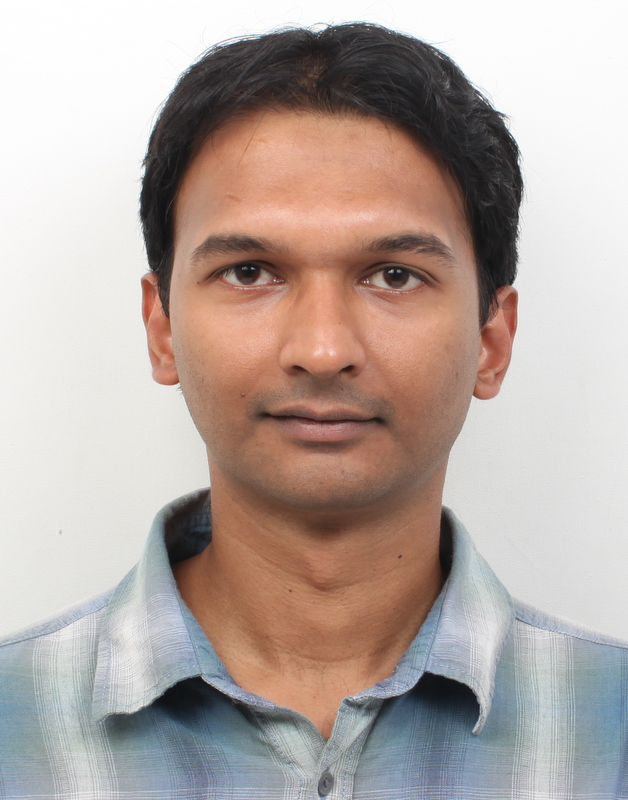
Shivaram Kalyanakrishnan is an Associate Professor at the Department of Computer Science and Engineering , Indian Institute of Technology Bombay , specialising in Artificial Intelligence and Machine Learning . His research spans sequential decision making , multiagent learning , multi-armed bandits , and humanoid robotics , with applications in robot soccer , computer games , and online advertising . He teaches advanced courses like CS 747: Foundations of Intelligent and Learning Agents and CS 748: Advances in Intelligent and Learning Agents , focusing on end-to-end system design and theoretical analysis. His scientific awards include the Best Student Paper Award at RoboCup International Symposium 2006 and nomination for Best Student Paper Award at AAMAS 2007 . His work on reinforcement learning and policy iteration has been published in leading venues such as IJCAI , ICML , and COLT , with recent contributions to railway scheduling and bandit algorithms. While no explicit list of advisees is provided, his research projects and publications suggest mentorship of students in collaborative efforts. Contact : shivaram@cse.iitb.ac.in .
Justin Johnson is an Assistant Professor at the University of Michigan's College of Engineering, Department of Electrical Engineering and Computer Science, and a Research Scientist at Facebook AI Research (FAIR). His work bridges computer vision, machine learning, and deep learning, focusing on visual reasoning, vision-language tasks, image generation, and 3D reasoning using neural networks. PhD, Stanford University (advised by Fei-Fei Li) His research interests span visual reasoning , vision and language , 3D vision , and image generation , with a focus on innovative applications of deep neural networks. Recent publications highlight work on 3D consistency, self-supervised learning, and multimodal integration of vision and text. Notable contributions include PyTorch3D for 3D data processing, and foundational work in visual question answering , neural style transfer , and scene graph-based image generation . Publications span top conferences like ICCV, CVPR, and NeurIPS. He teaches courses including EECS 498/598: Deep Learning for Computer Vision and EECS 442: Computer Vision at University of Michigan, with prior involvement in Stanford's CS 231N in co-teaching roles. Software projects include open-source frameworks like fast-neural-style for real-time artistic style transfer, and PyTorch3D for efficient 3D deep learning. These tools demonstrate his commitment to practical implementations and community-driven research.
Prof. Christian Holz is an Associate Professor at the Department of Computer Science and Deputy Head of the Institute of Intelligent Interactive Systems at ETH Zürich. His work focuses on advancing human-computer interaction through innovations in wearable technologies, mixed reality systems, and sensor-driven applications. Key research areas include motion capture, physiological signal processing, and adaptive user interfaces. Holz leads the SIPLab (siplab.ethz.ch), producing influential work at the intersection of computer science and biomedical engineering. His research explores cutting-edge topics such as egocentric vision systems, wearable health monitoring devices, and VR/AR applications. Recent studies investigate cybersickness detection via EEG, heart rate estimation from eye-tracking cameras, and scalable motion capture using inertial/UWB sensors. Holz's work emphasizes practical applications in healthcare, education, and human-centered computing. Publications reflect a strong focus on interdisciplinary solutions, combining machine learning with sensor data analysis. Notable contributions include the EgoSim multi-view simulator, WildPPG biomedical dataset, and MiBOT cardiovascular modulation device. His research bridges theoretical advancements with real-world usability in domains like emergency response training, chronic disease monitoring, and immersive education.
Prof. Konrad Schindler holds the position of Full Professor at the Department of Civil, Environmental and Geomatic Engineering at ETH Zürich. He is also the Head of the Institute of Geodesy and Photogrammetry (IGP), leading research and educational activities in geomatics and computer vision. His career spans roles as a Photogrammetric Engineer, scientific assistant, postdoc researcher, and academic faculty across institutions including Graz University of Technology, Monash University, and TU Darmstadt before joining ETH Zürich in 2010. Education: Undergraduate studies in Geodesy (1992–1995), Graz University of Technology, Austria MEng in Photogrammetry and Geoinformation (1995–1999), Vienna University of Technology, Austria PhD in Computer Science (2001–2003), Graz University of Technology, Austria Research focuses on Photogrammetry , Remote Sensing , Computer Vision , and Image Understanding with interdisciplinary applications in environmental monitoring, geospatial analysis, and disaster response. He develops computational methods for 3D reconstruction, fusion of multi-modal data, and AI-driven solutions for satellite imagery interpretation. His work bridges geomatic engineering and machine learning to address challenges in urban mapping, climate modeling, and biological systems analysis. Publications reflect expertise in geospatial AI, diffusion models, and benchmarking datasets for disaster resilience. Notable works include Marigold (image analysis adaptation) and BRIGHT (building damage assessment). His research emphasizes practicality and scalability, such as affordable depth estimation and global biomass datasets. He has received the 2013 Marr Prize Honourable Mention (IEEE) and the 2012 U.V. Helava Award (ISPRS), alongside several Best Presentation Awards. His contributions span technical leadership, editorial roles (ISPRS Journal), and service to Swiss remote sensing commissions. Advising and grants: While no specific advisee names or grant details are listed, his career trajectory includes mentoring postdocs and junior faculty. He teaches advanced courses in Photogrammetry , Image Interpretation , and Machine Vision , integrating cutting-edge AI techniques into curricula. His research group collaborates on global-scale projects like canopy height mapping and satellite-based climate variable assessments. Labs/Teams: As Institute Head, he oversees the IGP lab at ETH Zürich, with prior affiliations including the Digital Perception Lab (Monash University) and the Computer Vision Lab (ETH Zurich). His work often involves multi-institutional collaborations focused on geospatial AI and environmental science.
Amanda Phillips is an Associate Professor at Georgetown University, affiliated with the Departments of English, Film and Media Studies, Women’s and Gender Studies, and American Studies. Their research focuses on feminist and queer theory in digital media, with a particular emphasis on critical game studies and digital humanities. Selected publications include Gamer Trouble: Feminist Confrontations in Digital Culture and co-editing the Queer/Trans/Digital book series. Their scholarship appears in journals such as ROMchip , Feminist Media Histories , and Games and Culture . Research Interests: Digital media and gender politics Queer theory in gaming contexts Decolonial and anti-racist digital humanities Critical analysis of game mechanics Digital labor and precarity Affective histories of gaming Scientific Awards: Mellon/ACLS Dissertation Completion Fellow Academic Leadership: Former chair of the American Studies Association Digital Humanities Caucus Co-founder of the #transformDH Collective Editorial work on special issues of Game Studies and Antares: Letras e Humanidades Previous Institutions: IMMERSe Postdoctoral Fellow at University of California, Davis Ph.D. recipient from University of California, Santa Barbara with emphasis in Feminist Studies
Professor Hutan Ashrafian is a clinician-scientist and surgeon at the University of Leeds Business School, holding dual roles as Professor of Research Impact and Senior Research Fellow at Imperial College London. His expertise spans AI in healthcare, metabolic surgery, and ancient history. He pioneered STARD-AI and QUADAS-AI guidelines for AI diagnostics, collaborated on AI-driven breast cancer screening with Google and NHS, and led global health policy initiatives. Ashrafian’s work bridges medicine, history, and philosophy, including his contributions to understanding historical figures’ medical conditions, such as King Tutankhamun’s epilepsy. He has authored over 550 publications, 12 books, and holds a PhD in computational physiology and an MBA with distinction. Awards include the Hunterian Prize and Wellcome Trust Fellowship. His research also explores AI ethics, quantum physics paradoxes, and art-based medical diagnostics. Education: PhD in Computational Physiology (Imperial College London) MBA (Warwick Business School) MD (University College London) Bachelor of Science in Immunology (University College London) Research Interests: Ashrafian’s work spans: AI in Medicine: Diagnostic algorithms, guideline development (STARD-AI/QUADAS-AI), and ethical frameworks. Metabolic Surgery: Bariatric interventions, gut microbiome, and obesity treatments. Ancient History: Medical analyses of historical figures (e.g., Tutankhamun, Julius Caesar) and art-based pathology identification. Philosophy: AI rights (AIONAI law), temporal paradoxes, and the Simulation Argument. Awards: Royal College of Surgeons Arris and Gale Lectureship Hunterian Prize Wellcome Trust Research Fellowship Advising & Innovation: Supervised >50 PhD students, co-founded Oxford Medical Products (weight loss tech), and serves as CSO at Flagship Pioneering’s Preemptive Health division. He advises on NHS digital transformation and global health policy. Labs/Teams: Leads AI initiatives at Imperial’s Institute of Global Health Innovation and collaborates with Google, NICE, and international institutions on health tech solutions.
Prof. Dr. Roland Büchi is a Professor at the School of Engineering, Zurich University of Applied Sciences (ZHAW), specializing in control systems engineering and applied AI. His affiliation includes leadership roles in research projects such as the ongoing 'Digital Bridge to Computer Science' initiative. With a career spanning decades, he maintains active research output and industrial collaborations. Research Interests: Büchi focuses on control systems optimization , particularly PID controller tuning using AI methods, system identification, and applications in robotics and drone technology. His work bridges theoretical control theory with practical implementations in mechatronics. Recent efforts explore machine learning for hysteresis modeling and swarm optimization for control systems. Publication Trends: His 15 most recent works (2018-2024) emphasize AI-driven control optimization , drone technology advancements, and engineering education. Dominant themes include PID parameter tuning for time-delayed systems, drone telemetry, and adaptive learning algorithms. A notable shift toward AI/ML applications in control engineering emerged post-2020. Labs and Teams: Büchi collaborates with researchers like Lukas Gruber and has historical ties to ETH Zurich’s robotics projects. His work involves experimental validation at ZHAW’s engineering facilities, with patents in turbocharger magnetic bearing systems.
Jennifer Olsen, PhD, is an Assistant Professor of Computer Science at the University of San Diego since 2020. She holds a PhD, MS, and BS in Human-Computer Interaction and Cognitive Science from Carnegie Mellon University, followed by postdoctoral research at the Swiss Federal Institute of Technology (EPFL), Lausanne, Switzerland. Her research focuses on the intersection of human-computer interaction, cognition, and education, emphasizing collaborative learning and educational technology design from both learner and instructor perspectives. Education: PhD in Human-Computer Interaction, Carnegie Mellon University MS in Human-Computer Interaction, Carnegie Mellon University BS in Cognitive Science, Carnegie Mellon University Research Interests: Dr. Olsen explores how collaboration supports learning, designs technologies to enhance educational practices, and investigates gaze-based metrics for understanding collaborative problem-solving. Her work spans gamified robotics, AI-driven orchestration systems, and virtual reality applications in vocational training. She emphasizes learner-centered design and the integration of social robots and virtual agents in pedagogical settings. Grants/Advising: While no specific grants or advisees are listed, her prolific publication record indicates active involvement in educational technology research and development. Her work addresses challenges in classroom orchestration, multimodal data analysis, and accessibility in educational robotics. Labs/Teams: Collaborates with interdisciplinary teams focused on educational technology, human-robot interaction, and adaptive learning systems. Her research leverages tools like FROG orchestration graphs and eye-tracking technologies to develop practical classroom solutions.
Hao Su is an Associate Professor in the Department of Computer Science and Engineering at University of California, San Diego . He serves as Chairman & CTO of Hillbot Inc , and leads the SU Lab which focuses on building autonomous systems that learn actively in physical environments. His affiliations include the Institute for Learning-enabled Optimization at Scale , Artificial Intelligence Group , Contextual Robotics Institute , Halicioğlu Data Science Institute , and Center for Visual Computing . As a researcher in Computer Vision, Robotics, and Neural Geometry , he has made significant contributions to 3D foundation models, reward-free world models, diffusion policy frameworks, and GPU-accelerated simulation environments. His 2024-2025 publications include advancements in hand-eye calibration, dynamic mesh reconstruction, and multi-stage robotic manipulation. His scientific awards include: Frontiers of Science Award (2025) TPAMI Young Research Award (2025) NSF CAREER Award (2023) ACM SIGGRAPH Best Doctorate Thesis Honorable Mention (2019) He has served as Program Chair for CVPR 2025 and Area Chair for ICLR 2022 and NeurIPS 2023 , while previously serving as Publication Chair for 3DV 2016 and Program Committee for SIGGRAPH Asia Workshops .
Cicek Cavdar is an Associate Professor at the School of Electrical Engineering and Computer Science (EECS) at KTH Royal Institute of Technology , Sweden. She leads the Intelligent Network Systems research group and specializes in Telecommunication Networks , with a focus on Beyond 5G/6G Mobile Networks , Energy Efficiency , and AI-Assisted Network Management . PhD in Computer Science (2009) from University of California, Davis and Istanbul Technical University Her research spans Cell-Free Massive MIMO , Reconfigurable Intelligent Surfaces (RIS) , UAV Communication Systems , and Green Network Technologies . She actively contributes to 6G Network Architecture and Non-Terrestrial Networks , including satellite and aerial systems. Recent publications highlight AI-driven network optimization for handover management, energy-aware resource allocation , and multi-agent reinforcement learning in complex communication environments. She teaches advanced courses in Communication Systems , Machine Learning , and Software Engineering at KTH.