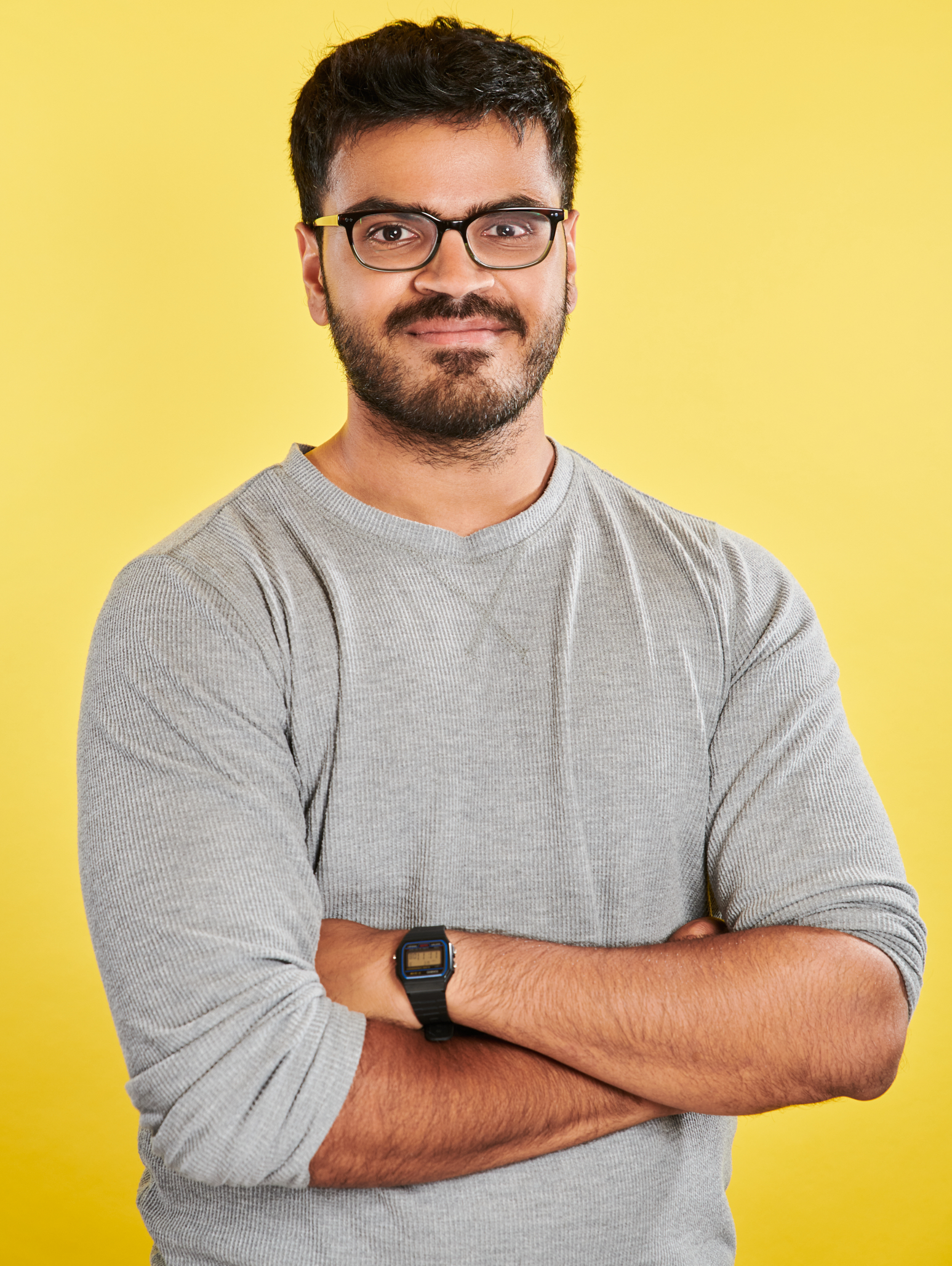
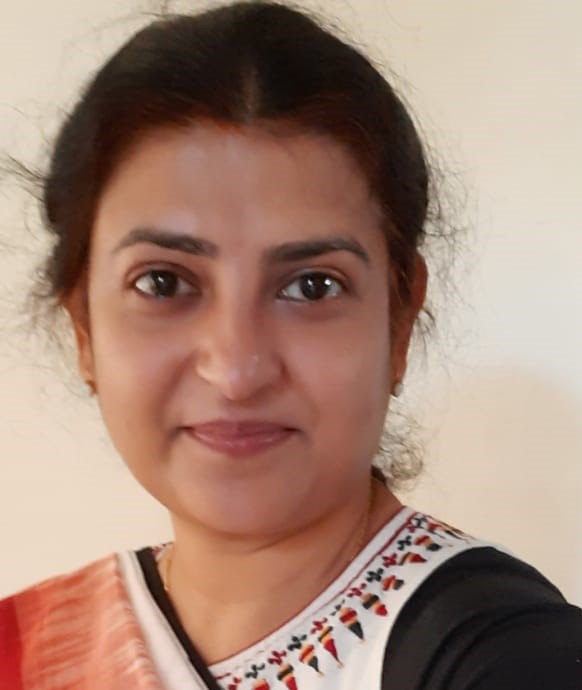
Battista Biggio is a Full Professor at the University of Cagliari, Italy, affiliated with the Department of Electrical and Electronic Engineering under the Faculty of Engineering and Architecture. His research focuses on machine learning security, adversarial attacks, and cybersecurity. He co-founded the cybersecurity firm Pluribus One and has pioneered foundational work in poisoning attacks and adversarial robustness. Education: MSc (2006), PhD (2010). He holds editorial roles as Associate Editor-in-Chief for Elsevier's Pattern Recognition Journal and serves on IEEE TNNLS and IEEE CIM editorial boards. His awards include the 2022 ICML Test of Time Award and the 2021 Pattern Recognition Medal. He chairs IAPR TC1 and organizes conferences like S+SSPR and AISec. Research interests span adversarial machine learning, malware detection, and secure AI systems. He leads initiatives such as the sAIfer Lab and co-develops the SecML-Torch library. Teaching includes courses on Machine Learning Security and Industrial Software Development. Notable contributions include seminal papers like 'Poisoning Attacks against Support Vector Machines' and 'Wild Patterns.' He manages over 10 research projects and advises on AI security for industrial applications. His work bridges academic research with practical cybersecurity solutions.
Neil Shah is a Lead Research Scientist at Snap Inc., leading initiatives in user modeling, personalization, and trust and safety across Snapchat. His research focuses on advancing machine learning algorithms for large-scale structured data, including graph and sequential representations, with applications to recommendation systems and social platform security. PhD in Computer Science, Carnegie Mellon University (2017), advised by Christos Faloutsos B.S. in Computer Science, North Carolina State University Current research interests span: Graph Neural Networks (GNNs) for real-time inference and scalable training Cross-domain recommendation systems and generative modeling Test-time augmentation and hyperbolic geometry in representation learning Explainability methods for GNNs and fairness-aware outlier detection Recent publications highlight productionized GNN frameworks (GiGL), multimodal graph benchmarks, and novel approaches to link prediction and collaborative filtering. His work has appeared at top venues like KDD, ICLR, NeurIPS, and WWW. Scientific recognition includes: Outstanding Service Award at WSDM 2022 Best Paper Honorable Mention at CHI 2019
Sebastiano Battiato is a Full Professor of Computer Science at the University of Catania's Department of Mathematics and Computer Science. He serves as Scientific Coordinator of the PhD Program in Computer Science and Deputy Rector for Strategic Planning and Information Systems at the University of Catania. As Director and Co-Founder of the International Computer Vision Summer School (ICVSS), he has significantly contributed to computer vision education globally. Education: Bachelor's degree in Computer Science (summa cum laude), University of Catania, 1995 Ph.D. in Computer Science and Applied Mathematics, University of Naples, 1999 Professor Battiato's research primarily focuses on Computer Vision, Imaging Technology, and Multimedia Forensics . His work spans from developing ISP algorithms for embedded devices to creating advanced techniques for image enhancement, coding, and forensic analysis. He has pioneered research in social media forensics, developing methods to determine if images have been processed through specific social platforms. His research has practical applications in assistive technologies, retail, digital marketing, and medical fields. His scholarly output shows a consistent focus on digital forensics and image processing, with an increasing emphasis on social media forensics in recent years. The research trajectory demonstrates progression from foundational image processing techniques to sophisticated forensic applications capable of addressing modern challenges like deepfakes and social media manipulation. Scientific Awards: 2017 PAMI Mark Everingham Prize for the series of annual ICVSS schools 2011 Best Associate Editor Award of IEEE Transactions on Circuits and Systems for Video Technology Professor Battiato has coordinated IPLab's participation in numerous large-scale research projects funded by national and international bodies as well as private companies. He has served as principal investigator on many international and national research projects, demonstrating strong leadership in securing research funding. His editorial work includes serving as associate editor for the SPIE Journal of Electronic Imaging and IET Image Processing Journal, and membership on several other editorial boards. As Director of IPLab research lab (http://iplab.dmi.unict.it), Professor Battiato leads a team focused on computer vision and digital forensics. The lab collaborates extensively with law enforcement agencies through iCTLAB, a university spinoff he founded that provides digital forensic services. IPLab is recognized for its contributions to image/video forensics, with techniques implemented in commercial forensic software like AMPED Authenticate.
Gianluca Setti is a Full Professor at the Department of Electronics and Telecommunications (DET) at Polytechnic University of Turin, where he has been serving since 2017. He previously held positions at the University of Ferrara from 1997 to 2017. His institutional roles include being the Contact Person for the Research Quality Evaluation process, Member of the Interdepartmental Center SmartData@PoliTO - Big Data and Data Science Laboratory, and Member of the University Quality Assurance Committee. He serves as Editor-in-Chief of the Proceedings of the IEEE, the first non-US editor to hold this position. Dr. Setti's research spans multiple interdisciplinary fields including machine learning, artificial intelligence, big data analytics, Internet of Things, biomedical signal processing, power electronics, and electromagnetic compatibility. His work bridges theoretical foundations with practical applications, particularly focusing on compressed sensing, neural networks, and circuit design for specialized applications. His research has significant implications for healthcare, sustainable infrastructure, and next-generation electronics. His publication record reveals a consistent trajectory from foundational work in chaotic systems and neural networks to contemporary applications in AI, IoT, and edge computing. The most recent publications demonstrate his focus on anomaly detection at the edge, neural oracles for biosignal processing, and power electronics innovations. His work shows strong integration between theoretical signal processing and practical circuit implementation. 1998 Caianiello prize (best Italian Ph.D. thesis on Neural Networks) IEEE Fellow (2006) IEEE Circuits and Systems Society Distinguished Lecturer (2004, 2015) 2004 IEEE CAS Society Darlington Award 2013 IEEE CAS Society Meritorious Service Award 2013 IEEE CAS Society Guillemin-Cauer Award 2019 IEEE Transactions on Biomedical Circuits and Systems best paper award Multiple best paper awards at major conferences including ECCTD2005, EMCZurich2005, ISCAS2011, PRIME2019, and EMCCOMPO2019 Dr. Setti has supervised numerous PhD students across various research domains including electromagnetic compatibility, signal and power integrity, communication networks, mechatronics and robotics. His research is supported by significant funding including national PRIN projects, EU-funded JTI-ECSEL initiatives, and commercial contracts. He leads the VLSILAB Group at DET, focusing on circuit architectures, embedded systems, and AI applications. His current projects include DECORI (anomaly detection), StorAIge (embedded storage for AI), PROGRESSUS (energy infrastructure), CONNECT (smart grid), and CONVERGENCE (wearable healthcare applications).
Valeria Bruschi is a Researcher at the Department of Information Engineering (DII) within the Faculty of Engineering at Università Politecnica delle Marche (UNIVPM) in Ancona, Italy. Her academic profile was last updated on April 13, 2024, and she maintains her office at the Engineering Faculty on via Brecce Bianche, with contact information including phone +39 071-220-4486 and email v.bruschi@staff.univpm.it. Dr. Bruschi's research spans multiple domains within audio and signal processing, with particular expertise in spatial audio systems, automotive human-computer interaction, and biomedical signal applications. Her work bridges theoretical signal processing techniques with practical implementations across diverse fields including automotive safety systems, hearing aid technology, sleep medicine, and agricultural monitoring. She has made significant contributions to head-related transfer function (HRTF) processing, real-time audio enhancement algorithms, and innovative monitoring systems that utilize acoustic signals for various applications. Analysis of Dr. Bruschi's recent publications reveals a strong trajectory in developing practical audio processing solutions with real-world applications. Her work shows increasing integration of machine learning techniques with traditional signal processing approaches, particularly in areas like driver monitoring systems, snoring detection and cancellation, and spatial audio rendering. A notable trend is her focus on creating lightweight, real-time implementations suitable for embedded systems and practical deployment scenarios, while maintaining high performance standards. Her research consistently demonstrates interdisciplinary collaboration, connecting audio engineering with fields as diverse as automotive safety, sleep medicine, and agricultural technology. Dr. Bruschi actively contributes to advancing audio engineering through her research on equalization techniques, noise reduction systems, and immersive audio technologies. Her work on pulse compression techniques for hearing aid distortion measurement represents an important contribution to audiological assessment methodologies. Her publication record demonstrates consistent scholarly output with increasing impact across multiple application domains, reflecting her ability to translate theoretical signal processing concepts into practical engineering solutions.
Enrico Magli is a Full Professor at the Department of Electronics and Telecommunications (DET) at Polytechnic University of Turin, Italy. He serves as Director of the Image Processing and Learning group and Coordinator of the 'ICT for Smart Societies' M.Sc. degree program. Additionally, he is a committee member of the PhD program in Electrical, Electronic and Communications Engineering and a member of the Interdepartmental Center SmartData@PoliTO - Big Data and Data Science Laboratory. Professor Magli's research focuses on applying machine learning and deep learning methods to satellite imaging, with applications to onboard processing and image analysis on the ground. His work spans deep learning for image and video analysis, image and video compression, compressive sensing, satellite imaging, and graph signal processing. He has published over 90 journal papers with 5900+ citations and an h-index of 40 on Google Scholar. His recent publications demonstrate a strong focus on developing deep learning architectures for satellite image processing, particularly for onboard applications. His research addresses challenges in hyperspectral image compression, super-resolution, change detection, and efficient neural network architectures suitable for resource-constrained satellite environments. There's also significant work on secure authentication systems using deep learning techniques and neural network optimization for edge devices. Elevated to IEEE Fellow (2017) 'for contributions to compression and communication of remotely sensed imagery' IEEE Geoscience and Remote Sensing Society 2011 Transactions Prize Paper Award IEEE Multimedia 2019 Best Paper Award Best Paper Awards at IEEE ICIP (2015, 2019) ERC Starting grant (consolidator type) and ERC Proof-of-Concept Grant recipient Multiple Best Paper Awards Francesco Carassa (2011, 2013, 2014) Professor Magli actively supervises numerous PhD students working on cutting-edge topics in deep learning for satellite imaging, image processing, and secure authentication systems. His research is supported by significant grants including ERC projects and multiple commercial contracts with space agencies and technology companies. He leads the Image Processing and Learning (IPL) Group at Politecnico di Torino, which focuses on developing innovative solutions for satellite image analysis and compression.
Luca Sterpone is a Full Professor at the Department of Control and Computer Science (DAUIN), Politecnico di Torino. He serves as Head of the Control and Computer Engineering Department (2023-2027), coordinates the Aerospace and Safety Computing Lab, and is a member of the Academic Senate and Power Electronics Innovation Center (PEIC). His research spans reconfigurable computing, fault tolerance, and radiation effects analysis in electronic systems. Professor since 2021 Department Head (DAUIN) since 2023 Coordinates international collaborations with ESA, AMD Xilinx, NVIDIA, and Thales Alenia Space Develops radiation-hardened FPGA tools (SETA, VERI-Place, PyXEL) 2007 EDAA Outstanding Dissertation Award and 2005 IEEE Best Paper Award Research Focus : Designing radiation-tolerant systems for aerospace, including fault-tolerant AI accelerators, FPGA reliability, and software-based error mitigation. He investigates soft error propagation in nanoscale circuits and develops tools for radiation sensitivity analysis in VLSI. His work integrates hardware-software co-design for mission-critical applications. Awards : EDAA Outstanding Dissertation Award (2007) IEEE European Test Symposium Best Paper (2005) SMACD Best EDA Tool Award (2018) ARC Best Paper candidate (2018) Teaching : He leads courses in Reconfigurable Computing (PhD level), GPU Programming , and Operating Systems . He has formal responsibility for teaching roles across 9 bachelor's and 7 master's years, and mentors multiple PhD students. Collaborations : Coordinates with the European Space Agency (ESA), University of Bielefeld, Universidad de Sevilla, and industrial partners like AMD Xilinx, NVIDIA, and General Motors. He leads projects such as RESCHIP4EU, VEGAS, and TERRAC for radiation-hardened computing solutions.
Igor Simone Stievano is a Full Professor at the Polytechnic University of Turin , affiliated with the Department of Electronics and Telecommunications (DET) and the Interdepartmental Center Ec-L - Energy Center Lab . He holds a PhD in Electrical Engineering and has supervised numerous students in disciplines spanning electromagnetic compatibility, machine learning, and multi-energy networks. His research interests include: Modeling and simulation of integrated circuits Machine learning for signal integrity Multi-energy network resilience Stochastic analysis of electrical systems Electromagnetic compatibility Key projects include the EU-funded SHIMMER initiative on hydrogen injection in gas networks and commercial contracts for high-speed I/O macromodeling. He serves as a chair and committee member at major conferences like the IEEE Workshop on Signal and Power Integrity. Scientific recognitions : IEEE Senior Member Recipient of the 2013 Futuro in Ricerca grant Editorial Board member of ENERGIES (2020-) Stievano actively participates in PhD college evaluations for Mathematical Sciences and Metrology programs at Politecnico di Torino, while teaching courses in Electrical Engineering and Digital Technologies across biomedical, computer, and media engineering curricula.
Dario De Marinis is an Assistant Professor at the Department of Mechanics, Mathematics & Management, Politecnico di Bari, Italy. His research focuses on fluid dynamics with applications in biomedical engineering, aerospace, and computational physics. Research Interests Fluid-structure interaction modeling Microfluidics and particle transport Biomedical applications (blood flow, valve mechanics) Aerospace engineering (hypersonic flows, turbulence) Numerical methods (Lattice Boltzmann, immersed boundary) Publications Trend Dario's recent work (2015–2025) spans computational fluid dynamics, with emphasis on multiphase flows, viscoelastic material behavior, and biomedical microfluidic devices. He has contributed to aerospace applications and turbulent thermal flows.
Simon J. Puglisi is a Professor in the Department of Computer Science at the University of Helsinki. His research focuses on algorithms, data structures, pattern matching, and data compression, with applications in bioinformatics and genomics. He has collaborated extensively with researchers in the field, including Travis Gagie, Juha Kärkkäinen, and Andrew Turpin. His work spans theoretical computer science and practical applications in genomic data processing and efficient indexing techniques. Key research interests include genome sequencing algorithms, efficient compression methods (e.g., Lempel-Ziv and relative Lempel-Ziv), and the development of succinct data structures for handling large genomic datasets. His contributions to suffix arrays, wavelet trees, and de Bruijn graphs have advanced computational methods in bioinformatics and information retrieval. Puglisi's articles frequently address challenges in text indexing, error correction in short-read sequencing, and optimizing algorithms for scalability. He is known for his work on self-indexing techniques and the SHREC error correction method for genomic data. His research bridges theoretical algorithm design with real-world applications in high-throughput sequencing and large-scale data management.
Dr. Dipanwita Thakur serves as Assistant Professor at the Department of Computer Engineering, Modeling, Electronics and Systems (DIMES) at the University of Calabria, Italy since July 2023. She is an active member of the European Cooperation in Science & Technology (COST Action CA22104) focusing on cybersecurity and serves in the IEEE Future Networks Working Group for Artificial Intelligence/Machine Learning. Previously, she held a 15-year Assistant Professor position at Banasthali University, Rajasthan, and has industry experience at TechMahindra and C-DAC. Education: Ph.D. in Smart Healthcare from West Bengal University of Technology, Kolkata M.Tech. in Software Engineering from Banasthali Vidyapith MCA from NIELIT, Government of India B.Sc. from University of Calcutta Her research pioneers Green Artificial Intelligence with emphasis on energy-efficient federated learning and smart healthcare applications. She develops privacy-preserving human activity recognition systems using multimodal data fusion, focusing on performance evaluation and environmental sustainability. Her work bridges theoretical machine learning with practical healthcare solutions, optimizing AI systems for reduced carbon footprint while maintaining clinical efficacy through hardware-algorithm co-design and quantization techniques. Recent publications reveal a strong trajectory toward sustainable AI, with increasing focus on energy-aware federated learning frameworks, multimodal medical segmentation, and non-IID data handling. Her work consistently addresses the critical balance between model accuracy, convergence speed, and energy consumption across edge devices, with growing emphasis on quantization techniques and hardware-algorithm co-design for real-world deployment. Scientific Awards: Elevated to IEEE Senior Member (2024) Dr. B.C. Roy Memorial Scholarship for outstanding 10th Board results (1992) Student Science Seminar Award by West Bengal Government (1990) Dr. Thakur actively mentors students as evidenced by her congratulations to advisee Farwa for paper acceptances. She serves as Associate Editor for Information Fusion (Elsevier) and IEEE Sensors Journal, and holds editorial roles at Scientific Reports. Her research is advanced through COST Action CA22104 and IEEE working groups, though specific grant details aren't listed in the source material. She has organized key workshops including Green-Aware AI 2024 and Green Federated Learning at IJCNN 2025. She leads research within the MONAI community on data quality and federated learning, and contributes to IEEE IoT and Future Networks initiatives. Her work with the COST Action CA22104 Behavioral Next Generation in Wireless Networks connects cybersecurity with sustainable AI development, while her Missouri S&T visiting scholar position focuses on energy optimization for federated learning systems.
Renzo Arina is a Tenured Associate Professor at the Department of Mechanical and Aerospace Engineering (DIMEAS) at the Polytechnic University of Turin . His academic career spans decades of contributions to Aeroacoustics and Computational Fluid Dynamics (CFD) . Research Interests : Numerical simulation of flow-induced noise Drag reduction techniques for vehicle optimization Computational methods for aeroacoustic modeling Boundary layer dynamics and separation control Research Projects : Erasmus Mundus Master in Aeroacoustics (2024–2025): Member of research group Aerodynamic Optimization of Vehicles (2016): Scientific Director for industrial efficiency Detailed Numerical Modeling of Airborne Sound Field (2013–2016): EU-funded research Discontinuous Galerkin Method for Aeroacoustics (2010–2012): National PRIN project Advising : Supervises PhD candidates Daniele Fabbri (Mechanical Engineering, 2023–ongoing) and Francesco Bellelli (Aerospace Engineering, 2022–ongoing) Labs & Teams : Member of the Boundary Layer Flow, Separation and Control research group at DIMEAS
Massimo Poncino is a Full Professor at the Department of Control and Computer Science (DAUIN) within the Faculty of Engineering at Politecnico di Torino. He serves as Scientific Advisor for the STMicroelectronics partnership and coordinates basic engineering subjects. A Senior Member of IEEE since 2012 and Fellow since 2012, he has served on editorial boards for IEEE Transactions on Computer-Aided Design, IEEE Design & Test of Computers, and ACM Transactions on Design Automation. Education: Laurea in Electronic Engineering (1989) and PhD in Computer and Systems Engineering (1993) from Politecnico di Torino Academic Career: Visiting Scientist University of Colorado (1993-1994), Researcher at Politecnico di Torino (1995-2001), Associate Professor at University of Verona (2001-2004), Full Professor at Politecnico di Torino (2006-present) His research focuses on energy-efficient digital systems , including design automation of SoCs, hardware-aware AI, battery management, cyber-physical systems, and embedded systems. Recent publications highlight advancements in digital twins for batteries , low-power neural network deployment , and IoT privacy . Scientific Awards: Recognition of Service Award - ACM (2013) Certificate of Appreciation - IEEE Circuits and Systems Society (2006, 2008, 2009) IEEE Fellow (2012-) Research Involvement: EU H2020, VI/VII Framework Programs evaluator Scientific Director for projects: Approxim@ction, EMBAI, DISLO-MAN, DAMASCO Member of EDA research group Teaching: Course director for Energy Management for IoT (2019-2025) Lecturer for Computer Science courses (2003-2025)
Dario Viberti is a Full Professor at the Polytechnic University of Turin, affiliated with the Department of Environmental, Land and Infrastructure Engineering (DIATI). He is a member of the Interdepartmental Center Ec-L - Energy Center Lab and actively contributes to the Master's and Continuing Education School. He serves as Coordinator for both Master’s levels I and II of the Natural Resources Development and Storage program and participates in doctoral colleges for Civil and Environmental Engineering and Materials, Sustainable Processes, and Systems for the Transition. His research focuses on flow in underground porous media , geoenergy , and underground energy storage , particularly hydrogen and CO₂ storage. His expertise spans numerical modeling, reservoir engineering, fluid mechanics, well testing, and energy transition systems. He is involved in commercial research projects with ENI Corporate University and leads initiatives related to sustainable energy applications. His recent publications reveal a strong trend in underground hydrogen storage , biogeochemical modeling , pore-scale simulation , and PVT analysis of gas mixtures . These works emphasize safety, efficiency, and long-term integrity of subsurface storage systems using advanced computational and experimental methods. Scientific Manager, Underground CO2 Storage Project (2022) Scientific Manager, Reservoir Modeling Project (2022) Coordinator, Master’s Program in Natural Resources Development and Storage Member, SEASTAR Competence Center Committee (2020–2025) He mentors several PhD students, including Michel Tawil, Marialuna Loffredo, Alice Raeli, and Alice Massimiani, supporting research in microfluidics, Lattice Boltzmann simulations, and thermodynamic characterization. He teaches courses such as Numerical Modeling for Multiphase Flow , Underground Energy Storage , and Well Logging and Testing across multiple degree programs. His work aligns with UN SDGs 7 (Affordable and Clean Energy), 9 (Industry, Innovation, and Infrastructure), and 13 (Climate Action).
Giovanni Russo is a Full Professor of Numerical Analysis at the Department of Mathematics and Computer Science, University of Catania, Italy . He coordinates the PhD program in Pure and Applied Mathematics and has been a visiting scholar at institutions including Courant Institute, University of California, Los Angeles, University of Michigan, and University of Bordeaux. His career spans over four decades across academia and research institutions. Education: PhD in Physics (1986, University of Catania), Laurea in Nuclear Engineering (1982, Politecnico di Milano). Research Interests: Russo specializes in Computational Fluid Dynamics , Numerical Methods for Conservation Laws , and Kinetic Equations . His work includes asymptotic preserving schemes , IMEX methods , semi-Lagrangian schemes , and high-order numerical techniques for PDEs with applications to fluid dynamics, plasma physics, and multiscale modeling. Scientific Trends: Recent publications focus on modeling epidemic dynamics , kinetic equations for inert mixtures , semi-Lagrangian methods , and uncertainty quantification in quantum systems. These works reflect his expertise in high-order numerical schemes , multiscale analysis , and applied mathematical modeling . Scientific Awards: CNR-NATO Fellowship (1987) Advising and Grants: Russo has supervised nine PhD students and served as Principal Investigator (PI) for major projects including MOSCOVID (modeling COVID-19) and ModCompShock (Horizon 2020 Marie Curie project). He has also organized international conferences like the 18th European Conference on Mathematics for Industry with 370 participants. Labs and Teams: Russo collaborates with research groups at the University of Catania and has been a visiting researcher at Courant Institute, University of Michigan, and GSSI L’Aquila. He contributes to journals as an editor and reviewer, including SIAM Journal of Numerical Analysis and Journal of Computational Physics .